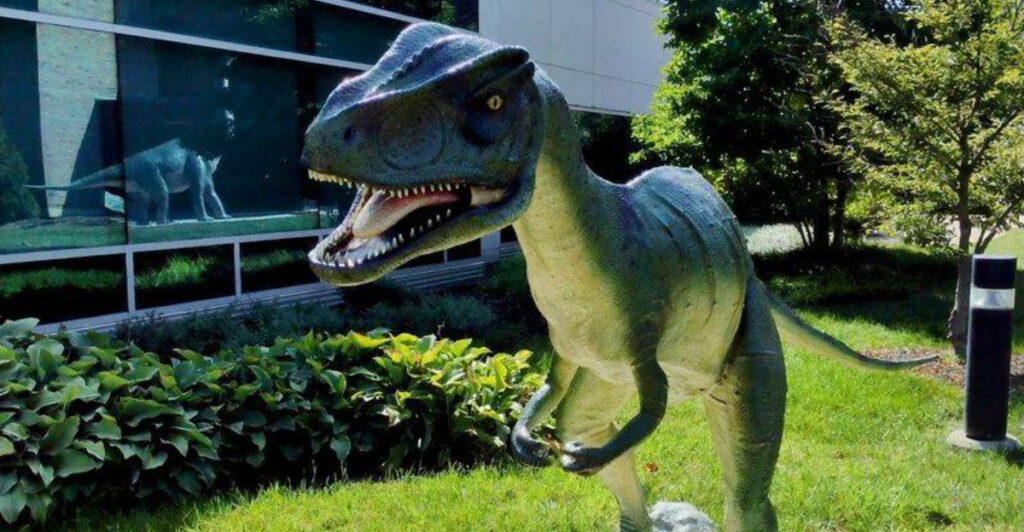
Science stops feel more surprising when prehistoric creatures appear right beside campus sidewalks and open grass. In Kalamazoo, Michigan, Schmaltz Geology Museum and Dinosaur Park gives families, students, and curious road trippers a free, easy way to see dinosaur sculptures up close without needing a full theme-park day.
The appeal is its simple sense of discovery, turning a short visit into a playful look at geology, fossils, and ancient life. It is small, approachable, and just unexpected enough to make an ordinary afternoon feel more interesting.
For anyone looking for a Michigan stop with learning, fun, and a few giant photo-worthy surprises, this Kalamazoo spot deserves a closer look.
A campus corner where dinosaurs suddenly appear
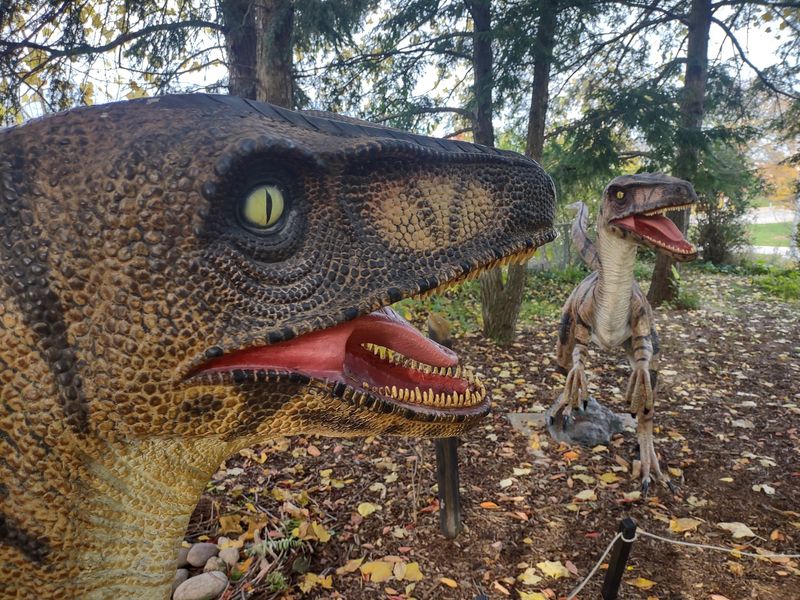
One minute the setting looks like a normal university campus, and the next, dinosaur sculptures rise out of the grass. That quick shift is part of the fun at Schmaltz Geology Museum and Dinosaur Park, a small outdoor spot at 1903 W.
Michigan Ave. in Kalamazoo. Instead of gates, ticket booths, or loud attractions, the park sits in a quieter academic setting, which makes the prehistoric figures feel even more surprising.
The scale of the park is modest, so the experience works best when expectations match the site. This is not a full day attraction or a giant landscaped zoo of dinosaurs.
It is more like a campus discovery, a place where science, art, and outdoor space meet in a way that feels casual and easy to approach.
Because the park is free, there is little pressure to rush or justify a big admission price. Families can stop by for a short visit, students can wander over between classes, and dinosaur fans can add it to a larger day around Kalamazoo.
That flexible setup gives the place a friendly rhythm that bigger attractions often lose.
There is also a playful contrast built into the location. College buildings and sidewalks create a practical, everyday background, while the sculptures pull the eye toward a much older world.
For kids, that mix can make the dinosaurs seem even larger. For adults, it turns a simple walk into a small local adventure.
Seen from that angle, the park stands out less as a polished destination and more as a memorable curiosity with real visual charm. It catches attention fast, rewards a short detour, and adds a prehistoric twist to Western Michigan University that many first-time visitors do not expect.
Big reptile energy in a compact Michigan space
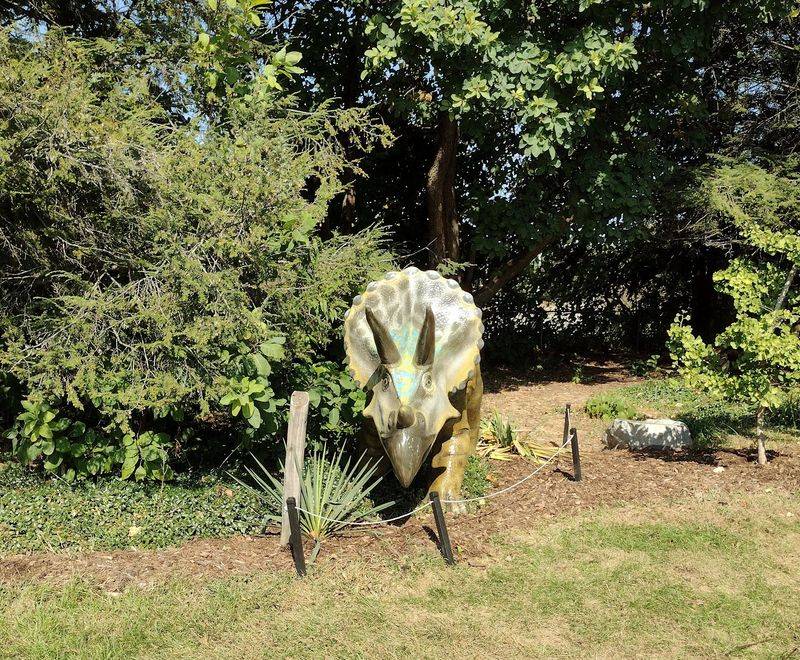
Size is the first thing to understand here, both what is large and what is small. The dinosaurs themselves create the drama, but the park around them is compact.
That contrast shapes the whole visit and helps explain why the sculptures are the true stars of the experience.
At Schmaltz Geology Museum and Dinosaur Park, the statues bring a burst of prehistoric color and form to a simple lawn area. Instead of needing long trails or elaborate exhibits, the park relies on the instant impact of seeing dinosaur bodies, tails, heads, and claws standing in plain view.
Even when the site is quiet, the figures add motion to the scene just by how they are posed.
Young kids often respond first to the obvious excitement of giant creatures in front of them. Older kids and adults may focus more on shape, scale, and details such as skin texture, stance, or the differences between the animals.
That makes the park useful for quick conversation, especially if someone in the group already loves fossils, natural history, or creature design.
At the same time, this is a place where a practical mindset helps. Reports have noted that some sculptures have shown wear or needed repair at times, so the exact lineup may not always look perfect.
Even so, the appeal remains clear: outdoor dinosaur figures, free to view, in a setting where you can walk around them at your own pace.
For a short stop, that visual payoff counts for a lot. The park does not depend on flashy extras.
It works because the main idea is simple, direct, and fun: walk over, look up, and spend a few minutes face to face with dinosaurs in western Michigan.
The museum next door adds the science piece
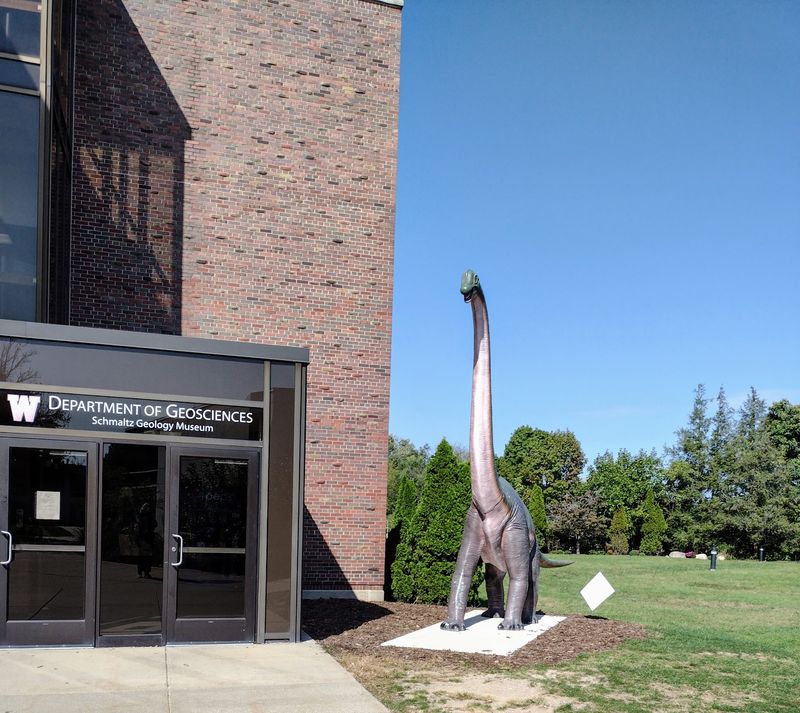
Giant sculptures grab attention, but the nearby Schmaltz Geology Museum gives the stop a stronger educational backbone. Pairing the outdoor park with the museum changes the visit from a quick photo stop into a science-themed outing.
Even if the park is what pulls people in first, the museum connection adds context that makes the whole place more interesting.
The relationship between geology and dinosaurs makes sense right away. Dinosaurs are exciting, but fossils, rocks, and earth history explain how anyone knows these animals existed in the first place.
A setting tied to a geology museum naturally points visitors toward bigger questions about ancient life, buried evidence, and the long timeline of the planet.
That matters especially for families with school-age kids. After seeing the sculptures outside, children can connect those large shapes to real scientific study instead of treating the park like only a novelty.
It becomes easier to talk about fossils, sediment, extinction, and how museums help turn old bones and rock layers into stories people can understand.
The outdoor and indoor combination also gives the site a useful balance. The park provides instant visual fun, while the museum angle offers a quieter layer of learning.
Together they create a stop that can work for different moods. Some visitors want quick excitement, while others enjoy taking their time with displays and educational material nearby.
Because the title location includes both the museum and the park, it makes sense to think of them as a matched pair rather than separate attractions. One delivers the wow factor.
The other supports the why behind it. That partnership is what lifts Schmaltz Geology Museum and Dinosaur Park above a random collection of statues and turns it into a more meaningful campus destination.
Best visited like a detour, not a day trip
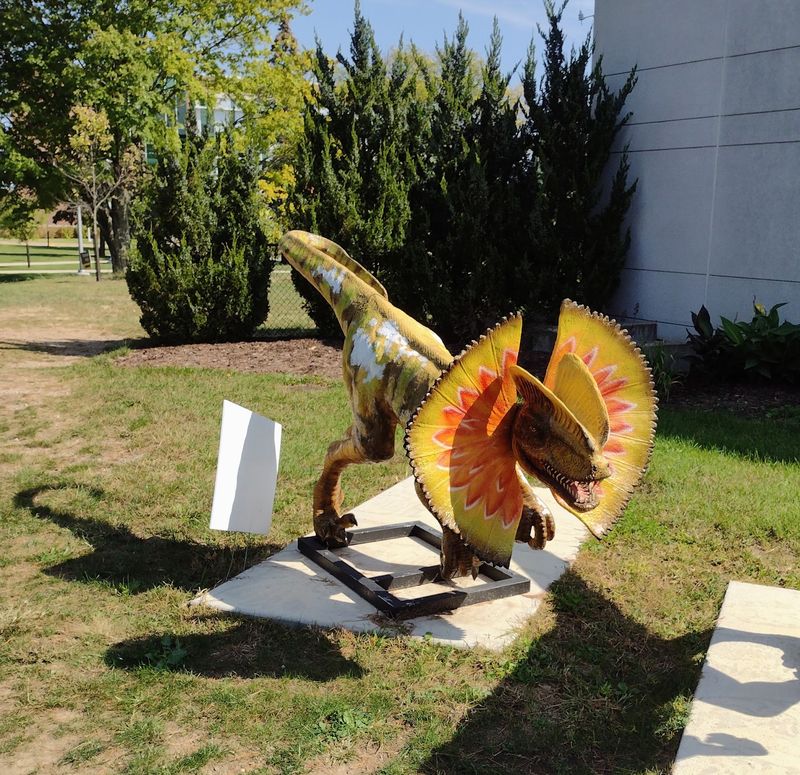
Plenty of places disappoint when they are treated like something bigger than they are. Schmaltz Geology Museum and Dinosaur Park works best when approached as a fun detour with a clear, simple mission.
Come for a short walk, a few photos, and a close look at the dinosaurs, and the visit makes much more sense.
The outdoor area is small enough that most people will not spend a long stretch there. That is not a flaw on its own.
In fact, a compact layout can be helpful for families with young children, travelers filling an open hour, or locals who want something different without planning a complicated outing.
That shorter format also makes the experience easier to combine with the museum nearby or with other stops around Kalamazoo. The park can break up a day of errands, campus visits, or city exploring.
If the weather is nice, even the walk to reach it can become part of the outing rather than just the route to the sculptures.
Setting expectations is especially helpful for adults bringing kids. Children who love dinosaurs may be thrilled just to stand near the figures and point out favorite species, but they should not expect rides, playground equipment, or hands-on climbing.
The sculptures are better treated as look-but-don’t-climb attractions, with the fun coming from observation rather than nonstop activity.
Seen that way, the park has a clear personality. It is brief, visual, and easy to fit into a regular day.
Instead of measuring it against major dinosaur destinations, it makes more sense to enjoy it for what it is: a free prehistoric pause on a university campus, where even a 20-minute stop can add a fun twist to the afternoon.
Finding it takes planning, especially around parking
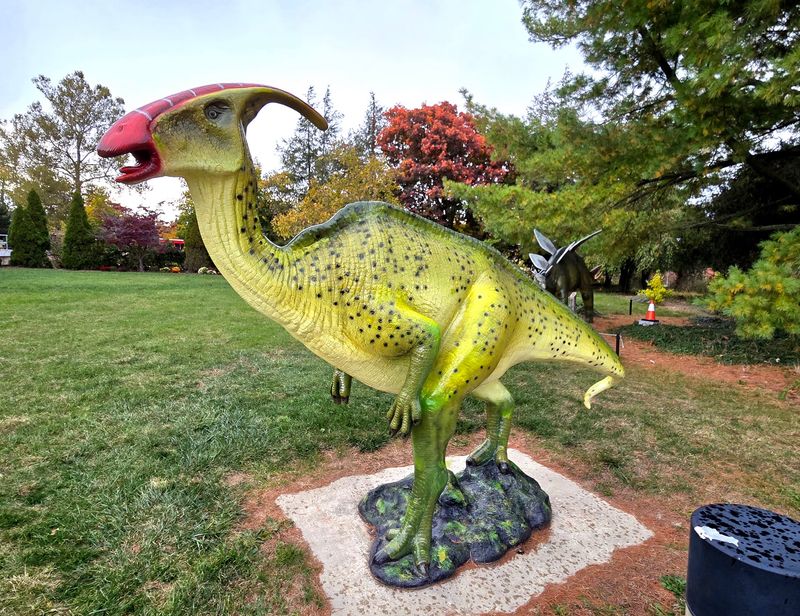
Here is the part that deserves advance thought: getting there can be less simple than the dinosaurs themselves. Several visitors have noted that the park is not always easy to find by instinct alone, and parking can be the trickiest part for non-students.
A little planning before arrival can save time, confusion, and unnecessary walking.
Because the site is on the Western Michigan University campus, it does not function like a standalone roadside attraction with obvious public parking beside the entrance. That campus setting adds charm once you arrive, but it also means visitors may need to navigate university lots, sidewalks, and building landmarks.
Looking at a map ahead of time is a smart move, especially for anyone unfamiliar with the area.
Accessibility is also an important practical issue. Public comments show that parking rules and nearby access have caused uncertainty for some visitors, including those who need handicap parking.
For that reason, anyone with mobility concerns should take extra care to confirm the most current campus access guidance before making the trip.
Weekends and off-hours can add another layer to the planning. Some travelers have noted limited facilities available to the general public during those times.
Bringing water, wearing comfortable shoes, and treating the visit as a mostly outdoor stop can make the experience smoother, especially in warm weather.
None of that means the park is not worth seeing. It simply means the visit works better when approached with a campus mindset instead of a typical park mindset.
Think ahead about where to leave the car, allow a little extra time for walking, and use clear location references. Do that, and the path to the dinosaurs becomes much easier to handle.
Why the free factor makes this stop stand out
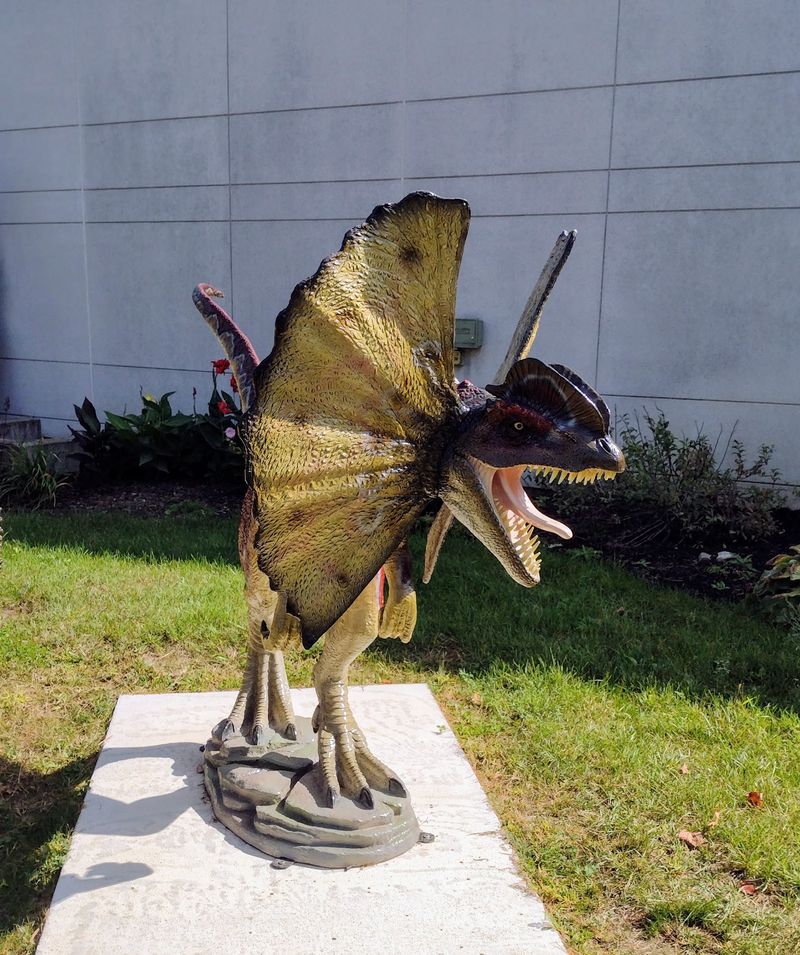
Free attractions have a special kind of freedom built into them. There is no pressure to stay for hours, no feeling that every minute must justify a ticket price, and no need to plan the whole day around one stop.
At Schmaltz Geology Museum and Dinosaur Park, that changes the mood from high-stakes outing to easy discovery.
That matters in a city setting where not every fun stop has to be huge to be valuable. A quick dinosaur walk can be enough to spark conversation, entertain a child, or give travelers a reason to stretch their legs.
For college visitors, local families, and curious passersby, the zero-cost entry lowers the barrier and makes the site easy to try on a whim.
The free aspect also softens the park’s limitations. Since the space is small and the sculptures may not always appear in perfect condition, the visit lands better as a no-cost experience than it would as a pricey attraction.
Instead of demanding a major commitment, it offers a light, accessible break with a memorable visual theme.
There is also something refreshing about seeing science-centered public art in an informal setting. Dinosaurs do not need a giant entertainment complex to be exciting.
Standing in the open air on a university campus, they still have enough pull to make children grin, adults stop for pictures, and ordinary foot traffic turn into a short adventure.
That is the clearest reason the place stands out. It gives western Michigan a playful educational stop that is simple, odd, and easy to remember.
Not every destination needs to be massive to earn attention. Sometimes a small patch of grass, a few prehistoric giants, and an open invitation to explore for free are plenty.