Detroit food stories are easy to recognize once you know what to look for. Across Michigan, long-running favorites keep the city’s flavor alive with chili-covered coney dogs, square slices with cheese baked to the edge, quick counter service, sit-down traditions, and regulars who know their orders by heart.
These spots matter because they are more than places to eat; they help explain how local loyalty, working-class comfort, and neighborhood pride can shape a city’s identity one bite at a time. Some are fast and no-fuss, while others invite people to settle in and stay awhile.
Together, they show why Detroit’s classic food culture still has such a strong pull.
1. Loui’s Pizza, Hazel Park
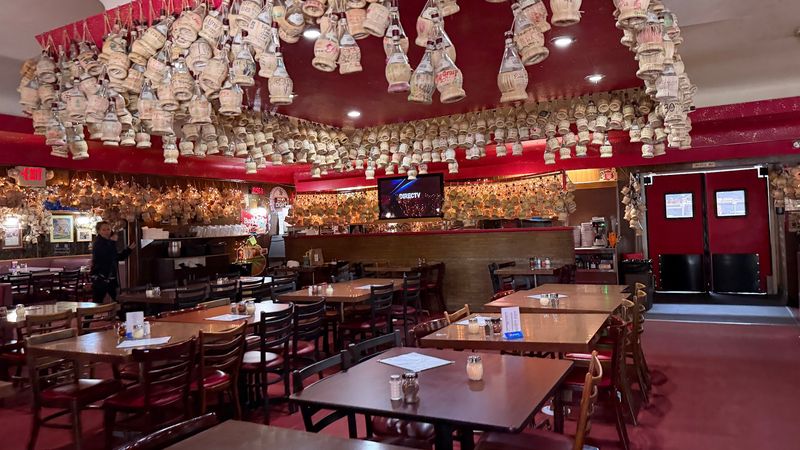
Few pizza cravings are as specific as the one that calls for a thick corner slice with crisp cheese at the rim. Loui’s Pizza, linked to Hazel Park since 1977, fits that mood with the kind of old-school charm people notice right away.
The appeal starts with the style itself: square pie, hearty crust, and a baked edge that adds texture to every bite.
Plenty of readers know Detroit-style pizza in broad terms, but Loui’s helps explain why the category matters. A well-made square pie balances softness in the center with a firmer, darker edge near the pan.
That contrast makes each piece a little different, so sharing a table becomes more fun because everyone has a favorite slice type.
For first-timers, ordering simply is smart. Start with a classic combination or a cheese pizza so the crust, sauce, and edge can do the talking before extra toppings crowd the experience.
Going in hungry also helps, because square pizza can look neat and modest at first, then land much heavier than expected after two or three slices.
Loui’s belongs in any conversation about historic Michigan pizza because places like this keep a regional habit alive through repetition, not trends. Families return, newcomers learn the style, and local food memory stays active.
That steady hand matters more than flashy reinvention when the goal is preserving a food tradition.
Another useful tip is to slow down on the first bite. The pan-baked edge, rich cheese, and thick base can hide small differences in texture that make Detroit pizza special.
Paying attention to those details turns a casual meal into a better understanding of why local pizza fans talk with such loyalty.
In Hazel Park, Loui’s stands as a clear reminder that square pie is not an offshoot or novelty. It is a hometown language, spoken through sauce, crust, and browned cheese.
2. National Coney Island, Roseville
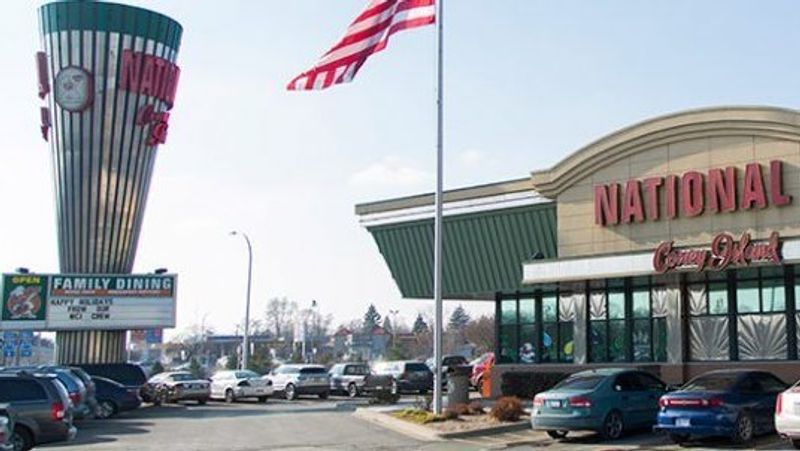
Bright lights, quick service, and a menu that covers a lot of ground help explain why coney places matter in Michigan life. National Coney Island, tied to Roseville since 1965, sits in that tradition with an approach that makes everyday eating feel familiar and dependable.
A coney here is part meal, part local shorthand, and part lesson in how simple foods can last for decades.
The classic formula is easy to understand but hard to perfect. A soft bun, a hot dog, savory chili, mustard, and chopped onions come together in a very specific balance.
Too much of one topping can throw everything off, so a solid coney stand earns respect by getting the ratio right again and again.
National also represents a style of place that works for many situations. It can handle a quick lunch, a casual dinner, or a late stop when nobody wants anything complicated.
That broad usefulness helps explain why coney institutions become woven into routines rather than saved only for special events.
Readers new to the Michigan coney world should order one traditional coney before branching out. That first plain test lets the chili and onion bite stand out clearly.
Adding fries and a drink rounds out the experience without turning the table into a giant spread that distracts from the main point.
Another practical move is to pay attention to speed and temperature. Coneys are best when served hot and eaten soon after they arrive, before the bun softens too much.
That may sound obvious, yet timing is a real part of why a coney at the counter often tastes better than one that sits around during a long conversation.
Roseville’s National Coney Island shows how regional food traditions survive through everyday use. When a meal is easy to order, easy to share, and easy to crave again, local identity stays close to the surface.
3. Green Lantern Pizza, Madison Heights
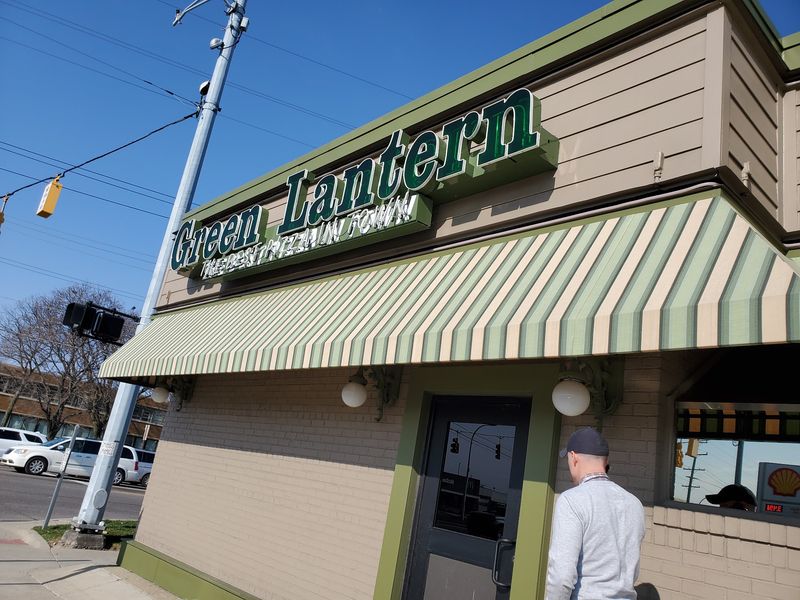
A neighborhood pizza spot can tell a whole regional story without saying much at all. Green Lantern Pizza, connected to Madison Heights since 1955, is one of those names that pops up whenever locals talk about old Michigan pizza habits.
Its place in the square-pie conversation matters because it reflects the long arc of suburban Detroit dining, where comfort and consistency often beat novelty.
Detroit-style pizza gets a lot of national attention now, but longtime places remind people that the style was never built for social media. It was built to feed groups, hold heat, and deliver crisp edges with a chewy center.
Green Lantern fits into that history by keeping the focus on the pie itself instead of surrounding it with too much fuss.
Anyone planning a visit should think about the order before arriving. A classic square pizza is the obvious move, and splitting toppings across a pie can help a group sample more without overdoing it.
When a pizza style is known for strong crust character, choosing at least one simpler section is useful because it lets that structure stand out.
There is also value in noticing how square slices change from center to corner. Middle pieces tend to be softer and more balanced, while corner slices offer sharper crunch and deeper browning.
That difference is part of the fun, and it gives each person at the table a reason to claim a favorite spot.
Green Lantern’s staying power points to a larger truth about Michigan food culture. Regional institutions do not survive only because they are old.
They last because they work on regular weeknights, after games, during family get-togethers, and on the kind of evenings when nobody wants to gamble on dinner.
Madison Heights has many food options, yet a place like this anchors memory in a practical way. One square pie can carry history, routine, and local pride all at once.
4. Duly’s Place Coney Island, Southwest Detroit
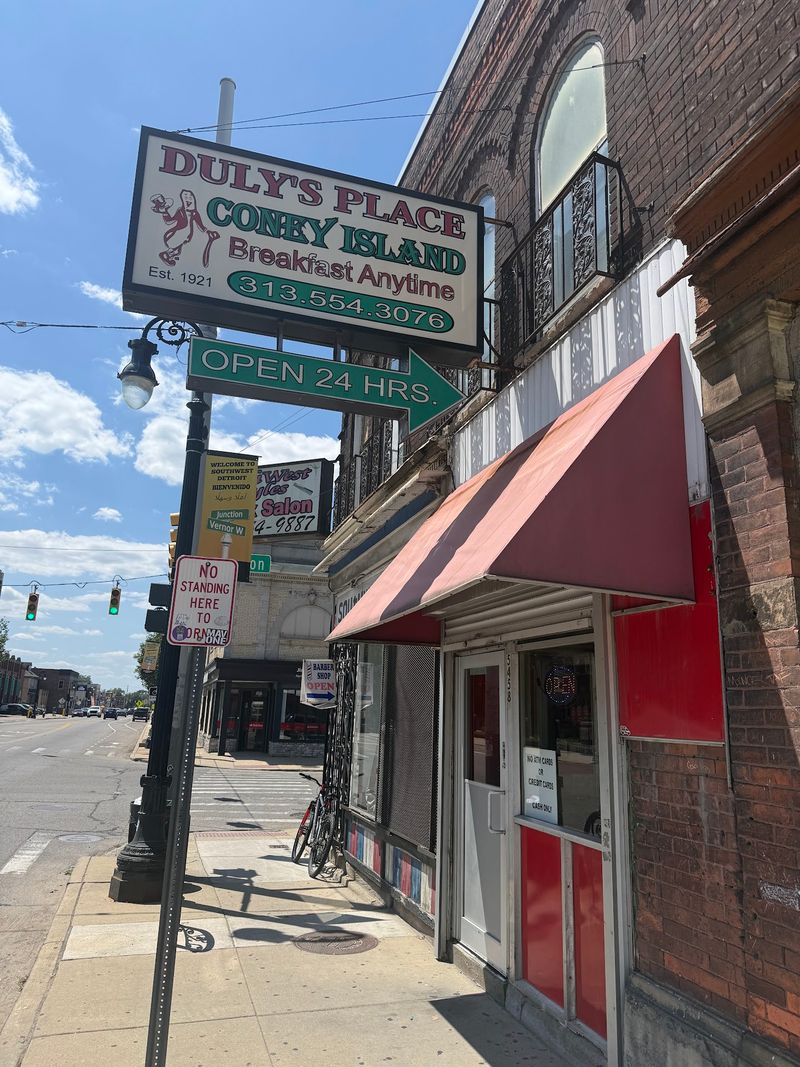
Small counters often leave the biggest mark, and Duly’s Place Coney Island in Southwest Detroit carries that kind of reputation with ease. Operating since 1921, it stands for a stripped-down version of the coney experience where the food arrives fast and the setting stays focused.
No oversized concept is needed when the basics are handled with confidence.
The beauty of a classic coney counter lies in directness. You sit, order, eat, and understand the local food code almost immediately.
A coney served in that environment lands differently because nothing pulls attention away from the bun, the snap of the dog, the savory topping, or the bite of raw onion.
Duly’s also helps readers see why Southwest Detroit matters in wider food conversations. The area has long been shaped by movement, work, and neighborhood loyalty, so a durable coney shop naturally becomes part of daily rhythm.
Places like this are less about ceremony and more about reliability, which is often the stronger foundation for food tradition.
For anyone visiting, the smartest plan is simple and focused. Order a classic coney or two, eat them while they are hot, and resist the urge to overcomplicate the meal on the first try.
The straightforward approach makes it easier to notice the balance of flavors and the quick, practical style that defines the stop.
Another useful idea is to pay attention to scale. At a compact coney spot, portions, timing, and movement often feel tighter and faster than at larger chain restaurants.
That speed is not a flaw. It is part of the format, and it adds to the sense that this food is made for real schedules and everyday appetites.
Duly’s Place remains important because it shows how little a city needs to create a memorable food landmark. A narrow room, a hot griddle, and a well-built coney can carry a century of local flavor.
5. Jet’s Pizza, Sterling Heights
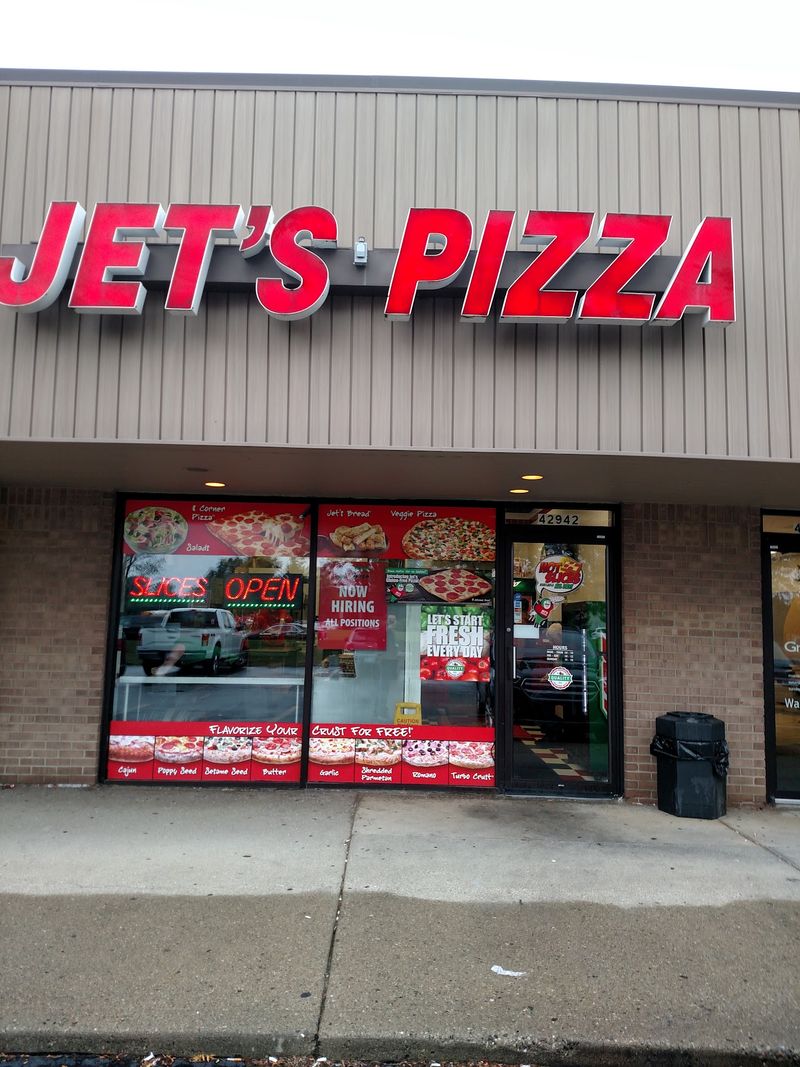
Some local food institutions grow because they solve a simple problem very well. Jet’s Pizza, with roots in Sterling Heights in 1978, helped bring square pizza to people who wanted a filling, easy dinner without giving up regional character.
That mix of convenience and identity matters because it shows how Detroit-style pizza moved from neighborhood favorite into a wider Michigan habit.
The square pie at a place like Jet’s is built for appetite. Thick crust supports hearty toppings, edges bring browned cheese crunch, and each slice feels substantial enough to count as real fuel after a long day.
Readers who usually picture thin, foldable pizza may be surprised by how different the pacing is here. One or two pieces can go a long way.
Jet’s belongs on this list because historic food stories are not only about tiny dining rooms and old counters. They are also about places that spread a local style farther without erasing its core appeal.
When more households learn the look and taste of a Detroit square pie through a dependable name, the region’s food language stays active.
Ordering well can make a big difference. A basic square with a familiar topping gives the crust room to stand out, while a side order can help stretch the meal for a group.
Carryout works especially well with this style because thick pizza travels better than many thinner pies, though it is still best while the cheese edge is warm.
There is also a practical lesson here for readers exploring Michigan food. Not every classic must be fancy, rare, or deeply ceremonial.
Sometimes a place earns long-term loyalty by fitting easily into busy family schedules while still delivering a style tied closely to home turf.
Sterling Heights gives Jet’s an important starting point in the regional story. From there, the square slice became more familiar to more people, and that wider reach helped Detroit pizza hold its ground.
6. Lipuma’s Coney Island, Rochester
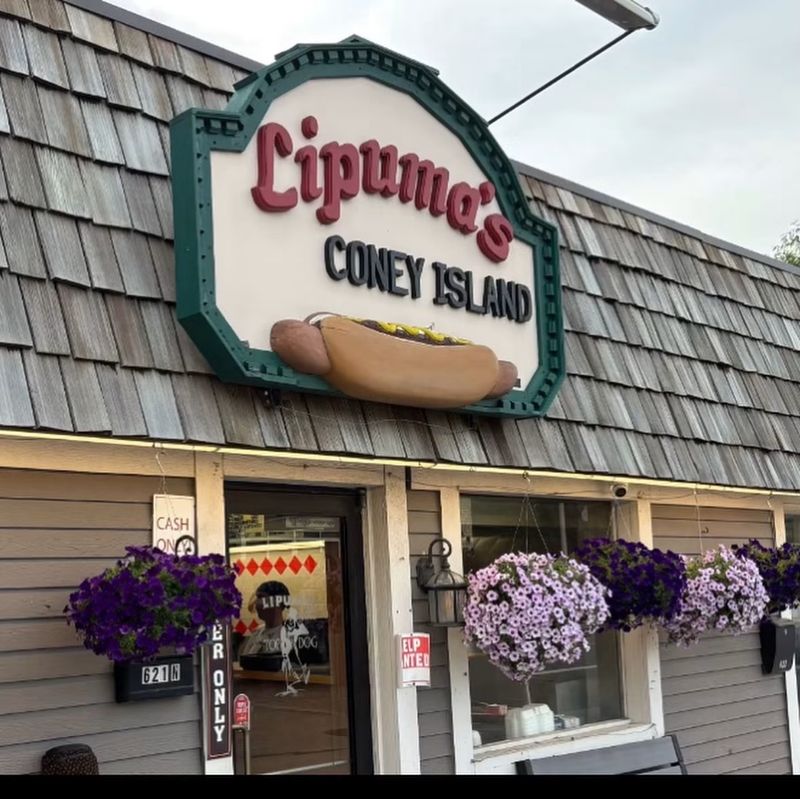
A great coney stop does not need a giant menu or a dramatic setup to make an impression. Lipuma’s Coney Island in Rochester, around since 1969, earns its place through focus, clarity, and the kind of reputation that grows one regular at a time.
In a state filled with coney options, that narrow concentration can be a strength.
Readers who have never compared coneys closely may think every version tastes about the same. Spend time with a dedicated shop, though, and the details start to separate themselves.
Bun texture, chili thickness, onion sharpness, and overall neatness all matter more than they first appear to matter. A well-made coney is fast food in speed but not in carelessness.
Lipuma’s fits nicely into the wider Michigan story because Rochester gives the tradition a slightly different setting from downtown Detroit or a heavy commuter corridor. The food still speaks the same local language, yet the experience can feel more compact and community-centered.
That variety shows how far the coney model has traveled without losing its basic identity.
First visits are easiest when expectations stay simple. Order the classic version, eat it fresh, and notice how the toppings work together instead of trying to identify one dominant flavor.
Good coneys are balanced, and balance rarely shouts. It tends to show up as a smooth, savory whole.
There is also practical value in understanding portion planning. Coneys look small, so people often order too little or too much based on guesswork.
Two can be a sweet spot for many appetites, especially with fries, though larger eaters may want more. Knowing that ahead of time can save a second line trip.
Rochester’s Lipuma’s reminds readers that Michigan’s food identity lives in many corners, not only the biggest city blocks. A compact coney shop can carry just as much local meaning as a famous downtown address.
7. Cloverleaf Bar & Restaurant, Eastpointe
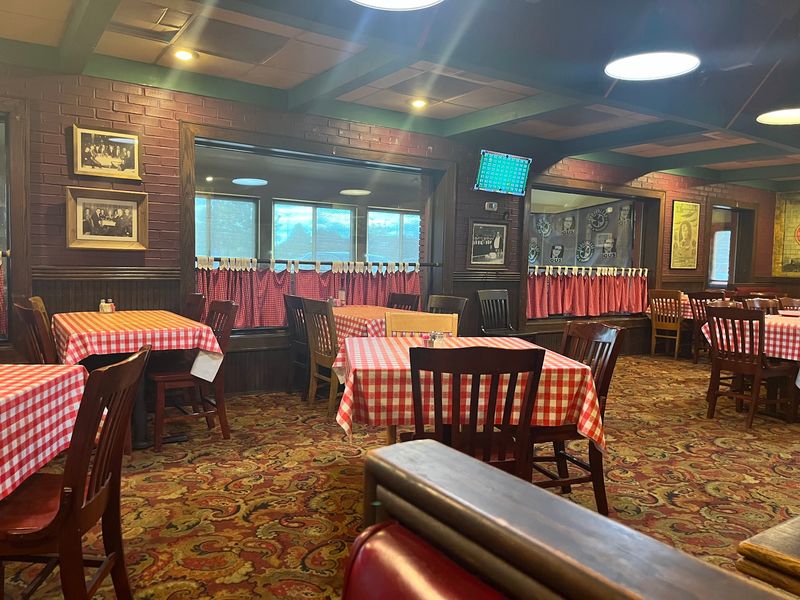
Pizza history gets more interesting when a place carries old techniques into the present without making a big show of it. Cloverleaf Bar and Restaurant, associated with Eastpointe since 1953, belongs in that conversation because square pizza there is tied to the roots of a style that helped define Detroit eating.
Even readers who know the name mostly by reputation can appreciate how strongly it represents regional continuity.
Square pizza works best when texture is treated like a main ingredient, not a side effect. The crust has to support toppings, the edges should brown with purpose, and the sauce should complement the cheese rather than drown it.
Cloverleaf helps illustrate those principles in a way that is easy to understand once a pie hits the table.
A practical strategy for visitors is to share at least one plain or lightly topped square alongside any busier order. Heavy topping combinations can be fun, but they also hide the structure that makes Detroit-style pizza memorable.
Sampling both versions gives readers a clearer sense of the craft behind the format.
Another reason Cloverleaf matters is that a bar and restaurant setting suits this kind of pizza well. Square slices are social food.
They are easy to divide, easy to compare, and sturdy enough to hold up through conversation. That makes them a natural fit for group dinners, game nights, or long catch-up meals where people reach for one more piece almost by reflex.
Eastpointe’s role in the story broadens the map beyond the central city without weakening Detroit’s claim on the style. Regional food traditions often spread through nearby communities, and that spread can strengthen identity rather than blur it.
Cloverleaf stands as a good example of that process in action.
For readers building a Michigan food itinerary, this is the kind of stop that teaches through eating. Each square slice offers a direct lesson in why pan pizza became a point of pride around Detroit.
8. American Coney Island, Downtown Detroit
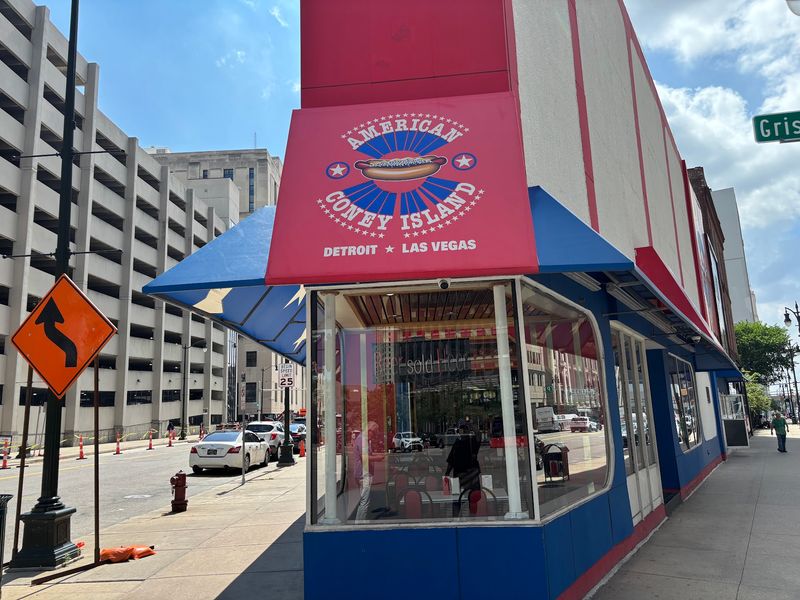
Downtown Detroit has a few food names that carry instant recognition, and American Coney Island is firmly in that group. Open since 1917, it stands as one of the clearest entry points into the city’s coney tradition.
The formula is simple, yet the impact is bigger than the ingredient list suggests because a coney here functions almost like a civic handshake.
Part of the appeal comes from location. Eating a classic coney in the middle of downtown places the meal inside a broader city story of workers, visitors, sports crowds, and longtime residents crossing paths.
That setting gives the food added force. It is not fancy, but it is deeply tied to the pace and identity of Detroit life.
Readers unfamiliar with the style should know that a Michigan coney is not overloaded for spectacle. The goal is proportion.
Chili, mustard, and onions work best when no single topping steals the whole scene. American Coney Island helps make that lesson easy to grasp because the dish is meant to be eaten quickly, clearly, and without much analysis at first.
Still, paying attention can improve the experience. Notice the texture of the bun, how the onions sharpen the richness of the chili, and how mustard brings brightness without taking over.
Those small details explain why the coney survives generation after generation. It is compact, but it is not random.
Another tip is to lean into the classic order before exploring side items. One or two coneys tell the story better than a crowded tray on a first visit.
That focused approach also makes comparison easier if another coney institution is on the same itinerary later in the day.
American Coney Island matters because it gives Detroit a steady culinary symbol in plain sight. Few foods carry local identity so efficiently, and few downtown meals deliver history in such a direct, accessible form.
9. Niki’s Pizza, Greektown
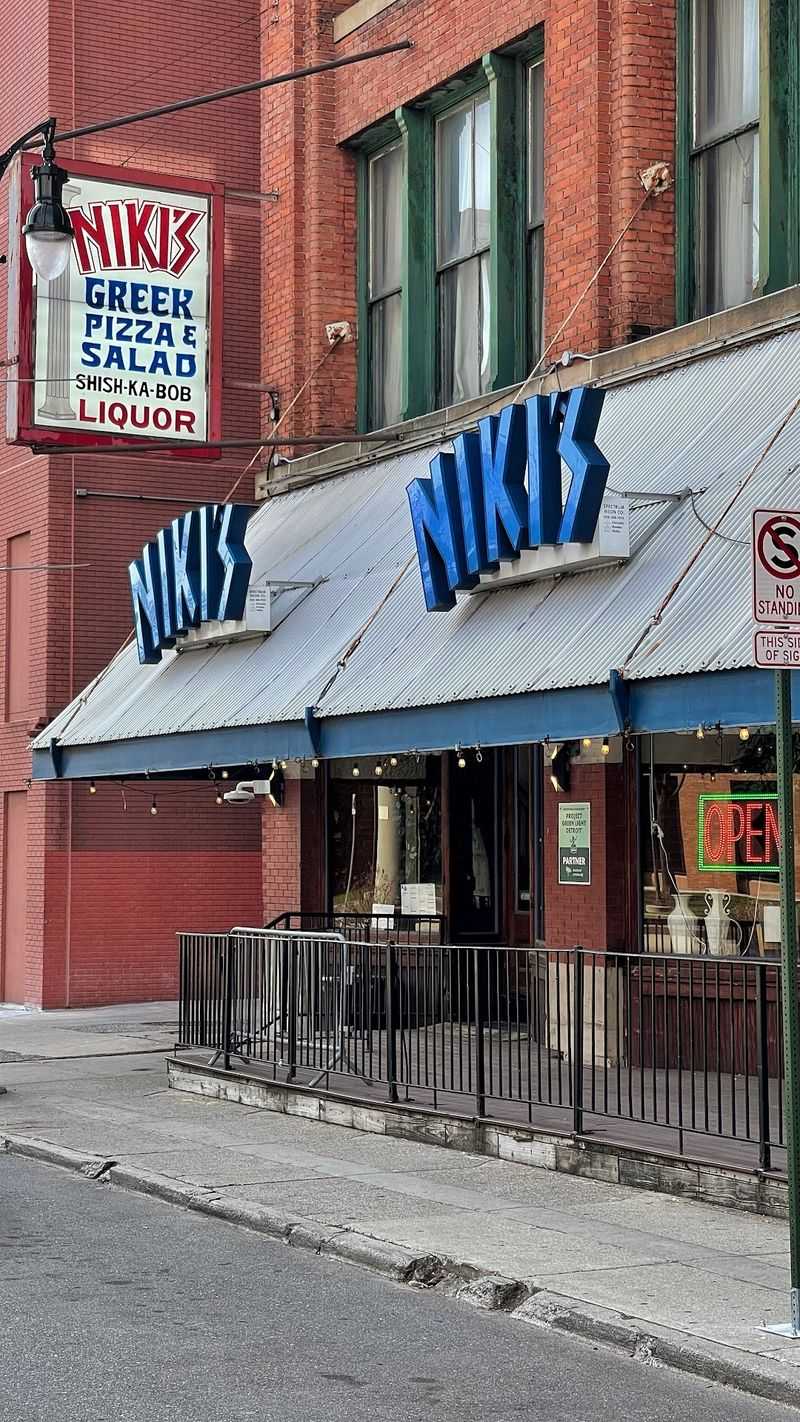
Greektown is full of energy, and Niki’s Pizza has long been part of the mix since 1981. That setting gives square pie a different kind of stage, one shaped by downtown movement, group dinners, and a neighborhood known for eating out.
Within that scene, Niki’s helps keep Detroit-style pizza visible in a place where visitors and locals often share the same tables.
Urban pizza spots often need range. They have to satisfy people looking for a full meal, groups splitting several dishes, and curious first-timers who want a famous regional style without a big learning curve.
Niki’s works well in that role because square pizza is friendly to sharing and easy to understand once the pan arrives.
Readers planning a stop in Greektown should use the setting to their advantage. Go with a small group if possible, order a square pie with a straightforward topping plan, and compare corner pieces to center slices.
The simple act of trading slices around the table turns texture differences into part of the meal, not just a technical detail.
Niki’s also shows how Detroit-style pizza functions inside a busier dining district. A regional classic does not need to sit apart from city life to remain meaningful.
It can operate right in the middle of nightlife and still hold onto its local identity through form, flavor, and shared familiarity.
One practical note: square pizza can be more filling than people expect, especially when the crust is thick and the cheese edge is rich. Ordering with restraint at first leaves room to enjoy the meal rather than pushing past comfort halfway through.
That matters even more when other neighborhood stops are part of the plan.
Greektown gives Niki’s a lively backdrop, but the pizza remains the real draw. In a district built for movement, a sturdy square slice offers a pause that still tastes unmistakably tied to Detroit.
10. Kerby’s Koney Island, Southfield roots
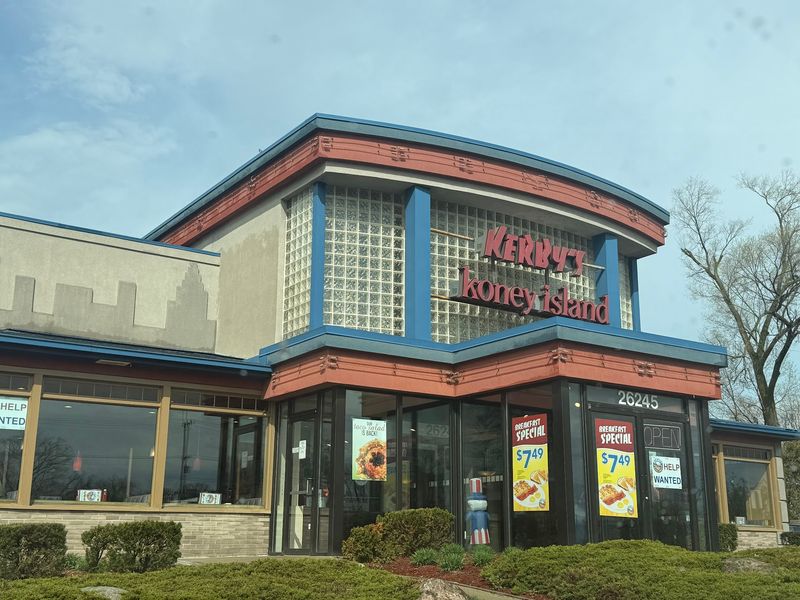
Metro Detroit has plenty of coney names, yet Kerby’s Koney Island stands out because its roots in Southfield connect it to the suburban side of the tradition. Dating to 1968, it represents the way coney culture traveled outward while staying recognizable.
That matters for readers who want to understand Michigan food as a network, not just a single downtown story.
Suburban coney restaurants often play a broad role in daily life. They can be breakfast stop, lunch counter, family dinner spot, and late casual meal all in one week.
Kerby’s fits that flexible pattern, which helps explain why coney institutions become household habits rather than occasional treats reserved for special outings.
The classic coney remains the center of the experience, and beginners should start there. Chili, mustard, and onions create the baseline for understanding the style.
Once that standard is clear, the rest of the menu makes more sense because readers can separate the signature item from the wider diner-style offerings that many Michigan coney restaurants provide.
Kerby’s also helps highlight an important point about regional food growth. Expansion does not automatically erase identity.
In some cases, a familiar name can carry local taste patterns to more neighborhoods and make them part of everyday life for more families. That broader reach can reinforce a tradition rather than weaken it.
For visitors, timing and appetite matter. A coney meal is quick, but adding fries or other extras turns it into a heavier spread than the simple hot dog format suggests.
Ordering one classic first is a smart way to judge pace before building a larger meal around it.
Southfield roots give Kerby’s a useful place in the Detroit flavor map. It reminds readers that local food identity grows through repetition in malls, busy roads, neighborhood corners, and family routines, not only through famous downtown landmarks.
11. Buddy’s Pizza, Detroit
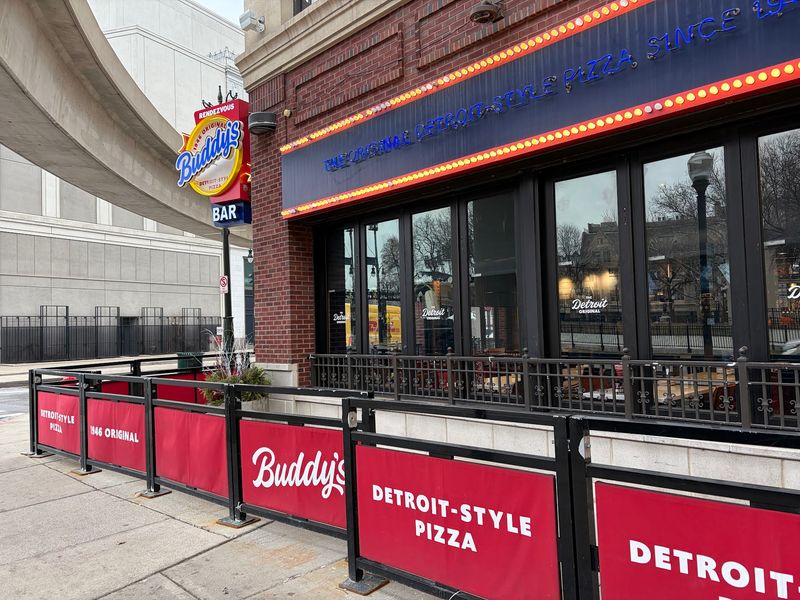
Any serious talk about Detroit square pizza eventually circles back to Buddy’s Pizza. With origins at Six Mile and Conant in 1946, the name sits near the center of the style’s story.
For readers exploring historic Michigan food, Buddy’s acts like a reference point, the place that helps other square pies make more sense through comparison.
The key lesson here is structural. Detroit-style pizza is not simply cut into squares after baking.
The pan, crust rise, edge browning, and placement of toppings all shape the final result. Buddy’s has long been associated with that framework, making it useful for anyone who wants to understand the style beyond the broad label.
A smart first order keeps the focus clear. Choose a classic square pie and pay special attention to the corner pieces, where crisp cheese and pan contact often produce the strongest contrast.
Then compare a center slice for softness and balance. That side-by-side tasting reveals why texture matters as much as flavor in this regional format.
Buddy’s also carries symbolic weight because Detroit food identity often grows out of practical invention. Thick, pan-baked pizza suits group meals, holds toppings well, and offers satisfying portions.
A style built on function can still become iconic, and that practical origin story gives the pizza extra staying power.
Readers should also plan around fullness. Detroit square pizza can be richer and heavier than it first appears, especially when the edges are deeply browned and the cheese layer is generous.
Sharing is helpful, both for appetite management and for comparing slice positions around the pan.
In the larger Michigan food picture, Buddy’s remains essential because it anchors the square-pie tradition in a clear time and place. Some restaurants preserve history through framed photos.
Here, history is easier to understand when it arrives hot in a rectangular pan.
12. Leo’s Coney Island, Southfield origins

Long-running coney restaurants often become part of ordinary life so completely that people forget how important they are to regional identity. Leo’s Coney Island, with origins in Southfield in 1972, fits that pattern.
It represents a version of the Michigan coney experience that is broad, accessible, and closely tied to suburban routines across Metro Detroit.
One reason Leo’s belongs in this lineup is its role in keeping the coney format visible for a wide audience. Not every historic institution is tiny or intensely specialized.
Some matter because they help preserve a local eating habit in the middle of busy schedules, school pickups, work lunches, and casual family dinners.
The coney itself still provides the clearest starting point. Readers should try one in traditional form before moving on to larger plates.
That simple order teaches the essentials fast: soft bun, savory chili, mustard for brightness, and onions for sharp contrast. A well-balanced coney does not need decoration to make the point.
Leo’s also highlights the Greek-American diner influence that shaped many Michigan coney restaurants. Even when the menu stretches beyond hot dogs, the underlying idea remains practical and welcoming.
People can gather, order quickly, and find comfort in food that is familiar without being dull.
A useful strategy for first-time visitors is to treat the menu like a map rather than a challenge. Pick the house-defining item first, then add sides only if appetite allows.
Coneys seem light, but several in a row can fill the table and the stomach faster than expected. Restraint at the start often leads to a better meal overall.
Southfield’s place in the story gives Leo’s a strong regional footing. By helping everyday diners stay connected to the coney tradition, it proves that Michigan food history is built as much through repetition and routine as through headline-making fame.
13. Shield’s Pizza, Detroit
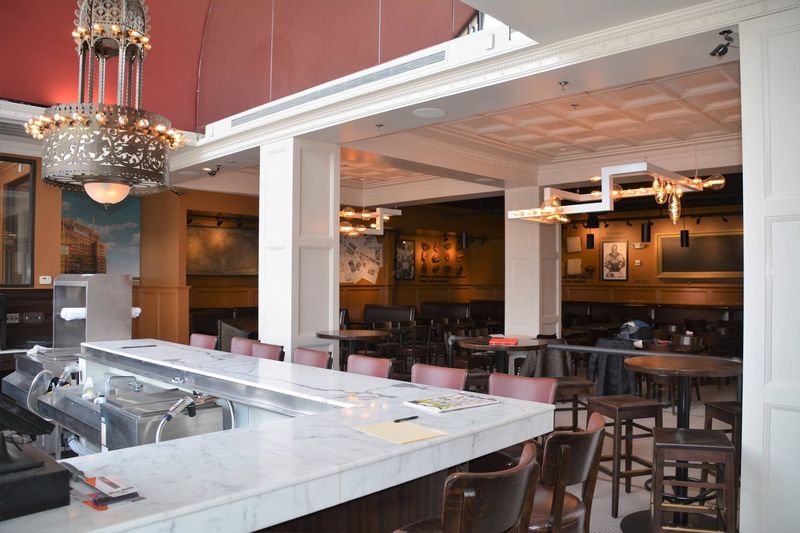
Shield’s Pizza carries a timeline that makes Detroit food history easy to picture. Its bar origins go back to 1937, with pizza arriving in 1946, placing the restaurant close to the formative years of the city’s square-pie tradition.
That combination of tavern roots and pan pizza helps explain why this style became such a natural fit for social eating.
Bar settings and square pizza work together for practical reasons. The slices are sturdy, the portions satisfy hungry groups, and the crisp edge adds enough character to keep each piece interesting even during long conversations.
Shield’s shows how Detroit pizza developed as a food people could share casually without treating it as a formal event.
For readers trying to understand the style better, Shield’s offers a useful reminder that texture drives the whole experience. A proper square pie should not be soft in every direction.
The center needs tenderness, but the outside should bring chew, crunch, and darker baked notes from the pan and cheese. That contrast is the point, not a bonus.
Ordering with a group is ideal here because it allows a wider look at the pie. Different slices reveal different strengths, and swapping pieces helps everyone notice those changes.
Keeping at least one pizza relatively simple is smart, since overloaded toppings can blur the crust and edge details that define the style.
Shield’s matters beyond nostalgia because it connects Detroit pizza to the kind of neighborhood place where people actually spend time. Food traditions survive best when they fit naturally into real social habits.
A pizza style that works for game nights, family outings, and after-work meals has a better chance of lasting.
In Detroit, Shield’s stands as a reminder that square pie is rooted in use as much as legend. The format stayed alive because it made sense on tables where people wanted solid food and easy sharing.
14. Lafayette Coney Island, Downtown Detroit
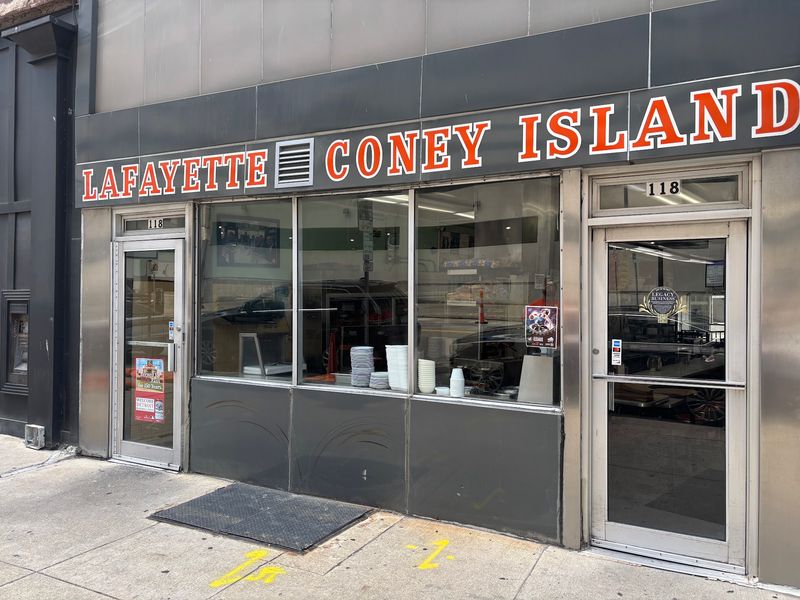
Some restaurants become city symbols because they keep things stripped to the essentials, and Lafayette Coney Island is a prime example. Operating in downtown Detroit since 1924, it is deeply linked to the local coney tradition and to the fast, unpretentious style that many visitors hope to find.
The experience is direct, compact, and centered on the dog itself.
That directness matters. A classic coney is not supposed to arrive as a giant construction with endless toppings.
It is a tightly built combination where chili, mustard, and onions each earn their place. Lafayette’s long-standing reputation within the downtown mix helps show why the coney became one of Detroit’s defining foods rather than just another hot dog variation.
For readers planning a first stop, leaning into the simplest possible order makes sense. Start with one or two standard coneys and eat them quickly while the textures are still sharp.
Coneys are at their best when heat, bun softness, and topping balance line up at once, which makes timing a real part of quality.
Another useful idea is to compare the downtown coney experience with suburban versions later on. The core formula may stay familiar, but setting changes perception.
In a dense city block, the meal can feel brisker and more intense, while the same style elsewhere may read as calmer and more routine. That contrast helps readers understand how place shapes taste memory.
Lafayette also highlights an important truth about iconic foods. They often last because they are repeatable, affordable, and easy to crave on ordinary days.
Fancy dishes can impress, but practical dishes are the ones most likely to attach themselves to local identity over generations.
Downtown Detroit gives Lafayette a strong stage, yet the coney remains the real story. In a few quick bites, it delivers a concentrated lesson in why Michigan takes this humble specialty so seriously.
Share this story