Tennessee’s landscape holds more than rolling hills and music legends. Scattered across the state, towering clock faces still mark the hours just as they did over a century ago.
These aren’t just beautiful buildings, they’re landmarks that watched history unfold, survived wars, weathered storms, and continue to anchor their communities today.
1. Rutherford County Courthouse – Murfreesboro
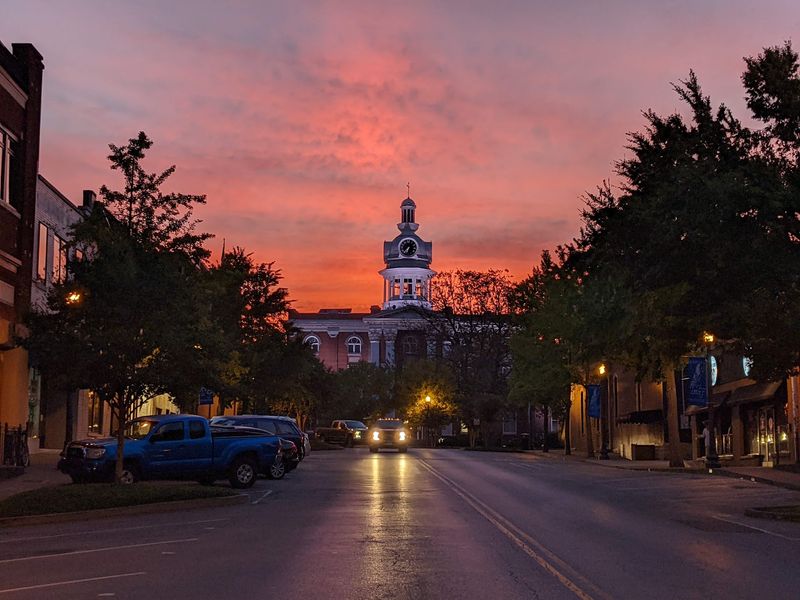
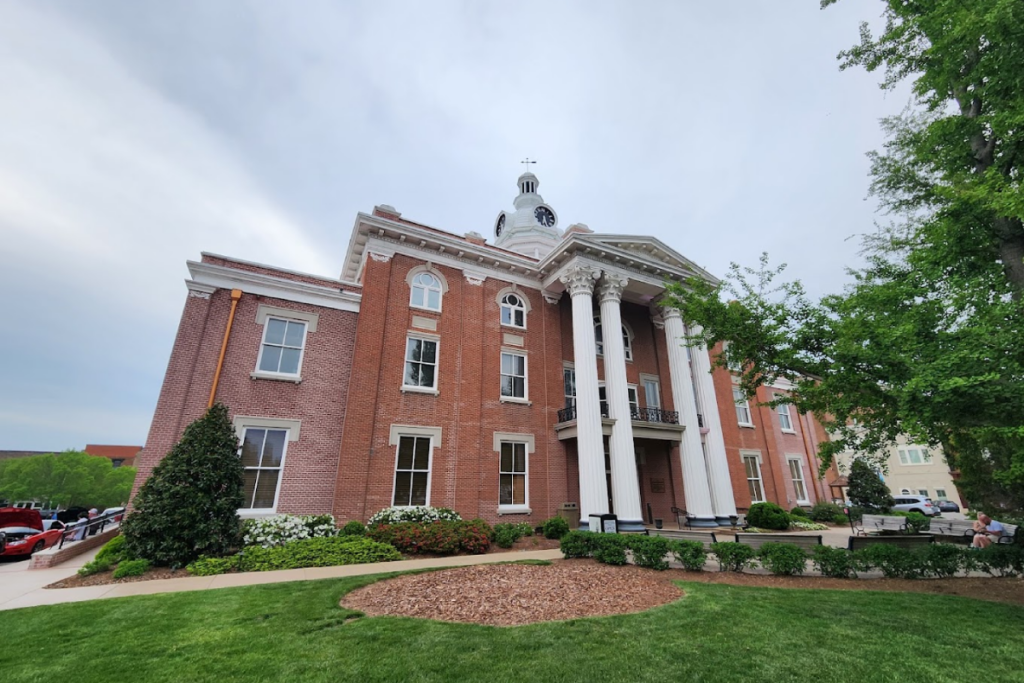
Standing tall in downtown Murfreesboro since before the Civil War, this courthouse has watched over Rutherford County through some of Tennessee’s most turbulent chapters. Construction wrapped up in 1859, and within a year, that distinctive clock tower was keeping time for a community about to be caught in the crossfire of a nation divided.
When you stand in front of it today, you’re looking at the same bricks that witnessed soldiers marching through town.
The courthouse sits right in the heart of the public square, impossible to miss. That clock tower rises from the center of the building, a beacon you can spot from blocks away.
Back in 1860, adding a clock to a courthouse tower wasn’t just about telling time, it was about civic pride and progress.
What makes this building remarkable isn’t just its age. It’s that the structure survived the Battle of Stones River, one of the bloodiest conflicts of the Civil War, fought just outside town in late 1862 and early 1863.
While Murfreesboro changed hands multiple times during the war, this courthouse kept standing.
The architecture reflects the Greek Revival style popular in the mid-1800s, with clean lines and symmetrical proportions. That clock tower, though, adds vertical drama to an otherwise horizontal design.
For generations of Murfreesboro residents, glancing up at that clock has been as routine as breathing.
Walk around the square today and you’ll find shops, restaurants, and a thriving downtown that still orbits around this 1850s anchor. The courthouse continues to serve its original governmental purpose, which is increasingly rare for buildings this old.
That clock still ticks, still chimes, still marks the passage of time for a city that’s grown exponentially since those first gears started turning in 1860. It’s a daily reminder that some things, when built right, genuinely last.
2. Smith County Courthouse – Carthage
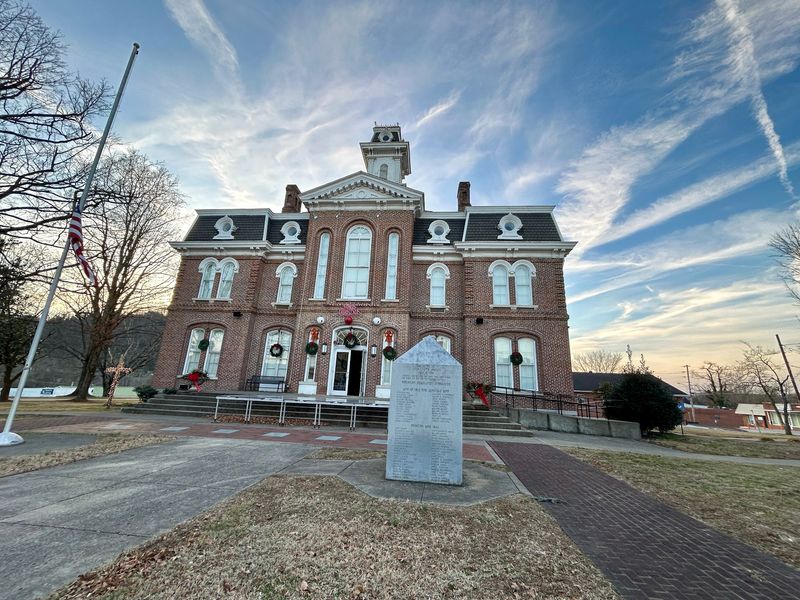
Perched on a hill overlooking the Cumberland River, the Smith County Courthouse brings a slice of French architectural flair to small-town Tennessee. Built between 1877 and 1879, this Second Empire beauty sports a mansard roof that was all the rage in post-Civil War America.
That central cupola, crowned with a working clock, gives Carthage a skyline feature that punches way above the town’s size.
Second Empire architecture got its name from Napoleon III’s France, and American builders loved copying the style during Reconstruction. The mansard roof, that distinctive steep-angled top story, wasn’t just for looks.
It created usable attic space while dodging height restrictions based on the number of stories.
The clock tower rises from the center of that mansard roof, visible from the river and from Highway 25 as you roll into town. For a county seat with fewer than 3,000 people, having a courthouse this grand was a statement.
Smith County was saying it had recovered from the war and was ready for the future.
The building’s proportions are impressive without being overwhelming. Red brick walls, tall windows, and that eye-catching roofline create a composition that photographs beautifully from every angle.
The cupola and clock tower add just enough height to command attention without dominating the landscape.
Carthage itself is worth exploring, a river town with deep roots in Tennessee history. Al Gore grew up here, and the town hasn’t forgotten its most famous son.
But long before modern politics, this courthouse was the center of county life, hosting trials, elections, and community gatherings under that ever-present clock.
Walking the grounds today, you get a sense of how important civic architecture was to 19th-century communities. This wasn’t just a functional building. It was a monument to democracy, progress, and local pride, all wrapped up in brick, stone, and one very punctual clock tower.
3. Gibson County Courthouse – Trenton
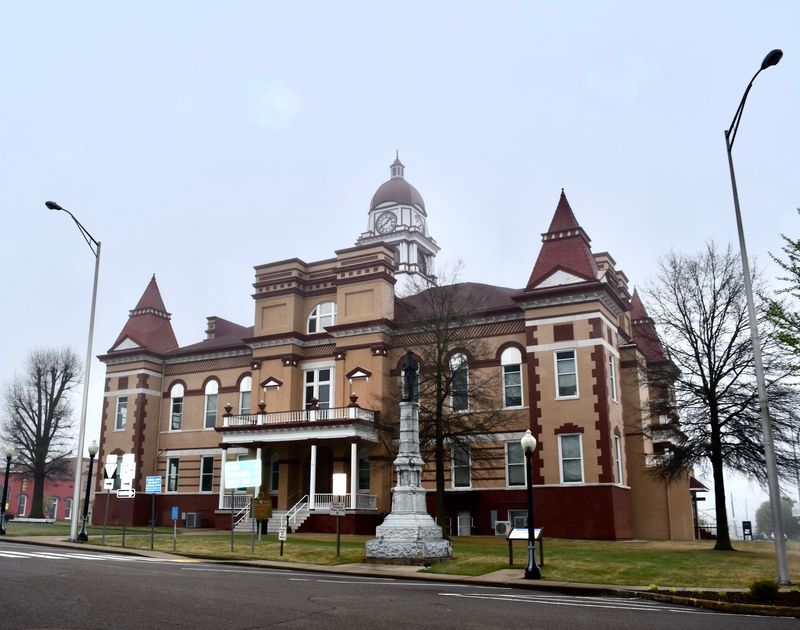
If you’re hunting for Victorian excess done right, Trenton’s Gibson County Courthouse delivers in spades. Completed in 1899, this building represents the tail end of the 19th century’s love affair with ornamental architecture.
That central belfry and clock tower, topped with a domed roof, rises like a wedding cake made of brick and ambition.
Victorian architecture didn’t believe in restraint, and this courthouse proves it. Every surface has some decorative element: arched windows, carved stonework, contrasting brick patterns.
The clock tower emerges from all that ornamentation as the focal point, drawing your eye upward to that distinctive dome.
Trenton sits in the northwest corner of Tennessee, closer to Memphis than Nashville, and the courthouse anchors the town square. Built during an era when county seats competed for status and population, a grand courthouse was essential marketing.
The belfry housed bells that called people to important events, while the clock kept everyone on schedule. Before everyone carried timepieces in their pockets, a public clock was genuinely useful infrastructure.
You could hear the bells from farms outside town, and you could see that clock face from most of downtown.
More than 120 years later, the building still functions as Gibson County’s courthouse. That’s remarkable longevity for a wooden-framed structure dressed up in brick. The clock still runs, the dome still catches afternoon light, and the whole composition still stops visitors in their tracks.
What strikes you most is the confidence. The architects and builders in 1899 weren’t thinking about preserving history because they were busy making it.
They built something beautiful and functional, assuming it would serve generations. They were right.
Standing in Trenton’s square, looking up at that domed clock tower, you’re seeing Victorian optimism frozen in brick, still ticking, still standing, still central to community life.
4. Rhea County Courthouse – Dayton
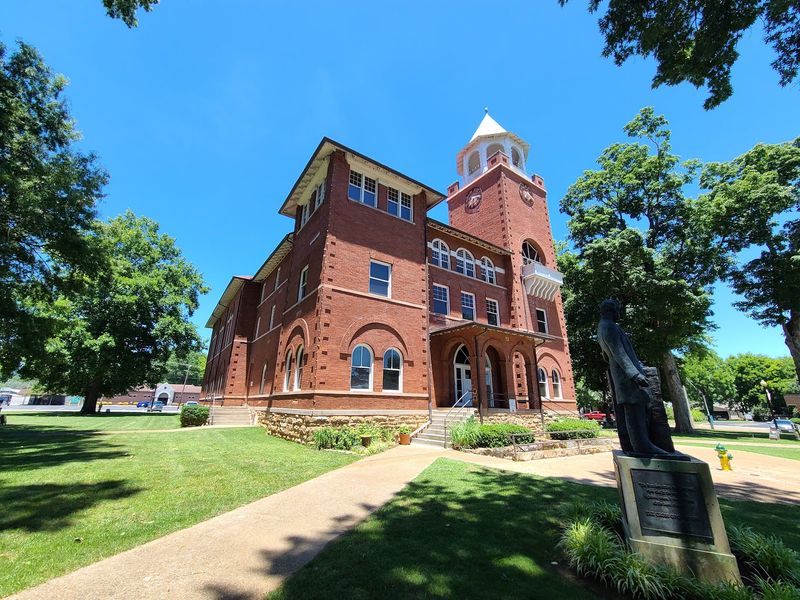
Every American history student knows about the Scopes Trial, that sweltering summer of 1925 when Dayton became the center of the evolution debate. What fewer people picture is the building where it happened: the Rhea County Courthouse, completed in 1891, with its northeast clock tower watching over the whole spectacle.
That tower has seen more drama than most Tennessee landmarks twice its age.
The courthouse went up in 1890-91, designed in a practical Romanesque Revival style. Nothing too fancy, but solid and dignified, exactly what a county seat needed.
That clock tower rises from the northeast corner rather than the center, giving the building an asymmetrical profile that’s more interesting than a perfectly balanced design.
When William Jennings Bryan and Clarence Darrow faced off in July 1925, the trial drew so many spectators that proceedings moved outside to the lawn. The clock tower loomed over the outdoor courtroom, ticking away during one of America’s most famous legal battles.
You can still visit the courtroom today, preserved much as it was during the trial.
Dayton isn’t a large town, sitting in the Tennessee Valley between Chattanooga and Knoxville. The courthouse dominates the modest downtown, and that clock tower is visible from the main highway.
For a building that witnessed such a pivotal cultural moment, it remains remarkably accessible and unpretentious.
The Scopes Trial put Dayton on the map, but the courthouse served the county for decades before and has continued serving for nearly a century since. Trials, weddings, property records, elections – all the ordinary business of democracy has flowed through these rooms while that clock marked the hours.
Standing outside today, you can almost hear the murmur of the 1925 crowd, almost feel that summer heat. But you’ll also see a working courthouse where Rhea County residents still come for licenses, legal matters, and civic business.
The clock tower connects both moments: the historic and the everyday, the famous and the forgotten, all measured in the same steady ticks.
5. Sevier County Courthouse – Sevierville
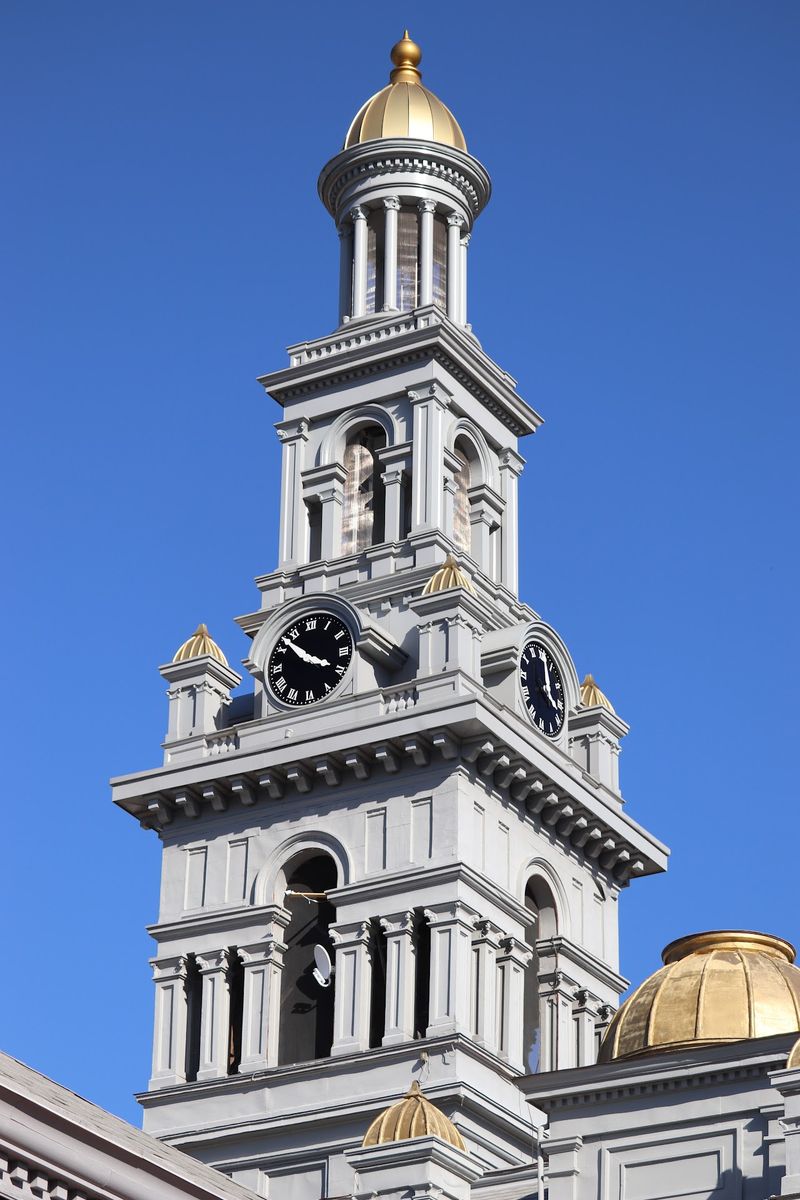
You can’t miss it. Seriously, if you’re anywhere near downtown Sevierville, that 130-foot tower pulls your eyes upward like a magnet.
Completed in 1896, the Sevier County Courthouse wasn’t built for subtlety. That tower, housing a historic Seth Thomas clock, shoots skyward with Victorian confidence, announcing that this gateway to the Smokies means business.
Seth Thomas clocks were the Cadillac of American timepieces in the late 1800s. Installing one in your courthouse tower was like parking a luxury car in your driveway, a flex that said your county had taste and resources.
The clock mechanisms were built to last, and this one has been keeping Sevierville on schedule for well over a century.
Sevierville sits at the doorstep of Great Smoky Mountains National Park, and millions of tourists pass through every year headed for Gatlinburg and Pigeon Forge. That courthouse tower serves as a landmark, a reminder that this area had a thriving community long before the tourist boom.
The building anchors the old downtown, even as modern development sprawls in every direction.
The architecture mixes Romanesque and Victorian elements, but that tower is pure drama. At 130 feet, it’s not the tallest structure in modern Sevierville, but it still commands respect.
The proportions are perfect: tall enough to impress, slender enough to appear graceful rather than bulky.
Walk around the building and you’ll notice the care put into details. Arched windows, decorative brickwork, stone accents, all the touches that made 1890s public buildings feel important.
The courthouse still serves its original function, hosting county government offices and courtrooms where local democracy plays out daily.
That Seth Thomas clock has watched Sevier County transform from a rural farming community to a tourism powerhouse. The gears still turn, the hands still move, the chimes still ring.
For locals, glancing at that tower is instinctive, a quick time check that connects them to every generation that’s done the same since 1896. It’s functional history, beautiful and useful in equal measure.
6. Henry County Courthouse – Paris
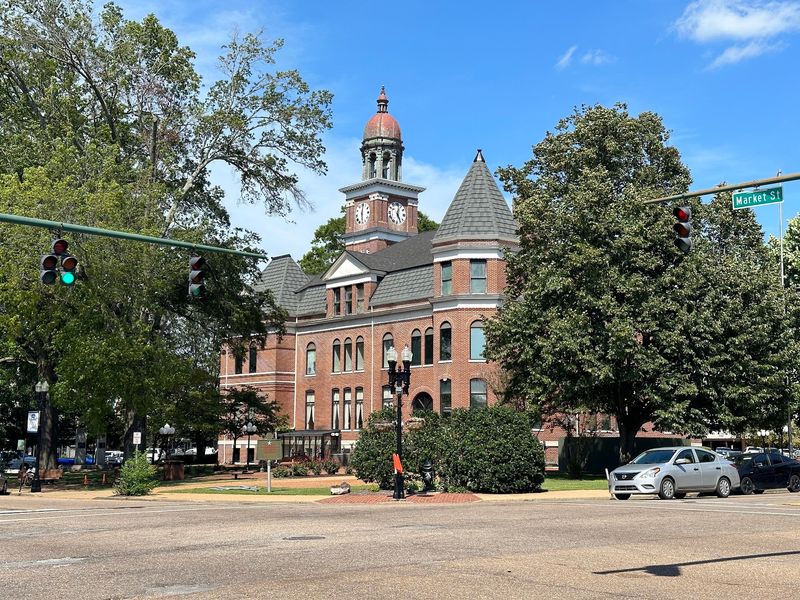
Paris, Tennessee, doesn’t mess around when it comes to courthouse architecture. The Henry County Courthouse, finished in 1896, brings heavyweight Richardsonian Romanesque style to a town best known for its mini Eiffel Tower replica.
That 113-foot clock tower rises with muscular confidence, all rough-cut stone and heavy arches, looking like it could weather a siege.
Richardsonian Romanesque gets its name from architect Henry Hobson Richardson, who popularized this beefy, medieval-inspired style in late 1800s America. Think massive stone walls, round arches, and towers that mean business.
This courthouse fits the template perfectly, with rusticated masonry that gives the whole building a fortress-like presence.
The clock tower doesn’t just sit on top of the building. It emerges from the structure like a natural outcropping, integral to the design rather than tacked on.
At 113 feet, it’s tall enough to be visible throughout downtown Paris, a constant point of reference for anyone navigating the town.
Paris sits in the northwest corner of Tennessee, and the courthouse occupies prime real estate on the town square. The building’s mass and that commanding tower create a sense of permanence that’s exactly what 1890s civic leaders wanted.
This courthouse wasn’t going anywhere, and neither was Henry County.
The style fell out of fashion by the early 1900s, replaced by lighter, more decorative approaches. That makes buildings like this one increasingly rare and valuable.
The heavy stonework, the solid proportions, the tower that looks like it could double as a watchtower – it’s all wonderfully out of step with modern glass-and-steel aesthetics.
More than 125 years after completion, the courthouse still serves Henry County government. That clock still keeps time, visible from the streets radiating out from the square.
The building has hosted countless trials, meetings, and ceremonies, all under that watchful tower. Walk past it today and you feel the weight of history, literally built into every stone, measured in every tick of that elevated clock.
7. Cumberland County Courthouse – Crossville
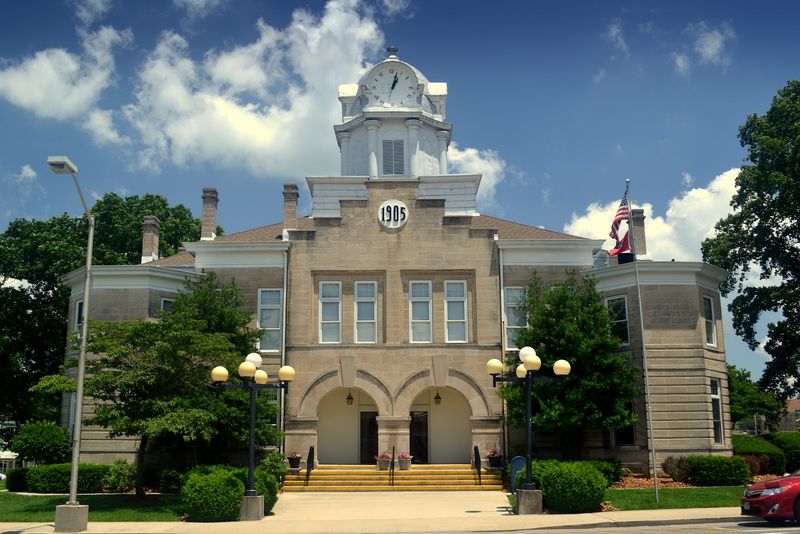
There’s something special about a building constructed from stone quarried right where it stands. The Cumberland County Courthouse in Crossville, completed in 1905, is built entirely from local Crab Orchard stone, giving it a color and texture you won’t find anywhere else.
That stone, with its warm tan and brown tones, has weathered more than a century of Cumberland Plateau weather, and the clock tower still rises proudly above downtown.
Crab Orchard stone is a Tennessee treasure, a sandstone found primarily in Cumberland County. It’s been used in buildings across the country, but there’s poetic justice in using it for the county courthouse.
The material literally grounds the building in its place, connecting architecture to landscape in the most direct way possible.
The courthouse sits on the Cumberland Plateau, roughly halfway between Nashville and Knoxville. Crossville has always been a crossroads town, and the courthouse serves as its civic heart.
That clock tower, built from the same stone as the rest of the structure, has survived everything the 20th and 21st centuries could throw at it.
Recently, the tower underwent major restoration work. More than a century of freeze-thaw cycles, rain, and wind had taken their toll on the stonework and clock mechanism.
The restoration wasn’t just cosmetic; it was essential preservation, ensuring this landmark survives for another century.
The building’s design is simpler than some of the Victorian-era courthouses on this list, reflecting the more restrained aesthetic of the early 1900s. But that Crab Orchard stone gives it character that fancy brickwork could never match.
Each block has its own color variation, its own texture, creating a facade that’s never boring.
Stand in front of the courthouse today and you’re seeing restored history. That clock tower, freshly repaired, keeps time just as it did in 1905.
The stone walls, cleaned and repointed, look ready for another century of service. For a building material quarried from the ground beneath your feet, turned into a courthouse that’s served generations of Cumberland County residents, it’s hard to imagine a better example of place-based architecture.
8. Nashville Union Station – Nashville
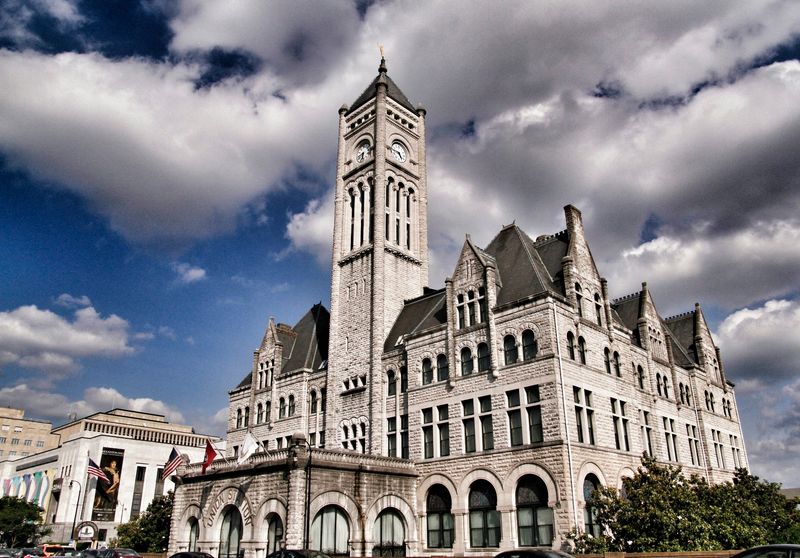
Not every clock tower belongs to a courthouse. Nashville’s Union Station, opened in 1900, brought Romanesque Revival grandeur to railroad travel, and that imposing clock tower became one of the city’s most recognizable silhouettes.
This wasn’t just a train station; it was a gateway, a first impression, a declaration that Nashville had arrived as a major American city.
The station served as the primary railroad terminal for Nashville during the golden age of train travel. Passengers arriving from New York, Chicago, New Orleans, all rolled into Union Station, greeted by that massive tower and the ornate stonework framing the entrance.
The clock told you whether you’d made your connection or needed to find a hotel.
Architect Richard Montfort designed a building that borrowed heavily from medieval European architecture: round arches, heavy stone walls, a tower that could have graced a castle. The clock tower rises from the main facade, impossible to ignore, visible from blocks away.
It announced the station’s importance before you even stepped inside.
The interior was equally impressive, with a vaulted ceiling, stained glass, and decorative details that made waiting for a train feel like an event. As rail travel declined in the mid-20th century, Union Station fell on hard times.
By the 1970s, it sat abandoned, a magnificent relic of a bygone era.
Preservation efforts saved the building from demolition, and today it operates as a luxury hotel. That clock tower still stands, still keeps time, still serves as a Nashville landmark.
The conversion to a hotel preserved the grand public spaces while adapting the building for modern use.
Walking past Union Station today, you might be headed to a Predators game or a honky-tonk on Broadway, but that clock tower pulls you back to 1900. It’s a reminder that Nashville’s history runs deeper than the current tourism boom, that this city was a transportation hub, a commercial center, a destination long before it became Music City USA.
The tower stands as proof that great architecture, built with vision and quality, transcends its original purpose and becomes part of a city’s identity forever.
Share this story