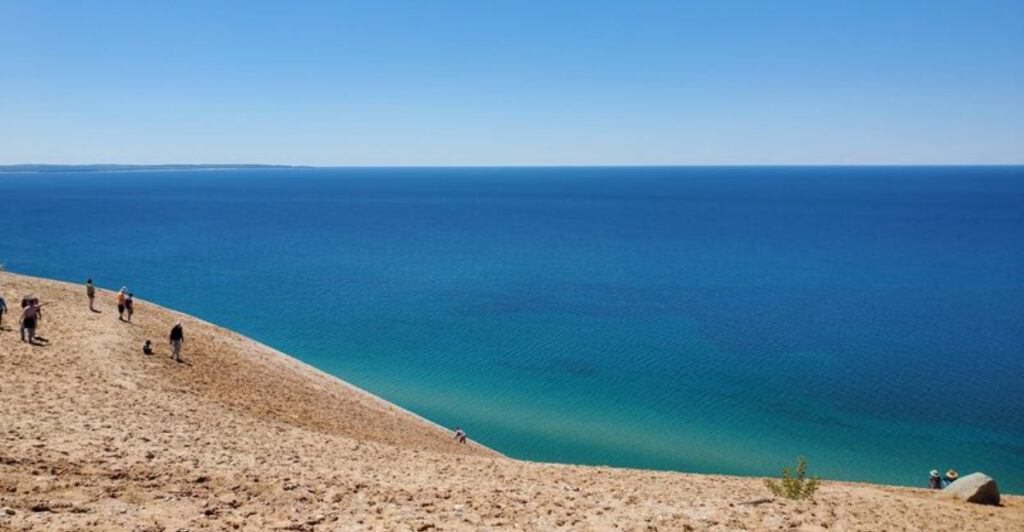
Sand dunes have a way of making distance feel misleading. At Sleeping Bear Dunes National Lakeshore in Michigan, Dune Climb Trail may look like one giant hill from the parking area, but the route keeps rising, dropping, and stretching farther than many first-time hikers expect.
That challenge is exactly what makes it memorable, turning a simple-looking walk into a sandy test of patience, stamina, and curiosity. The reward comes in stages, from wide dune views to the hard-earned finish near Lake Michigan, where every step feels like part of the payoff.
For anyone looking for a Michigan trail that looks easy until it absolutely does not, Dune Climb Trail deserves a closer look.
A giant sandbox that tricks the eye
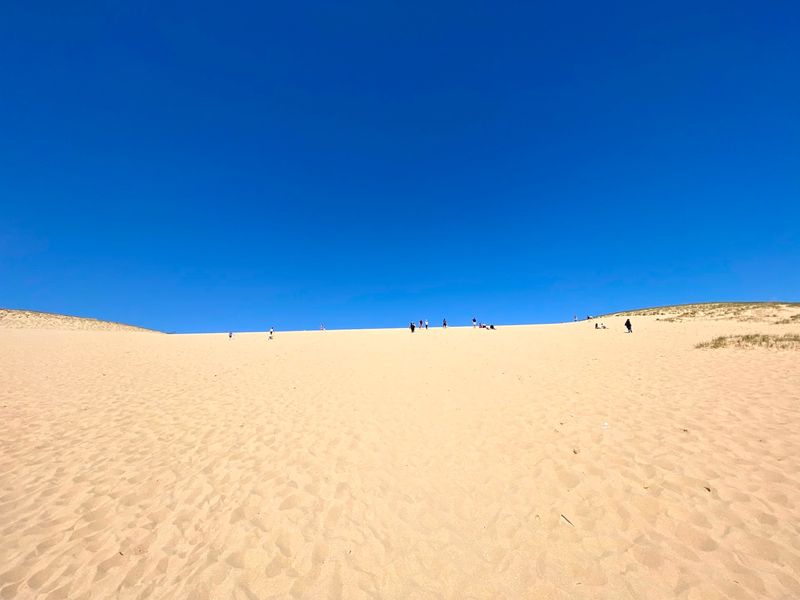
From the parking area, the first slope looks almost simple, like a giant playground hill with a clear top and an easy finish. That first impression fades fast once shoes sink into loose sand and each step slides backward.
Distance is hard to judge here because the landscape is open, bright, and missing the usual trail markers people expect in wooded parks. Without trees close by, the dunes flatten depth, so the next ridge always seems nearer than it really is.
The climb starts with a broad face of sand that pulls attention upward, yet the bigger surprise waits beyond the crest. More rolling dunes stretch ahead in long waves, and Lake Michigan still sits far beyond them.
That visual trick is part of the place’s power. A map can explain mileage, but standing in that open sandy expanse makes the route feel almost unreal, like a beach turned vertical and enlarged.
Wind shapes the surface into ripples and soft ridges that change the look from hour to hour. Morning light can make the sand appear cool and pale, while afternoon sun sharpens every footprint and slope.
Kids often race the first section because it looks fun and manageable from below. Adults usually slow down sooner, realizing that climbing soft sand asks more from calves, lungs, and balance than a normal hill.
Nothing here is hidden behind thick forest or buildings, which means the scene opens wide almost immediately. Glen Lake views and dune ridges begin showing up early, giving the route a dramatic start.
Still, the openness can fool strong hikers into moving too quickly at the beginning. Saving energy matters because the first big rise is only the introduction, not the full outing many expect.
That mismatch between appearance and effort is one reason the trail gets talked about so much. It offers a bold visual welcome, then turns into a longer, more serious adventure with every sandy step.
By the time the first climb is behind you, the day has already changed shape. What looked like a short scramble now feels like the opening scene of a much bigger crossing toward Lake Michigan.
Hill after hill on the way to the water
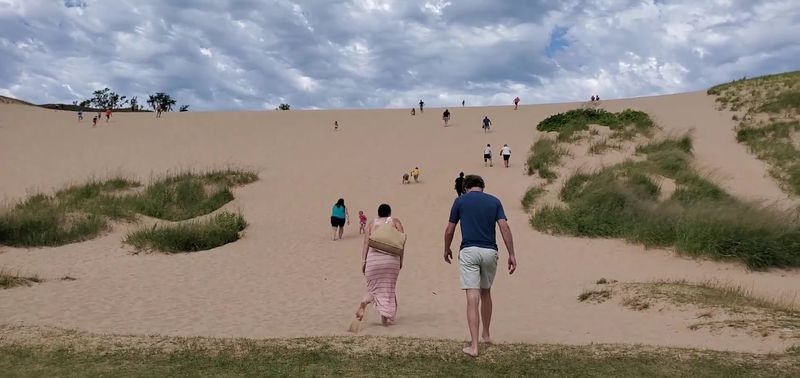
Once the first steep wall is done, the route reveals its real character through a series of rolling dunes that keep changing the effort. One downhill leads straight into another uphill, and the pattern repeats.
That is why the trip to Lake Michigan can take around two hours one way for many walkers, especially in warm weather. Sand slows every stride, and the open terrain gives almost no easy cruising.
Instead of a narrow dirt path with steady footing, the route is mostly broad sand under open sky. Some stretches feel quick, then a steeper ridge arrives and steals the rhythm you just found.
Walking here is less about speed and more about pacing. Short steps help, steady breathing helps, and frequent pauses often work better than trying to power through every slope without stopping.
The dunes are not identical, which keeps the crossing interesting. One ridge may be wide and gradual, while the next rises sharply enough to make a person lean forward like a stair climber.
Lake Michigan appears and disappears depending on where you stand. That teasing glimpse can make the water seem close, but another sandy swell often stands between the hiker and the shore.
Footprints from earlier hikers mark popular lines across the dunes, yet the broad surface still feels wonderfully exposed and free. There is no shade tunnel, no boardwalk, and almost no place to hide from sun.
Because the way out includes several downhills, some people forget what that means later. Every easy descent toward the lake turns into a climb on the way back, when legs are already tired.
Families often adjust by setting a turnaround point instead of forcing the full distance. That choice still delivers big scenery without turning the outing into a miserable slog during the hottest hours.
For anyone aiming at the lake, the middle section is the true test. It is not one famous hill, but a chain of sandy rises that slowly proves how far the shoreline actually is.
Lake Michigan arrives as a reward, not a shortcut

Reaching the water changes the whole mood of the outing because the route finally opens into a true lakeshore finish. After all that climbing sand, the flat beach feels almost strange under tired legs.
Lake Michigan is the payoff, but not in a flashy theme-park way. The reward comes from contrast: hard walking behind you, cool wind ahead, and a broad edge of blue water stretching outward.
Some hikers head straight to the shoreline and kick sand off their feet in the wet edge. Others sit down first, catch their breath, and look back at the dune country they just crossed.
That backward glance matters because it explains the scale better than any sign can. From the beach, the ridges look tall, layered, and much farther from the starting point than memory suggested.
The lakeshore itself can feel quiet even after a busy climb, since the open beach spreads people out. Waves add sound, gulls cut through the sky, and the air often feels cooler near the water.
Plenty of walkers treat the beach as a lunch stop or a place to rest before turning around. That makes sense, since the return trip demands energy and can feel tougher than the journey out.
It helps to remember that the lake is not the end until the parking area is reached again. A relaxed break is smart, but staying too long in hot conditions can make the return harder.
On clear days, the shoreline scene is simple and bold: tan sand, blue water, and big dune walls behind. That stripped-down look is part of why the finish feels so satisfying.
Even hikers who stop short of the beach understand the appeal after hearing what waits at the far end. The trail turns a shoreline visit into an earned destination instead of an easy drive-up stop.
By the time shoes are shaken out and water bottles come back out, the beach has done its job. It gives the crossing a clear purpose and turns a hard dune walk into a full adventure.
Michigan sun, wind, and sand set the rules
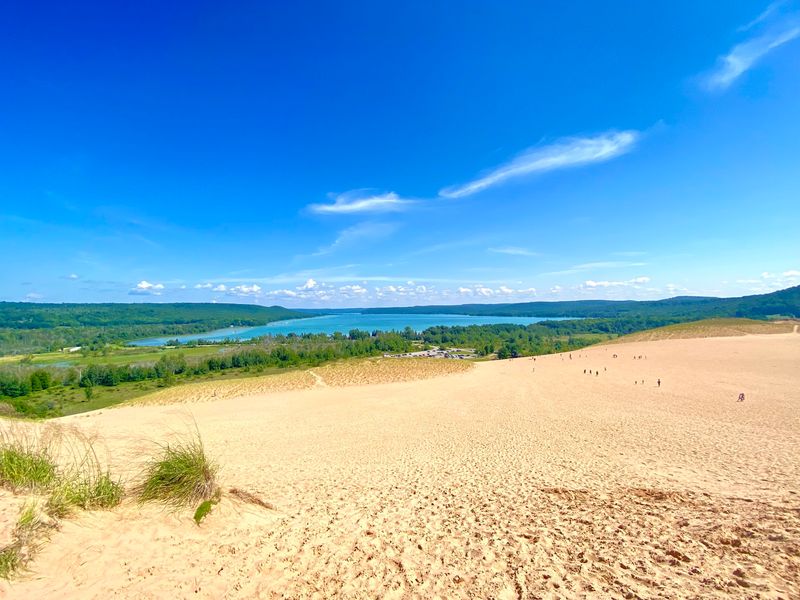
Weather shapes this hike almost as much as the dunes do. On a mild morning, the sand can feel friendly and the breeze helpful, but midday heat can turn the same route into heavy work.
Because the trail is so exposed, there is little shelter from sun, wind, or sudden weather shifts. That openness creates wonderful views, yet it also means comfort depends on timing and preparation.
Many hikers choose early morning or later afternoon for a reason. Cooler sand is easier on bare feet, the light is softer, and the long crossing to Lake Michigan becomes more manageable.
Footwear is one of the funniest and most debated parts of the trip. Boots trap sand, sneakers fill up quickly, and plenty of people simply go barefoot when temperatures allow it.
Bare feet can work well on cooler sand because they avoid the heavy, gritty feeling that comes with sand-filled shoes. Still, once the surface heats up, that option becomes much less pleasant.
Water is nonnegotiable on warm days. Even a route that looks playful from the parking lot can become draining fast when soft sand, direct sunlight, and repeated climbs start pulling moisture away.
Sunscreen, hats, and light clothing help too, especially for families with kids who may sprint early and fade later. A small towel can be useful for sweat and for brushing sand off faces.
Bugs may show up depending on season and conditions, especially away from breezy sections. Wind often helps, but bug spray can still make the walk more comfortable when the air turns still.
Changing skies deserve respect as well. Storms are easy to spot in open country, but distance across the dunes means a quick exit is not always as quick as it seems.
The smartest approach is simple and steady: check the weather, start before the hottest part of the day, and carry more water than expected. On this trail, nature sets the pace every time.
Why families stop at the crest and still win
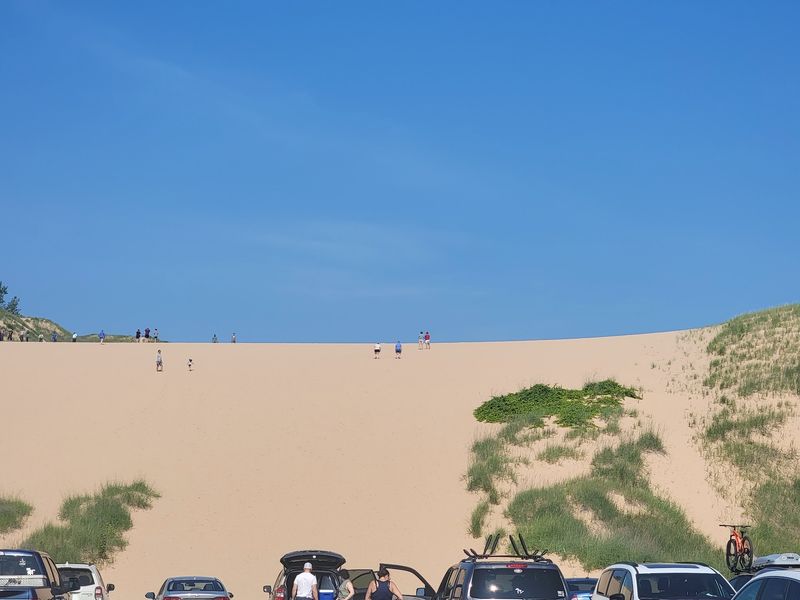
Not every good day here has to end at Lake Michigan. One of the smartest things about Dune Climb Trail is that it works at different levels, from a short scramble to a long test.
Families with small kids often treat the first big climb as the main event. That choice still delivers excitement, wide views, and plenty of sand play without committing everyone to hours of effort.
The first crest gives a strong sense of scale right away. Children can run, slide, dig, and roll around, while adults catch the landscape opening toward dunes, lakes, and open sky.
That flexibility makes the place more welcoming than a one-note trail with only a single outcome. A grandparent, a determined teenager, and a younger child can all enjoy the same area differently.
Parents quickly notice how demanding loose sand can be for growing legs. A child who happily charges uphill for ten minutes may need snacks, water, and a reset before going much farther.
Turning around early is not a failure here. In fact, good judgment often makes the outing better, keeping the day fun instead of letting exhaustion take over far from the parking area.
For older kids, the rolling dunes beyond the first climb can feel like a natural challenge course. The land invites games of spotting the next ridge, counting hills, and guessing when water will appear.
Because the setting is broad and open, adults can usually keep sightlines on children better than on wooded trails. Even so, the scale is large enough that staying together still matters.
Rest stops come naturally on higher ridges, where breezes and views offer a nice reward. Those moments help break the outing into smaller pieces instead of one long effortful push.
In the end, Dune Climb Trail succeeds because it leaves room for different ambitions. Some groups chase the lakeshore, while others claim the first summit, eat a snack, and call it a great day.
The return trip is the part many hikers underestimate
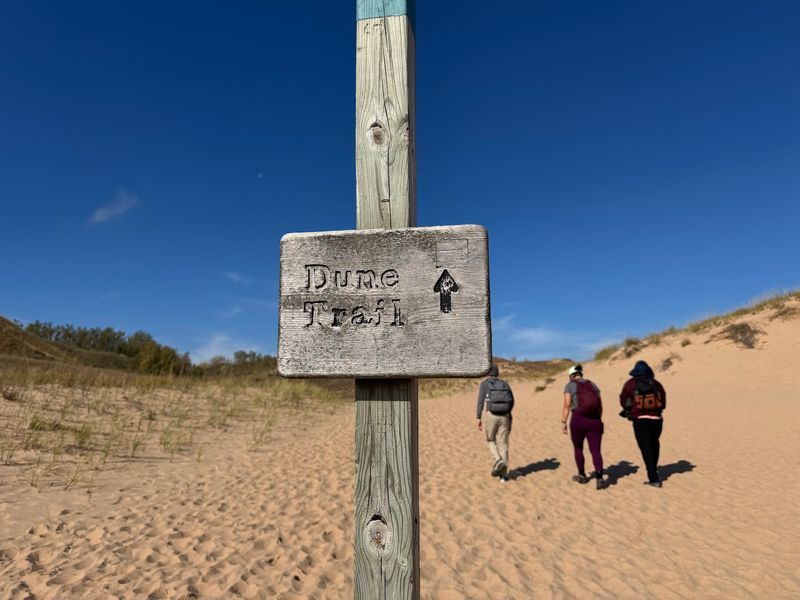
Excitement carries many people outward, but the return is where the trail gets serious. Legs are heavier, water bottles are lighter, and every downhill from earlier now asks to be climbed.
That reversal is the most useful thing to understand before starting for the lake. The route back is not a simple retracing of easy ground, because tired muscles change the whole experience.
Soft sand works against momentum on the way home just as much as on the way out. A short rise that seemed manageable earlier can suddenly feel steep once energy has dropped.
Heat often peaks later in the day too, which adds another layer of difficulty. Even strong walkers can find themselves stopping more often, breathing harder, and measuring progress one ridge at a time.
The landscape also plays a mental trick during the return. The parking area is hidden for long stretches, so there is rarely a comforting sightline showing exactly how much remains.
That is why pacing from the beginning matters so much. Saving water, taking breaks before absolute exhaustion, and keeping a calm rhythm can make the trip back far more manageable.
People who sprint the first dune often pay for it later. A steadier approach usually works better, especially for groups that want enough energy left for the final climbs near the start.
There is also no shame in changing plans early if conditions are hotter or harder than expected. Reaching only partway across the dunes is better than pushing too far and struggling badly later.
Park warnings about difficulty are not there for drama. Open terrain, heat, distance, and deep sand can combine into a tiring situation much faster than newcomers expect.
Finishing the full out-and-back brings real satisfaction precisely because the last stretch is demanding. The trail asks hikers to respect the landscape, and the closing climb to the parking area proves why.
How to plan the crossing without ruining the day
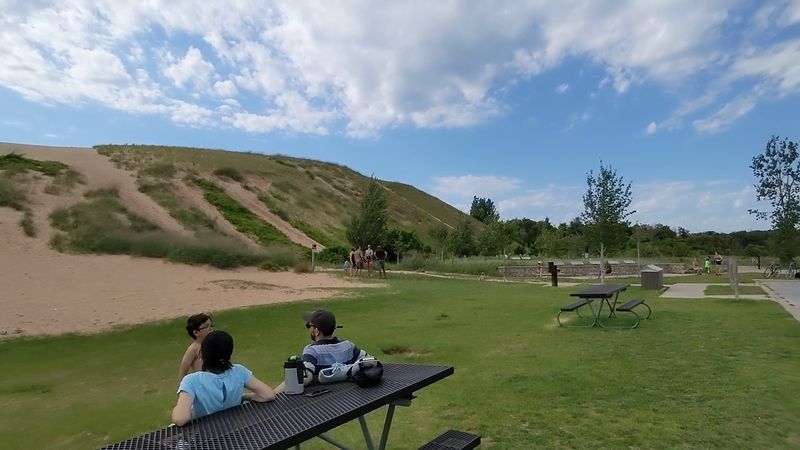
A better trip usually starts before anyone touches the sand. Dune Climb Trail rewards simple planning, and small choices about time, gear, and expectations can change the whole outing.
Start by deciding what kind of day the group actually wants. There is a big difference between climbing the first dune for views and crossing all the way to Lake Michigan and back.
For the full adventure, give the hike generous time instead of treating it like a quick stop. Depending on pace, weather, and breaks, the outing can take hours rather than minutes.
Carrying enough water should be the first priority, not an afterthought. Snacks help too, especially for kids or anyone likely to lose energy once the repeated climbs begin to pile up.
Clothing works best when it is light, breathable, and okay with getting sandy. Shoes are a personal choice here, but whatever goes on your feet should match the day’s sand temperature.
Morning is often the easiest window for comfort and energy. Cooler air and cooler sand can make the route more pleasant, while bright midday heat tends to magnify every slope.
Before leaving the parking area, look out across the dunes and set a realistic turnaround point. That simple decision can prevent the common mistake of wandering farther than water and stamina allow.
Families may want to build in extra rest time for sand play and short recovery stops. Stronger hikers may prefer a steady march, but even they benefit from brief pauses on higher ridges.
Open hours make the site flexible, yet daylight and weather still matter. Sunset can be beautiful, though anyone staying late should remember the sandy return remains slow in low light.
The smartest plan is the least dramatic one: go earlier, carry more water than expected, respect the distance, and enjoy whichever section matches the day. That approach lets the dunes stay fun and challenging.
Share this story