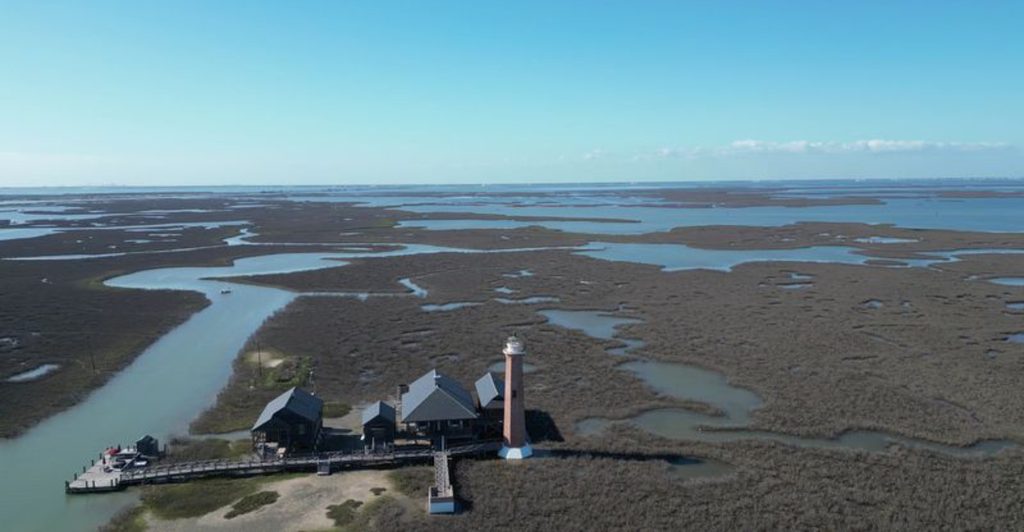
Along the Texas coastline, a handful of weathered sentinels rise from sandy shores and rocky points, their beams once guiding sailors through treacherous waters. These lighthouses have witnessed hurricanes, wars, and centuries of change, yet they remain standing as monuments to maritime history. Today, visitors can climb their spiraling staircases, explore their keeper’s quarters, and imagine life when these towers were the only lifeline for ships navigating the Gulf’s unpredictable currents.
From Port Isabel to Sabine Pass, each lighthouse tells a different story of courage, innovation, and the determination to keep mariners safe.
1. Lydia Ann Lighthouse (Port Aransas)
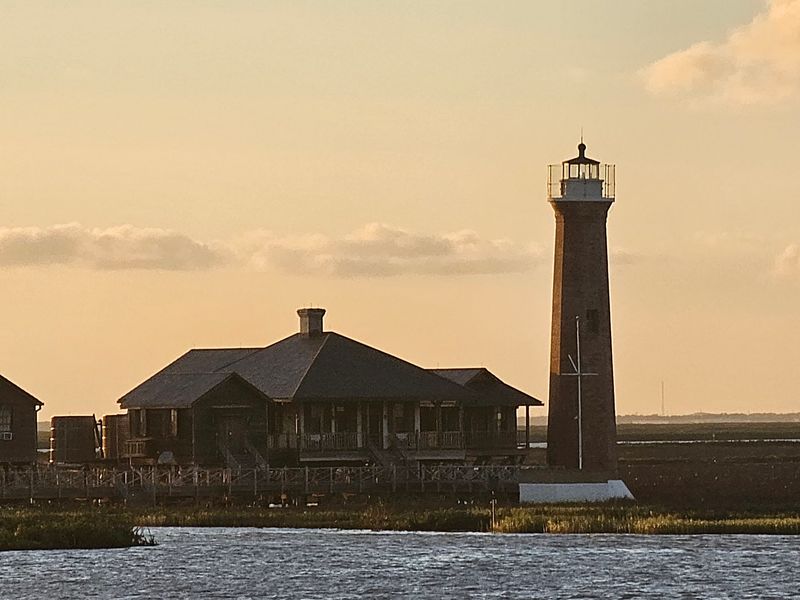
Standing watch over the Aransas Pass ship channel since 1857, this square iron tower has survived everything the Gulf could throw at it. Painted white with a distinctive black lantern room, the structure sits on a granite foundation that has weathered countless storms. Confederate forces briefly controlled it during the Civil War, using its strategic position to monitor Union naval movements.
The lighthouse originally burned whale oil, then switched to kerosene before being electrified in the early 1900s. Its light could be seen for 12 miles on clear nights, warning vessels away from the dangerous sandbars that shifted with every major storm. The keeper and his family lived in a separate dwelling nearby, maintaining a lonely but crucial vigil.
Hurricane damage forced its decommissioning in 1952, but the tower itself refused to fall. Today it stands as a beloved landmark visible from the Port Aransas ferry, though it’s not open for public tours since it sits on private property. Photographers love capturing it at sunset when the white tower glows golden against the darkening sky.
Local historians have worked to preserve its story, documenting the names of keepers who served there and the ships that relied on its beacon. The surrounding waters remain busy with commercial traffic and fishing vessels, though modern GPS has replaced the need for its guiding light. Still, boaters often use it as a visual reference point when navigating the channel.
The lighthouse represents an era when human vigilance was the only thing standing between sailors and disaster. Its survival speaks to the quality of its construction and the determination of those who’ve fought to protect it from developers and natural forces alike.
2. Halfmoon Reef Lighthouse (Port Lavaca)
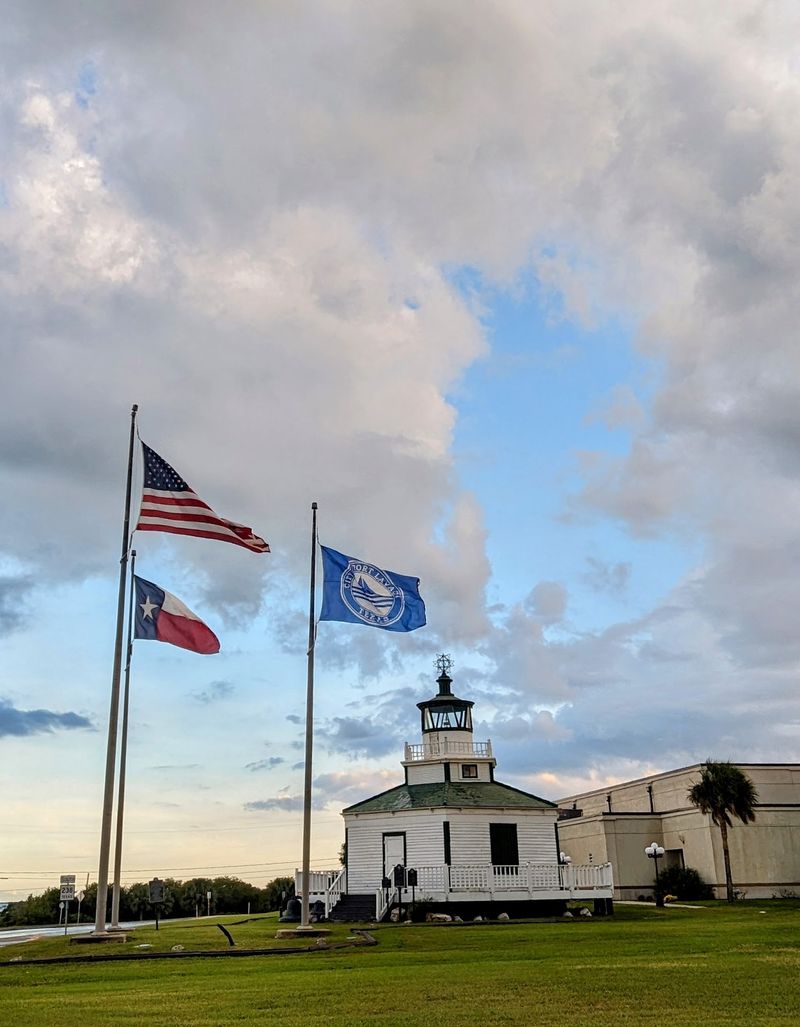
Originally built in 1858 on an isolated reef in Matagorda Bay, this elegant octagonal structure looked more like a Victorian mansion than a typical lighthouse. Its unique design featured living quarters wrapped around the central light tower, allowing the keeper’s family to live directly beneath the beacon they tended. The brownish-red brick construction and decorative ironwork made it one of the most architecturally distinctive lighthouses on the Texas coast.
Life on Halfmoon Reef was brutally isolated. Supply boats came irregularly, and storms could strand the keeper’s family for weeks at a time. Children were homeschooled, and medical emergencies meant waiting for weather calm enough to attempt the dangerous boat ride to shore.
Despite these hardships, several keepers served for decades, raising entire families in this remote outpost.
The structure was decommissioned in 1942 and abandoned to the elements for years. By the 1970s, it was in terrible condition, its iron supports rusting and its brick walls crumbling. A massive restoration effort began in 1979, and the entire lighthouse was carefully dismantled, transported to Port Lavaca, and reconstructed in Lighthouse Beach Park.
Visitors today can tour the restored interior, climbing the spiral staircase to the lantern room and exploring the keeper’s quarters. The furnishings give a glimpse into 19th-century lighthouse life, from the tiny kitchen to the cramped bedrooms where entire families slept. Standing on the gallery deck, you can imagine the isolation keepers felt, surrounded by water in every direction.
The relocation saved this architectural treasure from certain destruction, and it now serves as a museum and educational center. Its story reminds us that lighthouse keeping wasn’t just about maintaining a light but about human endurance in the face of loneliness and danger.
3. Port Isabel Lighthouse (Port Isabel)
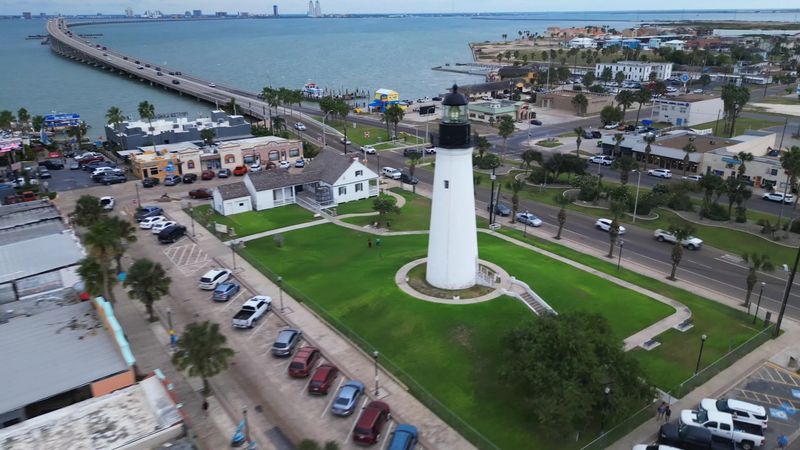
Built in 1852, this 72-foot brick tower is the only lighthouse in Texas that’s continuously open for public climbing. Its whitewashed walls and red-trimmed gallery make it a postcard-perfect symbol of the Rio Grande Valley’s maritime heritage. The lighthouse served a critical role during the Mexican-American War, with soldiers using it as an observation post to monitor troop movements.
Climbing the 75 steps to the top rewards visitors with panoramic views of the Laguna Madre, South Padre Island, and the Mexican coastline beyond. On clear days, you can see for miles in every direction, understanding immediately why this location was chosen. The narrow spiral staircase winds upward through the tower’s thick walls, each step worn smooth by more than a century of footsteps.
The lighthouse was deactivated in 1905 when the ship channel shifted, making its location less strategically important. For decades it sat empty and deteriorating until local preservation efforts began in the 1950s. The restoration transformed it into a state historic site, complete with a keeper’s cottage that now houses a small museum.
The exhibits tell stories of the keepers who lived here, including details about their daily routines and the challenges they faced. One keeper’s wife famously tended the light while her husband fought in the Civil War, proving that lighthouse keeping was often a family affair. The museum also explores the area’s role in the Mexican-American War and the development of the shipping industry.
Today the lighthouse anchors a charming historic district with shops, restaurants, and other restored buildings. It’s become a popular spot for proposals and wedding photos, its romantic silhouette perfect for celebrating life’s big moments. The site hosts special events throughout the year, including moonlight climbs that let visitors experience the tower after dark.
4. Bolivar Point Lighthouse (Port Bolivar)
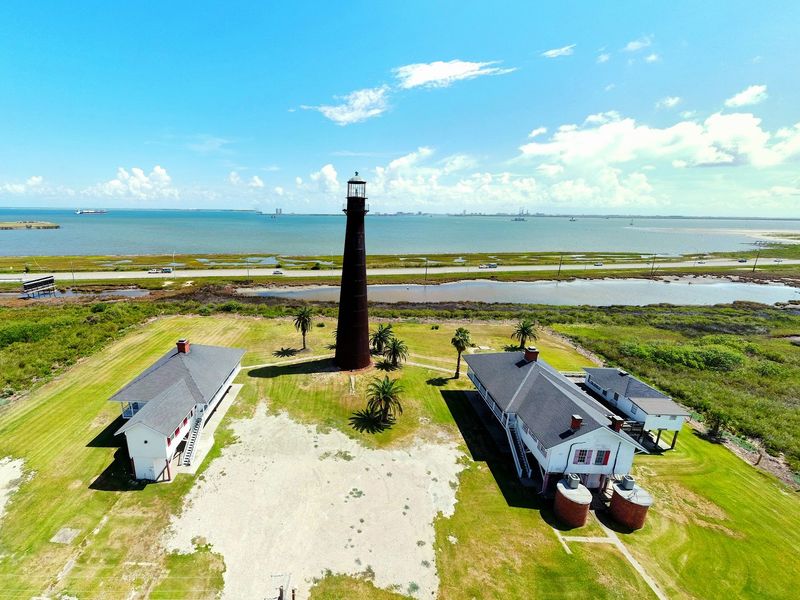
This skeletal iron tower has stood at the entrance to Galveston Bay since 1872, its open framework designed to let hurricane winds pass through rather than knock it down. The strategy worked brilliantly. While the devastating 1900 Galveston hurricane destroyed nearly everything around it, killing thousands, the lighthouse remained standing.
More than 100 people sought refuge inside during that storm, clinging to the iron stairs and platforms as the water rose around them.
The tower rises 117 feet, its black-painted iron creating a striking contrast against the sky. Unlike solid brick lighthouses, its see-through design meant keepers had to climb exposed stairs in all weather conditions, a terrifying prospect during storms. The keeper’s house once stood nearby, but it was destroyed in the 1915 hurricane, forcing subsequent keepers to live off-site.
The light was automated in 1933 and finally decommissioned in 1933, though the tower remains an active daymark for navigation. Over the years, it’s become an iconic landmark, visible from the free Galveston ferry and from beaches on both sides of the bay. Its distinctive silhouette appears in countless photographs, paintings, and even on local business logos.
The lighthouse is not officially open for climbing, but its presence dominates the landscape at Crystal Beach. Visitors can walk right up to its base and marvel at the engineering that’s kept it standing through more than a dozen major hurricanes. The surrounding area has been developed with beach houses and rental properties, but the lighthouse remains protected as a historic structure.
Local legends claim it’s haunted by the spirits of those who died in the 1900 storm, and some visitors report strange sounds and unexplained feelings near the base. Whether you believe in ghosts or not, standing beneath this survivor fills you with respect for its builders’ ingenuity and the keepers’ bravery in tending a light through the Gulf’s worst weather.
5. Texas Maritime Museum Lighthouse Tower (Rockport)
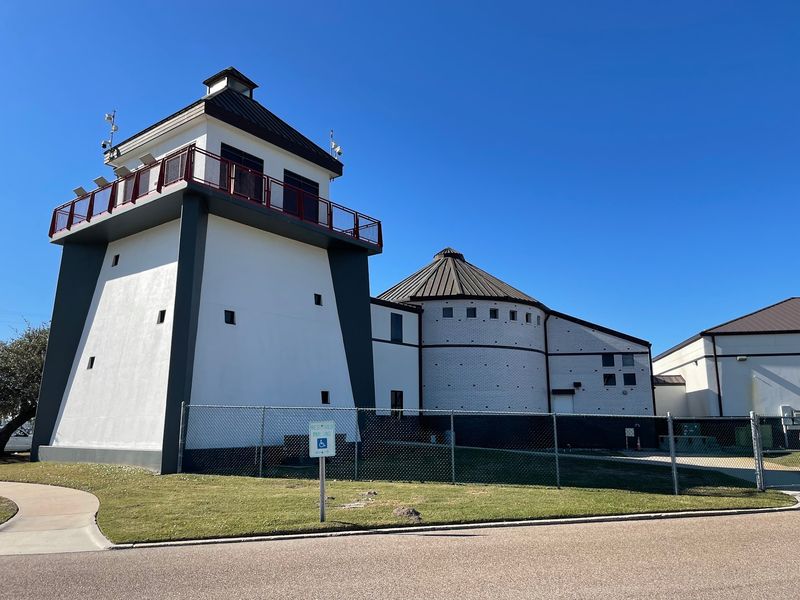
Unlike the other lighthouses on this list, this 65-foot tower was built in 2005 as a working replica to serve as the centerpiece of the Texas Maritime Museum. While it’s not historic in the traditional sense, it honors the state’s lighthouse heritage and provides visitors with an authentic climbing experience. The tower’s design incorporates elements from several historic Texas lighthouses, creating a composite that represents the entire tradition.
The museum itself sits on the Rockport waterfront, where Aransas Bay meets the Gulf. Inside, exhibits explore Texas maritime history from Spanish exploration through modern commercial fishing, with special emphasis on the lighthouse keepers who protected sailors for generations. Artifacts include original Fresnel lenses, keeper’s logs, and personal items from families who lived in isolated light stations.
Climbing the tower gives visitors a sense of what keepers experienced daily, hauling supplies up narrow stairs and maintaining equipment in the confined lantern room. The view from the top showcases Rockport’s harbor, the Aransas National Wildlife Refuge in the distance, and the waters where whooping cranes winter each year. Educational displays at each landing explain how different lighthouse technologies worked, from whale oil lamps to electric beacons.
The museum hosts special programs where children can learn about lighthouse life, including how keepers polished brass, trimmed wicks, and kept detailed weather logs. These hands-on experiences make history tangible for young visitors who might never have considered what life was like before GPS and radar. The tower also serves as a venue for educational programs about coastal ecology and maritime safety.
Hurricane Harvey severely damaged the museum in 2017, flooding exhibits and destroying irreplaceable artifacts. The community rallied to restore it, and the lighthouse tower became a symbol of resilience. Today it stands as both a memorial to Texas’s lighthouse heritage and a testament to Rockport’s determination to preserve its maritime culture despite nature’s destructive power.
6. Matagorda Island Lighthouse (Port O’Connor)
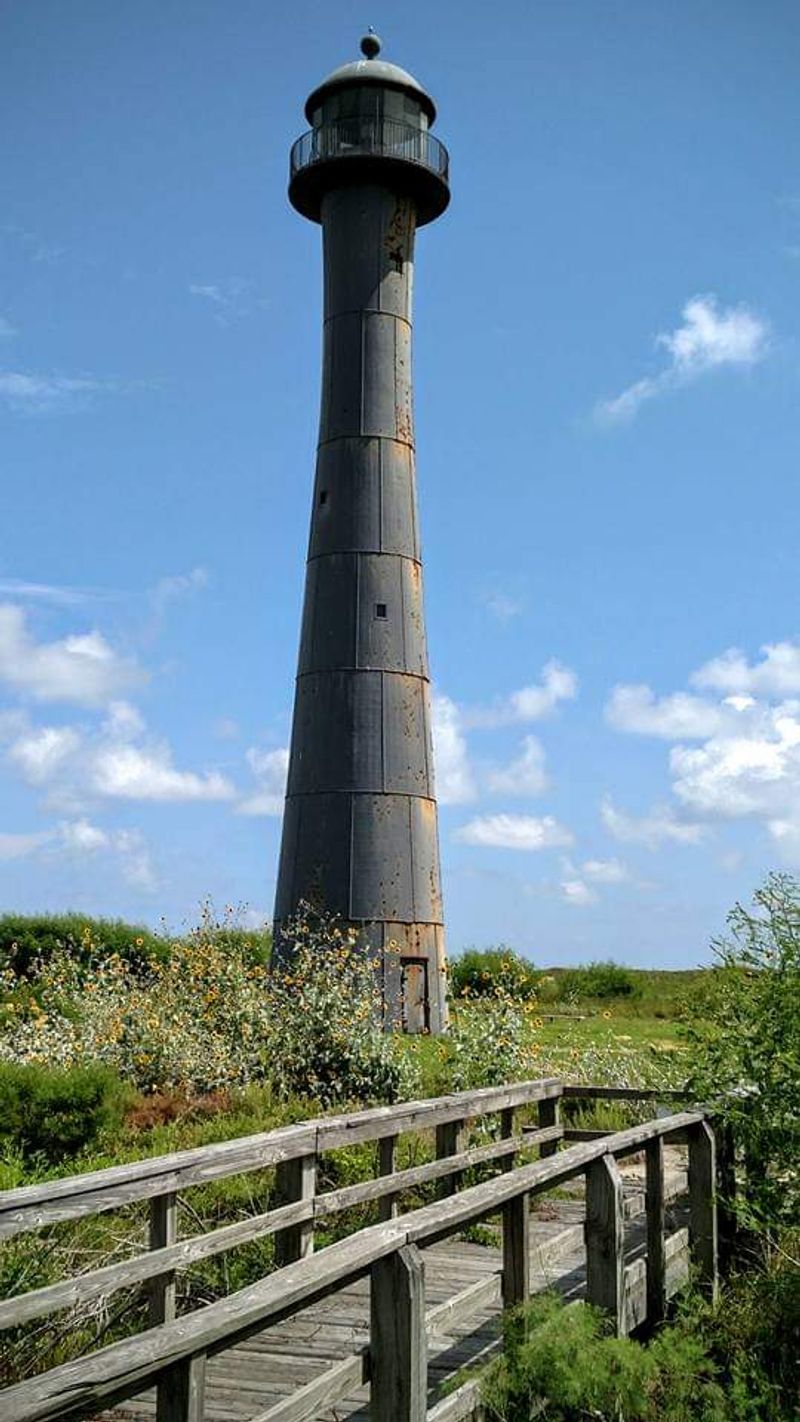
Rising 90 feet above the dunes of Matagorda Island, this cast-iron tower has marked the entrance to Matagorda Bay since 1852. Its distinctive black and white spiral stripes made it easily recognizable to sailors approaching from the Gulf, a crucial identification feature when multiple lighthouses dotted the coast. The tower was prefabricated in Baltimore and shipped to Texas in sections, then assembled on site using bolts and flanges.
The lighthouse keeper’s job here was among the most isolated on the Texas coast. The island had no permanent settlement, no roads, and no easy way to reach the mainland. Supplies came by boat, weather permitting, and keepers often went months without seeing anyone except their own families.
One keeper’s daughter later wrote about growing up there, describing a childhood of endless beach exploring but also crushing loneliness.
Confederate forces briefly occupied the lighthouse during the Civil War, using it as a lookout post. Union naval forces eventually recaptured it, recognizing its strategic importance for controlling coastal shipping. After the war, it returned to its peaceful role of guiding merchant vessels and fishing boats through the tricky channel.
The light was decommissioned in 1995 when modern navigation made it obsolete. Today the island is part of the Aransas National Wildlife Refuge, accessible only by private boat or special ferry service. The lighthouse has been stabilized and partially restored, though it’s not open for climbing due to safety concerns.
Visitors who make the journey can walk around its base and explore the surrounding area, which teems with wildlife including alligators, wild pigs, and countless bird species.
The isolation that made lighthouse keeping here so difficult now makes it a paradise for nature lovers. The lack of development means the landscape looks much as it did 150 years ago, with the lighthouse standing as the only significant human-made structure visible for miles. Photographers prize the opportunity to capture it in its wild setting, especially during the golden hour when the iron tower glows against the coastal prairie.
7. Port Mansfield Range Rear Light (Port Mansfield)
This unassuming skeletal tower serves a different purpose than traditional lighthouses. Range lights work in pairs, with a front light and a taller rear light positioned precisely in line with a navigation channel. When a ship’s captain aligns the two lights vertically, he knows his vessel is in the center of the safe channel.
Even a slight deviation to either side causes the lights to appear separated, warning the captain to correct course immediately.
The Port Mansfield rear range light was built in the 1960s when the town’s channel was dredged to allow larger fishing vessels access to the Gulf. The tower stands about 50 feet tall, its simple steel framework supporting a powerful light that can be seen for miles. Unlike historic lighthouses with their romantic architectural details, this structure is purely functional, built for efficiency rather than beauty.
Despite its utilitarian appearance, the range light plays a crucial role in keeping boats safe as they navigate the narrow channel through the Laguna Madre. The waters here are shallow and treacherous, with sandbars that shift after every storm. Without the range lights guiding them, captains would have to navigate by guesswork and depth sounders alone, a risky proposition when moving expensive vessels through tight spaces.
Port Mansfield has grown into a premier fishing destination, with charter boats heading out daily in search of redfish, speckled trout, and tarpon. The range lights guide them home safely, especially valuable when boats return after dark following long days on the water. Local captains have such faith in the system that they can navigate the channel at full speed in conditions that would force them to crawl along using other methods.
While it lacks the historical significance and architectural charm of older lighthouses, this working light represents the evolution of maritime navigation. Modern materials and precise engineering have made it more reliable and easier to maintain than its 19th-century predecessors. It’s a reminder that lighthouse technology didn’t end in the Victorian era but continues adapting to serve mariners’ changing needs.
8. Sabine Bank Light / Historic Lantern Site (Sabine Pass)
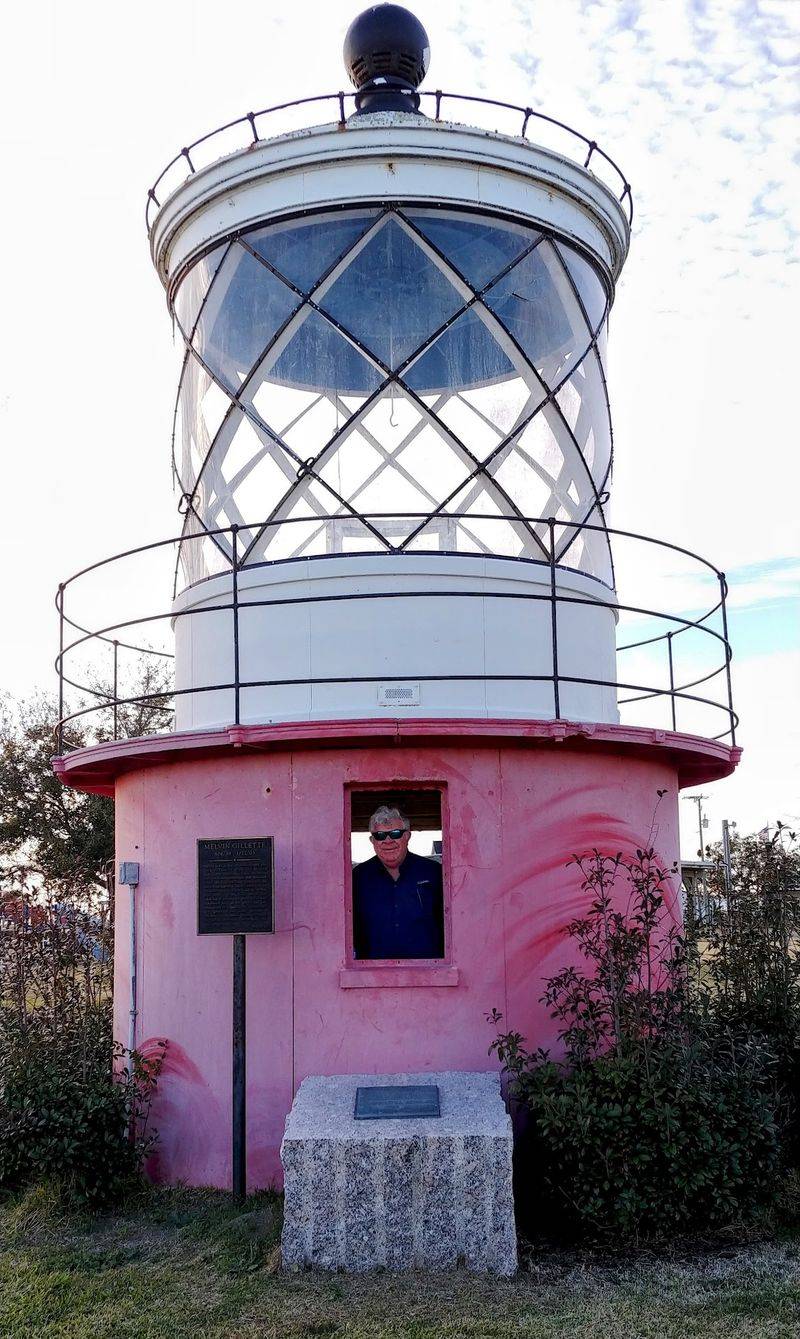
The original Sabine Bank Lighthouse stood 15 miles offshore in the Gulf of Mexico from 1906 until 1952, marking one of the most dangerous areas along the Texas coast. Built on iron pilings driven into the seafloor, the structure looked more like an offshore oil platform than a traditional lighthouse. Keepers lived in cramped quarters beneath the light, enduring weeks of isolation broken only by supply boat visits.
The lighthouse witnessed intense naval action during both World Wars, as German U-boats prowled the Gulf hunting merchant vessels. Keepers reported submarine sightings and helped coordinate rescue efforts when ships were torpedoed within sight of the light. The isolation that made peacetime duty lonely became terrifying during wartime, as keepers knew they were vulnerable targets with no way to defend themselves or escape.
Hurricanes posed a constant threat to the offshore structure. During major storms, waves crashed completely over the platform, and keepers could only huddle inside and pray the pilings would hold. Several times the lighthouse suffered serious damage, requiring extensive repairs and reinforcement.
The 1915 hurricane that devastated Galveston came close to destroying it entirely, with waves tearing away sections of the gallery and smashing windows.
The lighthouse was finally dismantled in 1952 when the Coast Guard decided it was too expensive and dangerous to maintain. The original Fresnel lens and other artifacts were preserved, and some are now displayed at sites around Sabine Pass. The lens itself is a marvel of 19th-century engineering, with hundreds of precisely cut glass prisms designed to focus and magnify the light source, making it visible for more than 15 miles.
Today, visitors to Sabine Pass can see the historic lantern and learn about the lighthouse’s remarkable history at local museums and historical markers. The offshore location where it once stood is now marked only by a modern automated beacon, but old-timers remember when the manned lighthouse stood watch over these treacherous waters, its keepers maintaining a lonely vigil far from shore.