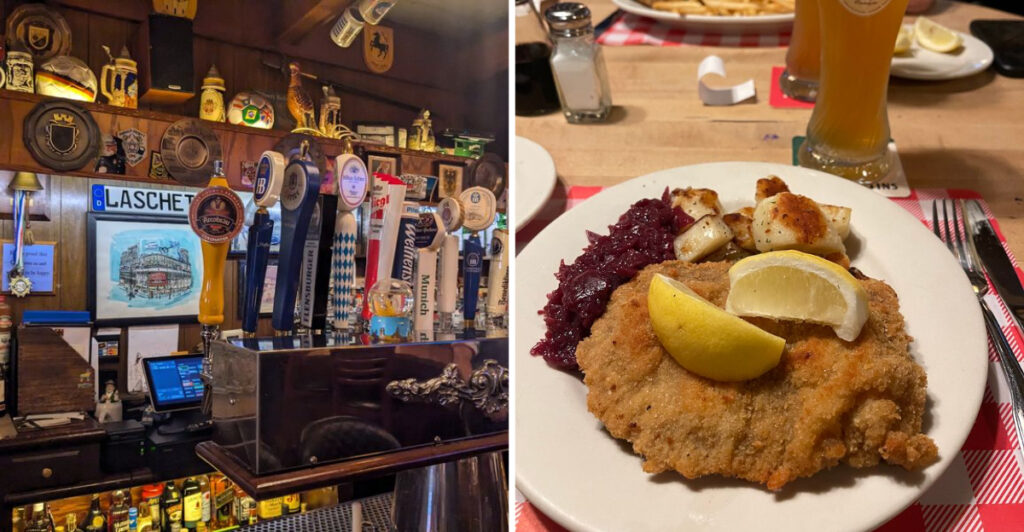
A plate nearly disappearing beneath golden schnitzel and tender spaetzle is a pretty convincing introduction to Laschet’s Inn. This longtime Chicago restaurant on West Irving Park Road keeps old-school German comfort food at the center of the experience, serving hearty portions in a setting that feels rooted in neighborhood tradition.
Crisp, breaded schnitzel delivers the satisfying crunch, while buttery spaetzle brings a softer, richer contrast alongside it. Nothing about the meal calls for a small appetite or unnecessary fuss. At Laschet’s, generous plates and familiar German flavors make settling in for a substantial dinner part of the pleasure.
An Irving Park Room Full of Character
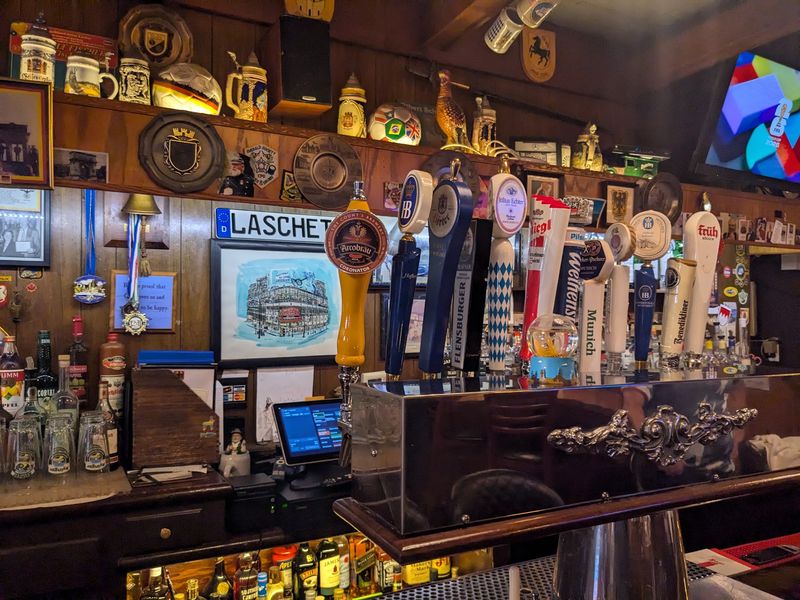
Some restaurants try hard to look old-fashioned. Laschet’s Inn does not need to try. The space on West Irving Park Road carries the kind of lived-in personality that comes from years of steady service, familiar routines, and walls filled with pictures and details that reward a slow look around.
The front bar and the dining area behind it give the place two different rhythms. One side invites a relaxed beer and conversation, while the other sets up the full meal experience with large plates, servers moving briskly, and the promise of comfort food that does not arrive in tiny portions.
That split matters because Laschet’s works well for more than one kind of visit. It can handle a casual catch-up over drinks, a long dinner with family, or a small group meal where everyone wants enough room to settle in without feeling rushed.
Decor here leans old-school rather than polished or trendy. Photos, knickknacks, and lodge-like touches create a setting that matches the menu instead of competing with it, and the effect is more grounded than theatrical.
Noise levels tend to fit the room’s practical design. Conversation still has space to breathe, especially compared with louder restaurant scenes built around constant music and tightly packed tables.
For anyone expecting sleek minimalism, Laschet’s goes in the opposite direction. The appeal comes from texture, history, and the sense that the room was shaped over time by regular use, not by a branding plan.
That makes the arrival memorable before a plate even lands on the table. By the time food starts moving out of the kitchen, the setting has already prepared diners for a meal based on substance, tradition, and generous portions instead of fuss.
Schnitzel That Owns the Table
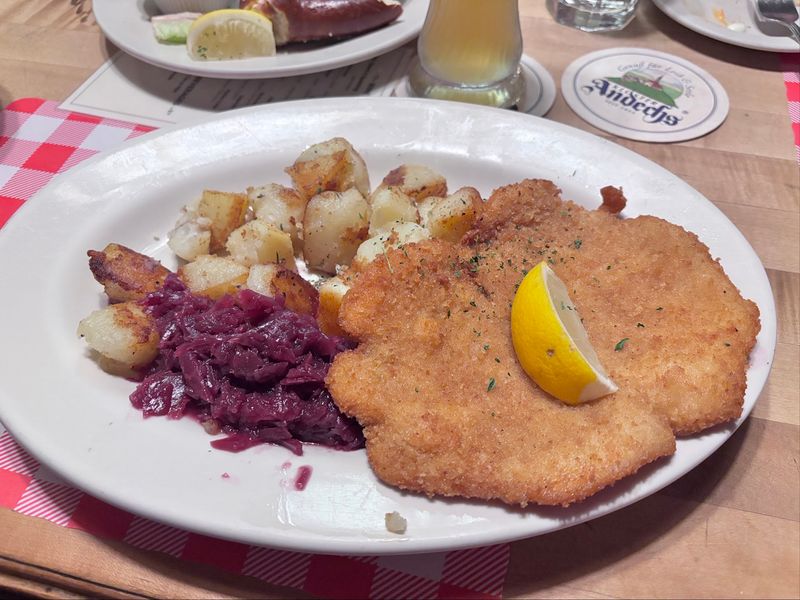
One glance at the schnitzel explains the headline. At Laschet’s Inn, this dish arrives with real physical presence, spreading across the plate in a way that instantly resets expectations for dinner size.
The visual appeal starts with color and texture. A properly crisp coating brings that deep golden look diners want, and the broad, flat shape gives every forkful a balance of crunch outside and tender meat inside when the kitchen hits its stride.
Chicken schnitzel shows up often in discussion around the restaurant, and Wiener schnitzel also holds a place on the menu. That range matters because it gives both first-timers and regulars an easy point of entry into German cooking without asking them to decode a long list of unfamiliar names.
What makes the plate satisfying is not only the size. Schnitzel is one of those dishes where sound, texture, and pace all matter, and a good version should crack lightly under the fork before giving way to juicy meat.
Laschet’s builds its reputation on hearty food, so the schnitzel is not treated like a delicate specialty. It is a centerpiece meal, the kind of order that makes neighboring tables look up when it passes by.
For the best experience, it helps to arrive hungry and treat the meal like an event rather than a quick stop. The portions are generous enough that side dishes are not afterthoughts, and that changes how the entire plate works.
In a city packed with flashy food trends, there is something refreshing about a restaurant that understands the simple drama of a giant crisp cutlet. Laschet’s turns schnitzel into a table-filling statement, and that confidence is a big part of the draw.
Spaetzle Brings the Butter and Balance
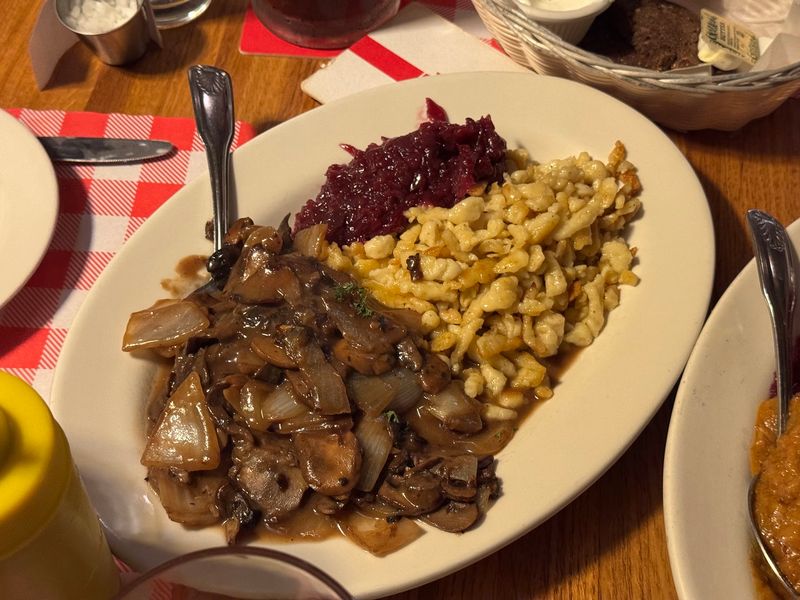
Big fried cutlets may grab attention first, but spaetzle is the quiet closer that rounds out the meal. At Laschet’s Inn, this classic German side gives the plate softness, richness, and a buttery contrast to crisp schnitzel.
Spaetzle is often compared to noodles or tiny dumplings, though that still does not capture the exact texture. The best bites are tender and slightly chewy, with enough butter to coat each piece without turning the dish greasy or heavy.
That texture matters because German comfort food can lean rich from several directions at once. Between breaded meats, gravies, sausages, and potato dishes, a meal needs a side that links everything together instead of competing for attention.
Laschet’s seems to understand that role well. Spaetzle appears not as decoration but as a real part of the experience, especially next to stronger flavors like rouladen, goulash, or schnitzel where the mild, buttery base helps the plate stay balanced.
For diners new to German cooking, ordering spaetzle is a smart move. It is familiar enough to feel approachable, yet distinct enough to show how Central European comfort food builds satisfaction through texture rather than spice alone.
There is also a visual pleasure in seeing it on the table. The loose, irregular shapes look handmade and home-style, which fits the restaurant’s broader personality far better than any sharply styled side ever could.
If the schnitzel delivers the crunch that gets all the glory, spaetzle provides the follow-through that makes the meal complete. A forkful of crisp cutlet with buttery spaetzle on the side explains why these two dishes belong together, and why Laschet’s keeps drawing hungry diners back to that pairing.
More Than Two Signature Plates
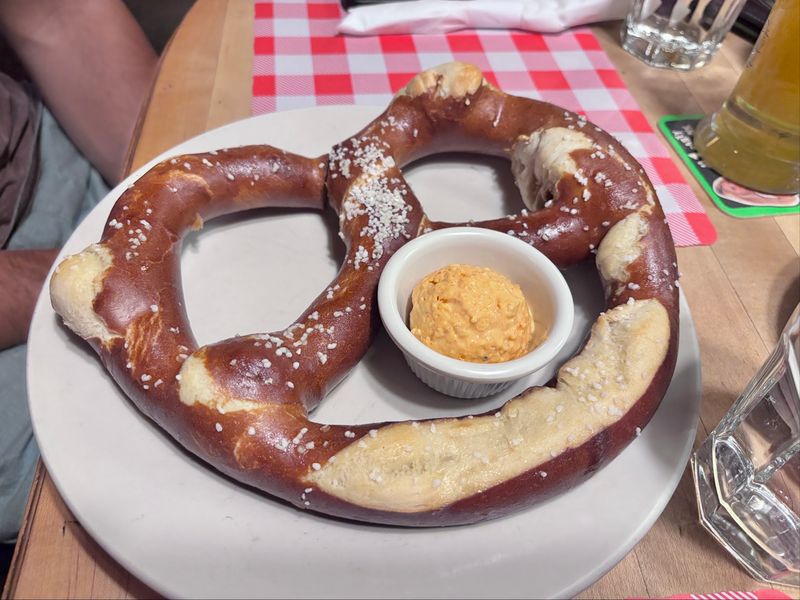
A strong schnitzel and a buttery side could carry plenty of restaurants, but Laschet’s Inn stretches well beyond those two staples. The menu opens the door to a fuller German and German-American meal, with dishes that deepen the experience for anyone ready to explore.
Goulash and goulash soup stand out as important examples. A bowl of soup can set the tone before the main plate arrives, especially in a restaurant built around warming, steady, comfort-driven cooking rather than quick bites.
Rouladen adds another layer of old-world appeal. When a menu includes dishes like that, along with sausages, potato pancakes, pork shank, leberkase, and chicken paprikash, the restaurant stops being only a schnitzel stop and becomes a place where repeat visits make sense.
That range also helps mixed groups. One diner may want the broad, crispy cutlet, while another leans toward braised beef, a sausage platter, or a soup-focused meal with beer and a shared starter.
Even the sides and extras help shape the table. Sauerkraut, potatoes, gravies, and baked desserts such as apple strudel support the larger point that Laschet’s is built for full meals, not just one headline dish with filler around it.
The practical takeaway is simple. First-time diners can safely order the famous plate, but return visits are where the menu really shows its depth, especially if the table shares a few different items and compares textures, sauces, and portion sizes.
That variety keeps the restaurant from becoming predictable. Instead of betting everything on one famous order, Laschet’s uses schnitzel and spaetzle as the gateway into a much broader lineup of sturdy, satisfying food that suits a neighborhood institution far better than a narrow specialty menu ever could.
Chicago, Illinois Keeps a Classic Beer Hall Spirit Alive
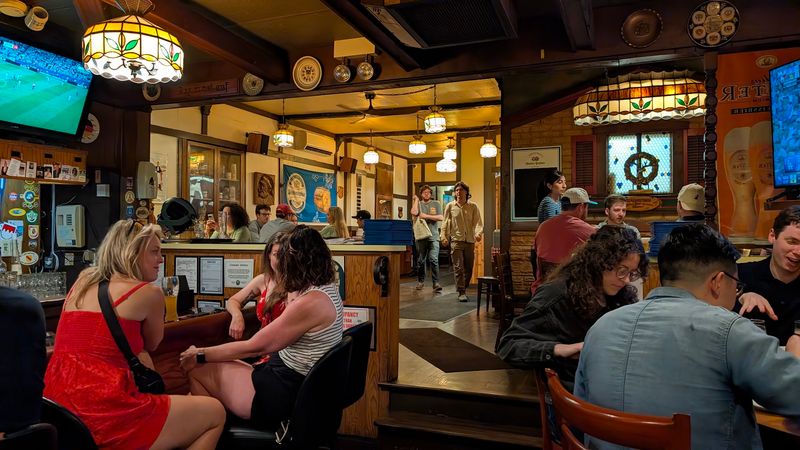
Not every restaurant knows how to be both a dinner spot and a serious beer destination. Laschet’s Inn does, and that combination shapes nearly every part of the experience once the food, bar, and room start working together.
German beer belongs naturally with schnitzel, sausages, and rich sides. At Laschet’s, the beer list and draft options help frame the meal the way wine does in other restaurants, except the mood is looser, more social, and more in step with hearty food.
The bar area adds a practical draw of its own. Someone can come in for a drink, watch a game on a nearby television, and still be only a few steps away from a menu full of substantial dinners instead of the usual bar snacks.
That dual identity gives the place unusual staying power. A restaurant focused only on dining can empty out after the rush, while a bar with weak food rarely builds a strong meal reputation, but Laschet’s sits comfortably in the middle.
The room seems built for conversation more than spectacle. Steins, taps, and old-school tavern energy support the food without turning the restaurant into a costume version of itself.
For diners planning a complete evening, beer is not just a side note here. It helps set the pace of the meal, whether the table starts with a drink and an appetizer, settles into a large entree, or finishes with coffee, dessert, or schnapps.
Chicago has many places to drink and many places to eat, but fewer that merge both sides with this kind of personality. Laschet’s preserves a beer hall spirit in a neighborhood setting, making the meal broader than one plate and turning dinner into a longer, more relaxed event anchored by German food and a bar that actually matters.
A Neighborhood Fixture With Long Memory
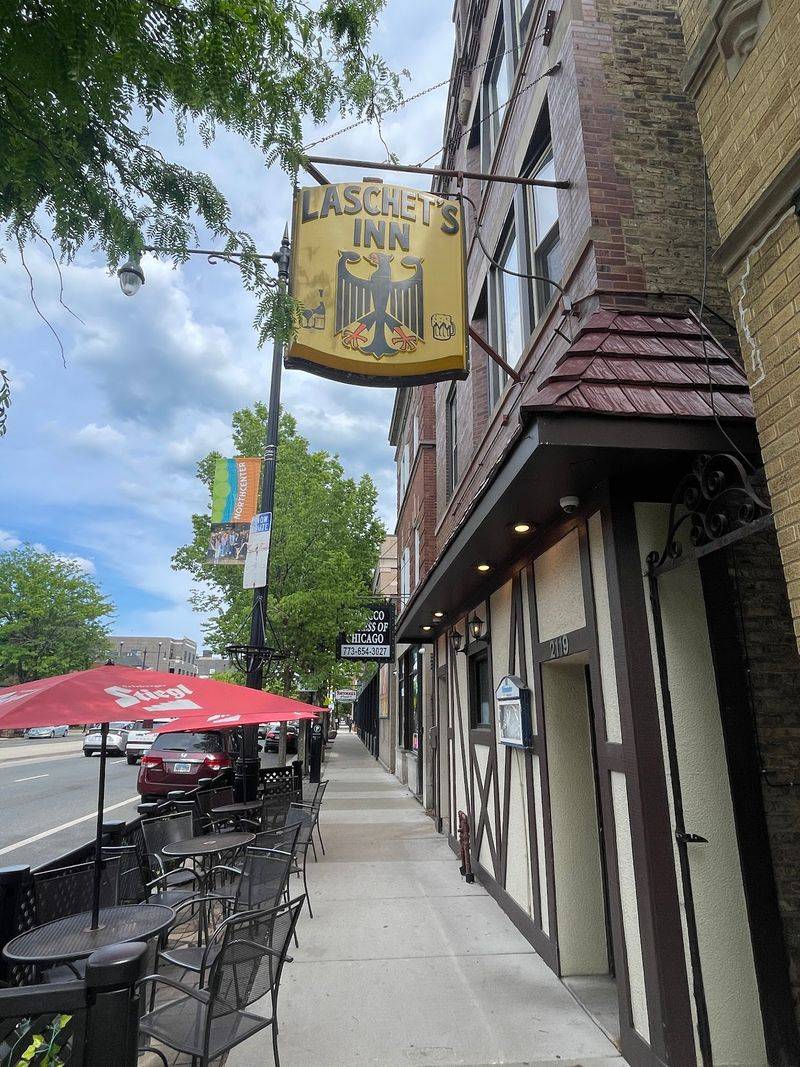
Some places stay relevant by constantly reinventing themselves. Laschet’s Inn seems to hold attention in a different way, by remaining steady enough that former regulars, nearby residents, and curious newcomers can all connect with the same address.
The restaurant’s old-school look is part of that story, but the deeper point is continuity. A room filled with photos and longstanding tavern details suggests a business shaped over time by repeat visits, neighborhood habits, and the kind of dining traditions that outlast trend cycles.
That matters in a city where restaurant turnover can be fast and dramatic. A place like Laschet’s offers a reminder that not every valuable dining room needs reinvention, branded slogans, or constant menu stunts to keep its identity visible.
The location on Irving Park Road also fits its role well. It is not presented as a glossy downtown set piece built for tourism alone, but as a North Side restaurant with enough personality and staying power to become part of local routine.
For readers interested in food culture, that neighborhood connection adds meaning to the schnitzel and spaetzle. Big portions land differently when they come from a place that reads like a community institution rather than a themed concept created last season.
There is also a modesty to the exterior approach that works in its favor. An inconspicuous entrance makes the meal inside feel discovered rather than overpackaged, and that understated arrival suits the restaurant’s substance-first identity.
Laschet’s does not need exaggerated storytelling to stand out. The combination of longevity, recognizable character, and a dining room that clearly carries history gives the restaurant a strong local footprint, helping explain why a plate of German comfort food here can feel connected to Chicago restaurant life in a way newer places often struggle to match.
How to Time the Meal for the Best Experience
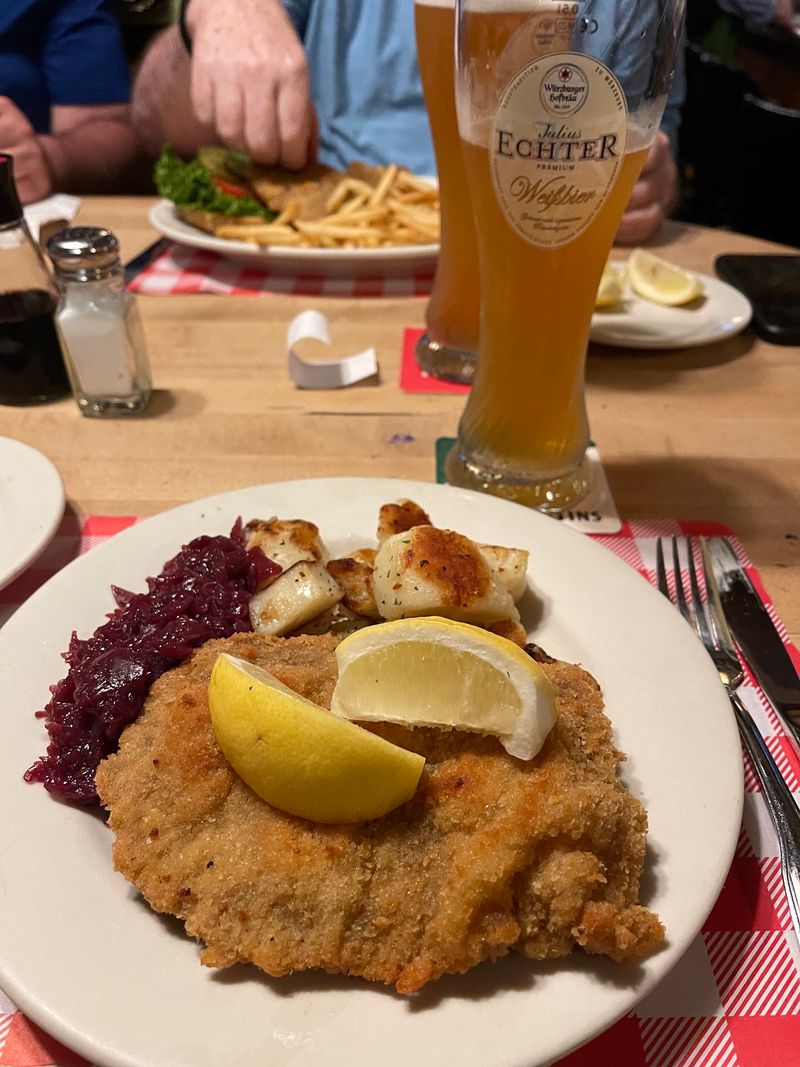
Good planning makes a hearty restaurant even better, and Laschet’s Inn rewards a little strategy. Since the kitchen opens at noon Tuesday through Sunday and the restaurant stays open late, diners have more than one way to shape the visit.
An earlier lunch or late afternoon stop can be ideal for anyone who wants a calmer pace and more room to look around. That timing also makes sense for first-timers who want to study the menu without feeling swept into a busy dinner rush.
Evening brings a different energy. The bar and dining room begin to act like a full social space, which suits groups, long catch-up meals, and tables that want to stretch dinner into drinks and dessert.
Because portions are generous, it helps to order with a plan. Splitting an appetizer, choosing a signature main like schnitzel, and adding spaetzle or another classic side creates a better progression than crowding the table too early with more food than anyone can properly enjoy.
Parking appears more manageable than some Chicago diners expect, with street options nearby adding a practical advantage. That small detail can change the tone of the night, especially for a restaurant where the meal is supposed to feel comforting, not logistically stressful.
Large groups should think ahead, especially in late afternoon and evening hours when the room is likely to fill with diners and bar traffic. The setup can handle company well, but popular neighborhood spots often work best when the busiest windows are treated with respect.
The smartest move is simple: arrive hungry, allow time, and order in a way that matches the restaurant’s strengths. Laschet’s is not a race-through dinner stop.
It works best when the table settles in, the beer arrives cold, the schnitzel lands hot, and the buttery spaetzle gets its proper place beside the main event.
Why the Plate Size Actually Means Something
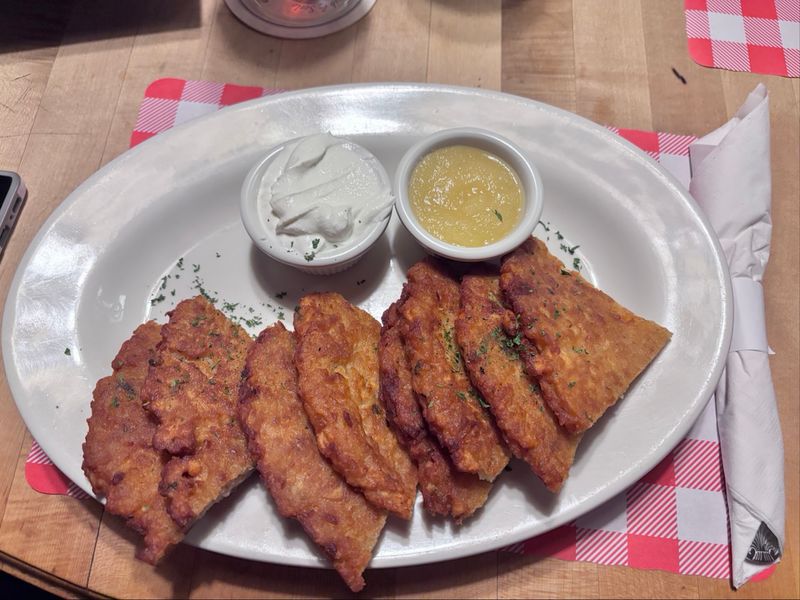
Plenty of restaurants serve large portions, but size alone does not create a strong dining identity. At Laschet’s Inn, the piled-high plates matter because they match the cuisine, the room, and the old-school rhythm of the place.
German comfort food is built around satisfaction, not tiny design tricks. When schnitzel arrives broad and crisp, when spaetzle covers real territory on the plate, and when sides hold their own instead of hiding in corners, the meal communicates its purpose clearly.
That purpose is part practicality and part hospitality. Big servings fit a menu grounded in sausages, gravies, soups, braised dishes, and beer, and they also support the social style of dining that makes people linger, share bites, and compare notes across the table.
Laschet’s stands out because the abundance does not seem random or inflated for novelty. It reads as consistent with the restaurant’s wider character, including its tavern roots, neighborhood location, and steady commitment to substantial food over fashionable presentation.
For readers chasing the next trend, that might sound simple. Yet simplicity is exactly the point when it is backed by strong execution, recognizable dishes, and a room that knows what kind of meal it wants to serve.
The schnitzel and spaetzle pairing captures that message best. One brings crunch and scale, the other brings soft, buttery comfort, and together they show how an old-school German restaurant can deliver drama without needing gimmicks or reinvention.
That is why Laschet’s earns attention in a city full of louder headlines. It offers a specific kind of pleasure that is easy to understand the second the plate lands: honest portions, classic cooking, and a meal that takes up real space on the table. Sometimes the clearest sign of a restaurant’s confidence is simply how fully it feeds the room.