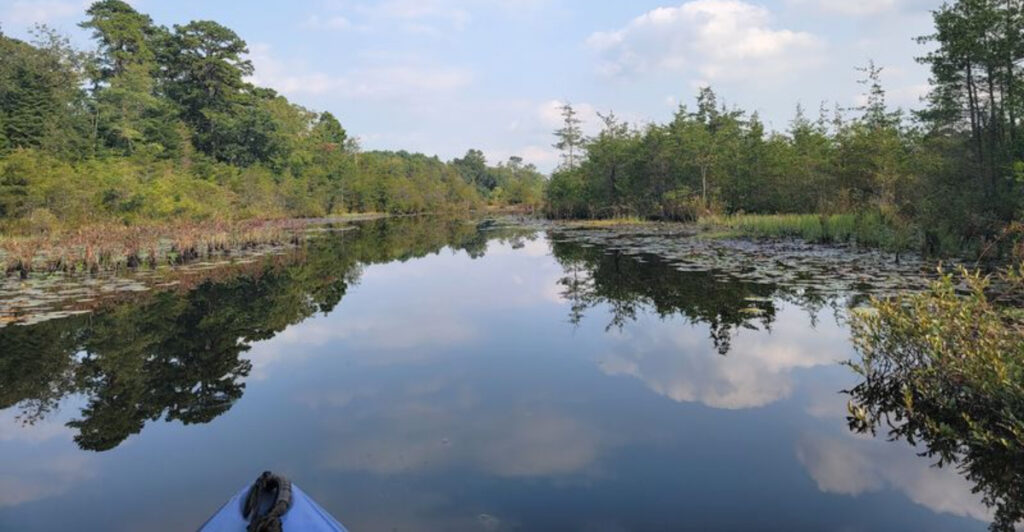
Some days call for a destination where the loudest interruption is a woodpecker tapping overhead or a breeze pushing through tall grass. New Jersey has more of those places than its traffic-heavy reputation suggests.
Beyond the packed boardwalks and busy trailheads are cranberry bogs reflecting the sky, woodland gardens hidden behind stone walls, and marsh roads where herons dramatically outnumber people. These are not places that demand an itinerary.
Most invite you to park, silence your phone, and follow whatever path looks promising. You can spend the morning watching boats cross a reservoir, eat lunch beside a river, or wander among roses without checking the time once.
A few destinations include historic buildings or nature centers, while others offer little more than a trail and a considerable amount of space. When your brain has too many tabs open, these 12 quiet New Jersey escapes provide exactly the right place to close a few.
1. Merrill Creek Reservoir – Harmony Township
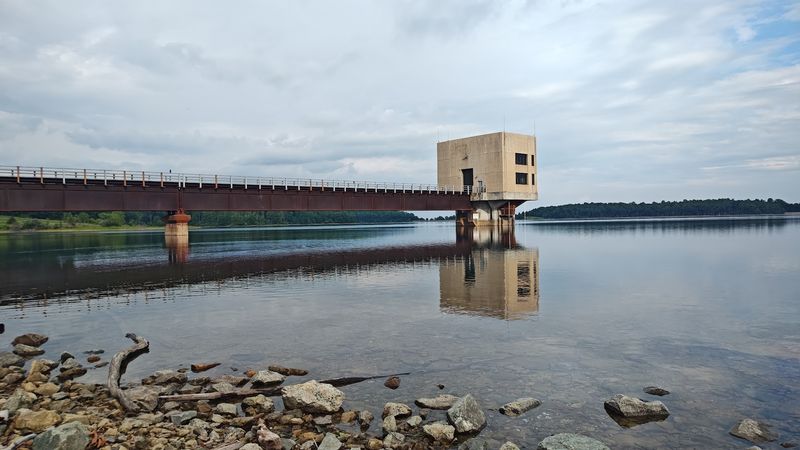
A wide sheet of blue water surrounded by rolling woodland makes a convincing argument for ignoring your notifications. Located in Harmony Township, Merrill Creek Reservoir covers 650 acres, yet the setting often feels surprisingly secluded once you leave the main parking areas.
The water supply facility is privately owned but welcomes visitors for low-impact recreation, giving walkers, birders, anglers, and paddlers plenty of room to unwind without the usual park distractions. Start with the Perimeter Trail if you want a substantial outing.
It circles the reservoir through forests and open fields, occasionally pulling close enough to the shoreline for long, unobstructed views across the water. Shorter trails near the visitor center work nicely when the goal is a gentle stroll rather than an ambitious hike.
Bring binoculars, because bald eagles, hawks, waterfowl, and migrating birds regularly appear around the preserve. The visitor center adds indoor exhibits and helpful information, though simply finding a bench near the water may be all the entertainment you need.
Gates open at 7 a.m., and closing times change seasonally, so check the posted schedule and leave enough time to return to your car. Parking is allowed only in designated areas.
Arrive on a weekday morning, and the reservoir delivers the rare pleasure of a landscape that seems to have lowered its voice just for you.
2. Tall Pines State Preserve – Sewell
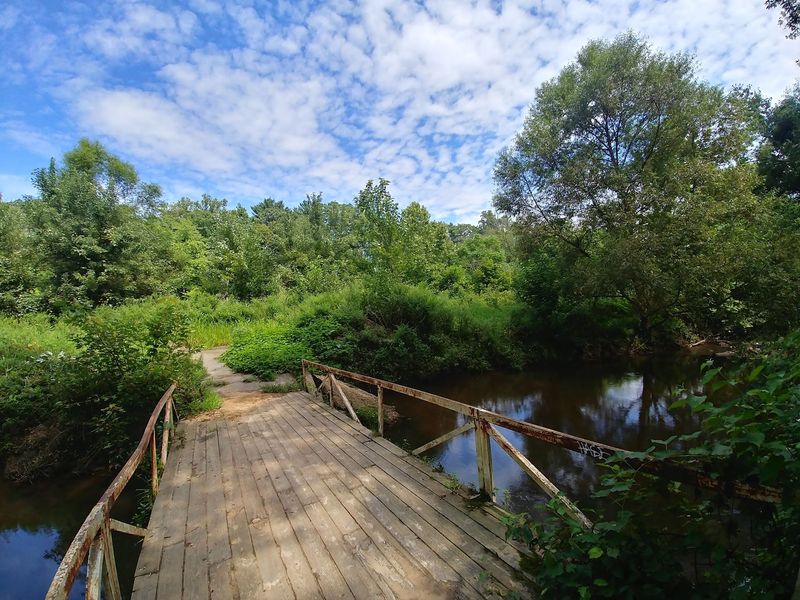
Golf once shaped this Gloucester County property, but nature has spent years cheerfully undoing the landscaping. Former fairways have become meadows, cart paths now guide walkers through the preserve, and young forests are gradually reclaiming land that might otherwise have disappeared beneath development.
That unusual past gives Tall Pines State Preserve an appealing mixture of openness and enclosure. One moment you are crossing a broad grassy corridor under an enormous sky; the next, you are walking beneath hardwood trees with birds calling from somewhere beyond the trail.
The terrain is mostly level, making this a good choice when you want fresh air without turning the day into a fitness challenge. Several interconnected paths allow visitors to adjust the distance as they go, and remnants of the old golf course create subtle clues about what the landscape used to be.
Small ponds and wetland areas attract turtles, frogs, dragonflies, and water-loving birds, while the meadow edges are especially pretty when wildflowers appear. There is no need to rush toward a major viewpoint because the slow transformation of the property is the main attraction.
Wear sturdy shoes after rain, when low areas may become muddy, and download or photograph the trail map before setting out. Tall Pines works best for an unhurried walk with no finish line—just a few miles of breathing room in a corner of South Jersey that chose wildness over another subdivision.
3. Franklin Parker Preserve – Chatsworth
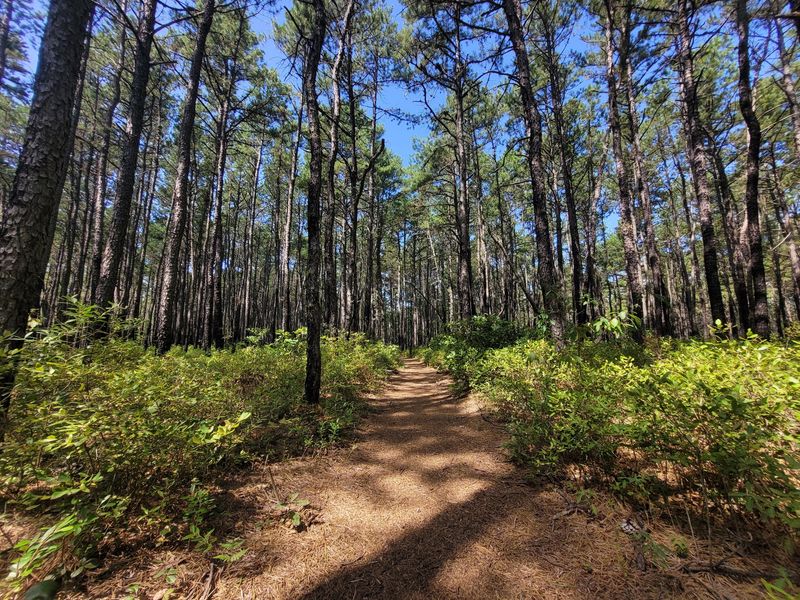
The old cranberry bogs stretch toward the horizon in long geometric pools, their dark water reflecting clouds, pine trees, and the occasional circling hawk. At 9,400 acres, Franklin Parker Preserve has enough space to make everyday concerns feel usefully small.
The preserve sits near Chatsworth in the heart of the Pine Barrens, linking major protected forests and sheltering cedar swamps, pitch-pine woods, blueberry fields, lakes, and tributaries of the Wading River. Its broad sand roads are ideal for a quiet walk or bicycle ride, particularly if you prefer expansive scenery to steep climbs.
Several routes lead through the former bog system, where earthen dikes place you between open water and sky. Wildlife changes with the seasons: spring brings frogs and migrating songbirds, summer fills the wetlands with dragonflies, and winter can produce excellent views of raptors and waterfowl.
Bring binoculars and plenty of water, but do not expect a snack stand, elaborate facilities, or constant trail signs. That lack of fuss is part of the appeal, although it makes carrying a map important.
The preserve is open daily from dawn to dusk, and parking areas are found near Route 532 and at other marked access points. Stick to established routes, watch for soft sand and muddy stretches, and give any wildlife plenty of room.
When you want the particular silence of the Pine Barrens—the kind broken by wind, wings, and little else—this is where to find it.
4. Cross Estate Gardens – Bernardsville
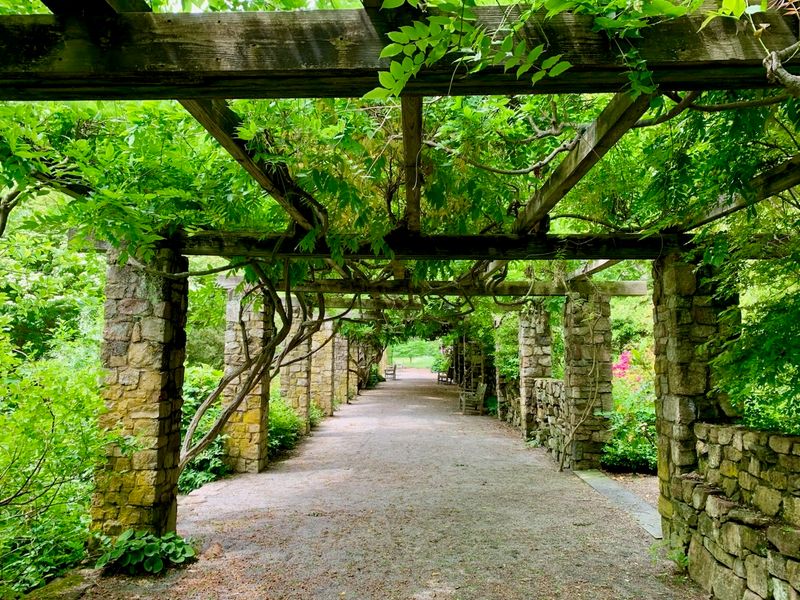
Follow the wisteria-covered pergola and the modern world begins to feel very far away. Cross Estate Gardens occupies a graceful corner of the New Jersey Brigade area of Morristown National Historical Park, near Bernardsville, where formal plantings meet woodland at the edge of the historic estate.
The gardens are compact enough to explore without a plan but varied enough to reward slow wandering. Stone walls frame perennial beds, mountain laurel forms a leafy allée, and native plants soften the transitions between carefully designed spaces and the surrounding forest.
Nothing here shouts for attention. Instead, the pleasure comes from small details: weathered garden gates, vines winding around columns, flowers leaning into patches of sun, and birds treating the shrubs like private apartments.
Spring and early summer bring the most abundant blooms, while autumn gives the grounds a richer, quieter palette. Bring a book or a sketchpad and claim a bench after your walk; this is one of those rare gardens where sitting still feels like the main event rather than a break between attractions.
Admission and parking are free, and the grounds are generally open daily from 8 a.m. until dusk. Because volunteers maintain the plantings and restoration work may occasionally affect access to individual areas, remain behind any temporary barriers.
Cross Estate is polished without feeling precious—a lovely choice when you need calm but do not want to disappear deep into the woods to get it.
5. Great Bay Boulevard Wildlife Management Area – Little Egg Harbor Township
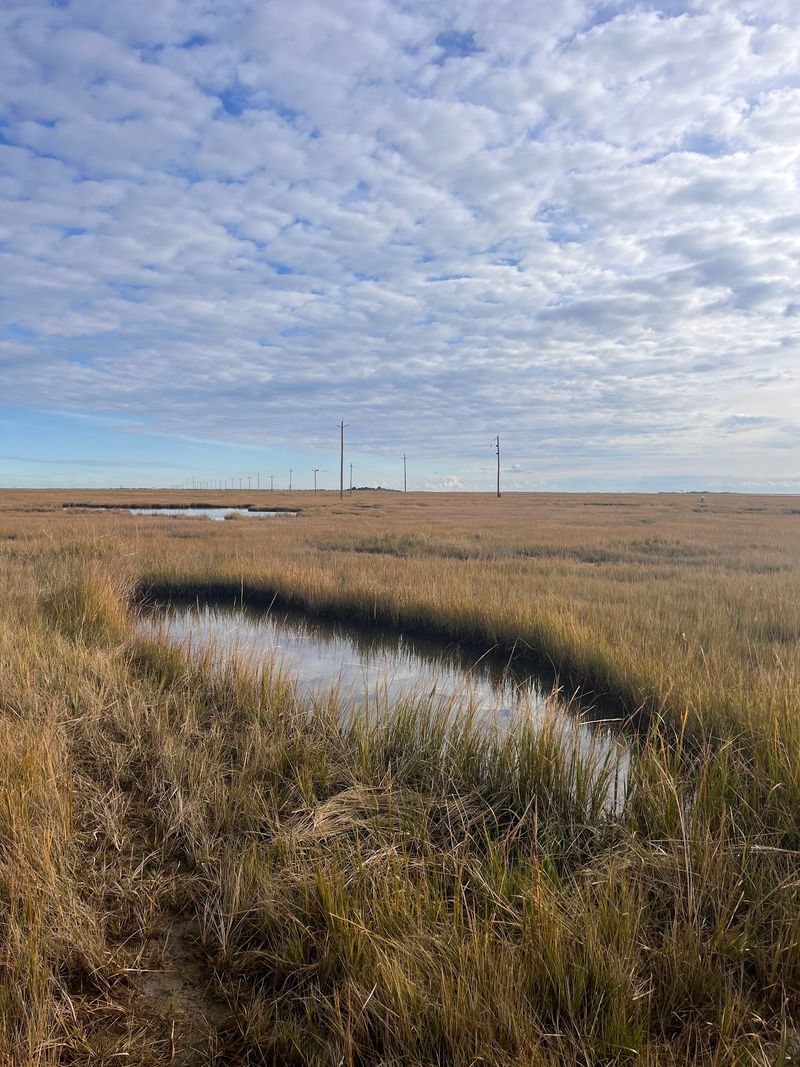
The paved road grows narrower, the houses fall away, and soon salt marsh seems to occupy the entire world. Great Bay Boulevard travels several miles from Little Egg Harbor Township toward Great Bay, crossing tidal creeks and passing through one of the most wonderfully undeveloped coastal landscapes in New Jersey.
Locals often call it Seven Bridges Road, although the exact bridge count has inspired plenty of debate. Numbers hardly matter once you are out there.
The real draw is the slow drive through marshland alive with egrets, herons, ospreys, glossy ibises, and seasonal flocks of migrating shorebirds. Pull-offs and small parking areas provide places to stop, look across the reeds, or launch a kayak into the winding waterways.
Bring binoculars and lower the windows; the soundscape of grasses, gulls, and moving water is much better than anything on the radio. Sunrise and late afternoon offer especially beautiful light, but those are also active times for mosquitoes and greenhead flies, so insect repellent belongs in the car.
The road can flood during unusually high tides and coastal storms, making weather and tide conditions worth checking before the trip. There are few facilities once you leave town, so arrive with water, snacks, and a full tank.
This is less a conventional attraction than a long exhale—a road where driving slowly is not merely allowed but entirely the point.
6. Maurice River Bluffs Nature Preserve – Millville
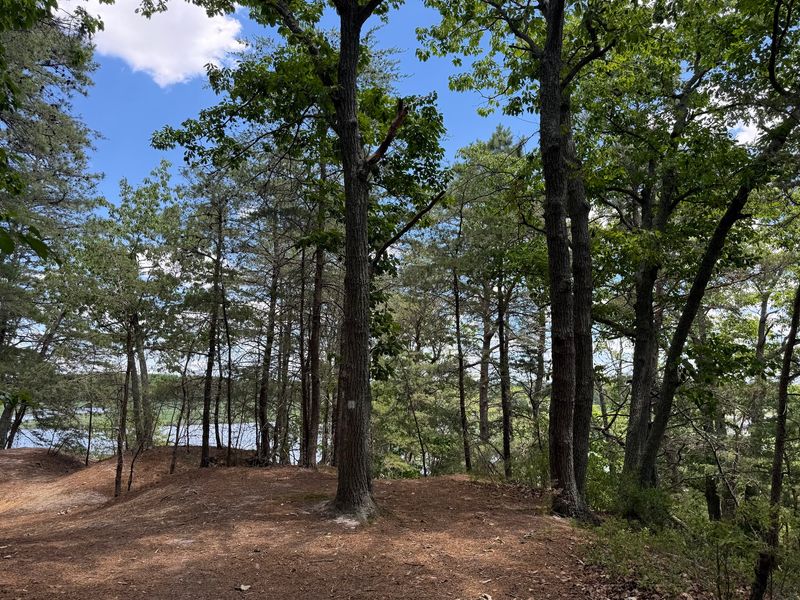
South Jersey is not known for hills, which makes the first climb above the Maurice River a pleasant little surprise. This 535-acre preserve in Millville protects rounded bluffs, freshwater ponds, forest, and some of the state’s largest stretches of wild rice marsh.
More than five miles of color-marked hiking trails thread through the property, with enough connecting loops to create either a brief restorative walk or a longer afternoon outside. For a first visit, follow the Blue Trail toward the floating dock.
It opens onto the river and provides a fine place to watch for ospreys, bald eagles, waterfowl, and belted kingfishers. Other routes pass a bird blind, historic remnants, a small bridge, and terrain that rises and dips more than most Cumberland County trails.
Benches and picnic tables appear in genuinely useful places, including spots overlooking the water, so pack lunch rather than eating beside the car. The preserve is open during daylight hours throughout the year, admission is free, and leashed dogs are welcome.
Some paths include roots, steps, and steep sections, making proper footwear helpful after rain. Separate mountain-biking trails cross the hiking network in places, so pause and look at marked intersections.
The preserve feels wild without being intimidating and interesting without being busy. It is the sort of place where you can walk for two hours, watch a river carry the afternoon past, and return to the parking lot noticeably less bothered by everything.
7. Whitesbog Historic Village – Browns Mills
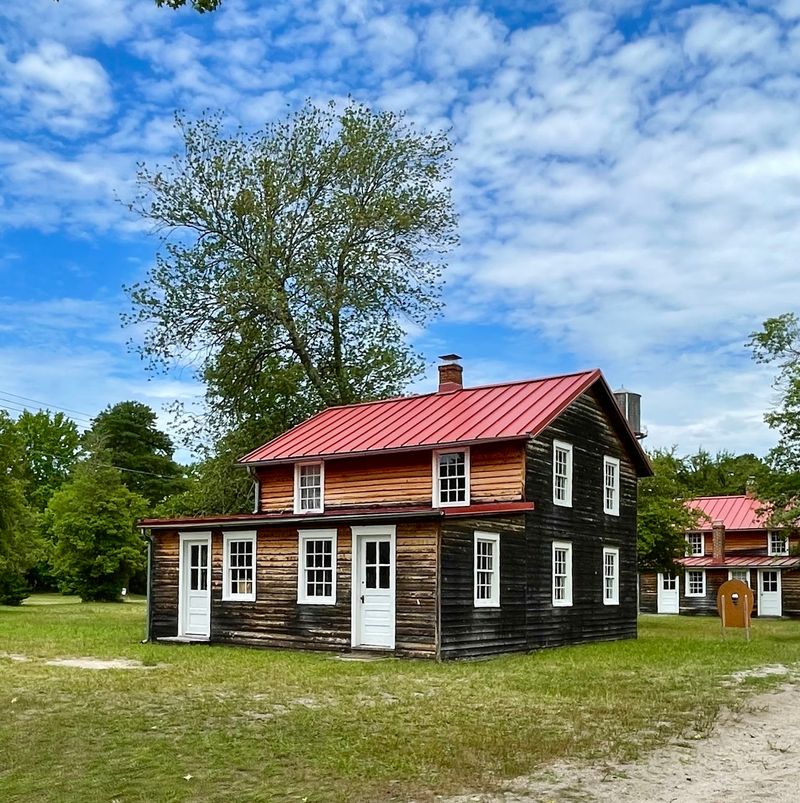
White wooden cottages and weathered agricultural buildings sit beside cranberry bogs so still they can double every cloud overhead. Whitesbog Historic Village, established in 1857, preserves the remains of a Pine Barrens farming community where cranberries and cultivated blueberries helped shape both the land and local life.
Its history gives a quiet walk more texture than a typical woodland outing. Begin near the village buildings, then follow one of several easy trails into the surrounding bogs, ponds, gardens, and forest.
The Historic Cranberry Trail passes workers’ cottages and old packing structures before looping around a demonstration bog, while the Blueberry Trail leads toward the former home and test fields of Elizabeth Coleman White, a key figure in the development of the cultivated blueberry.
For something shorter, the Nature Trail uses mossy paths and boardwalks to reach ponds and gardens.
The landscape changes dramatically by season: summer brings water lilies and green fields, fall colors the cranberry beds, and winter strips the scene down to water, sand, and sky. Trails are open daily from dawn to dusk as part of Brendan T.
Byrne State Forest, with no admission required for ordinary exploration. Buildings and the general store may keep more limited schedules, so treat those as a bonus rather than the basis of the visit.
Whitesbog offers enough history to engage the mind and enough open space to let it wander—a particularly good combination when you want solitude without an empty landscape.
8. Cloverdale Farm County Park – Barnegat Township
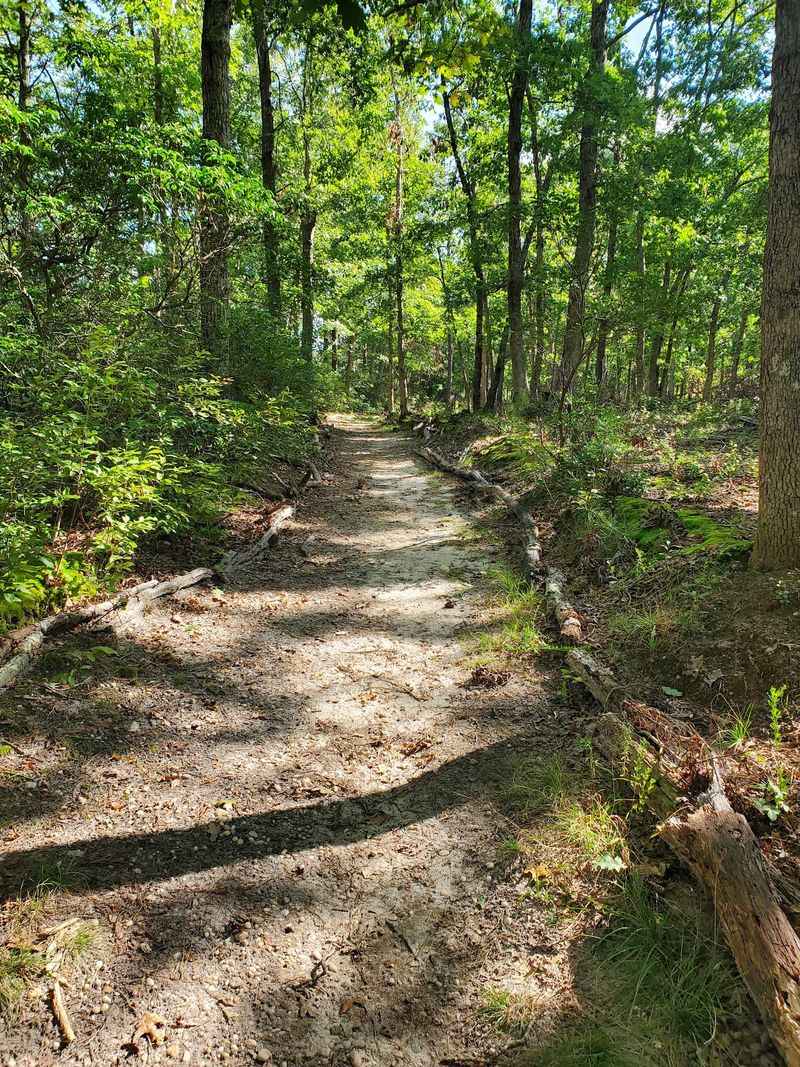
Cranberries have grown on this Barnegat property since the late 1800s, and the neat bogs still hold the memory of a working South Jersey farm.
Cloverdale Farm County Park preserves 90 acres of wetlands, woods, fields, and historic agricultural land that spent more than half a century under the care of cranberry growers Katherine and William Collins.
Today, its 1.4-mile self-guided nature trail provides an easy escape that does not require hiking boots, elaborate preparation, or an entire free weekend. The route moves from open bog country into undisturbed woodland, changing the scenery often enough to keep a short walk interesting.
Depending on the season, you may see wildflowers beside the trail, turtles near the water, and songbirds moving between the forest and farm edges. Photographers will find the bogs especially rewarding on windless mornings, when the water holds crisp reflections of the sky.
Fishing and bird-watching are also permitted, while a small picnic area makes it easy to stretch the visit with coffee and a packed lunch. The visitor center, generally open Friday through Sunday, contains exhibits about the property’s natural and agricultural history; restrooms are available when the building is open.
Park gates open at 7 a.m., with closing times shifting throughout the year. Cloverdale rarely asks much of its visitors. Walk the loop, read a few signs, watch the water for movement, and let an old cranberry farm handle the rest of the day.
9. Marquand Park – Princeton
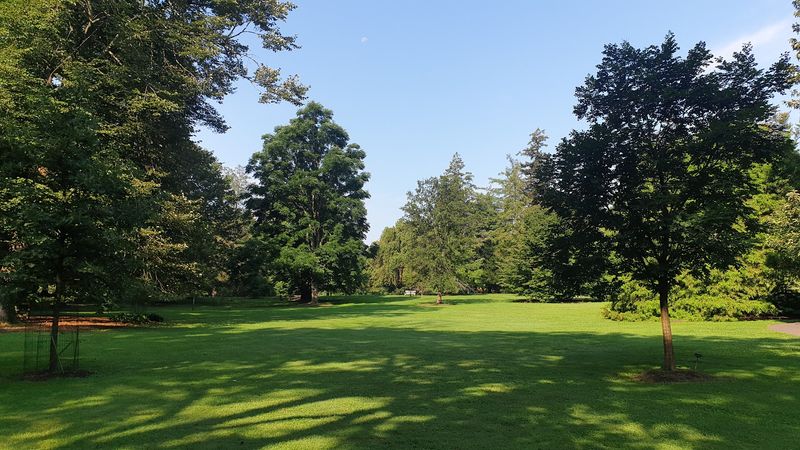
Princeton’s best-known paths tend to run past ivy-covered buildings, but a quieter kind of campus-worthy beauty waits on Lovers Lane. Marquand Park and Arboretum covers 17 wooded acres filled with native and exotic trees, including specimens collected and planted across generations.
Paved walkways and informal paths curve beneath broad canopies, linking open lawns, benches, picnic tables, and garden-like corners that feel surprisingly removed from nearby streets. Tree labels turn a casual stroll into a low-key scavenger hunt: look for unusual bark, enormous trunks, and species that clearly traveled a long way to settle in New Jersey.
The park began as part of a private estate, and its mature landscape retains the unforced elegance of grounds designed for wandering rather than organized activity. A playground and small ballfield can draw families, but move deeper into the arboretum and the sounds quickly soften.
Pack a book, choose a bench under an interesting tree, and leave the busier Princeton itinerary for another day. The park is open from dawn to dusk, admission is free, and a small lot off Lovers Lane provides limited parking.
Pedestrians can also enter from Stockton or Mercer streets, making it possible to walk over from central Princeton. Spring and fall are particularly colorful, though the bare branches of winter reveal the shapes of the specimen trees beautifully.
Marquand proves that a genuine reset does not always require driving to the wilderness; sometimes it is hiding behind a stone wall near town.
10. Deep Cut Gardens – Middletown
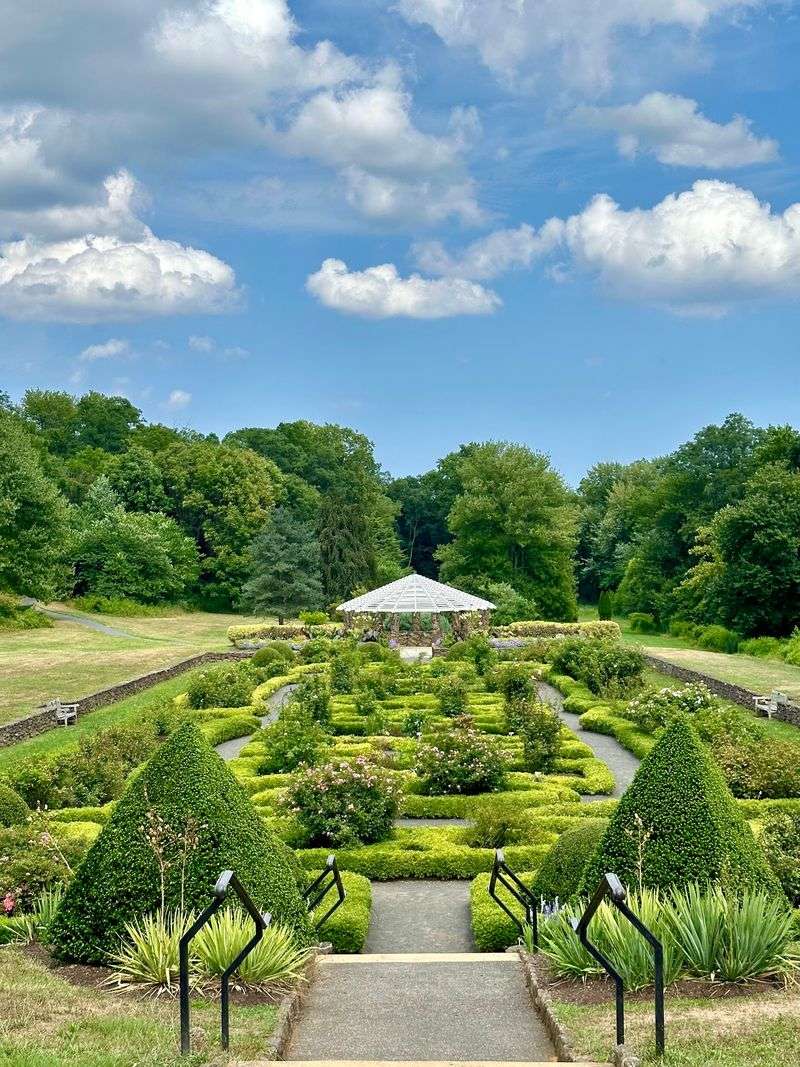
More than 180 rosebushes fill the formal parterre, yet the koi pond may be the spot that finally convinces you to stop moving. Deep Cut Gardens in Middletown spreads across 54 acres devoted to cultivated and native plants, giving home gardeners plenty of ideas and everyone else a beautiful place to slow down.
The landscape functions like a living catalog, but it never feels like homework. Paths pass seasonal display beds, sweeping lawns, wooded sections, a greenhouse, and carefully arranged spaces that change character throughout the year.
Late spring and early summer bring the rose garden into its full, fragrant glory, while autumn highlights ornamental grasses, seed heads, and foliage that summer visitors often overlook.
On cold or rainy days, the greenhouse offers a warm pocket of green, and the horticultural center includes a reference library for anyone tempted to turn a casual visit into a new gardening obsession.
Admission and parking are free. The grounds open daily at 8 a.m. and close at dusk, while the staffed facilities may follow their own hours.
Pets are not permitted, a rule that helps keep the paths and plantings especially peaceful. You can cover the main areas relatively quickly, but rushing would miss the point.
Give yourself time to inspect the roses, watch koi drift beneath the pond’s surface, and sit wherever the garden looks best. Deep Cut offers serenity with excellent landscaping—and no weeds at home waiting to make you feel guilty about enjoying it.
11. Estell Manor Park – Mays Landing
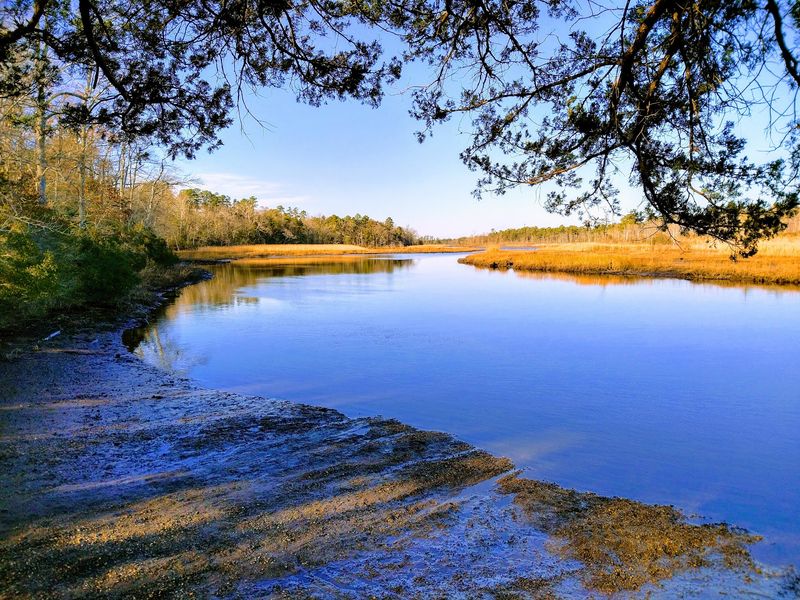
A raised boardwalk runs straight through cedar swamp, passing dark water, ferns, and trees that seem to absorb every sound. It is the standout walk at Estell Manor Park, a sprawling Atlantic County property near Mays Landing with trails, river access, historic ruins, and enough quiet corners to fill an entire day.
The land was once home to the Estellville Glassworks and later became part of a World War I munitions operation. Foundations, power plant remains, old roads, and other traces of that industrial past now sit among forest steadily reclaiming them.
Follow the Swamp Trail boardwalk for an easy, contemplative route, or use the wider network of woodland paths to reach the South River, observation areas, an artesian well, and scattered historical sites.
A floating dock gives visitors another place to pause near the water, while the nature center provides context about local wildlife and the property’s layered history.
The park includes recreational facilities and picnic areas, but its size makes solitude easy to find once you move beyond them. Gates generally open at 7:30 a.m. and close at dusk, with the nature center operating on a more limited daytime schedule.
Trail surfaces range from boardwalk and packed earth to sandy, occasionally wet ground, so choose footwear accordingly. Estell Manor feels part nature preserve, part open-air history puzzle—a place where the most interesting discoveries appear quietly between the trees rather than behind museum glass.
12. Palmyra Cove Nature Park – Palmyra
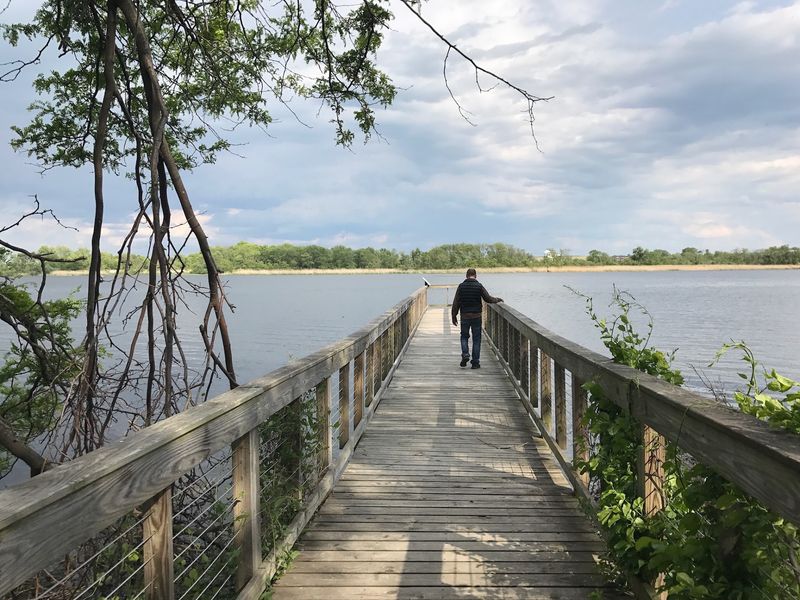
The Philadelphia skyline rises across the Delaware River, but from the edge of Palmyra Cove it looks oddly distant—close enough to recognize, far enough to ignore.
This 250-acre nature park sits beneath the shadow of the Tacony-Palmyra Bridge, turning an unlikely piece of riverfront into tidal wetlands, woodland, meadow, and sandy shoreline.
Its location is part of the magic. Traffic moves somewhere overhead, yet trails quickly lead into habitat used by hundreds of bird species, from warblers and woodpeckers to herons, ducks, and bald eagles.
Follow the paths toward the cove and river overlooks, stopping at observation platforms and quiet clearings along the way. Low tide exposes broad mudflats where shorebirds forage, while high tide brings water closer to the marsh grasses and changes the view entirely.
Binoculars add plenty to the outing, although the skyline, bridge, driftwood, and river provide enough visual interest even on a slow bird day. The environmental discovery center offers exhibits and restrooms when open, but its schedule may differ from the outdoor park, so confirm access before making it central to your plans.
Wear shoes that can handle mud after wet weather and bring insect repellent in warmer months. Palmyra Cove is not silent in the literal sense; it is peaceful in a more interesting way, proving that even beside a major bridge and across from a major city, nature can still claim the final word.