The oldest room at Portland Place was never meant to impress anyone. Built around 1720 as a modest one-and-a-half-story cabin, it now sits quietly inside a much grander house overlooking the Navesink River.
Walk through the property today, and nearly 300 years of additions, ambitions, family stories, and changing tastes unfold from room to room. Eight generations of the Hartshorne family lived here, gradually turning a working 200-acre farm into an elegant country retreat filled with art and handsome furnishings.
The remarkable part is how much survived. Rather than being cleared for modern development, the house, barn, gardens, and surrounding landscape were carefully restored and opened to the public as Historic Portland Place.
Tucked inside Hartshorne Woods Park in the Locust section of Middletown Township, this Monmouth County treasure offers something rare: a chance to step inside a home that evolved with one family for centuries while the world beyond its doors changed almost beyond recognition.
Historic Portland Place Preserves Nearly Three Centuries of New Jersey History
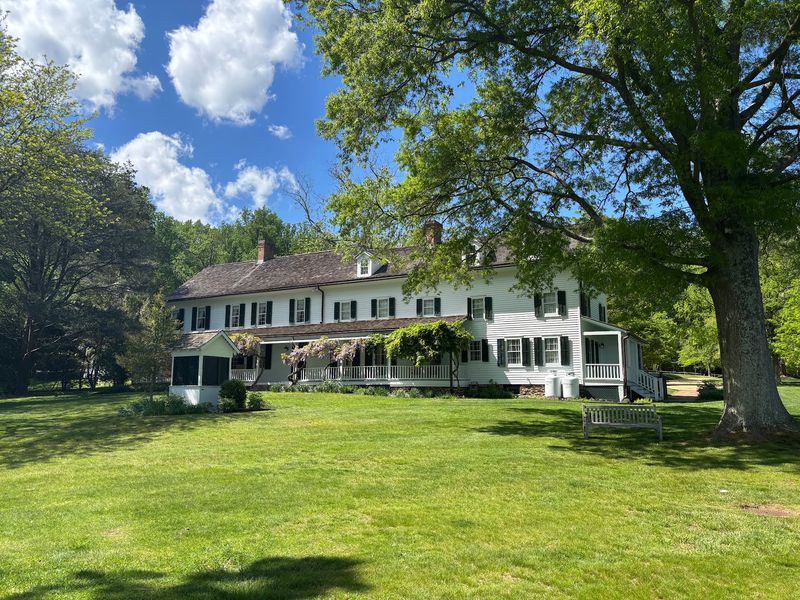
At first glance, Portland Place looks like one handsome historic home on a bluff. Look closer, however, and the building starts behaving more like a timeline.
Its rooms, rooflines, windows, and additions reflect different periods in the property’s long life, stretching from New Jersey’s colonial era into the 20th century. That layered quality makes the site far more interesting than a house frozen at one carefully selected date.
Located at 200 Hartshorne Road in Locust, Portland Place began as part of a 200-acre farm in the Navesink Highlands. The property later evolved into a family farmhouse and, eventually, a refined summer residence.
Today, its restored buildings and grounds form a 15-acre county historic site within Hartshorne Woods Park, connecting the domestic story inside the house with more than 800 acres of preserved landscape around it. The home is listed on both the New Jersey and National Registers of Historic Places, but its significance goes beyond age or architecture.
Portland Place helps explain how the Navesink Highlands developed from a sparsely settled coastal region into an agricultural community and later a destination for vacationers, artists, and affluent families. The setting also links the estate to the maritime history of nearby Sandy Hook, the Bayshore, and the Navesink River.
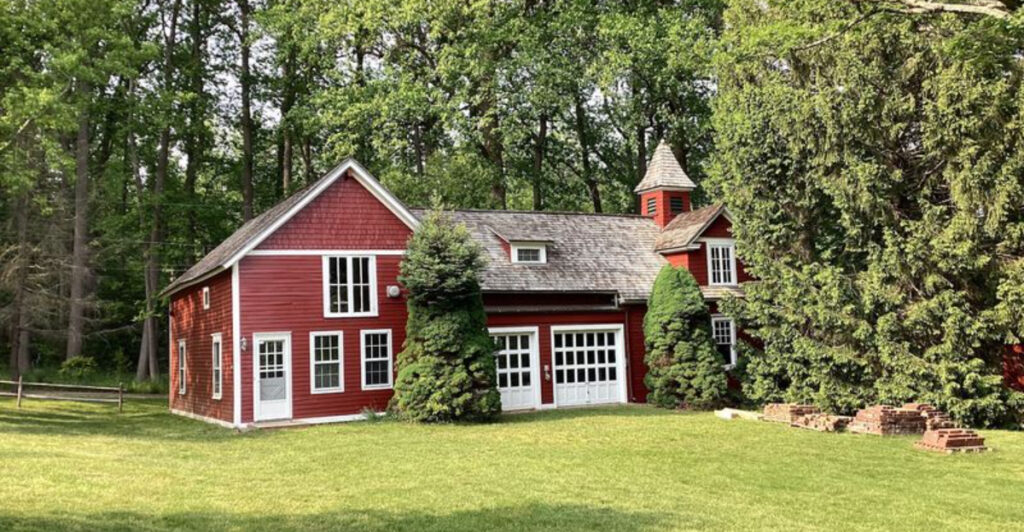
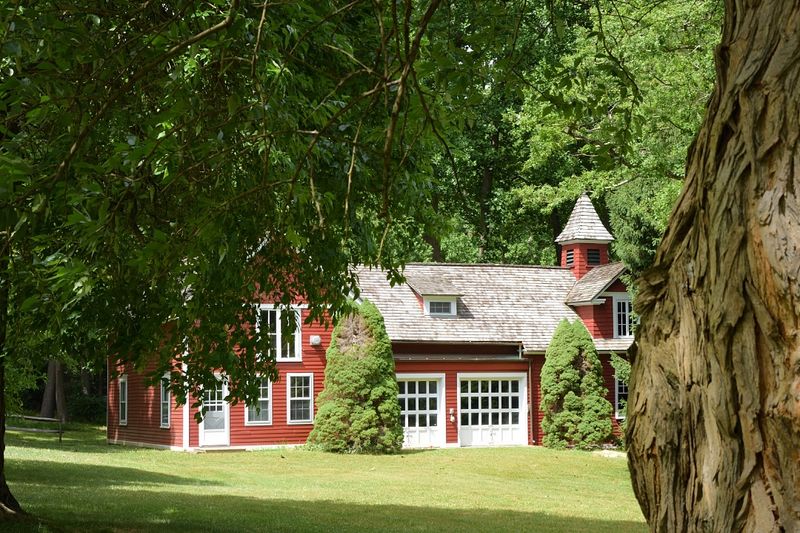
A restored 19th-century barn beside the house now serves as the visitor center, where exhibits introduce the Hartshorne family and the wider region before tours begin. It is an unusually complete setting: house, barn, gardens, bluff, river views, and mature woodland all contributing to the same story.
Instead of presenting history as a row of dates behind glass, Portland Place lets visitors see how people adapted one property over centuries without completely erasing what came before.
Eight Generations of the Hartshorne Family Called This Farmhouse Home
Long before the house acquired gracious rooms and a polished country-estate appearance, the Hartshornes were helping shape the geography of coastal Monmouth County. Richard Hartshorne, an English Quaker born in 1641, arrived in New Jersey during the late 17th century.
He eventually accumulated nearly 2,400 acres across the Navesink Highlands, the Bayshore, and the Sandy Hook peninsula—an enormous stretch of land in a region that looked very different from the busy Shore communities surrounding it today. His son William later acquired the 200-acre farm that became Portland Place.
From there, the property remained tied to the family through eight generations, an almost startling run of continuity for any New Jersey home. Each generation inherited more than a building.
They inherited farmland, family expectations, riverfront scenery, and a house that could be altered to fit new circumstances. What began as a practical colonial dwelling expanded as the family’s needs and fortunes changed.
Agricultural life gradually gave way to the rhythms of a summer estate, yet the earliest structure remained embedded in the growing home. That is what makes Portland Place feel personal rather than monumental.
Its history was shaped by births, meals, visitors, work, inheritances, and everyday decisions made across hundreds of years. The family connection continued into the modern era through Daniel Ward Seitz, a Hartshorne descendant and the property’s final private owner.
When Seitz died in 2008, he bequeathed Portland Place to the Monmouth County Park System. That decision kept the house from being separated from its history or swallowed by development.
It also reunited the estate with preserved land in Hartshorne Woods Park that once belonged to the broader Hartshorne holdings. Eight generations had changed the property considerably, but the final gift ensured that the family’s longest-lasting alteration would be its preservation.
A Humble 1720 Cabin Grew Into an Elegant Country Estate
The dining room contains the biggest architectural surprise in the house. Beneath its more polished appearance is Portland Place’s original dwelling, a Dutch-framed pioneer cabin constructed around 1720.
The one-and-a-half-story building would have been compact and practical, designed for survival and daily work rather than river-view entertaining. Instead of demolishing that early cabin when more space was needed, successive owners built around it.
The result is a home that physically contains its own origin story. Over time, new rooms and wings transformed the small dwelling into a substantial farmhouse.
Later alterations gave Portland Place the proportions and comforts of an elegant country residence, reflecting the Navesink Highlands’ shift from agricultural outpost to desirable summer retreat. Families with the means to escape hotter cities were drawn to the area’s elevated ground, coastal breezes, and broad water views.
Portland Place had all three, plus generations of family history already rooted in the soil. Its architecture followed that transition without becoming a neat replica of any single period.
That is precisely the point. The building’s mismatched ages reveal how historic houses actually develop: one practical addition, fashionable improvement, or changing use at a time.
A working farm required different spaces than a summer home built for leisure and guests, and traces of both identities remain. Even the surrounding property tells a similar story.
Formal garden elements sit within a landscape once devoted to farming, while a 19th-century barn survives beside a residence whose core predates it by roughly a century. The restoration preserved these contrasts instead of smoothing them away.
Visitors can stand in a gracious room and realize that its bones belong to a rugged colonial cabin built when the surrounding Navesink Highlands were thinly settled. Portland Place did not simply survive the last three centuries.
It expanded, adapted, and matured along with the family living inside it.
Restored Rooms and Family Treasures Bring the Past to Life
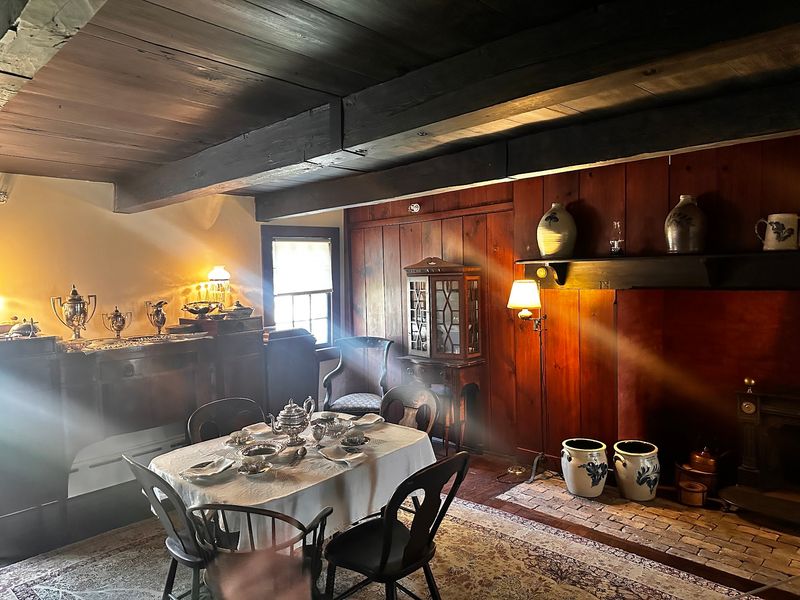
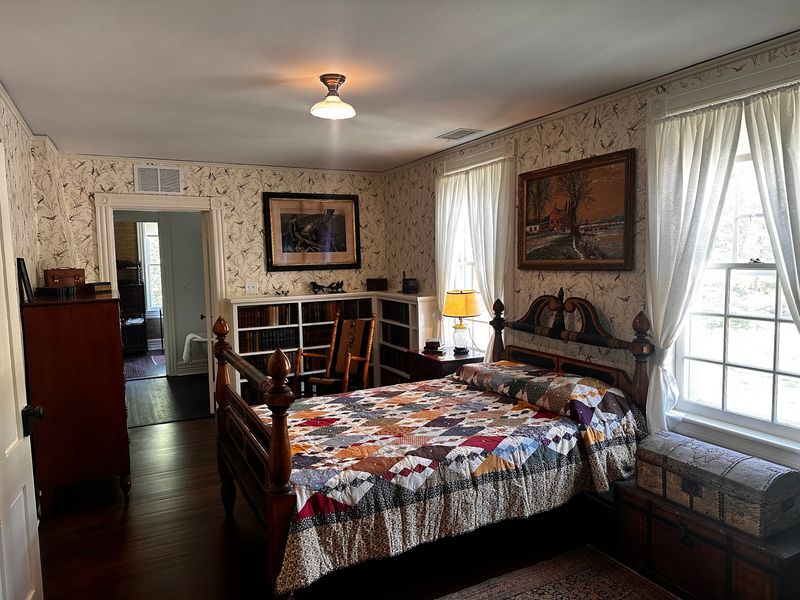
Open the front door, and this stops being a story about acreage and architectural dates. The rooms still hold furnishings, artwork, and objects connected to the people who occupied them, giving visitors the satisfying sense that the family has only recently stepped away.
Rather than filling the house with generic colonial reproductions, the restoration uses surviving pieces and carefully interpreted interiors to show how Portland Place changed over generations. The rooms do not all speak in the same historical voice, either.
The building’s earliest spaces recall its farmhouse beginnings, while later areas reflect the comfort and style expected of a well-appointed country residence. That contrast turns an ordinary walk through the house into a lesson in changing domestic life.
Art plays an especially important role. Hartshorne family members collected and commissioned works by notable American and British painters, and examples are displayed in both the home and visitor center.
These were not merely decorative purchases. They reveal the family’s tastes, connections, and deep attachment to the surrounding landscape.
The restoration itself was a major undertaking led by the Monmouth County Park System, with financial support from the Daniel Ward Seitz Bequest and a donation made to the Friends of the Parks from the Estate of Doris Scheuing.
Work extended beyond the main house to the gardens, barn, walkways, and improvements needed for public access.
The neighboring barn was adapted into a visitor center rather than left as an empty outbuilding. Inside, interpretive panels explore the Hartshornes, early settlement, agriculture, maritime activity, and the Navesink Highlands’ later popularity among artists and vacationers.
Together, the house and exhibits provide context without turning the experience into a lecture. The details do most of the talking: an old structural beam, a family-owned piece of furniture, a painting chosen for a particular wall, and a dining room that still carries the frame of a 1720 cabin.
Sweeping Navesink River Views Made the Property an Artistic Retreat
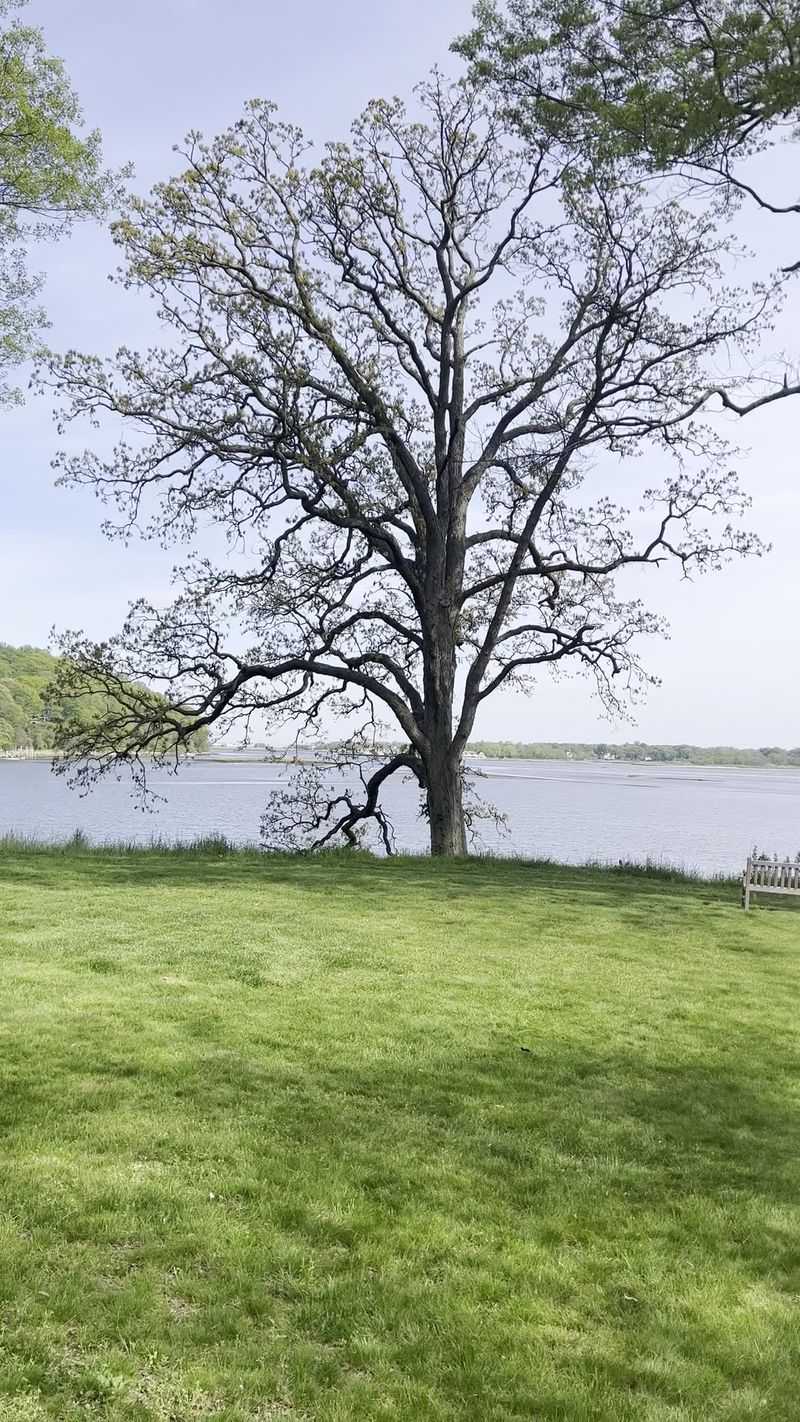
Stand near the edge of the bluff, and the family’s attachment to this particular patch of Monmouth County makes immediate sense. The Navesink River stretches below, catching the coastal light as wooded slopes frame the water.
It is a striking view now, but it would have felt even more secluded before roads, bridges, and modern development reshaped the surrounding area. The elevated setting gave Portland Place both practical and aesthetic advantages.
Breezes moved across the property during warm months, while the river connected the estate visually to the maritime world of the Bayshore and Sandy Hook. By the time the Navesink Highlands became a fashionable destination for summer visitors, the Hartshornes already occupied one of its loveliest vantage points.
Artists and writers were also drawn to the region’s forested bluffs, reflective water, and distinctive coastal light. The family embraced that creative connection, collecting and commissioning paintings by American and British artists.
Works displayed inside the house and visitor center show that the landscape was not simply a pleasant backdrop; it became part of the property’s cultural identity. The preserved grounds still allow visitors to experience that relationship between art and place.
Several vantage points overlook the river, though there is no river access from the historic site. Eight adjacent acres of century forest add another layer to the scenery.
Mature tulip trees rise within habitat used by sensitive wildlife, preserving a pocket of the older coastal woodland that once covered much more of the highlands. That forested area currently has no pedestrian trail access, which helps protect its ecology, but it remains an important part of the view and setting.
Formal gardens closer to the house provide a gentler counterpoint to the woods. Together, the river, bluff, trees, and cultivated grounds explain why Portland Place eventually became more than a farm.
The setting practically demanded long afternoons, open windows, and a canvas within reach.
Free Guided Tours Reveal the Stories Behind This Remarkable Home
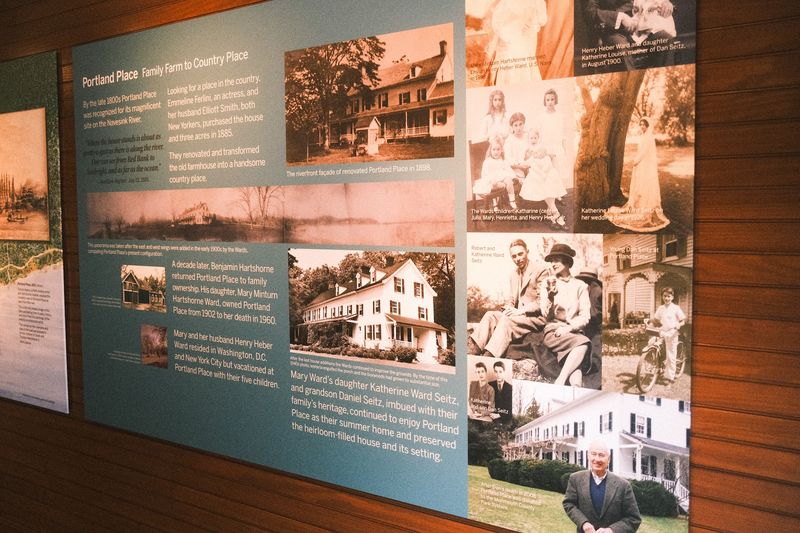
A visit begins in the restored barn, where guests register for a same-day docent-led tour and get their first look at the exhibits introducing Portland Place. Tours are free, which is a delightful rarity for an interpreted historic house with original family connections, restored interiors, and nearly three centuries of history.
During the 2026 season, tours are scheduled Wednesday through Sunday from May 2 through November 15, with departures at 10:30 a.m., 11:30 a.m., 1:30 p.m., and 2:30 p.m. Each group is limited to 10 people, so arriving early is sensible, particularly on a pleasant weekend when Hartshorne Woods Park is busy.
Registration takes place at the visitor center on the day of the tour rather than through advance reservations. Docents guide visitors through the building’s evolution, pointing out how the original cabin became part of a larger farmhouse and how later generations reshaped it into a country retreat.
The small group size suits the house; there is room to notice construction details, family furnishings, and artwork without shuffling through in a crowd. The visitor center, patio, walkways, and main floor are accessible, while the second-floor rooms can be reached only by stairs.
Interpretive materials are available to help visitors who cannot access the upper level. Parking at Portland Place is limited, and ride-sharing is encouraged.
Anyone planning to combine the house tour with a longer hike should use Hartshorne Woods Park’s Rocky Point, Claypit Creek, or Buttermilk Valley access areas rather than leaving a vehicle in the small historic-site lot.
The grounds open daily at 7 a.m. throughout the year, although closing times change seasonally, and severe weather can suspend indoor tours.
For all its grand views and polished rooms, Portland Place never feels disconnected from ordinary life. Its most memorable story remains wonderfully simple: one small cabin grew with one family until eight generations had left their mark upon it.