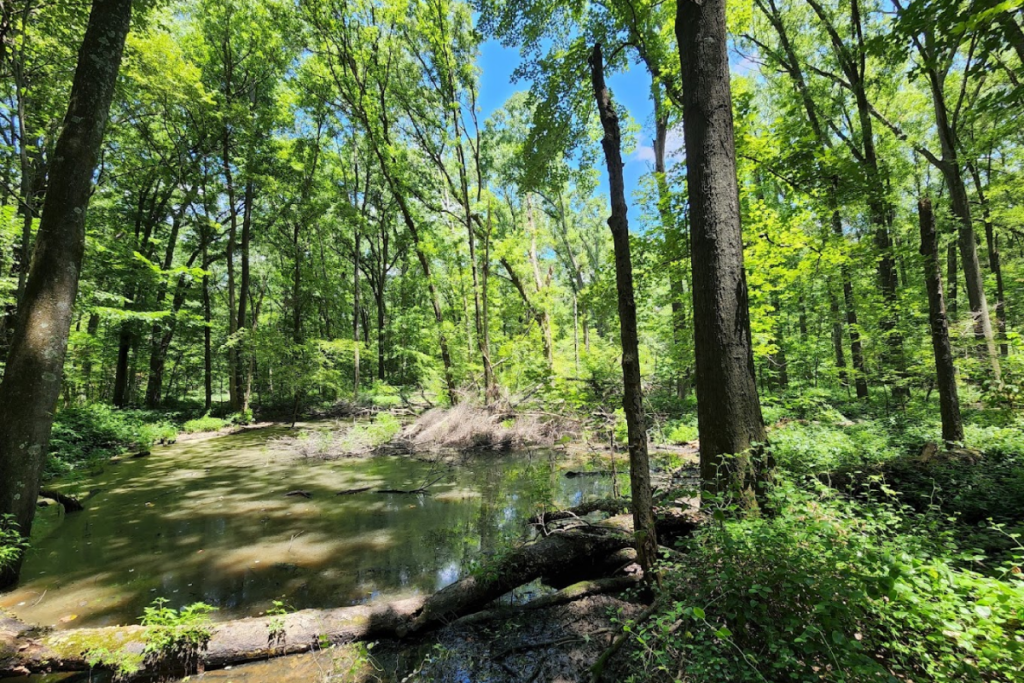
Tucked away in West Tennessee near the quiet town of Greenfield, Big Cypress Tree State Park is easy to miss if you’re not looking for it. At just a fraction of the size of Tennessee’s larger parks, this tiny natural area offers something most sprawling recreation spots can’t: a sense of stepping into a forgotten corner of the world where nature moves at its own pace.
The boardwalk winds through a bottomland forest, the trails are short but sweet, and the whole place carries the calm energy of a secret you stumbled upon by accident.
A Tiny Tennessee State Park With a Surprisingly Big Story
Most people have never heard of Big Cypress Tree State Park, and that’s kind of the point. Covering just 330 acres, it’s one of the smallest parks in the entire Tennessee state system. But what it lacks in size, it makes up for in backstory.
This place was built around a single tree. Not just any tree, but one of the largest bald cypress trees ever recorded in the United States.
For decades, it stood as a living monument, drawing curious travelers from across the region who wanted to see something truly ancient and awe-inspiring.
The park officially opened in 1976, carved out of the surrounding wetlands to protect that singular giant and the ecosystem thriving around it. Locals had known about the tree for generations.
Families would drive out on weekends just to stand at its base and look up.
Today, the park still carries that original mission, preserving a slice of West Tennessee’s natural heritage. Even though the landscape has changed, the commitment to conservation hasn’t.
The trails, boardwalks, and interpretive areas all exist to help visitors connect with the kind of wilderness that’s increasingly rare.
You won’t find flashy amenities or crowded campgrounds here. Instead, you get something quieter and more intentional. It’s a park that asks you to slow down, pay attention, and appreciate the details. And honestly, in a world that’s always rushing, that feels like a pretty big story all on its own.
Why This Quiet Greenfield Park Feels So Hidden Away
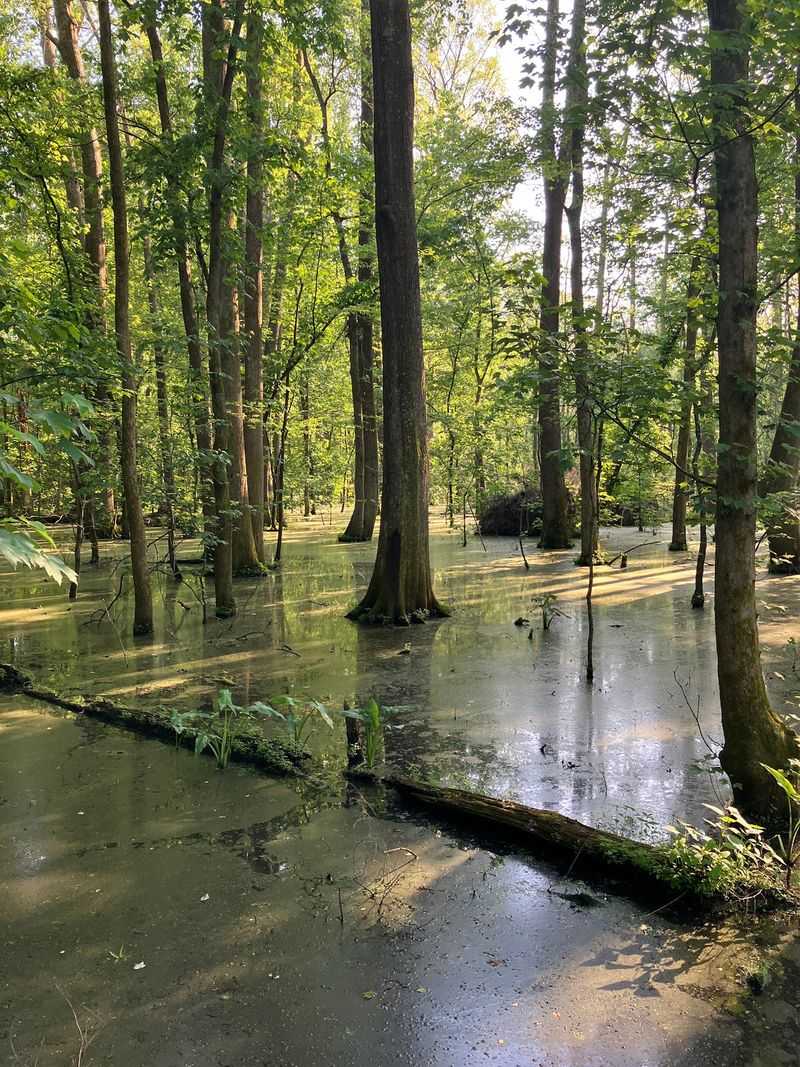
Getting to Big Cypress Tree State Park requires a bit of navigation. It sits about an hour northeast of Memphis, down roads that wind through farmland and small communities where the only traffic you’ll encounter is a tractor or two.
There’s no interstate exit with giant billboards pointing the way.
Greenfield itself is a town of fewer than 2,200 people. It’s the kind of place where everyone knows everyone, and the park feels like a local treasure that just happens to be open to the public.
You won’t see tour buses or out-of-state license plates filling the lot.
Part of what makes this park feel hidden is its location in Weakley County, a region often overlooked by travelers heading to more famous Tennessee destinations. It’s not on the way to anywhere, which means the people who show up are usually the ones who meant to.
That creates a different energy, one that’s more contemplative and less performative.
The park’s small size also contributes to the sense of seclusion. With only a handful of trails and a single boardwalk, there’s not much room for crowds even on busy days.
Most visitors report having the place to themselves, especially on weekday mornings or late afternoons.
And then there’s the landscape itself. The bottomland forest wraps around you like a green curtain, muffling outside noise and creating a pocket of stillness.
Cell service is spotty. The air smells like damp earth and cypress bark. It’s the kind of place that makes you forget, even briefly, that the rest of the world exists.
The Ancient Cypress Tree That Made This Place Famous
Once upon a time, this park was home to a cypress tree so enormous it seemed impossible. Measuring over 40 feet in circumference and estimated to be more than 1,350 years old, it was a living relic from a time before European settlers ever set foot in Tennessee.
Standing beneath it must have felt like standing in a cathedral.
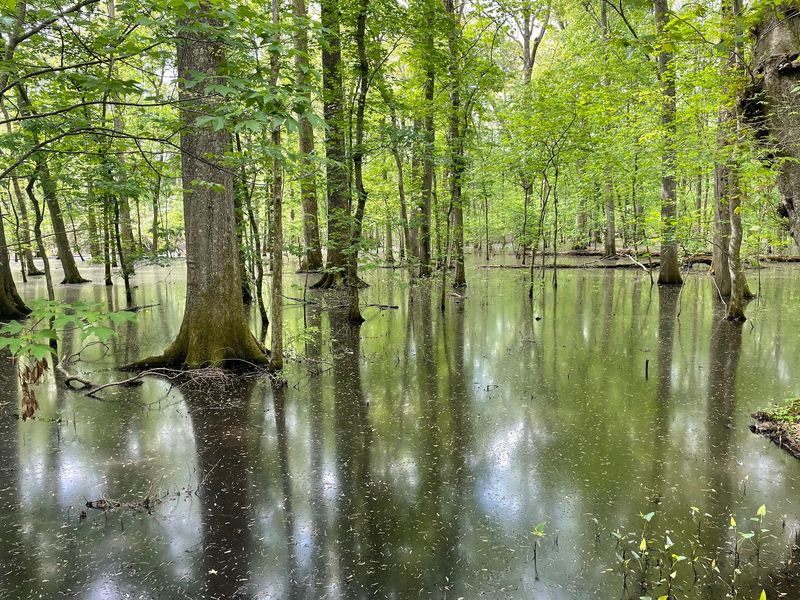
Bald cypress trees are remarkable on their own. They thrive in wet, swampy conditions where most other trees would drown.
Their root systems send up distinctive knobby projections called knees, which help stabilize the tree and possibly assist with oxygen exchange. They can live for centuries, growing slowly and steadily in the rich, waterlogged soil.
But this particular tree was exceptional even among its kind. It became a regional landmark, the sort of natural wonder people would plan trips around.
Families would pose for photos at its base, dwarfed by the sheer scale of the trunk. Naturalists studied it. Artists painted it. It represented continuity, endurance, and the raw power of the natural world.
The tree’s fame spread beyond Tennessee. Articles were written. Documentaries featured it. For a time, it held the title of the largest bald cypress in the United States, a crown it wore quietly in the middle of a West Tennessee swamp.
What made it so special wasn’t just its size, though. It was the way it connected people to deep time, to a version of the landscape that existed long before highways and power lines.
It was proof that some things, if left alone, can grow into something truly extraordinary.
What Happened to the Legendary Tree That Once Stood Here
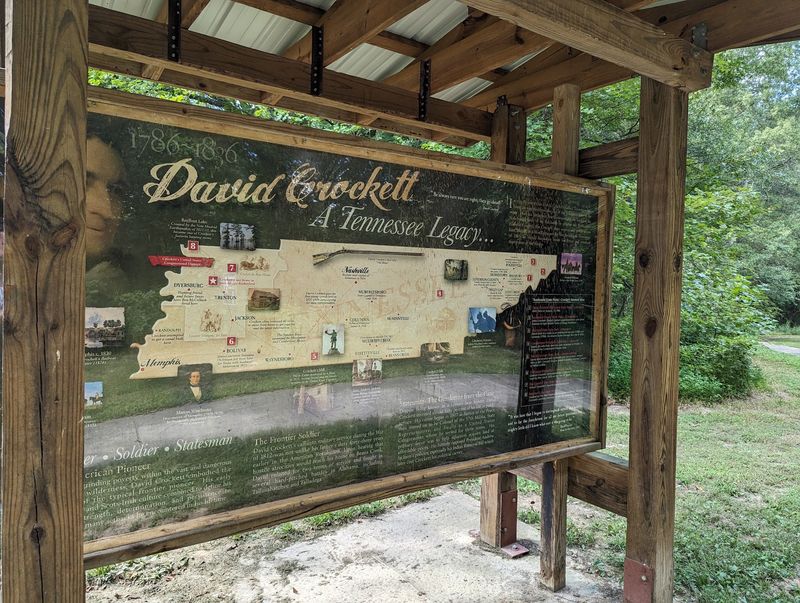
Here’s the hard truth: the tree is gone. In 1976, lightning struck the ancient cypress during a violent storm, splitting it down the middle and mortally wounding it.
The park had just been established to protect it, and within months of opening, the main attraction was dead.
It’s a cruel irony that’s not lost on anyone who visits. The very thing that inspired the creation of the park couldn’t be saved.
Lightning doesn’t care about historical significance or conservation efforts. Nature giveth, and nature taketh away, often without warning.
For a while, the remains of the tree stood as a ghostly reminder of what had been. Visitors could still see the massive stump and sections of the trunk.
But over time, decay set in. The wood softened, fungi moved in, and eventually the remnants collapsed back into the swamp that had nourished the tree for over a millennium.
Some people find this disappointing. They drive out expecting to see the legendary cypress and instead find an empty space where it used to be.
Online reviews occasionally reflect that frustration, the feeling of making a long trip for something that no longer exists.
But there’s another way to look at it. The tree’s absence is part of the story now, a reminder that even the mightiest living things are temporary.
The park didn’t close when the tree fell. Instead, it shifted focus to the ecosystem as a whole, the wetlands and wildlife that continue to thrive.
The cypress may be gone, but the forest it belonged to is still here, still growing, still worth protecting.
Walk the Boardwalk Through a Peaceful Bottomland Forest
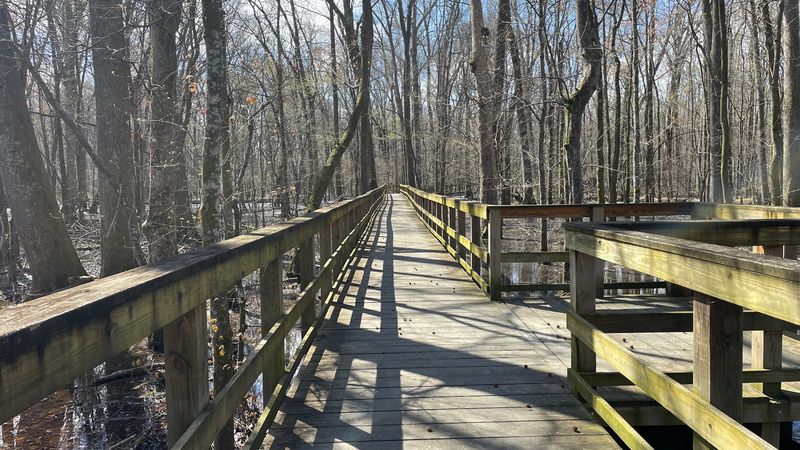
The boardwalk is the heart of the park experience. It starts near the end of the park road and stretches out over the wetlands, giving you a front-row seat to a landscape most people only see from a distance.
The wooden planks creak slightly underfoot, and the whole structure sways just enough to remind you that you’re walking on water.
Bottomland forests like this one are ecosystems shaped by flooding. Water pools in the low areas, creating habitat for cypress, tupelo, and a tangle of understory plants that thrive in the wet conditions.
The soil is dark and rich, constantly fed by decaying plant matter. It’s a different kind of beauty than mountain vistas or open meadows, quieter and more introspective.
Walking the boardwalk, you’re surrounded by life. Frogs call from hidden spots in the underbrush. Dragonflies zip past in flashes of iridescent color. If you’re lucky, you might spot a heron stalking through the shallows or a turtle sunning itself on a log.
The boardwalk isn’t long, maybe a quarter mile at most, but it doesn’t need to be. The point isn’t distance. It’s immersion. Every few steps offers a new angle, a different view of the same interconnected ecosystem.
You notice things you’d miss if you were hiking quickly: the texture of bark, the pattern of light on water, the way sound travels differently in dense forest.
Benches are scattered along the route, inviting you to sit and soak it in. And you should. This is the kind of place that rewards patience, that opens up the longer you stay still.
Wildlife, Wildflowers, and the Little Details Worth Slowing Down For
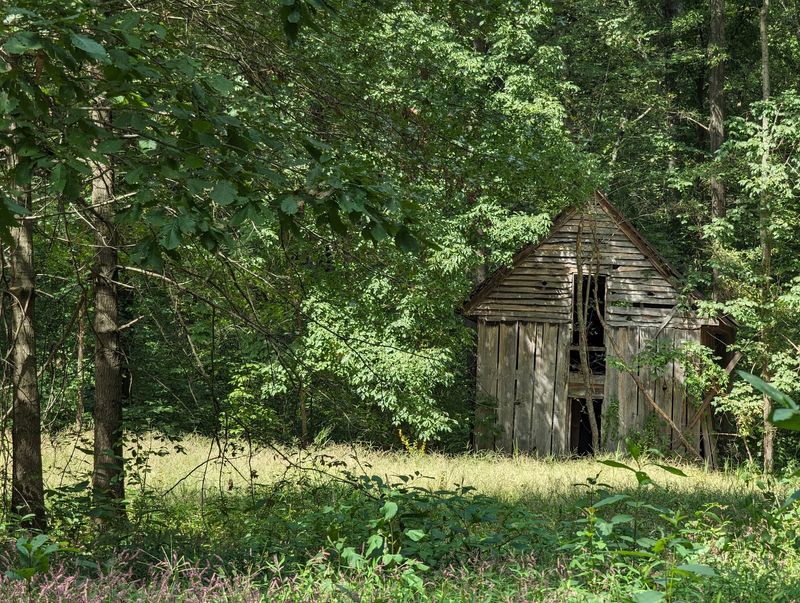
Big Cypress Tree State Park is a magnet for birders. The mix of wetland and forest habitat attracts dozens of species throughout the year, from warblers and woodpeckers to waterfowl and raptors.
Bring binoculars if you have them. Even if you don’t know a sparrow from a finch, the sheer variety is impressive.
Spring is when the wildflowers put on their show. The forest floor erupts in color as native plants take advantage of the sunlight filtering through the canopy before the leaves fully fill in.
Trilliums, violets, and other ephemeral blooms carpet the ground in patches of purple, white, and yellow. It’s fleeting, lasting only a few weeks, but it’s spectacular.
But you don’t have to visit during peak seasons to find something worth noticing. Summer brings the hum of insects, the buzz of cicadas, and the lazy flight of butterflies.
Fall turns the forest into a patchwork of gold and rust. Winter strips everything down to its bones, revealing the architecture of branches and the quiet persistence of evergreen ferns.
The key is to slow down. This isn’t a park where you rush from one landmark to the next checking boxes. It’s a place that rewards observation.
Look closely at the cypress knees poking out of the water. Notice the way moss clings to the north side of tree trunks. Listen for the rustle of something moving through the leaf litter just out of sight.
It’s the little details that make Big Cypress Tree State Park memorable. The play of light on water. The smell of damp earth. The feeling of being completely, blissfully alone in the woods.
Why This Small West Tennessee Park Is Worth the Detour
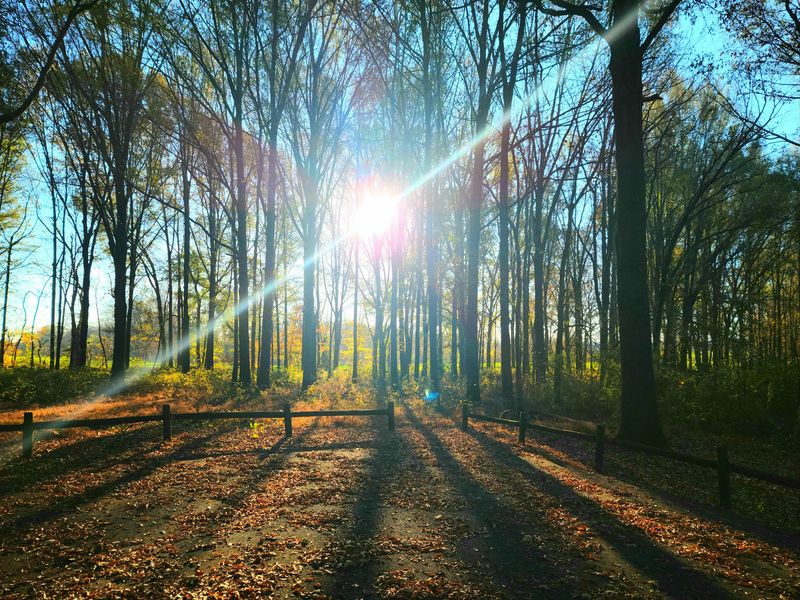
Let’s be honest: Big Cypress Tree State Park isn’t going to fill an entire day. The trails are short, the boardwalk is brief, and there are no waterfalls or dramatic overlooks.
If you’re looking for an adrenaline-packed outdoor adventure, this isn’t it. But that’s exactly why it’s worth visiting.
In a state packed with tourist attractions and bustling recreation areas, this little park offers something increasingly rare: simplicity. There’s no gift shop, no concession stand, no zipline course. Just trees, water, trails, and quiet. It’s a palate cleanser, a place to reset your internal pace.
The park is also accessible in ways that many outdoor spaces aren’t. The paved trails and boardwalk make it easy for visitors with mobility limitations to experience the forest up close.
Families with young kids appreciate the playground and the short distances that don’t require marathon endurance. It’s low-pressure, low-stakes, and genuinely welcoming.
And then there’s the location. If you’re traveling between Memphis and Nashville, or exploring the lesser-known corners of West Tennessee, Big Cypress Tree State Park makes a perfect pit stop. It’s close to other historical sites like Davy Crockett’s birthplace, so you can easily combine visits and make a fuller day of it.
But maybe the best reason to visit is simply this: it exists. Small parks like this one are easy to overlook in favor of bigger, flashier destinations.
Yet they’re often the ones that stick with you longest, the quiet places that remind you why you fell in love with the outdoors in the first place. Sometimes the best adventures are the ones that don’t shout for attention.