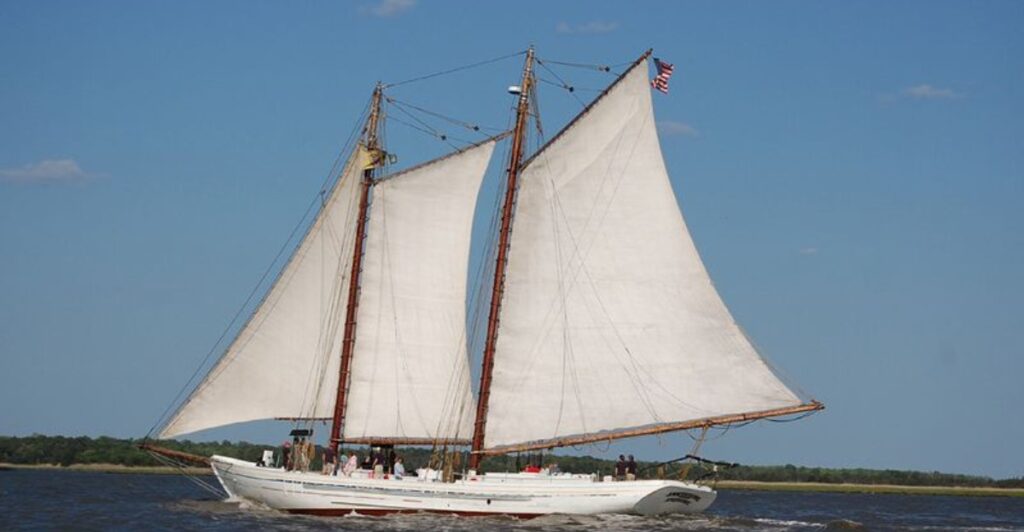
Two wooden masts rise above the Maurice River, their rigging cutting sharp lines across the South Jersey sky. Tied beside weathered shipping sheds in the tiny community of Bivalve, the A.J.
Meerwald looks like it sailed straight out of another century. In a sense, it did.
The oak-hulled schooner was launched in 1928, when Delaware Bay oysters supported bustling docks, packing houses, rail traffic, and thousands of local jobs. Nearly a century later, the vessel is not sealed behind museum glass.
It still carries passengers under sail. The Bayshore Center at Bivalve has turned this hardworking survivor into a floating classroom, while its waterfront campus preserves the larger story of the communities built around the bay.
Visitors can step into historic sheds, learn how oysters shaped the region, and board New Jersey’s official tall ship for a genuine maritime adventure. This is living history with creaking timbers, snapping canvas, and salt air included.
Bivalve Was Once the Oyster Capital of the World
The nickname sounds almost comically grand for such a quiet place, but Bivalve once had every right to call itself the Oyster Capital of the World. This small Cumberland County community sits along the Maurice River, a short run from Delaware Bay and some of the richest oyster grounds on the East Coast.
During the industry’s peak in the late 1800s and early 1900s, its waterfront was anything but sleepy. Oyster schooners crowded the river, workers hurried between packing houses, and barrels and baskets of shellfish moved from the docks to dinner tables far beyond New Jersey.
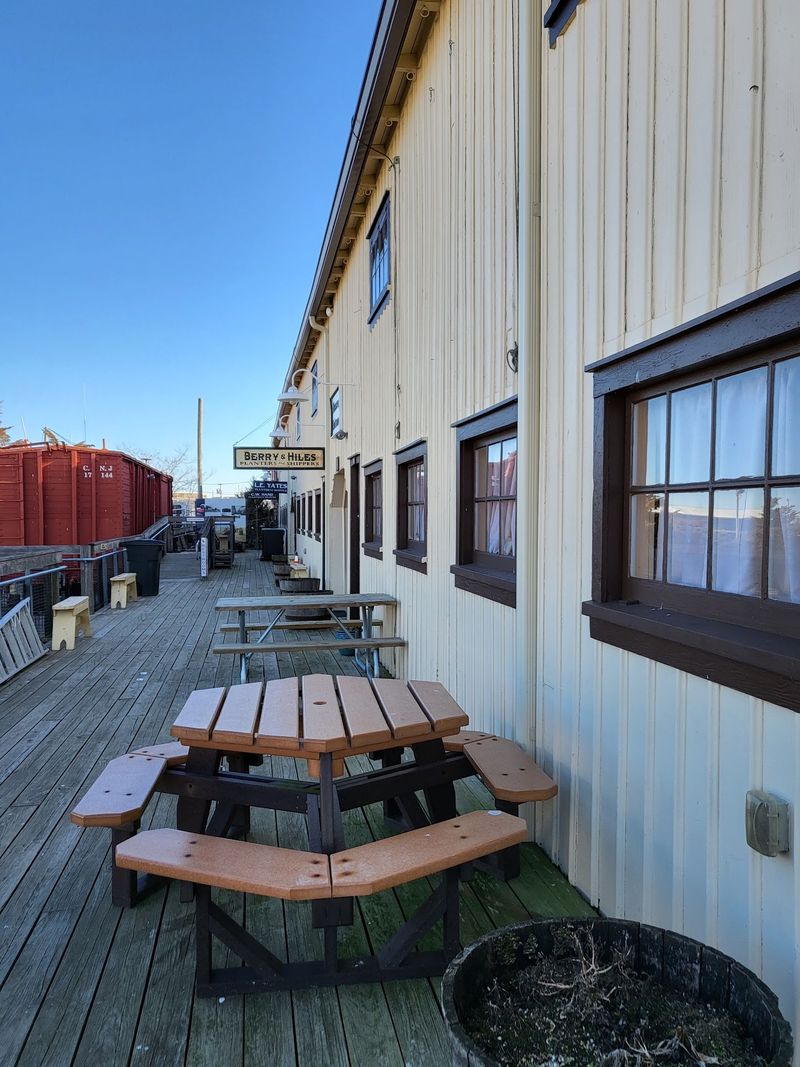
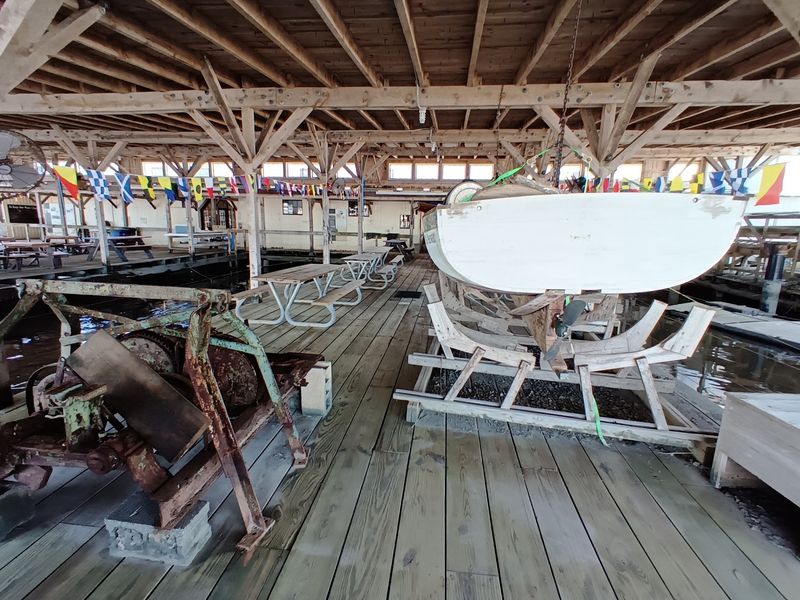
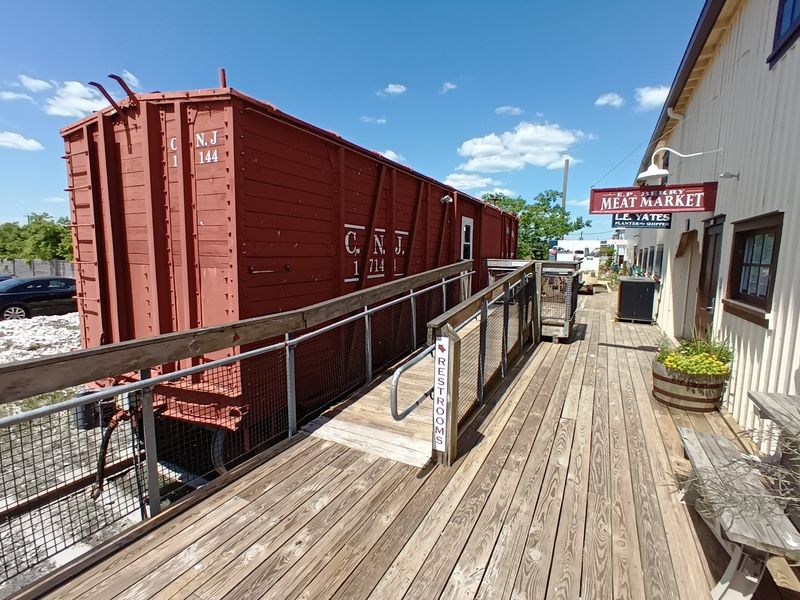
The Central Railroad of New Jersey built the Bivalve shipping sheds and wharves in 1904, creating an efficient link between boats, shucking houses, and major markets. Roofs added over the wharves in 1916 allowed crews to work with some protection from the weather.
At the height of the trade, thousands of people earned their living through harvesting, sorting, shucking, packing, and shipping oysters. The local economy depended on the bay so completely that a poor season could ripple through the entire community.
Disease, changing environmental conditions, the Great Depression, and shifts in the seafood business eventually reduced the industry’s scale. What remains, however, is unusually tangible.
Bivalve still has seven connected shipping sheds standing along the river, their long silhouettes preserving the shape of the old working waterfront. Fishing vessels continue to use the area, and oyster cultivation remains part of Delaware Bay life.
The crowds and railcars may be gone, but the river, wharves, sheds, and schooner make it easy to picture the era when this little port helped feed a nation.
The A.J. Meerwald First Took to the Water in 1928
On September 7, 1928, the Charles H. Stowman & Sons shipyard in Dorchester launched a new oyster schooner built for brothers Augustus C. “Gus” Meerwald and William “Bill” Meerwald.
The vessel cost $18,000 and was named for their father, Augustus Joseph Meerwald, a successful oysterman who served on the New Jersey Board of Shellfisheries. Everything about the boat reflected the practical needs of Delaware Bay.
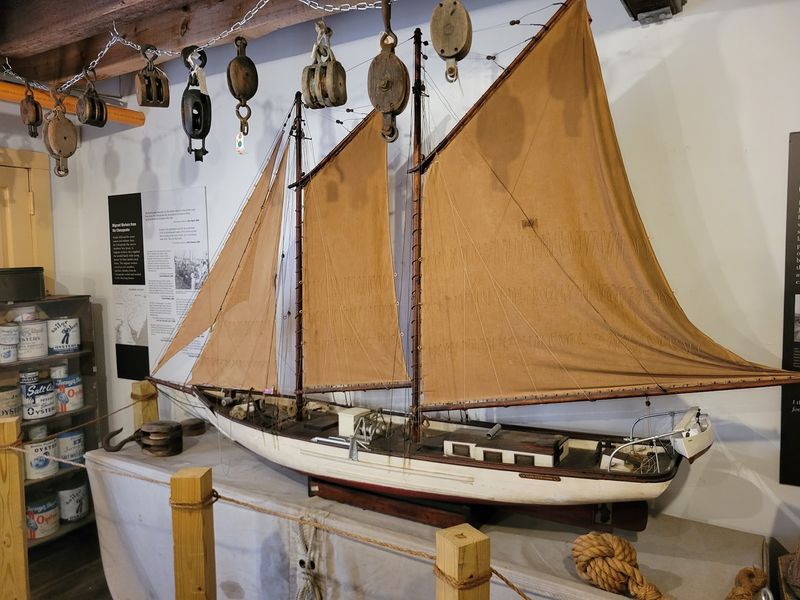
Its shallow draft helped it work local waters, its wide beam provided useful deck space, and its low freeboard made hauling heavy oyster dredges less punishing. A gasoline-powered winder pulled the dredges aboard, while sails and an engine gave the crew flexibility on the water.
The numbers remain impressive today. The A.J. Meerwald measures 85 feet along the deck and 115 feet from the tip of the bowsprit to the end of the main boom. Its two masts carry a gaff-rigged sail plan totaling 3,562 square feet, and the oak-on-oak construction pairs oak planking with oak frames.
Yet the schooner’s working career was anything but straightforward. Financial trouble left it idle for several years during the Great Depression.
In 1942, the federal government commandeered the vessel for wartime service, renamed it 86001-F, and converted it into a fireboat supporting ships handling munitions around Philadelphia and Camden. Returned to the Meerwald family in 1947, it was soon sold and renamed Clyde A.
Phillips, and put back to work. Later owners converted the boat for surf clamming, piling on equipment and sending it offshore.
By the end of the 1970s, the old schooner was retired and facing an uncertain future—a remarkably ordinary ending for a vessel that would eventually become New Jersey’s official tall ship.
A Remarkable Restoration Returned the Schooner to Sail
By the time Captain John Gandy found the former A.J. Meerwald in Maryland in 1986, its graceful lines were still there, but decades of hard labor and inactivity had taken a toll.
Saving the vessel required more than patching a deck or replacing a few boards. It meant building an organization, raising substantial funds, researching the schooner’s original construction, and finding people willing to contribute years of skilled work.
In 1988, a group led by 23-year-old Meghan Wren formed the Clyde A. Phillips Foundation, which later became the Delaware Bay Schooner Project and eventually the Bayshore Center at Bivalve.
Gandy donated the boat, giving the fledgling organization both an enormous opportunity and an equally enormous project. The schooner was lifted from the Maurice River by crane in 1992 and set ashore in Bivalve.
Professional shipwrights, volunteers, donors, and preservation agencies then worked to return it to its historic appearance and purpose. Restoring a wooden workboat is a complicated balancing act.
New material must make the vessel safe enough to carry passengers, yet the finished boat must retain the construction, proportions, and character that make it historically meaningful.
The team reconstructed the schooner’s oak hull and traditional rig while reviving the name A.J. Meerwald. On September 12, 1995, the vessel was rechristened and launched again.
It entered the National Register of Historic Places that year and was formally commissioned in 1996. Two years later, Governor Christine Todd Whitman designated it New Jersey’s official tall ship.
Preservation has not stopped with that first restoration. Wooden vessels demand constant inspection and repair, and major structural work remains part of the schooner’s life.
That continuing care is precisely why the A.J. Meerwald can still move under sail instead of surviving only in old photographs.
Visitors Can Climb Aboard for a Delaware Bay Adventure
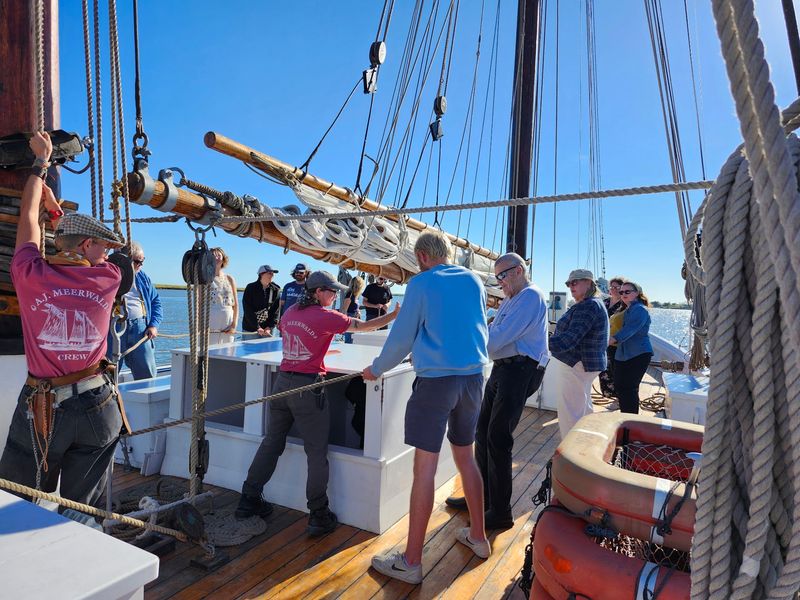
The first surprise aboard the A.J. Meerwald is how physical the experience feels.
Lines run across the deck, canvas rises overhead, and the crew moves deliberately as the vessel leaves the dock and prepares to sail. Passengers are not required to sit quietly and watch from a fixed seat.
When conditions allow, they may help haul lines and raise the sails, getting a quick lesson in why operating a traditional schooner takes teamwork. Those who would rather relax can settle in, watch the shoreline slip past, and listen for the change in sound when the engine gives way to wind in the sails.
With room for up to 49 passengers, the schooner feels intimate enough for the crew to explain what is happening without turning the outing into a formal lecture. Programs often connect sailing with the ecology and working history of the region, covering subjects such as oyster harvesting, water quality, navigation, and the wildlife of the Delaware estuary.
The A.J. Meerwald travels rather than remaining permanently at its Bivalve dock.
Its seasonal itinerary can include public sails from Bivalve, Cape May, and other ports around New Jersey and the wider Mid-Atlantic region. That mobility follows the spirit of a vessel built to work, not pose.
Public trips, educational sails, and private charters are offered, but routes and dates depend on weather, maintenance, and port schedules. Checking the current calendar before driving to Bivalve is essential, especially because the schooner may be spending part of the season elsewhere.
Bring a layer even on a warm day; open water has its own thermostat. Soft-soled shoes are also a sensible choice on a historic wooden deck where ropes, fittings, and narrow passages are part of the experience.
Historic Shipping Sheds Tell the Story of a Vanished Industry
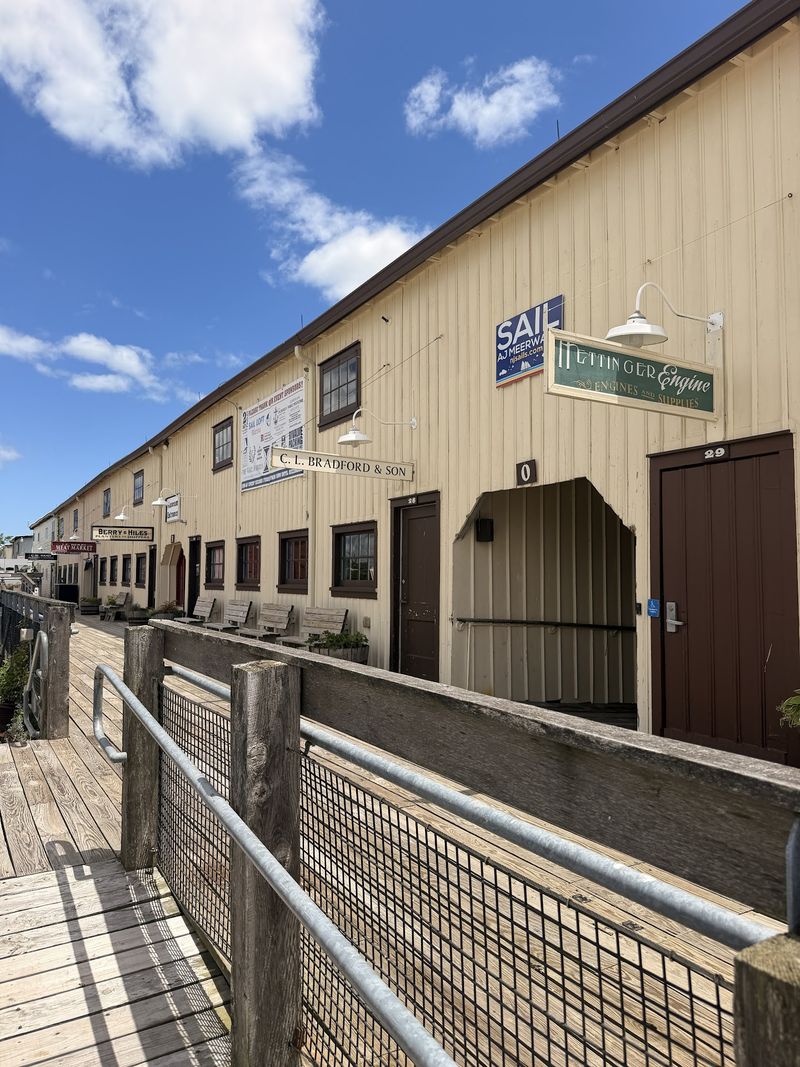
Long before refrigeration trucks could race seafood up the highway, Bivalve needed a waterfront system capable of moving an extremely perishable product quickly. The surviving shipping sheds show how that system worked.
Built by the Central Railroad of New Jersey in 1904, the row of structures stands beside the Maurice River with covered wharves extending along the water. Oyster boats could unload close to the buildings, where their catch was sorted, handled, and prepared for shipment by rail.
The layout makes the old operation understandable at a glance: river on one side, railroad connections on the other, and the busy work of the seafood trade in between. Today, the sheds form the centerpiece of the Bayshore Center’s campus and house the Delaware Bay Museum.
Exhibits draw on tools, photographs, boats, recorded voices, and other artifacts to explore more than the mechanics of oyster harvesting. They introduce the shipbuilders, captains, shuckers, packers, and families whose lives followed the rhythms of the bay.
That human focus matters because the oyster industry shaped local communities well beyond the docks. It influenced migration, created jobs for generations of residents, and produced a distinct culture along the South Jersey bayshore.
The buildings themselves carry much of the story. Their heavy timbers, practical construction, and position over the water reveal that this was an industrial site rather than a decorative waterfront.
The museum operates seasonally and may also open for scheduled events, so hours should be confirmed before a visit. When accessible, the site includes designated parking, ramps, flat surfaces, an elevator, tactile displays, captioned orientation films, and audio listening stations.
Even when the schooner is away, the sheds give Bivalve’s oyster era a scale and texture that a display case alone could never provide.
The Bayshore Center Keeps New Jersey’s Maritime Heritage Alive
A preserved ship can tell visitors what happened in the past, but a working ship can demonstrate it. That difference sits at the heart of the Bayshore Center at Bivalve.
The nonprofit operates the A.J. Meerwald as both a historic vessel and a hands-on classroom, using it to connect maritime history with the environmental condition of New Jersey’s waterways.
Students and adults can learn how wind moves a schooner, how sailors navigate, why oysters matter to an estuary, and how human activity changes the bay. Those ideas become much harder to ignore when the lesson unfolds on the same kind of vessel that once dredged the Delaware Bay.
Shore-based programs, museum exhibits, public events, and the historic waterfront broaden that work beyond sailing days. The center occupies a place where the boundaries between nature, labor, and local identity have always been thin.
Oysters were not simply a menu item here; they were an economic engine, an environmental resource, and the reason whole communities developed along the river. Maintaining that story requires the same persistence that saved the schooner in the first place.
The center acquired the shipping-shed complex in 2001 and continues to care for buildings and wharves that have faced more than a century of tides, storms, and coastal weather. The A.J.
Meerwald presents an even greater challenge, since salt water and wooden hulls do not make a low-maintenance partnership. Yet that ongoing work gives Bivalve something rare.
The town’s defining history has not been polished into an abstract exhibit or reduced to a roadside marker. It survives in oak planks, worn docks, broad sails, and a schooner that still answers the wind nearly a hundred years after its first launch.