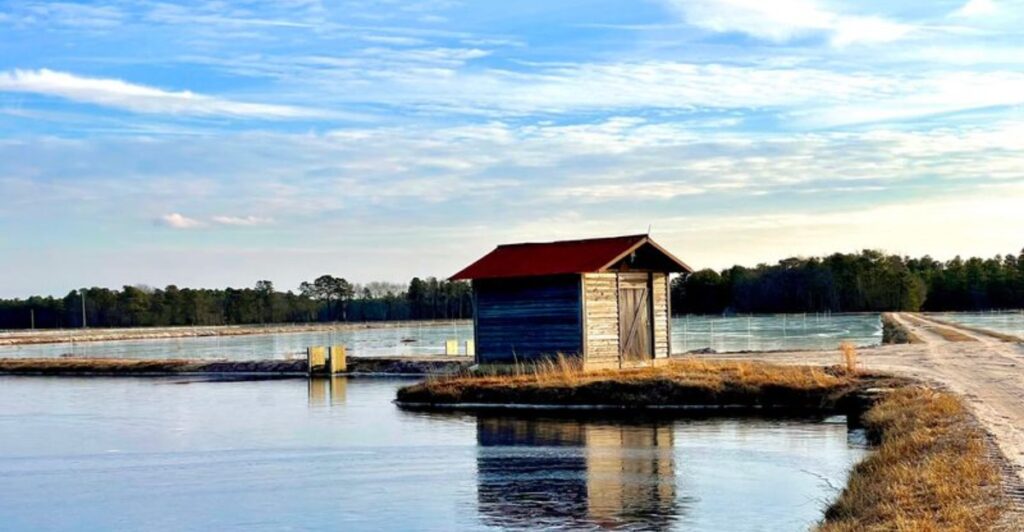
A row of weathered cottages appears beyond the pines, their red roofs glowing against pale sand roads and dark green woods. There are no traffic lights, bright storefronts, or modern subdivisions in sight—just old farm buildings, still water, and enough quiet to make the present day feel very far away.
This is Whitesbog Historic Village, a former cranberry-farming community tucked inside Brendan T. Byrne State Forest near Browns Mills.
Founded in 1857, the village once bustled with workers, wagons, packing operations, and families whose lives revolved around the harvest. It also became the birthplace of the cultivated highbush blueberry, thanks largely to the determination of Elizabeth Coleman White.
Today, its cottages, bogs, gardens, and sandy trails remain remarkably atmospheric. Whitesbog does not look polished into a staged version of history.
It feels weathered, practical, and real—a storybook world where the scenery happens to come with one of New Jersey’s most important agricultural stories.
Whitesbog Village Hides Deep in the New Jersey Pine Barrens
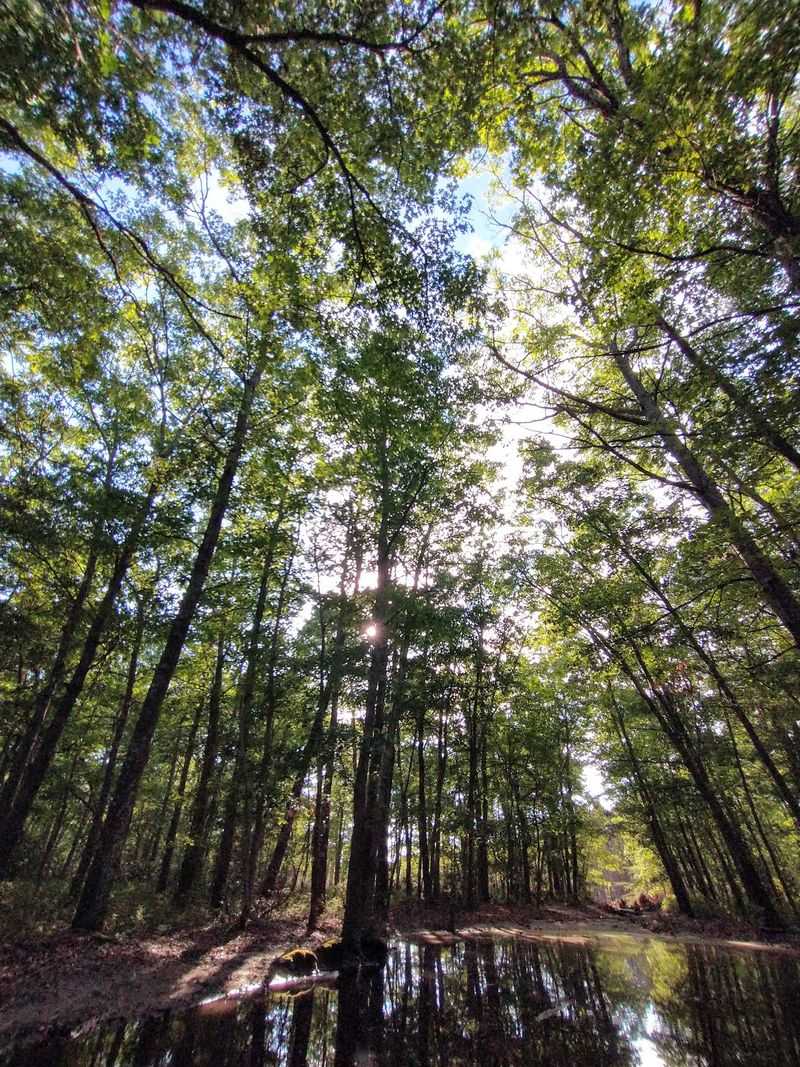
The transition happens gradually. Suburban roads give way to long stretches of forest, the traffic thins, and the sandy soil of the Pine Barrens begins showing through beneath the trees.
Then Whitesbog appears, seemingly miles removed from the New Jersey most people picture.
The historic village sits near Browns Mills in Burlington County, almost exactly in the middle of the state and surrounded by Brendan T. Byrne State Forest. It is part of a roughly 3,000-acre landscape of cranberry bogs, blueberry fields, reservoirs, creeks, forest, and sugar-sand roads.
That secluded setting is a large part of its appeal. Whitesbog was never meant to be a decorative village or a tidy cluster of museum buildings.
It developed as a working agricultural community in a place where the acidic soil and high water table made ordinary farming difficult but created excellent conditions for native cranberries and blueberries. Water still defines the scenery.
Narrow roads follow reservoirs and bogs, while drainage channels and floodgates hint at the engineering required to control the growing cycle. In warmer months, everything seems intensely green.
Fall brings rust-colored foliage and cranberry harvest activity, while winter strips the landscape down to still ponds, bare branches, and wide skies. The quiet can be startling if you arrive after fighting traffic elsewhere in the state.
Stand beside one of the bogs for a few minutes and you may hear little beyond wind, birds, and the occasional crunch of tires on sand. Yet this is not wilderness untouched by people.
Every pond, ditch, building, and field reflects generations of work. That combination—deep forest wrapped around an old company village—is what makes Whitesbog feel less like an attraction and more like a place stumbled upon in the opening chapter of a novel.
A Cranberry Farm Grew Into a Thriving Company Town
It all began in 1857, when James A. Fenwick purchased 108 acres of wild cranberry bog and pine forest along Cranberry Run.
Commercial cranberry cultivation was still relatively new in New Jersey, but the Pine Barrens offered the sand, muck, and readily controlled water the crop needed. Fenwick expanded the operation, and his son-in-law Joseph Josiah White eventually took charge after Fenwick’s death in 1882.
Known as J.J. White, he was equal parts farmer, mechanic, engineer, and businessman.
He had already co-written an influential cranberry-growing manual with his wife, Mary Fenwick White, and understood that a successful bog depended on far more than simply planting vines. Dams, canals, reservoirs, drainage systems, storage buildings, packing facilities, and transportation all had to work together.
Under White, the farm grew into a 3,000-acre operation. By the time it was incorporated as J.J. White Inc. in 1912, Whitesbog had become New Jersey’s largest and one of its most advanced cranberry farms. A community grew alongside the business.
The main village included permanent homes, workers’ cottages, a general store, post office, schoolhouse, barrel factory, repair shops, warehouses, and an enormous sorting and packing plant. Seasonal harvesters stayed in two separate settlements called Rome and Florence, and the workforce could swell dramatically when the berries were ready.
Italians and other immigrant laborers were important parts of that seasonal community, while women and children also performed demanding, poorly paid work in the bogs. Pickers were sometimes compensated with tickets or company scrip redeemable at the store or exchangeable for cash.
Life was not the romantic country interlude the surviving buildings might suggest. It was organized around physical labor, water management, weather, and a short harvest window.
Whitesbog’s beauty came from work, and its preserved landscape makes more sense when viewed as the remains of a complicated industrial village built around fruit.
Weathered Cottages and Red-Roofed Buildings Preserve the Past
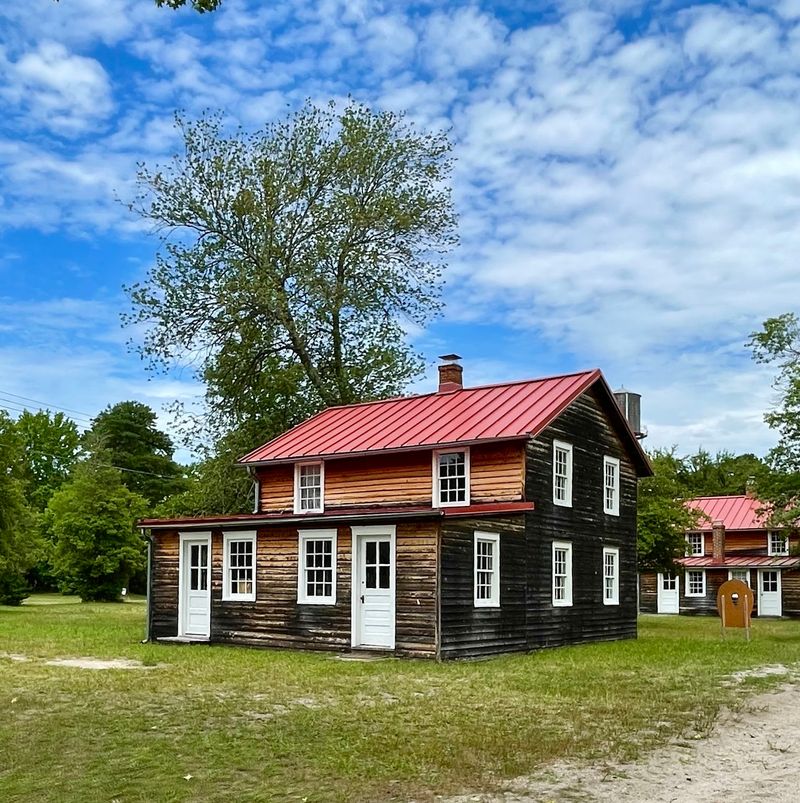
Walk down the village road and the first thing that catches the eye is the color palette. Gray cedar siding, dark wooden walls, rusty-red metal roofs, white-trimmed windows, and sandy lanes create a scene that looks almost art-directed.
The effect is especially striking under a blue autumn sky, but Whitesbog’s character comes from its imperfections. Boards are weathered.
Buildings lean into their age. The surviving structures look like they have endured Pine Barrens heat, damp winters, and more cranberry seasons than anyone can count.
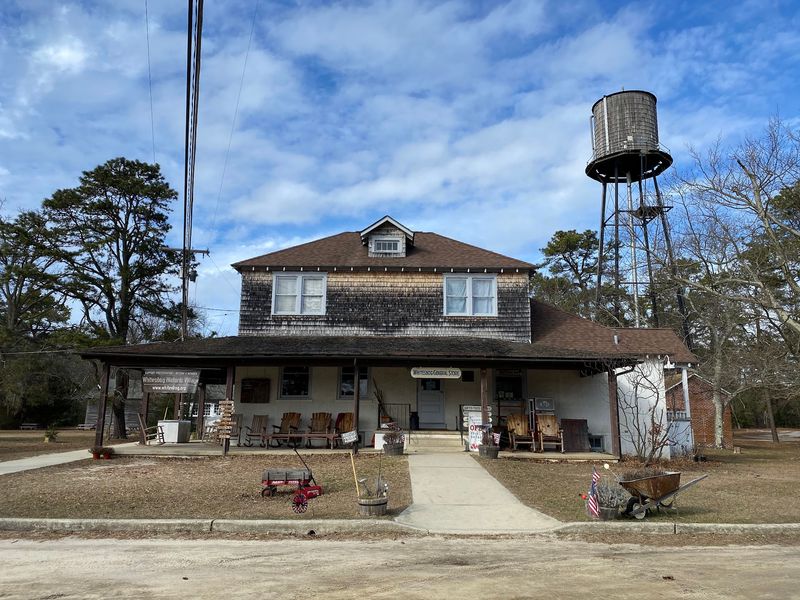
Among them are workers’ cottages, storage buildings, the barrel factory, agricultural sheds, and the 1924 General Store. The store once served as a practical center of village life, supplying residents and workers who could not simply make a quick run to a supermarket.
Today, it opens on select hours—regularly listed as Saturdays from 10 a.m. to 2 p.m.—and carries locally themed goods such as cranberry and blueberry preserves, honey, candy, books, crafts, and hiking supplies. Elsewhere, the remains of the former sorting and packing complex reveal the scale of the business.
Cranberries had to be cleaned, graded, packed, stored, and shipped, and Whitesbog developed specialized spaces for every step. Suningive, the home Elizabeth White built in 1922 and 1923, offers a different perspective.
Its surrounding gardens were shaped around native Pine Barrens plants rather than formal imported specimens, reflecting White’s interest in the landscape beyond its commercial crops. Not every building is routinely open, and that restraint helps the village retain its atmosphere.
Visitors are not funneled through a polished sequence of exhibits. Instead, signs, tours, and occasional programs add context while the roads and structures do much of the storytelling.
Whitesbog is listed on both the New Jersey and National Registers of Historic Places, but its real power is simpler. You can still stand between the cottages and imagine this isolated road as someone’s entire neighborhood.
Elizabeth White Helped Create the Modern Blueberry Here
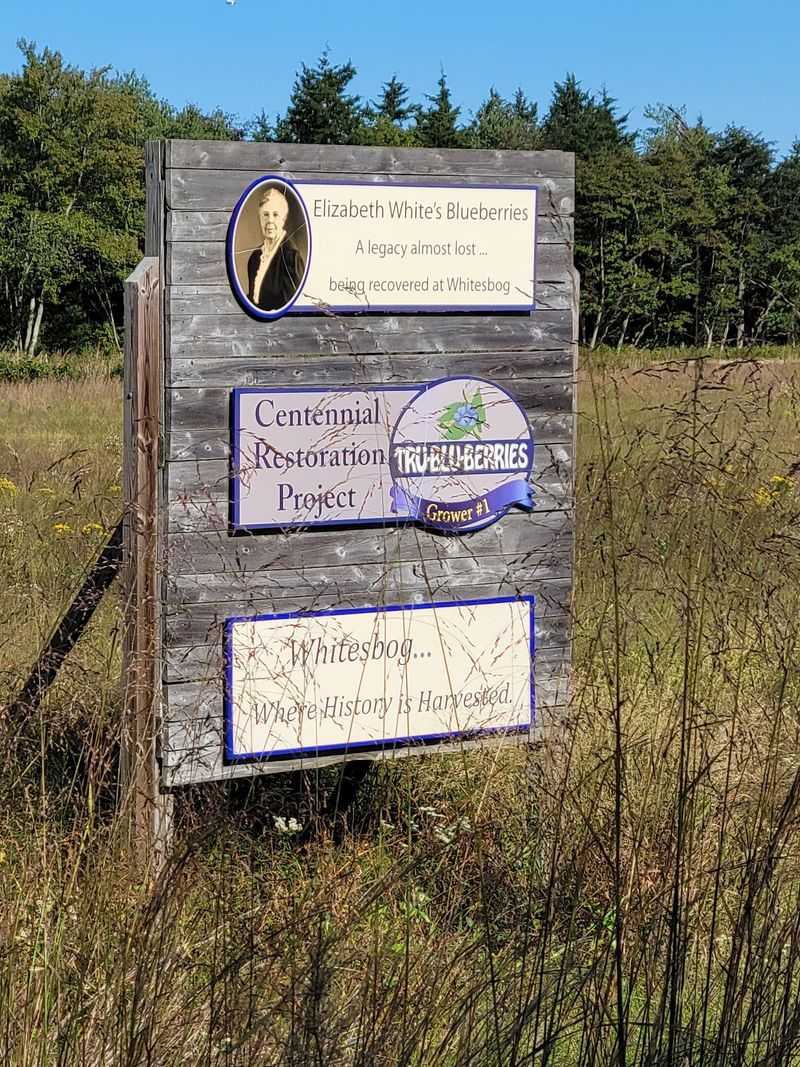
Before the early 20th century, blueberries were usually gathered in the wild. Farmers had tried to cultivate them, but the plants resisted easy domestication, and the berries varied widely in size, flavor, and quality.
Elizabeth Coleman White saw an opportunity hiding between her family’s cranberry bogs. Born in 1871, she began working at Whitesbog in 1893 and became deeply involved in its agricultural experiments.
In 1911, she read about research by U.S. Department of Agriculture botanist Frederick Vernon Coville, who had discovered that blueberries required highly acidic soil.
That was hardly a problem at Whitesbog; acidic Pine Barrens ground was everywhere. White contacted Coville and offered land, funding, workers, and practical knowledge for his experiments.
She also recruited local woodsmen—people who knew the Pine Barrens well—to search for wild bushes producing unusually large or flavorful berries. A promising plant could earn its finder a cash reward, and the best specimens were brought back for propagation and crossbreeding.
The collaboration paired Coville’s scientific methods with White’s knowledge of local growing conditions and talent for organizing work. In 1916, their efforts produced the first commercial crop of cultivated highbush blueberries.
White also helped rethink how the fruit was sold, using clear cellophane over berry boxes so customers could inspect what they were buying. The innovation seems ordinary now, but it made an unfamiliar cultivated fruit easier to market.
Blueberries soon became a major crop, spreading far beyond South Jersey into farms and grocery stores across the country. White continued experimenting with native plants, including American holly, and established a nursery at Whitesbog.
Her house and garden, Suningive, remain central to the village story, and the nearby Blueberry Trail leads toward an early test field. The next time a blueberry lands in a muffin, pancake, or cereal bowl, it is worth remembering that its family tree may lead back to one determined New Jersey farmer working among these sandy bogs.
Sandy Trails Wind Past Cranberry Bogs and Quiet Forests
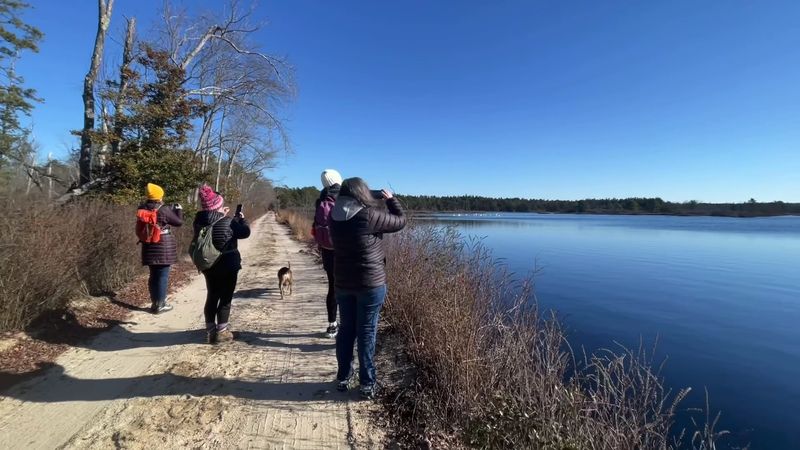
Here is the secret to exploring Whitesbog properly—do not rush it. The terrain is mostly flat, but the property rewards slow walkers who notice reflections on the water, wild blueberry bushes along a trail, or a great blue heron standing motionless near a bog.
Several marked routes begin around the village and spread into the surrounding farm landscape. The Historic Cranberry Trail loops past workers’ cottages, former packing and storage buildings, and a demonstration bog, making it a natural choice for visitors interested in the agricultural story.
The Blueberry Trail connects Elizabeth White’s former home with the historic test-field area, while wild blueberry plants grow along parts of the route. The Holly Trail reaches toward remnants of the old nursery operation, another reminder that White’s interests extended beyond berries.
For a shorter family-friendly outing, the Nature Trail follows mossy paths and boardwalks toward ponds and the gardens around Suningive. Union Pond offers a quick loop with summer water lilies and broad reflections, while the Rome Village Trail ventures toward a former seasonal workers’ settlement and the photogenic hummocks of Rome Pond.
Conditions change with the weather. Sugar sand can be loose and surprisingly tiring, puddles linger after rain, and biting insects take their Pine Barrens duties seriously in warmer months.
Sturdy shoes, water, sunscreen, and insect repellent are sensible even if the plan is only a casual stroll. Wildlife provides plenty of company, including deer, frogs, turtles, songbirds, waterfowl, and the occasional snake minding its own business.
Seasonal programs add another layer, from blueberry events in summer and cranberry harvest activities in fall to winter tundra swan outings, garden walks, wagon rides, and guided history hikes. The landscape never performs on command, though.
Some days its biggest attraction is simply the silence stretching across the bogs.
What to Know Before Visiting Whitesbog Historic Village
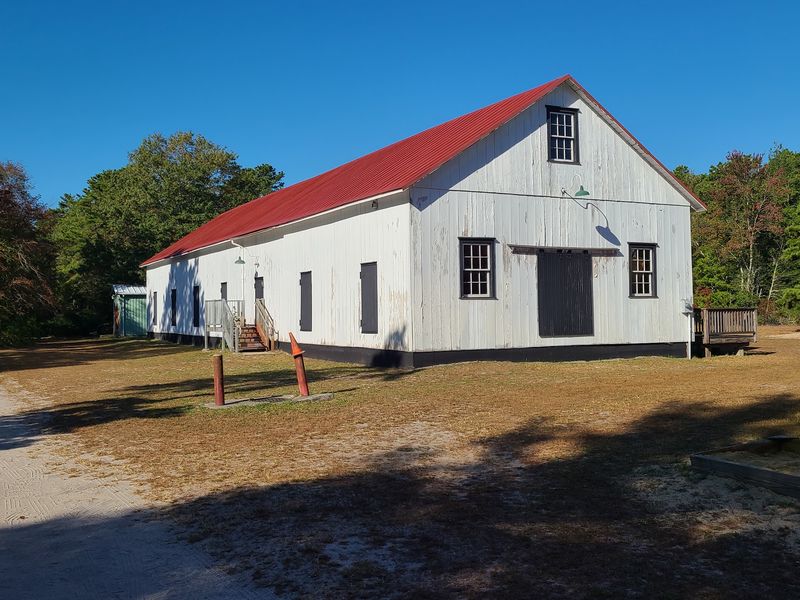
The historic grounds and trails are generally open daily from sunrise to sunset, throughout the year, at 120 West Whites Bog Road in Browns Mills. Admission is typically not required for a self-guided walk, although tours, festivals, workshops, and special programs may charge a fee or require advance registration.
Whitesbog is spread across a working landscape rather than arranged like a conventional museum campus, so arriving with a trail map makes the experience much easier. Cell service can be inconsistent, and downloading the map before entering the forest is a smart little precaution.
Parking is available near the village, but large events can draw crowds and alter traffic patterns.
The 1924 General Store normally keeps more limited hours than the outdoor grounds, with Saturday hours commonly set from 10 a.m. to 2 p.m., so anyone hoping to browse the preserves, books, crafts, and local goods should confirm the latest schedule.
Restroom availability may also depend on the day or event. Dogs are generally welcome outdoors when leashed, provided owners clean up after them, but individual programs or buildings may have different rules.
A typical visit can last anywhere from an hour to half a day. The central village is compact, while the wider network of sandy roads and trails makes it easy to extend the outing.
Spring brings blooming native plants and energetic frogs. Summer centers on blueberries, fall belongs to the cranberry harvest, and winter offers open views and migrating birds without the usual army of mosquitoes.
Some historic buildings are accessible only during scheduled tours, and active farm areas should be viewed from designated roads and paths. That slight unpredictability suits Whitesbog.
It remains part historic site, part working farm, and part Pine Barrens back road—a place where red roofs, dark water, and old cottages still hold an entire community’s story.