Gatlinburg sits right at the doorstep of the Great Smoky Mountains, which means you’re already starting with one of the best free attractions in America. But even beyond the national park, this mountain town offers plenty of ways to fill your days without emptying your wallet.
Whether you’re riding the free trolley, browsing local art studios, or discovering hidden waterfalls, you can experience the heart of Gatlinburg on a shoestring budget and still take home memories worth far more than any ticket price.
1. Ride the Gatlinburg Trolley
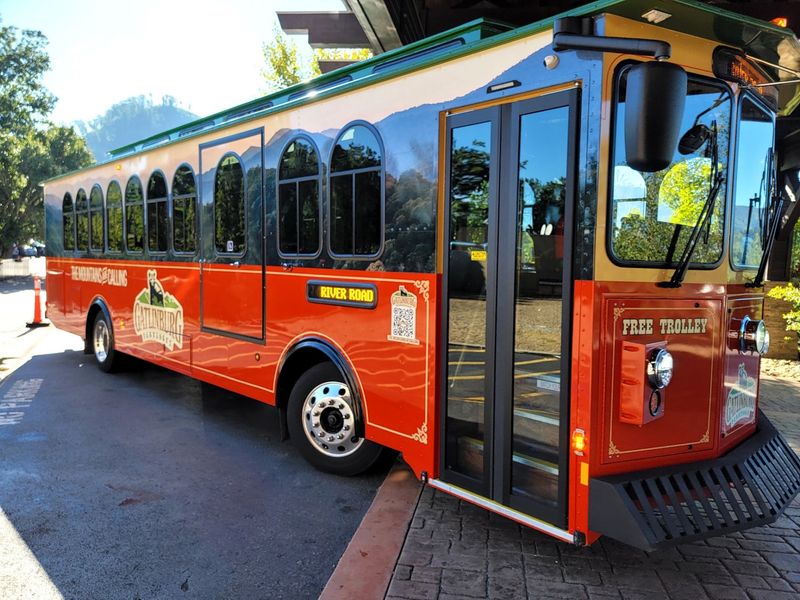
Parking in downtown Gatlinburg can cost you anywhere from ten to twenty dollars a day, and that adds up fast when you’re trying to stretch a vacation budget. The city’s trolley system runs year-round and costs absolutely nothing, which makes it one of the smartest moves you can make as soon as you arrive.
Hop on at any marked stop, ride the loop through town, and save your cash for something more memorable than a parking meter.
The trolley doesn’t just save you money. It also takes the stress out of navigating narrow mountain roads and hunting for a spot during peak season.
You can ride from your hotel to the Arts and Crafts Community, over to the national park, or straight into the heart of the Parkway without circling the block a dozen times. Drivers are friendly and know the town inside out, so don’t hesitate to ask questions.
Routes cover most of the places visitors want to see, and trolleys run frequently enough that you won’t be stuck waiting long. During summer and fall, expect shorter intervals between buses. In winter, service slows down a bit, but it’s still reliable.
Check the schedule online or grab a printed map at the visitor center so you know which color route gets you where you need to go.
Families with young kids especially appreciate the trolley because it turns transportation into part of the adventure. Little ones love watching the scenery roll by and ringing the stop bell.
Plus, when everyone’s tired from a day of hiking or exploring, climbing aboard beats trudging back to a distant parking lot. It’s practical, it’s free, and it keeps your vacation moving without burning through your budget before lunch.
2. Explore Great Smoky Mountains National Park
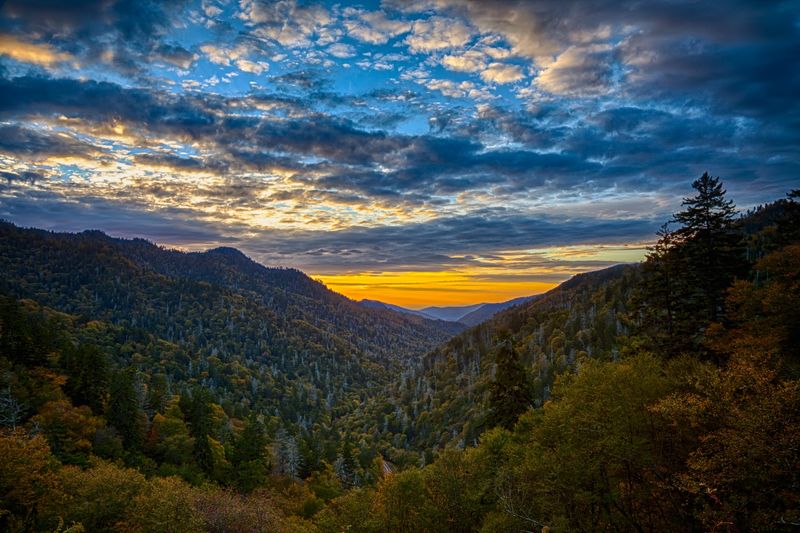
Most national parks charge an entrance fee, but the Smokies break that rule. You can drive right in, park at a trailhead, and spend the entire day wandering through old-growth forest, past rushing streams, and up to mountain overlooks without paying a dime at the gate.
The only cost you’ll face is a parking tag if you leave your car for more than fifteen minutes, and that daily tag currently runs five dollars, which is still a bargain compared to what you’d spend on any commercial attraction in town.
The park sprawls across more than half a million acres, so you could visit a dozen times and never see the same trail twice. Cades Cove offers an eleven-mile loop road with chances to spot deer, black bears, and wild turkeys against a backdrop of historic cabins and churches.
Clingmans Dome, the highest point in Tennessee, rewards the short but steep walk to the observation tower with 360-degree views that stretch across multiple states on clear days. Laurel Falls and Grotto Falls are family-friendly hikes that deliver waterfall payoffs without requiring advanced hiking skills.
Pack a lunch, bring plenty of water, and plan to make a full day of it. Cell service gets spotty once you’re deep in the park, so download maps ahead of time or pick up a paper version at any visitor center.
Rangers lead free programs year-round, from guided nature walks to evening talks about wildlife and park history. Check the schedule when you arrive and you might catch a program that adds even more value to your visit.
Weather in the mountains changes fast, so layer your clothing and keep a rain jacket handy. Crowds peak during fall foliage season and summer vacation weeks, but early mornings and weekdays stay quieter.
The park is the crown jewel of the region, and experiencing it costs almost nothing.
3. Hike to Cataract Falls
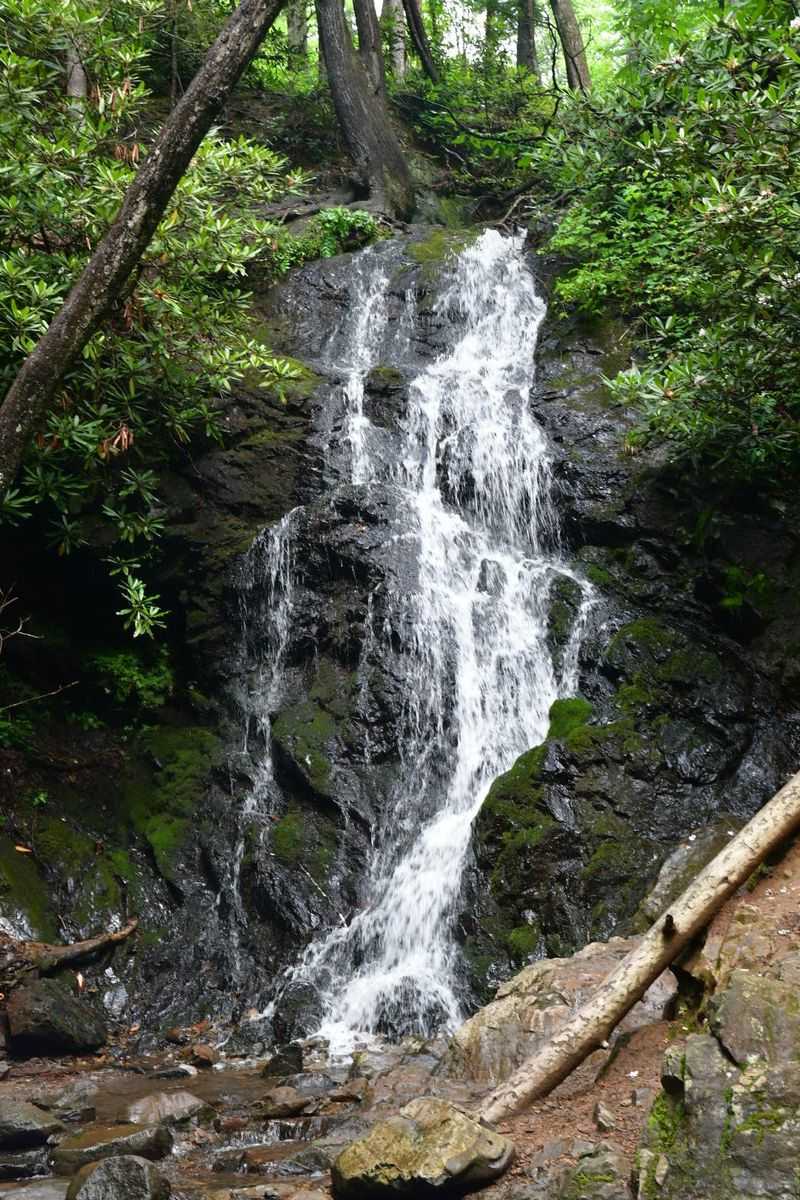
Not every waterfall hike requires scrambling over boulders or climbing steep switchbacks for miles. Cataract Falls sits just a short walk from the Sugarlands Visitor Center, making it one of the easiest waterfall destinations in the Smokies.
The trail measures less than a mile round trip, mostly flat, and suitable for families with young children or anyone who wants a taste of the forest without committing to an all-day adventure.
Start at the visitor center parking area and follow the paved path that eventually transitions to a natural surface trail. The sound of rushing water grows louder as you approach, and soon the falls come into view, tumbling over mossy rocks in a series of small cascades.
It’s not the tallest or most dramatic waterfall in the park, but it offers a peaceful spot to rest, take photos, and enjoy the cool mist on a warm afternoon.
Because the hike is so accessible, it does attract crowds during peak visitor hours. Arrive early in the morning or later in the afternoon to avoid the midday rush and give yourself a better chance at finding parking close to the trailhead.
The visitor center itself is worth exploring before or after your hike, with exhibits on park wildlife, history, and geology, plus knowledgeable staff who can answer questions and recommend other trails based on your interests and fitness level.
Wear sturdy shoes even though the trail is short. Roots and rocks can make footing tricky, especially after rain when everything gets slick.
Bring a camera or phone to capture the falls, but also take a moment to just listen to the water and breathe in the mountain air. This quick hike delivers a genuine Smokies experience without the time or effort investment of longer treks, and it won’t cost you anything beyond the parking tag you already need for the park.
4. Drive the Roaring Fork Motor Nature Trail
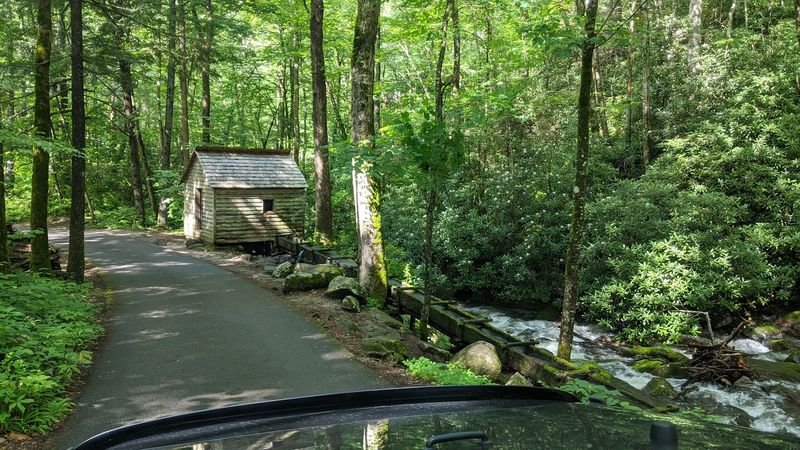
Roaring Fork Motor Nature Trail gives you a front-row seat to the kind of scenery that makes the Smokies famous, all from the comfort of your car. This one-way loop road winds through thick forest, past gurgling mountain streams, and by preserved homesteads that show how settlers lived more than a century ago.
You don’t pay an admission fee to drive it, just the standard parking tag if you stop to explore any of the trailheads or historic sites along the way.
The road is narrow and winding, so take your time and watch for oncoming traffic, pedestrians, and wildlife. Speed limits stay low, which is perfect because you’ll want to slow down anyway to soak in the views.
Several pull-offs let you stop for photos or to walk down to the creek, where the water rushes over smooth stones and creates that classic mountain soundtrack. Old log cabins and barns dot the route, and you can get out to peek inside or read the interpretive signs that explain how families farmed, raised livestock, and survived in these remote hollows.
Trailheads along Roaring Fork offer access to some of the park’s best waterfall hikes, including Rainbow Falls and Grotto Falls. If you’re up for a longer walk, these trails branch off from the motor trail and lead deeper into the backcountry.
But even if you never leave your car, the drive itself delivers a rich experience of Appalachian forest and history.
The road closes in winter when ice and snow make it unsafe, typically from late November through early spring. During open months, fall foliage turns the drive into a kaleidoscope of reds, oranges, and yellows, while spring brings wildflowers and rushing water from snowmelt.
Arrive early to beat the crowds and enjoy the peaceful atmosphere before tour buses and rental cars fill the route.
5. Browse the Great Smoky Arts & Crafts Community
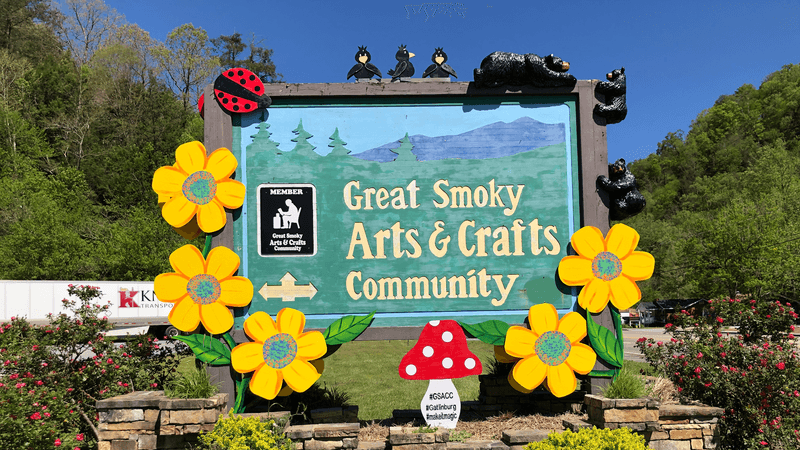
Tucked into the hills east of downtown Gatlinburg, the Great Smoky Arts & Crafts Community stretches along an eight-mile loop and claims the title of the largest group of independent artisans in North America. More than 120 shops, studios, and galleries line the route, showcasing everything from hand-thrown pottery and custom furniture to paintings, leather goods, jewelry, and woven baskets.
Browsing costs nothing, and even if you don’t buy a single item, watching craftspeople work at their benches or wheels is entertainment in itself.
Each studio has its own personality. Some artists welcome visitors to watch them shape clay, carve wood, or blow glass, and they’re usually happy to explain their techniques and answer questions. Others display finished pieces in gallery-style settings where you can admire the craftsmanship without any pressure to purchase.
The community has been around since the 1930s, and many of the current artisans come from families who’ve been creating here for generations, so you’re experiencing a living tradition that runs deep in these mountains.
Plan to spend at least a couple of hours if you want to see more than a handful of studios. The loop is too long to walk comfortably, so drive it and stop wherever something catches your eye.
Parking is free at every studio, and most places have small lots right out front. Weekdays tend to be quieter than weekends, giving you more one-on-one time with the artists and a more relaxed atmosphere overall.
You’ll find everything from affordable trinkets to museum-quality pieces, so if you do decide to buy, there’s something for every budget. But remember, you’re under no obligation to spend.
The real value here is seeing authentic mountain crafts created by people who’ve dedicated their lives to their art, and that experience is completely free.
6. Walk the Downtown Parkway
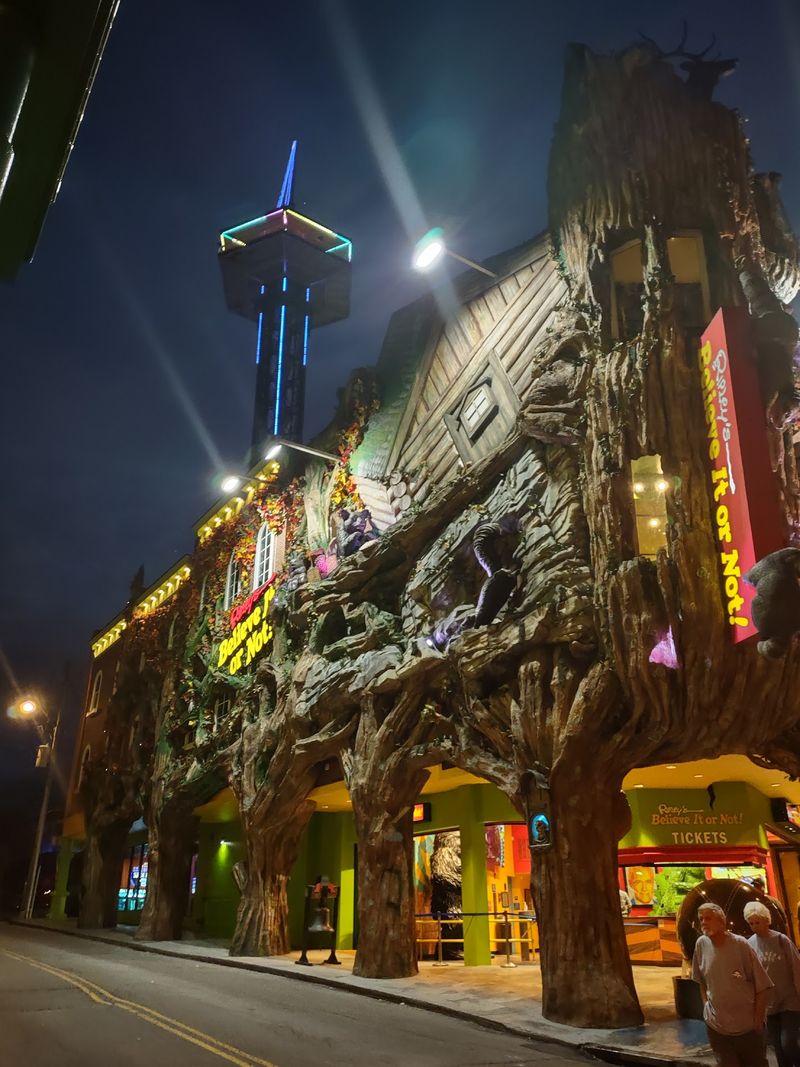
Gatlinburg’s main drag pulses with energy from morning until late at night, and you don’t need to spend a dime to soak it all in. The Parkway runs straight through the heart of town, lined with candy shops, souvenir stores, restaurants, arcades, and attractions that compete for attention with bright signs and wild storefronts.
Window-shopping here is an activity unto itself, especially if you enjoy people-watching or catching the occasional street performer who sets up on the sidewalk to play music or juggle.
Start at one end and stroll at your own pace, poking your head into shops that look interesting or just enjoying the mountain town vibe. Taffy-pulling machines in candy store windows draw crowds of kids and adults alike, and many shops offer free samples of fudge, roasted nuts, or saltwater taffy.
You’re not obligated to buy after you sample, though the temptation is real once you taste homemade peanut brittle or chocolate-covered strawberries.
Street performers add an unpredictable element to any walk down the Parkway. You might stumble across a bluegrass duo picking banjos, a magician pulling off card tricks, or a caricature artist sketching tourists.
Toss a few dollars in their tip jar if you enjoy the show, but even if you don’t, stopping to watch for a few minutes costs nothing and adds flavor to your afternoon.
The Parkway gets crowded during peak season, so prepare for slow-moving sidewalks and plenty of elbow-bumping. If crowds stress you out, walk early in the morning before most shops open or later in the evening after families with young kids have headed back to their hotels.
The atmosphere changes after dark when neon lights flicker on and the town takes on a carnival-like energy. Either way, walking the Parkway is free entertainment that gives you a genuine taste of Gatlinburg’s touristy charm.
7. Stroll Along River Road
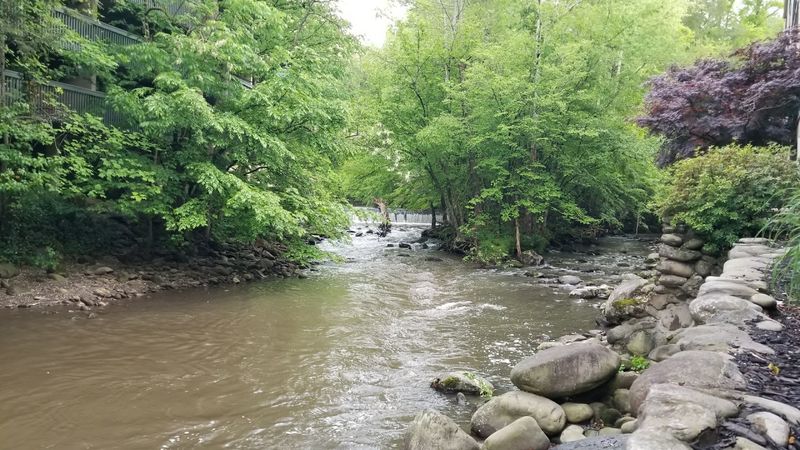
When the Parkway feels too loud and too crowded, River Road offers a quieter escape without leaving town. This narrow street runs parallel to the Little Pigeon River, offering benches, shade trees, and a more relaxed pace than the main tourist strip.
You’ll still find a few shops and small galleries, but the vibe here leans more toward peaceful strolling than frantic souvenir hunting.
The river itself is the main attraction. Water tumbles over rocks and boulders, creating a soothing soundtrack that drowns out traffic noise and tour-bus engines.
Benches line the walkway, inviting you to sit for a while and watch the water flow or simply rest your feet after a long day of exploring. Ducks and songbirds hang out along the riverbank, and if you’re lucky, you might spot a heron fishing in the shallows.
River Road connects to the Parkway at several points, so you can easily hop between the two depending on your mood. Some visitors use it as a shortcut to avoid crowds, while others seek it out specifically for the calmer atmosphere.
Either way, it’s a public street with free access, and you can walk as much or as little of it as you like.
Couples often find River Road more romantic than the bustling Parkway, and it’s a nice spot for a quiet conversation or a moment of reflection. You won’t find big attractions or flashy entertainment here, but that’s exactly the point. River Road gives you a breather from the tourist hustle while keeping you close to everything downtown has to offer.
It’s free, it’s peaceful, and it’s a reminder that Gatlinburg has more to offer than just neon and noise.
8. Visit the Gatlinburg Scenic Overlook
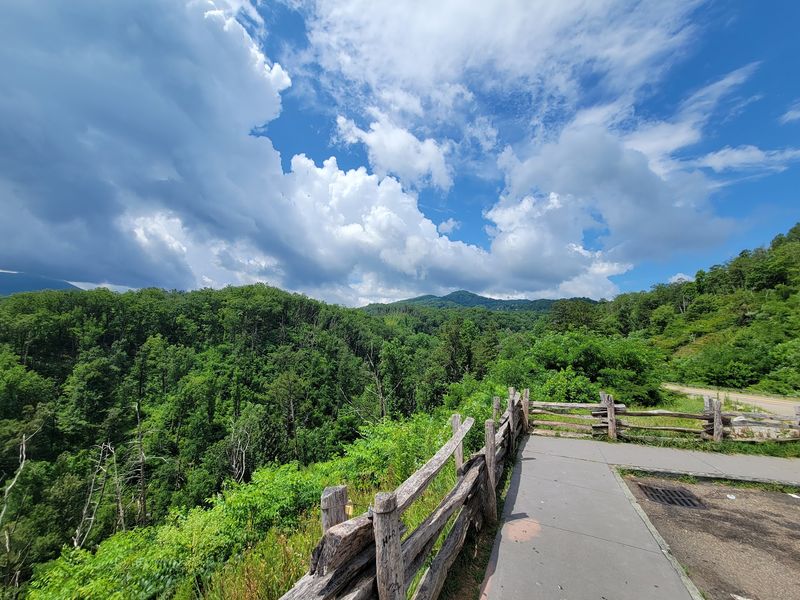
You don’t need to ride the Sky Lift or pay for an observation deck to get a bird’s-eye view of Gatlinburg and the surrounding mountains. The Gatlinburg Scenic Overlook sits right off Highway 321 on the way into town, and it’s one of the easiest places to pull over, snap some photos, and take in the whole valley without spending a penny.
The overlook includes a small parking area, a paved viewing platform, and interpretive signs that point out landmarks and peaks in the distance.
On clear days, the view stretches for miles, showing off the layered ridges that give the Smokies their name. Gatlinburg spreads out below, a cluster of buildings tucked into the narrow valley with the national park rising on all sides.
It’s a great spot to get your bearings when you first arrive or to appreciate the town from a different perspective before you head home. Sunrise and sunset bring the best light, painting the mountains in shades of pink, orange, and purple that make even phone cameras look like professional gear.
The overlook is small, so it can fill up quickly during peak times. Arrive early or be prepared to wait a few minutes for a parking spot to open up. Most visitors don’t linger long, so turnover happens fast.
Once you’re up on the platform, take your time. Read the signs, identify the peaks, and soak in the view without feeling rushed.
Accessibility is one of the overlook’s best features. Unlike mountain hikes that require stamina and sturdy boots, this viewpoint is paved and level, making it suitable for wheelchairs, strollers, and anyone who has trouble with uneven terrain.
You get a genuine mountain vista without the physical effort, and that’s a rare combination. It’s a quick stop, but it’s worth pulling over for, especially if you’ve never seen Gatlinburg from above.
9. Browse the Galleries at Arrowmont School of Arts and Crafts

Arrowmont School of Arts and Crafts started as a settlement school in 1912 and evolved into one of the most respected craft education centers in the country. While most of what happens here involves workshops and classes that cost money, visitors can explore select galleries free of charge and see rotating exhibits of contemporary art, pottery, fiber work, metalwork, and more.
It’s a chance to experience high-quality craft without the commercial feel of downtown shops.
The campus sits just off the Parkway on a hillside, surrounded by trees and quieter than the tourist hustle below. Gallery hours vary depending on the season and whether workshops are in session, so check ahead or stop by the office to ask what’s open.
When exhibits are up, you’ll find professionally curated displays that highlight both student work and pieces by established artists who teach or exhibit at Arrowmont. The quality is consistently impressive, and you’ll often see techniques and materials you won’t encounter anywhere else in town.
Unlike commercial galleries where sales are the primary goal, Arrowmont’s exhibits focus on education and appreciation. You’re welcome to look, learn, and take your time without anyone hovering or pushing a purchase.
That makes it a more relaxed experience, especially if you’re genuinely interested in craft traditions and contemporary art but don’t have the budget to buy high-end pieces.
If you visit during workshop season, you might catch glimpses of students working in studios or instructors demonstrating techniques. The campus itself is beautiful, with historic buildings and well-maintained gardens that make for a pleasant walk even if the galleries aren’t open.
Arrowmont represents a quieter, more thoughtful side of Gatlinburg’s arts scene, and it’s worth a stop if you appreciate craft as an art form rather than just a souvenir.
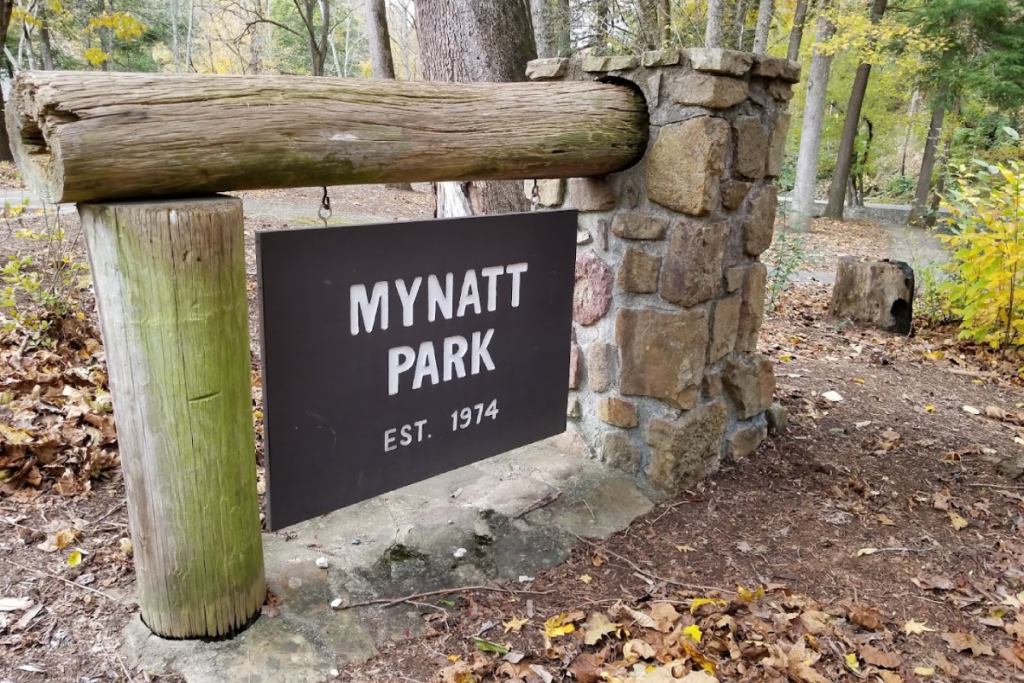
10. Have a Picnic at Mynatt Park
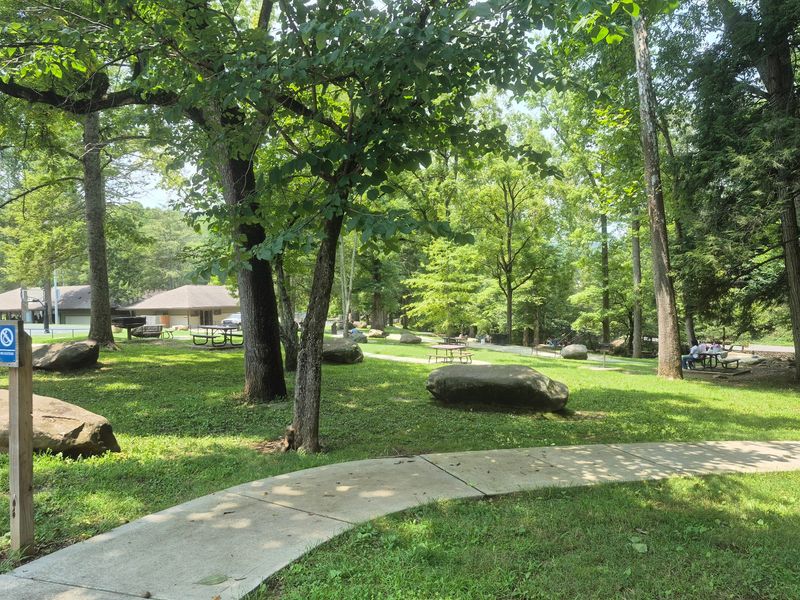
Eating out in Gatlinburg adds up fast, especially when you’re feeding a whole family three meals a day. Mynatt Park gives you a free spot to spread out a blanket, unpack a cooler, and enjoy a meal without restaurant prices or tourist-trap markups.
The park sits along the Little Pigeon River with grassy areas, picnic tables, and enough room for kids to run around and burn off energy between bites.
Pack sandwiches, snacks, and drinks from a grocery store and you’ll save twenty or thirty dollars compared to eating at even a casual restaurant. The park has restrooms, so you don’t need to worry about finding facilities, and the river provides natural entertainment for kids who like skipping stones or watching the water flow.
Shade trees keep things comfortable on hot days, and the mountain backdrop makes it feel more special than eating in a parking lot or hotel room.
Mynatt Park is one of several city parks Gatlinburg promotes as free picnic destinations, and it’s centrally located enough that you can easily stop in between other activities. Whether you’re taking a break from hiking, shopping, or driving around town, the park offers a low-cost way to recharge without losing momentum.
Bring a frisbee, a ball, or a deck of cards and you’ve got a full afternoon of entertainment for the price of groceries.
Locals use the park too, especially on weekends, so you might find yourself sharing the space with residents who know all the best spots. That’s part of the charm.
You’re not stuck in a tourist bubble. You’re experiencing a slice of everyday Gatlinburg life where families gather, dogs play, and people take time to enjoy the outdoors without spending money.
It’s simple, it’s practical, and it’s a reminder that some of the best vacation moments don’t come with a price tag.
11. Play Disc Golf at Mills Park
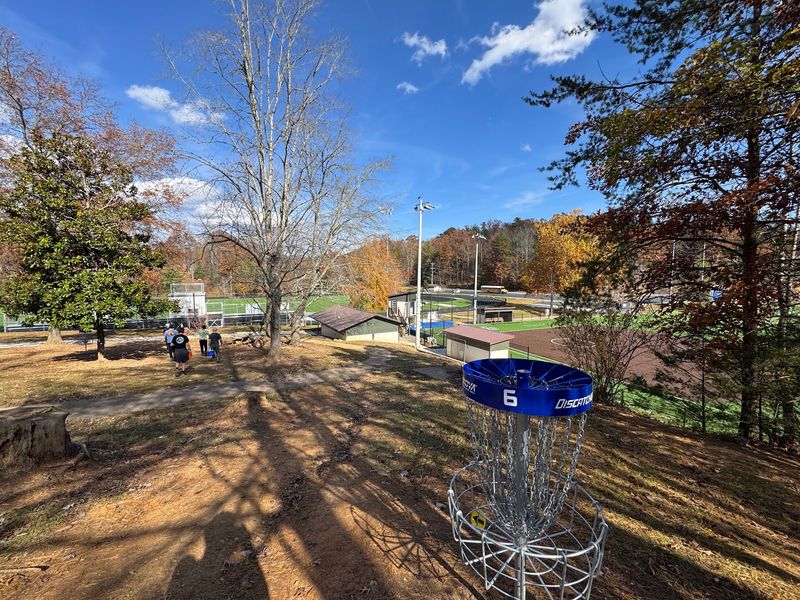
Gatlinburg’s paid attractions can drain your budget in a hurry, but the city’s 18-hole disc golf course at Mills Park gives you a full activity without charging admission. Disc golf works like regular golf except you throw a frisbee-style disc toward metal baskets instead of hitting a ball into holes.
The course at Mills Park winds through wooded terrain with enough elevation changes and obstacles to keep the game interesting, whether you’re a seasoned player or trying it for the first time.
If you don’t own discs, you can usually borrow or rent them from local outdoor shops for just a few dollars, or buy a basic starter set that you’ll use for years. Once you’ve got your discs, the course itself is free to play as many times as you want.
Each hole has a tee pad and a clearly marked basket, and signs show the distance and par. The layout challenges players of all skill levels, with shorter holes for beginners and longer, trickier shots for anyone looking to test their accuracy.
Mills Park also includes playground equipment, walking paths, and open space, so if you’re traveling with people who don’t want to play disc golf, they can still enjoy the park while you work your way through the course. It’s a good option for groups with mixed interests or families where some members want activity and others prefer to relax.
Playing a full round takes about an hour or two depending on how crowded the course is and how many throws it takes you to reach each basket. Go early in the morning or on weekdays to avoid waiting behind other groups.
The course is well-maintained and the setting is peaceful, with trees providing shade and the sound of the river in the background. It’s a genuinely fun way to spend a morning or afternoon without spending more than a few dollars on discs.
12. Catch One of Gatlinburg’s Free Seasonal Events

Gatlinburg’s event calendar is packed year-round with festivals, concerts, demonstrations, and public gatherings, and many of them are completely free to attend. Depending on when you visit, you might catch live music in Ripley’s Aquarium Plaza, a craft demonstration during the Spring Wildflower Pilgrimage, or one of the city’s seasonal festivals that bring food vendors, artisans, and performers to the streets.
Check the city’s official events calendar before you arrive so you can plan your trip around something that interests you.
Summer brings free concerts and outdoor entertainment almost every week, with local musicians and regional acts performing everything from bluegrass and country to rock and folk. The city sets up stages in public spaces, and you can grab a seat on the grass or stand near the stage without buying a ticket.
Fall festivals celebrate the changing leaves with parades, storytelling, and heritage demonstrations that highlight Appalachian culture. Winter events include holiday light displays and caroling, while spring welcomes wildflower walks and photography workshops led by park rangers and naturalists.
These events give you a chance to experience Gatlinburg’s community spirit beyond the commercial attractions. You’ll rub shoulders with locals, meet other travelers, and participate in traditions that have been happening for decades.
Some events include free samples of food or craft beer, while others offer hands-on activities like pottery demonstrations or weaving workshops where you can try your hand at traditional techniques.
Timing is everything, so do your homework before you book your trip. If your schedule is flexible, aim for a weekend when a major festival is happening.
If you’re locked into specific dates, check what’s going on during your stay and build your itinerary around it. Free events turn a good vacation into a great one, and Gatlinburg delivers plenty of them if you know where to look.