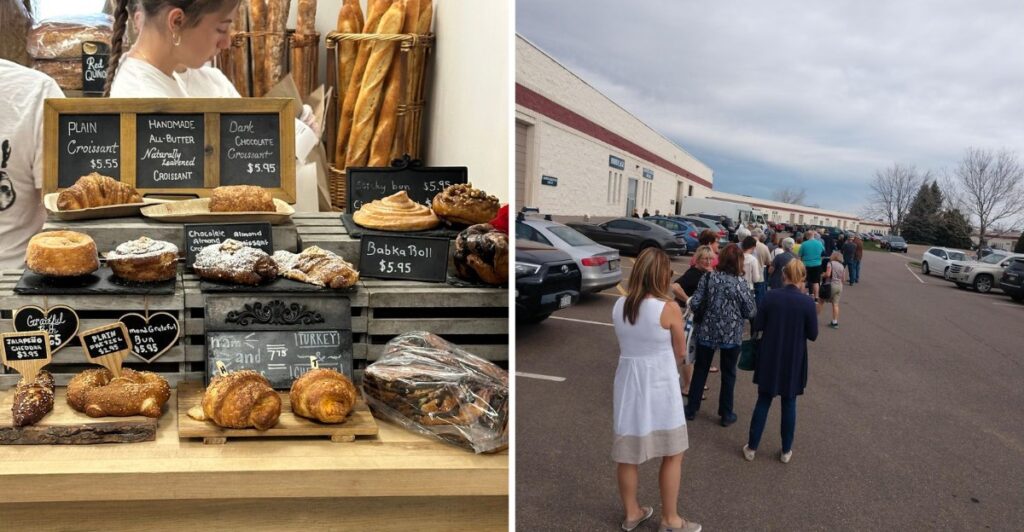
Saturday morning at Grateful Bread Company can begin with a line before the bakery even opens its doors. Tucked into Golden, this cash-only Colorado favorite has turned its limited public hours into something closer to a weekly ritual, with regulars arriving early to get first pick of freshly baked loaves and other treats.
There is an appealing bit of suspense to the routine: show up too late, and the bread you had in mind might already be gone. No elaborate gimmick is necessary when scarcity and serious baking create their own buzz. Here, bringing cash is important—but beating the crowd might matter even more.
Why The Line Starts Before Ten
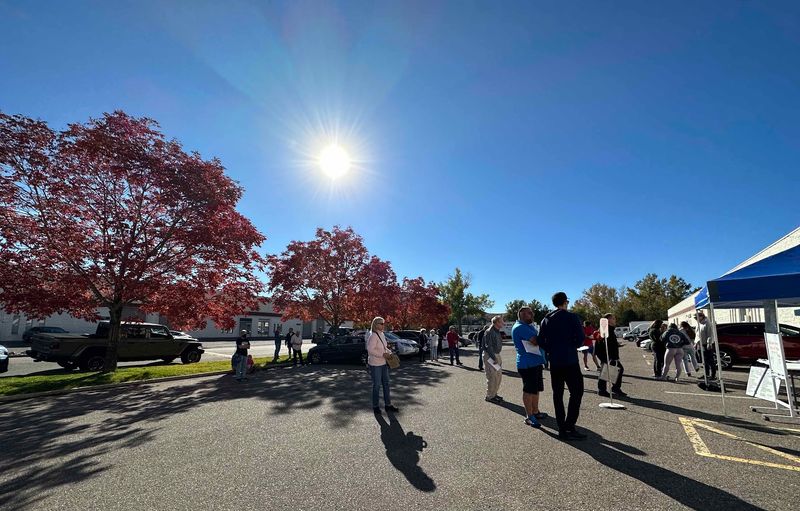
Saturday morning works differently here. Long before the door opens, a line begins to form outside Grateful Bread Company, and that early wait is not just habit.
It is a practical move for anyone hoping to grab a favorite loaf, pastry, or pretzel before the day’s supply starts thinning out.
The bakery is only open to the public during a short weekly retail window, which changes the whole rhythm of a visit. Instead of dropping by whenever a craving hits, shoppers plan ahead, arrive early, and treat the stop almost like a small mission.
Limited hours create urgency, but they also create focus. Everyone in line knows why they came. There is also the draw of freshness. Bread and pastries are the stars here, and timing matters when crust, texture, and selection are part of the experience.
Early arrivals have the widest choice, especially if they are looking for popular items such as sourdoughs, babka, sticky buns, or pretzel sticks.
The line itself says something useful about the bakery. People are willing to wait because the setup promises access to products that are not always easy to find in a regular retail bakery, especially from a business that spends much of its week working as a wholesale operation.
That gives the Saturday sale a special rhythm without turning it into a show. For a first visit, the smartest plan is simple. Bring cash, get there near opening, and expect a system rather than a leisurely browse.
The reward is not just being first in line. It is seeing how a short Saturday sale turns bread buying into one of the most talked-about food routines in Golden.
Cash Only, Old School, And Surprisingly Efficient
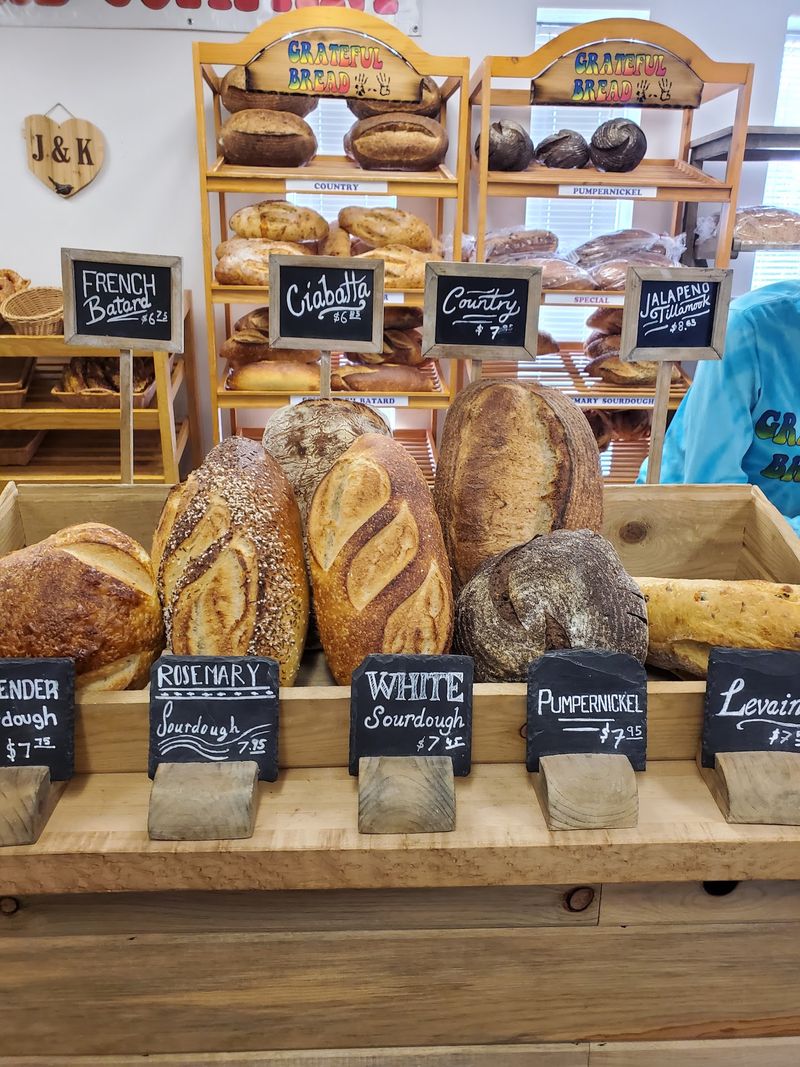
Few details shape the mood faster than the payment rule. Grateful Bread Company is known as a cash-only stop, and that old-school setup adds a layer of intention to the visit.
In a world of tap, swipe, and phone screens, handing over bills makes the bakery feel more direct and a little more deliberate. That would be annoying if the process were messy. Instead, the Saturday system appears built for volume.
Shoppers are guided through an order flow that helps move a crowd, and the structure matters because this is not an all-day storefront with endless time to browse and compare.
Part of the experience comes from knowing what kind of place this is. During most of the week, Grateful Bread Company operates as a wholesale bakery, turning out breads and pastries beyond the needs of a tiny front counter. Public retail hours are short, so the sale window has to work quickly and clearly.
Reports of clipboards, order sheets, number picking, and staff directing the line all point to a bakery that has learned how to handle a rush without pretending to be a polished boutique. The setup may not feel luxurious, but it is practical, and practical is exactly what a high-demand bread sale needs.
That cash-only rule also encourages a little preparation. Bring enough money, know that popular items may go fast, and consider the trip more like a produce market run than a slow cafe visit. The pace is part of the identity.
For readers chasing the title’s central idea, this section explains a lot. People line up before the doors open not only because the bread is attractive, but because the bakery’s short, cash-based, efficient routine rewards shoppers who arrive ready, pay quickly, and leave with bags that feel satisfyingly heavy.
Inside Colorado’s Saturday Bread Rush
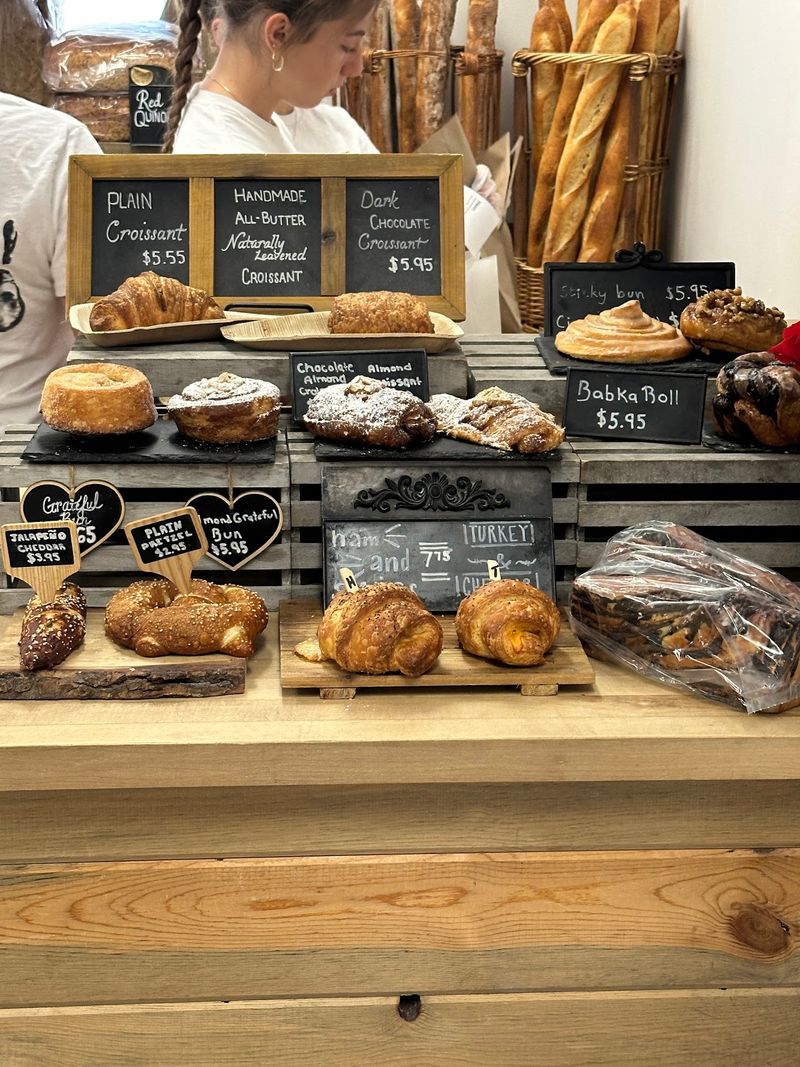
Open the bag later at home, and the bakery’s pull becomes obvious. Grateful Bread Company has built its reputation around artisan breads and pastries, with a lineup that goes beyond one signature loaf.
The range matters because the Saturday crowd is not chasing a single trend item. It is chasing choice, quality, and the chance to leave with several very different kinds of baked goods.
Sourdough appears to be one of the strongest draws, especially in flavors that sound a little more distinctive than standard white or wheat. Rosemary sourdough and lavender sourdough stand out on that front, offering readers a clue about the bakery’s style.
The menu seems interested in craft and character, not bland sameness. Then there are richer picks. Chocolate babka gets repeated praise, and sticky buns, cookies, croissants, bagels, and rolls help round out the table.
Jalapeno cheddar bread and jalapeno cheddar pretzel sticks bring in a savory lane, while ciabatta and rye appeal to shoppers after everyday loaves with stronger texture and chew.
The useful takeaway is not that every single item will suit every single person. Bread lovers often have sharp preferences, especially around crust, flake, sweetness, or softness.
A bakery with a wide spread invites both loyalty and debate, which is often a sign that people are paying close attention rather than buying on autopilot. For a first-timer, the best approach is to mix categories. Pick one classic loaf, one bolder flavor, and one treat.
That gives a fuller picture of the bakery’s strengths and helps explain why a short Saturday retail window can still inspire early arrivals, full order sheets, and careful planning across Golden and beyond.
A Working Colorado Bakery
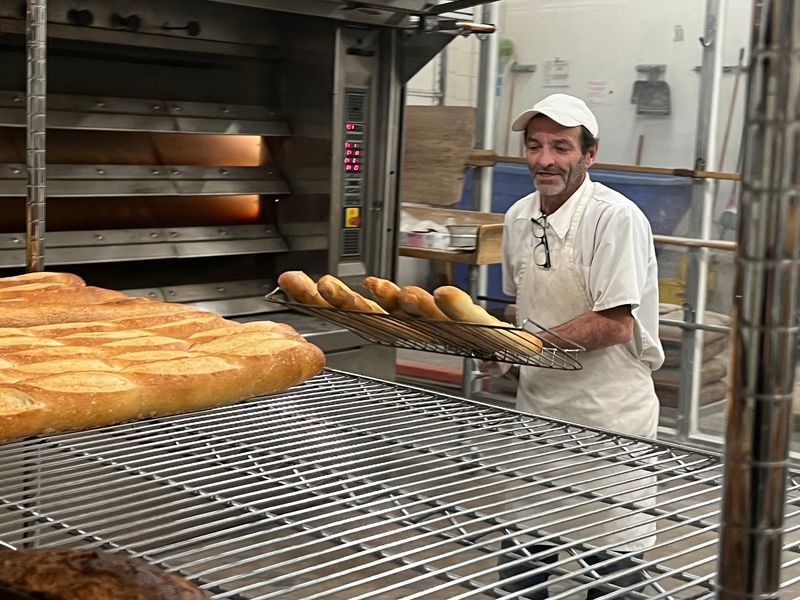
One reason this place catches people off guard is the setting. Grateful Bread Company at 425 Violet St, Golden, is not framed like a polished tourist bakery with staged seating and a long menu board meant for lingering.
It functions first as a working bakery, and that changes how the visit reads from the curb. The address sits in Golden, but the experience leans more production-minded than picturesque. That distinction is useful.
A shopper arriving here should expect a wholesale bakery that opens to the public on certain days, not a full-time cafe built around hanging out with a laptop and a latte.
That working identity shapes the visual experience. Depending on where a person stands, there may be a view into the bakery operation while waiting to order.
Seeing the active production side gives the place a stronger sense of purpose. It reminds visitors that the bread is the center of gravity, not decorative branding.
The location also helps explain the line. When public access is limited and tied to a real production schedule, the Saturday opening takes on more urgency than a regular neighborhood stop.
Buyers are entering a bakery’s rhythm rather than expecting the bakery to bend around theirs. For practical planning, the address matters because this is a place where timing and expectations do much of the work.
Know where you are going before leaving home, bring cash, and understand that the setup is streamlined around baked goods to take away. Comfort comes from being prepared, not from lingering amenities.
That distinction is a big part of the charm. The Violet Street location delivers a bread-first experience with the bones of a real working bakery, and that straightforward identity gives the Saturday crowd a clear reason to show up focused, hungry, and ready to order.
The Community Angle Hiding In Plain Sight
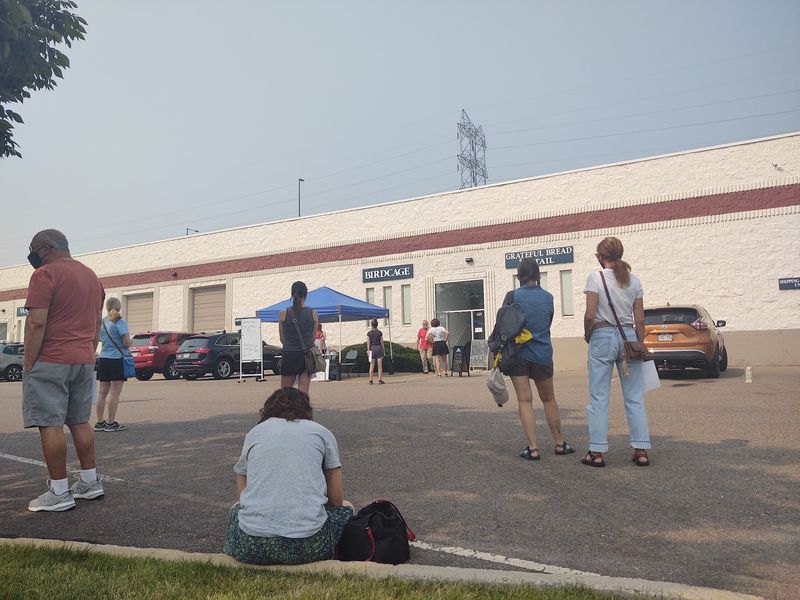
Not every bakery line turns into a small neighborhood scene, but this one often does. Grateful Bread Company appears to blend food buying with a quiet sense of local connection, and that social layer helps explain why the routine has lasted.
The bread brings people in, yet the structure around the sale gives the place a more human scale. One notable detail is the involvement of local high school workers during Saturday retail hours. That choice does more than fill staffing needs.
It gives young workers visible customer-service experience and places the bakery in everyday community life rather than keeping it sealed off as a specialty food operation.
Even the waiting process seems to encourage a shared rhythm. An outdoor greeter, numbered ordering, and a crowd that knows the drill can make a line move with less stress than expected.
When a business uses simple systems and friendly direction, people spend less energy wondering what happens next.
There is also a practical form of responsibility in how unsold items are handled, with reports that remaining baked goods are donated locally after Saturday sales. That does not need dramatic language to matter.
It shows an operation trying to connect output, timing, and waste in a thoughtful way. Readers should not imagine a sentimental storybook scene. The setup is still busy, short on hours, and centered on getting bread into hands quickly.
Yet a wholesale bakery can easily feel impersonal, and Grateful Bread Company seems to avoid that trap by creating moments of welcome within a fast-moving sale.
That balance is part of the appeal. A person may come for jalapeno cheddar bread, babka, or sourdough, but the broader picture includes local jobs, familiar faces, and a Saturday line that behaves less like a scramble and more like a recurring neighborhood ritual with flour on its sleeves.
How To Time Your Visit Without Missing The Best Stuff
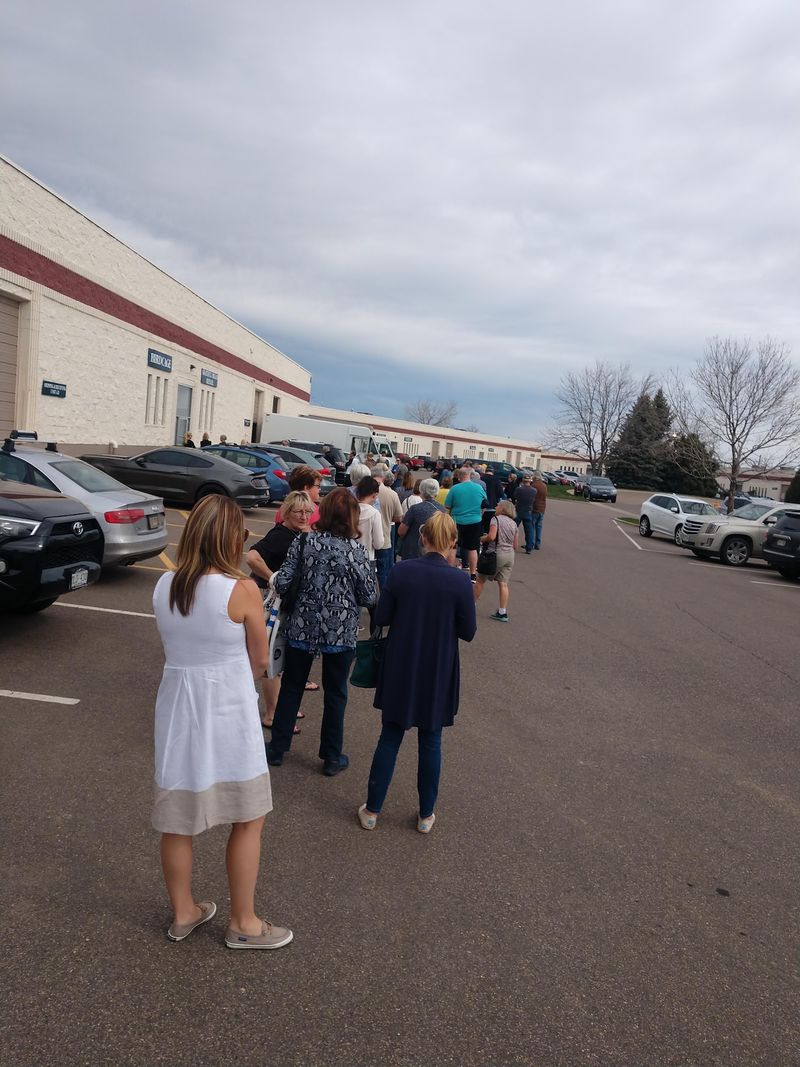
Good bread rewards planning, and this bakery asks for more planning than most. Grateful Bread Company is open to the public only during a narrow Saturday window, listed as 10 AM to 2:30 PM, so the difference between a great visit and a frustrating one can come down to timing.
Early arrivals have the best shot at full selection. That matters most for shoppers with a specific target in mind, whether it is chocolate babka, sticky buns, a particular sourdough, or those much-praised savory pretzel sticks.
Showing up near opening is the safest move when the goal is choice rather than luck. Later visits can still work, but they come with a tradeoff. The line may shrink closer to closing, yet the inventory narrows too.
For flexible shoppers who enjoy seeing what remains, that can be perfectly fine. For anyone set on one or two favorites, late afternoon is a gamble.
Preparation helps in smaller ways too. Bring cash, consider packing reusable bags, and think through an order before getting to the front.
Because the bakery uses a clear system to handle Saturday volume, ready shoppers help themselves and everyone behind them.
There is another timing lesson hidden in the business model. Since this is primarily a wholesale bakery and not a daily retail storefront, it makes sense to treat the public sale like a weekly market opening rather than an anytime convenience stop.
The bakery is not trying to stretch itself across seven days for walk-in traffic. A smart first visit, then, is simple and low-drama.
Arrive between 10 and 11 if a favorite item matters, keep expectations realistic about possible sellouts, and buy more than one category. The short opening window is part of the whole story, and timing is the key that unlocks the best version of it.
Why This Golden Bakery Still Draws A Crowd
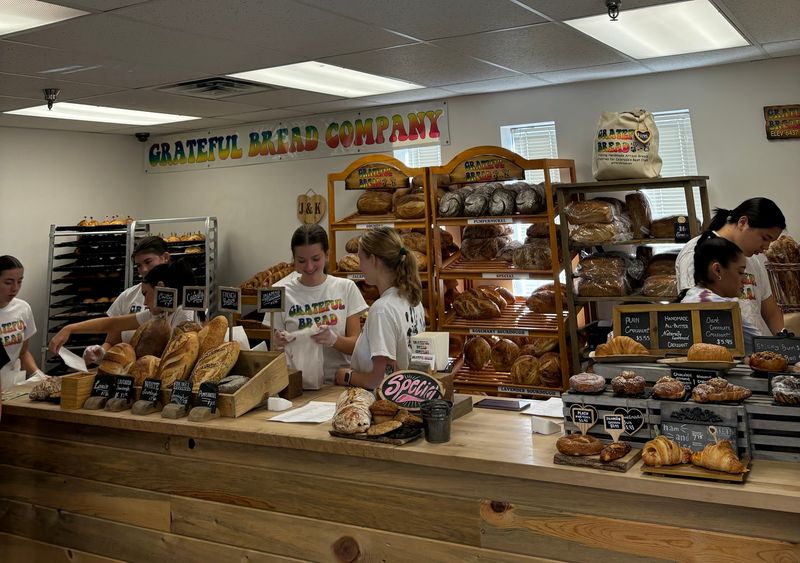
Plenty of bakeries make good bread. Far fewer turn limited access into a weekly event without leaning on gimmicks.
Grateful Bread Company stands out because several unusual factors lock together at once: cash only payment, a short public schedule, a wholesale backbone, and baked goods strong enough to motivate people to line up before opening.
That combination creates scarcity, but scarcity alone is never enough. If the products were forgettable, nobody would plan a Saturday around them.
The draw appears rooted in artisan loaves, memorable flavor choices, rich pastries, and a buying experience that asks customers to participate instead of drifting in casually.
There is also a satisfying sense of local specificity. This is not a national chain trying to imitate neighborhood energy.
The routine is shaped by Golden, by the bakery’s production-first identity, and by a community that has learned how the system works. In practical terms, that means early lines, quick decisions, and very full bags heading back to kitchens across the area.
At the same time, the bakery is not presented here as flawless or endlessly romantic. A few details, such as short hours, product sellouts, and debates over packaging or certain pastries, show a real operation with strengths and limitations.
Oddly enough, that realism makes the place more interesting. It is a bakery with a clear point of view, not a polished fantasy. So why do people still line up before the doors open? Because the Saturday window feels earned.
It offers access to bread and pastries that people want badly enough to plan for, pay cash for, and carry home like treasure.
In the end, the title fits for a reason. Colorado has many scenic stops, but this Golden bakery turns discipline, demand, and crusty loaves into its own kind of weekend drama.