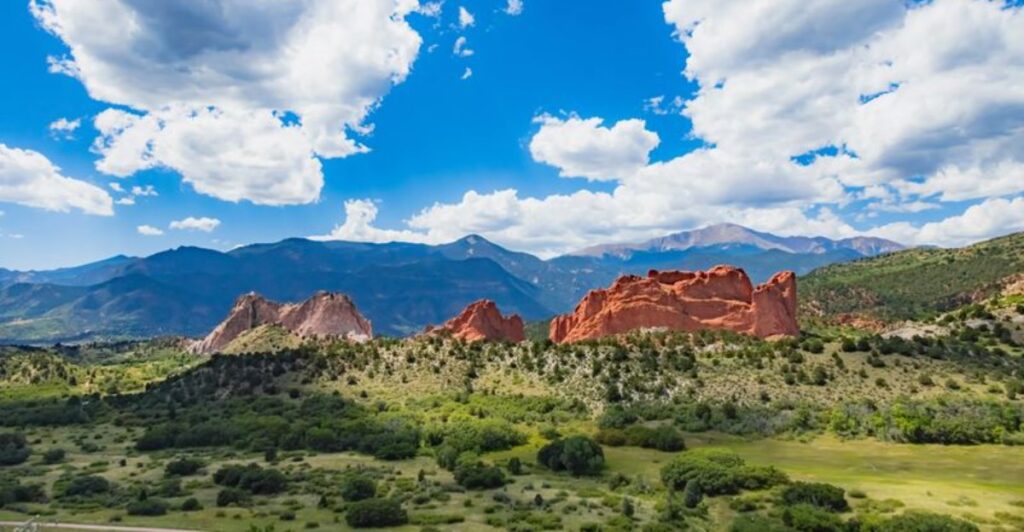
Towering slabs of red sandstone rise from the landscape at Garden of the Gods like they were dropped there from somewhere far beyond Colorado. Against blue skies and the distant profile of Pikes Peak, the formations create a surreal setting that becomes even more dramatic once you are standing beneath them.
Trails and scenic viewpoints make it easy to explore at your own pace, while the Visitor & Nature Center adds context to the geology and wildlife surrounding you. Better still, experiencing this extraordinary landscape does not require an expensive admission ticket. For a few hours, Colorado Springs can feel remarkably close to another world.
Red Towers That Rewrite the Horizon
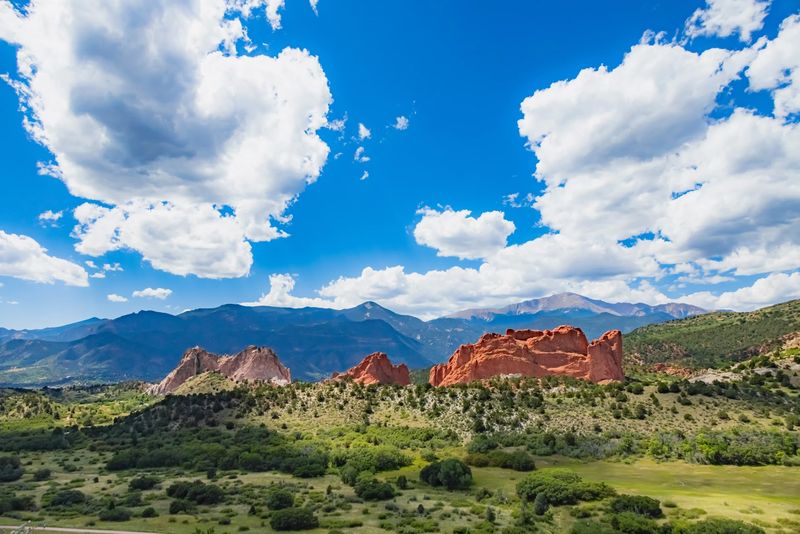
Even before a trail begins, the rocks take over the view. Sharp sandstone walls shoot upward at surprising angles, and the usual idea of a city park disappears almost at once.
Instead of shady groves or rolling lawns, the landscape opens into giant slabs, narrow fins, and tilted towers that look as if they were placed there by a set designer with a love for bold color.
The strongest effect comes from contrast. Deep red and orange stone stands against bright blue Colorado sky, while the pale outline of the mountains adds another layer behind it.
On clear days, the scene looks extra crisp, and that clean light makes every edge stand out, from broad rock faces to smaller ridges carved by wind and time.
Photos flatten the scale, but standing near the formations changes everything. A person becomes tiny beside the stone, and even a paved path can feel like a route through a natural canyon museum.
That size is a big reason the park seems otherworldly. It does not resemble the usual forested image many travelers expect from Colorado.
Good timing helps if the goal is to really take in the view. Early morning often brings softer light and fewer distractions, while late afternoon can deepen the warm tones in the rock.
Midday delivers the strongest color contrast, which is great for first-time visitors who want the classic postcard look.
For anyone arriving at the Visitor & Nature Center first, the smartest move is simple. Step outside, pause, and let your eyes adjust to the shapes. The skyline here is not made by buildings. It is built by stone, and that changes the whole mood of the place.
Colorado’s Front-Row Seat to Pikes Peak
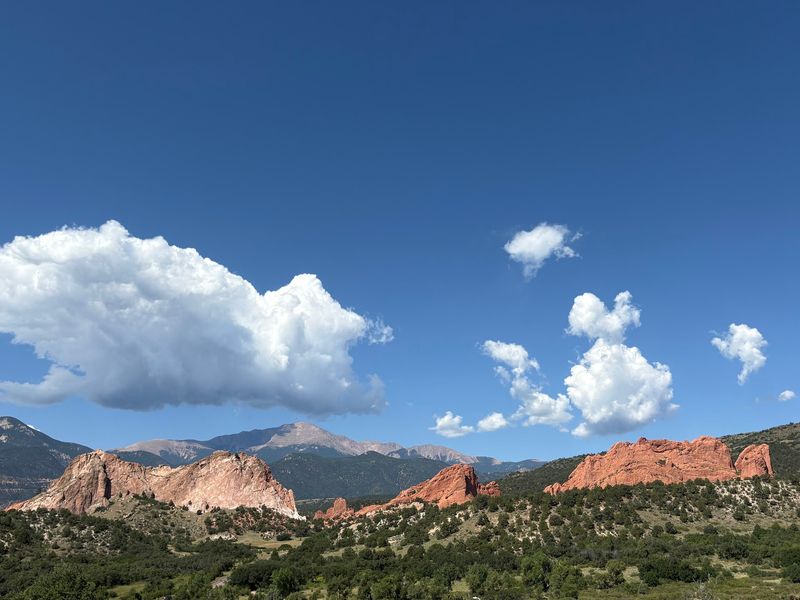
Not every park gets a mountain this famous as its backdrop. At Garden of the Gods Visitor & Nature Center, the view gains extra drama because the red rocks do not stand alone.
Behind them rises Pikes Peak, broad and powerful, giving the whole setting a layered look that is much bigger than a single trail or overlook.
That pairing changes how the park reads to the eye. The sandstone seems wild and sculpted, full of motion and slanted lines, while the mountain looks steady and immense.
Put them together under a bright sky, and the landscape starts to resemble a movie scene from another world instead of a public park in Colorado Springs.
The observation areas near the center are especially useful for first-time visitors. Instead of rushing straight to a trail, it helps to spend a few minutes looking across the park from above.
From there, the arrangement becomes clearer. Roads curve through open land, major formations rise in clusters, and the mountain acts like a giant anchor in the distance.
Weather can change the experience in small but noticeable ways. Fresh snow on Pikes Peak adds even more contrast to the rusty stone below, while summer haze softens the far edges and makes the nearest rocks feel even bolder.
Either way, the mountain gives scale. It reminds visitors that the park is not a random patch of rock but part of a much larger Colorado landscape.
Bring binoculars if there is room in the day pack. They are not required, but they make distant details sharper and help connect the overlook to the land beyond it. That simple extra step turns a pretty view into a fuller read of the terrain.
The Visitor Center That Makes the Terrain Click
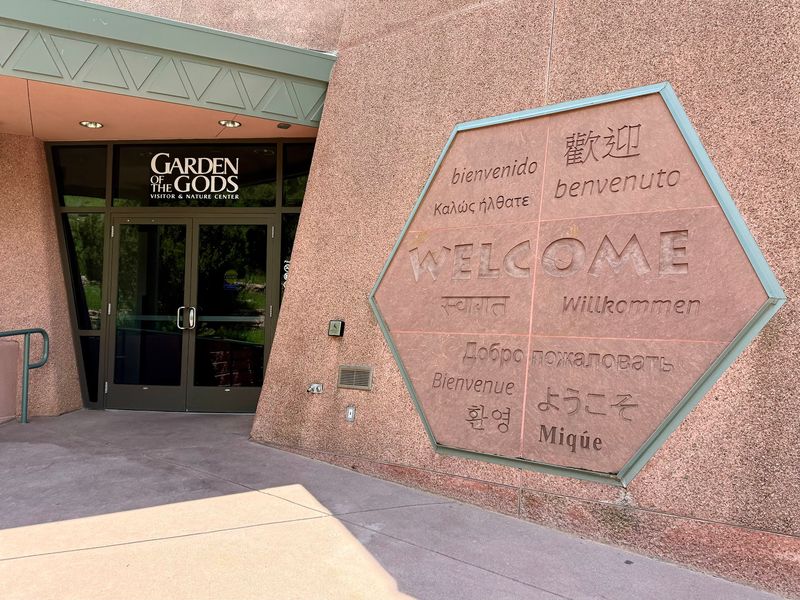
A place this unusual makes more sense when the indoor stop comes first. The Visitor & Nature Center is not only a parking and restroom break.
It helps translate the landscape outside, giving shape to what might otherwise seem like a jumble of giant red formations.
Exhibits, displays, and the short film add useful background without turning the visit into homework. Younger kids can quickly grasp the basics, while adults get enough context to notice more once they head outside.
Instead of simply saying the rocks are impressive, the center gives clues about how they formed, why they tilt, and how the area fits into regional natural history.
That matters most for first-time visitors who want a smoother day. A quick stop inside can answer practical questions about trails, viewpoints, and tour choices before anyone commits to a route.
It also helps families with mixed energy levels. One person may want a longer hike, another may prefer scenic overlooks, and the center makes planning easier before the group spreads out.
The building itself adds to the experience because the windows and viewing areas keep the landscape present. Learning happens with the rocks still in sight, which prevents the indoor portion from feeling separate from the park.
The transition from museum-style information to open-air exploration is short and natural. Another useful detail is pace. Spending 20 to 40 minutes here can save time later by helping visitors choose the right trail or tour from the start.
Clean restrooms, water, and staff support also make it a smart base rather than an afterthought. For many travelers, the center turns amazement into understanding. The scenery is still the star, but the park becomes richer once the shapes outside have names, stories, and a clearer place in the bigger picture.
Trails for Strollers, Sneakers, and Serious Wandering
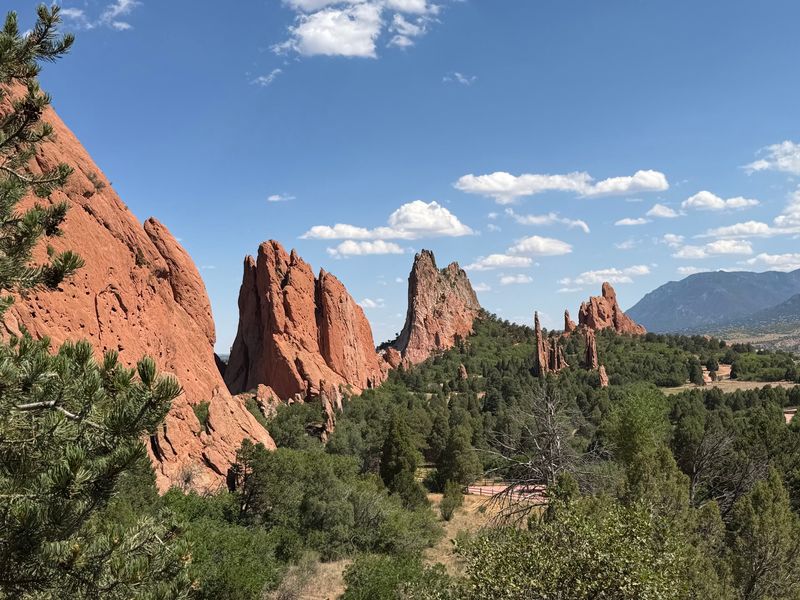
One of the best surprises here is how many kinds of visitors can enjoy the park in the same afternoon. Garden of the Gods has paved paths, easier loops, and longer walking options, so the experience does not belong only to strong hikers with trekking poles and a full day to spare.
The easier routes are a big advantage for families, older adults, and anyone adjusting to Colorado altitude. A short paved loop can still bring people close to major formations without turning the outing into a hard workout.
That means more time looking around and less time worrying about whether the path will be too rough, too steep, or too long.
At the same time, the park does not feel limited. Those who want more movement can connect longer routes and spend extra time circling around formations, gaining different angles as the light changes.
A rock wall that looked flat from one side may reveal deep texture from another. The terrain keeps shifting as the path bends, and that creates a steady sense of discovery.
Good preparation makes the walk better. Water matters, especially on warm days, because sunshine bounces strongly off open ground and stone.
Comfortable shoes are also a smart call, even for paved sections, since many visitors end up walking more than planned once the scenery starts pulling them farther along.
Another practical tip is simple but useful. Take a photo of the map or pick one up before heading out. The park is friendly to explore, yet having a clear route keeps the day relaxed and helps match the walk to available energy.
That flexibility is a major reason the place stands out. A stroller route, a scenic loop, and a longer hike can all exist in the same red rock setting, which opens the park to far more people.
Smart Starting Point
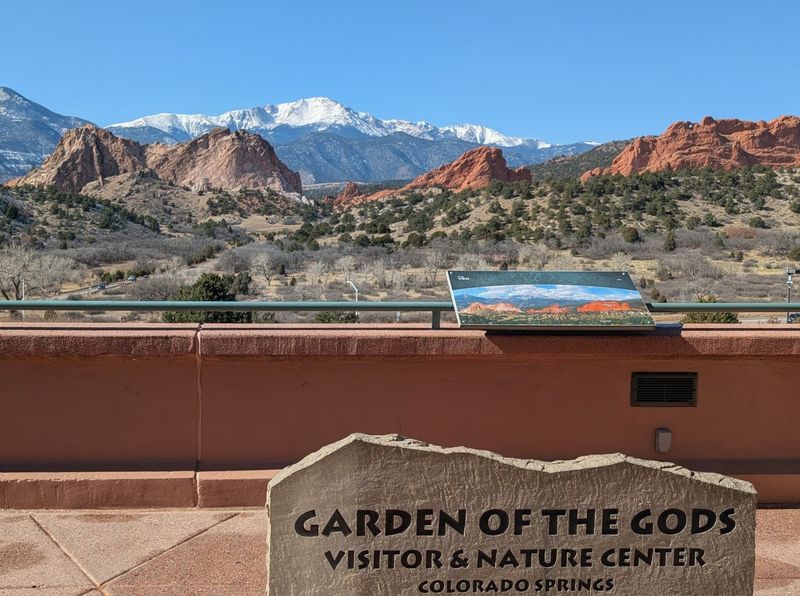
Address details may not sound exciting, but they matter here. Starting at Garden of the Gods Visitor & Nature Center gives the day a much smoother shape, especially for newcomers who would rather spend time exploring than guessing where to begin.
The center works like a launch pad. Parking, restrooms, exhibits, staff help, and trail information are all in one place, which removes a lot of small travel stress at the start.
Instead of driving into the park without a plan, visitors can get oriented first and then decide whether the day should focus on short walks, scenic views, or a guided tour.
That matters even more during busier periods. The park is popular, and closer trail lots can fill quickly. Beginning at the center allows people to regroup, use the facilities, check maps, and connect to the broader experience without instantly competing for the nearest spot to a rock formation.
Layout is another quiet strength. There is convenient access to trails from the visitor center area, so the place does not feel cut off from the park itself.
It functions as part classroom, part overlook, and part base camp. For travelers with kids or multigenerational groups, that setup makes breaks much easier to manage.
Hours are useful to remember as well. The center operates daily from 9 AM to 5 PM, so arriving earlier in the day gives more flexibility for planning and exploring while the indoor resources are open.
That window also helps visitors fit the center, a walk, and a view stop into one outing without feeling rushed. Practical choices are not always glamorous, but they improve the whole visit. In this case, the right starting point turns a famous park into a more organized and enjoyable adventure.
Tours, Shuttles, and Easy Ways to Cover More Ground
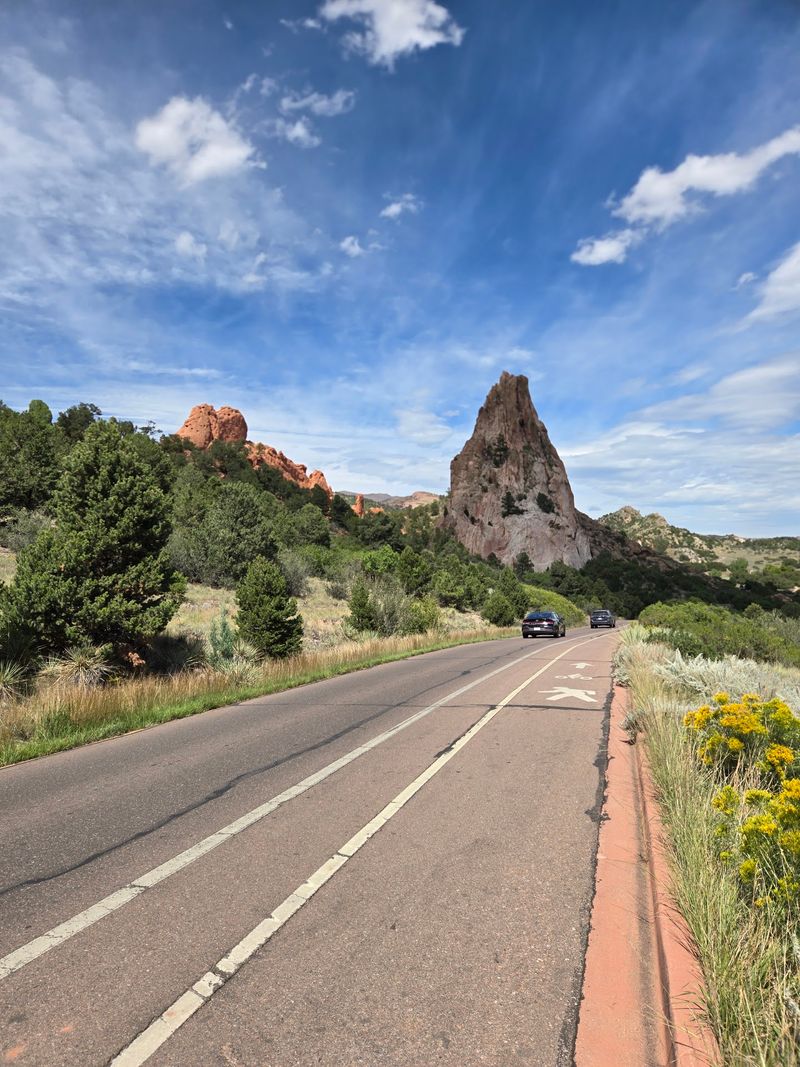
Not every great park has to be explored only on foot. One of the smartest features at Garden of the Gods Visitor & Nature Center is the range of ways to see more terrain without turning the day into a complicated puzzle of parking, walking distance, and timing.
Guided options can be especially helpful for first-time visitors. A trolley or jeep ride gives a quick lay of the land, which helps people understand where the major formations sit and which areas they may want to revisit later on their own.
That early overview can prevent the common mistake of wandering randomly, getting tired too soon, and missing the angles that make the park so dramatic.
The value is not only convenience. Guided rides often add stories, geology notes, and local history that are easy to miss when driving through alone.
Strange rock shapes become easier to read once someone points out how the landscape formed and why certain formations have become signature sights.
Shuttle service can also make the day more comfortable by reducing traffic stress and helping visitors reach major areas more easily. For families with kids, older travelers, or anyone saving energy for one favorite trail, that can be a much better use of time than circling for parking and walking long connector stretches.
Even active travelers may benefit from mixing styles. A short guided ride first, followed by a self-paced walk later, creates a balanced visit with both context and freedom.
That approach works well in a park where the scenery changes quickly depending on direction, elevation, and distance from the road. The best choice depends on energy, time, and curiosity. Some people want full independence.
Others enjoy a little structure at the start. Either way, the center supports both styles, and that flexibility helps the park feel welcoming instead of overwhelming.
Why the Park Lands Like a Different World
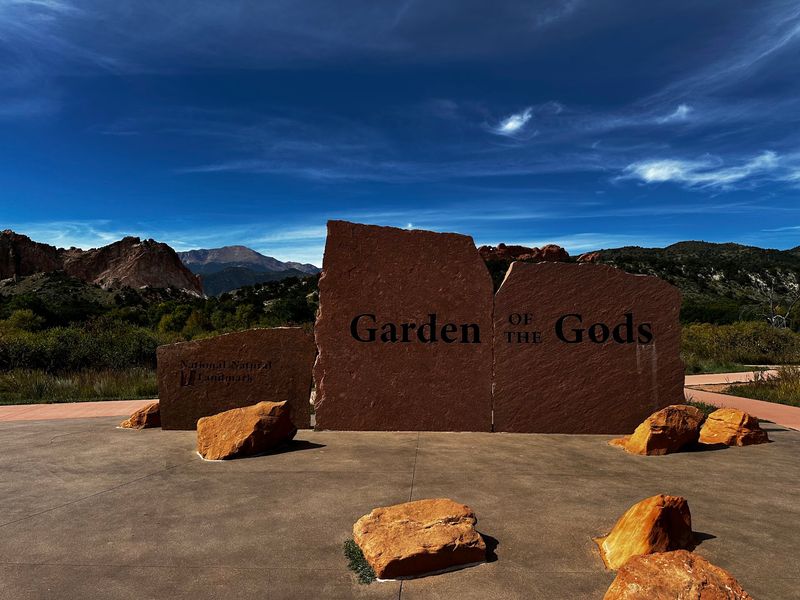
Plenty of scenic places are beautiful, but not all of them feel surprising. Garden of the Gods hits differently because the park combines several unusual elements at once.
The rock color is intense, the shapes are oversized, the ground stays open, and the mountain backdrop widens the whole scene into something that barely resembles an ordinary urban stop.
The sense of another planet comes from form as much as color. Many formations tilt, twist, or rise in narrow blades, creating silhouettes that seem less like hills and more like giant sculptures.
There are moments when the land looks unfinished in the best possible way, as if pressure and motion froze mid-action and never settled back down.
Light changes the mood hour by hour. Morning can make the rock look cleaner and cooler, while late afternoon warms everything into richer orange and red tones.
Shadows carve sharper lines into the stone, and those lines create a level of depth that helps the terrain look almost unreal, especially when the sky is cloudless and bright.
Yet the park never becomes distant or hard to enter. That is part of its power. It offers strange beauty without requiring extreme effort, technical skill, or a long backcountry journey. A traveler can learn at the center, step outside, and quickly reach views that look cinematic.
That blend of access and spectacle is rare. Families can handle it. Casual sightseers can enjoy it. Serious photographers can chase angles for hours. Few places manage to be so approachable while still looking so wild.
By the time the visit ends, the park has usually done more than provide nice scenery. It has changed scale, color, and expectation all at once, which is exactly why it reads less like a park and more like another world close to town.