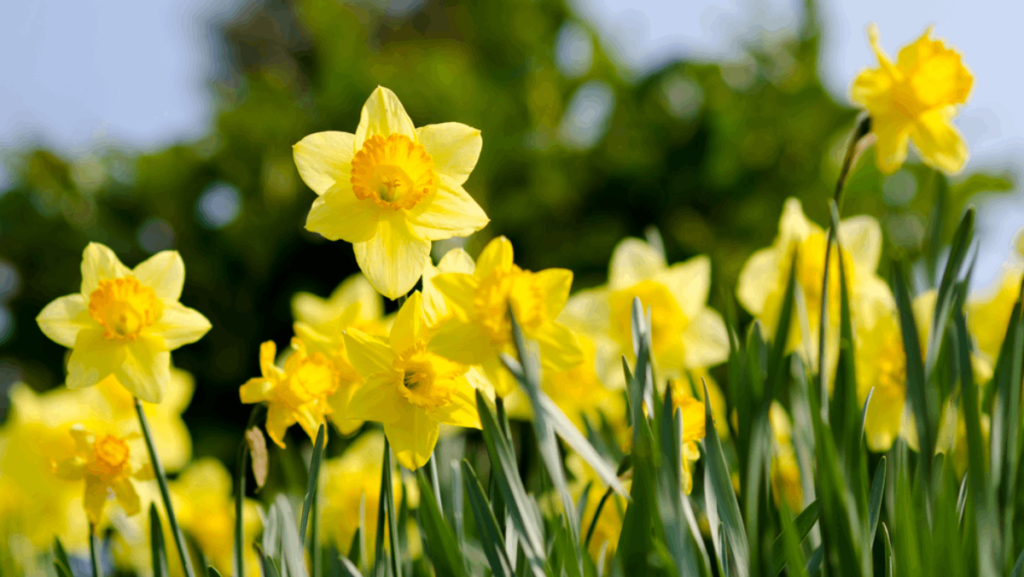
Every spring, something magical happens in the Great Smoky Mountains. A peaceful valley called Cades Cove transforms into a golden wonderland when thousands of bright yellow daffodils burst into bloom.
These cheerful flowers blanket the historic meadows and homesteads, creating one of Tennessee’s most beautiful springtime sights that draws visitors from all over the country eager to witness nature’s colorful show.
Welcome to Cades Cove, One of Tennessee’s Most Beautiful Valleys

Tucked away in the heart of the Great Smoky Mountains National Park, Cades Cove stands as one of Tennessee’s most treasured natural wonders. This broad, lush valley stretches across nearly 4,000 acres and offers visitors a rare glimpse into Appalachian history combined with breathtaking mountain scenery.
The eleven-mile loop road winds through open fields where deer graze peacefully and historic buildings tell stories of the families who settled here in the early 1800s. Log cabins, barns, and churches still stand as reminders of the community that once thrived in this isolated mountain valley.
What makes Cades Cove truly special is how the landscape has been preserved. Unlike many tourist spots, this valley maintains its peaceful, rural character. Mountains rise dramatically on all sides, creating a natural amphitheater that protects the valley and makes every visit feel like stepping back in time to simpler days.
Why Daffodils Bloom All Across Cades Cove Each Spring

The golden carpets of daffodils that appear each spring weren’t planted by the park service. These cheerful flowers are living reminders of the families who called Cades Cove home over a century ago. Pioneer women brought daffodil bulbs from their former homes and planted them around their cabins, churches, and family gravesites.
Daffodils proved to be incredibly hardy flowers, perfect for mountain life. They required little care and returned faithfully every spring, brightening the valley after long, cold winters. Even after the last residents left in the 1930s, when the national park was created, the daffodils kept coming back.
Today, these descendants of those original plantings spread naturally across the valley. They cluster around old home foundations, line former garden paths, and dot the meadows where families once farmed. Each bloom connects visitors to the real people who loved this valley and made it their home generations ago.
When the Daffodils Usually Bloom in Cades Cove

Planning your visit around the daffodil bloom requires a bit of flexibility since Mother Nature sets her own schedule. Typically, the flowers begin appearing in mid-March and reach their peak display through early April. However, mountain weather can be unpredictable and dramatically affect timing.
A warm winter might coax the bulbs to bloom earlier, while a late frost or cold snap can delay the show by a week or two. Elevation also plays a role throughout the valley. Daffodils in sunnier, lower spots often bloom first, while those in shadier areas near the mountains take longer to open.
Even if you miss the absolute peak, the valley remains gorgeous throughout spring as other wildflowers join the display and baby animals appear in the meadows.
The Best Places to Spot Daffodils Around Cades Cove

You don’t need a treasure map to find daffodils in Cades Cove because they pop up throughout the valley. The most spectacular displays typically appear around the historic structures where families once tended their gardens. The area surrounding the John Oliver Cabin, the oldest homestead in the cove, usually showcases impressive clusters of blooms.
The Methodist Church and the Primitive Baptist Church both feature beautiful daffodil displays in their surrounding grounds and nearby cemeteries. These spots offer particularly moving experiences as the flowers honor the graves of the pioneers who planted them. The Cable Mill area, with its collection of historic buildings, also provides excellent daffodil viewing opportunities.
As you drive the scenic loop, watch the open meadows carefully. Daffodils often appear in surprising patches across the grasslands, marking spots where cabins or outbuildings once stood. Pull into the designated parking areas and take short walks to discover hidden clusters that most drivers miss from their cars.
Why Spring Is One of the Best Times to Visit Cades Cove

While Cades Cove attracts visitors year-round, spring offers a uniquely magical experience that seasoned travelers prefer. The daffodils are just the opening act in a season-long natural performance. As March turns to April and May, the valley explodes with life after winter’s dormancy.
Wildlife viewing reaches its peak during spring months. Mother bears emerge with new cubs, white-tailed deer fawns take their first wobbly steps, and wild turkeys strut through the meadows. The trees leaf out in brilliant shades of green, and wildflowers beyond the daffodils paint the landscape in purple, white, and pink.
Perhaps the biggest advantage is smaller crowds compared to summer and fall. You’ll still encounter other visitors, especially on weekends, but the traffic moves more smoothly. Morning temperatures are cool and comfortable for hiking, and the longer days give you plenty of time to explore without feeling rushed through this stunning mountain valley.
A Spring Tradition That Keeps Bringing Visitors Back to Cades Cove

Something about the annual daffodil bloom has woven itself into the hearts of countless families who return to Cades Cove every spring. For many, it’s become a treasured tradition that marks the changing seasons and creates lasting memories across generations. Grandparents bring grandchildren to see the same flowers they enjoyed decades earlier.
Seeing those bright yellow faces pushing up through the grass reminds visitors that some beautiful things remain constant and dependable. The flowers connect us to the pioneer families who planted them, creating a living bridge across time.
Photographers schedule their trips around the bloom, hoping to capture that perfect shot of golden daffodils against misty blue mountains. Nature lovers simply sit quietly among the flowers, soaking in the peaceful atmosphere.