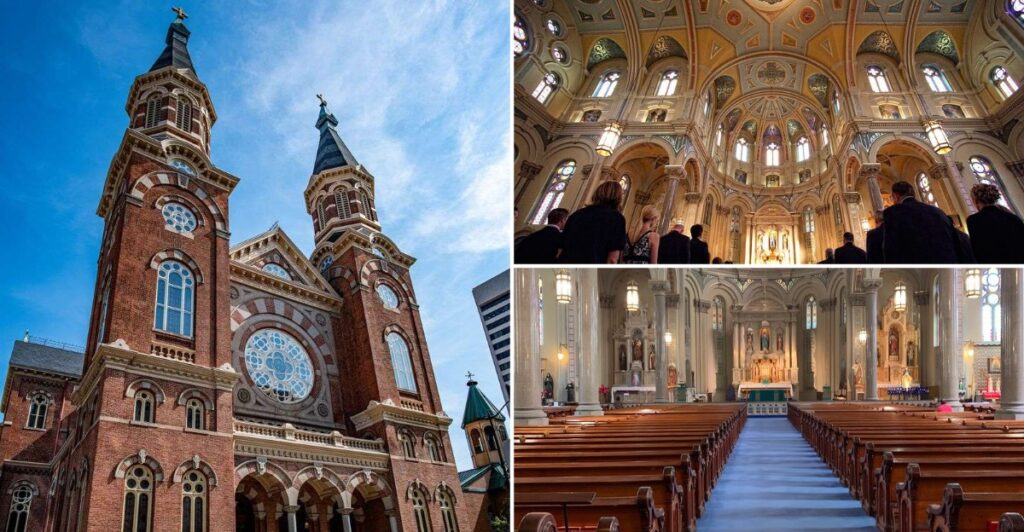
Historic churches feel even more fascinating when the nickname hints at a story most people do not know. In downtown Detroit, Michigan, Old St. Mary’s Catholic Church stands out with twin towers, a detailed interior, deep city roots, and a past that once earned it the unusual name “Church of the Grottos.” That detail gives the landmark more than architectural beauty; it opens the door to a richer look at faith, immigrant history, craftsmanship, and local memory.
The church still draws worshippers, history lovers, and curious visitors who want to see why it has remained so memorable. For anyone interested in Michigan landmarks with beauty and backstory, Old St. Mary’s deserves a closer look.
Twin Towers Above Monroe Street
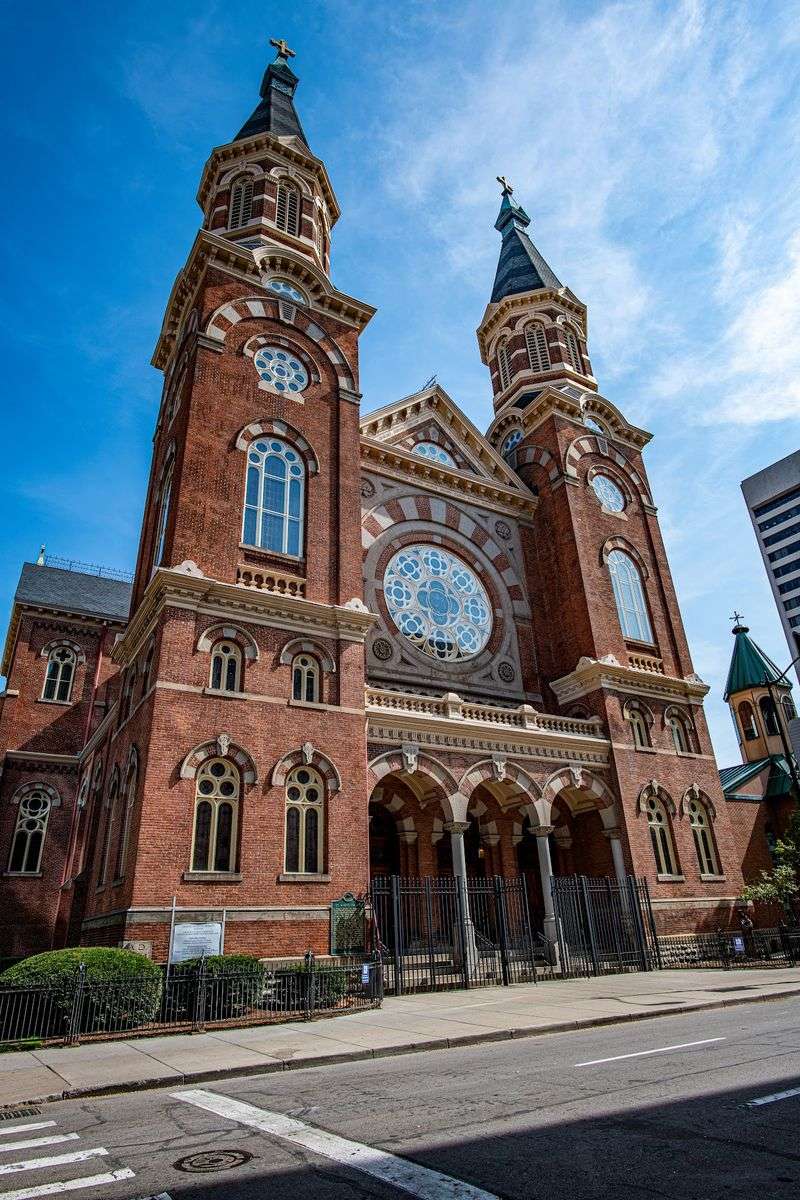
Downtown Detroit moves fast, but Old St. Mary’s slows your eyes almost instantly. The church stands on Monroe Street with a strong, upright presence, and its twin towers give the building the kind of skyline shape that makes you look twice.
Even before you know anything about its history, the exterior tells you that this is one of those places built to last.
The facade has weight and texture, not the flat look of a modern building. Brick, stone, tall windows, and sharply defined lines work together to create a church that looks formal without feeling cold.
In a busy part of the city filled with restaurants, traffic, and downtown motion, that solid design creates a clear visual break.
One reason the exterior matters so much is location. Old St. Mary’s sits in Greektown, where the streets can feel lively and packed with movement, so the church becomes an anchor in the middle of it all.
If you are exploring the neighborhood on foot, it offers a sudden change of pace and scale.
For first-time visitors, the best approach is simple. Stand back far enough to take in both towers, then move closer and notice the details around the entrance and windows.
That shift from wide view to close inspection helps you understand why the building is so memorable.
It also prepares you for what happens inside. The outside gives you a sense of age, strength, and craftsmanship, but it does not reveal the full richness waiting beyond the doors.
Old St. Mary’s starts making its case from the sidewalk, long before the interior takes over.
Where The Church Of The Grottos Story Begins
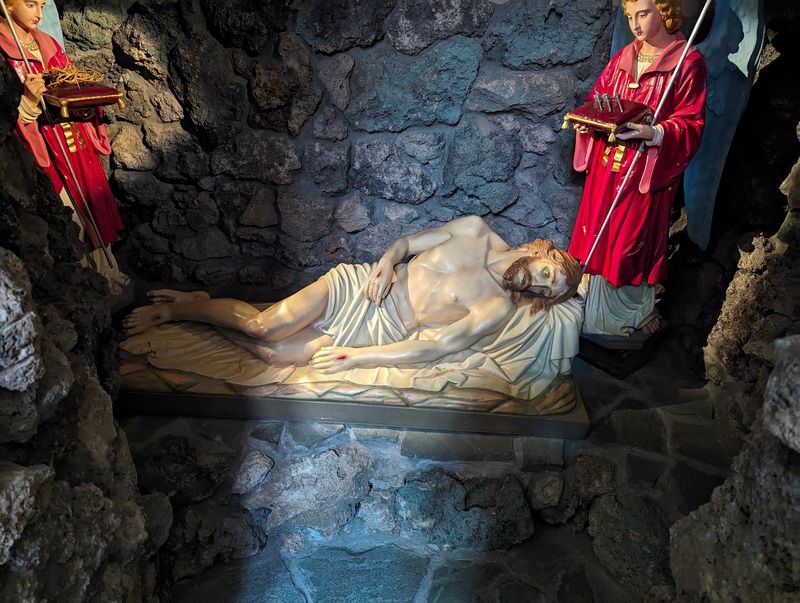
A nickname can tell you a lot about a place, and Old St. Mary’s once had a very unusual one. It was known as the Church of the Grottos, a title that immediately sparks curiosity because it sounds more intimate and devotional than formal.
Instead of pointing to towers or size, the name suggests prayer spaces shaped by faith and imagination.
In Catholic tradition, a grotto often refers to a shrine-like setting linked to the Virgin Mary or to quiet reflection. At Old St. Mary’s, that older name connects to the church’s distinctive devotional character, including sacred spaces and visual elements that encourage people to pause rather than hurry through.
The name matters because it hints that this church was built to do more than hold services.
That older identity gives the building a special place in Detroit church history. Many churches are remembered for architecture alone, but Old St. Mary’s also carries a spiritual nickname that sounds personal and local.
It tells you the church was experienced not only as a landmark, but also as a place of focused devotion.
If you visit with that story in mind, the church becomes easier to read. Look for the smaller sacred details, not just the grand ones, and pay attention to spaces set aside for prayer.
The old nickname makes more sense when you stop searching only for a big-room effect and start noticing the quieter corners.
That is why the phrase Church of the Grottos still catches attention today. It adds texture to the church’s identity and keeps the building from becoming just another old structure in downtown Detroit.
A memorable name opens the door, then the church itself fills in the meaning.
Granite Columns And A Ceiling That Pulls Your Eyes Up
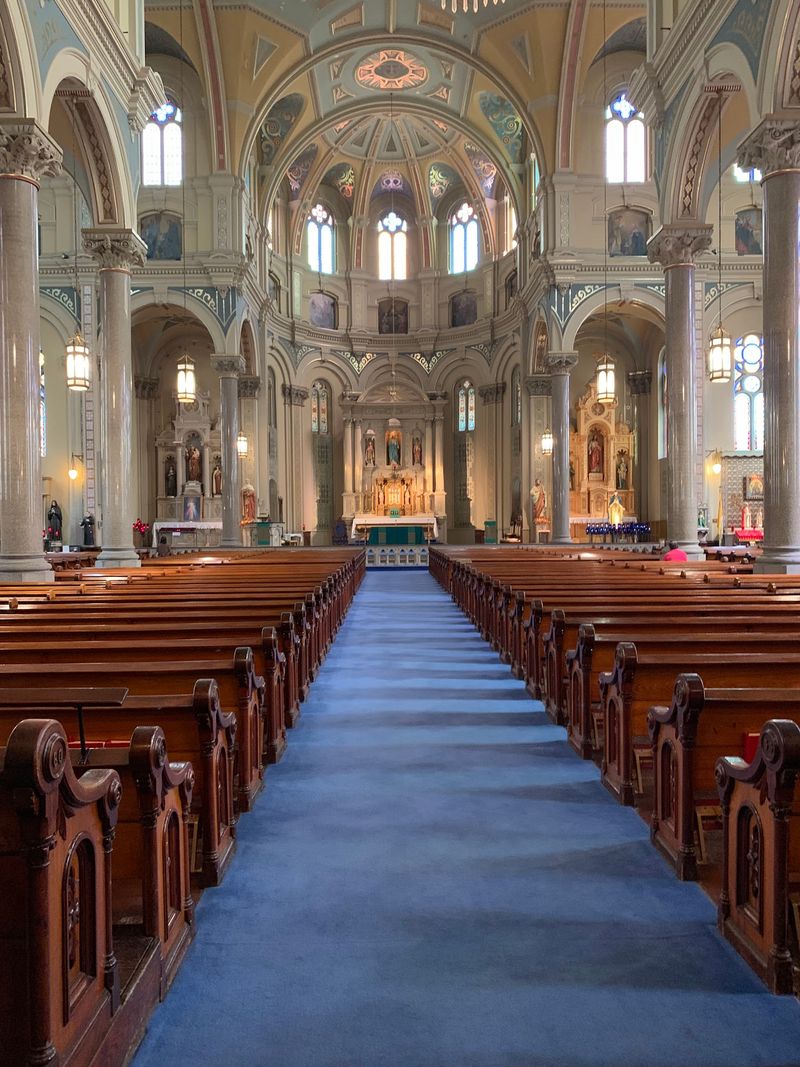
Step inside, and the scale changes in a hurry. Old St. Mary’s interior lifts upward with high ceilings, strong columns, and layers of ornament that reward slow looking.
It is the kind of church where your eyes do not stay in one place for long because every direction offers another detail.
The granite columns are among the features that give the room its power. They are not small decorative touches tucked into the background.
They help organize the entire space, creating a sense of order and weight while guiding your attention toward the altar and the wider architecture around it.
Then there is the surface detail. Statues, carved elements, sacred artwork, and carefully shaped design choices keep the church from feeling plain or oversized.
Instead of one dramatic focal point doing all the work, the interior builds its effect piece by piece, which makes a slow walk through the church especially rewarding.
If you enjoy historic buildings, this is a good place to look carefully rather than rush for a quick photo. Notice how the vertical lines pull your vision upward, then compare that to the steadier, grounded feeling of the columns below.
That contrast between lift and strength is one reason the sanctuary feels so balanced.
Lighting also plays a role in how the church reads. Depending on the time of day, parts of the interior can feel soft and quiet while other sections stand out more clearly, which changes the experience from one visit to the next.
Old St. Mary’s is not impressive only because it is old. It is impressive because the design still controls attention exactly the way a landmark church should.
Old-World Worship In The Middle Of Detroit
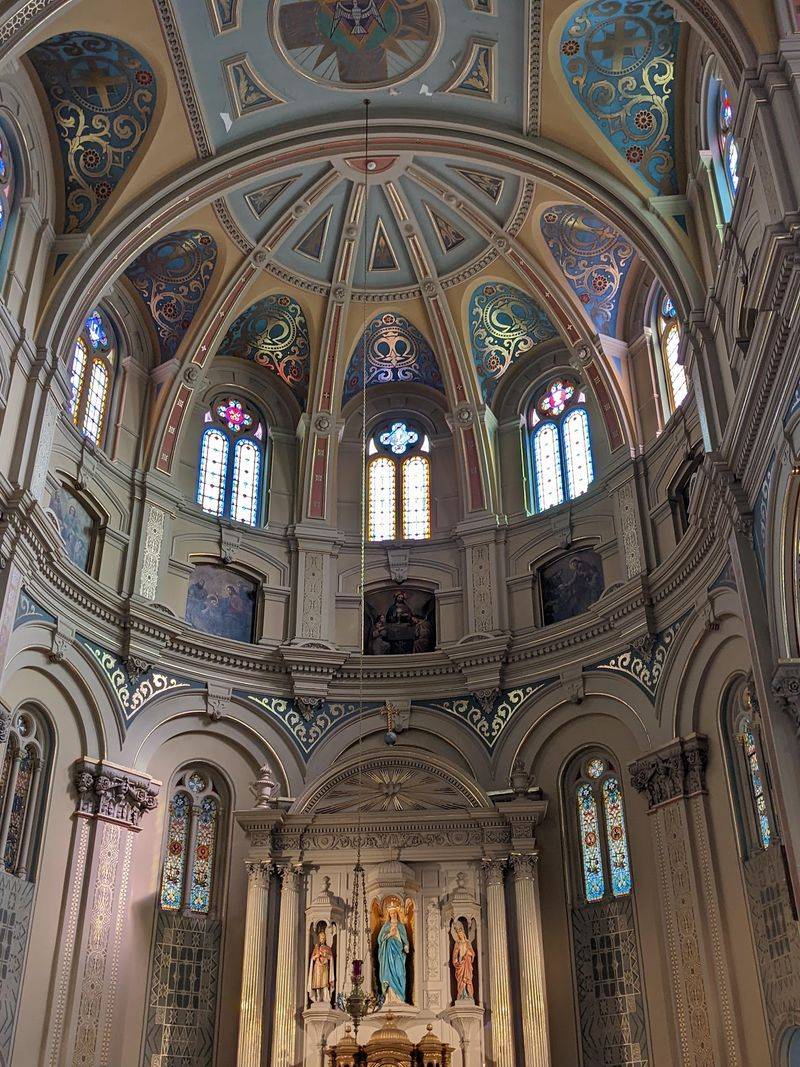
Some churches are admired mostly as historic buildings. Old St. Mary’s has that appeal, but it is also very much an active parish, and that changes the experience in an important way.
The space is not preserved like a museum piece behind glass. It is used for worship, prayer, music, confession, and the regular rhythm of church life.
That living quality shows up in the features many visitors notice right away. The traditional wooden confessionals, the communion rail, and the strong sense of reverence connect the church to older Catholic practices that are harder to find in some places.
For people who attend Mass here, those details are not stage props. They are part of how the church functions week after week.
Music also shapes the setting. The organ and choir are often mentioned as central parts of the experience, and in a large, ornate church, sacred music can fill the room in a way that changes how the architecture is felt.
Sound rises into the height of the building and turns visual beauty into something fuller and more immersive.
If you are planning a visit, remember that a church is first a place of worship. During Mass or prayer time, quiet respect matters, especially if others are there for devotion rather than sightseeing.
A gentle pace, lowered voice, and careful timing will help you appreciate the church without interrupting the purpose it serves.
That active parish life is one reason Old St. Mary’s stands apart downtown. Beauty alone would make it notable, but the ongoing use of the space gives the building extra depth.
It carries history, art, and ritual all at once, which is far rarer than a quick glance from the sidewalk might suggest.
A Michigan Landmark With Deep City Roots
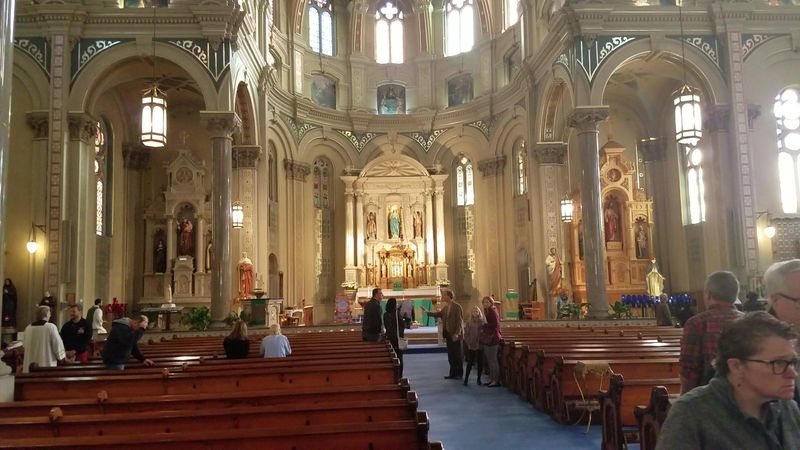
Old St. Mary’s is not tucked away in a quiet rural setting. It rises right in downtown Detroit, which gives its history a different kind of energy.
The church has remained part of the city’s everyday life through changing streets, new buildings, and the constant reshaping that comes with an urban center.
That downtown location helps explain why the church matters beyond religion alone. A building like this becomes part of the city’s visual memory.
Workers on lunch breaks, families attending weekend Mass, visitors exploring Greektown, and people interested in Detroit architecture all cross paths with the same landmark.
The church is often described as one of Detroit’s older Catholic parishes, and that long presence adds gravity even if you are only there briefly. In a city known for reinvention, structures that still carry their original purpose can tell a more layered story.
Old St. Mary’s does exactly that without needing flashy presentation.
You can sense the contrast best by paying attention to the block around it. Restaurants, traffic, signs, and the normal pulse of downtown create one pace, while the church introduces another.
It does not compete with the neighborhood’s noise. It answers it with steadiness.
For travelers, that makes Old St. Mary’s easy to fold into a broader Detroit day. You can pair it with a walk through the district and still come away with a stop that feels fully distinct from the rest of your route.
For locals, it offers a continuing reminder that historic Detroit is not frozen in the past. It is still in use, still visible, and still woven into the city street by street.
How To Visit Without Missing The Best Details
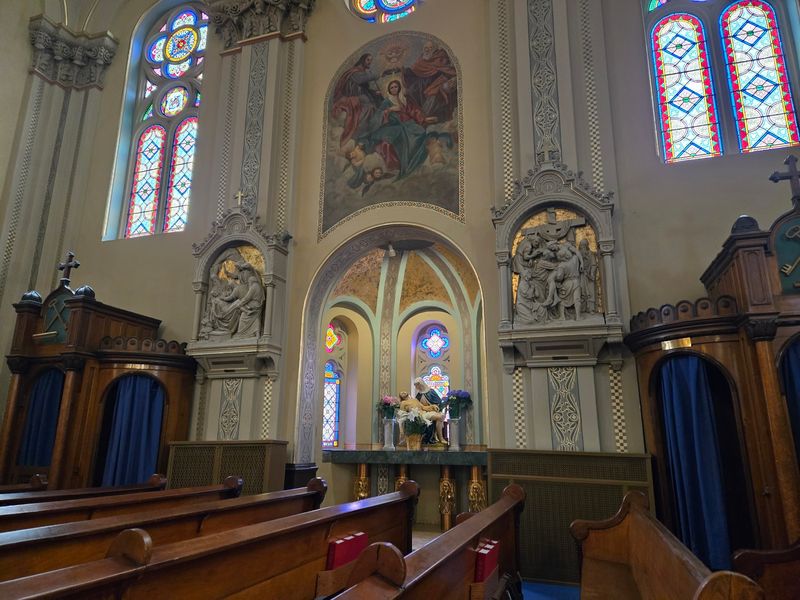
A quick visit can be rewarding here, but a smart visit is even better. Old St. Mary’s has limited public hours on many weekdays, so timing matters if you want more than a fast peek through the doors.
The church is generally open around midday on weekdays, longer on Saturday, and in the morning into early afternoon on Sunday.
That schedule creates a useful choice. If you want a quieter look at architecture and devotional details, arriving during open sightseeing hours outside the busiest worship moments can make the experience easier.
If you are coming for Mass, plan for a different kind of visit where prayer and liturgy shape the pace.
One practical tip is to give yourself enough time for both a broad look and a careful look. Start in the main nave and take in the full sweep of the interior first.
After that, move slowly toward side details such as statues, shrines, and smaller sacred features that connect back to the church’s older identity.
Because this is an active church, awareness matters as much as curiosity. If people are praying, keep photos brief and quiet, and avoid stepping into spaces being used for devotion.
Fridays can include extended prayer after the midday Mass, so that may not be the best moment for uninterrupted sightseeing.
The church also sits in a very walkable downtown area, which makes planning simple. You can fit a stop here into lunch hour, a weekend neighborhood stroll, or a larger day of Detroit architecture.
The best visits usually combine two things: enough time to notice the craftsmanship, and enough respect to let the church remain what it is meant to be.
Why Old St. Mary’s Still Stops People In Their Tracks
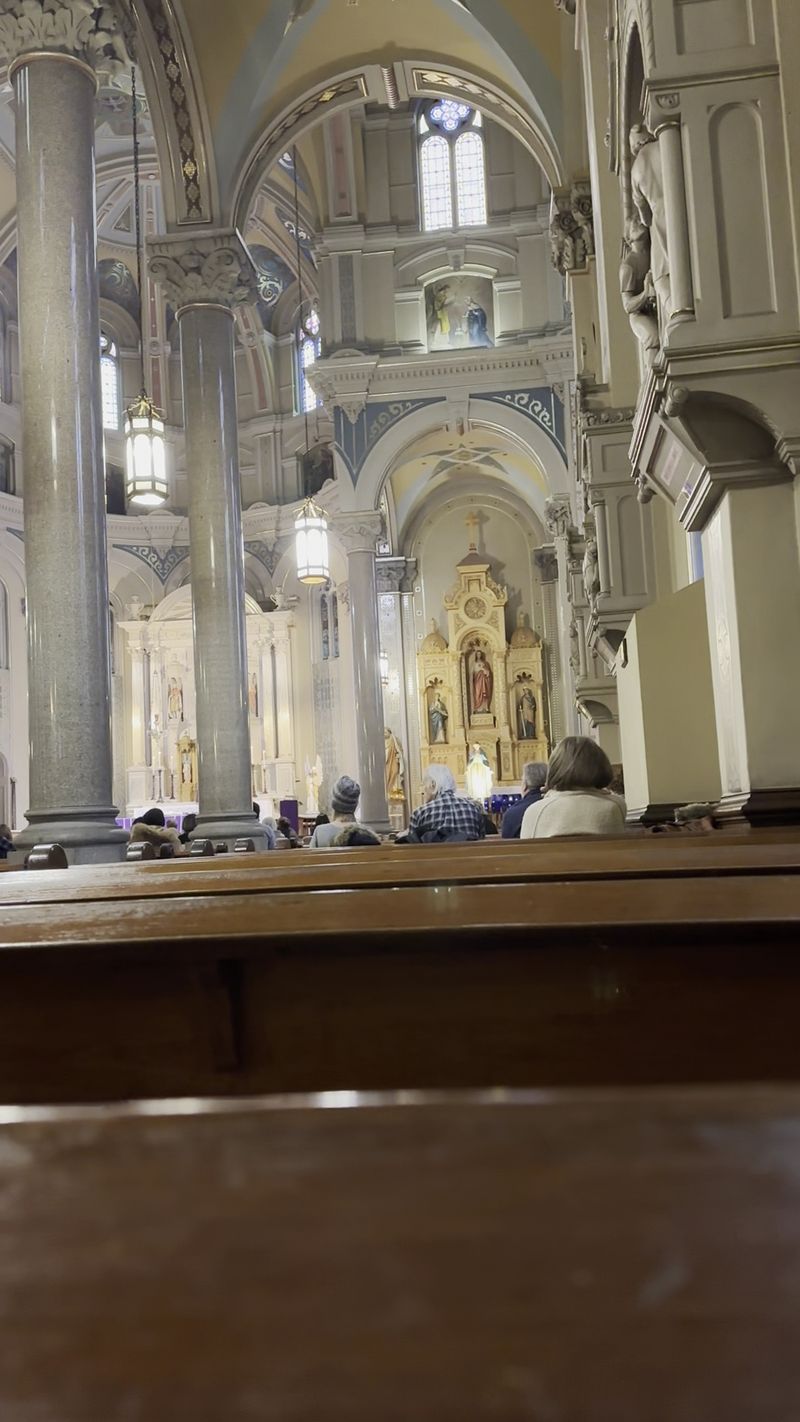
Plenty of historic buildings earn admiration for age alone. Old St. Mary’s goes further because it offers several kinds of value at once.
It is visually commanding from the street, deeply detailed inside, active as a parish, and tied to a nickname that gives its history extra personality.
That combination is rare. Some churches are known mainly for architecture, while others are remembered for neighborhood history or worship tradition.
Here, those strands meet in one place. The result is a church that appeals to more than one kind of visitor without losing its core purpose.
For architecture fans, the twin towers, granite columns, and richly decorated interior provide plenty to study. For people interested in Catholic tradition, the confessionals, communion rail, music, and devotional spaces reveal a parish that still honors older practices.
For anyone curious about Detroit, the setting in Greektown places the church right inside the city’s daily energy instead of apart from it.
The old Church of the Grottos name gives the final layer. It adds a human note to a monumental building and points toward the quieter devotional side of the church, not only the grand public face.
That is an unusual tension, and it works in the building’s favor. Monumental on the outside, prayerful in its details, and still active in the present, Old St. Mary’s carries more than one story at the same time.
If you are choosing one historic church to see in downtown Detroit, this one makes a strong case for itself. It offers scale without emptiness, beauty without showiness, and history that still has a job to do. Few city landmarks manage all of that under one roof.