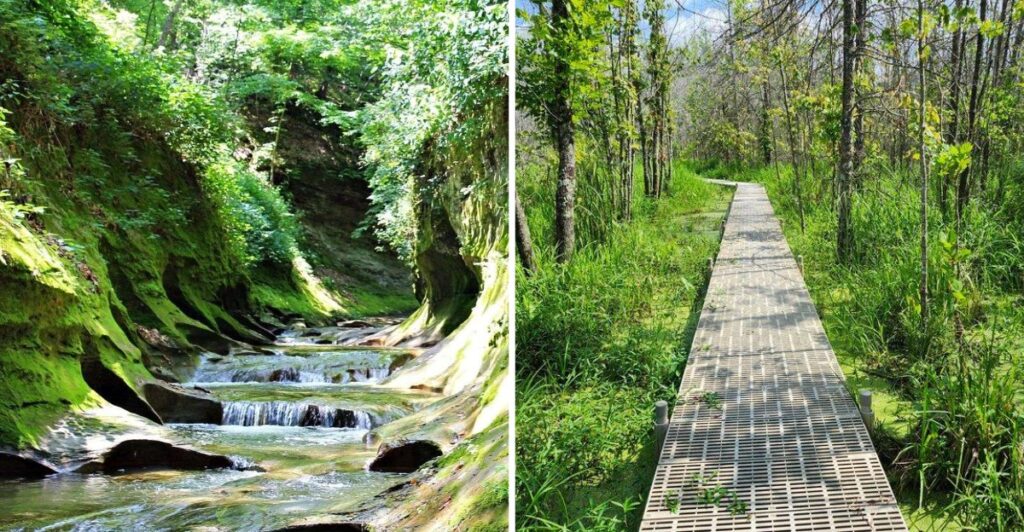
Indiana saves some of its best surprises for travelers willing to look beyond the familiar stops. Venture off the usual route, and the landscape opens into rocky gorges, quiet wetlands, wooded trails, tumbling waterfalls, and creek-carved formations that hardly match the state’s flatland stereotype.
These lesser-known places also offer something increasingly valuable: enough breathing room to notice wildlife, listen to the water, and explore without feeling rushed. Some require only a short detour to reach, yet remain absent from many road-trip plans. These 9 underrated Indiana spots prove there is still plenty hiding beyond the state’s headline attractions.
1. Hemlock Cliffs (English)
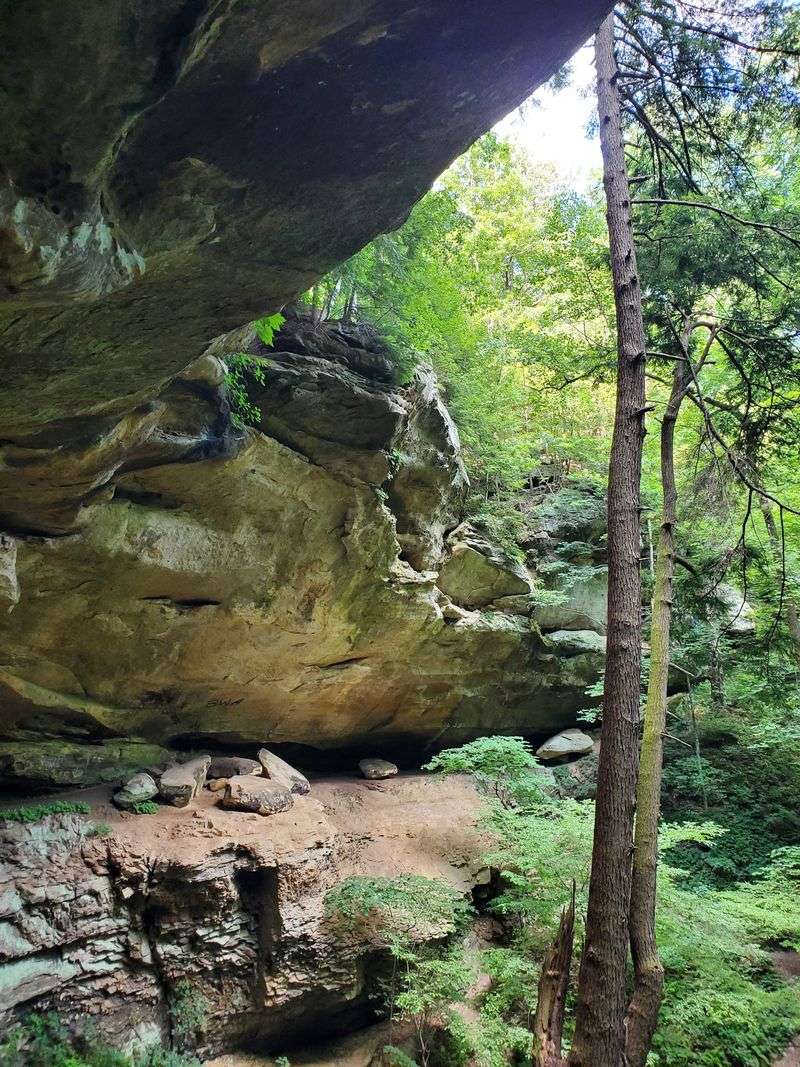
Some Indiana trails stay pleasant and predictable. Hemlock Cliffs is not one of them. Tucked inside Hoosier National Forest near English, this two-mile loop drops visitors into a cooler, shadier world lined with tall rock walls, damp stone, and pockets of greenery that look different from the usual hardwood forest.
The route is short enough for a half-day outing, but it packs in a lot of scenery. Waterfalls can appear along the cliffs after rain, and the canyon holds unusual rock shapes, overhangs, and narrow passages that make the walk more dramatic than many people expect in Indiana.
Footing can be uneven, so sturdy shoes help more than casual sneakers. The trail is much more enjoyable when hikers slow down and watch where they step, especially around wet rock, exposed roots, and muddy sections near the canyon floor.
Summer visits have a big advantage because the shade can make the area feel cooler than nearby open land. Spring is another smart pick, with fresh green growth and flowing water adding extra life to the loop without turning the trip into a long, difficult trek.
Photos are easy to take here, but the better move is to pause often and look up. The height of the surrounding walls changes the whole scale of the place, and small details like ferns, moss, and water stains on stone reward anyone who pays attention.
Because the hike is not very long, many visitors pair it with other southern Indiana stops. Even so, rushing misses the point.
Hemlock Cliffs works best as a slow ramble, one where every bend reveals another cool rock face, another trickle of water, or another shaded corner that makes the forest seem far wilder than expected.
2. Green’s Bluff Nature Preserve (Spencer)
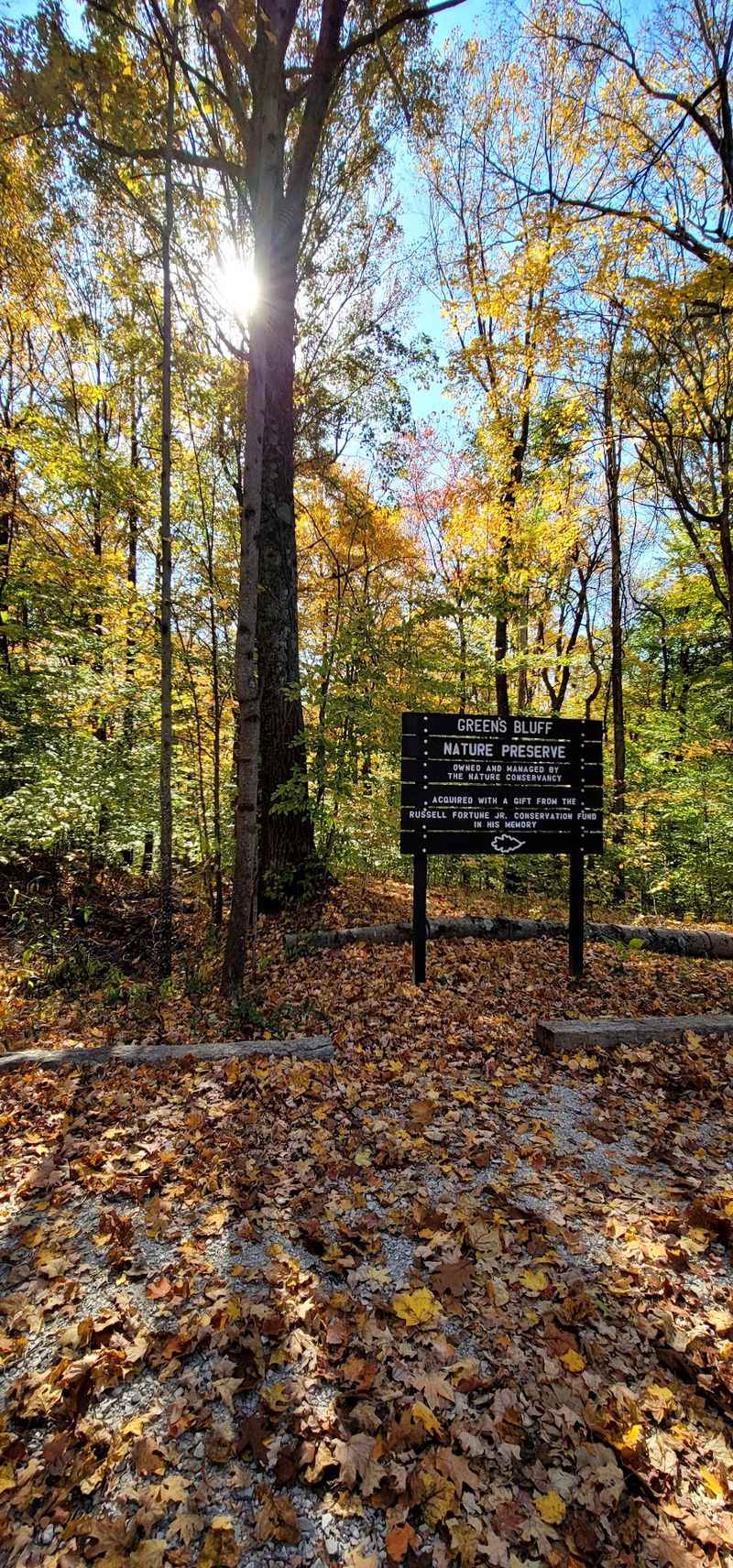
Not every memorable Indiana view comes with a big parking lot and a crowd. Green’s Bluff Nature Preserve near Spencer proves that quickly.
Rugged sandstone cliffs rise above Raccoon Creek, and the land folds into ravines and wooded slopes that create a quieter, more tucked-away experience than many well-known trail spots.
The preserve offers a mix that keeps a walk interesting from start to finish. One stretch may feel shaded and enclosed by thick forest, while another opens toward bluff-top views that let visitors look out over the creek corridor and the rough shape of the surrounding land.
Plant life adds another layer to the trip. Hemlock groves, ferns, and seasonal wildflowers give the preserve a softer side, which balances the tougher look of the cliffs and sandstone edges.
That contrast is part of the fun here, since the scenery keeps switching moods as the trail moves along. Good footwear matters, especially after rain. Trails in ravine country can be slick, and uneven ground asks for more attention than a flat park path.
A careful pace makes room for better views anyway, whether that means scanning for wildflowers or stopping at an overlook to catch the shape of the bluff.
Early morning is a strong time to visit because the woods tend to feel extra calm before the day warms up. Cooler seasons can also be rewarding, when leaves thin out and the sandstone features stand out more clearly through the trees.
Green’s Bluff does not need flashy extras to make an impression. Between the cliffs, creek setting, and rich plant life, it delivers a rugged corner of southern Indiana that rewards patient walkers, quiet observers, and anyone ready to trade a standard stroll for terrain with a bit more edge and variety.
3. Pine Hills Nature Preserve (Waveland)
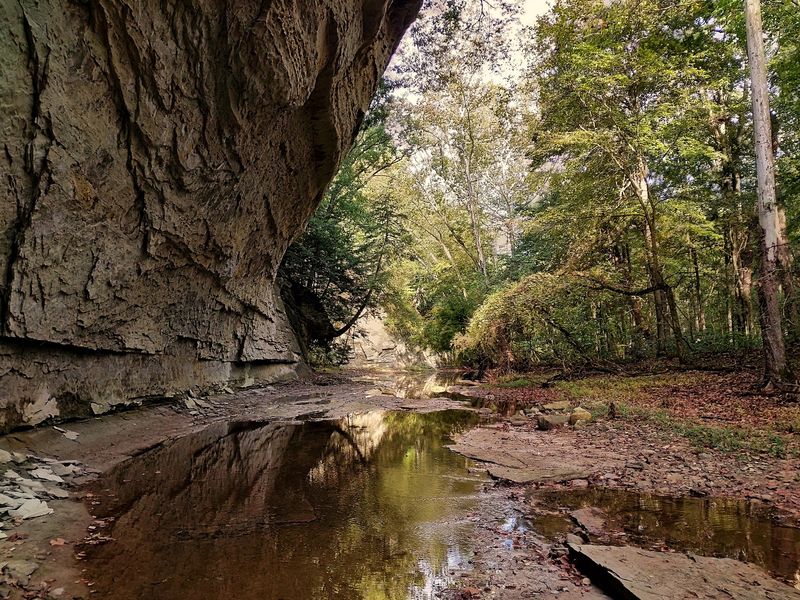
A trail can turn exciting in a hurry at Pine Hills Nature Preserve. Located within Shades State Park near Waveland, this landmark area mixes steep ravines, sandstone bluffs, and narrow ridges known as backbones, giving hikers a route that feels more adventurous than a standard walk in the woods.
Devil’s Backbone gets much of the attention, and for good reason. The narrow ridge creates a memorable passage with sharp drops and a strong sense of exposure compared with gentler Indiana trails.
Honeycomb Rock adds another standout feature, with weathered stone surfaces that show off the preserve’s unusual geology.
There is also real history underfoot here. Pine Hills was Indiana’s first dedicated nature preserve, and that status fits the terrain.
The area has a distinct look and structure, shaped by water, stone, and steep slopes that break away from what many travelers expect in the state.
This is a place to wear shoes with grip and move carefully. Some sections can feel demanding, especially for visitors not used to hills, stairs, or narrow paths.
Taking it slow is part of the experience, since the best views often come during quick pauses rather than from rushing toward the next marker.
Leaf-off seasons can reveal more of the bluffs and ridges, while warmer months bring deep green forest cover that makes the ravines seem even steeper. Either way, carrying water and allowing extra time is smart because the preserve invites frequent stops for photos and short breathers.
Pine Hills stands out because every section has a stronger shape than expected. Instead of one scenic overlook and a routine return, the preserve keeps serving up ridges, stone, and sudden changes in elevation.
For hikers who want a little challenge with their scenery, this corner of Shades State Park delivers a memorable route.
4. Charles C. Deam Wilderness (Bloomington)
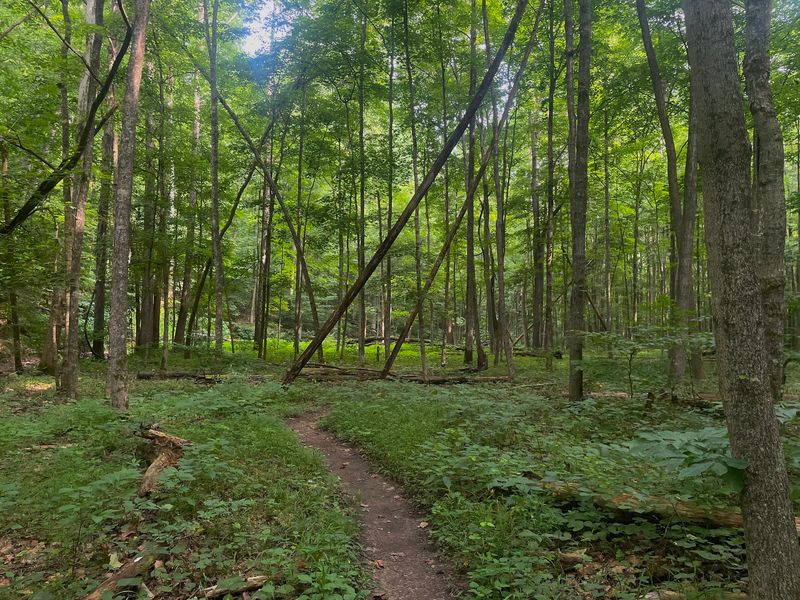
Space changes everything, and Charles C. Deam Wilderness near Bloomington has a lot of it. Spread across nearly 13,000 protected acres within Hoosier National Forest, this area offers the kind of room where trail noise fades, crowds thin out, and a day outdoors can stretch into real solitude.
More than 37 miles of trails wind through the wilderness, so visitors have options. Some come for a simple hike, others for horseback riding, and plenty are drawn by primitive camping that trades convenience for a more rugged, unplugged outing.
The scale lets each trip feel different depending on route, weather, and season. Because the area is large, planning matters more here than at a short preserve trail. A map, water, snacks, and realistic timing can make the difference between a satisfying ramble and a tiring slog.
Cell service may not be something to count on, which makes basic preparation a smart habit rather than extra caution.
One of the best parts is the chance to settle into the woods instead of racing through them. Long sections of trail give the forest time to unfold, and small details start to stand out, from birdsong overhead to shifting light through the trees and the gradual rise and fall of the land.
Spring and fall are especially inviting for many visitors, thanks to milder temperatures and easier hiking conditions. Summer can still be rewarding, but the combination of heat, humidity, and distance calls for a slower pace and an earlier start.
Charles C. Deam Wilderness is a strong pick for people who want more than a quick scenic stop. It offers a broader experience, one built around distance, quiet, and self-guided exploration. For anyone craving elbow room in southern Indiana, this is the kind of place where a trail can still feel open-ended.
5. Beanblossom Bottoms Nature Preserve (Ellettsville)
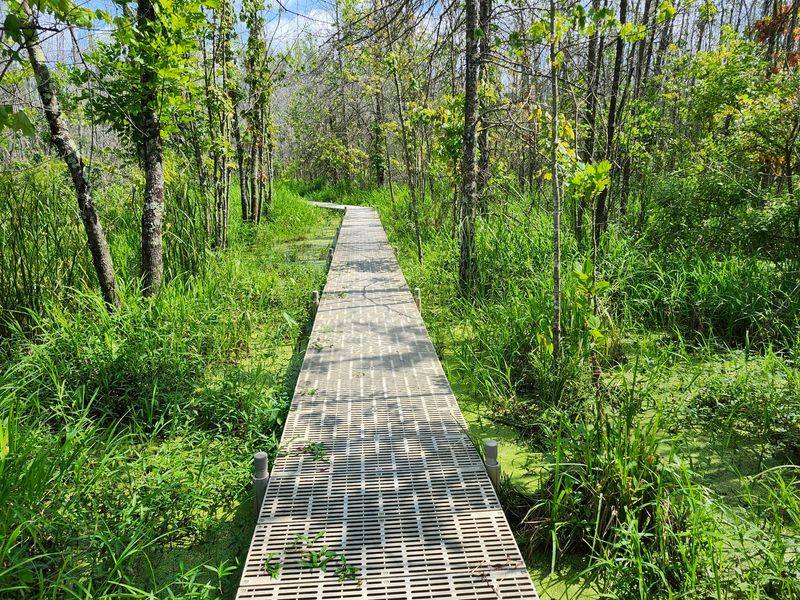
Boardwalk trails have a different rhythm, and Beanblossom Bottoms Nature Preserve near Ellettsville uses that to its advantage. Instead of steep climbs or rocky squeezes, this preserve invites visitors into wetlands and bottomland forest, where the experience is quieter, flatter, and focused on watching rather than rushing.
A trail of roughly two miles, along with raised boardwalk sections, helps people move through habitat that would otherwise be harder to access. That setup makes the visit feel immersive without requiring expert hiking skills, and it opens views across wet areas where birds and other wildlife may be easier to spot.
Patience pays off here. Observation areas give visitors a reason to stop, stay still, and let the preserve reveal itself in stages. Ripples on the water, calls from hidden birds, and shifting light over the marsh can turn a simple walk into a much richer outing.
Binoculars are a smart addition, especially for anyone curious about birdwatching. Even visitors who do not know every species can enjoy scanning the edges of the wetland, where movement often catches the eye before a clear view does.
Quiet steps and low voices help much more than covering ground quickly. This preserve also works well for families or casual explorers who want nature without a punishing trail.
The boardwalk brings structure and comfort, but the setting still feels wild in its own way, with wetland plants, open views, and the soft sounds of water and wind doing most of the work.
Beanblossom Bottoms offers a side of Indiana that many travelers overlook. Swamps, marshes, and bottomland woods may not get the same attention as cliffs or waterfalls, yet they hold their own kind of beauty. For a calm outing near Bloomington, this preserve gives visitors room to slow down and pay closer attention.
6. Jug Rock Nature Preserve (Shoals)
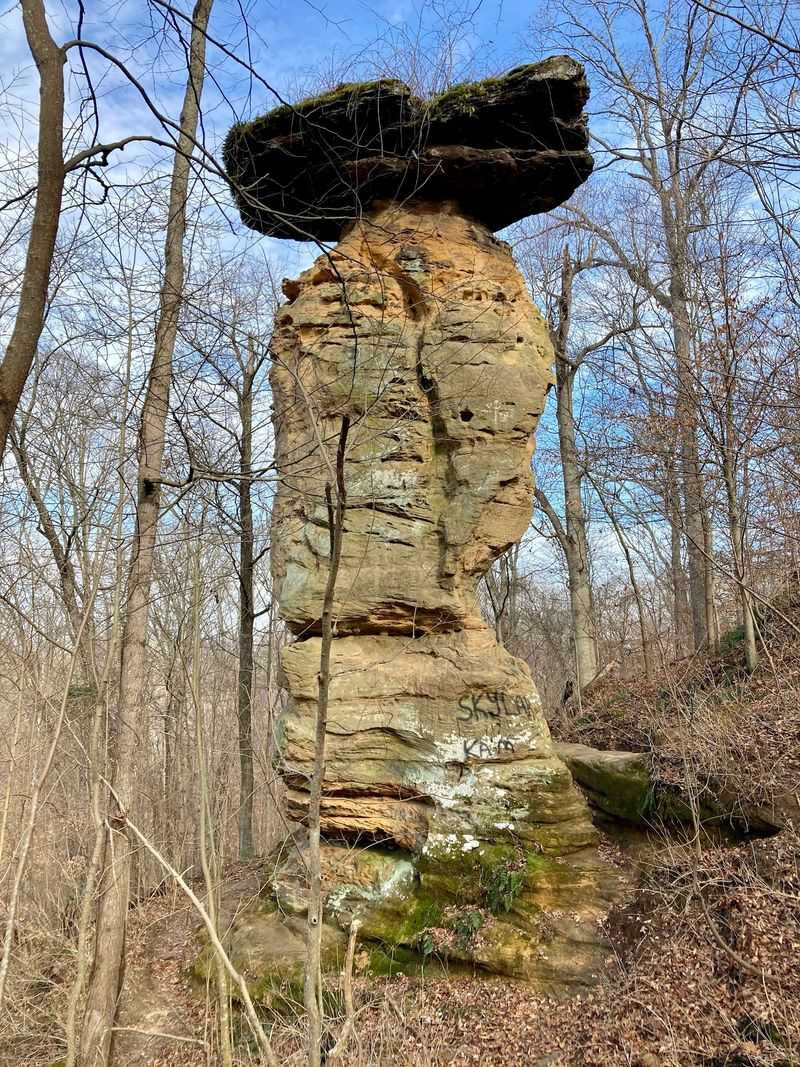
Few places in Indiana make drivers do a double take quite like Jug Rock. Near Shoals in Martin County, this small nature preserve centers on an unusual freestanding sandstone formation that rises from the woods with a shape and presence unlike the scenery most people expect on an everyday southern Indiana route.
The preserve is not enormous, and that is part of its charm. Rather than turning into a long hiking commitment, the stop works as a focused look at one standout natural feature.
Visitors can take in the wooded surroundings, approach the area at an easy pace, and enjoy a geology lesson without needing an all-day schedule. Jug Rock earns attention because it is so visually distinct. Sandstone outcrops are one thing.
A separate rock mass rising so clearly from the landscape is another. The contrast between the stone and the forest around it gives the preserve a bold look, especially when filtered light hits the rock surface.
This is a strong detour for travelers exploring other Martin County or southern Indiana stops. It fits well into a broader day trip, especially for people who enjoy unusual landforms, quick scenic breaks, or photo stops with more personality than a standard roadside pull-off.
As with many small natural areas, the best approach is simple and respectful. Stay on marked paths, watch footing if the ground is damp, and take time to notice the textures in the sandstone instead of just snapping one picture and heading out.
Jug Rock shows that a place does not need massive acreage to stand out. One odd, striking geological feature can be enough to anchor an entire visit.
For travelers who like their nature stops a little offbeat, this preserve offers an easy-to-overlook landmark with a shape that sticks in memory long after the drive home.
7. Williamsport Falls (Williamsport)
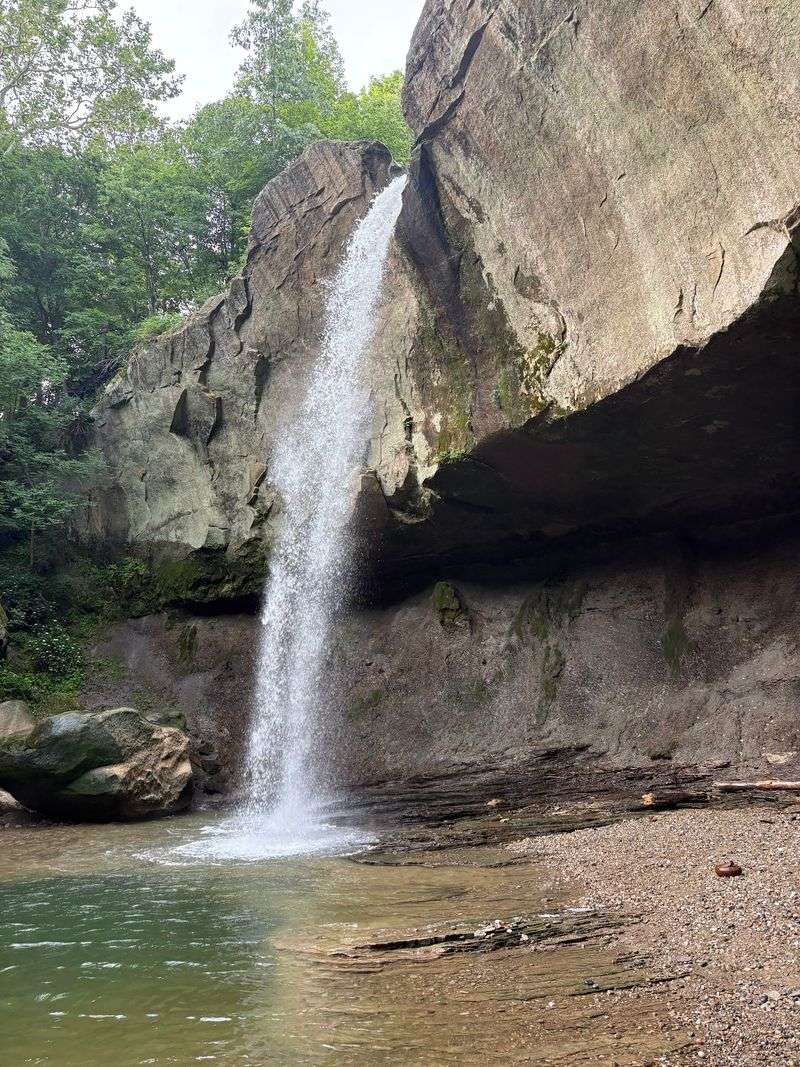
Waterfalls always get attention, but Williamsport Falls still slips under the radar for many Indiana travelers. Near the small town of Williamsport, this dramatic drop pours into a sandstone amphitheater and creates one of the most eye-catching waterfall scenes in the state when recent rainfall gives it a strong flow.
The falls are promoted as Indiana’s second-tallest waterfall, and the height is a big part of the appeal. Instead of a broad, gentle cascade, visitors get a more vertical presentation, with water spilling down a tall rock face into a setting shaped by layered sandstone and steep walls.
Timing matters here more than at some other natural spots. Flow can vary a lot depending on rain, which means one visit may bring a thin ribbon of water while another delivers a fuller, louder show.
Checking recent weather can improve the odds of seeing the falls at their most photogenic. The surrounding amphitheater adds real drama to the scene. Even when the water is lighter, the shape of the rock still gives the site a sense of scale and structure.
That makes Williamsport Falls appealing for photographers, casual sightseers, and road trippers looking for a stop that offers clear visual payoff.
Visitors should still be careful around wet surfaces and avoid treating the area like a playground. Slick stone and changing conditions around waterfalls deserve respect, even during what seems like a quick stop.
Williamsport Falls works especially well as part of a day in Warren County, but it can also justify a trip on its own after a good rain. The combination of height, sandstone backdrop, and small-town setting gives it a memorable personality.
For people chasing natural scenery in Indiana, this waterfall has a much bigger presence than its low profile suggests.
8. Fall Creek Gorge Nature Preserve (Williamsport)
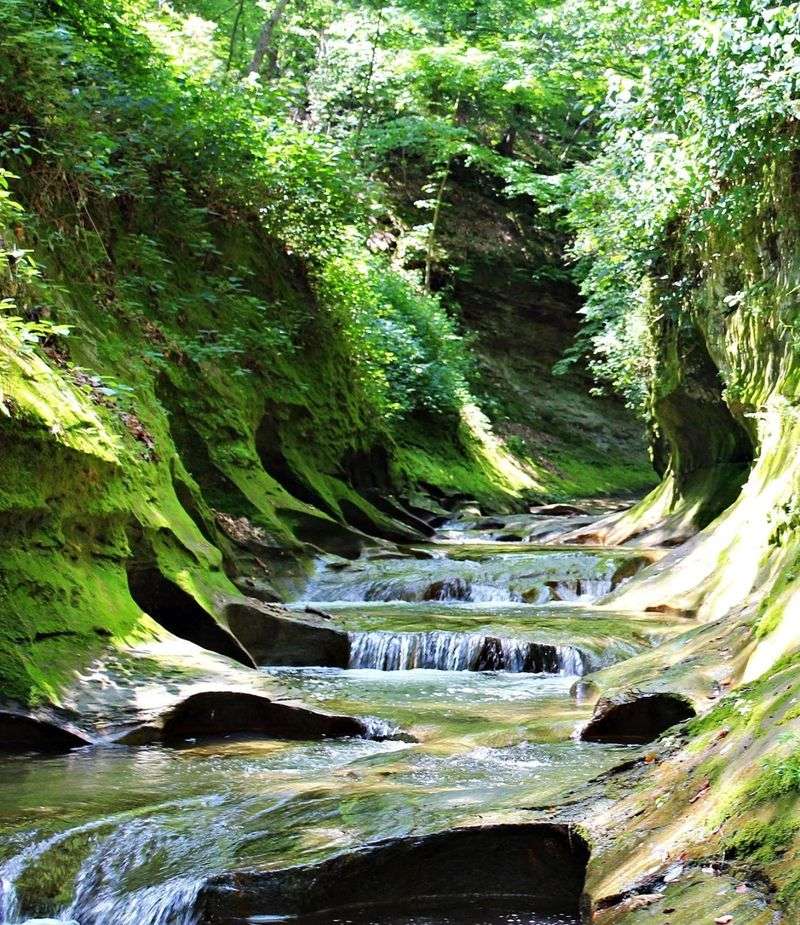
Right near Williamsport, the creek itself becomes the main attraction at Fall Creek Gorge Nature Preserve. Known locally as The Potholes, this site showcases bedrock shaped over time by moving water, creating a rocky corridor with carved forms that look patient, strange, and quietly impressive.
Unlike a waterfall stop built around one big vertical drop, this preserve rewards closer inspection. The shapes in the stone are the story.
Water has worn channels, bowls, and smooth surfaces into the creek bed, turning ordinary flow into a long record of erosion that visitors can actually see.
That makes the preserve a smart companion to nearby Williamsport Falls without repeating the same experience. One stop delivers height and drama.
The other focuses on texture, detail, and the slow work of water on rock. Together, they show two very different sides of the same regional landscape.
A careful pace matters here, especially around uneven or damp stone. Good shoes help, and so does a little curiosity.
Looking across the creek is fine, but looking down and noticing how the bedrock bends, dips, and twists is where the visit becomes much more interesting.
Lower noise levels suit this place. Creek sounds, moving light, and the shape of the gorge do plenty on their own, so there is no need to treat it like a quick checklist stop.
Short visits can still be satisfying when attention stays on the carved stone rather than speed. Fall Creek Gorge is easy to overlook because it is more subtle than a tall waterfall. That subtlety is exactly why it deserves more notice.
For travelers who enjoy geology, creek landscapes, or natural places that reward patient observation, The Potholes offer one of Indiana’s more distinctive small preserves and a strong excuse to linger around Williamsport a little longer.
9. Fern Cliff Nature Preserve (Greencastle)
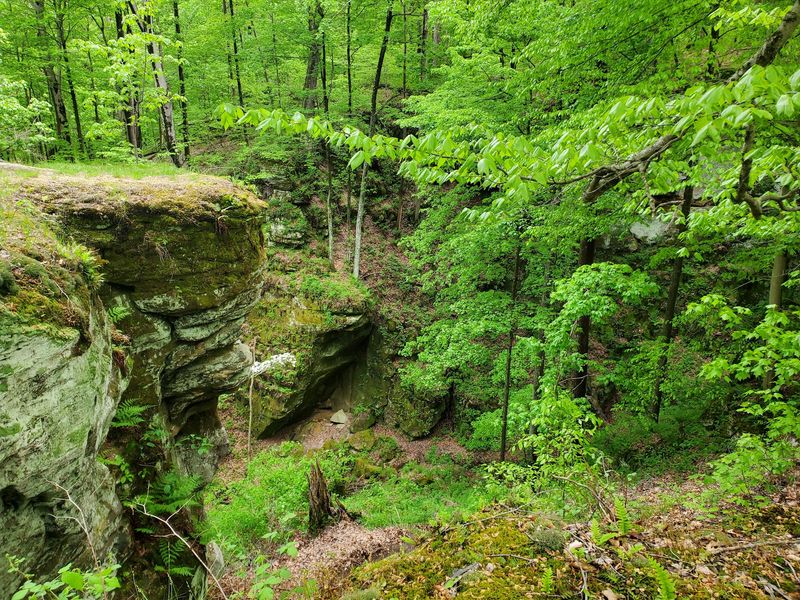
Fern Cliff Nature Preserve near Greencastle has the kind of scenery that changes the mood as soon as the trail begins. Sandstone cliffs, wooded ravines, ferns, and mosses combine to create a richer plant-filled setting than many visitors expect, with layers of texture that pull attention away from everyday noise pretty quickly.
The preserve covers 157 acres, which gives it enough room to feel varied without becoming overwhelming. Cliffs frame parts of the landscape, while shaded ravines support plant life that thrives in cooler, damper conditions.
That mix makes the walk interesting for both casual hikers and people who like spotting small natural details. One especially unusual feature is the abandoned sandstone quarry inside the preserve.
Time has softened its industrial past, and sphagnum moss slowly filling the area adds a strange, memorable twist. It is the sort of detail that gives the preserve character beyond standard trail scenery.
Fern Cliff is also a National Natural Landmark, which hints at how distinct the site is within Indiana. Visitors do not need to know every fern or moss to appreciate it, though.
Simply noticing how the vegetation changes near cliffs, damp ground, and shaded pockets can make the walk more engaging.
Because plant life is a big part of the appeal, this is a good place to move slowly and look closely. Bring water, wear shoes that can handle uneven ground, and allow time for short stops instead of treating the preserve like a quick fitness loop.
Fern Cliff stands out by offering geology and botany in the same outing. The sandstone gives the preserve structure, while the ferns, mosses, and quarry details give it personality.
For travelers near Greencastle who want scenery with a little more complexity than a basic woodland stroll, this preserve offers a quietly unusual day outdoors.