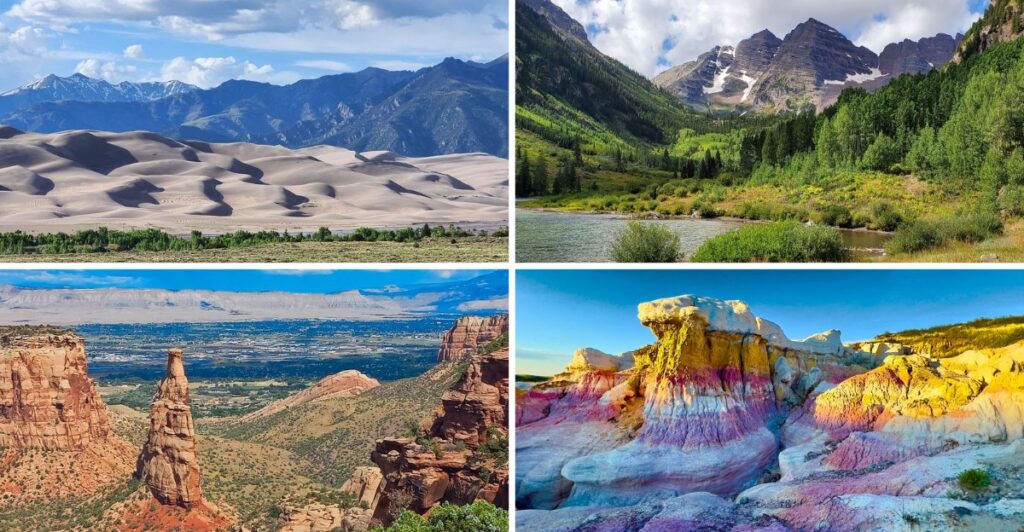
A camera can barely keep up with how quickly Colorado changes its scenery. One road leads toward towering red rock formations, another opens onto enormous sand dunes, and the next might end beside an alpine lake reflecting snow-dusted peaks.
Add dramatic canyons, historic cliff dwellings, waterfalls, and landscapes that transform with the light, and photographers have an extraordinary amount to work with. The challenge is less about finding something worth shooting and more about deciding where to point the lens first. These 11 Colorado spots offer the colors, textures, scale, and unforgettable backdrops capable of filling an entire camera roll.
1. Maroon Bells (Aspen / Snowmass)
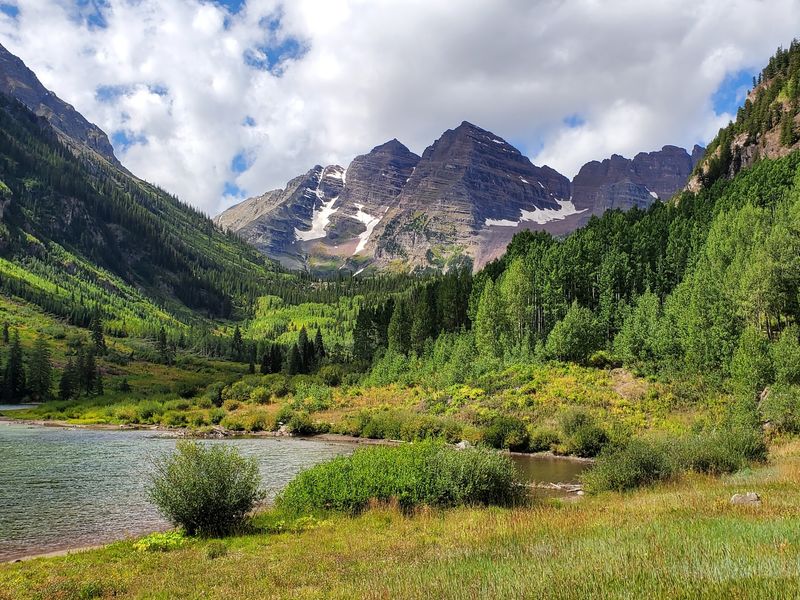
Postcards did not make Maroon Bells famous by accident. The view across Maroon Lake lines up two sharp peaks, dark evergreens, and a reflection so clean that even simple shots can look polished when the water stays calm.
Getting there early helps in several ways. Sunrise often brings softer color, fewer people near the shoreline, and smoother water before wind starts to break the reflection into ripples.
Fall gets a lot of attention, and for good reason. Golden aspens add a bright frame around the lake, but summer greens and fresh snow in cooler months can also change the whole mood of the scene.
A smart plan is to photograph more than the classic lakefront angle. Step along the trail, look for tree trunks as natural borders, and try lower viewpoints near the water for stronger foreground detail.
Clouds can be useful here instead of disappointing. A thin layer in the sky can hold color longer after sunrise, while heavier weather can add drama to the peaks and make the mountains stand out against shifting light.
Because this is one of Colorado’s best-known locations, patience matters. People often gather at the same photo spots, so arriving with extra time makes it easier to wait for a clean frame or explore small side angles.
Bring a tripod if morning light is dim, and pack layers because alpine temperatures can swing quickly. A polarizer may help control glare on the water, though many photographers remove it when they want the strongest possible reflection.
Maroon Bells rewards careful observation more than fancy gear. The shapes are already strong, so the real challenge is timing, balance, and choosing whether the star of the image is the glowing lake, the changing trees, or the steep mountain faces above.
2. Garden of the Gods (Colorado Springs)
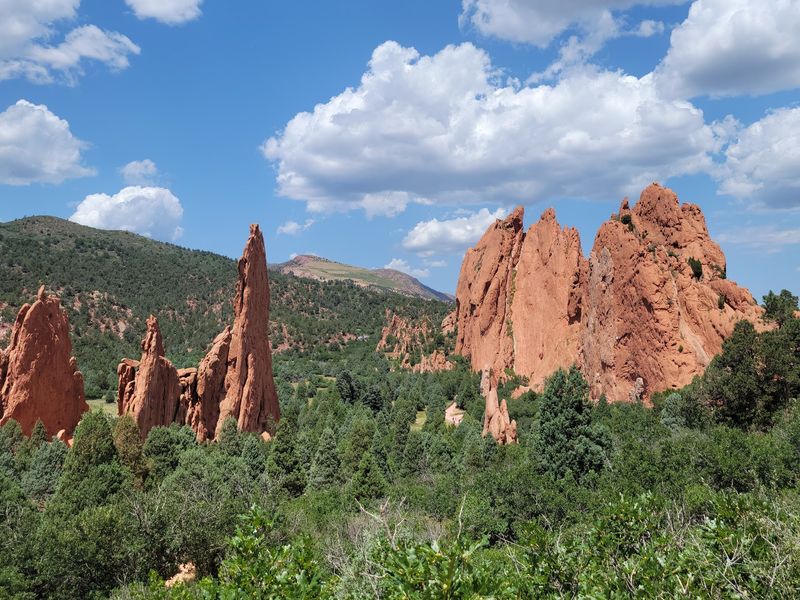
Few places in Colorado deliver instant drama as fast as Garden of the Gods. Red sandstone towers shoot up from the ground in wild angles, and the views often line up with Pikes Peak in a way that gives photos both color and scale.
Light changes the park quickly. Sunrise and sunset usually bring the warmest glow on the rocks, while midday can work better for crisp contrast, bold blue sky, and stronger shadows between the formations.
Balanced Rock is the obvious star for many visitors, but it is not the only subject worth attention. Walking farther opens up frames with twisting fins, layered ridges, and roads that can guide the eye through the composition.
Because the park is easy to access, it helps to think beyond the standard viewpoint. Try shooting through gaps in the rocks, include scrub and trail edges for foreground texture, or step back and let the rock walls interact with distant mountains.
Weather can make this place even better. Fast clouds, fresh snow on Pikes Peak, or a summer storm building over the horizon can give the scene more depth than a clear sky alone.
Wide lenses work well here, but a medium zoom is just as useful. It lets photographers isolate the strongest rock shapes without extra parking lots, signs, or crowds creeping into the edges of the frame.
Timing also matters if clean images are the goal. Early morning often feels calmer, and that can make it easier to photograph famous formations without a line of people standing beneath them.
Garden of the Gods is excellent for beginners because good compositions are everywhere, yet it still challenges experienced photographers to play with line, color, and distance. The rocks do plenty of the heavy lifting, but careful framing turns a common stop into a striking image.
3. Great Sand Dunes National Park and Preserve (Mosca / Alamosa)
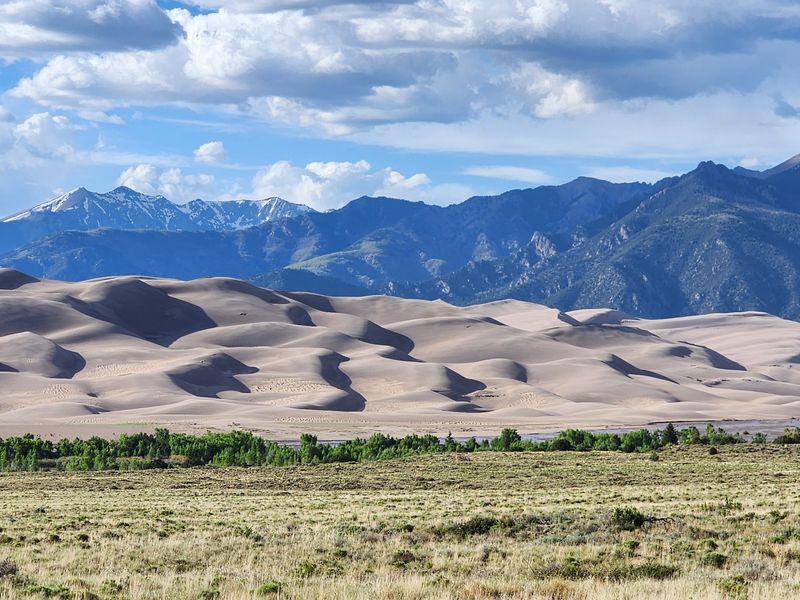
Colorado surprises a lot of people here. Instead of pine forests and alpine lakes, Great Sand Dunes spreads out in rolling ridges of sand with tall mountains rising behind them, which gives photographers a rare mix of desert shapes and rugged peaks.
Late afternoon is often the sweet spot for texture. As the sun drops lower, shadows slide across the dunes and carve out every ripple, curve, and crest in a way flat midday light usually cannot match.
Footprints are part of the challenge. Wind can smooth the surface, but clean patterns do not last long in busy areas, so walking carefully and scouting for untouched slopes can make a big difference.
A strong image here often depends on simplicity. One ridge line, one set of shadows, and one mountain backdrop can be more powerful than trying to squeeze the entire scene into a single frame.
Climbing higher opens wider views, but lower angles can make nearby textures stand out. Photographers who switch between broad landscapes and tighter studies of ripples, edges, and small plants usually leave with the most variety.
Night adds another layer to the experience. Dark skies around the park create a strong chance for star photography, and the dune outlines can give the foreground enough shape to anchor a sky full of points of light.
Conditions change quickly with weather and season. Wind can erase tracks, clouds can throw moving patterns across the sand, and fresh snow on the distant mountains can sharpen the contrast between pale peaks and darker slopes.
Bring water, protect gear from grit, and expect more walking than the map may suggest. Great Sand Dunes rewards photographers who slow down, study the lines, and treat light and shadow as the main subjects instead of just the giant piles of sand.
4. Paint Mines Interpretive Park (Calhan)
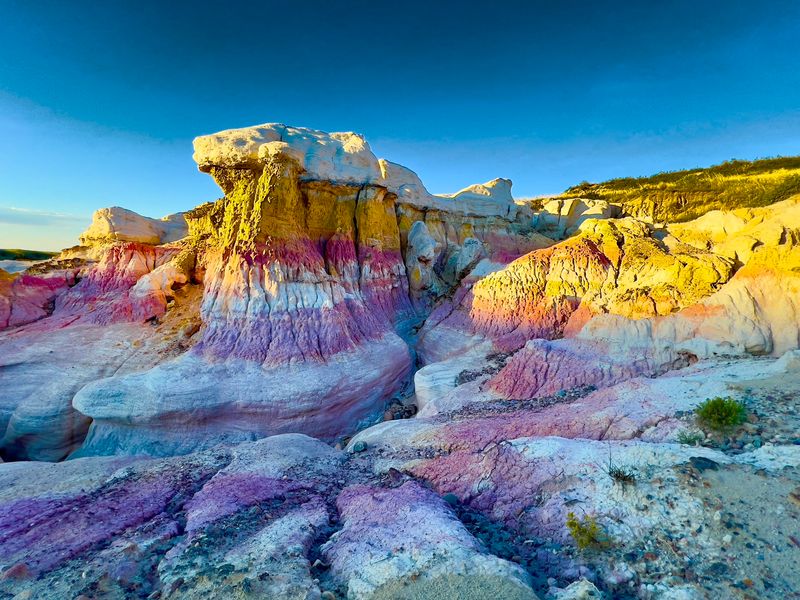
At first glance, eastern Colorado may not seem like the place for one of the state’s strangest photo landscapes. Then Paint Mines appears with soft clay spires, winding gullies, and bands of pink, orange, yellow, and white that look almost painted by hand.
The color is the big draw, but shape matters just as much. Rounded hoodoos, cracked surfaces, and narrow channels give photographers plenty of ways to build frames that feel more sculpted than wide-open.
Soft light usually works best here. Early morning or late evening can keep the pale tones from washing out, and lower sun can add gentle shadow that helps the ridges and folds stand apart.
This is a good place to slow down and look small. Wide shots show the odd landscape in context, but tighter images of layered clay, broken textures, and curving edges often reveal the most unusual details.
Composition can change quickly with just a few steps. Move left or right and one simple mound can shift from a flat shape into a stack of layered color, framed by taller formations behind it.
The prairie setting adds a useful contrast. Sparse grass, open sky, and distant flat land remind viewers that these bright formations sit in a part of Colorado many travelers rush past on the way to the mountains.
Because the terrain is fragile, careful footing is important. Staying on marked paths protects the area and also helps photographers see the formations from slightly raised angles that can make the gullies and color bands easier to organize in a frame.
Paint Mines is a strong reminder that dramatic images do not always require giant peaks. Here, the reward comes from noticing subtle color shifts, odd textures, and shapes that seem to change personality depending on the light, your lens choice, and how close you decide to get.
5. Black Canyon of the Gunnison National Park (Montrose / Gunnison)
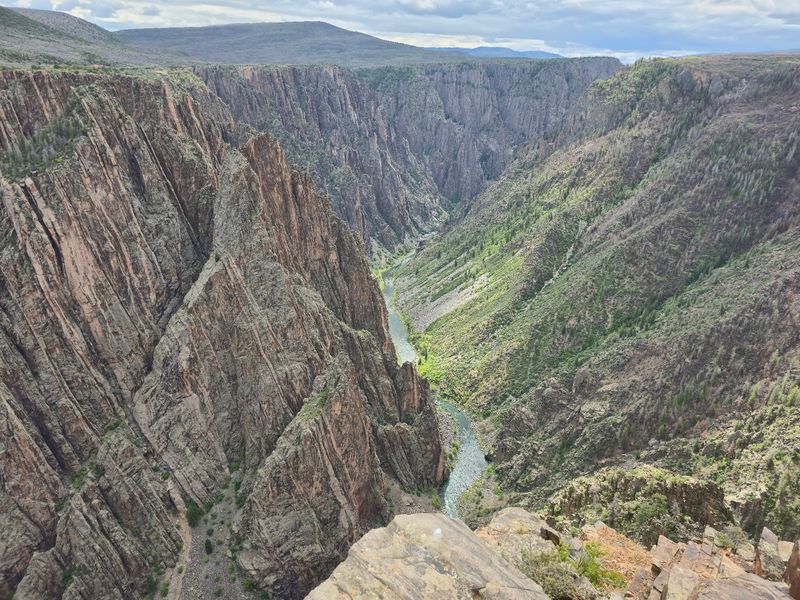
Black Canyon does not ease into the scene. The cliffs drop hard, the walls look almost severe in certain light, and the Gunnison River sits far below as a narrow ribbon that sharpens the sense of depth.
For photographers, contrast is the main event. Dark rock, bright sky, thin bands of water, and sudden shadow create images with a tougher edge than Colorado’s better-known lake-and-peak views.
Overlooks along the rim make access fairly simple, but the compositions do not always come easy. The canyon is so deep and steep that it helps to spend time choosing whether the image should focus on scale, shape, or the river cutting through the bottom.
Morning and evening light can bring out more structure in the rock faces. Midday can still work, especially when the goal is stark drama, but lower sun often reveals extra texture in the walls and more separation between ridges.
A telephoto lens can be surprisingly useful here. It compresses layers of cliff and shadow, letting photographers isolate abstract patterns in the stone rather than only relying on giant panoramic views.
Wide shots are still important, especially at overlooks where the canyon curves and narrows. Including a jutting rim or a sliver of foreground rock can help viewers judge just how suddenly the land falls away.
Weather has a strong effect on mood. Clear blue sky creates bold graphic contrast, while storms and moving clouds can deepen the shadows and make the canyon appear even more dramatic.
Because the landscape is visually intense, simpler framing often wins. One clean overlook, one diagonal cliff line, and one visible thread of river can tell the story better than cluttered edges and too many competing details. Black Canyon rewards patience, nerve, and a careful eye for depth.
6. Colorado National Monument (Grand Junction / Fruita)
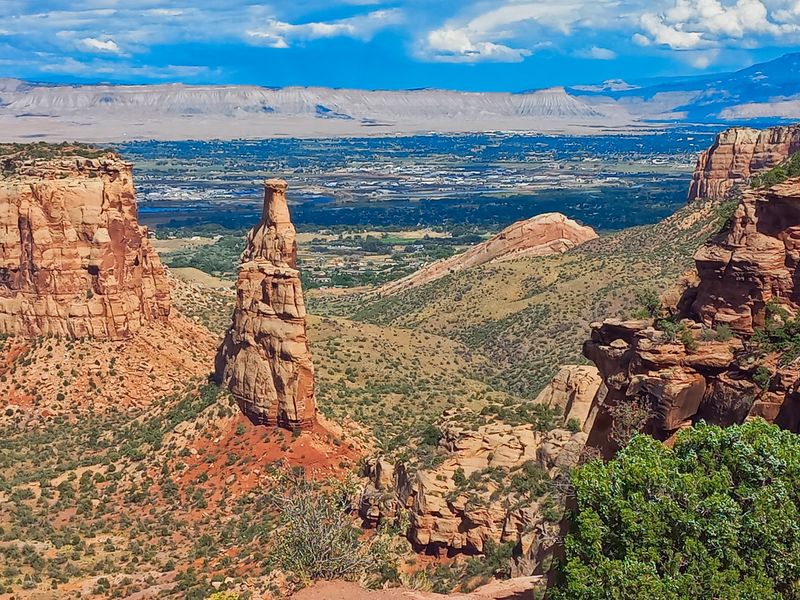
Western Colorado brings a whole different mood, and Colorado National Monument proves it fast. Towering sandstone monoliths, red canyon walls, and wide desert views create a landscape that looks bold, dry, and full of strong lines.
Rim Rock Drive is one of the big advantages for photographers. It links overlook after overlook, making it easy to chase changing light, compare angles, and photograph major formations without a long backcountry push.
Independence Monument is one of the most recognizable subjects in the park. It stands out best when framed against open sky or layered canyon walls, especially when early or late light adds more shape to its sides.
Wide panoramas are an obvious choice here, but smaller compositions can be just as strong. Jagged rock edges, twisted desert plants, and repeating cliff bands can turn a large scene into something more graphic and controlled.
Sunrise and sunset usually give the sandstone its richest color. During those hours, the rock can shift from rusty orange to deep red, while longer shadows help carve out the depth between monoliths and canyon floors.
Midday is not useless, though. Strong sun can highlight the clean geometry of cliffs and produce sharp contrast that works well for images centered on shape rather than soft color.
Photographers should keep an eye on foregrounds. A patch of scrub, a section of rim, or a curving road line can help anchor the image and stop the giant background from feeling too flat or distant.
This park is especially rewarding for anyone who likes structure in a landscape. The cliffs rise in blocks, the canyons stretch in layers, and the overlooks give enough variety to build a full set of images in one visit. Colorado National Monument shows the desert side of the state with real confidence and no need for alpine scenery.
7. Mesa Verde National Park (Cortez)
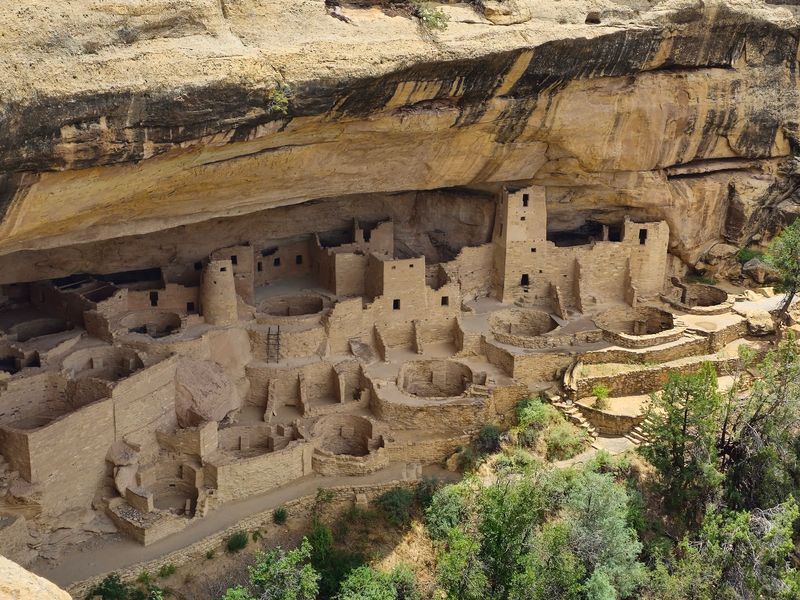
Mesa Verde gives photographers more than scenery alone. Ancient cliff dwellings tucked beneath sandstone alcoves add human history to the frame, and that mix of architecture, shadow, and rock creates images with a very different energy from Colorado’s usual mountain subjects.
Wide compositions work well when the goal is context. They show how the structures sit within the cliff walls and help viewers understand the scale of the alcove, the drop below, and the rough country around it.
Tighter framing tells another story. Masonry lines, stacked openings, and shadow moving across stone can highlight detail without losing the sense that these buildings belong to the cliff itself.
Light matters here in a specific way. Side light can reveal texture in both the rock and the walls, while deep shade under the alcoves may require careful exposure so bright sandstone does not overpower the structures.
Instead of rushing for a single famous overlook, it helps to think in layers. Foreground rim, middle-distance dwellings, and background canyon walls can create stronger depth than a flat straight-on view.
Color is subtler than at some red-rock parks, but that can be an advantage. Earth tones, blue sky, and dark recesses keep attention on shape, age, and craftsmanship rather than loud contrast.
Because this is a place tied closely to history, respectful observation goes a long way. A photograph becomes more interesting when it shows not only the buildings, but also the protection of the alcove and the hard landscape surrounding them.
Mesa Verde rewards photographers who pay attention to both story and structure. The strongest images often balance rugged geology with the careful design of the dwellings, showing how closely the two are connected.
It is a place for thoughtful framing, steady light, and details that reveal a long relationship between people and the land.
8. Roxborough State Park (Littleton)
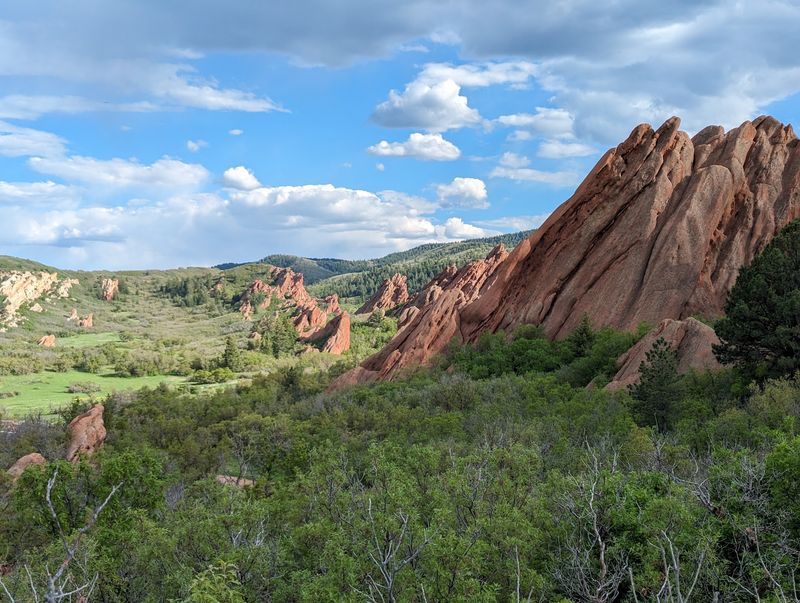
Roxborough has a sharp, tilted look that grabs attention right away. Red rock slabs rise at bold angles from grasslands and foothills, giving photographers strong lines to work with before the camera even comes out of the bag.
The beauty here is not only in the formations themselves. The contrast between rusty stone, pale grass, green shrubs, and blue sky gives even simple compositions a clean color palette that reads well in photos.
Trails help reveal how much the scene changes with movement. A formation that looks broad and heavy from one bend may turn thin, jagged, or layered from the next, which makes it easy to build variety without covering huge distance.
Morning light can be crisp and clear, while evening often warms up the rocks and softens the grasslands. Neither time is wrong, but lower light usually gives the tilted slabs more shape and helps separate the planes of rock.
Foregrounds are especially important here. Trail edges, bunches of grass, or small shrubs can anchor the bottom of the frame and lead the eye toward the larger rock walls behind them.
Telephoto shots can work better than expected. Compressing the scene can make the angled formations stack against each other in a more dramatic way, almost like giant stone sails frozen in place.
Wildlife and changing weather can add surprises, but the core subject stays the same: geometry. Roxborough is full of diagonals, repeated ridges, and textures that reward anyone who pays attention to direction and spacing rather than only chasing the biggest view.
Because the park sits close to the Denver area, it is a handy place to practice composition. The rocks are striking, the trails offer multiple perspectives, and the landscape is organized enough to teach photographers how line and color can carry an image without needing extreme height or epic distance.
9. Red Rocks Park and Amphitheatre (Morrison)
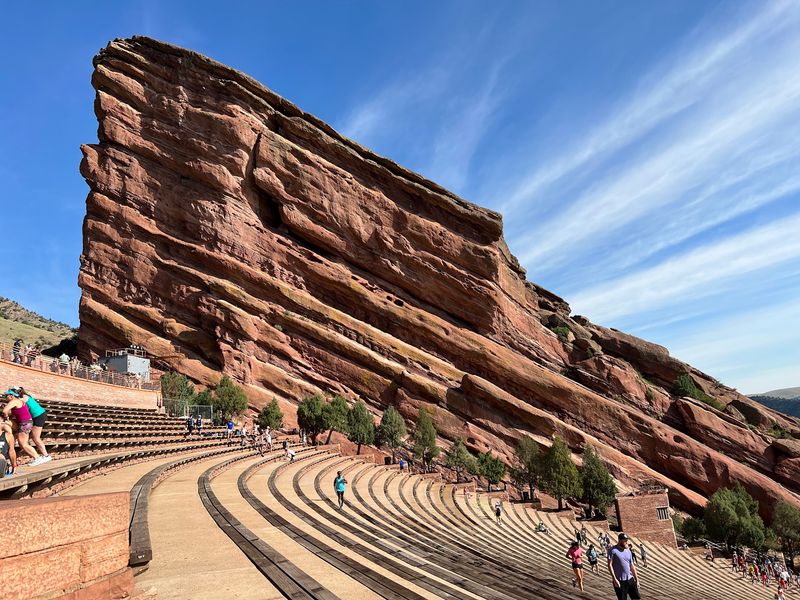
Red Rocks has a built-in sense of scale that is hard to ignore. Giant sandstone walls rise around the amphitheater, and the rows of seats below add a clean pattern that turns the whole place into a mix of landscape and design.
That combination is the real draw for photographers. One frame can hold ancient rock, modern structure, open sky, and distant foothills without looking crowded, as long as the angle is chosen carefully.
Early morning can be especially useful here. The venue is often quieter, the light is softer, and the red stone can stand out without the harsher glare that stronger midday sun sometimes creates on steps and concrete.
From the seating area, repeating lines become a big compositional tool. Rows can pull the eye toward the stage, while the towering rocks on both sides keep the image grounded and unmistakably tied to this location.
Step higher for wider views and the setting opens up. The amphitheater becomes part of a larger foothill landscape, which helps show how unusually well the venue fits into the surrounding terrain.
Tighter compositions also work nicely. Cropping in on the seats against one rock face, or isolating stair lines with stone texture behind them, can create cleaner graphic shots with strong rhythm.
Cloud cover can improve the scene more than many visitors expect. It softens contrast on the seating and gives the red stone richer depth, especially when breaks in the clouds send small patches of light across the formations.
Red Rocks is a smart stop for photographers who want variety without constant relocation. It offers details, architecture, huge natural forms, and broad scenic views in one compact area. The trick is deciding whether the image should celebrate the venue, the geology, or the way both elements lock together so naturally.
10. Bear Lake, Rocky Mountain National Park (Estes Park)
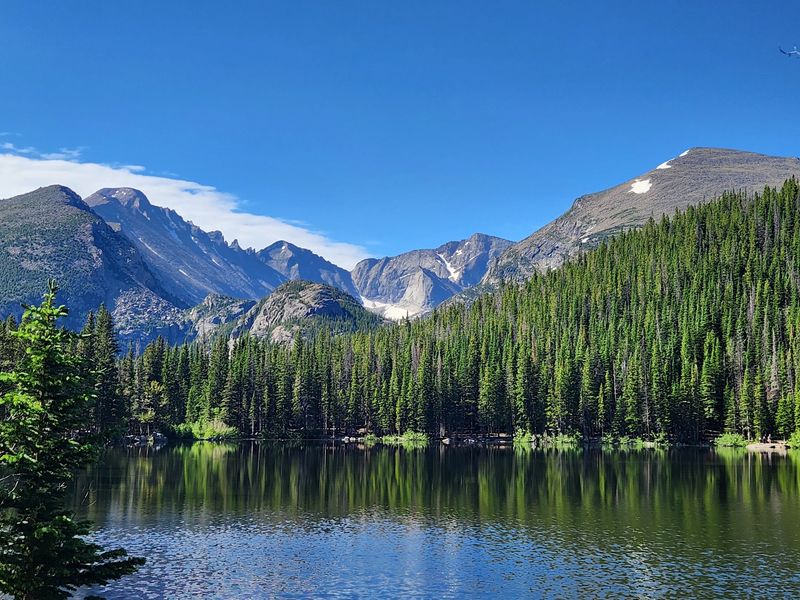
Bear Lake proves that a short walk can still deliver a classic Colorado photo. Calm water, evergreen trees, and rugged peaks come together in one tidy scene, which makes it appealing for both first-time visitors and serious photographers.
The shoreline trail is a big advantage. It gives several angles without requiring a major hike, so photographers can quickly compare reflections, mountain placement, and foreground detail as the light shifts across the lake.
Morning is often the easiest time to get cleaner reflections. Lighter wind can keep the water smoother, and the quieter pace around the lake can make it simpler to set up a tripod without people constantly crossing the frame.
Even on a popular trail, there are ways to avoid ordinary shots. Look for rocks, branches, or shoreline curves to anchor the foreground, and consider moving away from the most obvious opening to find a less familiar arrangement of trees and peaks.
Season makes a noticeable difference here. Summer gives deep green forest, fall can bring touches of yellow, and cooler months may add snow and ice that simplify the scene into stronger shapes and tones.
Because the view is balanced and accessible, it can tempt photographers to stop at one frame. Taking time to work the edges of the lake usually pays off, especially when reflections change or cloud shadows shift over the mountain slopes.
A polarizer can help manage glare, though it is wise to test a few versions of the same scene. Too much reflection control can reduce the mirror effect that many people come here to photograph.
Bear Lake is excellent for practicing clean composition. The ingredients are familiar, but success depends on small choices: where to stand, how much shoreline to include, and whether the image should lean toward symmetry, texture, or the quiet contrast between still water and rough peaks.
11. Lost Gulch Overlook (Boulder)
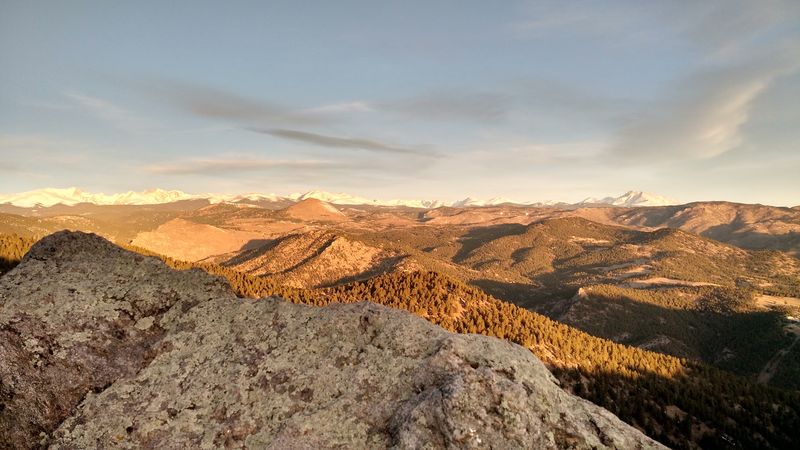
Lost Gulch Overlook is the kind of place that makes photographers stop talking for a minute. High above Boulder, the view opens across forested foothills and mountain layers that stretch toward the Continental Divide and the Indian Peaks.
Big panorama is the obvious play, and it works. The scene has enough depth and distance to support wide compositions, especially when shifting light starts separating the nearer ridges from the farther blue-gray peaks.
Sunrise and sunset get the most attention because color can move quickly across the landscape. Warm light on the rocks and trees near the overlook can add a strong foreground, while the mountains behind hold cooler tones that keep the image balanced.
It helps to resist photographing only the far horizon. The overlook itself offers rough stone, uneven edges, and pockets of trees that can give the frame more structure than a distant-only view.
Changing weather can make this spot especially lively. Thin clouds can catch color, storm cells can build drama over the divide, and hazy conditions can turn the mountain layers into softer bands that stack neatly across the frame.
Because the location is popular, timing matters for practical reasons too. Arriving early gives more space to work and more freedom to choose a clean angle without people clustering along the best rock perches.
A medium zoom is handy here, not just a wide lens. Pulling in tighter can isolate repeating ridgelines or pockets of illuminated trees, turning a giant vista into a more controlled study of color and depth.
Lost Gulch Overlook rewards photographers who pay attention to transitions. Light shifts, atmospheric haze, and the move from rocky foreground to distant peaks are the details that make the view stand out. It is less about one single landmark and more about reading the whole landscape as layers unfolding across the frame.