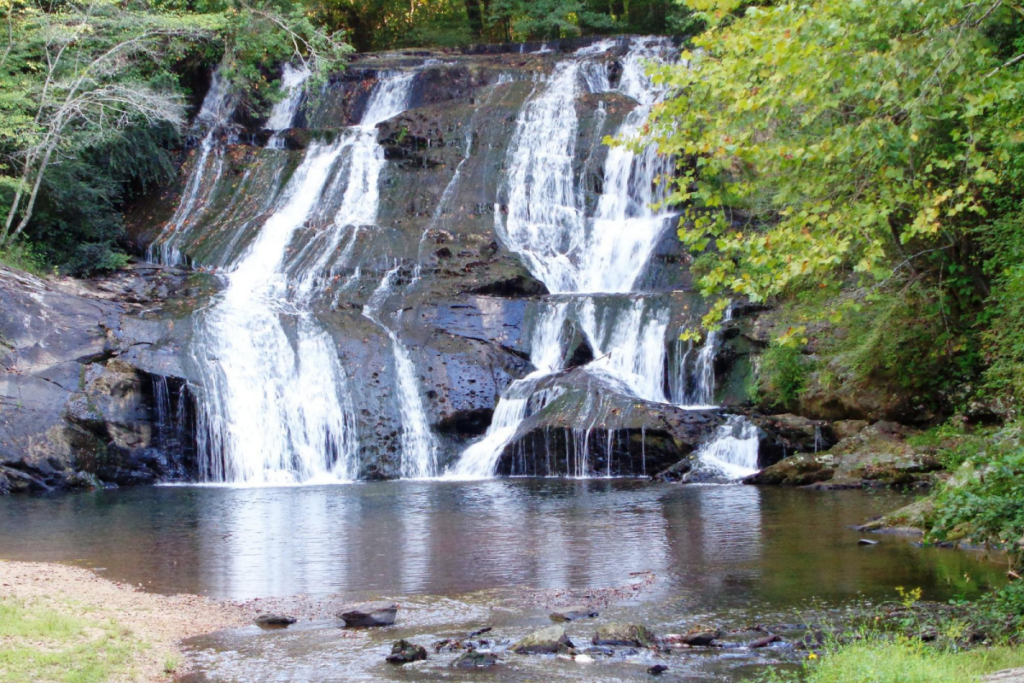
Tennessee’s waterfalls are stunning year-round, but heavy rain can turn these beautiful spots into genuinely dangerous places. When storms roll through, trails get slippery, currents grow stronger, and what was once a pleasant hike can quickly become a risky adventure.
Knowing which waterfalls become especially hazardous after downpours can help you plan safer trips and avoid unnecessary danger.
1. Cummins Falls, Cookeville
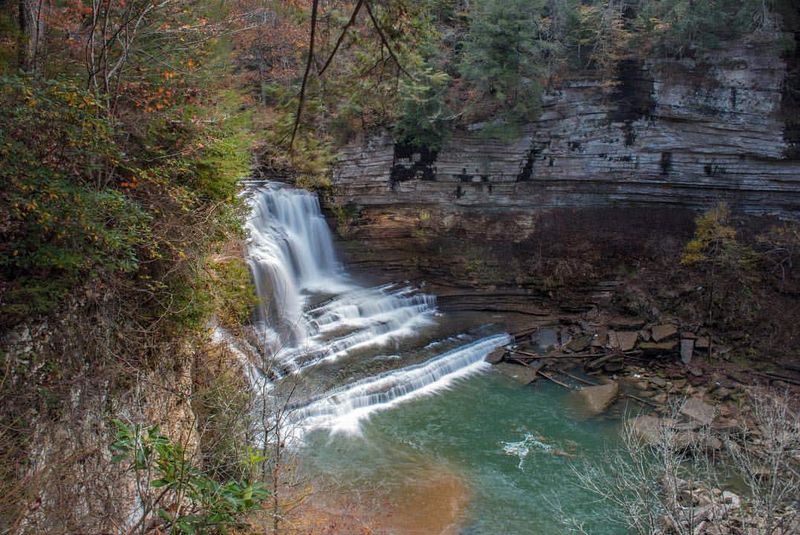
Wading through Cummins Falls’ gorge is half the fun on a sunny day, but after heavy rain, park officials don’t mess around. They’ll close gorge access entirely when flash-flood conditions develop, and for good reason.
The creek you casually splashed through last summer can transform into a fast-moving torrent that’s waist-deep or higher.
Reaching the base of this 75-foot waterfall requires you to actually enter the water and navigate upstream through the gorge. Under normal conditions, it’s a refreshing adventure.
After a storm, though, the current becomes strong enough to knock people off their feet, and the water turns murky, hiding slippery rocks and sudden drop-offs.
Flash flooding is the real danger here. Rain upstream can cause water levels to rise rapidly, even if the sky above you looks clear. People have been caught off guard by sudden surges, and rescue operations in this gorge are complicated and dangerous for everyone involved.
The rocks along the creek bed are limestone and already slick with algae under the best circumstances. Add high water and you’re dealing with surfaces that offer almost no traction.
One wrong step can send you tumbling into deeper water or onto sharp rocks.
Park rangers monitor weather conditions closely and will restrict access when necessary, but they can’t be everywhere at once. If you arrive and see high water or muddy conditions, turn around.
The waterfall will still be there next week, and you’ll actually be able to enjoy it safely.
Local hikers know to check recent rainfall totals before heading out. If there’s been more than an inch of rain in the past 24 hours, or if storms are forecast, pick a different destination.
Cummins Falls after heavy rain isn’t worth the risk, no matter how impressive the increased flow might look in photos.
2. Greeter Falls, Altamont
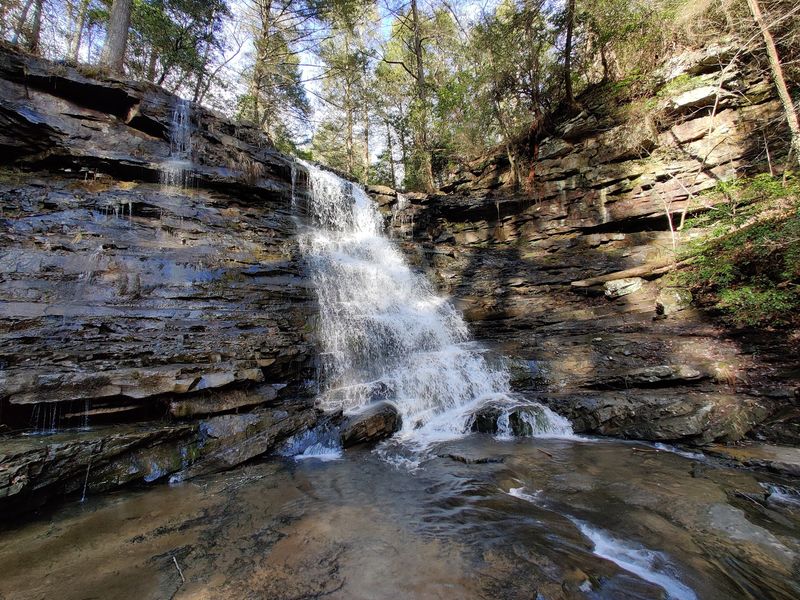
That spiral staircase down to Greeter Falls is an engineering feat, but it’s also a slip-and-fall waiting to happen when wet. The wooden steps and ramps that make this waterfall accessible are already challenging in dry weather.
Throw in rain, and you’re navigating a steep descent on surfaces that turn slick as ice.
The upper falls drop about 50 feet, and the lower falls add another 50, making this a genuinely impressive sight. But getting there means descending steeply into a gorge where moisture hangs in the air even on sunny days.
After heavy rain, everything from the handrails to the trail itself is soaked.
Wooden boardwalks and stairs are convenient, but they don’t drain like natural trails. Water pools on the surfaces, and moss grows in the damp environment.
Even with your best hiking boots, you’re dealing with reduced traction on every step.
The trail doesn’t just go straight down either. It winds through the forest, crosses over rocky sections, and includes that memorable spiral staircase that feels precarious even when bone-dry.
Adding wet conditions to this equation significantly increases the chance of a twisted ankle or worse.
Plenty of visitors have reported near-misses on this trail after rain, grabbing handrails at the last second or catching themselves before a tumble. The problem is that one slip on a staircase can turn into a serious fall, and you’re deep enough in the gorge that help isn’t immediately available.
If you’ve already made the drive to Savage Gulf, consider exploring the upper rim trails instead when conditions are wet. You’ll still get beautiful forest scenery without navigating treacherous stairs.
Greeter Falls will be just as photogenic once things dry out, and you’ll actually be able to focus on the view instead of your footing.
3. Foster Falls, Sequatchie
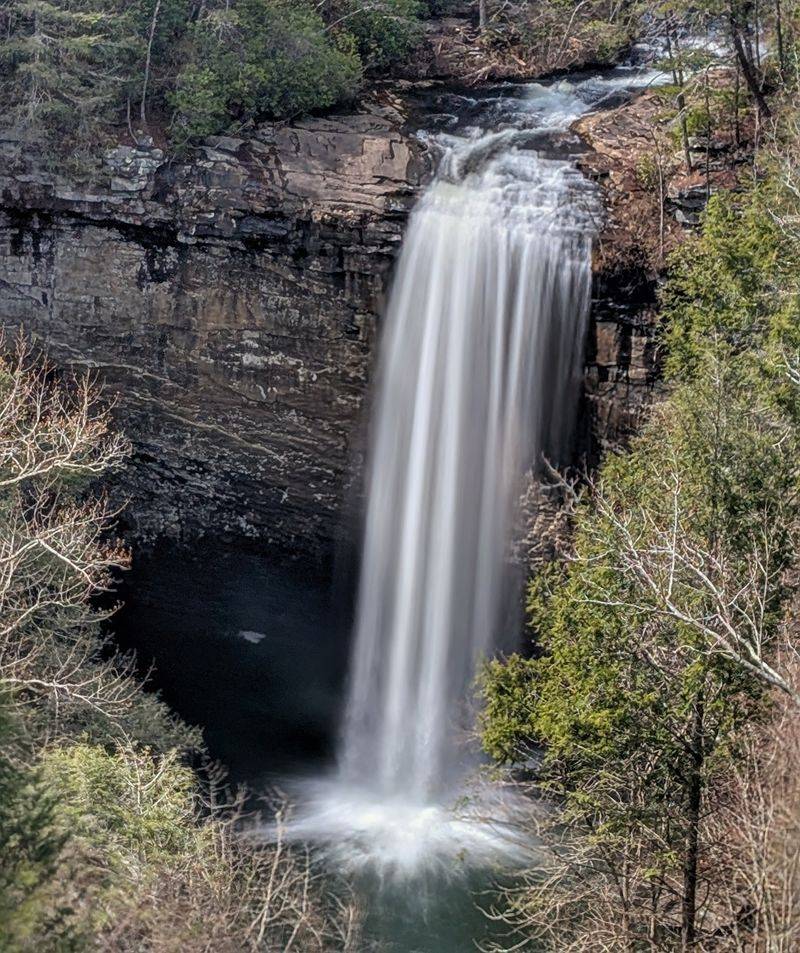
Foster Falls drops 60 feet into a gorgeous plunge pool that’s perfect for swimming on hot days, but that same pool becomes a swirling danger zone after storms. The hike down is short, maybe half a mile, but it’s steep enough to get your heart pumping.
Wet rocks turn that quick descent into a much slower, more careful process.
The terrain here is mostly sandstone and limestone, both of which get incredibly slippery when wet. You’re not just dealing with a muddy trail; you’re navigating actual rock faces and uneven stone steps that offer almost no grip once they’re soaked.
Heavy rain dramatically increases the waterfall’s volume, which sounds spectacular until you realize it also means stronger currents in the pool below. What’s normally a calm swimming hole can develop undertows and swirling currents that even strong swimmers should avoid.
The water also turns murky, hiding rocks and the pool’s depth.
Climbers love the cliffs around Foster Falls, but after rain, those routes become off-limits for anyone with sense. The rock stays wet for days, and attempting to climb or even scramble around the falls in these conditions is asking for trouble.
The trail might be short, but it’s also narrow in places, with drop-offs that become more intimidating when you’re trying to maintain balance on slick surfaces. There’s not always a lot of room for error, especially if you encounter other hikers coming up while you’re heading down.
Local outdoor enthusiasts will tell you that Foster Falls is a rainy-day skip. The drive through Sequatchie Valley is beautiful regardless of weather, so you’re not wasting the trip by choosing a different activity.
Save this hike for when you can safely enjoy both the descent and the pool, rather than white-knuckling your way down and back up again.
4. Abrams Falls, Cades Cove
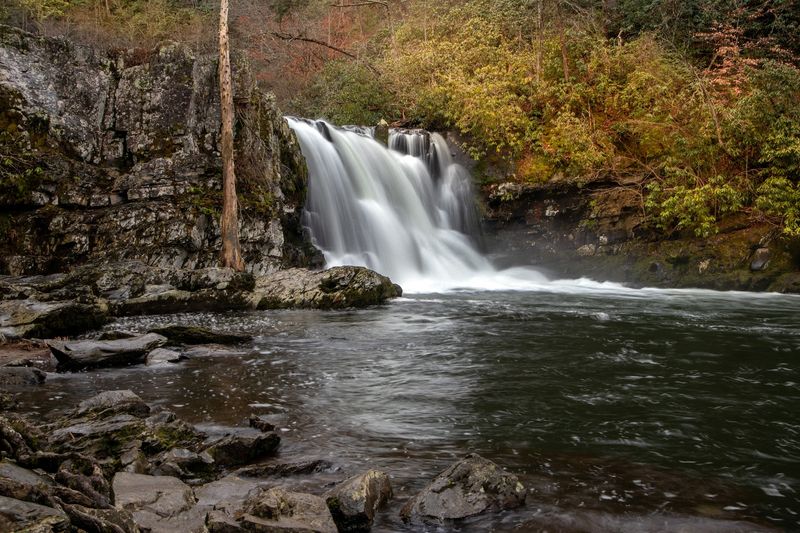
Don’t let the 25-foot height fool you. Abrams Falls moves more water than any other waterfall in the Smokies, and that volume creates conditions that have claimed lives over the years.
The National Park Service doesn’t post warnings for fun; they do it because this waterfall has a documented history of accidents.
The rocks around the falls are notoriously slippery, even when it hasn’t rained recently. Spray from the falls keeps everything damp, and algae coats the surfaces.
After heavy rain, these rocks go from slippery to downright treacherous, and people still try to get close for photos.
That powerful volume creates a dangerous undertow in the pool below. Swimmers have been pulled under and struggled to surface, and the churning water makes rescue attempts incredibly difficult.
When rainfall increases the waterfall’s flow, these dangers multiply exponentially.
The five-mile round-trip hike to reach Abrams Falls crosses several streams that swell after rain. What might be easy rock-hopping in dry conditions can require wading through fast-moving water that’s over your ankles or even your knees.
Each crossing becomes a potential hazard.
The trail itself is generally well-maintained, but sections near the falls get muddy and slick. You’ve hiked 2.5 miles to get there, so there’s temptation to push forward even when conditions aren’t ideal.
That’s exactly when accidents happen, though, when fatigue and determination override better judgment.
Park rangers have recovered bodies from this waterfall, and they’ve rescued countless others who underestimated the conditions. The combination of slippery rocks, powerful currents, and increased water flow after rain creates a genuinely dangerous situation that no photo or experience is worth.
Cades Cove offers plenty of other activities when Abrams Falls isn’t safe. The loop road provides wildlife viewing, historic buildings, and mountain views without requiring you to risk your safety on a wet trail leading to a dangerously powerful waterfall.
5. Ramsey Cascades, Gatlinburg Area
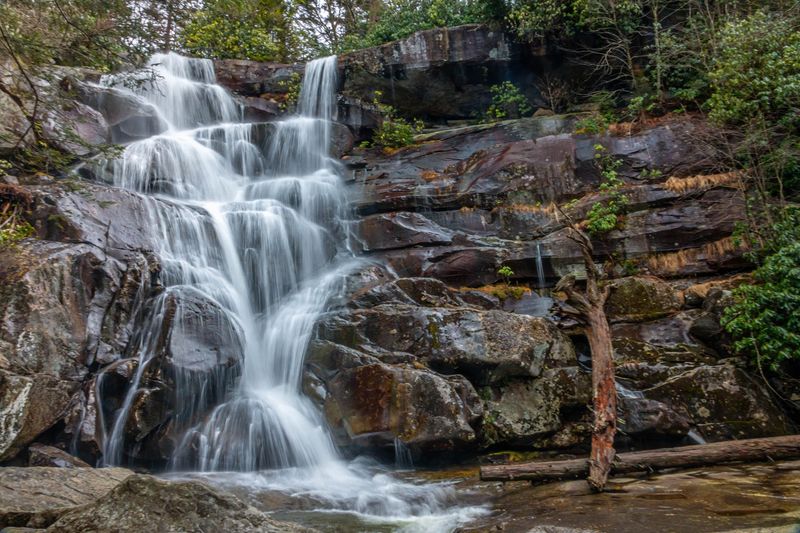
At eight miles round-trip with significant elevation gain, Ramsey Cascades is already the Smokies’ most strenuous waterfall hike. Adding wet conditions and swollen streams to this challenge turns it into something only experienced hikers should attempt.
The trail crosses multiple streams on footlog bridges that become sketchy when wet and when the water below is running high.
Those footlogs are just that: logs laid across streams, sometimes with a handrail, sometimes without. They’re narrow, often damp from spray, and they bounce slightly as you cross.
When the streams below are raging from recent rainfall, the psychological challenge of crossing these bridges intensifies significantly.
The final approach to the 100-foot cascades gets steep and rocky, with sections that are muddy and root-covered even in dry weather. After rain, this area turns into a slippery obstacle course where every step requires attention.
The NPS specifically warns visitors not to climb on or around the waterfall, advice that becomes even more critical when everything’s wet.
Old-growth forest surrounds this trail, which means lots of shade and moisture retention. The trail can stay wet for days after rain, and certain sections seem to never fully dry out. Combine that with the natural slickness of wet leaves, exposed roots, and mossy rocks, and you’re dealing with challenging footing for miles.
The cascade itself is beautiful, tumbling over layers of rock in a series of drops. But the area around the base is rocky and uneven, with water spray keeping everything perpetually damp.
People have slipped and fallen here, sometimes seriously injuring themselves miles from the trailhead.
This hike demands several hours even in good conditions. Starting out when trails are wet means you’ll be dealing with those conditions for the entire journey, both getting there and getting back.
Fatigue sets in, attention wavers, and that’s when injuries happen.
The Smokies have dozens of other waterfalls with easier access. On days following heavy rain, choose one of those instead.
Ramsey Cascades will still be Tennessee’s tallest waterfall next month, and you’ll enjoy it more when you’re not constantly worried about your next step.
6. Jackson Falls, Duck River
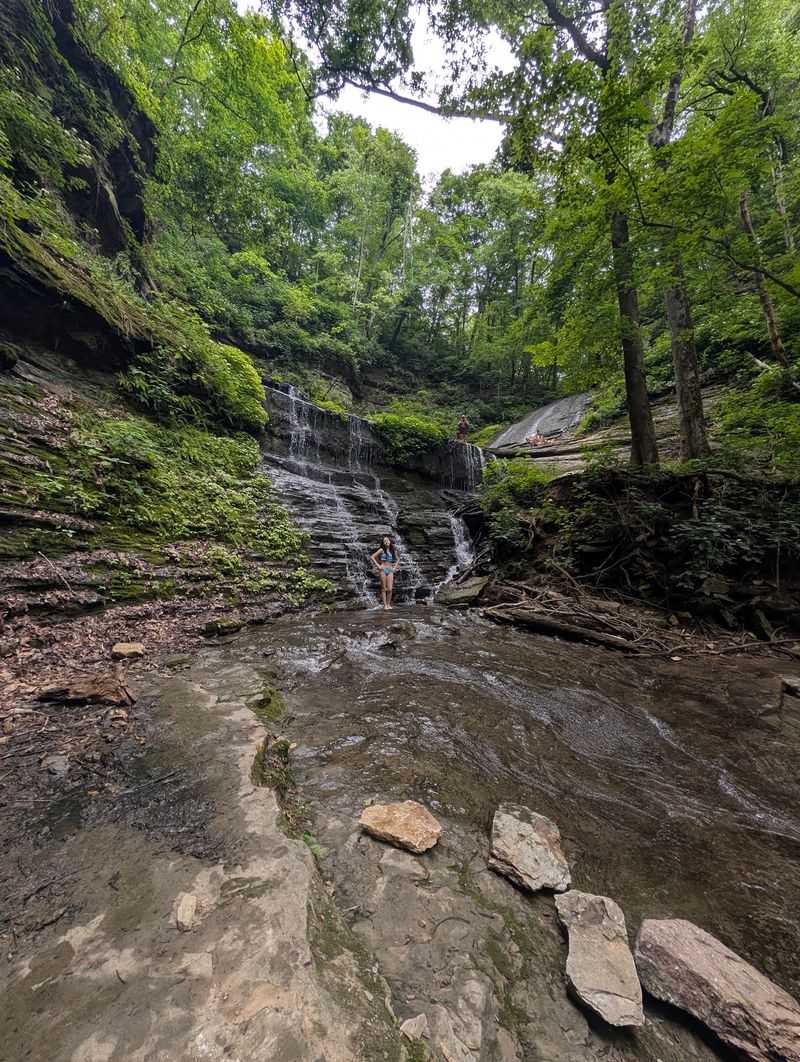
When the National Park Service specifically calls out a trail as slippery after heavy rain, you should probably listen. Jackson Falls’ paved descent seems like it would be safer than a natural trail, but that pavement becomes remarkably slick when wet.
The steep grade that makes this waterfall accessible to more visitors also means there’s no gentle way down once things get slippery.
The paved path is a blessing for people who can’t handle rough trails, but it’s also a curse in wet weather. Water doesn’t absorb into pavement; it runs across the surface, creating a thin layer that reduces traction dramatically. Add in the steep angle, and you’re essentially walking down a wet ramp.
Jackson Falls sits along the Duck River, which means the entire area is naturally prone to moisture. Even without recent rain, morning dew can make the paved trail slick.
After an actual rainstorm, the conditions go from slippery to potentially dangerous, especially for older visitors or anyone with mobility challenges.
The waterfall itself is lovely, spilling over a rocky ledge into a pool that’s popular for wading. But when water levels rise from upstream rainfall, that gentle pool can become deeper and faster-moving.
The rocks around the falls, already slick from constant moisture, become even more hazardous.
There’s something ironic about a paved trail being more dangerous than a dirt path in certain conditions, but that’s exactly what happens here. Dirt and gravel provide some texture and absorption.
Smooth pavement with water on top is like walking on ice, especially if you’re wearing shoes without aggressive tread.
Handrails help, but they’re not a guarantee against slipping. They might keep you from falling completely, but you can still twist an ankle or wrench a knee trying to catch yourself. And if the railings are wet too, your grip isn’t as secure as you’d like.
This is one of those waterfalls where checking the weather forecast actually matters. If rain is predicted or has fallen in the past day, consider postponing your visit.
The falls will still be there, and you’ll actually be able to enjoy them without clutching railings and taking tiny, careful steps the entire way.
7. Burgess Falls, Sparta
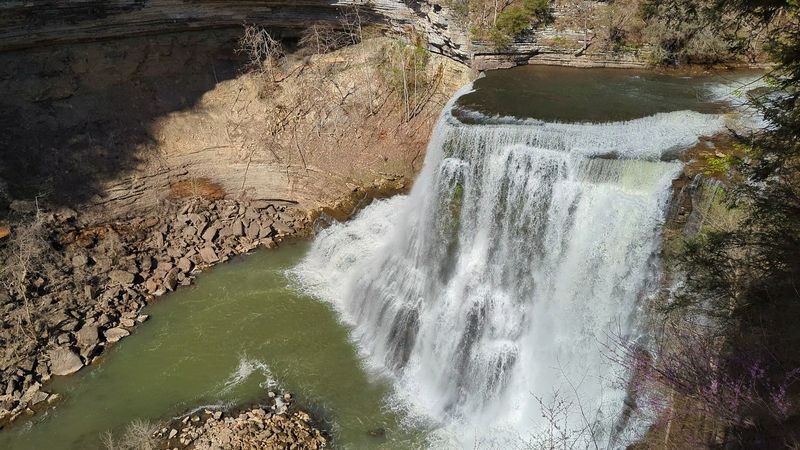
Burgess Falls State Park centers around a stunning 136-foot waterfall on the Falling Water River, and that name becomes very literal after heavy rain. The river can transform from a scenic flow to a powerful torrent that’s been included in National Weather Service flood warnings.
That’s not just a cautionary note; it’s an active weather emergency.
The main trail to the falls is relatively easy, following the river downstream past several smaller cascades before reaching the big drop. But when the Falling Water River is running high, those smaller falls become much more impressive and much more dangerous.
The spray increases, rocks along the trail get soaked, and the roar of the water becomes genuinely intimidating.
Overlook platforms provide great views of the main falls, but they’re positioned near the gorge edge. When everything’s wet and you’re trying to get the perfect photo, it’s easy to forget that you’re standing on potentially slippery surfaces near a significant drop.
People have slipped on these platforms, and the results aren’t pretty.
The river upstream can receive heavy rainfall even when Sparta itself is dry. That means conditions can deteriorate rapidly without much local warning.
Water levels can rise throughout the day, making your return hike more challenging than your initial walk in.
Flood warnings in this area are taken seriously by locals who know how quickly conditions can change. When the National Weather Service issues warnings, they’re not being overly cautious; they’re responding to real data about water levels and flow rates that indicate genuine danger.
The trail includes some sections with stairs and boardwalks that, like at other waterfalls, become slippery when wet. The difference here is that you’re walking alongside a river that’s actively flooding, which adds psychological stress even if you’re technically on safe ground.
Checking the park’s website or calling ahead after heavy rain is smart. Park staff will know current conditions and whether trails are open.
If there’s any question about safety, choose a different activity. Burgess Falls at normal flow is spectacular; Burgess Falls during flood conditions is something to admire from very far away, if at all.
8. Fall Creek Falls, Spencer
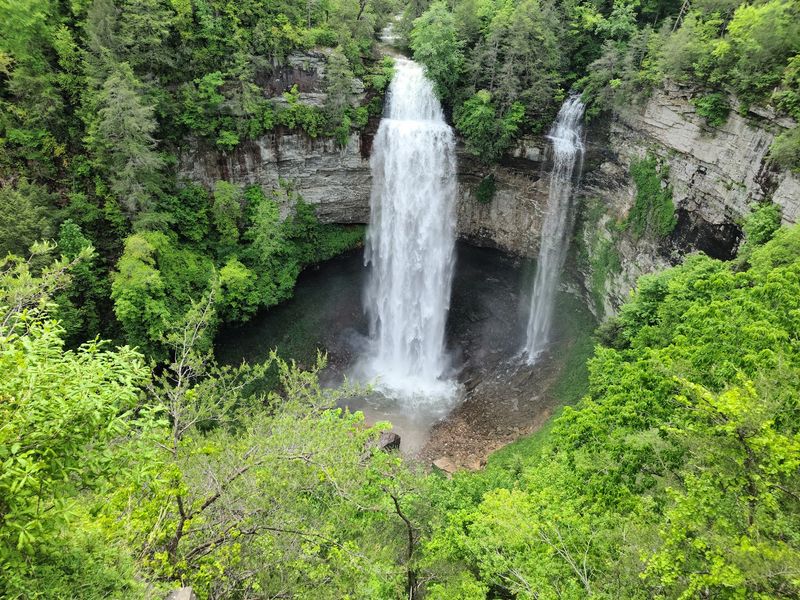
Tennessee’s tallest waterfall at 256 feet is impressive from the overlook platform, and that platform is reasonably safe even after rain. But the trails that descend toward the gorge for different perspectives?
Those are a completely different story when wet. What looks manageable from above becomes significantly more challenging once you’re actually navigating slick rocks and steep terrain.
The overlook gives you a spectacular view without much effort, which is perfect for days following heavy rain. The problem is that people see the falls from above and want to get closer, leading them down trails that become genuinely treacherous when wet.
The descent is rough even in dry conditions, with rocky sections and steep grades.
After a downpour, the waterfall’s flow increases dramatically. It’s visually stunning, which is exactly why people want to hike down for a closer look.
But that increased flow also means more spray, more moisture in the air, and wetter conditions on every surface near the gorge.
The rocks along these descending trails are a mix of sandstone and limestone, both notorious for becoming slippery when wet. Add in moss, algae, and the natural moisture that hangs in gorges, and you’re dealing with surfaces that offer minimal traction.
One slip can send you sliding or tumbling down a slope.
The park has multiple trails with varying difficulty levels, and after rain, even the moderate routes become more challenging. The difficult trails? They edge into dangerous territory when wet. Steep scrambles over rocks that are already tricky in dry weather become legitimately hazardous.
Fall Creek Falls State Park is huge, with plenty of other waterfalls and activities. On rainy days or immediately after storms, stick to the overlooks and paved areas.
You’ll still get incredible views without risking an injury on a slippery descent into the gorge.
Experienced hikers who know these trails intimately might feel comfortable navigating them in less-than-ideal conditions. If you’re visiting for the first time or don’t have significant hiking experience, though, wet weather is absolutely the wrong time to attempt the more adventurous routes around Fall Creek Falls.
9. Cane Creek Falls, Spencer
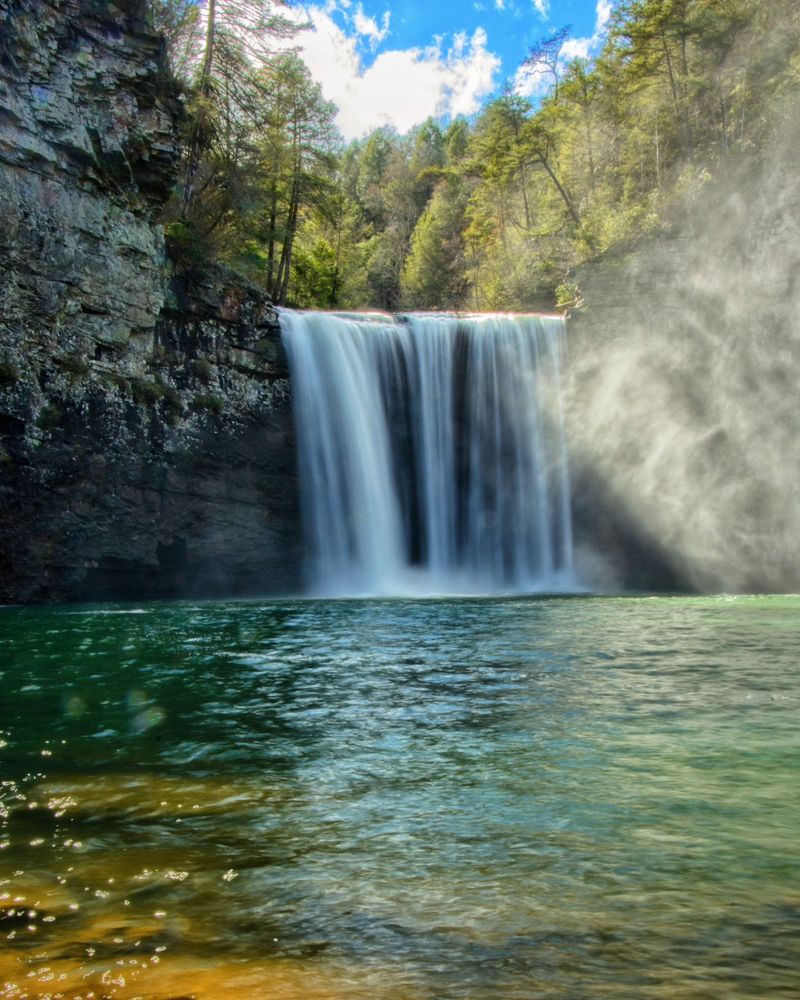
Also tucked inside Fall Creek Falls State Park, Cane Creek Falls has a reputation among serious hikers for its rugged approach. The Cable Trail earns its name from the actual cables installed to help hikers navigate the steep, rocky descent.
If a trail needs permanent cables, that should tell you something about the terrain you’re facing.
Under normal conditions, the Cable Trail is an adventure that requires using your hands, carefully placing your feet, and sometimes relying on those cables to maintain balance or control your descent. Add rain to this equation, and you’re scrambling over wet rocks while gripping wet cables.
The difficulty level jumps significantly.
The gorge approach is especially rugged, with large boulders, exposed roots, and sections where you’re essentially rock-scrambling rather than hiking. These surfaces are challenging when dry and become genuinely hazardous when slick.
A fall here could mean serious injury far from easy rescue access.
Cane Creek Falls itself is beautiful, dropping about 85 feet into a scenic gorge. But reaching that view requires navigating terrain that many hikers underestimate.
The park doesn’t close the trail after rain, but that doesn’t mean it’s a good idea to attempt it in wet conditions.
The cables provide assistance, but they’re not a safety guarantee. They help with balance and give you something to hold onto, but if the rocks beneath your feet are slippery, those cables can only do so much.
You’re still responsible for maintaining your own footing and making smart decisions.
This is the kind of trail where you see the most experienced hikers turn around after assessing conditions. There’s no shame in deciding that wet rocks and steep terrain aren’t worth the risk.
Fall Creek Falls State Park has easier waterfall hikes that are much more appropriate after rain. Cane Creek Falls is a dry-weather destination for people comfortable with challenging terrain. If you’re not both of those things, or if it’s been raining recently, choose one of the park’s more accessible falls instead.
10. Ozone Falls, Ozone
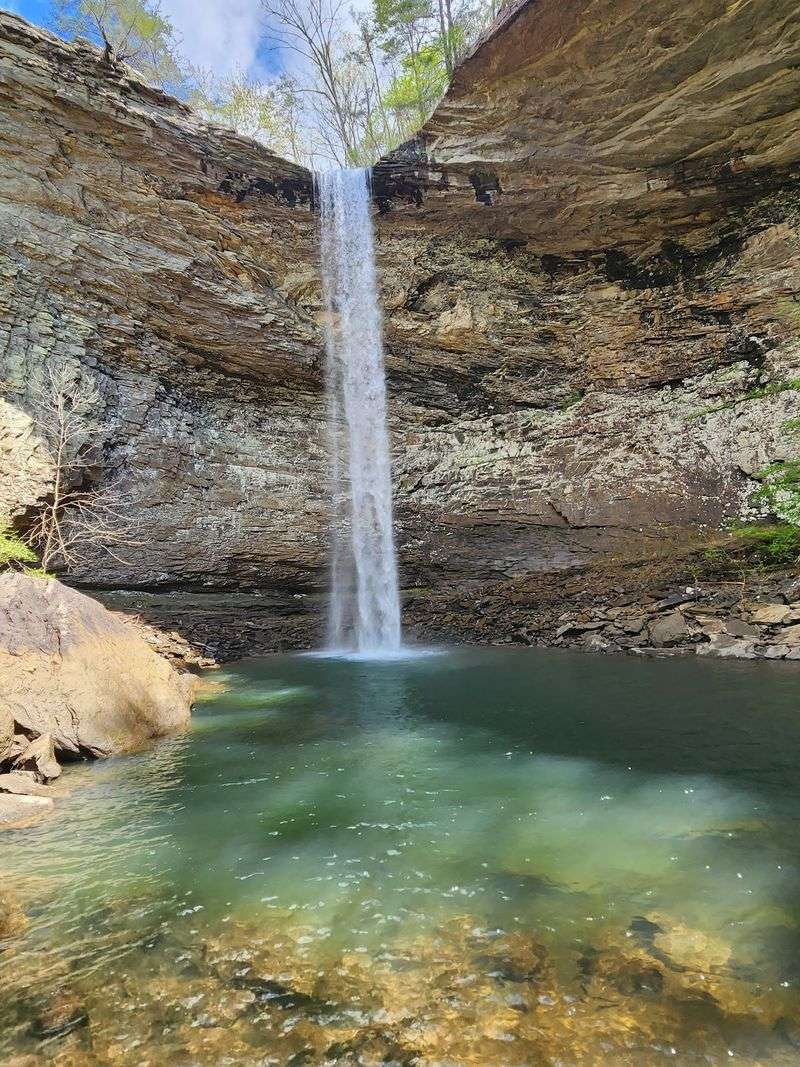
Ozone Falls plunges 110 feet into a stunning amphitheater-like gorge that’s been featured in movies and countless photographs. The upper overlook is accessible and relatively safe, but getting down to the lower viewing area requires navigating a considerable descent over uneven rocks.
This is exactly the kind of situation where wet footing transforms a manageable hike into a risky proposition.
The descent isn’t technically difficult, but it’s steep and rocky. You’re picking your way down a slope where foot placement matters, and where slipping could send you tumbling over sharp rocks.
Dry conditions give you decent traction; wet conditions remove that advantage entirely.
The gorge itself is naturally damp from waterfall spray and limited sunlight. Even on sunny days, certain sections stay moist.
After actual rainfall, everything from the rocks to the vegetation becomes slippery. The moisture lingers in the gorge long after the rain has stopped.
Reaching the base of the falls is rewarding, offering a completely different perspective than the overlook provides. But that reward comes with risk that increases substantially when conditions are wet.
The rocks near the plunge pool are constantly damp from spray, and heavy rain increases both the spray and the water’s power.
The trail isn’t marked with signs warning about specific hazards, which means you’re responsible for assessing conditions yourself. Some visitors assume that if the trail is open, it must be safe.
That’s not how it works, though; you need to evaluate whether your skills and the current conditions are a good match.
Local photographers love Ozone Falls, but they also know when to skip the descent. Getting the shot from the upper overlook might not be as dramatic, but it’s a lot smarter than risking an injury on slippery rocks just for a different angle.
If you arrive and see wet conditions, enjoy the view from above. The falls are beautiful from the overlook, and you can always come back another time to explore the lower area when it’s safe.
Ozone Falls isn’t going anywhere, and neither should you be if the rocks are slick and the descent looks sketchy.