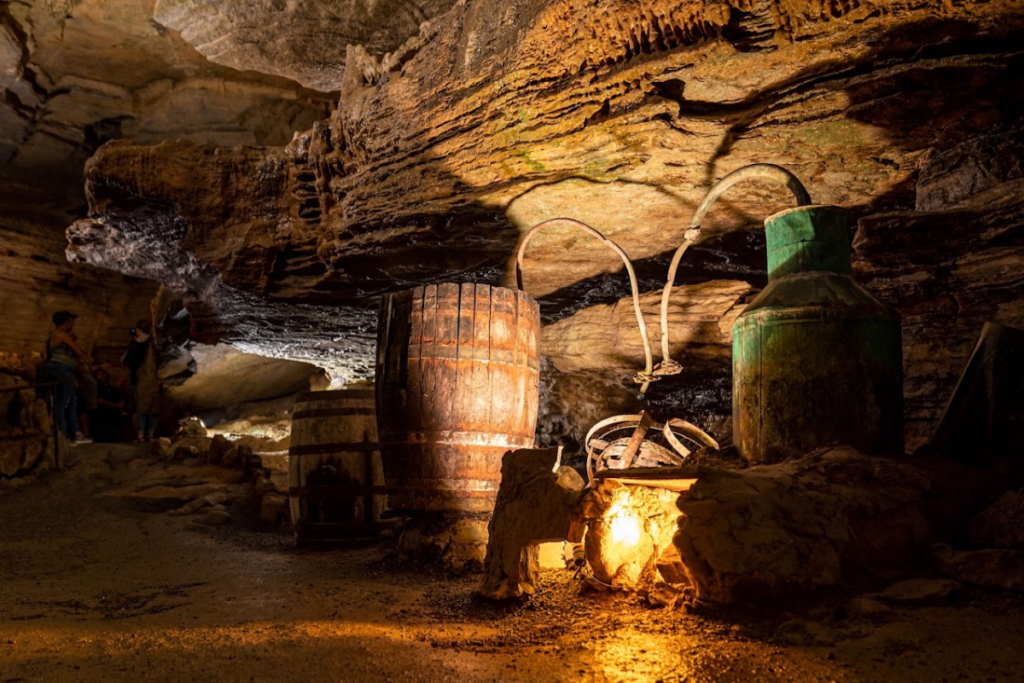
Tennessee holds more than just country music and hot chicken. Scattered across the state are places so unusual, so visually striking, that stepping into them feels like crossing into a different dimension.
From underground waterfalls to misty cypress swamps, these 13 spots prove that you don’t need a passport to experience landscapes that feel completely otherworldly.
1. Reelfoot Lake State Park, Tiptonville
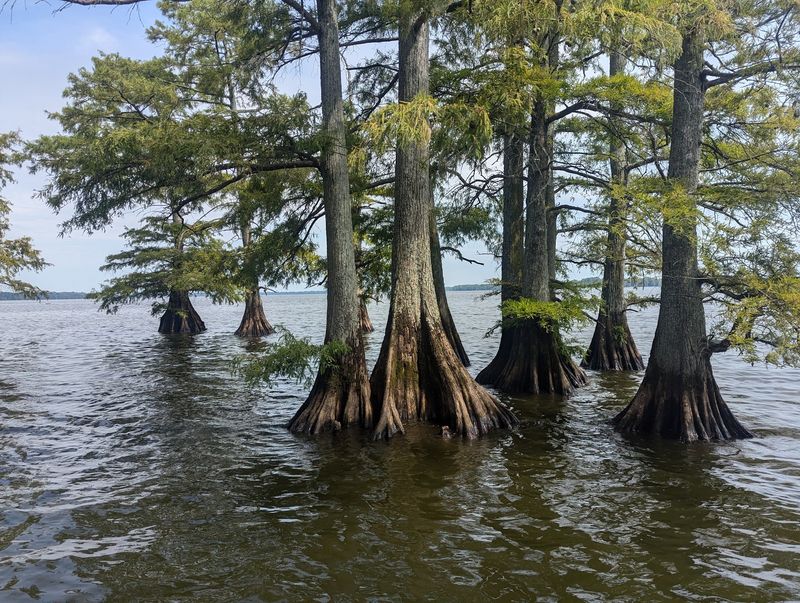
Most Tennessee lakes look like, well, lakes. Reelfoot Lake looks like someone airlifted a chunk of Louisiana bayou and dropped it in the northwest corner of the state.
Bald cypress trees grow straight out of the water, their knobby knees poking up through lily pads and duckweed.
The lake formed during the New Madrid earthquakes of 1811-1812, when the ground literally sank and the Mississippi River flowed backward to fill the depression. That violent origin story created something beautiful: a 15,000-acre natural lake that feels completely out of place in Tennessee.
Morning mist clings to the water surface most of the year, wrapping around the cypress trunks and creating an atmosphere that photographers dream about. Great blue herons stalk through the shallows. Bald eagles nest in the treetops during winter months.
You can paddle through the flooded forest in a kayak or canoe, weaving between trees that have stood in water for over two centuries. The silence out there is profound, broken only by bird calls and the occasional splash of a fish.
It’s disorienting in the best way.
The state park offers boat tours if you’d rather have a guide point out the wildlife and explain the ecology. But renting a kayak and exploring on your own lets you fully absorb how strange and beautiful this place really is.
Reelfoot doesn’t look like the rest of Tennessee because it isn’t like the rest of Tennessee. The landscape feels borrowed from somewhere farther south, creating one of the most unusual natural areas in the entire state.
When the fog rolls in thick and the cypress trees fade into gray silhouettes, you could easily forget which state you’re in.
2. Ghost River State Natural Area, Moscow
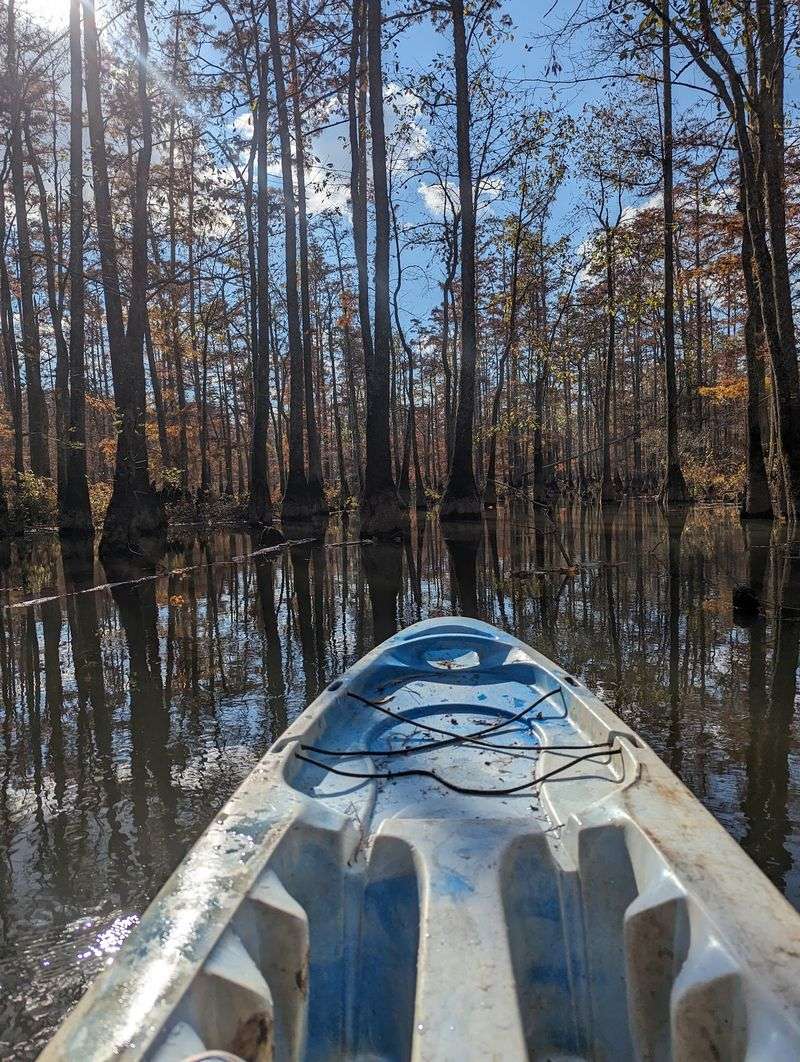
Ghost River earned its name honestly. Paddling through this section of the Wolf River feels like navigating a fever dream where every cypress tree looks identical and every turn leads to three more identical channels.
The state’s own description warns that the canoe route passes through a disorienting maze of cypress and tupelo trees.
This isn’t a gentle float down a clear stream. The water runs dark with tannins, stained the color of strong tea by decaying vegetation.
Cypress knees jut up at odd angles. Spanish moss drapes from low-hanging branches, and the whole place feels humid and close even on cooler days.
The natural area protects one of the few remaining bottomland hardwood forests in West Tennessee. Cypress-tupelo swamps like this used to cover huge sections of the region, but most were drained or logged.
What’s left at Ghost River shows what the landscape looked like before people decided swamps were inconvenient.
Wildlife thrives in the tangled waterways. Wood ducks nest in tree cavities. Barred owls call from the forest. River otters slide down muddy banks. You might spot an alligator snapping turtle, prehistoric-looking and big enough to make you glad you’re in a boat.
The paddling route covers about nine miles, but it feels longer because you’re constantly checking landmarks to make sure you haven’t somehow circled back on yourself. The maze effect is real, and it’s part of what makes Ghost River so memorable.
This isn’t a place for beginners or anyone who panics easily when they can’t see a clear path forward. But if you want to experience a genuinely strange Tennessee landscape that feels nothing like the mountains or rolling hills the state is famous for, Ghost River delivers.
3. Crystal Shrine Grotto, Memphis
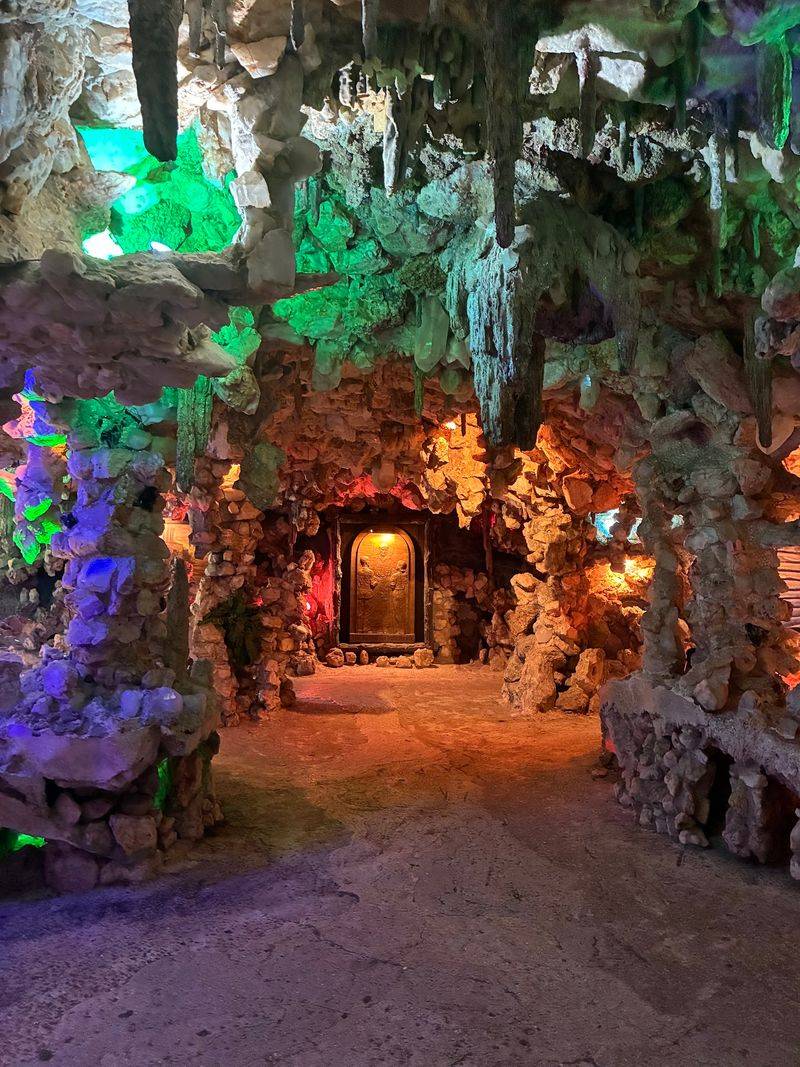
Finding a fantasy grotto hidden behind a Memphis church wasn’t on anyone’s Tennessee bingo card, but here we are. Crystal Shrine Grotto looks like something a particularly devout hobbit might build: low stone archways, glittering crystal formations, religious scenes carved into rock walls, and passages so small you have to duck.
Artist Dionicio Rodriguez built the grotto in the 1930s using a technique that made concrete look exactly like natural stone and wood. He was so good at it that you have to touch the surfaces to believe they’re not real rock.
The whole structure feels ancient even though it’s less than a century old.
The grotto winds underground (or at least feels underground) through a series of connected chambers and passages. Crystals embedded in the walls catch the light. Statues peer out from shadowy alcoves.
The scale shifts constantly, with some spaces barely wide enough to squeeze through and others opening into surprisingly large grottos.
It’s not a natural cave, but that somehow makes it stranger. Someone imagined this fantastical space and then spent years building it by hand, creating something that feels like it should exist in a fairy tale rather than behind a church in Memphis.
The site sits on the grounds of Memorial Park Cemetery, which adds another layer of surreal to the experience. You’re walking through a graveyard, and then suddenly there’s this elaborate underground-style grotto filled with crystals and religious art.
Visiting feels like stumbling into a secret world that operates by different rules. The craftsmanship is remarkable, the atmosphere is genuinely otherworldly, and the whole experience is deeply weird in the best possible way.
Memphis has a lot of unexpected attractions, but Crystal Shrine Grotto might be the most delightfully strange.
4. Seijaku-En Japanese Garden, Memphis
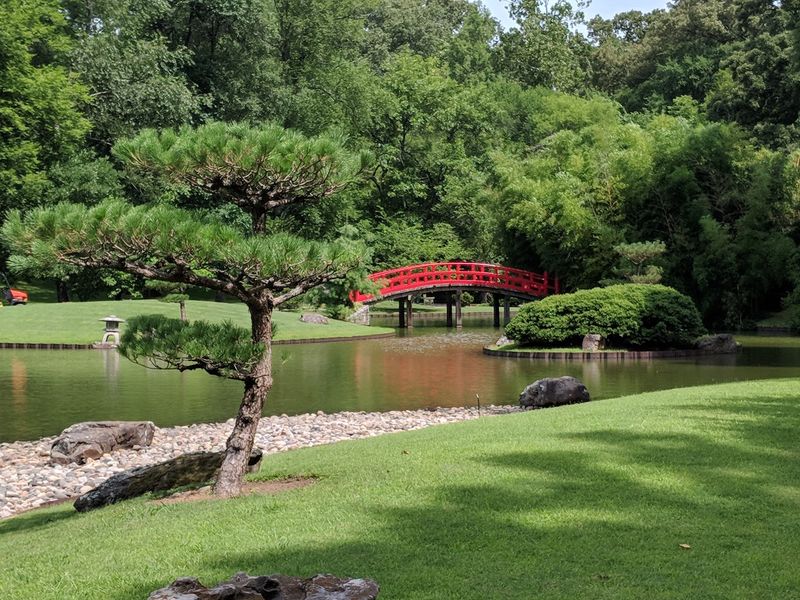
Walking into Seijaku-En feels like stepping through a portal that drops you somewhere in Japan. The garden was specifically designed to create that exact sensation, using every trick in traditional Japanese landscape design to transport visitors thousands of miles without leaving Memphis.
The name translates to Garden of Tranquility, which undersells how carefully constructed this illusion is. Every sight line was planned.
Every plant placement was deliberate. The goal was to recreate the experience of moving through an East Asian forest landscape, and it works remarkably well.
Water features anchor the design, with koi ponds connected by streams crossed by wooden bridges and stepping stones. Japanese maples provide bursts of color in spring and fall. Carefully pruned pines frame specific views. Stone lanterns mark pathways.
The whole composition guides your eye and your movement through the space.
Traditional Japanese gardens are designed to reveal themselves gradually as you walk. You don’t see everything at once.
Instead, each turn opens a new view, each bridge offers a different perspective on the water, and the landscape unfolds like a story with chapters.
Seijaku-En follows those principles faithfully. The garden isn’t huge, but it feels much larger because of how the space is structured. High earthen berms block views of the surrounding Memphis landscape. Bamboo groves create natural screens.
You lose sight of where you are, which is exactly the point.
Spring brings cherry blossoms and azaleas. Fall turns the maples brilliant red and orange. Even in winter, the bones of the garden remain beautiful, with evergreens and carefully placed rocks creating a serene composition.
The Memphis Botanic Garden maintains Seijaku-En as a separate, distinct space within the larger grounds. It’s a remarkable example of how landscape design can completely transform your sense of place and create the feeling of being somewhere else entirely.
5. Virgin Falls State Natural Area, Sparta
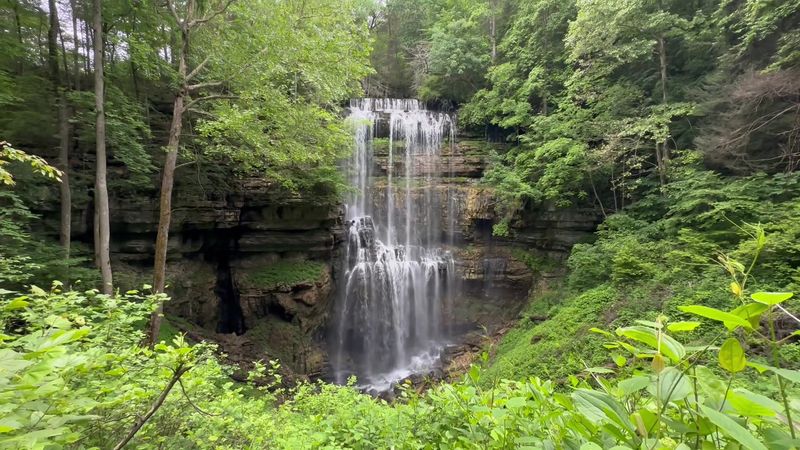
Virgin Falls sounds made up. An underground stream emerges from a cave, drops 110 feet over a cliff, and then disappears into another cave at the bottom.
It’s the kind of thing you’d invent for a fantasy novel if you were worried about making the geography too realistic. Except it’s real, and you can hike to it.
The catch is that the hike is no joke: eight miles round trip through rugged terrain with significant elevation changes. But people make the trek specifically because the destination is so unusual.
The waterfall appears seemingly out of nowhere, spilling from a cave opening halfway up a cliff face. The water has never seen daylight before this moment.
It plunges down the rock face, creates a brief pool at the bottom, and then vanishes into another cave to continue its underground journey.
Standing at the base of Virgin Falls feels like witnessing something that shouldn’t be possible. Water is supposed to flow from high ground to low ground in visible streams and rivers.
This water just appears, falls, and disappears, like a magic trick performed by geology.
The trail to Virgin Falls also passes several other waterfalls and interesting rock formations, so the hike itself offers plenty of scenery. But Virgin Falls is the star attraction, the reason people are willing to tackle the distance and difficulty.
The state natural area protects the Virgin Falls watershed, which includes extensive cave systems and underground streams. The landscape above ground looks like typical Cumberland Plateau forest, but beneath your feet is a hidden world of water-carved passages and subterranean rivers.
Visiting requires planning. The trail is challenging enough that you need decent fitness and good footwear. But if you want to see one of Tennessee’s genuinely weird natural features, Virgin Falls delivers.
It’s proof that reality can be stranger and more interesting than fiction.
6. Fall Creek Falls State Park, Spencer
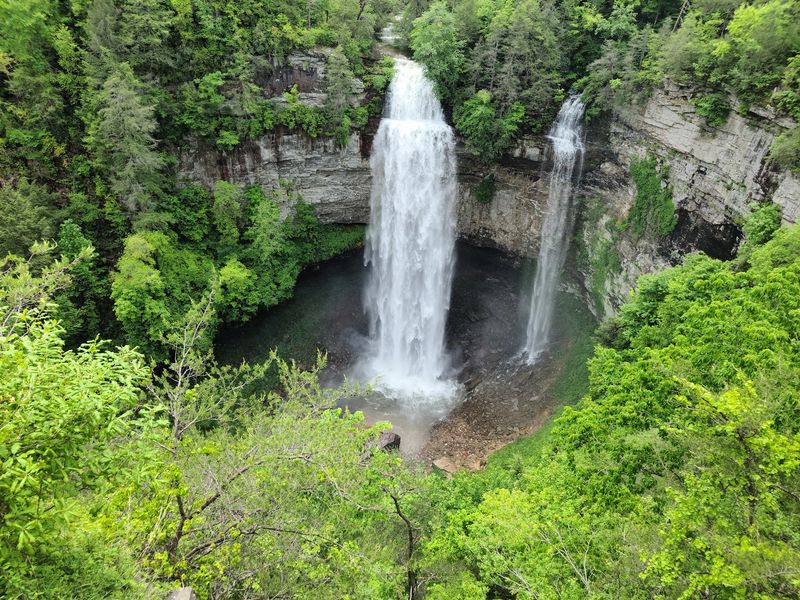
Fall Creek Falls drops 256 feet into a bowl-shaped gorge, making it one of the tallest waterfalls east of the Rocky Mountains. But the raw numbers don’t capture what makes this place feel otherworldly.
It’s the combination of scale, mist, forest, and sheer rock walls that creates an atmosphere unlike anywhere else in Tennessee.
The gorge is deep enough that light filters down at angles that change throughout the day. Morning sun catches the mist rising from the plunge pool, creating rainbows.
Afternoon light illuminates the rock faces and makes the water glow. The whole scene shifts and transforms depending on when you visit.
After heavy rain, the falls roar with volume and the mist becomes a thick fog that fills the gorge. The sound echoes off the rock walls. Water droplets hang in the air. Standing on the observation platform feels like being inside a storm cloud.
The state park includes several other major waterfalls and miles of gorge rim trails, but Fall Creek Falls is the centerpiece. The trail system lets you view the falls from above, from the side, and from the base, each perspective offering a completely different experience.
Sheer sandstone cliffs line the gorges throughout the park, some rising over 100 feet straight up from the creek beds. Hemlock and rhododendron create dense forest cover.
In some areas, the gorges are so deep and narrow that they stay cool and shaded even in summer.
Tennessee’s tourism department regularly highlights Fall Creek Falls as one of the state’s premier natural attractions, and for good reason. The landscape has a dramatic, almost theatrical quality that photographs well but feels even more impressive in person.
Visiting in different seasons creates entirely different experiences. Spring brings high water volume and lush green foliage. Fall adds color to the forest canopy. Winter occasionally freezes portions of the falls into massive ice formations.
Each version of Fall Creek Falls feels like a different world.
7. The Caverns, Pelham
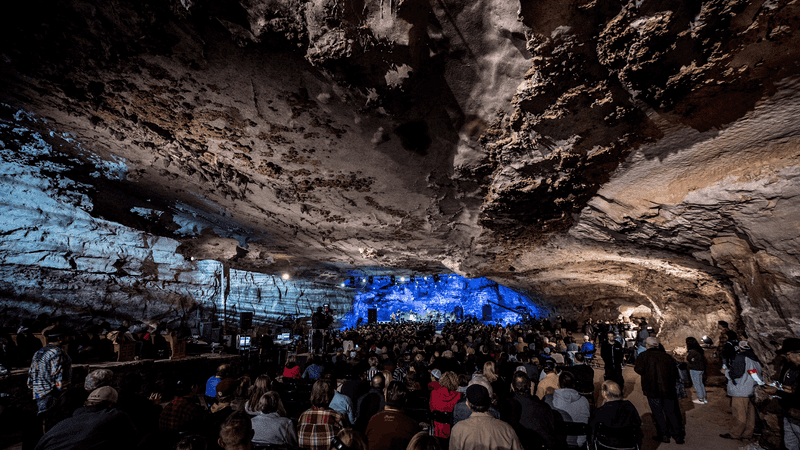
Walking into a cave and finding a full concert stage setup inside is genuinely disorienting. Your brain knows caves are for bats and stalactites, not live music venues.
But The Caverns in Pelham decided that a massive underground chamber was the perfect place to host performances, and honestly, they weren’t wrong.
The main concert chamber is big enough to hold hundreds of people, with natural acoustics that make everything sound incredible. The temperature stays around 58 degrees year-round, which means summer concerts are blissfully cool and winter shows require a jacket even though you’re technically indoors.
But the venue is just one part of the cave system. The Caverns includes over 8,000 feet of known passages, and tours take visitors through multiple enormous underground rooms filled with the usual cave features: stalactites, stalagmites, flowstone, and rock formations that look like frozen waterfalls.
The scale is what makes it feel otherworldly.
These aren’t cramped passages you have to squeeze through. Some chambers are large enough that the tour guide’s voice echoes for seconds. You can stand in the middle of a room and barely see the ceiling above you in the dim lighting.
The cave stays naturally illuminated during tours, with lights highlighting specific formations and creating dramatic shadows on the walls. The effect is theatrical without being cheesy, emphasizing the strange beauty of the underground landscape.
The Caverns also hosts underground concerts by well-known musicians, which means you might find yourself watching a performance in a space that’s been forming for millions of years. The combination of ancient geology and modern entertainment creates a surreal experience.
Above ground, the property includes hiking trails and a zip line course, but the main attraction is definitely what’s below. Descending into the earth and discovering this hidden world of enormous chambers and live music venues feels like finding Narnia, if Narnia had better acoustics and a liquor license.
8. Rock Island State Park, Rock Island
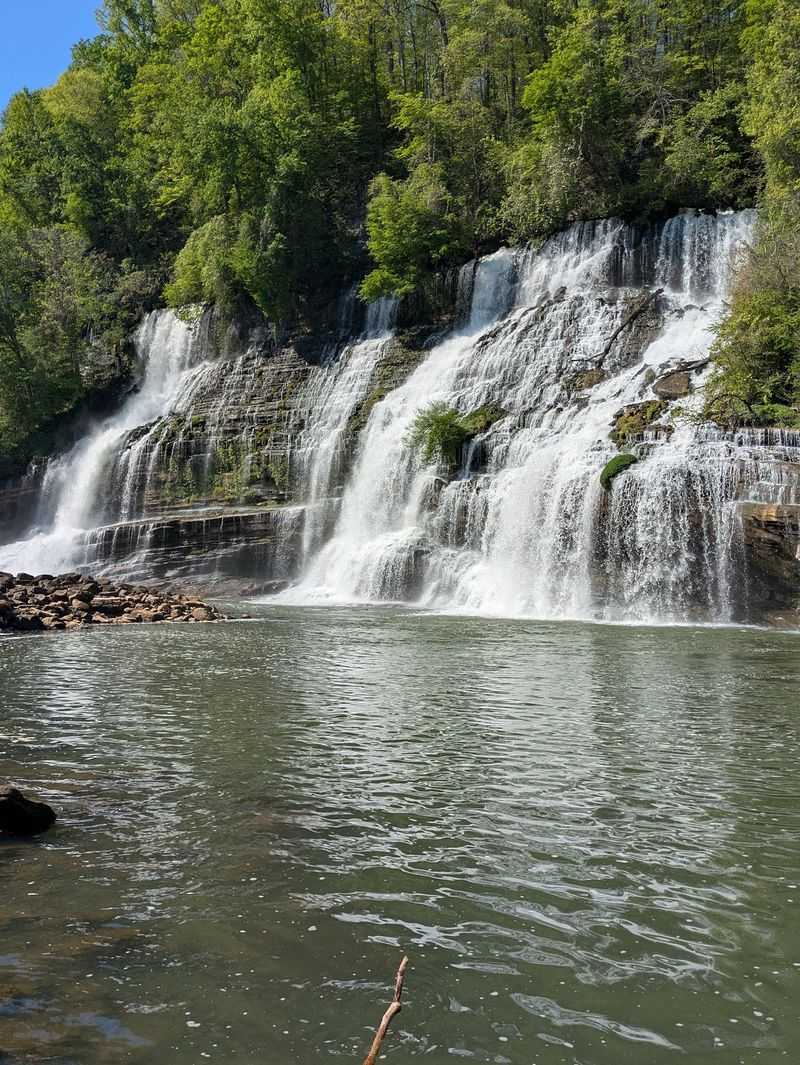
Rock Island sits at the confluence of three rivers, which creates exactly the kind of dramatic water features you’d expect when that much flowing water meets rocky terrain. Multiple waterfalls pour through narrow gorges.
The Caney Fork River crashes over ledges and through boulder fields. The whole area feels wild and powerful.
The main waterfall area features several distinct drops and cascades, with water surging around massive boulders and through channels carved into bedrock. It’s not one clean vertical drop but rather a series of powerful cascades that create constant motion and sound.
Moss covers many of the rock faces, adding intense green color to the gray stone. In areas where mist from the falls reaches, the vegetation grows thick and lush.
The combination of rushing white water, dark rock, and bright green plants creates striking visual contrasts.
Swimming areas near the falls let visitors get right up close to the power of the water, though you need to be a confident swimmer and aware of currents. The pools between cascades offer calmer spots, but the river is always moving, always pushing downstream.
Rock Island was once the site of a major cotton mill and later a hydroelectric plant, and some of the old industrial structures remain. The ruins add an interesting layer to the landscape, showing how people tried to harness and control the river’s power.
Hiking trails wind along the gorge rim and down to the river level, offering multiple perspectives on the waterfalls and rapids. Some trails are easy walks, while others involve scrambling over rocks and navigating steep terrain.
The park is popular with kayakers and paddlers who come to run the rapids and test their skills against the powerful current. Watching experienced boaters navigate the white water adds to the sense that this is a place where nature still calls most of the shots.
Rock Island proves that Middle Tennessee can be just as dramatic as the mountains, at least where rivers cut through rock.
9. The Lost Sea, Sweetwater
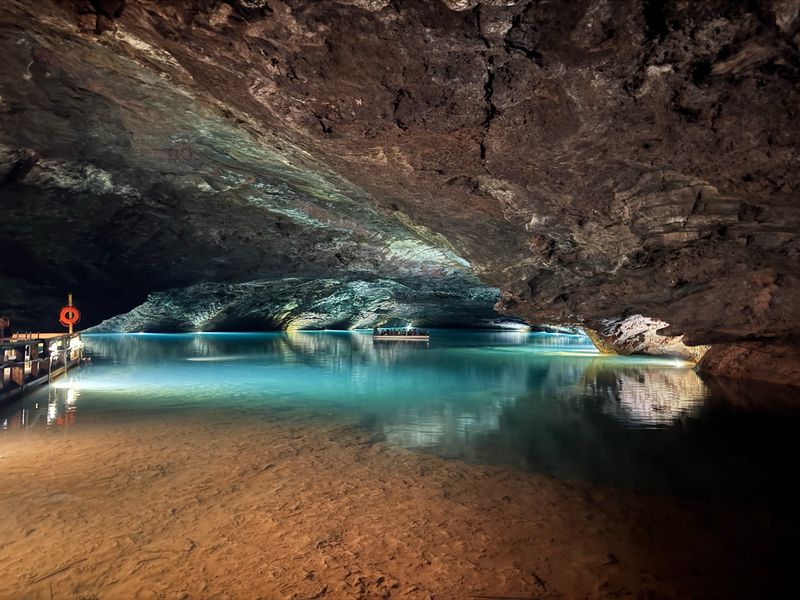
America’s largest underground lake sounds like a marketing claim until you’re actually standing next to it, deep inside Craighead Caverns, staring at dark water that stretches beyond the reach of the lights. The Lost Sea is real, it’s massive, and boarding a boat to tour an underground lake feels appropriately surreal.
The cavern system was known to Cherokee people and later used by Confederate soldiers to mine saltpeter for gunpowder. But the underground lake wasn’t discovered until 1905, when a thirteen-year-old boy wiggled through a tight passage and found himself staring at a body of water that shouldn’t exist.
Modern visitors take a much easier route, walking through developed cave passages before descending to the lake level. The tour includes the usual cave features along the way: stalactites, flowstone, and rock formations with names like the Giant’s Footprint.
But the lake is why people come. The boat ride takes you out onto water that’s so clear you can see straight to the bottom in areas where the lights reach.
Rainbow trout swim in the lake, stocked decades ago and now thriving in the constant 58-degree temperature.
The cavern ceiling disappears into darkness above the water. The lake extends far beyond the tour route, with over four acres mapped and likely more undiscovered passages.
You’re floating on water that’s been trapped underground for thousands of years, in a space large enough to feel endless.
The Lost Sea has been a tourist attraction since the 1960s, which means it’s not some hidden secret. But popularity doesn’t make it less strange.
Descending into the earth, walking through rock passages, and then boarding a boat on a hidden lake hits all the otherworldly notes.
The caverns maintain a constant temperature year-round, making this an all-weather destination. The lake’s water level stays remarkably stable, fed by underground springs that keep the ecosystem alive.
It’s a functioning underground world that most people never know exists.
10. Ruby Falls, Chattanooga
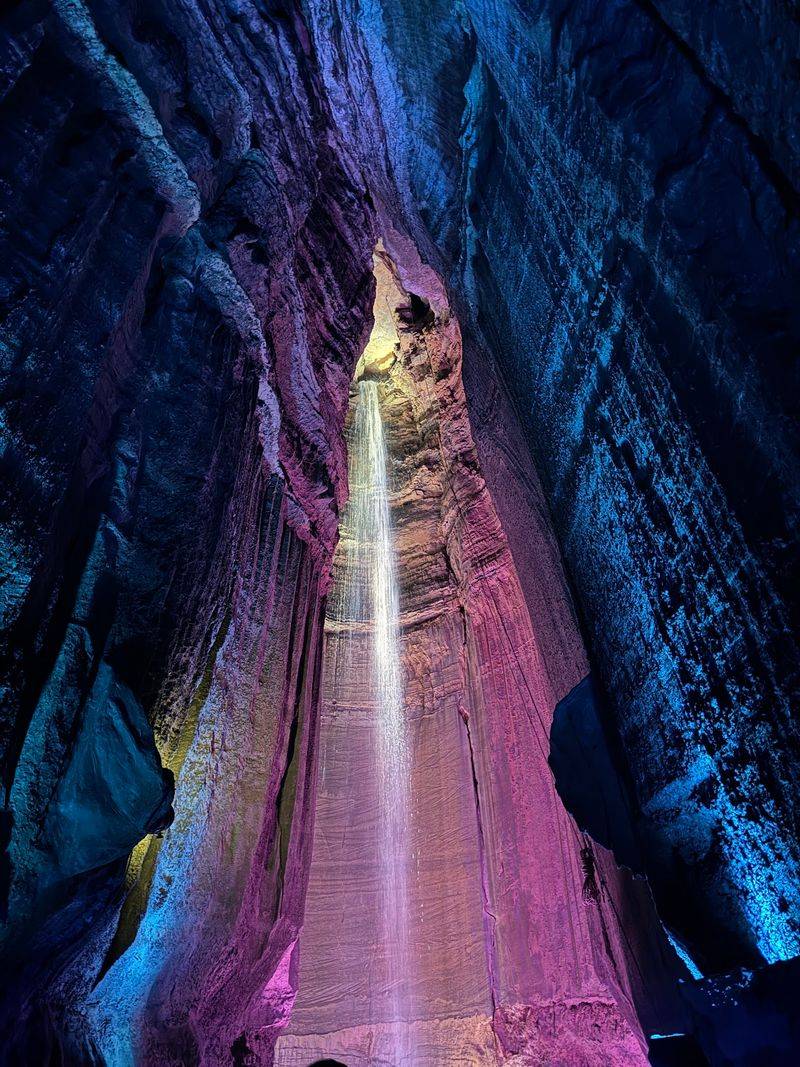
An underground waterfall is already unusual. An underground waterfall that drops 145 feet inside Lookout Mountain, lit with colored lights and accessed by elevator, crosses firmly into the surreal.
Ruby Falls has been a tourist attraction since 1928, which makes it one of the oldest commercial caves in the South, but time hasn’t made it any less weird.
You start by descending 260 feet in an elevator, which opens into a network of cave passages. The tour winds through a half-mile of underground corridors, past stalactites and flowstone formations, deeper into the mountain.
Then you round a corner and there it is: a waterfall plunging from the cavern ceiling into a pool at the bottom, the water illuminated with shifting colored lights. The chamber is large enough to hold the falls and a crowd of tourists, all staring up at water that’s falling through solid rock.
The falls are named after Ruby Lambert, wife of the cave’s discoverer Leo Lambert, who found the waterfall in 1928 while exploring the cave system. He immediately recognized the tourist potential and set about developing the cave for visitors.
The colored lighting is theatrical and definitely not natural, but it creates a memorable atmosphere. The falls shift from blue to purple to green, highlighting different aspects of the rock and water.
Some people find it tacky. Others find it magical. Most find it memorable regardless.
The waterfall is fed by rainwater and snowmelt that seeps through limestone layers above, collecting in underground streams before plunging through the opening in the cavern ceiling. During dry periods, the flow decreases.
After heavy rain, it increases. The falls are always flowing, but the volume changes.
Ruby Falls sits inside Lookout Mountain, which also houses Rock City and other tourist attractions. But while Rock City is above ground, Ruby Falls offers the chance to descend into the mountain and see what’s hidden inside.
Standing in that cavern, watching water fall from darkness into light, definitely feels like stepping into another world.
11. Ozone Falls State Natural Area, Ozone
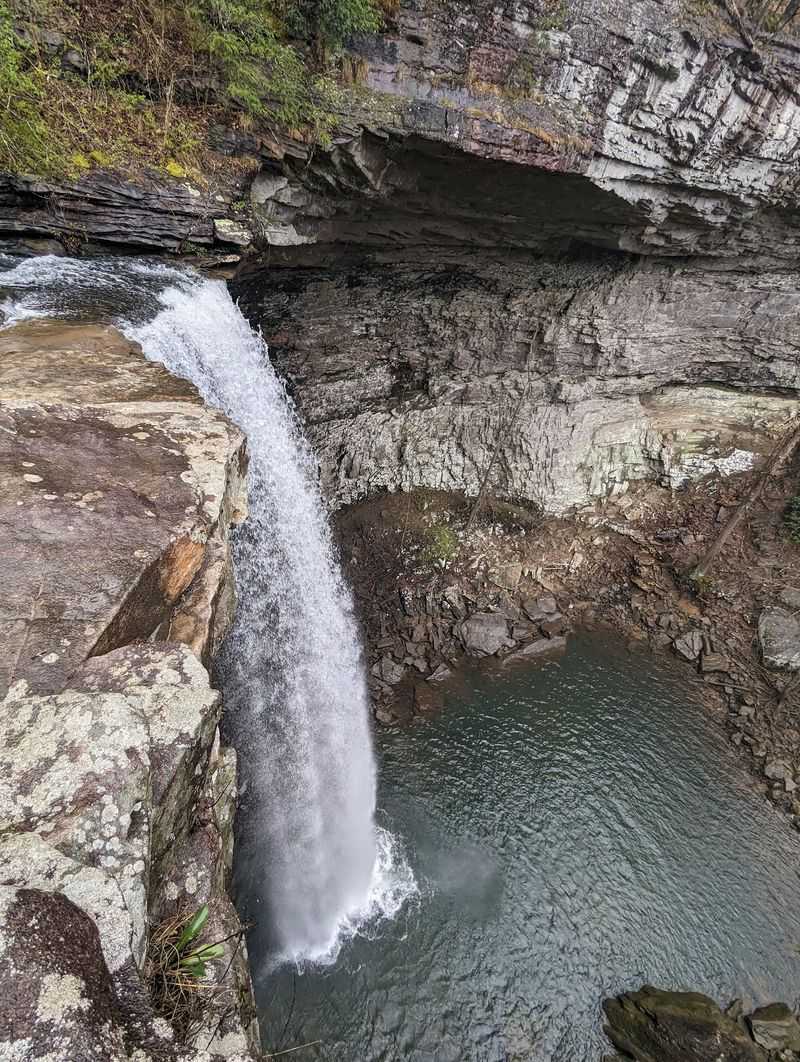
Ozone Falls drops 110 feet into a natural rock amphitheater that looks like it was designed by someone with a flair for drama. Towering stone walls curve around the plunge pool.
Massive boulders litter the gorge floor. The whole scene is so visually striking that it was used as a filming location for The Jungle Book, standing in for an exotic waterfall in India.
The hike to the falls is mercifully short, less than a quarter mile from the parking area. But the payoff is huge.
The falls pour over a sandstone ledge in a single clean drop, hitting the pool below with enough force to create constant mist.
The amphitheater effect is what makes Ozone Falls special. The rock walls create natural acoustics, so the sound of falling water echoes and amplifies.
You feel surrounded by the noise and the mist and the sheer scale of the rock formations.
Brave souls can scramble down to the base of the falls, though the trail is steep and requires careful footing. Standing at the bottom and looking up at the water falling from above puts the height into perspective. 110 feet is tall enough that you have time to think while watching a drop of water fall from top to bottom.
The gorge above and below the falls is equally impressive, with high rock walls and forest growing wherever soil can accumulate. The creek continues downstream through a rugged boulder field that looks like a giant’s rock garden.
Ozone Falls isn’t a huge state natural area and doesn’t require hours to visit, which makes it perfect for people who want a quick hit of dramatic scenery. But quick doesn’t mean less impressive.
The falls and the amphitheater setting pack a visual punch that rivals much larger parks.
The name “Ozone” supposedly comes from the fresh, clean air around the falls, created by the mist and the surrounding forest. Whether that’s scientific or just poetic, the air does feel different in the gorge, cool and damp and alive.
12. Roan Mountain and Carvers Gap, Roan Mountain
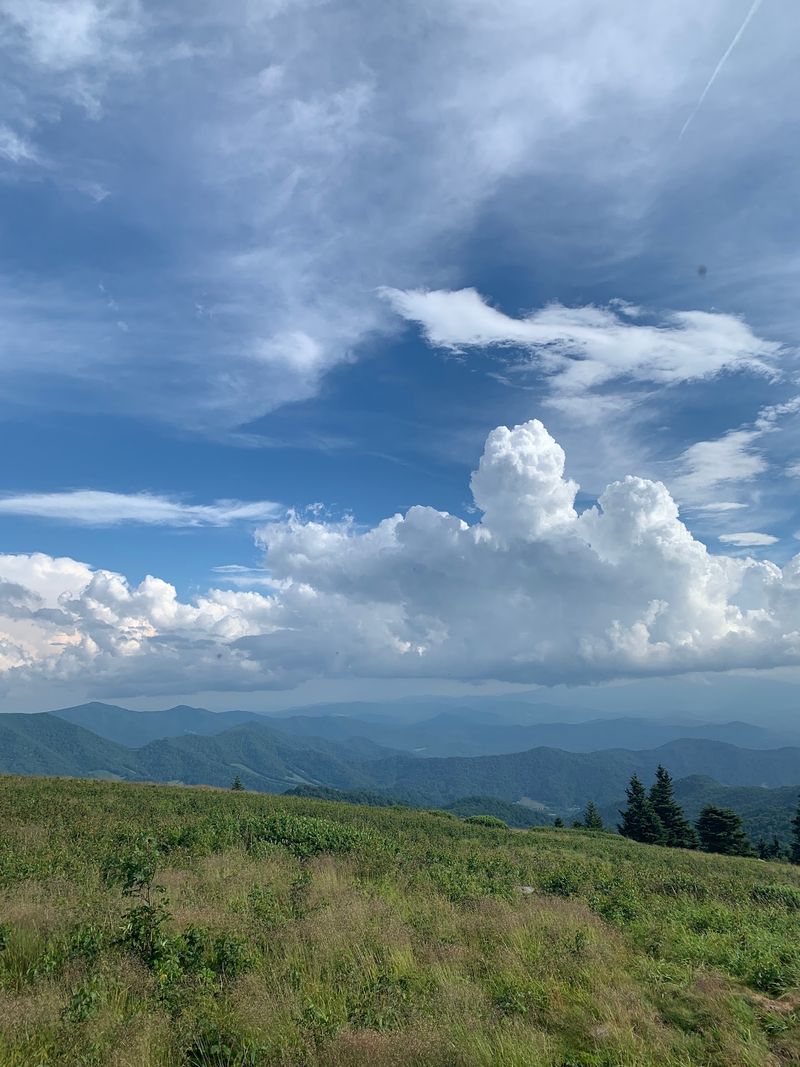
Roan Mountain sits on the Tennessee-North Carolina border and doesn’t look like either state. The high-elevation grassy balds, the clouds drifting across the ridgeline, the long sweeping views, the whole landscape feels more Alpine than Appalachian.
It’s the kind of place where you expect to see yodeling shepherds instead of hikers from Knoxville.
Grassy balds are ecological mysteries. Trees should grow at this elevation, but they don’t. Instead, the mountaintops are covered in grass and low shrubs, creating open meadows above the tree line.
Scientists still debate exactly why balds form and persist, but the result is visually stunning.
The Appalachian Trail crosses Roan Mountain at Carvers Gap, and the section through the balds is one of the most photographed stretches of the entire 2,190-mile trail. The path winds through waist-high grass, crosses open ridgelines, and offers 360-degree views that go on for miles.
In June, the rhododendron gardens on Roan Mountain explode into bloom, covering the slopes with pink and purple flowers. The Catawba rhododendron grows so thick in places that it forms tunnels you walk through, emerging onto open balds covered in blossoms.
It’s one of the best natural flower displays in the eastern United States.
The weather at this elevation can change fast. Clouds roll in without warning, reducing visibility to a few feet and creating an eerie, muffled atmosphere. The wind blows constantly across the open balds.
In winter, ice and snow coat everything, transforming the landscape into something even more otherworldly.
Hiking the balds feels like walking on top of the world. The elevation tops 6,000 feet in places, high enough that the air feels thinner and the temperature drops noticeably.
On clear days, you can see mountain ranges stacked in layers to the horizon.
Roan Mountain proves that Tennessee has more landscape diversity than most people realize. This isn’t the forested ridges and valleys that define most of the state. This is open, exposed, windswept terrain that feels borrowed from somewhere much farther north.
13. Forbidden Caverns, Sevierville
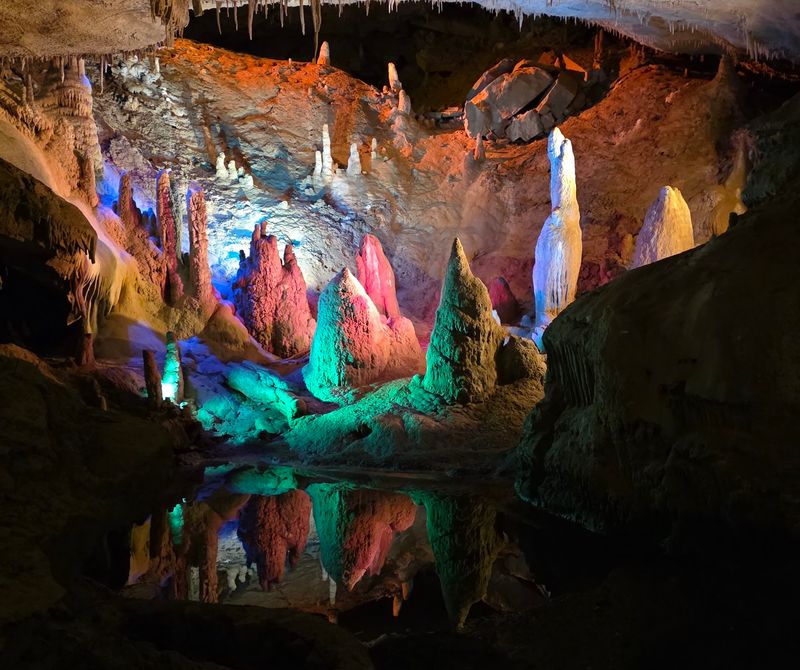
Most Smoky Mountain attractions involve bears, moonshine, or pancakes. Forbidden Caverns involves descending underground into a maze of passages, enormous rock formations, and pools of water that have been sitting in darkness for thousands of years.
It’s a much stranger experience than the typical Sevierville tourist trap.
The cave system extends for miles, though tours cover about a half-mile of passages and chambers. That’s plenty to get the full underground experience: narrow passages that open into huge rooms, rock formations that look like frozen waterfalls, and pools so clear and still they reflect the ceiling like mirrors.
The formations inside Forbidden Caverns are genuinely impressive. Stalactites hang like icicles from the ceiling. Stalagmites rise from the floor, some of them meeting their counterparts from above to form complete columns. Flowstone covers walls in rippling sheets that look like melted wax.
One chamber contains an underground stream that you can hear before you see it, the sound of running water echoing off the rock walls. The stream is cold and clear, fed by water seeping through limestone layers above.
It’s been flowing through this cave for longer than humans have been in Tennessee.
The cave maintains a constant temperature around 58 degrees, which feels wonderfully cool in summer and surprisingly warm in winter. The humidity stays high year-round, which helps the formations continue growing, adding microscopic layers of calcite year after year.
Forbidden Caverns got its name from local legend about moonshiners using the cave to hide their operations. Whether that story is true or just good marketing is unclear, but the name fits.
Walking into the cave does feel like entering a forbidden place, somewhere humans aren’t really supposed to be.
The lighting inside is dramatic without being over-the-top, highlighting specific formations and creating shadows that emphasize the three-dimensional nature of the rock. You get a sense of depth and scale that photographs struggle to capture.
Standing in those chambers, surrounded by rock that’s been forming for millions of years, definitely creates the feeling of being in another world entirely.