Pennsylvania has a food story that is much bigger than cheesesteaks, soft pretzels, and chocolate bars, though those are famous for good reason. Across the state, especially in Pennsylvania Dutch Country, old family recipes still show up on restaurant tables, farmers market stands, bakery shelves, church suppers, and holiday breakfasts, and some of them can surprise visitors who are used to simpler names or lighter flavors.
A sweet pie made with molasses crumbs, a sandwich built around smoky bologna, noodles called pot pie, and two different kinds of fastnacht traditions may sound unusual at first, but each one tells a piece of the state’s history, from Amish and Mennonite kitchens to Pittsburgh hotel dining rooms and college creamery lines. If you are planning a trip through Pennsylvania, these foods are worth tasting with an open mind, because the odd names, heavy portions, and old-fashioned flavors are exactly what make them memorable.
1. Apple Butter With Fresh Bread – Good N Plenty Restaurant – Smoketown
A spoonful of apple butter can fool visitors before the first bite, because there is no dairy in it at all.
The spread is made by slowly cooking apples with spices until they become thick, dark, sweet, and almost silky.
At Good N Plenty Restaurant in Smoketown, apple butter with fresh bread feels like a welcome handshake from Lancaster County.
The restaurant has long been known for Pennsylvania Dutch comfort food, and this simple starter shows how much local cooking values thrift, patience, and big flavor.
Outsiders may find it strange because it looks like jam, sounds like butter, and tastes like spiced apple pie filling.
Locals know to spread it thick on warm bread, especially when the loaf has a soft center and a chewy crust.
The tradition comes from a time when farm families needed smart ways to preserve apples after harvest.
Long cooking reduced the fruit, deepened the sweetness, and helped it last through colder months.
If you try it, do not rush.
Take a small piece of bread first, add a modest layer, then decide how sweet you want the next bite.
Apple butter also pairs well with cottage cheese, pork, biscuits, and even sharp cheddar.
That mix of sweet and savory is very Pennsylvania Dutch, where the table often moves between sugar, vinegar, salt, and spice.
For travelers, this is a low-risk food adventure.
It is familiar enough to enjoy right away, yet old-fashioned enough to feel special.
Bring home a jar if you can, but check the label for real apples and warm spices.
The best versions taste slow-cooked, not syrupy, and they make an ordinary breakfast feel like a small visit to Smoketown.
2. Whoopie Pies – Bird-in-Hand Bake Shop – Bird in Hand
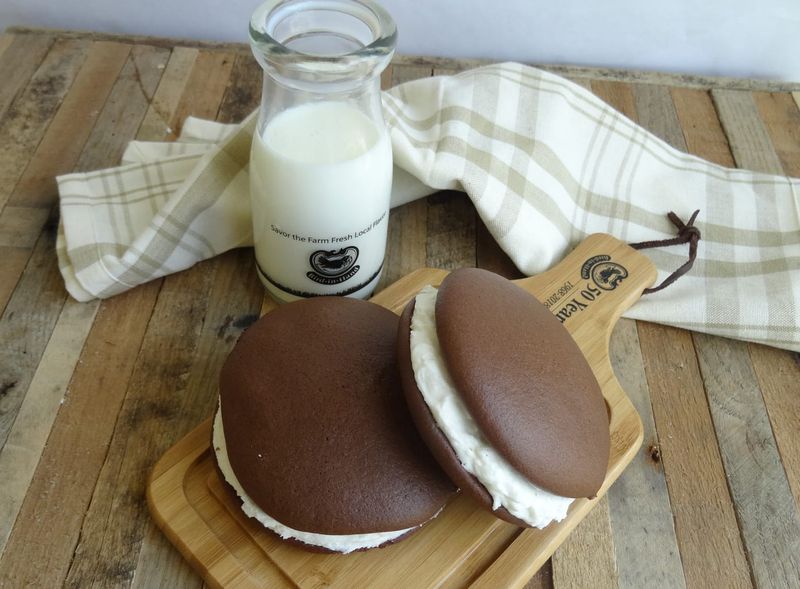
One look at a whoopie pie and many visitors wonder if it is a cookie, a cake, or a sandwich.
The honest answer is yes, in the happiest possible way.
Bird-in-Hand Bake Shop in Bird in Hand is a fitting place to meet this Pennsylvania favorite.
The area is surrounded by Lancaster County farms, and bakeries here often feel tied to family recipes, early mornings, and trays that empty fast.
A classic whoopie pie has two soft chocolate cake rounds with sweet cream filling in the middle.
Some versions use pumpkin, red velvet, oatmeal, or peanut butter, but the chocolate one is the old standby many people picture first.
The strange part for outsiders is the size and sweetness.
A whoopie pie can look like a snack but eat like dessert for two, especially when the filling is thick.
There is also friendly debate about its origins, with Pennsylvania, Maine, and other places claiming a piece of the story.
In Pennsylvania Dutch Country, the treat is often linked to lunch pails and home baking.
Folklore says children shouted with joy when they found one packed for lunch.
Whether that story is fully true or not, the name still carries that playful feeling.
When buying one, check for cake that bends softly instead of crumbling.
The filling should taste creamy and sweet, not greasy.
If you are new to whoopie pies, split one with a friend and grab coffee or milk.
The drink helps balance the sugar and lets you enjoy the texture.
For a fun souvenir, choose a wrapped pie from the bake shop and eat it the same day.
Freshness matters, and a good whoopie pie should feel like a bakery treat, not a packaged snack.
3. Lebanon Bologna Sandwich – Seltzer’s Smokehouse Meats – Palmyra
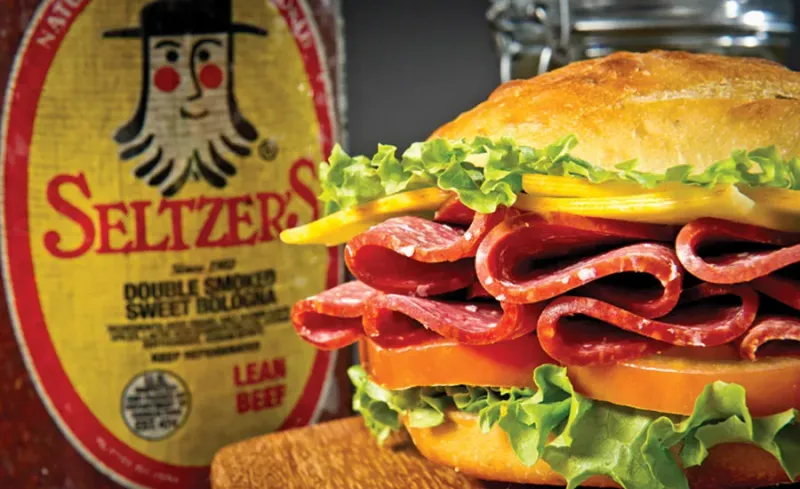
The first bite of Lebanon bologna can surprise people who expect plain lunch meat.
It is smoky, tangy, slightly sweet, and bold enough to announce itself before the sandwich is even finished.
Seltzer’s Smokehouse Meats in Palmyra is closely tied to this Pennsylvania tradition.
The company has deep roots in Lebanon County style bologna, a cured beef sausage that gets its famous flavor from smoking and fermentation.
Outsiders may find the sandwich strange because the word bologna usually brings to mind pale slices from a supermarket pack.
Lebanon bologna is darker, denser, and far more intense.
Some versions are sweet, while others lean more savory and smoky.
Sweet Lebanon bologna is especially loved in Pennsylvania, often tucked into school lunches or served at family gatherings.
The simplest sandwich may include white bread, bologna, and mustard.
Others add cheese, pickles, lettuce, or mayonnaise, though strong mustard is a smart match because it cuts through the richness.
A helpful tip is to start with thin slices.
Thick cuts can overpower the bread and make the smoke flavor feel too strong for first-timers.
The food’s history reflects Pennsylvania German preservation methods.
Before modern refrigeration, curing and smoking meat helped families make beef last longer, especially through winter.
Today, Lebanon bologna works beyond sandwiches.
Locals roll it with cream cheese, cube it for snack trays, or pair it with crackers.
If you visit Palmyra or nearby central Pennsylvania, look for a sandwich that keeps the meat as the star.
Fancy toppings are not needed.
A good Lebanon bologna sandwich tastes like smokehouse history between two slices of bread.
It may be unusual to visitors, but in Pennsylvania it is comfort food with a serious backbone.
4. Pennsylvania Dutch Chicken Pot Pie – Dienner’s Country Restaurant – Ronks
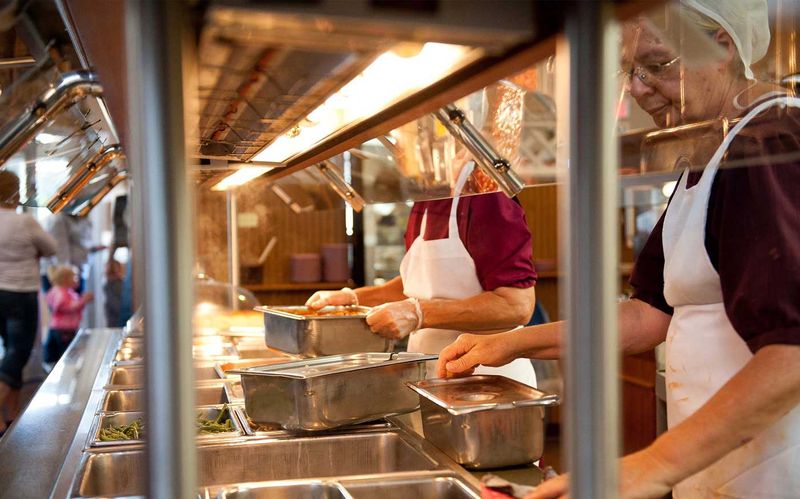
A visitor expecting a flaky crust may blink twice when Pennsylvania Dutch chicken pot pie arrives in a bowl.
Around Lancaster County, pot pie often means slippery square noodles simmered with chicken, potatoes, and broth.
Dienner’s Country Restaurant in Ronks is a welcoming place to understand the difference.
The cooking is hearty, plainspoken, and built for people who appreciate a full plate after a long day.
The dish is strange to outsiders mostly because of the name.
In many parts of the country, chicken pot pie is baked under pastry, but Pennsylvania Dutch pot pie is more like a thick stew with homemade dough squares.
Those noodles are the heart of the meal.
They soak up broth and become tender without losing their bite.
The flavor is usually simple, not flashy.
Chicken, onion, celery, carrots, potatoes, parsley, and pepper do the work.
That simplicity is part of its charm.
Pennsylvania Dutch cooking often turns basic farm ingredients into filling meals that can feed a table without waste.
If you order it for the first time, think of it as chicken and dumplings with a local twist.
That expectation makes the missing crust feel less confusing.
Add pepper at the table, but taste first.
Some kitchens season gently so each person can adjust the bowl.
Pot pie also tastes best hot, so eat it soon after it is served.
The noodles keep thickening as they sit.
For travelers exploring Ronks, this dish gives a real sense of place.
It is not fancy, and it does not try to be.
Instead, it offers warmth, softness, and a little surprise in the name.
Once you understand the local meaning, Pennsylvania Dutch chicken pot pie makes perfect sense.
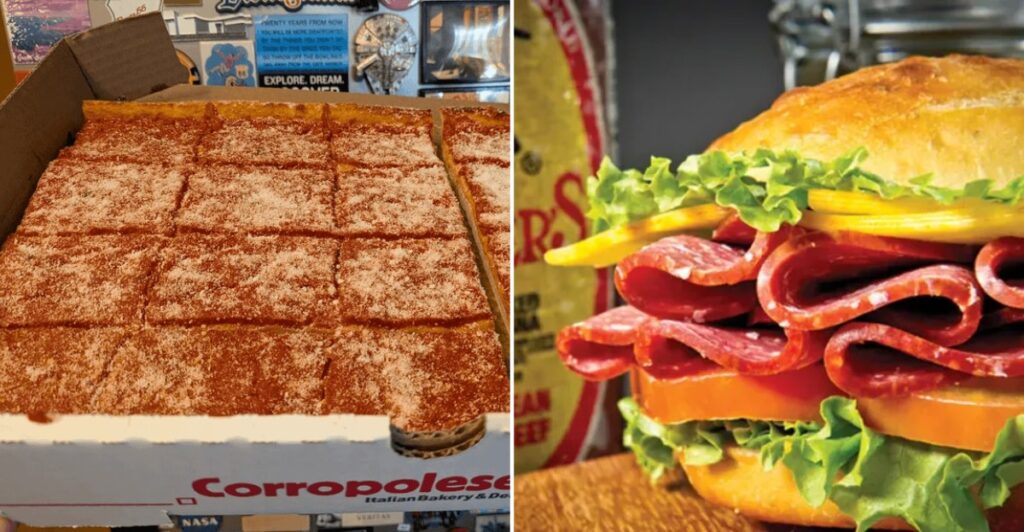
5. Tomato Pie – Corropolese Bakery & Deli – Norristown
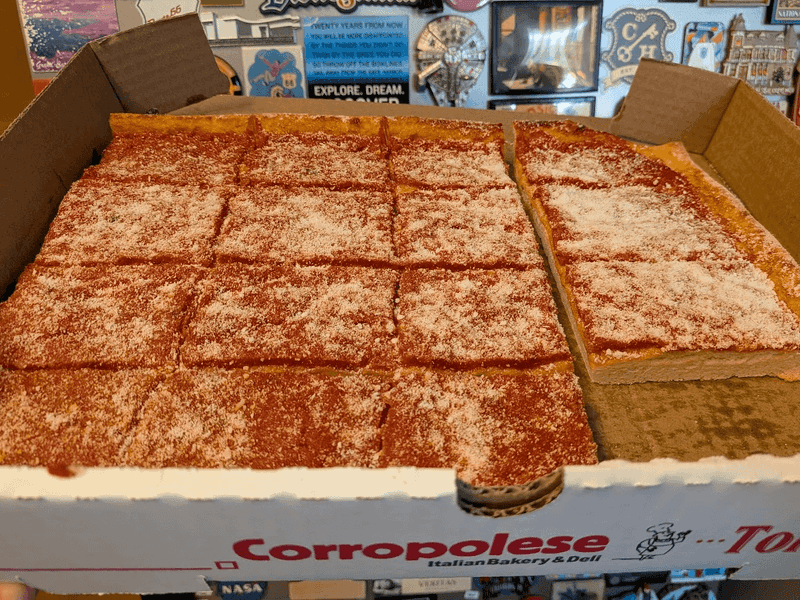
Room-temperature pizza without melted cheese sounds like a mistake until a proper Pennsylvania tomato pie lands in your hands.
Then the soft crust, bright sauce, and dusting of grated cheese start to make sense.
Corropolese Bakery and Deli in Norristown is one of the best-known names connected with this regional favorite.
Its tomato pie is often served in square slices, packed in bakery boxes, and brought to parties across the Philadelphia suburbs.
The odd part for outsiders is that tomato pie is usually not eaten hot.
The cheese is not stretchy, and the sauce sits proudly on top.
Instead of acting like regular pizza, it behaves more like a savory bakery item.
The crust is thick enough to hold the sauce but soft enough to bite easily.
A good slice depends on balance.
The tomato sauce should taste sweet, tangy, and seasoned, while the grated cheese adds salt and a little sharpness.
Tomato pie is common at birthdays, office lunches, holiday gatherings, and game-day spreads.
Because it travels well and does not need an oven, it is practical food for a crowd.
If you are trying it for the first time, do not ask the shop to heat it unless locals suggest it.
Eating it at room temperature is part of the tradition.
Grab napkins, because the sauce can be generous.
Also, choose a corner piece if you like extra crust.
The style reflects the Italian American food culture that helped shape southeastern Pennsylvania.
It is humble, shareable, and built around bakery skill.
Tomato pie may seem strange beside a bubbling cheese pizza, but that comparison misses the point.
Treat it as its own thing, and Norristown’s favorite party slice becomes easy to love.
6. Funnel Cake Fix – Funella’s Funnel Cake – North Wales
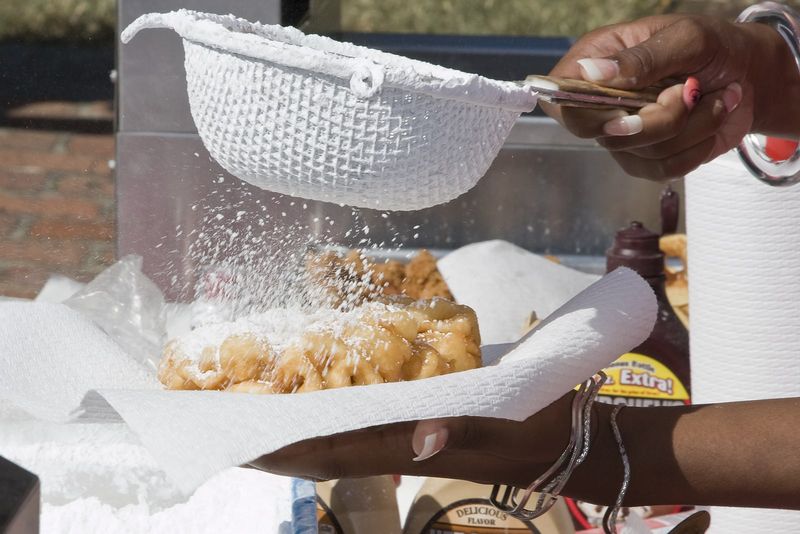
Powdered sugar on your shirt is almost part of the ticket when funnel cake is involved.
The treat is messy, warm, crisp, soft, and wonderfully unserious.
Funella’s Funnel Cake in North Wales gives this fairground favorite a place to shine beyond the midway.
For many Pennsylvanians, funnel cake brings back memories of summer carnivals, fire company fairs, boardwalk trips, and sticky fingers.
The name comes from the old method of pouring batter through a funnel into hot oil.
The batter twists into a lacy shape, fries quickly, and becomes a golden nest ready for sugar.
Outsiders may find it strange because it looks like a pile of fried scribbles.
There is no neat slice, no fork required, and no real plan except pulling off pieces while it is still hot.
The classic topping is powdered sugar, and that is still the best starting point.
Fruit, chocolate, caramel, whipped cream, and ice cream can be fun, but too many toppings may hide the fried dough flavor.
A useful trick is to share one.
Funnel cakes are larger than they look, and they taste best in the first few minutes.
If you want the cleanest bite, tear from the edges where the batter is crisp.
The center is usually softer and sweeter because it catches more sugar.
Funnel cake has links to Pennsylvania Dutch cooking, though versions of fried batter exist in many cultures.
In Pennsylvania, it became closely tied to fairs and outdoor food stands.
Part of the joy is the setting.
A funnel cake eaten while walking around North Wales or a local event feels different from one eaten at a kitchen table.
It is not everyday food, and that is the point.
Funnel cake is a cheerful little celebration on a paper plate.
7. Turkey Devonshire – Union Grill – Pittsburgh
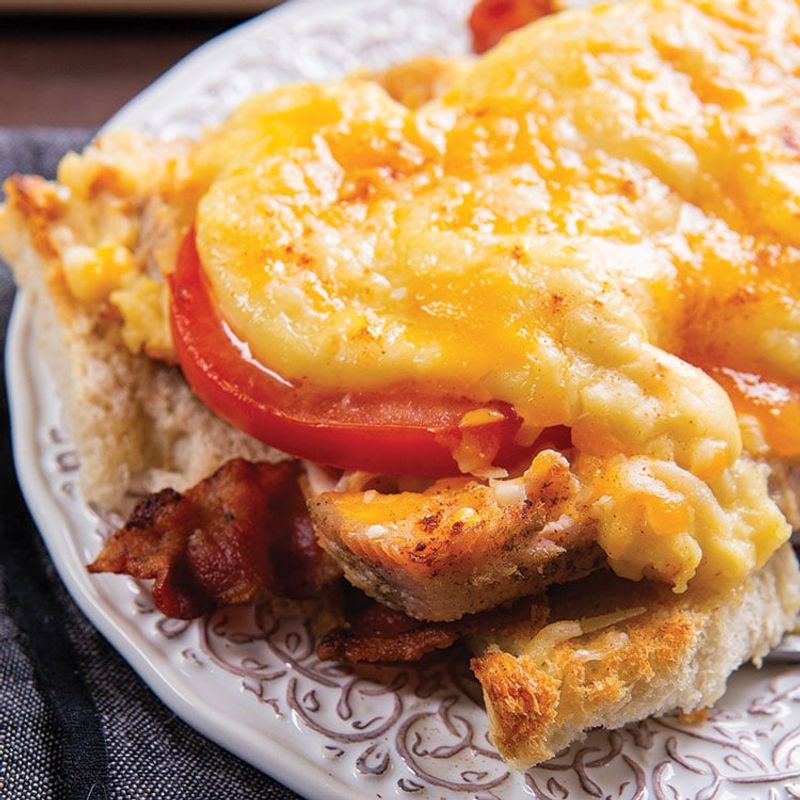
A fork and knife are required when a sandwich arrives buried under cheese sauce.
That is the first clue that Turkey Devonshire plays by Pittsburgh rules.
Union Grill in Pittsburgh is a fitting stop for this rich local classic.
The dish usually includes toast, sliced turkey, tomato, creamy cheese sauce, and crisp bacon, all broiled until warm and golden.
The combination may sound strange to anyone expecting a normal turkey club.
Turkey Devonshire is open-faced, saucy, and heavier than its polite name suggests.
Its story goes back to Pittsburgh dining history.
The dish is often credited to Frank Blandi, who created it in the 1930s at the Stratford Club near Devonshire Street.
That origin explains the fancy sound of the name.
The plate itself, though, feels like comfort food dressed up for dinner.
The cheese sauce is the key.
It should be smooth and rich without tasting like plain melted cheese.
Tomato adds brightness, while bacon gives salt and crunch.
Turkey keeps the dish from becoming only sauce and bread.
If you order it, arrive hungry.
This is not a light lunch, and it pairs better with a simple side than another heavy item.
Some people compare it to a Kentucky Hot Brown, and the idea is similar.
Pittsburgh’s version has its own loyal following and shows how city restaurants can turn leftovers and pantry staples into a signature dish.
For first-timers, take a bite with every layer included.
Bread alone or sauce alone will not explain the appeal.
Turkey Devonshire is a little retro, a little over-the-top, and very western Pennsylvania.
It may look odd at first, but the warm, salty, creamy mix wins people over quickly.
8. Fastnachts – Yum Yum Bake Shops – Colmar
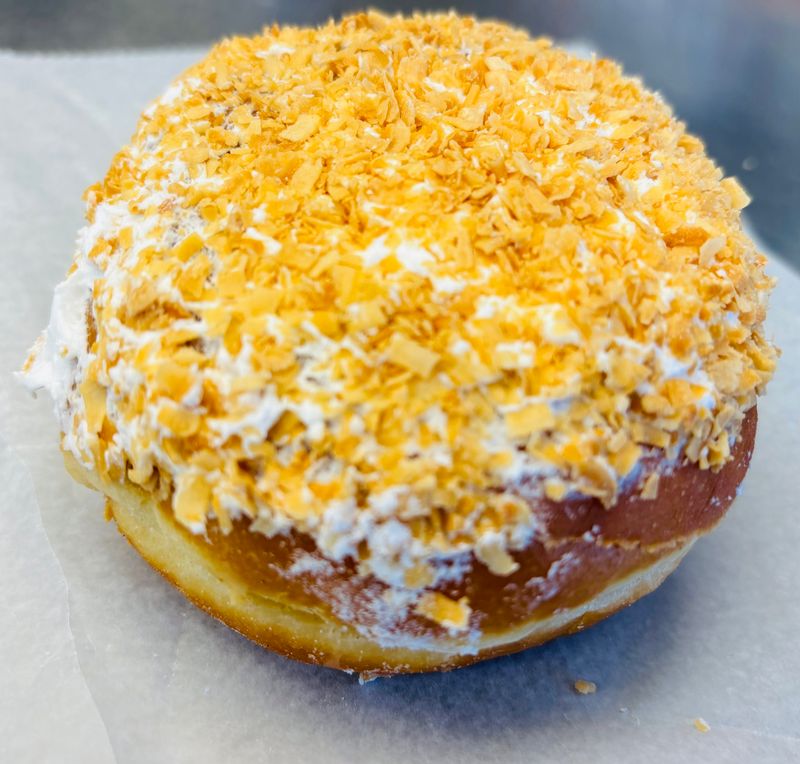
The day before Lent can taste like fried dough in Pennsylvania.
Fastnachts are the reason many people gladly stand in bakery lines before breakfast.
Yum Yum Bake Shops in Colmar is a popular spot where this tradition feels alive and busy.
The bakery is known for doughnuts, but fastnacht season brings a special kind of excitement.
Fastnachts are linked to Shrove Tuesday, the day before the Christian season of Lent begins.
Families once used up sugar, fat, and other rich ingredients before a period of simpler eating.
Outsiders may find the custom strange because the food has a calendar attached to it.
In many Pennsylvania communities, fastnachts are not just doughnuts, they are an annual event.
The texture can vary.
Some are plain and sturdy, others are powdered, sugared, glazed, or filled.
Traditional versions may be less sweet than modern doughnuts.
That can surprise people who expect frosting and sprinkles.
The name comes from German words tied to fasting night.
Pennsylvania German communities kept the food tradition going, and bakeries helped make it easy for everyone to join.
If you want the best experience, go early.
Fastnachts taste freshest the day they are made, and popular bakeries can sell out.
Try one plain first if available.
It helps you notice the dough, light frying, and slightly chewy bite.
Coffee is a smart partner, especially with sugared versions.
The bitterness balances the richness.
Fastnacht Day also offers a small lesson in local culture.
Food here is not only about flavor, but timing, memory, and community habit.
A box from Colmar can feel like a seasonal souvenir.
Share it at work or home, and you will understand why Pennsylvanians treat one fried pastry day like a holiday worth planning around.
9. Apple Dumplings – Dutch Eating Place, Reading Terminal Market – Philadelphia
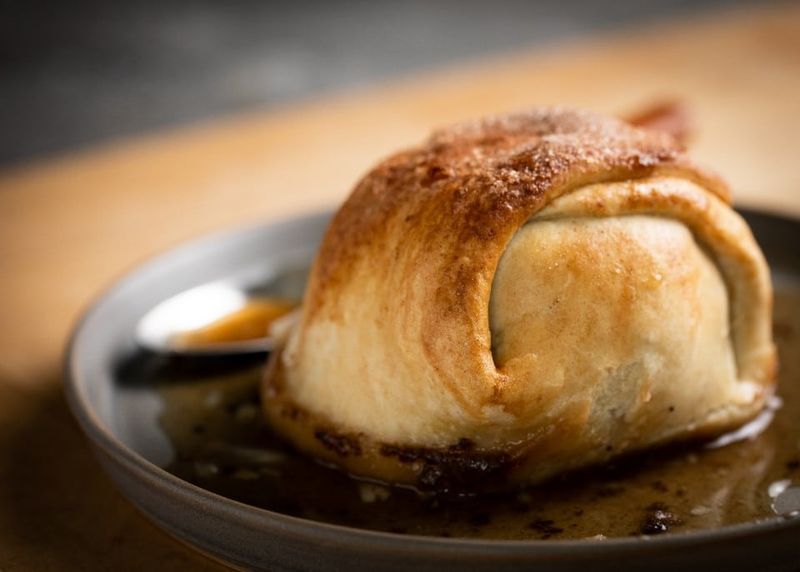
A whole apple wrapped in pastry feels like someone turned a fall orchard into a personal dessert.
Add cinnamon syrup, and the plate becomes hard to ignore.
Dutch Eating Place inside Reading Terminal Market in Philadelphia is a beloved place to try apple dumplings.
The market is busy, loud, and full of food choices, but this Pennsylvania Dutch stand has a steady pull.
An apple dumpling usually starts with a peeled and cored apple.
The fruit is wrapped in dough, baked until tender, and served with sweet sauce.
Outsiders may find it strange because it is bigger and more rustic than a slice of pie.
Instead of chopped apples under a crust, the apple remains the star.
The best part is the contrast.
The pastry becomes soft in some spots, flaky in others, while the apple turns warm and spoonable.
Cinnamon, sugar, butter, and syrup bring everything together.
Some people like it with cream or ice cream, though it is rich enough on its own.
This dessert makes sense in Pennsylvania because apples grow well across the state.
Farm kitchens used fruit in pies, sauces, dumplings, and preserves, making the harvest last in delicious ways.
If you order one at Reading Terminal Market, consider sharing unless you are very hungry.
It can be a full dessert, snack, or sweet breakfast depending on your mood.
Eat it warm if possible.
The sauce soaks into the pastry, and the apple flavor is brighter.
A practical tip is to find a seat before digging in.
Cutting through the pastry while standing in a crowd is harder than it looks.
Apple dumplings offer old-fashioned comfort in the middle of Philadelphia’s bustle.
That mix of country recipe and city market energy is pure Pennsylvania.
10. Shoofly Pie – Dutch Haven – Ronks
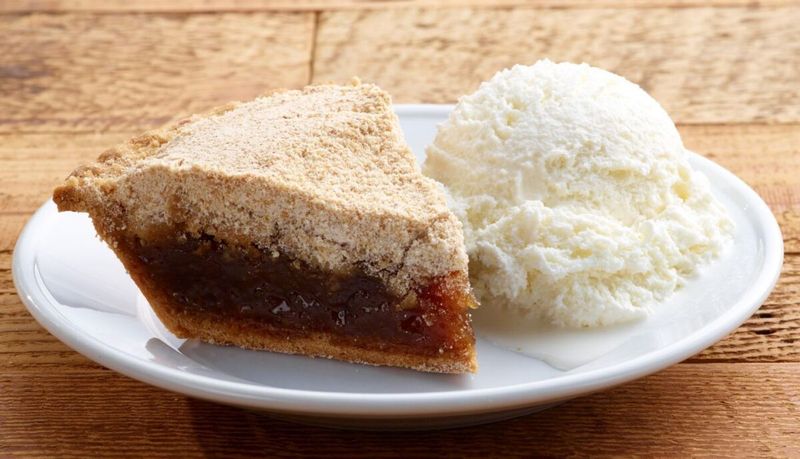
The name alone makes people smile before they even see the pie.
Shoofly pie sounds like a joke, but in Lancaster County it is a serious sweet tradition.
Dutch Haven in Ronks is famous for this molasses-rich dessert.
Its roadside windmill and gift shop atmosphere have made it a familiar stop for travelers exploring Pennsylvania Dutch Country.
Shoofly pie is built from a pie crust, a gooey molasses layer, and a crumb topping.
Some versions are wet-bottom, with a soft sticky base, while others are drier and more cake-like.
Outsiders may find it strange because the flavor is darker than many fruit pies.
Molasses tastes deep, earthy, and a little bitter under the sweetness.
The pie is often connected to Pennsylvania Dutch baking traditions.
Molasses was easier to store than fresh fruit, so it became useful in sweets that could be made year-round.
There are several stories about the name.
One says the sweet pie attracted flies that had to be shooed away, though food historians still debate the full truth.
If you are new to it, ask whether the pie is wet-bottom or dry-bottom.
Wet-bottom shoofly is stickier and more intense, while dry-bottom may feel easier for beginners.
Coffee is almost required.
Its roasted flavor balances the molasses and keeps the sweetness from becoming too much.
A small slice is wise at first.
Shoofly pie is rich, and a little goes a long way.
For the best experience, treat it as a heritage dessert rather than a modern bakery creation.
It is plain, bold, and old-school.
After a few bites, the odd name matters less.
What remains is a taste of Pennsylvania Dutch resourcefulness, where simple pantry goods become something people still travel to try.
11. Fasnachts, Potato Donuts – Beiler’s Doughnuts – Philadelphia
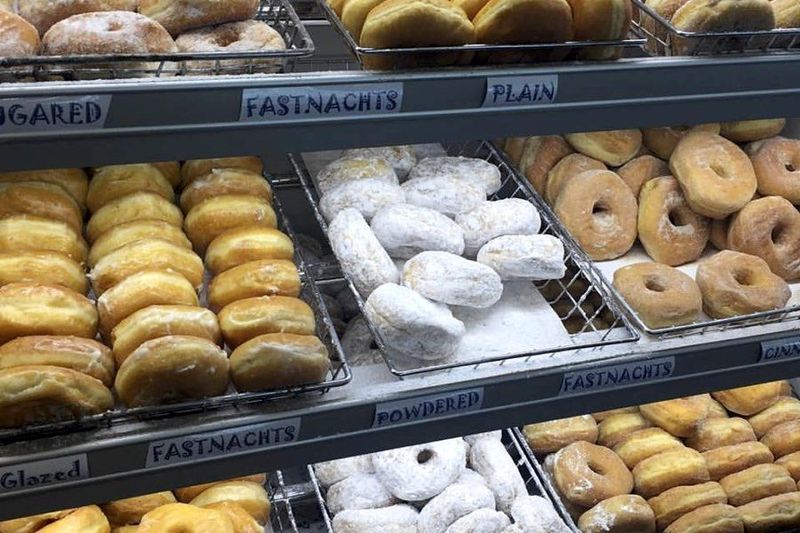
Potatoes in doughnuts sound like a dare, but the idea has deep roots in Pennsylvania kitchens.
The potato helps create a tender texture that can make the pastry feel softer and more filling.
Beiler’s Doughnuts in Philadelphia is a lively place to meet this tradition in a modern market setting.
Located in Reading Terminal Market, it draws lines for fresh doughnuts in many flavors, while also connecting to Pennsylvania Dutch baking heritage.
Fasnachts, sometimes spelled fastnachts, are often eaten around Shrove Tuesday.
Potato versions use mashed potato or potato water in the dough, depending on the recipe.
Outsiders may find the potato part strange because doughnuts are usually thought of as pure sweet treats.
Here, a humble vegetable helps shape the crumb without making the pastry taste like dinner.
The result can be slightly chewy, soft, and satisfying.
Some are plain, while others come powdered, glazed, sugared, or filled.
Spelling differences can also confuse visitors.
Fasnacht and fastnacht both show up in Pennsylvania, and local families may defend their version with a smile.
If you are comparing bakery styles, notice the weight.
A potato fasnacht may feel heartier than a standard raised doughnut.
Freshness matters more than decoration.
Choose one made that day, and eat it before the texture fades.
At Beiler’s, the busy market adds to the fun.
Watching trays move behind the counter makes the treat feel immediate, not mass-produced.
For a first taste, try a simple sugar or plain version before choosing a filled one.
That way, you can understand the dough itself.
Potato fasnachts show how Pennsylvania food often turns practical ingredients into something festive.
What began as a way to use what was on hand still brings people together, one warm pastry at a time.
12. Hand-Dipped Ice Cream Pilgrimage – Penn State Berkey Creamery – University Park
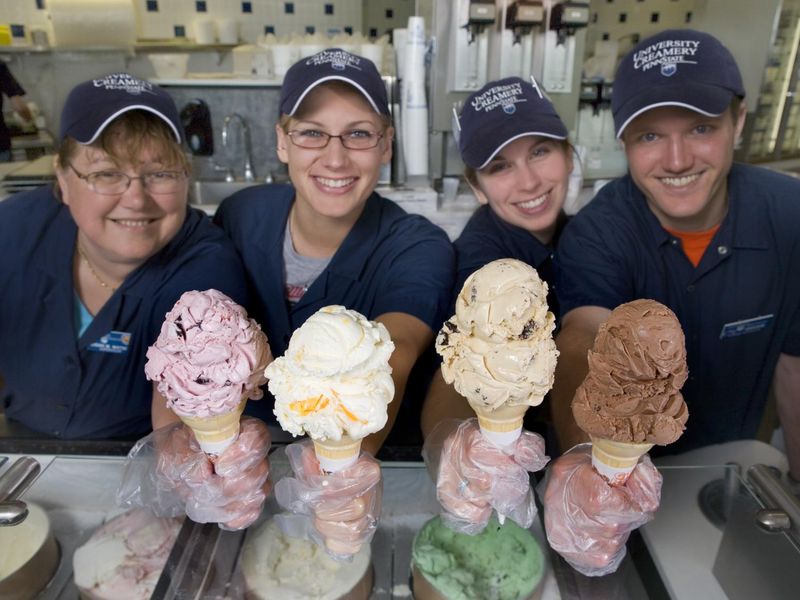
Some food stops feel less like errands and more like a ritual.
At Penn State Berkey Creamery in University Park, getting ice cream is part campus tradition, part road-trip reward.
The Creamery has served generations of students, alumni, families, and visitors.
Its hand-dipped ice cream is famous across Pennsylvania, and the line can be part of the experience.
Outsiders may find the pilgrimage strange because it is not just about dessert.
People plan visits around it, bring coolers, debate flavors, and treat a scoop like a Penn State memory.
The creamery’s roots reach back to university dairy education.
Penn State has long been known for agricultural study, and the ice cream reflects that connection between farming, food science, and campus life.
One famous rule often mentioned is that customers traditionally could not mix flavors in the same cone or dish.
Whether visitors hear it as strict or charming, it adds to the legend.
The portions are generous, so choose carefully.
A single scoop may be enough for many people.
Popular flavors can change, but classics with chocolate, vanilla, peanut butter, and fruit usually have loyal fans.
Ask staff what is moving fast that day if you cannot decide.
If you are traveling with a group, have everyone order a different flavor and share tastes before committing next time.
Just keep the line moving, because the place can get busy.
Eating outside on campus makes the treat better.
You can watch students pass, see families taking photos, and feel how food becomes part of place.
The Berkey Creamery shows a different side of Pennsylvania tradition.
Instead of an old farm recipe or holiday pastry, it is a school tradition that grew into statewide fame.
A cone here is cold, creamy proof that Pennsylvania food pride can be playful too.