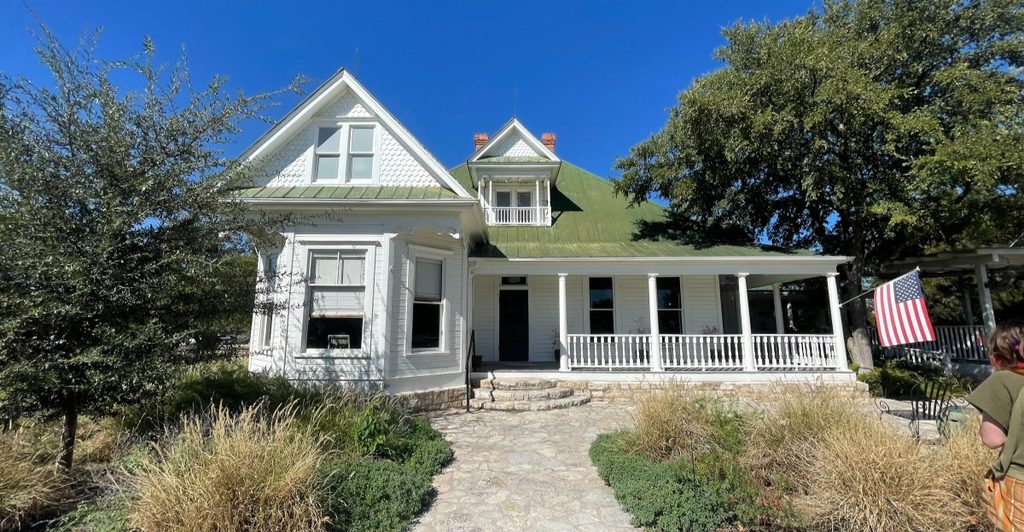
Texas has starred in more movies than you might think. From classic Westerns to horror flicks and coming-of-age stories, the Lone Star State has provided the backdrop for some seriously iconic scenes. Best part?
You can actually visit these spots yourself and walk where your favorite characters once stood, making for one unforgettable road trip through film history.
1. Fort Worth Water Gardens (Fort Worth) – Logan’s Run
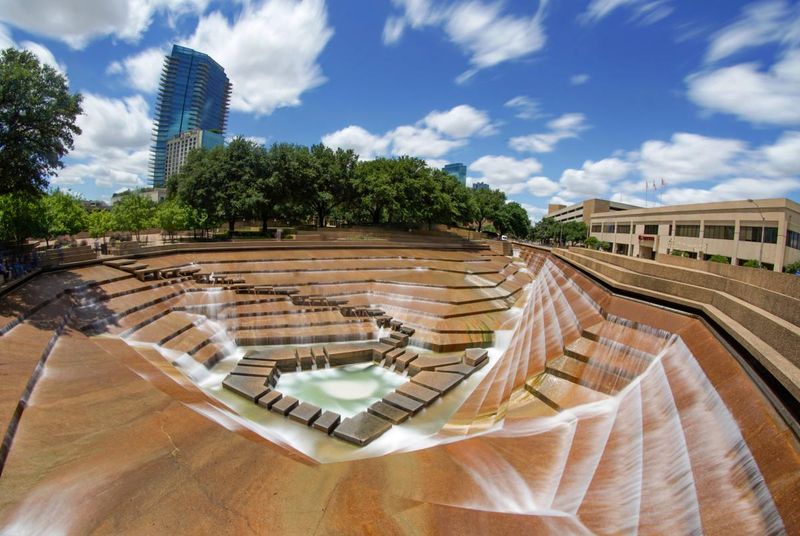
Picture this: a futuristic city where nobody lives past thirty, and you need a seriously dramatic backdrop to sell that dystopian vibe. Director Michael Anderson found it in downtown Fort Worth at the Water Gardens, a brutalist masterpiece that looks like it belongs on another planet. The 1976 sci-fi film used these concrete terraces and cascading pools to represent the year 2274, and honestly, it still feels pretty otherworldly today.
Philip Johnson designed this urban park in 1974, and it quickly became one of Fort Worth’s most recognizable landmarks. The active pool features water tumbling down massive steps, creating a thunderous roar that drowns out city noise. You can actually walk down into the pools on designated paths, getting up close to the rushing water just like Michael York did while running for his life in the movie.
The terraced pool offers a quieter experience with its stepped fountains, while the aerating pool shoots water forty feet into the air. All three pools create different moods and sounds, which is exactly why Hollywood came calling. The stark concrete geometry and dramatic water features made the perfect stand-in for a future society.
Visiting today feels like stepping onto a movie set that never got torn down. The gardens sit right in the middle of downtown, free to explore any time you want. Bring a change of clothes in summer because the temptation to cool off in the wading areas is real.
The best time to visit is early morning or late afternoon when the light hits the concrete at interesting angles.
Pro tip: the gardens underwent major renovations after a tragic accident in 2004, so they’re safer now with improved railings and warning signs. Still, watch your step on those wet concrete surfaces. This place proves that sometimes the future is hiding right in your own backyard.
2. Smithville – Hope Floats
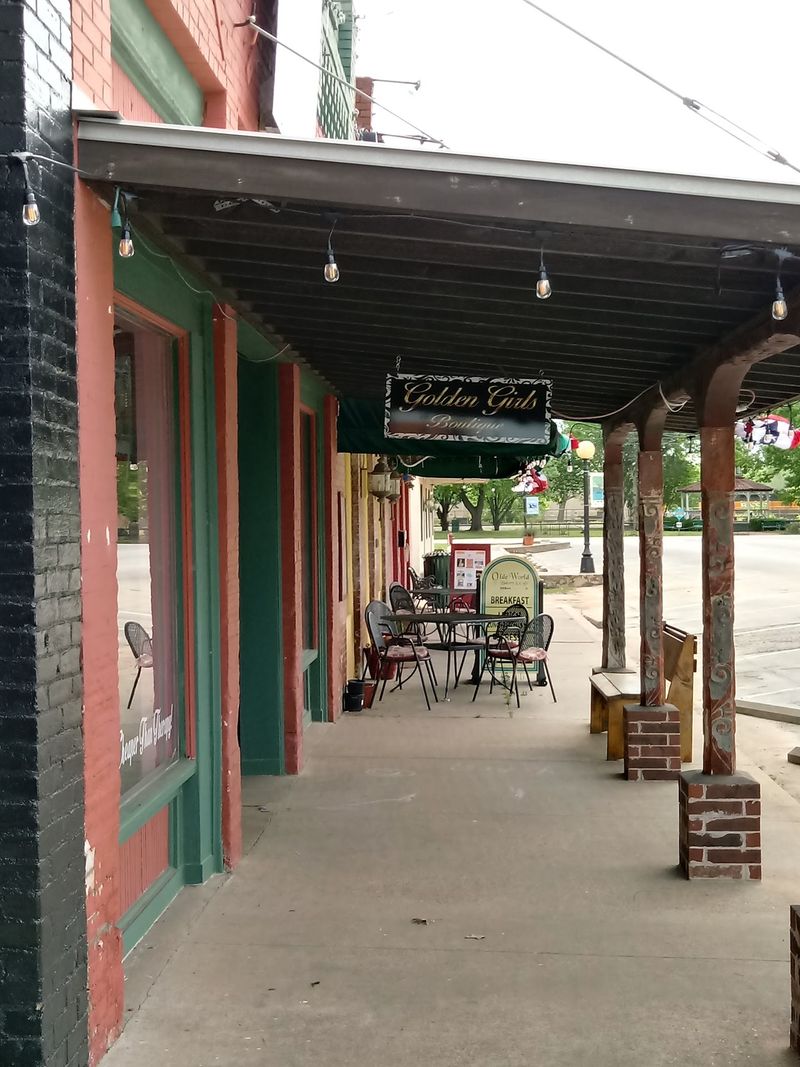
Sandra Bullock returned to her Texas roots for this 1998 tearjerker, and the production team picked Smithville as the perfect stand-in for the fictional town of Smithville (keeping it simple, apparently). About forty miles east of Austin, this tiny community got its fifteen minutes of fame when Bullock’s character came home to heal a broken heart. The whole town became a movie set, and locals still talk about it like it happened yesterday.
Main Street got the full Hollywood treatment, with crews transforming storefronts to fit the movie’s aesthetic. The old Smithville Railroad Depot appears in several scenes, as does the iconic water tower that’s been a landmark since 1895. You can walk the same sidewalks where Bullock filmed, pop into some of the same shops, and grab lunch at spots that fed the cast and crew.
The famous house where most of the movie takes place sits on a residential street, and while it’s privately owned (so don’t go knocking), you can drive by and snap a photo from the curb. Fans of the film make pilgrimages here regularly, treating Smithville like a shrine to second chances and new beginnings. The town embraces its movie history without going overboard, which keeps things authentic.
Beyond the movie connections, Smithville offers genuine small-town Texas charm. The Colorado River runs nearby, providing opportunities for kayaking and fishing. Buescher State Park sits just outside town if you want to extend your visit with some hiking.
Downtown has antique stores, a few good restaurants, and that unhurried pace that makes you understand why Bullock’s character found peace here.
Visit during spring when the wildflowers bloom, or in fall when the heat backs off. The town doesn’t have a ton of hotels, so plan accordingly. Bring your camera because the historic buildings and tree-lined streets photograph beautifully, movie fan or not.
3. Swantner Park (Corpus Christi) – Selena
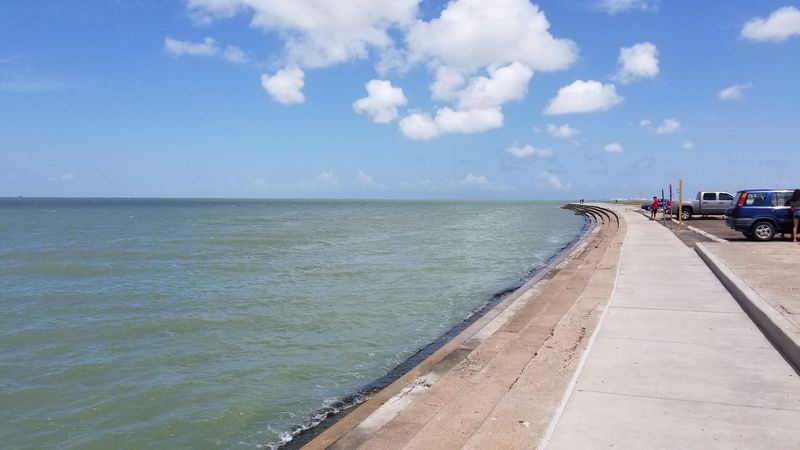
Before she became the Queen of Tejano music, Selena Quintanilla was just a Corpus Christi girl with a dream. The 1997 biopic starring Jennifer Lopez captured her rise to stardom, and several scenes were filmed right in her hometown. Swantner Park served as the location for a pivotal concert scene, bringing the movie back to where Selena actually performed throughout her career.
The park sits in a working-class neighborhood on the city’s west side, the kind of place where local bands and community events happen regularly. It’s not fancy or touristy, which makes it feel more authentic to Selena’s story. She performed at venues like this throughout South Texas, building her fanbase one small show at a time before hitting the big stages.
When you visit, you’re standing where J.Lo stood while portraying one of Texas’s most beloved musical icons. The park has a stage area where local performances still happen, keeping that live music tradition alive. Corpus Christi takes its Selena heritage seriously, and while Swantner Park isn’t the main attraction on the Selena trail, it represents the grassroots beginning of her journey.
The real pilgrimage spot is the Selena Museum on Leopard Street, run by her family and packed with costumes, awards, and personal items. But movie location hunters appreciate Swantner Park for its role in telling her story on screen. It’s a regular neighborhood park with playground equipment, picnic tables, and basketball courts, nothing fancy.
Combine your visit with other Selena sites around Corpus: her grave at Seaside Memorial Park, the Mirador de la Flor statue on the seawall, and Molina’s Restaurant where the family used to eat. The city has embraced her legacy in beautiful ways. Spring and fall offer the best weather for exploring, though die-hard fans make the trip year-round.
Bring flowers if you visit her memorial, that’s what locals do.
4. The Royal Theater (Archer City) – The Last Picture Show
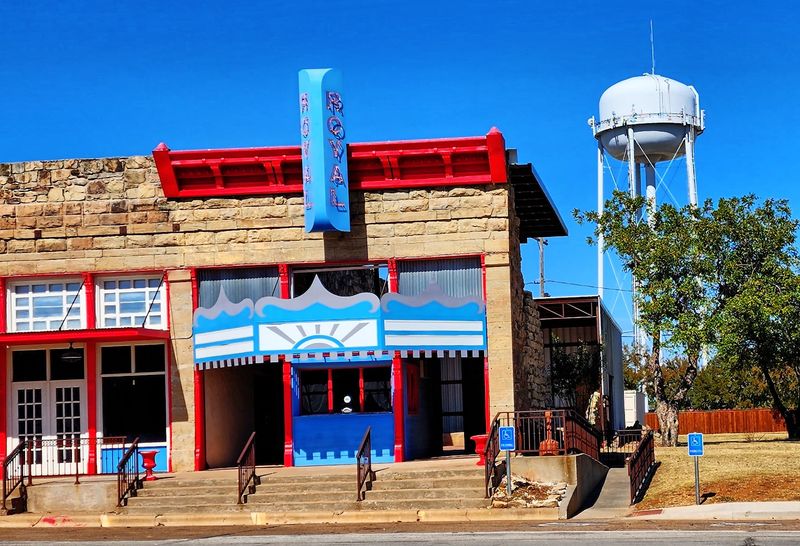
Larry McMurtry grew up in Archer City, and when he wrote his novel about a dying West Texas town, he based it on his hometown. Director Peter Bogdanovich brought the story to screen in 1971, filming in the actual locations McMurtry described. The Royal Theater, which had already closed by then, became the titular picture show, representing the end of an era in small-town America.
McMurtry later bought the theater and turned it into part of his massive used bookstore empire. For years, Booked Up occupied multiple buildings in downtown Archer City, making this tiny town (population under 2,000) a destination for book lovers worldwide. The Royal still stands on the main square, looking much like it did in the movie, a monument to both cinema and literature.
Walking around Archer City feels like time traveling. The town hasn’t changed much since the 1950s setting of the film, which is both charming and a little melancholy. You can spot other filming locations around the square, including the pool hall and various storefronts.
Everything sits within a few blocks, making it easy to do a complete Last Picture Show tour on foot.
McMurtry passed away in 2021, and his bookstore has since downsized significantly, but the town still attracts fans of his work and the film. The Royal Theater building remains, though it’s not always open to the public. The whole town serves as a living museum to a certain kind of Texas that’s mostly disappeared, preserved partly by accident and partly by McMurtry’s literary legacy.
Archer City sits about two hours northwest of Fort Worth, way out in ranch country where the land flattens and the sky dominates. Bring cash because some local spots don’t take cards. Check ahead on bookstore hours if that’s part of your plan.
The best time to visit is during the cooler months when you can comfortably walk around town. It’s quiet, remote, and exactly the kind of place that inspired great American literature and film.
5. Granger – True Grit
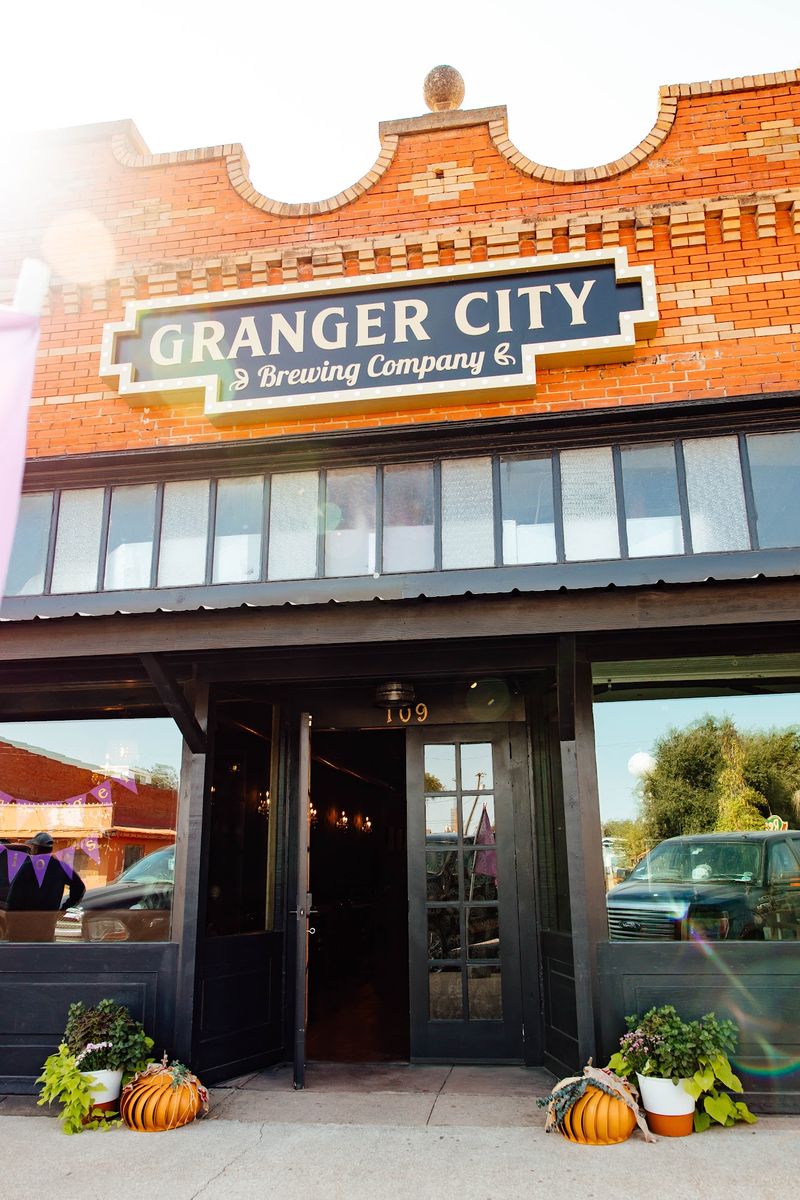
When the Coen Brothers decided to remake the John Wayne classic in 2010, they needed a town that could pass for 1870s Arkansas. They found it in Granger, Texas, a tiny community northeast of Austin that still had the bones of an Old West settlement. The production transformed downtown into Fort Smith, building false fronts and dirt streets that made Granger look like it had time-traveled 140 years.
Jeff Bridges, Matt Damon, and young Hailee Steinfeld rode horses down what’s normally a paved street, filming scenes that would earn the movie ten Oscar nominations. The Coen Brothers are notorious perfectionists, and they chose Granger because its historic buildings required minimal modification. Some structures date back to the late 1800s, giving the film authentic period architecture without relying entirely on movie magic.
Today, you can walk the same streets and recognize buildings from the movie, though the false fronts and hitching posts are long gone. Granger hasn’t tried to capitalize on its Hollywood moment with tacky tourist traps, which actually makes visiting more interesting. You get to experience a genuine small Texas town that happens to have hosted a major film production, not a theme park version of one.
The town sits in Williamson County farm country, surrounded by fields and ranch land. Downtown consists of just a few blocks, but those blocks pack in some beautiful 19th-century architecture. The old bank building, general store facades, and commercial structures tell the story of Texas’s early days, when cotton was king and railroads determined which towns survived.
Granger doesn’t have much in the way of tourist infrastructure, so plan accordingly. Bring snacks and water. The nearby city of Taylor (famous for barbecue) sits just ten minutes away if you need amenities.
Visit in spring when wildflowers blanket the surrounding countryside, or in fall when temperatures drop. Take photos of the historic buildings and imagine Rooster Cogburn riding past, one eye squinting, ready for trouble.
6. Gruene Hall (Gruene) – Michael
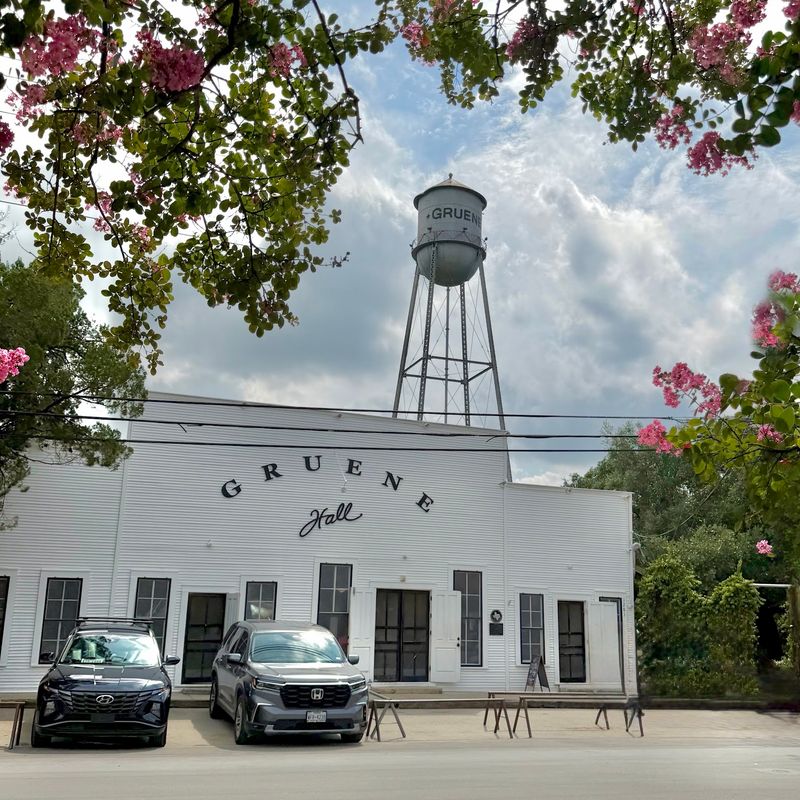
Texas’s oldest continually operating dance hall got its Hollywood moment in 1996 when John Travolta played an angel in the movie Michael. Gruene Hall, built in 1878, provided the perfect setting for a honky-tonk scene, complete with its weathered wood floors, tin ceiling, and walls covered in band posters and memorabilia. The place looks exactly like you’d imagine a classic Texas dance hall should look, because it invented the template.
Travolta’s character dances with Andie MacDowell in a scene that captures the hall’s authentic atmosphere. The production didn’t need to dress up Gruene Hall much, it’s been accumulating character for nearly 150 years. The building has hosted everyone from Willie Nelson to George Strait, and walking through the doors feels like entering a time capsule of Texas music history.
Located in the historic town of Gruene (pronounced “Green”), the hall anchors a small district of preserved 19th-century buildings along the Guadalupe River. The town was a thriving cotton center until the boll weevil and the Great Depression shut everything down. Instead of being demolished, the buildings sat mostly abandoned for decades, accidentally preserving a piece of old Texas until restoration efforts began in the 1970s.
Today, Gruene Hall books live music almost every night, maintaining its reputation as a premier venue for Texas and country artists. The dance floor still slopes toward the stage, worn smooth by generations of boots. The bar serves cold beer in bottles and cans, nothing fancy.
Screen doors stay open in good weather, letting breezes flow through while the music plays.
Visit on a weekend night when a band is playing to experience the hall as it’s meant to be experienced. The schedule gets posted online, featuring both legendary acts and up-and-comers. Arrive early because it fills up fast.
Gruene sits just north of New Braunfels, making it easy to combine with tubing on the Guadalupe or exploring nearby San Antonio. The surrounding historic district has antique shops, restaurants, and the Gristmill River Restaurant built into an old cotton gin. Come for the movie location, stay for the music and the magic.
7. Marfa – Giant & No Country for Old Men
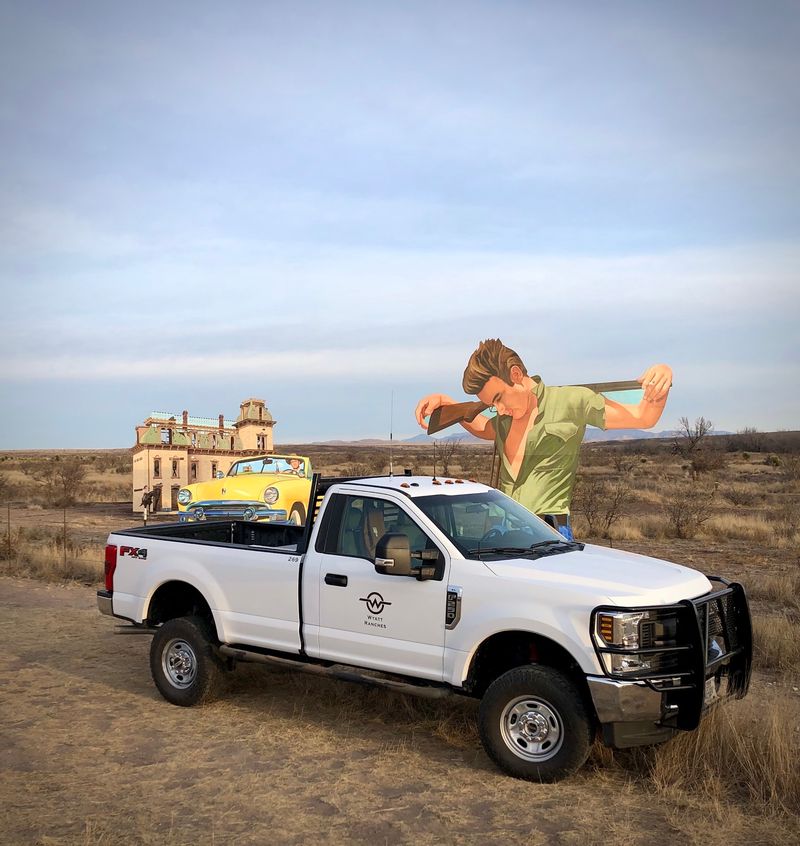
Way out in the Trans-Pecos region, where Texas starts looking more like the moon than the movies, sits Marfa. This tiny town (population around 1,700) has punched way above its weight in Hollywood history. Giant, the 1956 epic starring Rock Hudson, Elizabeth Taylor, and James Dean in his final role, put Marfa on the map.
The fictional Reata Ranch scenes were filmed on the surrounding ranches, with the mansion facade built specifically for the movie.
That facade still stands on private property outside town, weathered but recognizable. Dean, Hudson, and Taylor spent months in Marfa during production, and locals still share stories passed down from grandparents who met the stars. The movie captured the vast emptiness and harsh beauty of West Texas in a way that made the landscape itself a character, establishing Marfa as a go-to location for films needing that particular brand of desolation.
Fast forward fifty years, and the Coen Brothers returned to Marfa for No Country for Old Men. The 2007 thriller used the town and surrounding desert to create an atmosphere of isolation and menace. Javier Bardem’s terrifying hitman stalked these streets and highways, and the landscape’s indifference to human drama became central to the film’s themes.
The Coen Brothers understood what Giant proved decades earlier: Marfa looks like nowhere else.
Between its two major Hollywood moments, Marfa transformed into an unlikely art destination. Minimalist artist Donald Judd moved here in the 1970s, establishing permanent installations that attract art lovers from around the world. The town now hosts galleries, trendy hotels, and farm-to-table restaurants, creating a surreal collision of cowboy culture and contemporary art.
It’s the kind of place where ranchers and artists share the same coffee shop.
The drive to Marfa is part of the experience, hours of empty highway through landscape that hasn’t changed much since Giant filmed. Visit the Chinati Foundation to see Judd’s installations, catch a movie at the historic Presidio Theater, and drive out to the Marfa Lights viewing area at night. Book accommodations well in advance because options are limited.
Spring and fall offer the best weather, though summer nights cool down nicely. Marfa rewards visitors who embrace its remoteness and contradictions.
8. Bastrop County Courthouse (Bastrop) – Bernie
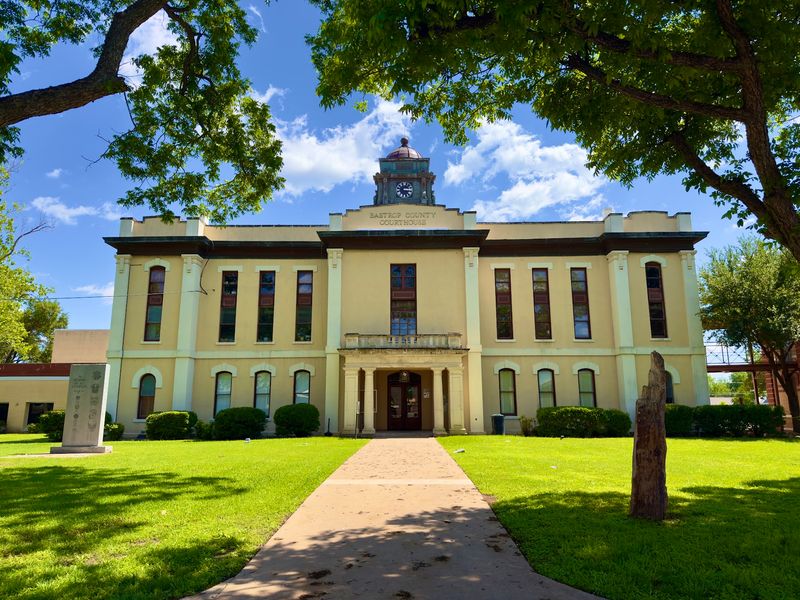
Richard Linklater loves filming in Texas, and his 2011 dark comedy Bernie showcased small-town East Texas in all its peculiar glory. The Bastrop County Courthouse, built in 1883, appears prominently in the film, standing in for the Carthage courthouse where the real Bernie Tiede faced trial for murder. Jack Black plays Bernie with surprising nuance, and Matthew McConaughey chews scenery as the prosecuting attorney, both performing against the backdrop of this beautiful historic building.
The courthouse sits in the center of Bastrop’s downtown square, a Second Empire-style structure with a distinctive mansard roof and clock tower. It’s been lovingly maintained and still functions as the working courthouse, so you can walk inside during business hours and see the historic courtrooms. The building survived numerous threats over the years, including a close call during the devastating 2011 Bastrop fires that destroyed thousands of acres around town.
Linklater shot extensively around Bastrop, using local businesses and recruiting townspeople as extras. The film captures the rhythms and characters of small-town Texas with affection and gentle mockery, never quite letting you forget that this bizarre true story could only happen in a place like this. The courthouse represents the center of community life, where justice and gossip intersect in equal measure.
Bastrop itself deserves more than a quick movie location photo stop. The town has a charming historic district with antique stores, local restaurants, and beautiful old homes. It sits along the Colorado River, offering opportunities for kayaking and fishing.
Bastrop State Park, recovering nicely from the 2011 fires, provides hiking trails through the unique Lost Pines ecosystem, a forest of loblolly pines isolated from the main East Texas piney woods.
The downtown square makes for pleasant walking, with the courthouse as the centerpiece. Several local spots serve good food, and the town has maintained its historic character without becoming overly touristy. Visit in spring or fall when the weather cooperates.
If you’re a Linklater completist, you can also hunt down other Austin-area locations from his films, though Bernie captures a different, more rural Texas than his Austin-set movies. The courthouse stands as a reminder that every small town has its stories, and sometimes those stories are strange enough for Hollywood.
9. Texas Chain Saw Massacre Locations (Round Rock, Leander & Kingsland) – The Texas Chain Saw Massacre
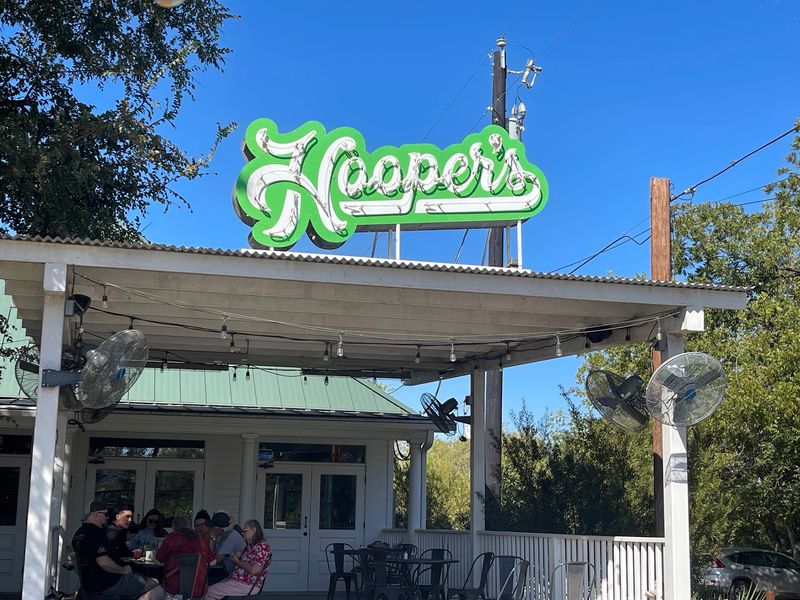
Tobe Hooper’s 1974 horror masterpiece traumatized a generation and established Texas as the go-to location for terrifying cinema. The film shot on a shoestring budget around the Austin area, using real locations that added to the movie’s documentary-style realism. The infamous house where Leatherface and his cannibal family lived originally sat in Round Rock, looking appropriately creepy without any Hollywood enhancement.
That house has had quite a journey. After the film wrapped, it sat abandoned for years, becoming a pilgrimage site for horror fans despite being in rough shape. Eventually, it was moved to Kingsland in the Texas Hill Country, where it now operates as a restaurant and horror attraction.
You can eat barbecue in Leatherface’s dining room, which feels either wonderfully twisted or deeply wrong, depending on your perspective.
The gas station where the characters first encounter the hitchhiker (and should have immediately turned around) still stands in Bastrop, though it’s been renovated and no longer looks quite as ominous. Other locations around Leander and the surrounding countryside appear in the film, though some are on private property. The landscape itself, all that flat Texas scrubland and isolated farmhouses, creates as much dread as any specific location.
What made the film so effective was its use of real Texas heat, dust, and decay. The cast and crew shot during a brutal summer, and that misery translates on screen. The locations weren’t dressed up to look scary, they just were scary, embodying a certain kind of rural isolation that still exists in parts of Texas.
Hooper understood that sometimes the most terrifying thing is being far from help when things go wrong.
Visiting these locations requires some planning. The house-turned-restaurant in Kingsland embraces its horror history with tours and events. The gas station in Bastrop is privately owned but visible from the road.
Some filming locations sit on private land, so respect property boundaries. Die-hard fans make these pilgrimages regularly, treating the sites with the reverence usually reserved for historical landmarks.
October is obviously the most popular time to visit, with horror fans making it part of Halloween celebrations. The restaurant hosts special events around the film’s anniversary. Bring your camera and your courage.
Just remember: it’s only a movie. Probably.
10. San Elizario Plaza (San Elizario) – Fandango
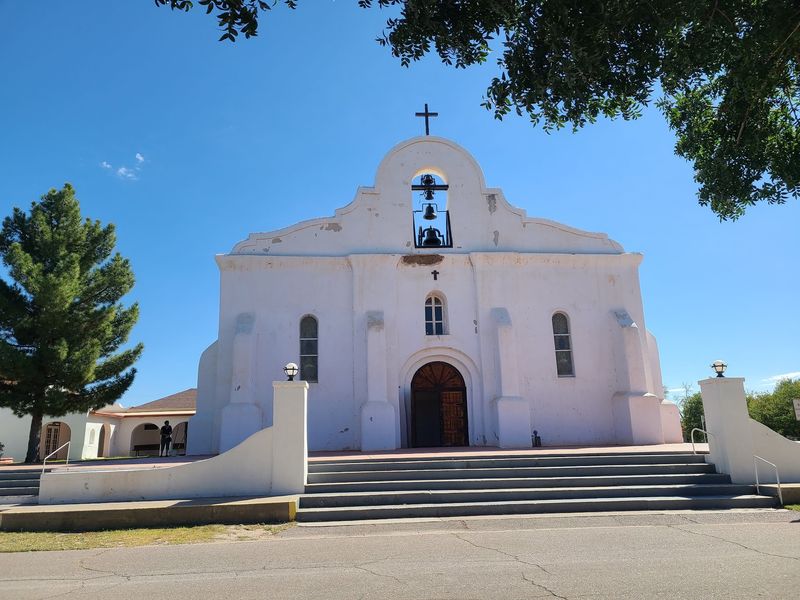
Most people have never heard of the 1985 film Fandango, but Kevin Costner fans and road trip movie enthusiasts consider it a cult classic. The film follows five college friends on one last adventure before real life kicks in, and they end up in the tiny border town of San Elizario, just outside El Paso. The historic plaza, with its Spanish colonial architecture and old mission church, provided the perfect setting for the film’s climactic scenes.
San Elizario is one of the oldest communities in Texas, established as a Spanish presidio in the 1700s. The plaza retains that old-world charm, with the San Elizario Chapel (originally built in the 1770s) anchoring the square. White-washed adobe buildings surround the plaza, creating a scene that feels more New Mexico than stereotypical Texas.
The chapel’s simple beauty and the plaza’s peaceful atmosphere made it ideal for Fandango’s mix of comedy and melancholy.
The town has worked hard to preserve its historic character and cultural heritage. Los Portales Museum and Info Center occupies a restored historic building on the plaza, offering exhibits about the area’s Spanish and Mexican roots. The chapel remains active, hosting services and community events.
Walking around the plaza, you can easily imagine Costner and his friends causing their particular brand of good-natured chaos.
San Elizario doesn’t get much tourist traffic compared to nearby El Paso, which means you can explore without crowds. The town celebrates its heritage with festivals and events throughout the year, including a popular farmers market. The surrounding area is rich with history, from the old jail to various historic buildings that tell the story of Texas’s Spanish colonial period.
Combine your visit with exploration of the other historic missions in the area, part of the El Camino Real trail. The drive from El Paso takes about thirty minutes through the Lower Valley. Visit in spring or fall when temperatures are reasonable, because summer in this part of Texas gets brutal.
Bring water and sunscreen. The plaza is small enough to explore in under an hour, but the peaceful atmosphere might convince you to linger. It’s a reminder that Texas history extends far beyond cowboys and oil wells, reaching back to Spanish colonial times when this land belonged to a different empire.