
Lighthouses usually stand out because of where they sit, but this Detroit landmark gets attention before the water even enters the picture. On Belle Isle, the William Livingstone Memorial Light rises in bright marble near the meeting point of the Detroit River and Lake St. Clair, giving visitors an unusual mix of elegant design, maritime history, and wide waterfront views.
The appeal comes from how different it looks from the typical Great Lakes lighthouse, with a polished shape and material that make it feel almost monumental. It still watches over passing ships while adding another layer to Belle Isle’s long story.
For anyone drawn to Michigan landmarks with history, architecture, and big-water scenery, this lighthouse deserves a closer look.
A White Marble Tower That Stops You Cold
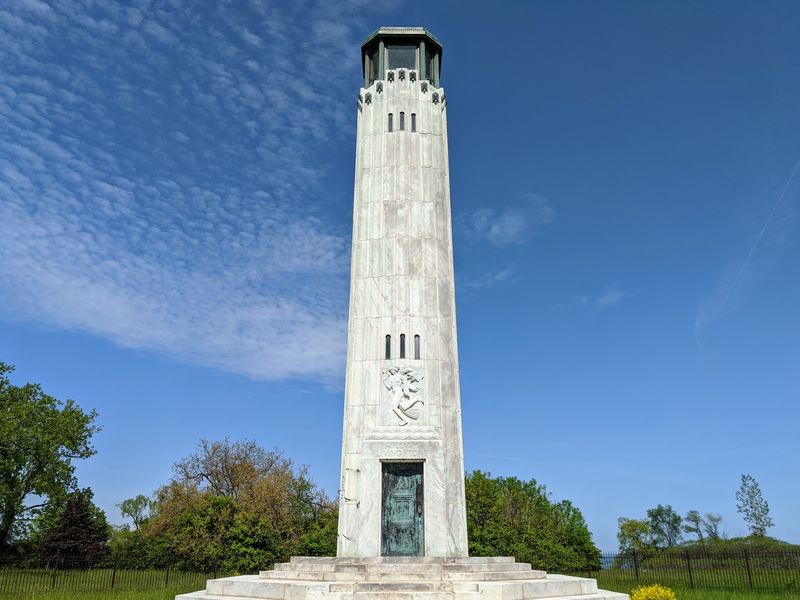
Some landmarks announce themselves from far away, and this one does it with color alone. Against the blues and greens of Belle Isle, the William Livingstone Memorial Light rises in pale marble, looking crisp, formal, and a little unexpected for a working waterway.
Most people connect lighthouses with rough stone, painted metal, or weathered wood, so a gleaming white tower instantly changes the mood.
The shape adds to that surprise. Its design has a clean, upright look with Art Deco character, which gives the lighthouse a polished city style instead of a rugged seaside one.
That makes sense in Detroit, where architecture and industry share space with river views and long stretches of parkland.
You cannot go inside, and the fence keeps you from getting very close, but the visual impact still lands. In fact, the slight distance can make the structure look even more sculptural, almost like a monument placed carefully at the edge of the water.
From several angles, it appears less like a little harbor light and more like a piece of civic art.
If you are visiting for photos, early or late daylight works best because the marble catches changing light beautifully. Bright midday sun makes it pop, but lower light can pull out softer details in the stone and surrounding landscape.
Even on a casual walk, the tower gives you that rare moment when a familiar idea, the lighthouse, suddenly looks completely new.
That first sight is a big reason the place stands out. Belle Isle has many scenic corners, but very few stop you in your tracks the way this one can.
One glance tells you that this is not an ordinary riverfront marker.
Why Michigan’s Marble Lighthouse Is So Unusual
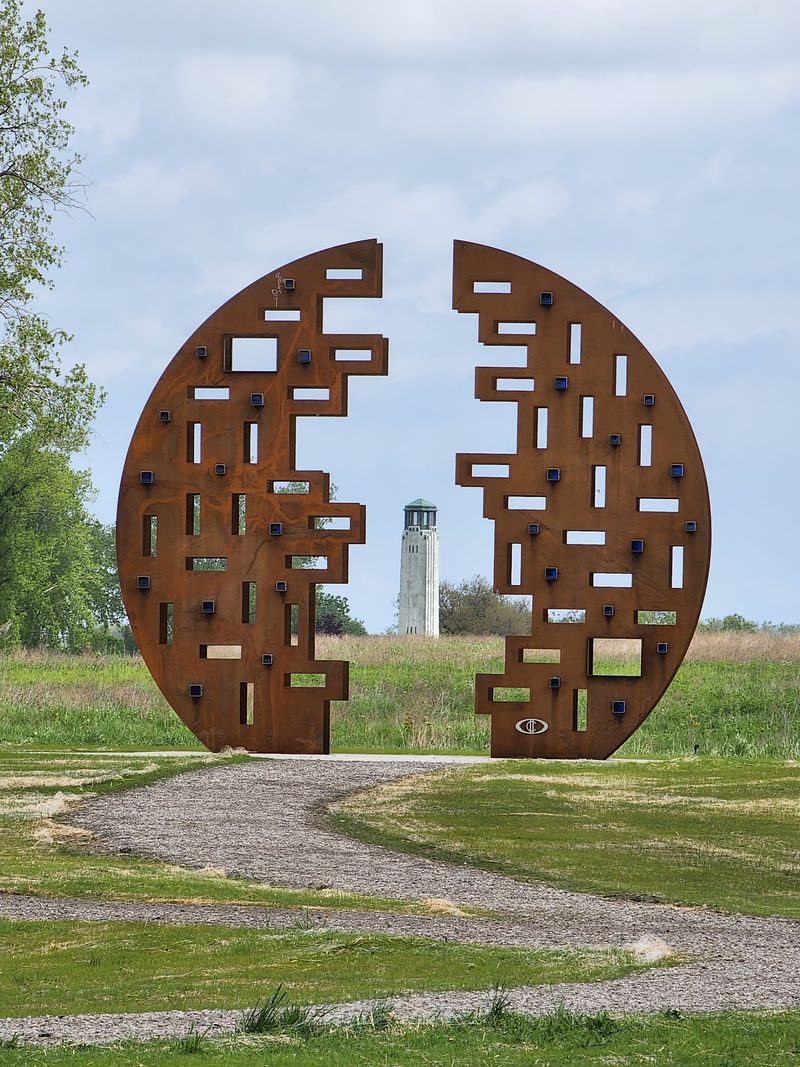
Plenty of lighthouses are old, handsome, or set in dramatic places. Very few can claim to be the only all-marble lighthouse in the country, and that single detail changes how you look at the William Livingstone Memorial Light.
It is not just guiding water traffic in a practical sense. It is also making a strong design statement in solid stone.
Marble carries a different feeling than brick or steel. People tend to connect it with memorials, government buildings, and sculpture, which gives the lighthouse a more ceremonial appearance than a typical beacon.
That fits the site well because it was built as a memorial, not only as a plain utility structure.
The material also sharpens every line. Instead of blending into the background, the smooth pale surface catches light and shadow in a way that makes the tower look precise and almost carved.
On a cloudy day, the marble can appear cool and soft. In bright sun, it looks cleaner and bolder, almost glowing against the river.
For anyone exploring Belle Isle, this uniqueness is part of the fun. You are not checking off another lighthouse that happens to sit near water.
You are seeing a rare piece of Great Lakes history where architecture, memorial purpose, and navigation all meet in one compact form.
Knowing that helps you appreciate the walk out there. Even if the gate is closed and access is limited, the point of the stop is not climbing stairs or touring rooms.
The real reward is seeing a one-of-a-kind structure in its proper setting, where freighters move past and the marble still does the job it was meant to do, with style that no ordinary lighthouse could match.
Freighters, Border Views, And Open Water Drama
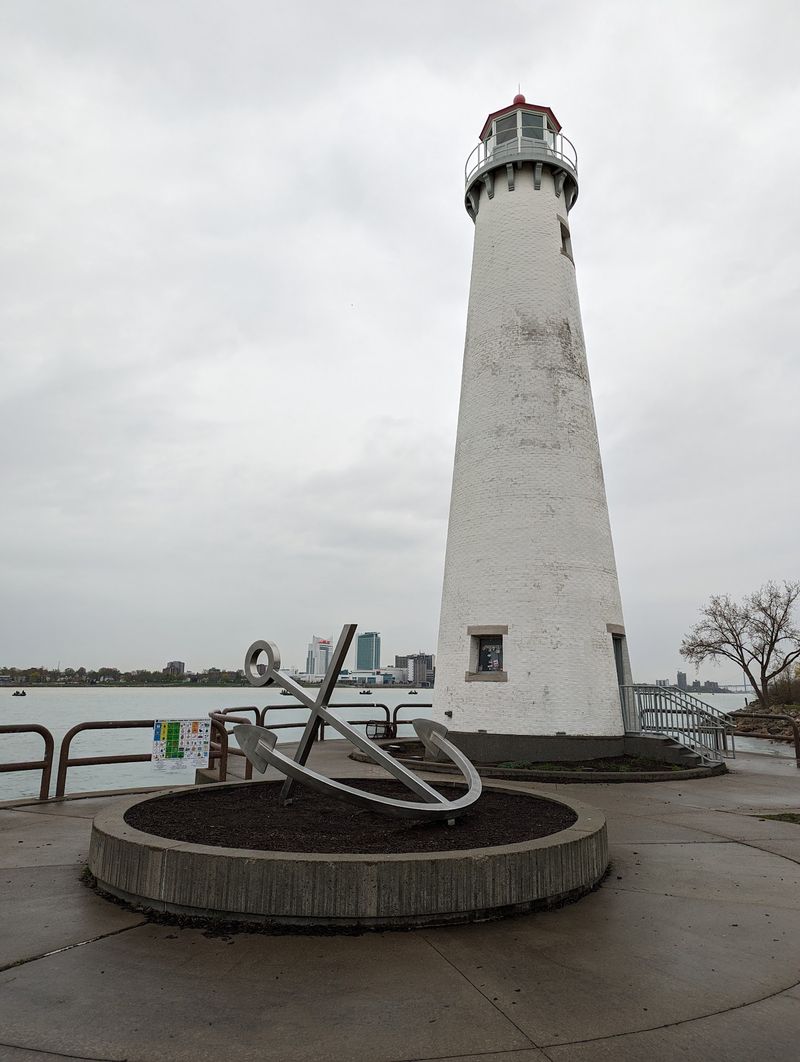
A lighthouse matters most when the water around it gives the story some motion. At William Livingstone Memorial Light, that motion often comes from freighters sliding through the channel, turning a quiet walk into a front-row seat for Great Lakes shipping.
Watching one of those huge ships move through the river is the kind of simple spectacle that does not need a tour guide.
The setting helps the whole scene feel bigger. From this edge of Belle Isle, you get broad views toward Lake St. Clair, the Detroit River, and the nearby Canadian shoreline.
That mix of city, international border, and working water creates a landscape that is active without feeling noisy.
Because the lighthouse stands at a strategic point, you can understand why a marker belongs here. This is not decoration dropped in a random park corner.
It sits where traffic, shoreline, and open water all interact, which gives the place a purpose you can actually see.
If a freighter happens to pass while you are there, take time to stop and watch the pace. Big ships move more slowly than many people expect, and that slow glide makes the scene more impressive.
The marble tower seems calm and still while the vessel inches along, and the contrast between them is part of the charm.
Bring binoculars if you enjoy small details on distant boats, but even without them, the view delivers plenty. You may catch shifting light on the water, changing weather over the lake, and a line of shore that reminds you Detroit is tied to much larger freshwater routes.
Few city landmarks combine architecture and active shipping in such an easy, watchable way.
The Walk Out on Belle Isle Is Part of the Reward
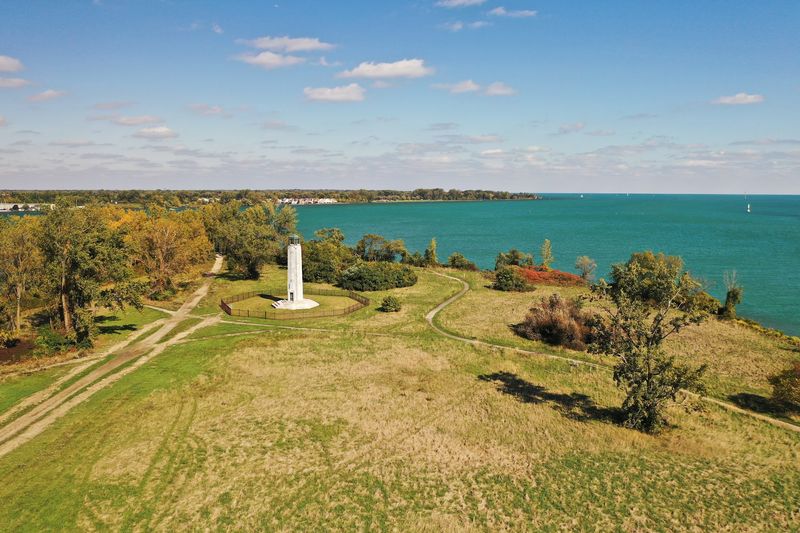
Not every landmark should be reached in seconds. One reason the William Livingstone Memorial Light works so well is that you earn the view with a short walk, and that gives the place a slower rhythm than a roadside stop.
Instead of jumping out of a car and leaving right away, you get a little build-up from the trail, the shoreline, and the widening water views.
Depending on where you start, the walk can feel like a quick outing or a longer loop through a quieter corner of Belle Isle. Many people prefer the waterfront route because it gives better scenery than a more direct approach.
Along the way, you can spot small inlets, plants near the path, and changing angles toward the river.
That approach matters because the lighthouse sits in a less crowded area than some of the island’s more famous hangouts. If you are looking for a calm stretch where runners, walkers, and photographers spread out instead of packing together, this end of the island usually gives you more breathing room.
Comfort matters here. Wear decent walking shoes, bring water on warm days, and expect little shade in some sections.
If you are heading out with kids, the route is manageable, but planning for sun and distance makes the outing smoother.
The best strategy is simple: treat the path and the lighthouse as one experience, not two separate things. Pause at the shoreline, look back toward the city, then keep moving until the marble tower comes into full view.
By the time you arrive, the lighthouse feels placed at the end of a small journey, which makes the sighting more satisfying than a fast stop ever could.
A Detroit Memorial With Real Local Weight
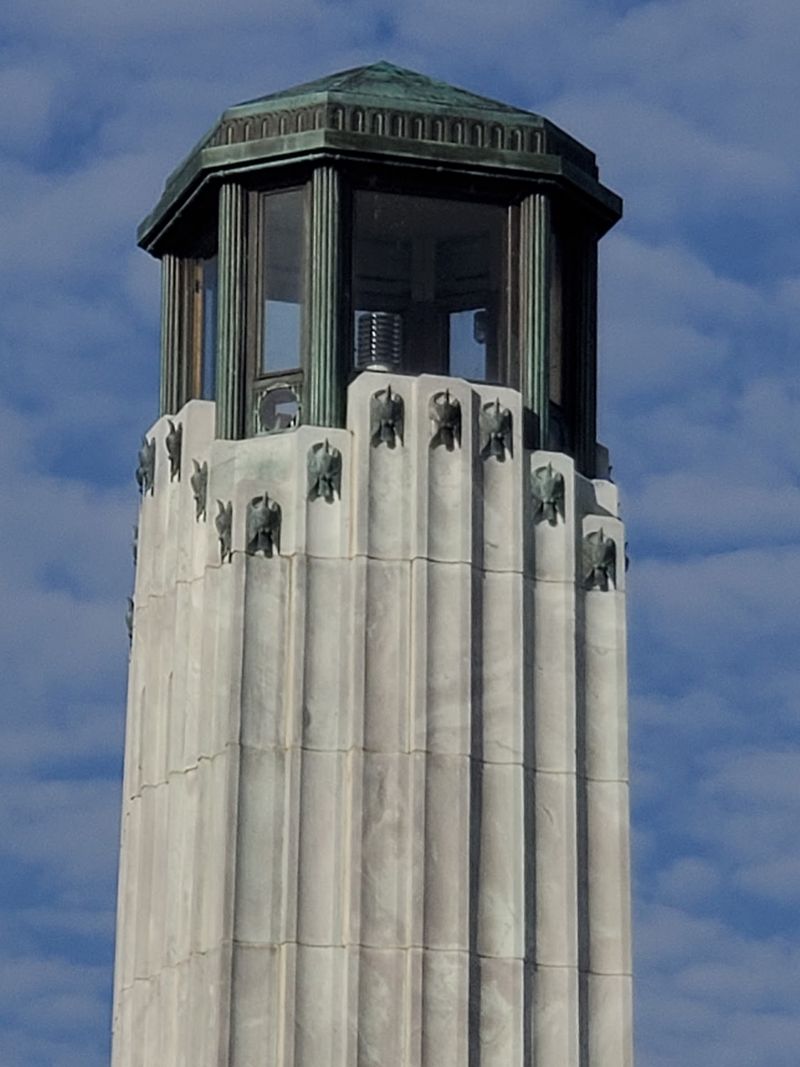
Names on landmarks can blur into the background, but here the memorial part truly matters. William Livingstone was an important figure in Detroit and Great Lakes shipping, so the lighthouse is tied to local history in a direct way rather than by a loose dedication.
That gives the structure extra meaning beyond its good looks.
Because it honors a person connected to regional water commerce, the site links Detroit’s civic story with the larger life of the lakes. The freighters passing nearby are not just scenic extras.
They echo the shipping world that helped shape the city and made channels, routes, and navigation such serious business in this region.
The design choice strengthens that message. Marble and memorial purpose belong together naturally, so the lighthouse reads almost like a public monument that also happens to serve on the waterfront.
That dual identity is a big part of why the place feels different from many other lights around the country.
Its age adds another layer. Built in 1929, the tower comes from a period when civic projects often aimed to be useful and beautiful at the same time.
You can sense that ambition in the careful shape, the refined material, and the formal setting out on Belle Isle.
If you enjoy history but do not want a heavy museum experience, this is a good kind of stop. You can learn the basic story before you go, then let the setting fill in the rest.
The river, the shipping lanes, and the memorial structure all explain one another. By the time you leave, the lighthouse is no longer just a pretty object at the water’s edge.
It becomes a compact lesson in how Detroit honors the people who helped build its connection to the Great Lakes.
Go Early, Bring Water, Expect the Fence
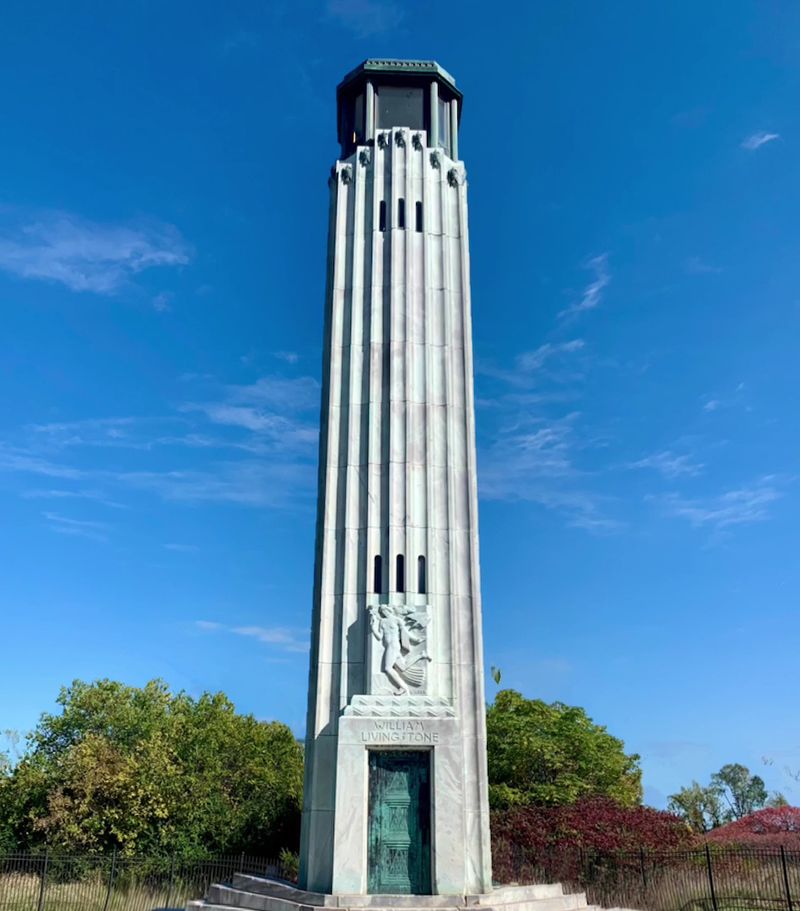
Here is the useful truth before you go: the William Livingstone Memorial Light is better as an outdoor viewing destination than as a traditional lighthouse tour. You cannot enter the structure, and the fenced perimeter means your experience is about seeing, walking, and taking in the surroundings rather than getting close to every detail.
Once you know that, the visit makes much more sense.
Timing can make a big difference. Early morning usually offers easier parking, lighter foot traffic, and softer light on the marble.
Later in the day, especially in warm weather, Belle Isle can get busier, and the open path to the lighthouse can feel hotter and less relaxed.
The site is generally open during park hours, and the lighthouse area is reached on foot from nearby parking. Distances can vary with the route you choose, so it helps to decide ahead of time whether you want the quickest walk or a longer, more scenic loop along the water.
If a path appears blocked or rerouted, turn back the same way rather than assuming every trail connects cleanly.
Bring water, especially in summer. A hat, sunscreen, and comfortable shoes are smart too, since the appeal here comes from being outside for a while instead of ducking into indoor spaces.
If you plan to photograph the lighthouse, a phone works fine, but a zoom lens can help because you may be shooting from farther back.
One more practical note matters for families: services are limited near the point, so do not expect bathrooms or snacks right at the lighthouse. Plan the basics first, then enjoy the walk.
With the right expectations, the outing feels easy, scenic, and pleasantly low-stress.
Why This Quiet Corner Lingers After the Crowds

Some Detroit attractions impress with noise, size, or nonstop activity. The William Livingstone Memorial Light takes the opposite route.
It wins you over with restraint, using distance, water, and a small but striking structure to create a stop that feels calm even when the rest of Belle Isle is busy.
Part of the appeal is that the lighthouse does not over-explain itself. You walk out, notice the marble, catch the shape against the sky, and start connecting the pieces on your own.
A memorial. A navigation aid.
A work of design. A Great Lakes landmark in a city park.
The layers reveal themselves slowly.
The quieter location helps. Compared with more crowded points on the island, this corner gives you room to look around instead of just moving with a crowd.
You hear wind, water, and distant traffic from ships or the city, but the mood stays measured. That slower pace makes the details easier to notice, from the line of the shore to the changing color of the river.
There is also a nice contrast built into the experience. Detroit is known for industry, engineering, and movement, yet here stands a polished marble lighthouse with a memorial spirit and graceful styling.
It fits the city better than it first appears because it brings together function, ambition, and design in one compact landmark.
If you are choosing one reason to seek it out, make it this combination of rarity and setting. Plenty of historic structures are interesting on paper.
Fewer hold up so well in person, with active freighters nearby and open water all around. The William Livingstone Memorial Light does not need flashy extras.
Its power comes from being unusual, well placed, and unmistakably tied to Detroit and the lakes that shaped it.