Texas doesn’t do anything small, especially when it comes to roadside attractions. From towering cowboys to oversized boots, the Lone Star State has mastered the art of going big or going home. These aren’t your average photo ops—they’re larger-than-life landmarks that celebrate Texas pride, quirky humor, and a whole lot of personality.
Whether you’re planning a road trip or just curious about what makes Texas so wonderfully weird, get ready to meet some seriously impressive giants.
1. Big Tex (Dallas)
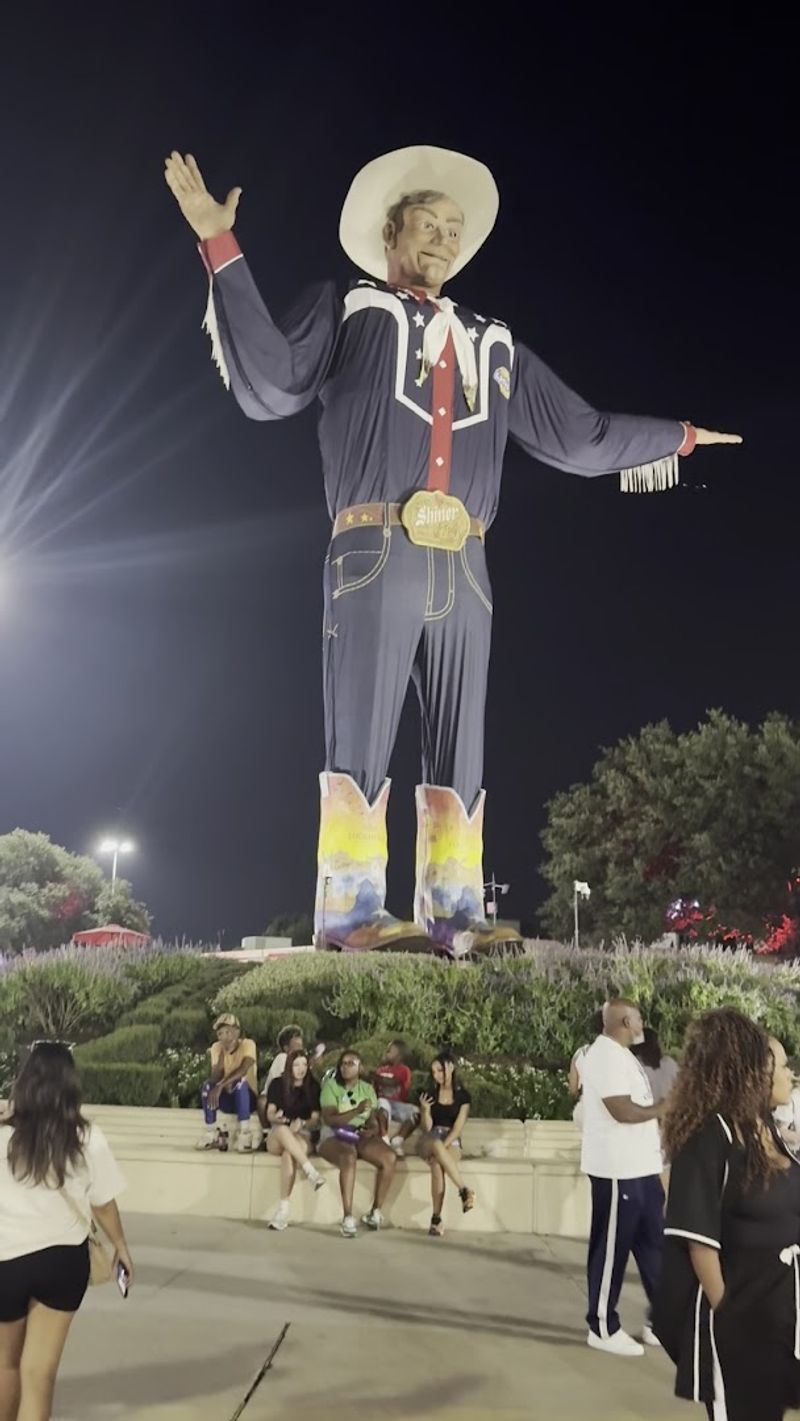
Standing tall at the State Fair of Texas since 1952, Big Tex has become more than just a statue—he’s a beloved symbol of everything Texan. At 55 feet high, this friendly giant greets millions of visitors each fall with a booming voice and a wave that makes you feel right at home. His massive cowboy hat alone measures 75 gallons, and his boots are size 70, making him impossible to miss from anywhere on the fairgrounds.
Big Tex has quite the story. Originally built as a Santa Claus for a small-town Christmas celebration, he got a serious makeover to become the cowboy icon we know today. He’s survived fires, renovations, and even a complete rebuild after a devastating electrical fire in 2012.
What makes him special isn’t just his size—it’s the tradition he represents. Families have been taking photos with Big Tex for generations, passing down the ritual from grandparents to grandkids. He’s witnessed countless first dates, marriage proposals, and bucket-list visits from people all over the world.
The fair runs every September and October, transforming Fair Park into a wonderland of fried foods, livestock shows, and carnival rides. Big Tex stands at the entrance like a guardian, his 30-foot arm extended in welcome. You can’t help but smile when you see him.
He’s goofy, he’s grand, and he’s 100% Texas.
Whether you’re a first-timer or a seasoned fair-goer, standing beneath this gentle giant is a rite of passage that never gets old.
2. World’s Largest Cowboy Boots (San Antonio)
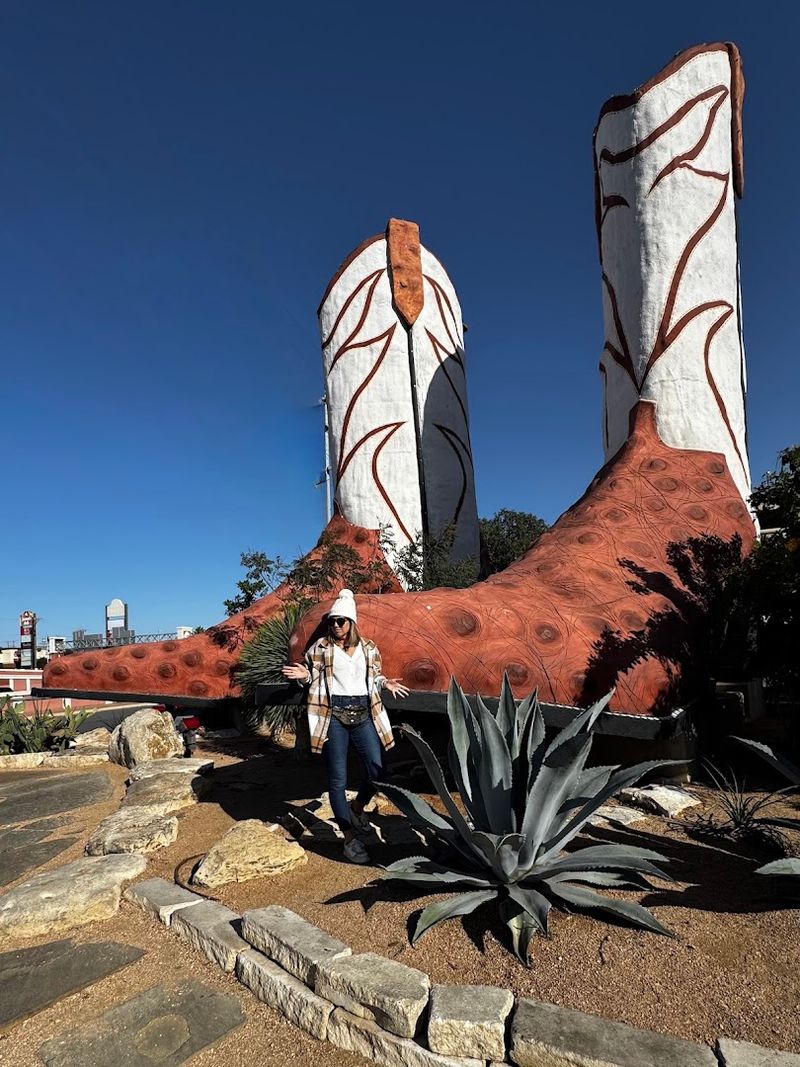
Parked outside a North Star Mall entrance in San Antonio, these colossal cowboy boots stand over 35 feet tall and weigh about 10,000 pounds each. They’re not just big—they’re ridiculously detailed, complete with stitching, leather texture, and that classic pointed toe that screams Texas style. Bob Wade, a Texas artist known for his oversized creations, crafted these beauties back in 1979 for a Washington, D.C. art exhibition before they found their permanent home in the Alamo City.
The boots have become one of San Antonio’s most photographed landmarks, and for good reason. They’re positioned perfectly for selfies, family portraits, and those classic “look how tiny I am” comparison shots. Kids love climbing on the base, and adults love the nostalgia they bring.
What’s fascinating is how these boots have traveled. After their debut in D.C., they spent time at various locations before settling in San Antonio in 1980. They’ve become such an iconic part of the city’s identity that locals use them as a meeting spot and navigation landmark.
The boots represent more than just Western kitsch—they’re a celebration of Texas culture and craftsmanship. Wade’s attention to detail makes them look like they could actually be worn by a giant rancher. The leather appearance is so convincing you might forget they’re made of fiberglass and steel.
Rain or shine, these boots stand proud, reminding everyone that in Texas, even footwear dreams big and refuses to apologize for it.
3. The Eiffel Tower with Cowboy Hat (Paris, TX)
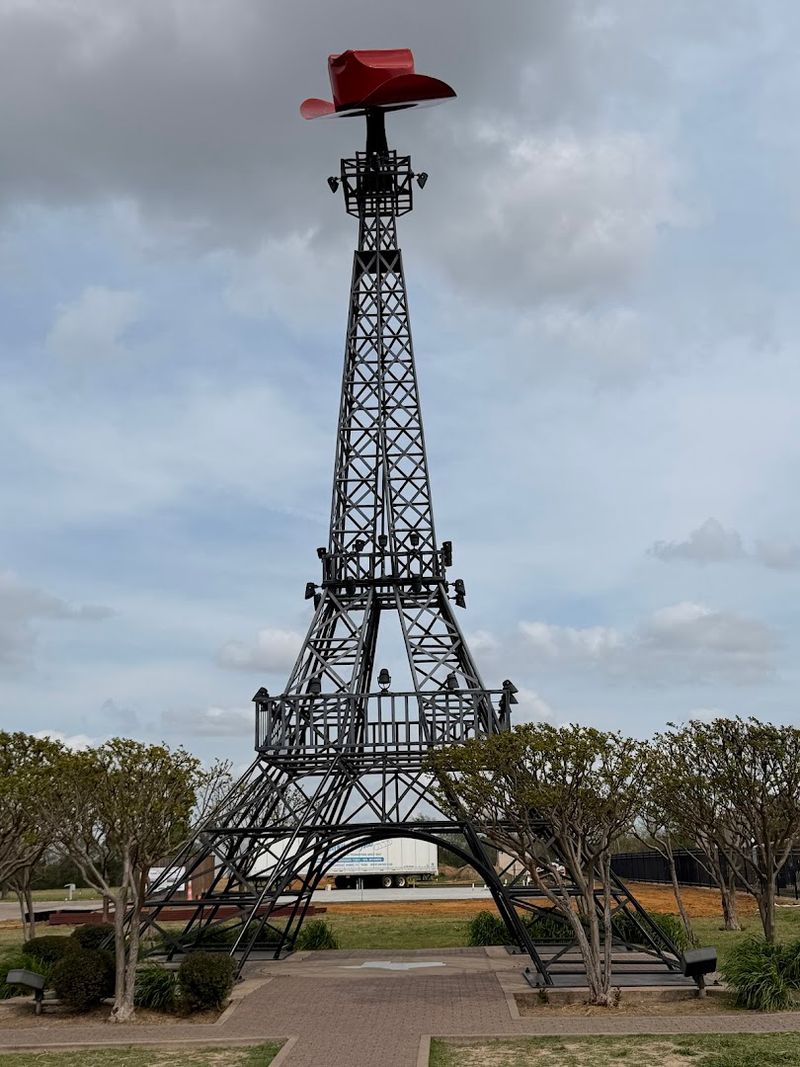
Only in Texas would you find the Eiffel Tower wearing a cowboy hat. Paris, Texas decided they weren’t going to let France have all the fun, so they built their own version—a 65-foot-tall red steel tower crowned with an enormous Stetson. The hat addition happened in 1998 after the town realized their tower needed something special to stand out from other Eiffel Tower replicas scattered across America.
The original tower was erected in 1993, but it was the hat that transformed it from a simple replica into a genuine Texas landmark. That red cowboy hat sitting on top is the perfect blend of French elegance and Texas swagger. It’s quirky, it’s bold, and it makes absolutely no sense—which is exactly why it works.
Located in Love Civic Center Park, the tower has become the heart of Paris, Texas. Locals gather here for events, concerts, and festivals throughout the year. The surrounding park offers walking trails, picnic areas, and plenty of space for kids to run around while parents snap photos of this wonderfully weird monument.
The tower lights up at night, creating a romantic atmosphere that’s surprisingly charming. Couples have gotten engaged here, tourists have made special detours just to see it, and the town has embraced its unique claim to fame. Sure, the original Eiffel Tower in France might be taller and more famous, but does it have a cowboy hat?
Didn’t think so.
This is Texas doing international landmarks its own way—bigger personality, better hat.
4. World’s Largest Pecan (Seguin)
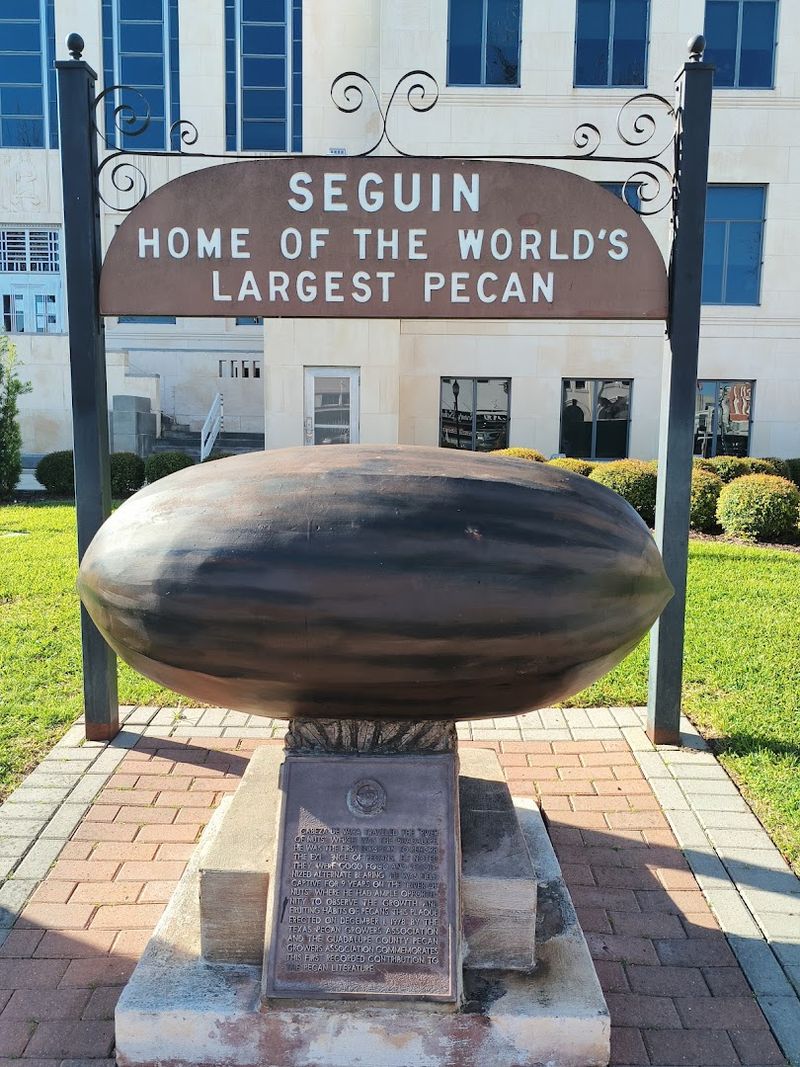
Seguin proudly claims the title of Pecan Capital of Texas, and they’ve got a 1,000-pound sculpture to prove it. This massive pecan sits downtown, celebrating the region’s rich agricultural history and the nut that helped put this town on the map. Built from concrete and metal, the sculpture captures every ridge and curve of an actual pecan, just scaled up to absolutely ridiculous proportions.
The pecan industry has been vital to Seguin since the late 1800s when pecan orchards began flourishing along the Guadalupe River. Today, the area produces millions of pounds of pecans annually, and this giant tribute serves as a constant reminder of that legacy. It’s functional art that tells a story about community, farming, and Texas pride.
What makes this attraction especially fun is its location on the courthouse lawn, where it’s easily accessible for visitors exploring downtown Seguin. The town hosts an annual Pecan Fest Heritage Days celebration each October, drawing thousands of people who come to enjoy pecan-themed foods, live music, and arts and crafts. During the festival, the giant pecan becomes the unofficial mascot and favorite photo backdrop.
Visitors often joke about the size of the squirrel it would take to carry this thing away. The sculpture has weathered decades of Texas heat, storms, and countless tourist visits without losing its charm. It’s simple, honest, and unapologetically specific to Seguin’s identity.
Not every town can claim a signature crop, and even fewer can say they built a monument to it.
This pecan proves that sometimes the best roadside attractions are the ones that celebrate local flavor—literally.
5. The Giant Sam Houston Statue (Huntsville)
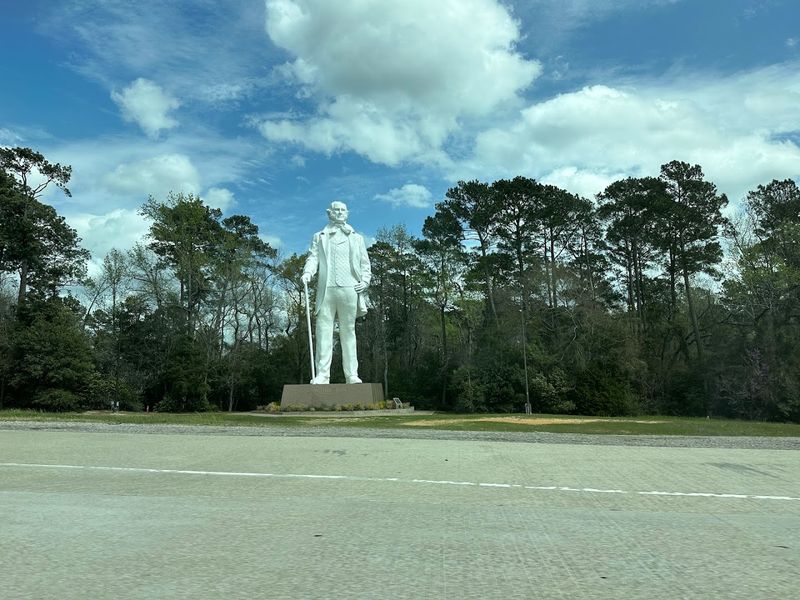
Visible from Interstate 45 near Huntsville, this 67-foot-tall tribute to Sam Houston commands attention like few other roadside attractions can. The statue depicts the Texas hero standing with his walking cane, gazing toward the horizon with the kind of determination that helped shape a state. Made of concrete and steel, it weighs a staggering 30 tons and has been greeting travelers since 1994.
Sam Houston was a larger-than-life figure even without the statue—military leader, governor, senator, and the man who led Texas to independence from Mexico. Huntsville was his adopted hometown, where he lived his final years and is now buried. The statue honors his legacy while also serving as a beacon for the Sam Houston Memorial Museum just down the road.
Artist David Adickes created this masterpiece, and he’s known for other giant presidential heads scattered across Texas. But this Sam Houston statue might be his most impressive work. The sheer scale makes you feel tiny, and the detail in Houston’s face conveys both strength and wisdom.
Drivers often pull over at the nearby visitor center just to get a closer look and snap some photos. The statue has become such an iconic landmark that locals use it for directions—”turn left after Big Sam” is a perfectly acceptable navigation instruction around here. At night, strategic lighting makes the statue glow against the dark sky, creating an almost ethereal presence.
Whether you’re a history buff or just appreciate oversized monuments, this tribute to Sam Houston delivers on every level.
It’s grand, it’s respectful, and it’s impossible to ignore.
6. World’s Largest Spur (Lampasas)
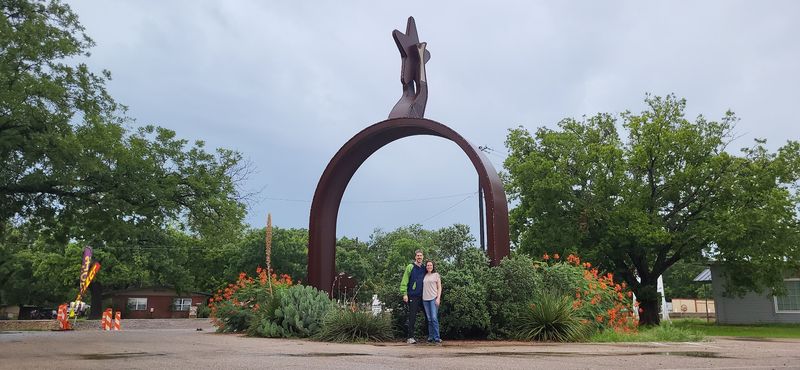
Lampasas doesn’t mess around when it comes to celebrating its ranching heritage. Their claim to fame is a gigantic spur sculpture that towers over visitors and pays homage to the cowboys who shaped this region. The spur features all the classic elements—the heel band, shank, and that distinctive rowel wheel—just magnified to proportions that would require a truly mythical horse to justify.
Spurs have been essential tools for cowboys since the earliest days of ranching, used to communicate with horses and maintain control during long cattle drives. Lampasas sits in the heart of Texas Hill Country, where ranching remains a way of life for many families. This monument connects modern visitors to that enduring tradition in a way that’s both educational and entertaining.
The sculpture’s location makes it perfect for a quick stop during a road trip through Central Texas. You’ll find it near downtown, where other historic buildings and local shops create a charming small-town atmosphere. The spur has become a popular backdrop for engagement photos, family portraits, and social media posts from travelers documenting their Texas adventures.
What’s clever about this attraction is how it takes something familiar and transforms it through scale. Everyone knows what a spur looks like, but seeing one this massive creates a sense of wonder and humor. Kids get excited imagining the giant cowboy who might wear it, while adults appreciate the craftsmanship and symbolism.
Lampasas may be a small town, but they’ve created a landmark that punches way above its weight.
It’s proof that you don’t need a huge budget or famous artist to make something memorable—just a good idea and genuine local pride.
7. The Giant Roadrunner (Fort Stockton)
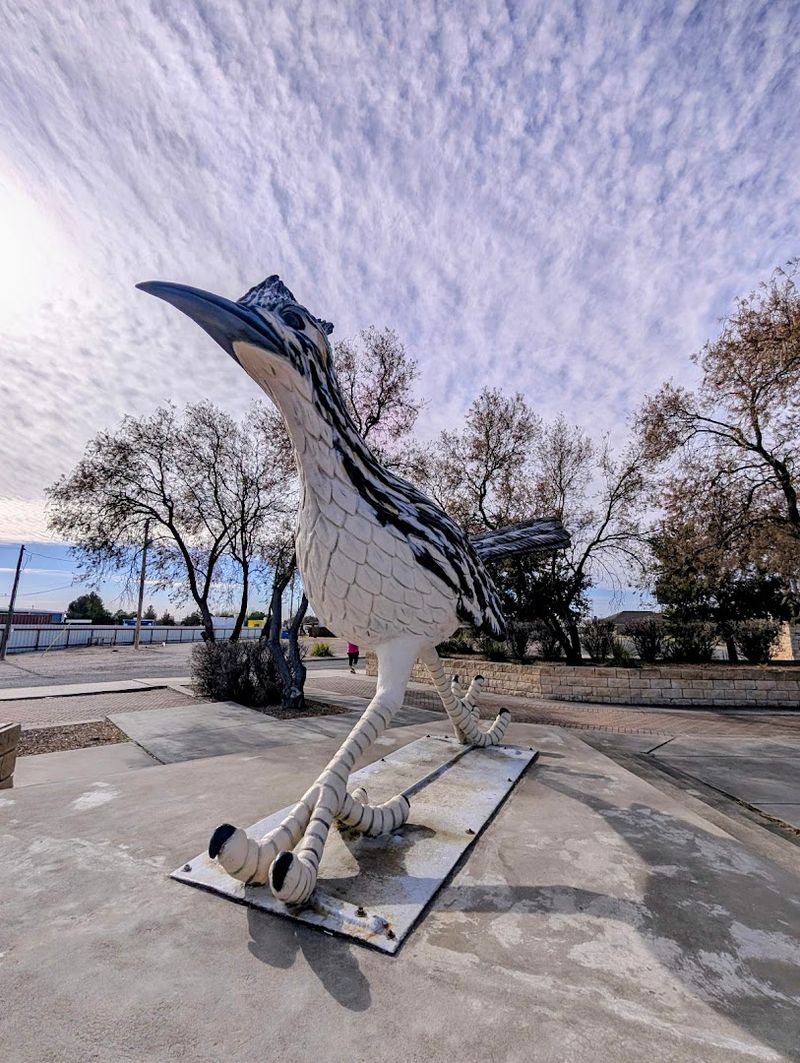
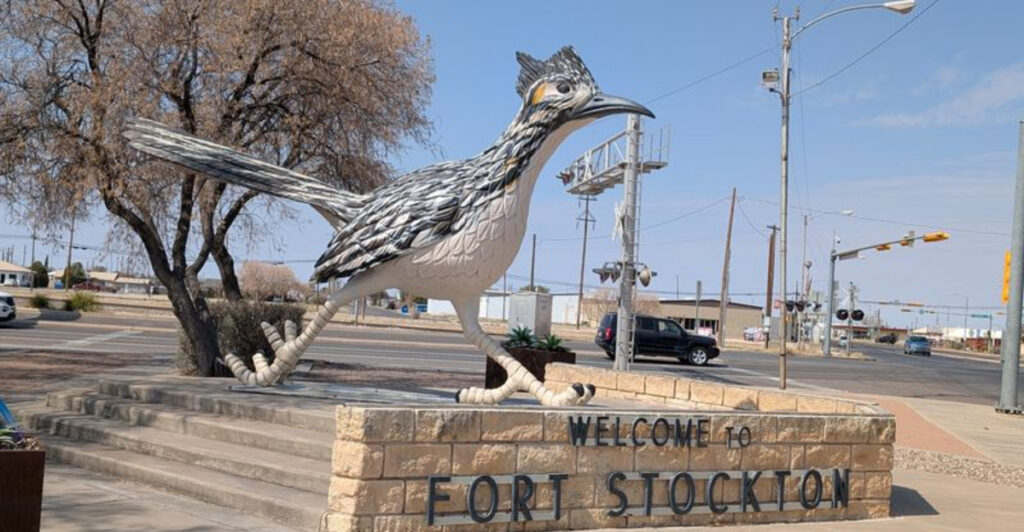
Fort Stockton’s Paisano Pete holds the title of world’s largest roadrunner, and this bird means business. Standing 11 feet tall and stretching 22 feet from beak to tail, Pete greets visitors with vibrant colors and a personality that matches the quirky desert town he calls home. Built in 1979, he’s become the unofficial mayor of Fort Stockton and the star of countless vacation photos.
Roadrunners are iconic birds of the Southwest, known for their speed and their ability to thrive in harsh desert conditions. The name “Paisano” comes from a Spanish term meaning “countryman” or “friend,” which perfectly captures the welcoming spirit of this West Texas community. Pete represents both the natural wildlife of the region and the independent, resilient character of the people who live here.
The statue sits prominently along I-10, making it an irresistible pit stop for travelers crossing the vast stretches of West Texas. Fort Stockton embraces Pete fully—you’ll see roadrunner imagery throughout town, from business logos to street signs. Local shops sell roadrunner souvenirs, and the town hosts events celebrating their famous feathered friend.
Pete’s paint job has been refreshed multiple times over the years, keeping his blues, purples, and tans bright and eye-catching. He’s positioned in a running stance, frozen mid-stride as if he’s about to sprint across the desert landscape. The statue has survived decades of intense sun, windstorms, and the occasional prank by creative teenagers.
For anyone driving through this part of Texas, Paisano Pete offers a welcome dose of whimsy and a reminder that even in remote areas, Texans find ways to celebrate what makes their corner of the state special.
8. World’s Largest Horseshoe (Marathon)
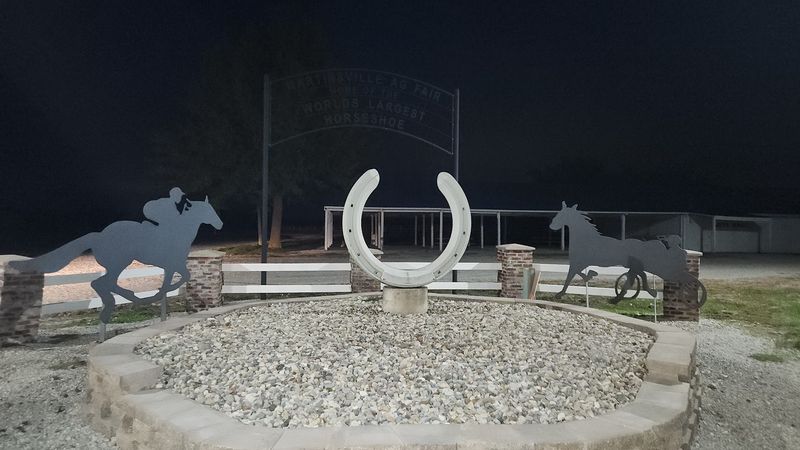
Marathon, Texas sits in the middle of nowhere—and that’s exactly its appeal. This tiny desert town in Big Bend country decided to mark its territory with the world’s largest horseshoe, a fitting tribute considering the area’s ranching roots and cowboy culture. The sculpture captures that classic U-shape we all recognize, complete with nail holes and weathered metal texture, just scaled up to dimensions that would fit a horse the size of a small building.
Horseshoes have been symbols of good luck for centuries, and ranchers in this region have relied on plenty of luck to survive the harsh desert conditions. Marathon itself was named by a sea captain who thought the landscape resembled Marathon, Greece. The town served as a vital railroad stop and ranching hub, and while its population has dwindled over the years, its spirit remains strong.
The horseshoe sits along Highway 90, offering travelers a perfect excuse to stretch their legs and snap some photos before continuing their journey to Big Bend National Park. Marathon has become a surprising destination for artists, writers, and adventurers seeking solitude and inspiration in the desert. The Gage Hotel, a beautifully restored historic property, anchors the tiny downtown and has helped put Marathon on the map for travelers seeking authentic West Texas experiences.
This oversized horseshoe might not be the flashiest roadside attraction in Texas, but it has a quiet dignity that matches its surroundings. There’s something almost poetic about finding this symbol of luck and perseverance in such a remote location. It reminds visitors that even in the emptiest corners of Texas, communities take pride in their identity and history.
The horseshoe stands as a monument to the ranchers, railroad workers, and dreamers who built lives in this beautiful, unforgiving landscape.