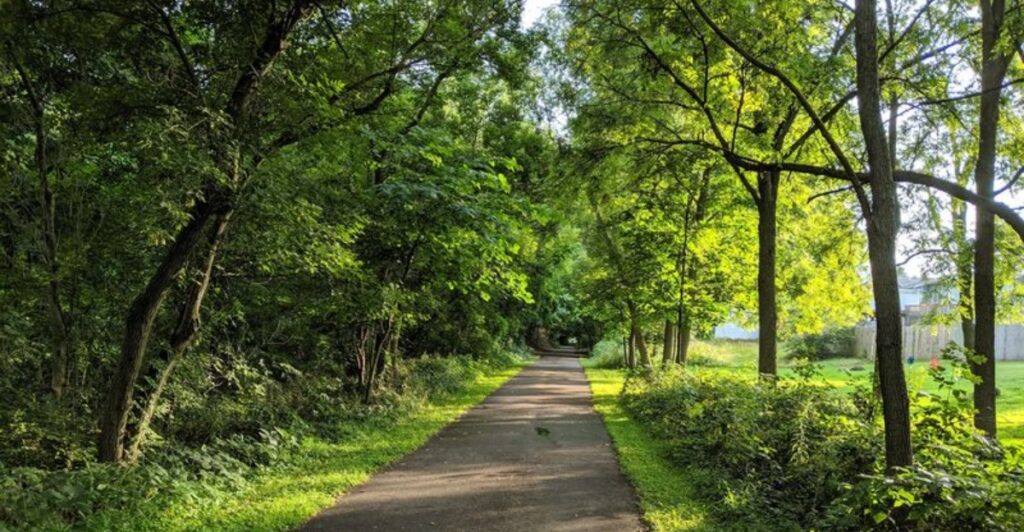
A long bike ride can change the whole shape of your day, and the Fred Meijer White Pine Trail gives you room to really go somewhere. This state park trail stretches for about 92 miles and links small towns, woods, river views, and quiet country spaces across five counties.
It matters because it gives Michigan riders a safe, car-free route for exercise, travel, and simple outdoor fun. If you have ever wanted one trail that can handle a quick spin or a full adventure, this is the kind of place that gets your attention fast.
Ninety-Two Miles That Actually Feel Like a Journey
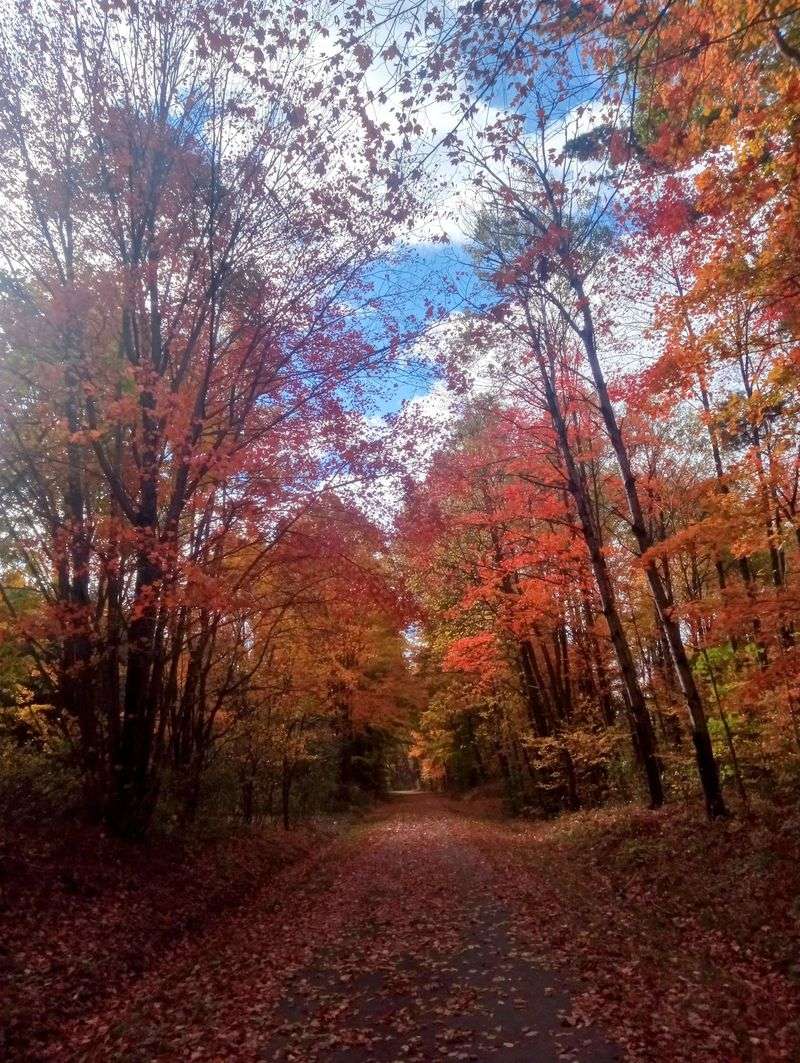
Big rides usually start with one simple thought: keep going. At the Fred Meijer White Pine Trail, that idea turns into a real adventure because the route is long enough to feel like a trip, not just a workout lap around town.
When you roll onto the path near Big Rapids, the scale of the trail becomes part of the thrill.
About 92 miles is a serious distance, yet the route is broken up in a way that makes it less intimidating. You can ride a short piece, turn it into a half-day outing, or plan a full-distance challenge over one or more days.
That flexibility is a big reason the trail stands out for casual riders and stronger cyclists alike.
Because it follows a rail corridor, the path has a steady, easy-to-follow shape. You are not constantly guessing where to turn, and you are not dealing with heavy traffic beside you for most of the ride.
That frees up your attention so you can notice the woods, bridges, open farmland, and changing sky instead of watching every passing car.
Length also changes your mindset. A trail this big invites preparation, pacing, and little goals along the way.
Maybe your target is the next town, the next shaded stretch, or one more bridge before a water break. Bit by bit, the miles build into a day that feels satisfying without needing fancy gear or expert skills.
If you are curious about long-distance trail riding in Michigan, this is the kind of route that makes the idea seem possible. It gives you space to test your legs, settle into a rhythm, and enjoy the rare pleasure of moving through a big slice of the state under your own power.
Five Counties, Five Different Moods
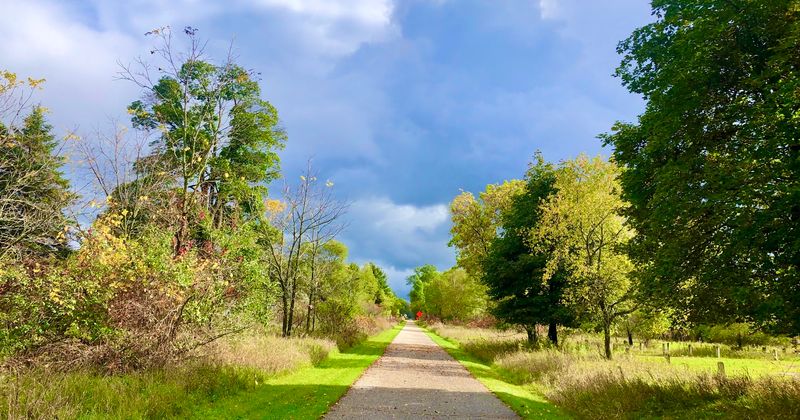
One of the smartest things about this trail is how often the scenery changes. Riding across five counties keeps the experience from turning flat or repetitive, even though the route itself is easy to follow.
Every stretch brings a slightly different mood, and that variety helps the miles pass in a fun, steady way.
Some sections feel shaded and tucked away, with trees forming a green tunnel over the path. Other parts open wide and let you see fields, road crossings, and big Michigan skies.
Then a town appears, offering a quick burst of activity before the trail settles down again into quieter country.
That mix matters for more than looks. Different settings give your brain little resets during a long ride.
A bridge can break up a straight stretch. A downtown segment can be a natural snack stop.
A wooded run can cool things off on a warm day and give your eyes a rest from bright sun.
Near Big Rapids, riders get a useful taste of the trail’s changing character. You can move from town edges to calmer natural spaces without needing to load the bike back onto a car.
For families or newer riders, that makes it easier to sample the route and learn what kind of section you enjoy most.
Five counties also mean five chances to notice local differences. Trail signs, nearby buildings, crossings, and rest areas do not look exactly the same from place to place.
The route holds together as one long state park trail, but it never acts like a copy-and-paste bike path. That is a huge reason the ride stays lively.
You are not just covering distance. You are crossing a string of connected landscapes, each with its own pace, color, and little details waiting beside the pavement.
Michigan Scenery Without Constant Traffic Noise
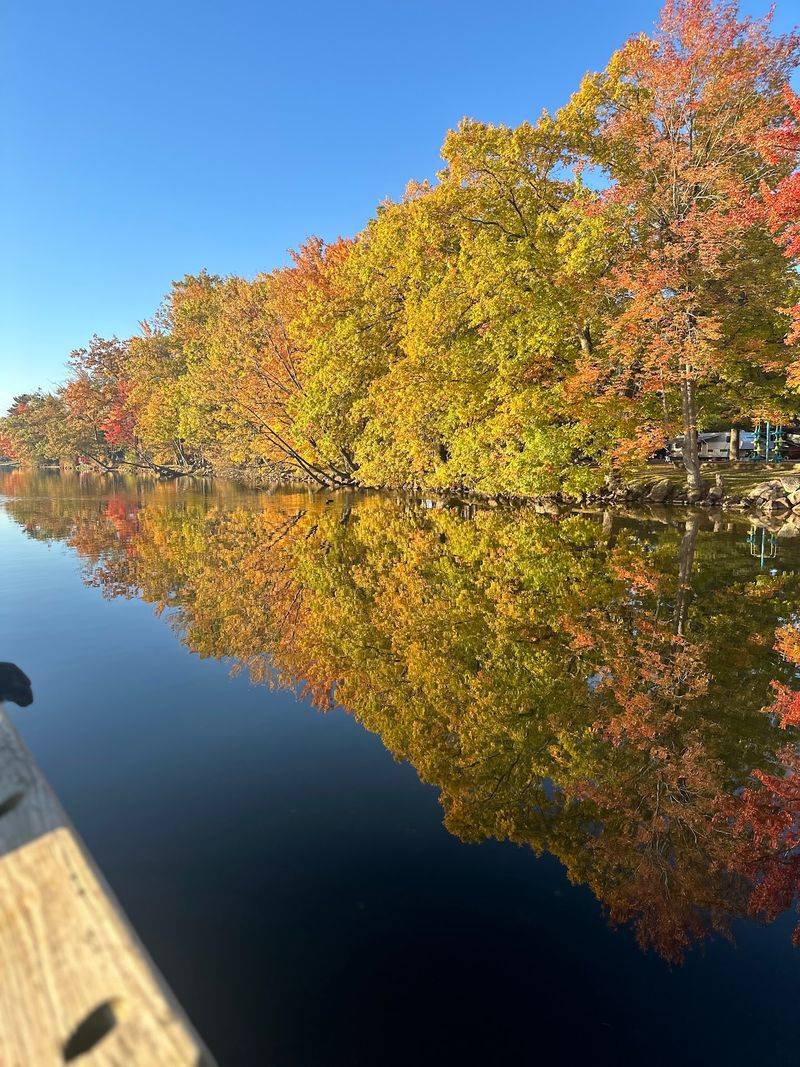
Silence is a bigger part of this trail than many first-time riders expect. Once you leave busier access points behind, the Fred Meijer White Pine Trail often trades engine noise for birds, tire hum, and the soft rush of wind through leaves.
That calmer soundscape can completely change how a ride feels.
Instead of riding shoulder-to-shoulder with traffic, you spend long stretches on a path built for movement at a human pace. You can hear a friend talk without shouting.
You can notice the crunch of gravel where surface changes happen, the echo under a bridge, or the quick warning call of another rider passing on the left.
Scenery works differently when noise drops away. Trees look taller.
Water crossings feel cooler. Even plain farm edges become more interesting when you are not distracted by nonstop road pressure.
The trail gives you time to really see Michigan, not just glance at it through a windshield on the way somewhere else.
That does not mean the route is wild or remote every second. It moves through small towns, developed areas, and road crossings too, which keeps the ride practical and connected.
Still, the overall rhythm leans peaceful, especially compared with riding on regular streets for the same number of miles.
For many cyclists, walkers, and runners, that is the real draw. Fitness is part of the picture, but so is mental breathing room.
A long straight section under trees can settle a busy mind better than a short indoor workout ever could. If your favorite outdoor places are the ones that give you space to think, this trail has that kind of value built right into it.
The quiet is not empty. It is full of motion, fresh air, and room to keep rolling north or south at your own speed.
Pavement, Rough Spots, and What Your Bike Should Expect
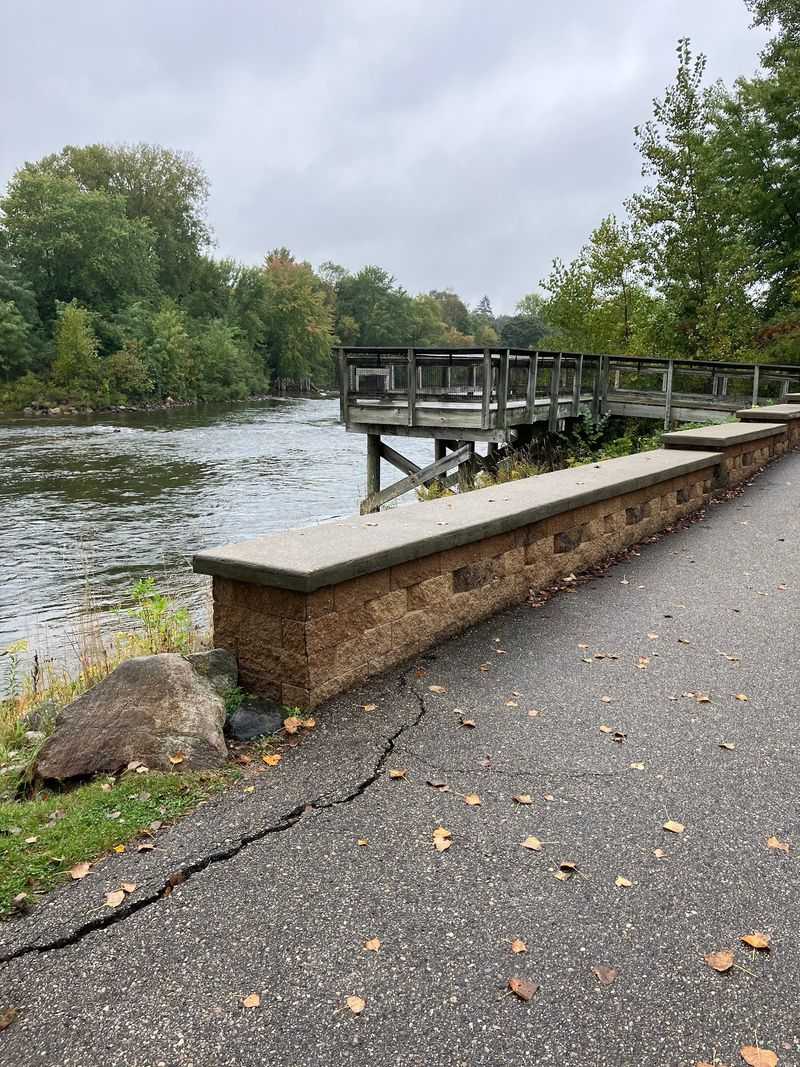
Not every mile on this trail rides the same, and that is useful to know before you clip in. The White Pine Trail is known for long paved stretches, but some sections can be rough, patched, or bumpy, especially where older pavement shows its age.
Going in with realistic expectations makes the day smoother.
Plenty of riders enjoy excellent pavement on large parts of the route, especially on recently improved sections. At the same time, local reports often mention uneven spots, root bumps, worn joints, and a rougher feel in certain areas near and beyond Big Rapids.
That does not erase the fun, but it should shape your setup.
If you are choosing between a skinny-tire road bike and something a little sturdier, comfort matters. A hybrid, gravel bike, touring bike, or e-bike with slightly wider tires can take the edge off broken pavement and mixed surfaces.
Lower tire pressure, within safe limits for your bike, may also help on chattery sections.
Road crossings need attention too. Some crossings are simple, while others ask you to slow down, look carefully, and make eye contact with drivers when possible.
A bright jersey, front and rear lights, and a bell are smart additions even on a mostly traffic-free trail. Bring a spare tube, pump, and basic tools, because 92 miles leaves lots of room for small problems.
None of that should scare you away. It simply means the trail rewards a practical rider.
Think of it as an adventure path, not a perfect indoor track poured across five counties. When your bike is ready and your pace matches the conditions, even rough stretches become manageable transitions between the prettier, faster miles that keep this route on so many Michigan ride lists.
Small Town Stops Keep the Long Ride Human
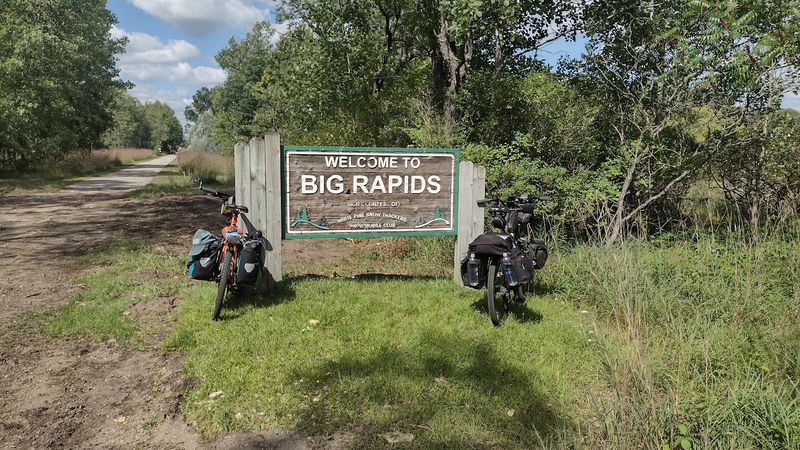
Long trails can feel overwhelming if there is nowhere to pause, refill, or reset. The White Pine Trail works well because it is not cut off from everyday life.
As the route passes through communities along the way, the ride gains useful little breaks that make a very long distance seem much more manageable.
Instead of one endless corridor of trees, you get changing chances to stop for food, water, or a few minutes off the saddle. Some towns near the trail have signs pointing toward places to eat, and newer rest features in parts of the system have made the experience easier for cyclists.
Clean restrooms, filtered water, and simple repair tools can make a big difference late in a ride.
That practical support matters most on hot days. Carry plenty of water anyway, because supply points can be uneven and you do not want to gamble on the next fountain being close.
A snack packed in your jersey pocket is smart too, especially if your pace is faster than your meal stops.
Small towns also give the trail a more welcoming personality. You are not only passing through nature.
You are moving through living places with parks, crossings, side streets, and the everyday rhythm of western and northern Michigan. That keeps the route grounded and interesting for riders who like a sense of connection as much as scenery.
For beginners, those access points are especially helpful. You can park near one town, ride out for a while, and return without taking on the full 92 miles.
More experienced riders can use the same communities as checkpoints for longer efforts. Either way, the towns along the route act like natural mile markers with real-world perks, turning a huge trail into a ride you can shape around your own energy, timing, and appetite.
A Rail-Trail Backbone With Real Michigan Character
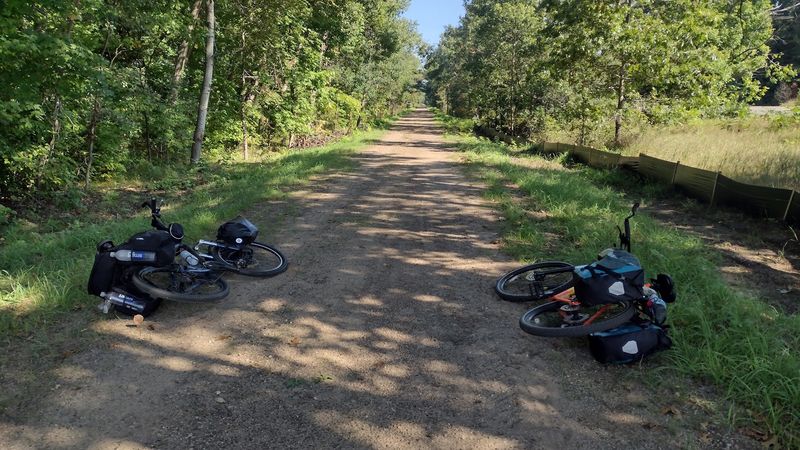
There is a reason the White Pine Trail covers so much ground so smoothly. Its path follows an old railroad corridor, and that history still shapes the ride today.
You can sense it in the long straight stretches, the broad curves, and the way the trail links towns in a practical, no-nonsense line.
Old rail routes were built to move people and goods across distance with steady grades, and that design now helps cyclists, walkers, and runners travel through the landscape with less climbing drama. On a trail this long, gentler grades are a gift.
They make the route more approachable for mixed ages and a wider range of fitness levels.
The railroad past also gives the trail a strong Michigan identity. Rather than feeling like a bike path dropped into a random green strip, the route reads as part of the region’s working history.
Bridges, crossings, town connections, and the corridor itself hint at earlier travel patterns that helped shape the communities around it.
That sense of structure matters during a long day outdoors. A rail-trail tends to carry you forward in a clear, steady way.
You are not constantly stopping to solve the route in your head. The landscape unfolds mile after mile, and the old corridor quietly does its job in the background.
Near Big Rapids, that history meets the present in a useful way. The trail is now a state park route that serves recreation, exercise, and local travel, but its older bones still explain why it can stretch so far and connect so many places.
For riders, that means the experience is more than a pretty strip of pavement. It is a piece of transportation history reused for fresh air, long miles, and a slower look at the state.
That blend of old purpose and new use gives the trail much of its staying power.
How to Ride It Smart From Big Rapids and Beyond
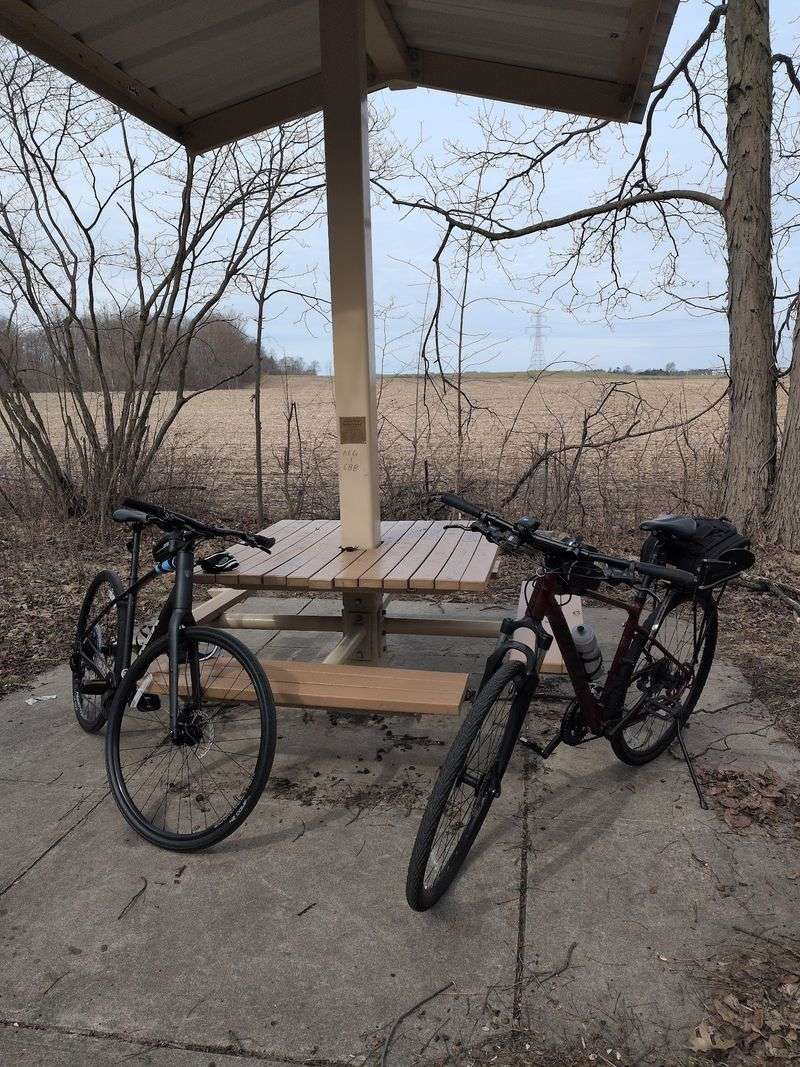
A trail this long rewards a little planning, but the payoff is huge. Starting around Big Rapids gives you a practical base for sampling the route, building confidence, or launching a bigger day on the bike.
The key is matching your plan to the trail’s real conditions instead of chasing an ideal version in your head.
Morning is often the easiest time to ride. Cooler air helps, the light is softer, and you have more room in the day if you decide to go farther than expected.
Check your bike the night before, top off tires, charge e-bike batteries if needed, and pack more water than you think you will use.
Clothing can stay simple, but comfort matters. Padded shorts, sunglasses, sunscreen, and gloves go a long way on a ride that may last several hours.
If you are unsure about the full route, choose an out-and-back section. That format lets you control mileage without worrying about a shuttle car or a pickup plan.
Watch carefully at road crossings, especially where markings are limited or drivers may not expect trail users. Keep your speed in check on rough pavement, bridge ramps, or patched areas.
If your group includes kids or newer riders, talk through passing rules and stopping signals before you begin.
Most of all, ride with range in mind. A 20-mile spin, a 40-mile challenge, or a multi-stop day can all work here.
The trail’s biggest strength is that it can meet you at different skill levels without losing its sense of adventure. If you listen to your legs, stay flexible, and treat the rough sections as part of the route instead of a surprise, the Fred Meijer White Pine Trail becomes one of the most satisfying ways to spend a day outdoors in Michigan.
It asks for effort, then gives plenty back.
Why This State Park Trail Earns Its Long-Ride Reputation
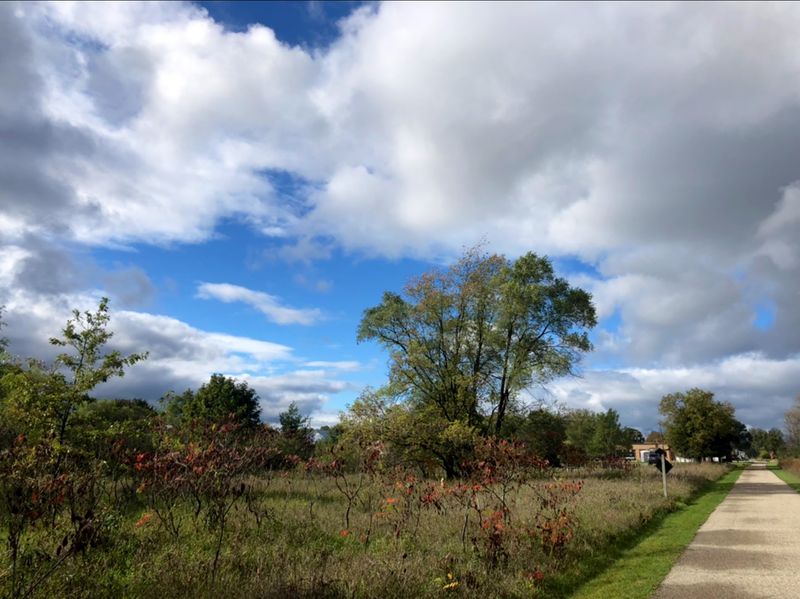
Some trails are nice for an hour, and some trails pull you into a bigger kind of day. The Fred Meijer White Pine Trail belongs in that second group.
Its reputation comes from a rare combination of reach, access, scenery, and the simple pleasure of moving mile after mile without being trapped beside fast traffic.
The route is not polished in every single spot, and that honesty is part of its character. You may hit smooth fresh pavement, then run into an older section that asks for patience and a looser grip on the bars.
Yet the overall experience stays compelling because the trail keeps offering new views, new towns, and new reasons to continue.
For Michigan riders, the scale alone makes it special. Covering about 92 miles across five counties gives the trail a true travel feel that many local paths cannot match.
It can be a training ground, a weekend goal, a scenic escape, or a place to clear your head after a crowded week.
Its open-all-day schedule adds another layer of usefulness. Early birds, casual afternoon riders, and long-distance cyclists all have room to fit the trail into their own routine.
Since the route can be entered in different segments, it does not demand one grand all-or-nothing effort to be enjoyable.
That is the final strength of the White Pine Trail near Big Rapids and beyond. It offers ambition without shutting out beginners.
You can arrive curious and leave with a new favorite stretch, or show up chasing big mileage and find the challenge you wanted. Few paved trails in the state deliver that kind of range.
When a path can serve daily exercise, small-town wandering, and true point-to-point adventure all at once, it earns its place on Michigan’s must-ride list the old-fashioned way, by giving riders plenty of roadless distance and letting the miles tell the story.