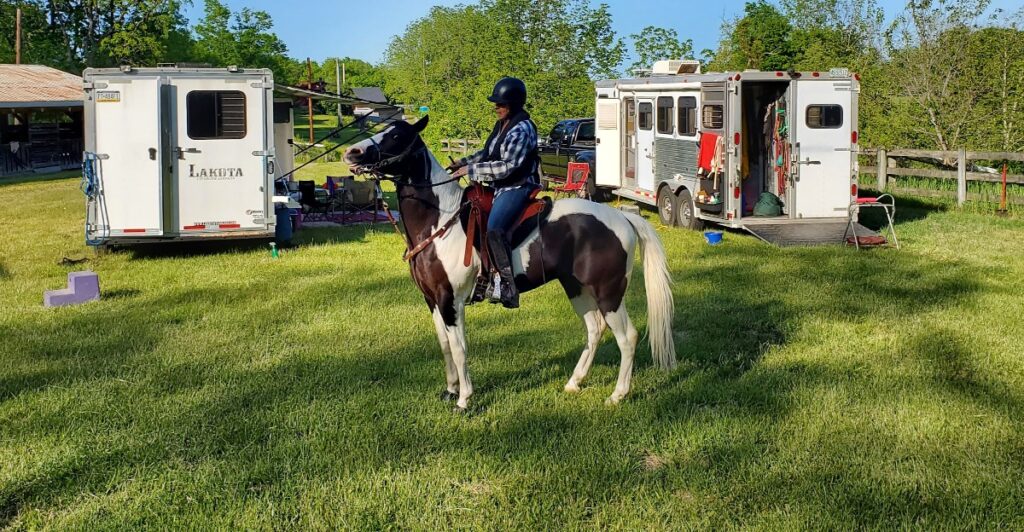
A horse trailer pulling into a farm once home to 230 Guernsey cows is a sight that makes sense in Sussex County. At Lusscroft Farm in Wantage, the barns and fields are still there, but the dairy herd is long gone.
Today, riders interested in bringing their own horses can find marked trails across a 578-acre property with woods, open ground, and nearly a century of agricultural history. The outing takes a little planning: Lusscroft’s heritage association directs riders to High Point State Park for current trail access information.
Get that detail settled, though, and the reward is a ride through a place with far more to look at than the next turn in the path. One stretch puts you among trees; another opens toward fields shaped by the farm’s working years.
The old buildings give you plenty to talk about when you get back to the trailer.
Lusscroft Farm Welcomes Riders With Their Own Horses
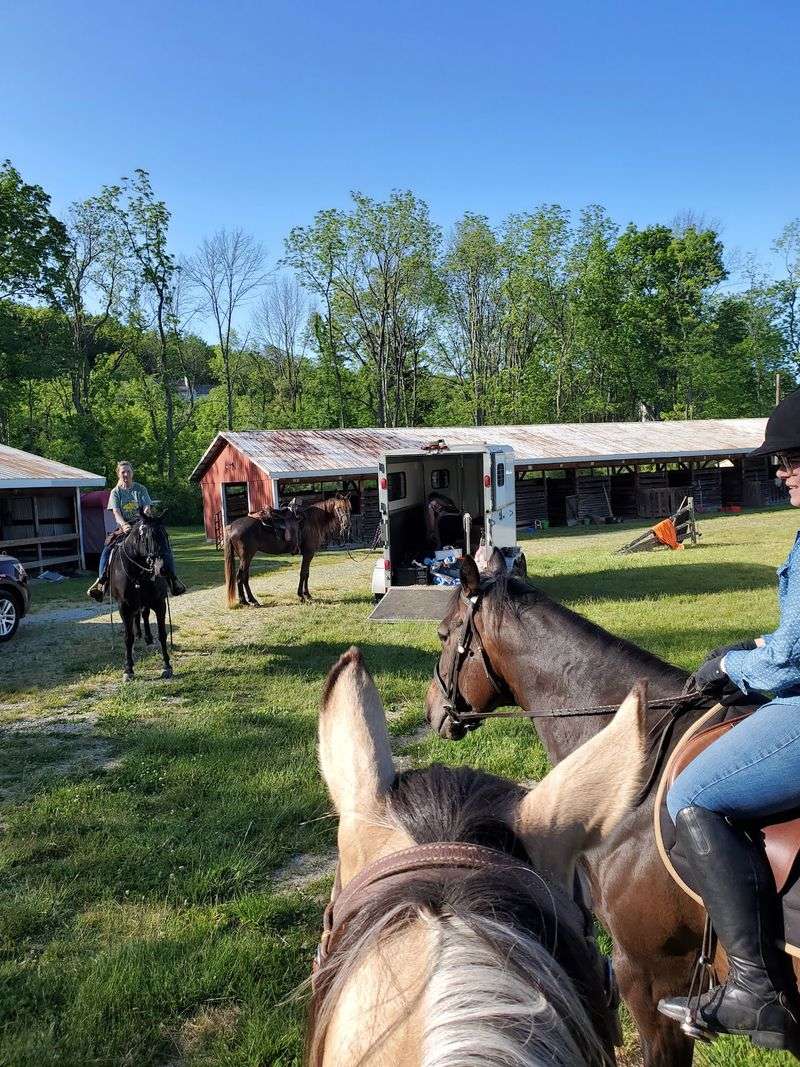
There is no horse rental counter waiting at the end of Neilson Road. Lusscroft is an outing for people who have a horse to bring, a way to transport it, and the experience to plan a trail ride.
That makes it quite different from booking an hour in the saddle at a riding stable. You arrive with your usual riding partner, then explore a landscape neither of you sees on an ordinary day at home.
The farm sits at 50 Neilson Road in Wantage, near High Point State Park and Stokes State Forest. Its nearly 578 acres leave room for more than a quick loop around the barns.
Fields, wooded sections, and old farm structures give the property a distinctly rural feel, even before you get far from where you parked. The trails are also used by people on foot, so a relaxed pace and care around other visitors belong in the plan.
Riding here is tied to the farm’s larger purpose. The state owns Lusscroft, and the Heritage and Agriculture Association works to preserve its buildings and grounds while supporting outdoor recreation and agricultural education.
Equine trails are part of that work. A visit is a chance to use the property as a farm landscape again, with a horse moving through fields that once supported cattle.
There is one practical distinction to make before loading the trailer. The association asks riders interested in Lusscroft to contact the High Point State Park office about trail riding.
Confirming access, permitted routes, and where to park a trailer first will make the day easier for both rider and horse.
Marked Trails Wind Through Fields and Woodland
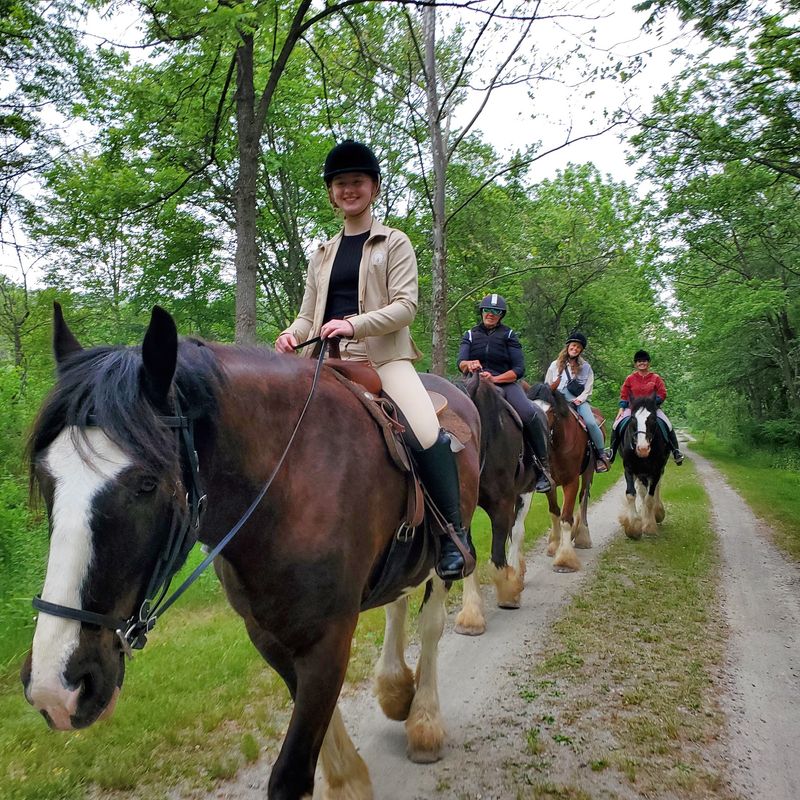
A trail disappears between the trees, then the view widens again at the edge of a field. That shift is much of Lusscroft’s appeal.
You get the enclosed, quiet stretches of a woodland ride without spending the entire outing under a canopy, and the open ground gives you a chance to see how large the old farm really is. Lusscroft’s published trail map shows a network of marked paths and connections to trails in neighboring High Point State Park and Stokes State Forest.
The Appalachian Trail is nearby, too. Those connections make the map useful well before a visit, but they do not mean every adjoining trail is open to horses.
Riders should confirm which routes permit equestrian use with the park office and plan a ride around those routes. Even if you intend to stay within Lusscroft, bringing a copy of the map is sensible.
A farm with several trail choices feels pleasantly open when you have time to wander; it feels less pleasant if you are trying to work out the way back while a tired horse waits for a clear decision. Pick a route that suits your horse’s conditioning, allow time for shared-trail encounters, and remember that footing can change after rain.
The paths also give riders a good introduction to Lusscroft’s geography. The farm occupies ground near the headwaters of the West Branch of Papakating Creek, with fields and woodland tucked into the Sussex County hills.
It is varied scenery on a manageable scale: enough room to settle into a ride, with the buildings and cultivated land never far from the story.
The Farm’s Dairy Past Gives Every Ride a Sense of History
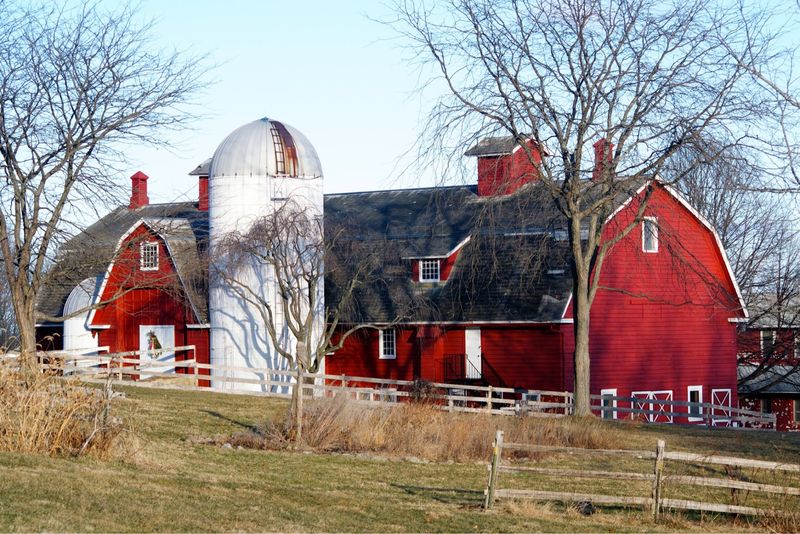
James Turner had ambitious ideas for this patch of Sussex County. After buying the property in 1914, he developed Lusscroft into a model dairy farm, investing in livestock, buildings, machinery, orchards, and gardens.
His Guernsey herd grew to about 230 cows. Electricity was among the modern conveniences he brought to a farm designed to demonstrate how much a carefully run dairy operation could do.
That history is easier to picture from a horse than from a passing car. The fields were working land, the barns had a demanding daily job, and the routes across the property connected different parts of a large agricultural operation.
A ride gives you time to notice the space between those pieces. Lusscroft’s rural views are lovely, but they were shaped by people making a living and testing better ways to farm.
Turner deeded Lusscroft and other farms to New Jersey in 1931 for agricultural research and education. As part of the state’s agricultural experiment station, the property became a place to study cattle breeding, feeding, pasture improvement, and milk production.
Its researchers contributed to the development and organization of artificial insemination in American dairy farming. Rutgers graduate students also worked there.
The farm’s use changed again when it became a 4-H outdoor education center in the 1970s. That chapter lasted until the camp closed in 1996; the property later came under the administration of High Point State Park.
So when an old barn or open pasture catches your eye on the ride, there is more than one era behind it. Lusscroft has been a private farm, a research station, and a place where young people learned outdoors.
Turner Mansion and the Old Barns Add to the Scenery
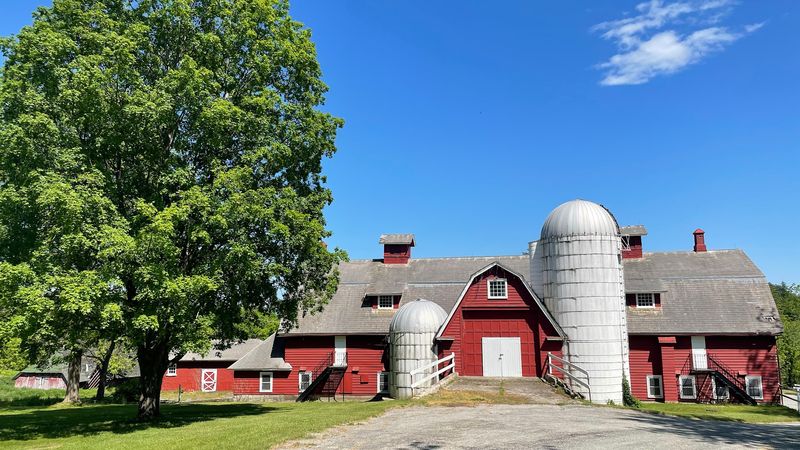
The Manor House is the sort of building that makes you take a second look after miles of fields and farm roads. James Turner’s house was completed in 1916, and its presence says plenty about the scale of his plans for Lusscroft.
This was a working dairy farm, but it was also an estate built by a man who put considerable money and attention into the land around him. The barns tell the other half of that story.
Their size and placement help make sense of a farm that once kept a large Guernsey herd and later served as a research station. You do not need a guided history tour to appreciate the contrast between a substantial house and the buildings that supported the daily work.
Seen together, they keep Lusscroft from feeling like a set of trails laid over an anonymous patch of countryside. There are smaller details worth knowing about as well.
The cottage on the property dates to around 1835, although it was extensively rebuilt in 1928. Higher on the ridge, Outlook Lodge was built in 1930 with timbers salvaged from area barns and houses.
Each structure belongs to a different piece of the farm’s history, so the property rewards a little curiosity about what you are passing. For a rider, the buildings are best treated as part of the view unless current access information says otherwise.
Historic structures may be used for scheduled events and preservation work; a trail ride does not come with entry to them. The pleasure is in moving through the same landscape that ties them together, then recognizing the Manor House or a barn when it appears between the trees.
Wildflowers and Changing Leaves Make Each Season a Different Ride
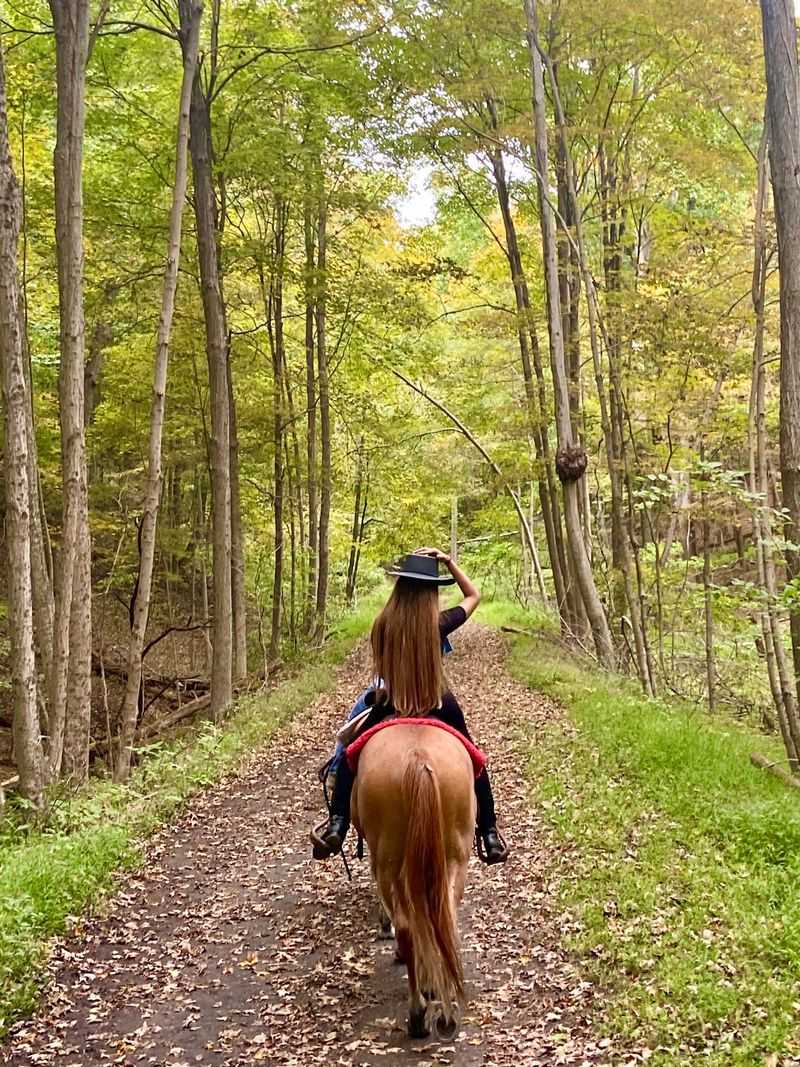
An open field makes a fine argument for returning in a different month. In spring, fresh growth changes the edges of the paths and brings color back to the farm.
Summer fills out the trees and meadows. By autumn, the views through the woods open up again as leaves turn and fall.
It is the same network of trails, but the landscape gives you something different to notice each time. Lusscroft’s fields have significance beyond their looks.
The farm lies in the Great Limestone Valley, where its open land offers habitat for grassland birds. The property also sits near the headwaters of the West Branch of Papakating Creek.
Those details explain why the combination of meadow, trees, and wet areas feels richer than a simple ride through pasture. It is a working farm landscape that has become valuable habitat, too.
The seasonal changes bring practical differences for horse and rider. Spring rain can leave soft ground, summer warmth calls for careful planning around water and exertion, and autumn’s shorter days make the timing of a ride more important.
Conditions matter more than a calendar photo. A beautiful morning after heavy rain may still be a poor choice for a trail that needs time to dry.
Lusscroft’s heritage association runs guided nature walks at different points in the year, including an autumn leaves walk. Those events are for walkers, but they show how much the farm’s character changes with the seasons.
A rider gets a different vantage point, moving between woodland and field with the pace set by a familiar horse.
Check Trail Access Before Bringing Your Horse
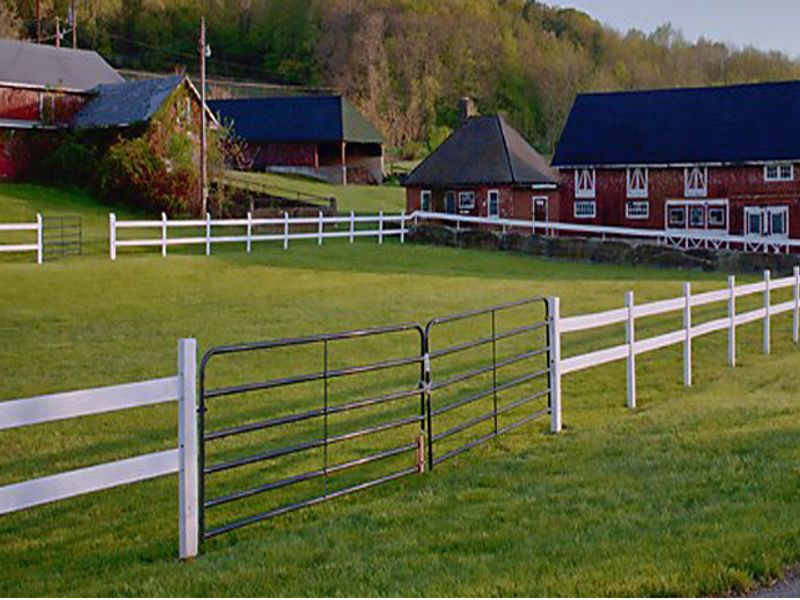
The most useful stop on a Lusscroft ride happens before you leave home. The Heritage and Agriculture Association directs riders to the High Point State Park office at 973-875-4800 for information about trail riding at the farm.
Ask about current access, which marked routes allow horses, where trailers may park, and any temporary closures or conditions. Those details can change, and they are worth confirming before you make the trip to Wantage.
There is also an outdated event detail to leave out of your plans. Lusscroft once hosted organized overnight equine rides, but the association says it can no longer host them.
A day ride should be planned as a day ride, without assuming a stall or overnight arrangement will be available. If an old event listing suggests otherwise, use the current guidance from the park office.
Lusscroft’s trail map and building map are helpful for getting your bearings, but each answers a different question. The trail map shows the wider path network; the building map helps you understand the farm complex.
Keep your intended riding route separate from nearby trails you have not confirmed for horses. That matters especially where Lusscroft’s paths connect with other public lands.
Bring what your horse needs for the outing, including water, and allow enough time to finish comfortably in daylight. The address for navigation is 50 Neilson Road, Wantage, NJ.
Once access is confirmed and the route is clear, the logistics settle into the background. Ahead are old fields, stretches of woodland, and the farm buildings that have watched this Sussex County property change for more than a century.
Share this story