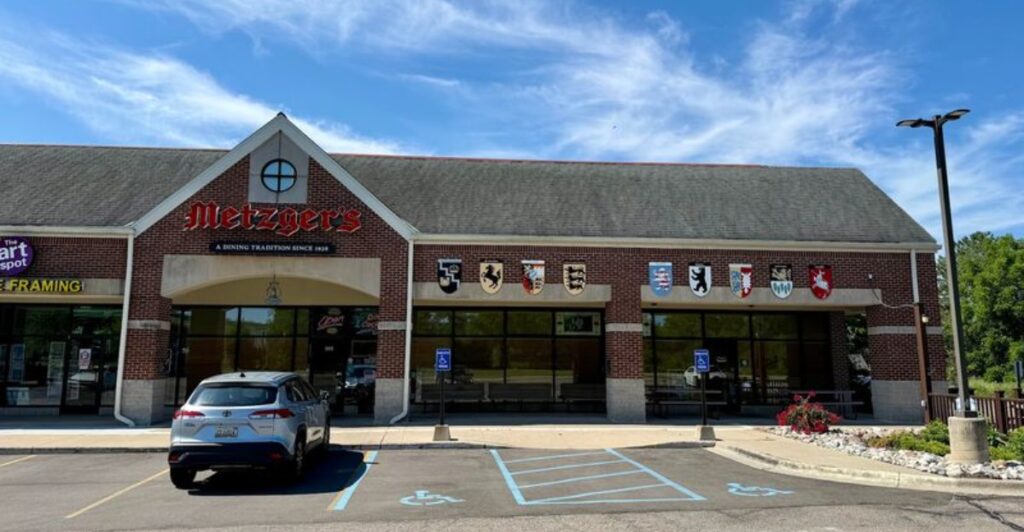
Dinner feels a lot more memorable when the beer arrives in a boot-shaped mug. In Ann Arbor, Michigan, Metzger’s has been serving German-inspired food since 1928, with clay boots, hearty meals, and walls lined with old steins adding plenty of character to the experience.
The appeal comes from how easily tradition and fun mix together, giving longtime regulars and first-time visitors something to notice before the food even reaches the table. You can come for the German beer ritual, settle in for a filling meal, or bring the family along for the atmosphere.
For anyone looking for a Michigan restaurant with decades of history and a few quirky traditions, Metzger’s is worth a closer look.
The Beer Boot Gets Everyone Looking
A boot-shaped beer vessel turns an ordinary drink into a conversation. The clay boot tied to Metzger’s story also points to a playful side of German dining: serving beer can be as much about the vessel as the drink.
Its tall leg and broad foot make it easy to spot across a table.
Before planning your meal around one, ask the staff whether clay boots are currently available for service. A tradition in a restaurant’s history does not always mean every vessel is used every day.
You can still enjoy the setting and choose a regular glass or stein if the boot is not an option.
If you do order beer in a boot, take a moment to look at its size before choosing a pour. A large vessel can hold more than you expect.
Sharing may be a better fit for your table, but check what the restaurant allows and order with care. There is no need to turn a fun tradition into a drinking challenge.
German beer boots are often linked with group celebrations, yet the simple visual joke works at a quiet dinner, too. A shoe belongs under the table, not on top of it.
That bit of surprise gives everyone a reason to pause between looking at the menu and talking about the food.
For a useful photo, set the vessel against Metzger’s steins or other dining room details rather than blocking the table with plates. Keep your drink steady while you do it.
The boot shape deserves a clear view, but dinner is better when the beer stays inside its unusual container.
Even if you skip beer, the boot offers a quick way to understand the restaurant’s style. Metzger’s takes familiar parts of German dining and gives them room to be seen.
Start with that curious shape, then look around for the smaller stories on the walls.
A Michigan Restaurant With a Long Story
Think about the year 1928 for a moment. Metzger’s history stretches back to that year, long before its current home on North Zeeb Road became the address you would enter for dinner.
That span gives the restaurant a different kind of interest from a dining room designed only to look old.
The address matters if you have heard older Ann Arbor stories about Metzger’s. The restaurant once operated downtown, so a longtime local and a first-time guest may be talking about different buildings.
They are still talking about the same restaurant tradition. Do not head downtown expecting to find the dining room there today.
Inside the present location, photographs and historical articles add context to the meal. Rather than trying to study every piece at once, pick one wall or display to look over while you wait.
Old images can show how the restaurant presents its past, even if you do not know every name or date.
There is a simple reason this history works well at a family table. A grandparent might remember the earlier location, while a child may be focused on the clocks and mugs.
Both can find something worth asking about. If your group includes several generations, leave a little time before or after eating to explore the displays together.
Longevity does not tell you what tonight’s dinner will taste like. It does explain why Metzger’s has more to share than a menu of German dishes.
The past is visible in the room, and you can take it in at your own pace without joining a tour or following a set route.
On your way out, glance at the photographs once more. After seeing the tables busy with present-day meals, those older images may look less like decoration and more like earlier pages in the same continuing story.
Steins, Stained Glass, and Cuckoo Clocks
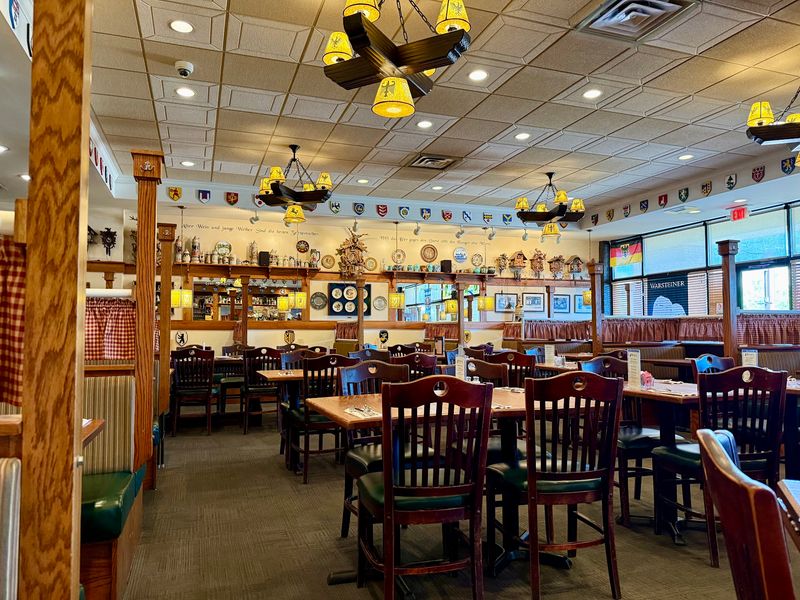
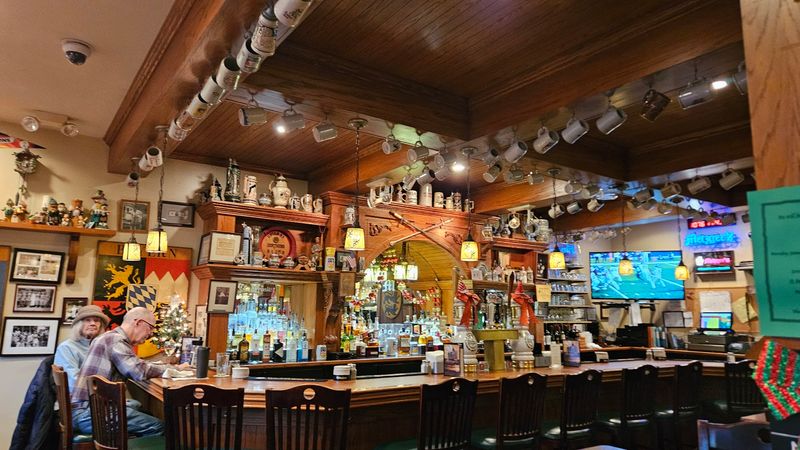
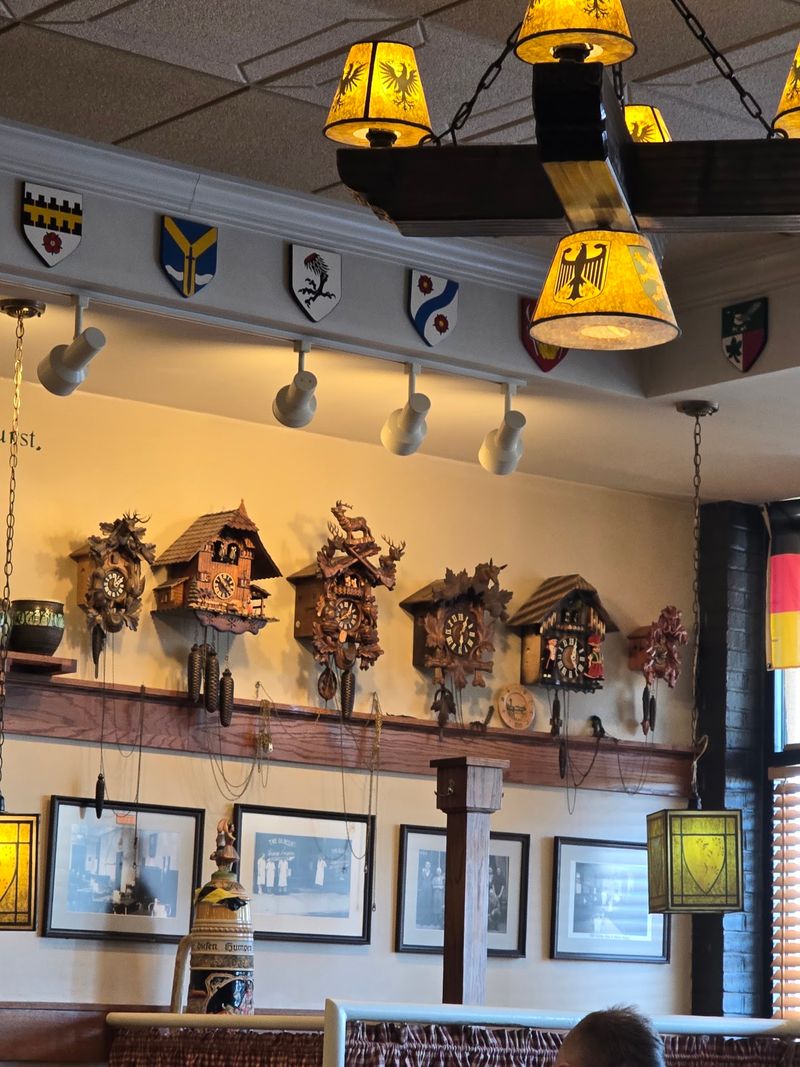
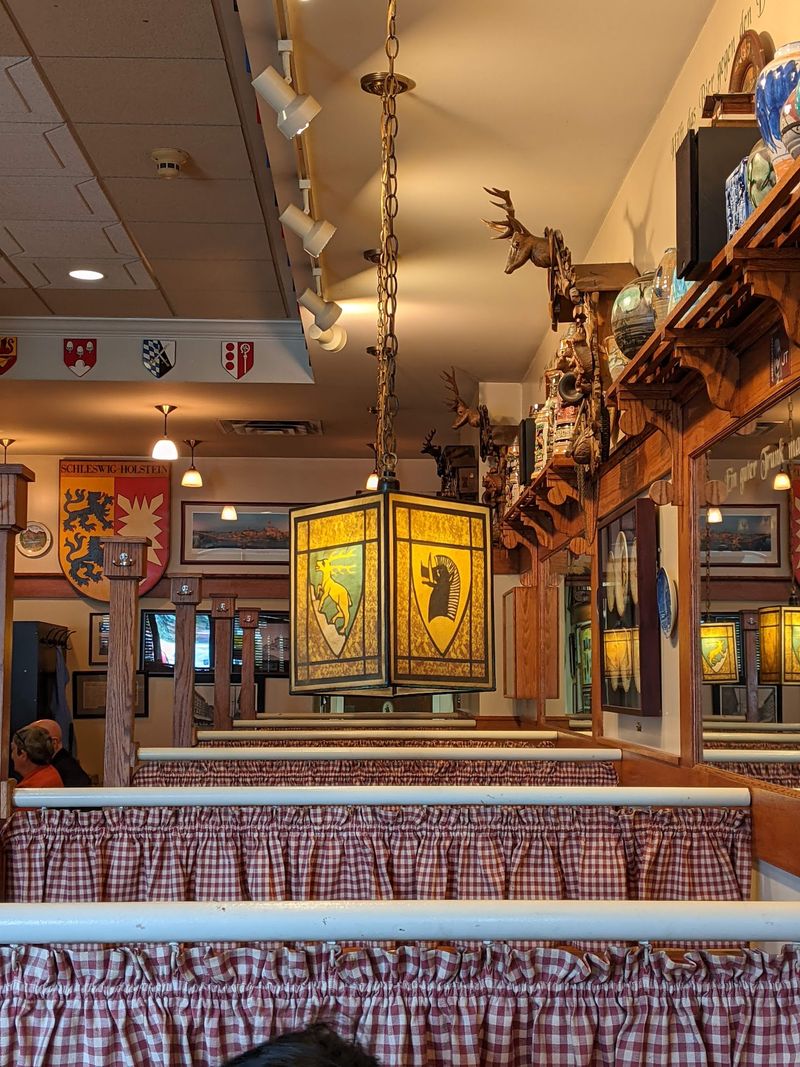
Your eyes have work to do while you wait for dinner. Antique steins, photographs, stained glass, and cuckoo clocks give Metzger’s dining room plenty of small details to study.
A stein can have a carved scene or a shaped lid, so even two mugs near each other may look entirely different.
Start near your own table rather than crossing the room as soon as you sit down. You can take in the nearby displays while the server explains the menu, then look farther around after your order is placed.
That keeps the walk comfortable for staff carrying hot plates and full drinks.
The clocks offer an easy game for a family meal: see how many different shapes you can find without leaving your seat. Stained glass changes the view in another way, adding color to an interior already filled with objects.
None of it requires you to know anything about German art to enjoy looking closely.
Decor can sometimes be a shortcut, a few objects hung up to suggest a theme. Here, the mix of steins, images, and clocks gives you more specific things to notice.
Look for a tiny figure on a mug or an old photograph you might otherwise pass by. These pieces invite attention without demanding it.
If you plan to take pictures, be thoughtful about other tables. Focus on a detail you like and keep strangers out of the frame when you can.
A close photograph of one stein may tell a better story than a wide shot filled with diners trying to eat.
Once the food arrives, the displays become a backdrop rather than the main event. There will still be plenty to see while you wait for dessert or finish a drink.
At Metzger’s, even a pause between courses can be spent spotting one more clock above the tables.
Order Around the German Classics
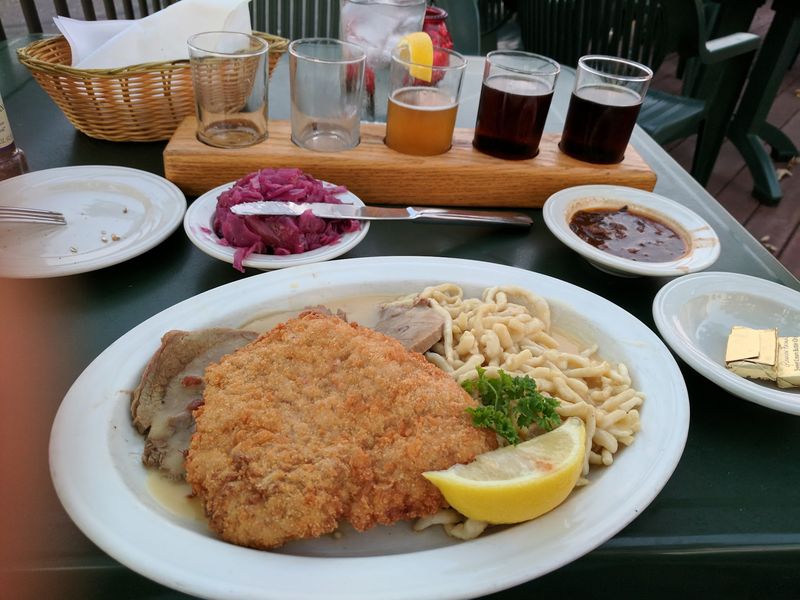
The menu gives the beer boot some serious competition. Metzger’s serves German dishes alongside American choices, so you can build a meal around a familiar sausage or try something that needs a quick explanation.
A little planning helps when several rich plates all sound good.
Sauerbraten is one place to start. It is a German-style roast with a tangy character, which makes it different from an ordinary roast beef dinner.
Schnitzel is another approachable choice if you want a meat dish with a crisp coating. If neither suits you, look at the sausages, cabbage rolls, or other options available that day.
Side dishes can change the whole plate. Potato pancakes bring a different texture from mashed or fried potatoes, while German potato salad adds a sharper taste.
Red cabbage offers a sweet and tangy contrast to meat. Ask your server which sides come with an entree and whether you can choose alternatives before ordering.
When you are eating with someone else, choose different sides and share tastes if that works for your group. You will learn more about the menu without ordering several full meals.
That is especially useful if the names of dishes are new to you or you cannot decide between potatoes and cabbage.
Portions may be generous, but your appetite is the better guide than anyone else’s plate. You can ask about portion sizes and request a container for leftovers if needed.
A large meal also leaves less room for dessert, so decide early if cake or strudel is part of your plan.
German cooking has room for many flavors and textures, not just sausage beside a mug of beer. Let the boot catch your eye, then give the food equal attention.
The useful first step is simple: choose a main dish, pick a contrasting side, and enjoy how they work together.
Build a Meal Beyond the Beer
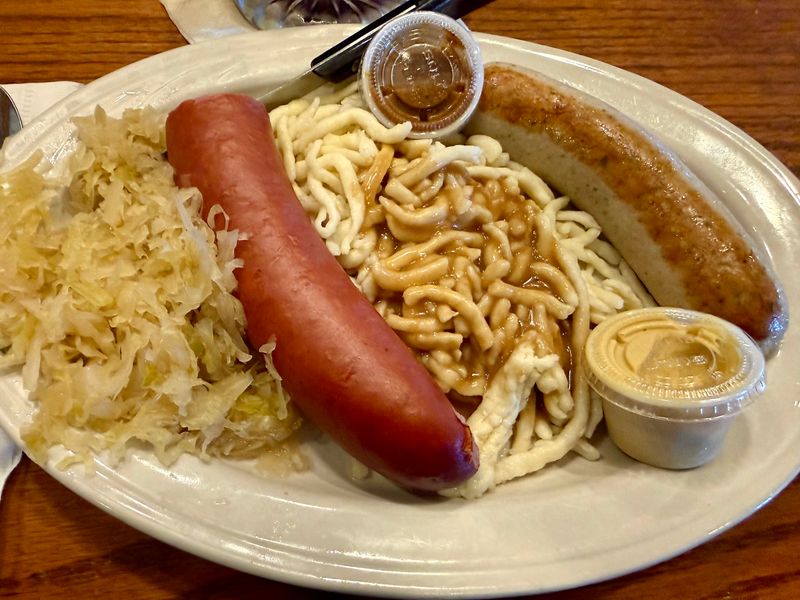
No one at the table needs to order beer to enjoy Metzger’s. The menu includes German and American dishes, which makes it easier to bring along someone who wants a familiar sandwich while you try a plate of sauerbraten.
You can share the same table without agreeing on every flavor.
A Reuben gives sandwich fans an easy route through the menu. If you would rather keep the meal focused on German cooking, consider a sausage dish with potato salad or cabbage.
Check the current menu when you arrive, since the exact choices and sides can change. Asking a server to explain an unfamiliar name is quicker than guessing.
Dessert offers another reason to slow down. Carrot cake, Black Forest torte, and apple strudel are among the sweets associated with meals here, though availability may vary.
If you are already full, share one slice or ask what can be packed to take home. There is no prize for finishing every course at once.
Families can make the choices easier by ordering at different speeds. Pick main dishes first, then see how everyone feels before adding dessert.
Children may enjoy looking at the clocks while adults decide between cake and strudel. A nonalcoholic drink also lets anyone join a toast without making the beer tradition the center of the meal.
Food needs can be specific, so tell the staff about allergies or dietary limits before you order. Do not assume a potato dish is suitable just because the name sounds simple.
Sauces, dressings, and sides may have ingredients that are not obvious from a short menu description.
The pleasure here is having more than one way to join the table. A boot-shaped beer vessel may start the conversation, but a sandwich, a German side, or a shared dessert can carry it through dinner.
Plan Your Stop on North Zeeb Road
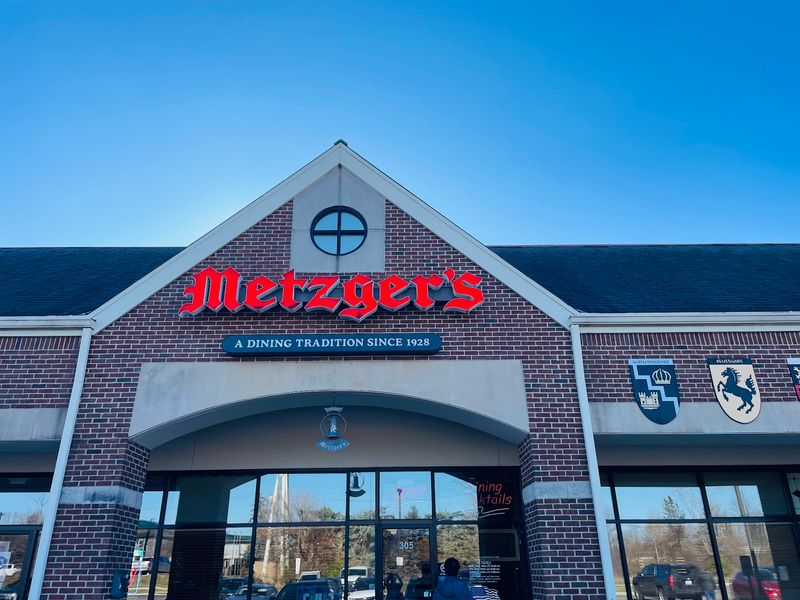
Put 305 N Zeeb Rd into your directions before you set out. Metzger’s current Ann Arbor location is not the older downtown address that may come up in a family story or an old photograph.
Checking the address first prevents a history lesson from turning into a wrong turn.
The listed opening time is 11 a.m. each day, which gives you a choice between lunch and dinner. Posted closing times differ by day: Friday and Saturday list 9 p.m., Sunday lists 7 p.m., and Monday through Thursday list 8:30 p.m.
Hours can change, especially around holidays, so confirm them shortly before your visit.
If you want a slower look at the steins and photographs, lunch may give you more time to settle in before an evening plan. A weekend dinner could take longer, particularly if you arrive with a group.
Consider checking whether a reservation is available rather than assuming a table will be ready when everyone gets there.
Give yourself a few minutes to read the menu. With sausages, roasts, sides, sandwiches, and desserts to consider, ordering in a hurry may mean missing a dish you would have liked.
Decide which part of the meal matters most to you before arriving. That could be a German entree, a clay boot if one is available, or simply cake after lunch.
Ask about outdoor seating if you are hoping to use the beer garden. Its availability may depend on weather, staffing, or the day, and it is better to check than build your visit around an assumption.
Indoor seating still puts you close to the restaurant’s collection of clocks and steins.
A practical plan leaves room for curiosity. Find the right address, confirm the hours, and arrive with enough time to choose your meal.
Once seated, you can let the unusual vessels and wall displays set the pace.
One Boot, Nearly a Century of Conversation
A clay boot is a wonderfully odd reason to notice a restaurant. It has the shape of footwear and the job of a drinking vessel, which is enough to make a person look twice.
At Metzger’s, the idea sits beside a history reaching back to 1928 and a present-day menu built for full meals.
That combination is the real point of a visit. You can come in curious about beer and leave having learned the difference between potato pancakes and German potato salad.
Or you might spend dinner noticing how many steins and clocks fit around the room. Each path gives you a closer look at the same place.
Keep the boot tradition in the right frame. It makes a lively headline, but it should not be a promise that a clay boot will be waiting at every table.
Ask whether one can be used during your visit, then enjoy whichever vessel your drink comes in. The care you take with the order matters more than staging a photo.
For a first meal, pick one dish you know and one detail you do not. A familiar sandwich can sit beside an unfamiliar side, or a classic German entree can lead to a dessert you have never tried.
That small step makes the menu interesting without turning dinner into a test of how adventurous you can be.
Before leaving, take one last look at the historical photographs. The current North Zeeb Road dining room is part of a longer Ann Arbor story, not the whole of it.
You do not need every date to understand why those images belong next to tonight’s tables.
The boot may get the first glance, and it has earned it. Yet the meal has more to offer than a clever container: a broad menu, visible traces of the past, and enough curious details to keep the table talking.