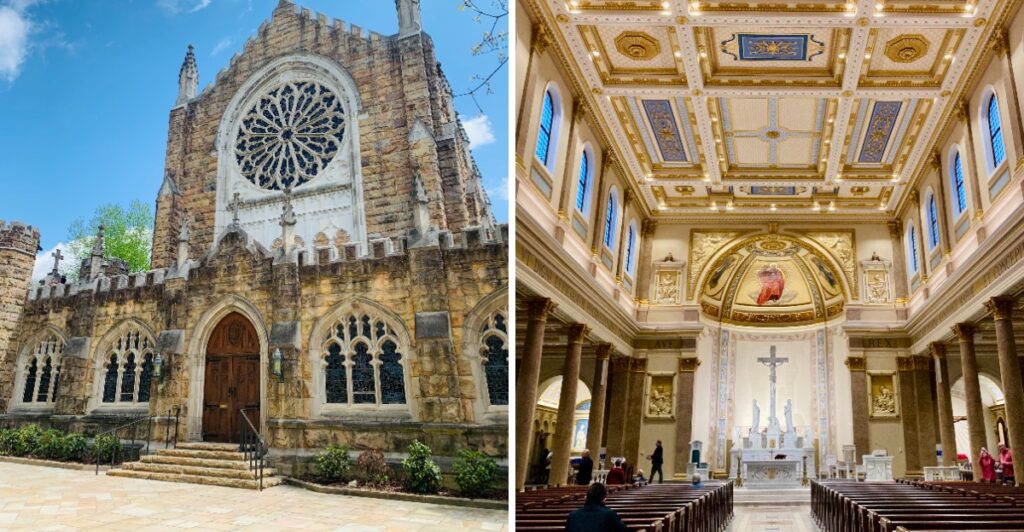
Tennessee is known for barbecue, country music, and the Great Smoky Mountains, but hidden among the rolling hills and busy cities are churches so stunning they could rival European cathedrals. These sacred spaces blend Gothic arches, intricate stained glass, and architectural grandeur that transport you far beyond the South. Whether you’re drawn to history, art, or simply breathtaking beauty, these twelve remarkable churches will leave you wondering if you’ve stepped into another world entirely.
1. All Saints’ Chapel – Sewanee
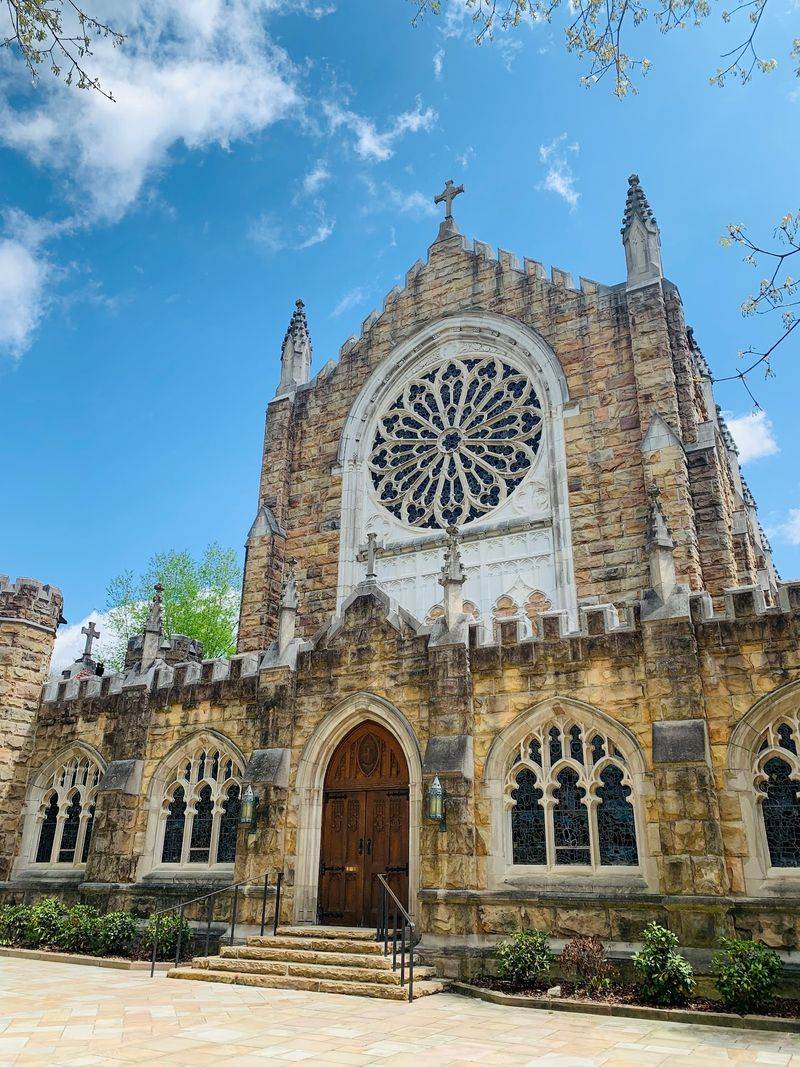
Perched high on the Cumberland Plateau, All Saints’ Chapel rises from the University of the South campus like a medieval vision. Built between 1905 and 1959, this Gothic Revival masterpiece took over five decades to complete, and every year of labor shows in its soaring stone arches and hand-carved details. The chapel’s exterior features Tennessee sandstone that glows warm and golden in the afternoon light.
Step inside and you’ll find yourself beneath vaulted ceilings that seem to reach toward heaven itself. The stained glass windows tell biblical stories in brilliant color, casting rainbow patterns across the stone floor when sunlight streams through. Many of these windows were crafted by renowned artists and donated by families connected to the university over generations.
The chapel’s organ is a marvel in its own right, with thousands of pipes creating music that fills every corner of the vast space. Visitors often sit in the wooden pews just to absorb the atmosphere of quiet reverence and timeless beauty. The building serves both as a working chapel for the university community and a destination for architecture enthusiasts from across the country.
What makes All Saints’ truly unforgettable is how it combines English Gothic tradition with Southern setting. Walking through its cloisters and courtyards, you might genuinely forget you’re on a Tennessee mountaintop rather than wandering the grounds of Oxford or Cambridge.
2. Church of the Holy Trinity – Nashville

Nestled in the Germantown neighborhood, Holy Trinity Episcopal Church stands as Nashville’s oldest surviving church building, dating back to 1852. The Norman Romanesque design sets it apart from typical Southern churches, with its rounded arches and solid stone construction evoking medieval European monasteries. Originally built to serve German immigrants, the church has weathered wars, floods, and urban change while maintaining its architectural integrity.
The exterior’s rough-cut stone and simple lines might seem modest at first glance, but they possess a quiet strength that grows on you. There’s something deeply comforting about the building’s proportions and the way it sits solidly on its corner lot, unchanged while the neighborhood has transformed around it. The bell tower still stands watch over the streets below.
Inside, the sanctuary preserves much of its original character with wooden pews and exposed timber ceiling beams. The stained glass windows, though simpler than those in grander cathedrals, create a warm, intimate atmosphere that invites contemplation. Light filters through in soft, colored rays that shift throughout the day.
What truly distinguishes Holy Trinity is its authentic age and survival. While Nashville has lost many historic structures to development, this church remains a tangible link to the city’s immigrant past and architectural heritage. Standing within its walls, you’re experiencing the same space that served Nashville’s German community more than 170 years ago.
3. Christ Church Cathedral – Nashville
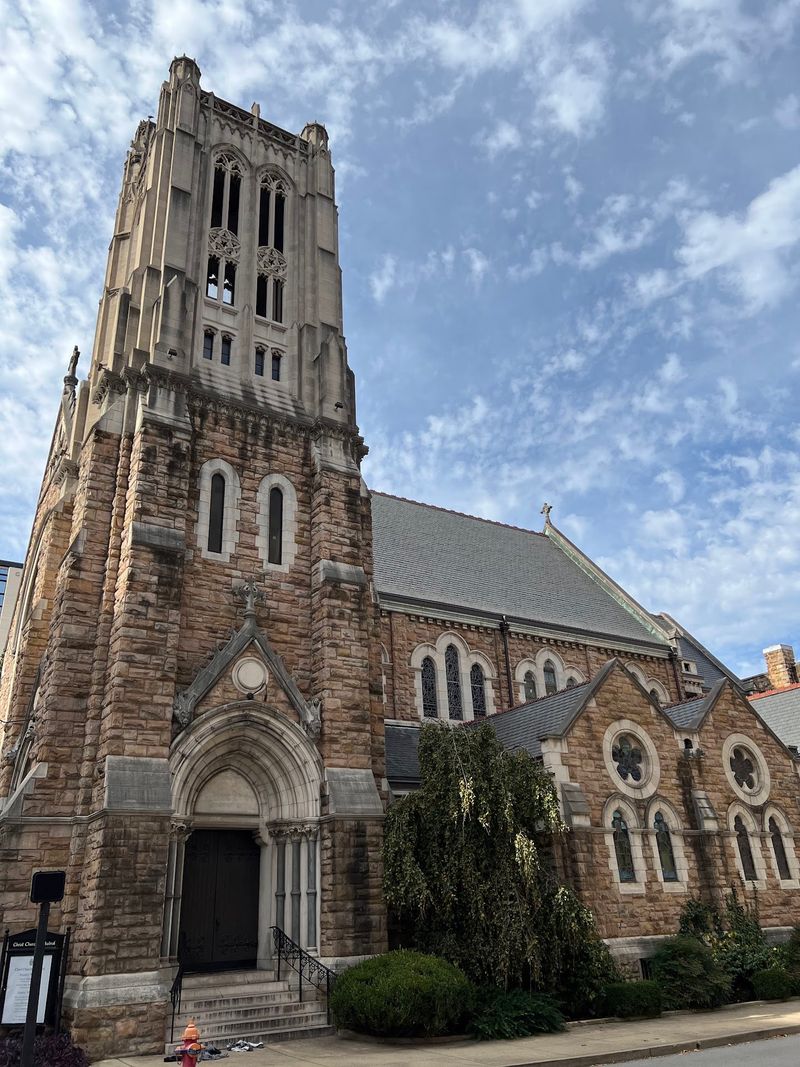
Right in the heart of downtown Nashville, Christ Church Cathedral commands attention with its striking Gothic Revival architecture and prominent bell tower. Founded in 1829, the current building was completed in 1894 and represents one of the finest examples of Victorian Gothic design in the South. The red brick exterior with limestone trim creates a bold contrast against the modern glass towers that now surround it.
The cathedral’s spire reaches skyward, visible from blocks away and serving as a spiritual landmark amid Nashville’s ever-changing skyline. Gargoyles peer down from the roofline, adding a touch of medieval mystery that seems wonderfully out of place in Music City. The building’s proportions and details follow traditional Gothic principles with remarkable faithfulness.
Walking through the heavy wooden doors transports you into a different era entirely. The nave stretches before you with rows of dark wooden pews leading toward an ornate altar. Stained glass windows line both sides, depicting saints and biblical scenes in jewel-toned glass that glows when backlit by Tennessee sunshine.
The craftsmanship in these windows rivals anything you’d find in European cathedrals.
The cathedral’s pipe organ fills the space with rich sound during services and concerts, its notes reverberating off stone and wood. Beyond its architectural beauty, Christ Church serves as the seat of the Episcopal Diocese of Tennessee, making it both a working cathedral and a treasured historic landmark. It’s a place where history, faith, and artistry converge in unexpected harmony.
4. Cathedral of the Incarnation – Nashville
Breaking from the Gothic tradition, the Cathedral of the Incarnation embraces bold modern design that still manages to inspire awe. Completed in 1914 and serving as the seat of the Catholic Diocese of Nashville, this cathedral proves that sacred architecture doesn’t require medieval styling to transport visitors beyond the everyday. The building’s Classical Revival approach creates spaces both grand and welcoming.
The exterior features clean lines and a restrained elegance that stands in refreshing contrast to more ornate religious buildings. Smooth stone surfaces and symmetrical proportions give the cathedral a timeless quality that transcends specific architectural trends. The dome rises gracefully above the crossing, visible from surrounding streets and marking the building as something special.
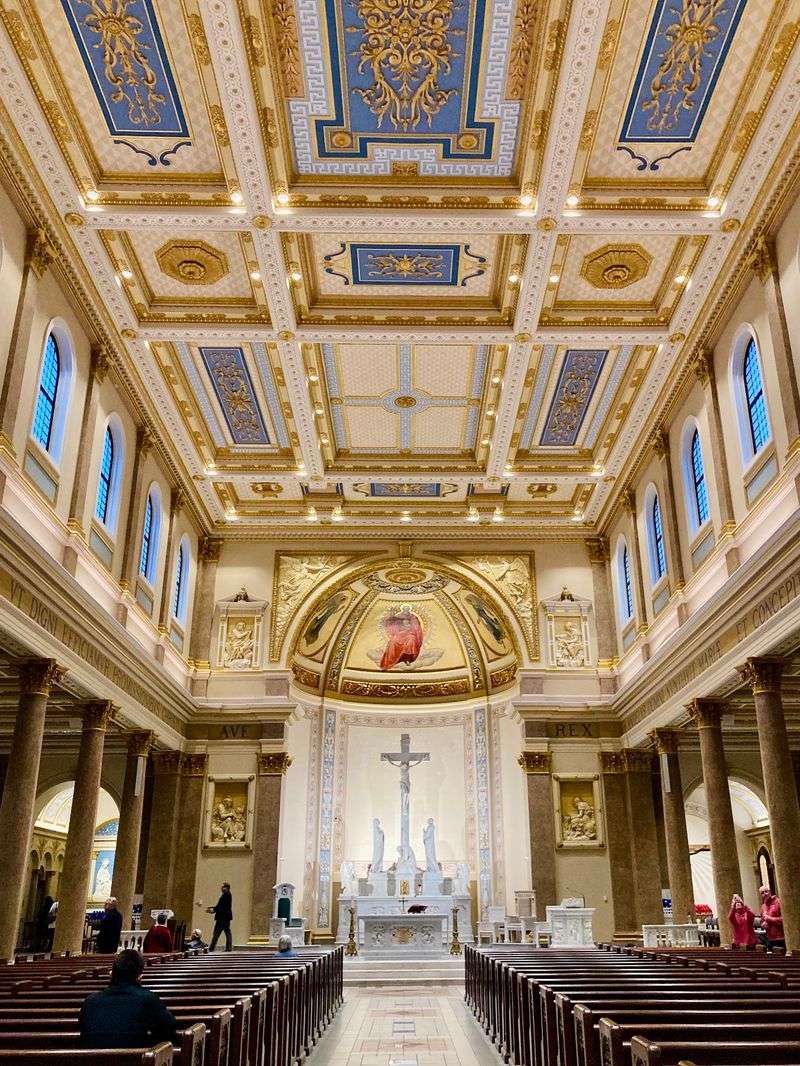
Step inside and the interior volume takes your breath away. High ceilings create a sense of spaciousness and light, while marble columns and polished floors add richness without overwhelming the senses. The altar area draws the eye forward with its careful composition and beautiful detailing.
Natural light floods in through tall windows, eliminating the darkness sometimes found in older churches.
The cathedral’s art and decoration reflect both traditional Catholic imagery and more contemporary sensibilities. Murals, statuary, and religious artwork throughout the building demonstrate skilled craftsmanship and thoughtful placement. The overall effect is one of serene beauty that encourages quiet reflection.
Despite its location in the bustling West End neighborhood, the cathedral’s interior feels removed from the outside world, offering a peaceful sanctuary from urban noise and hurry.
5. Basilica of Saints Peter & Paul – Chattanooga
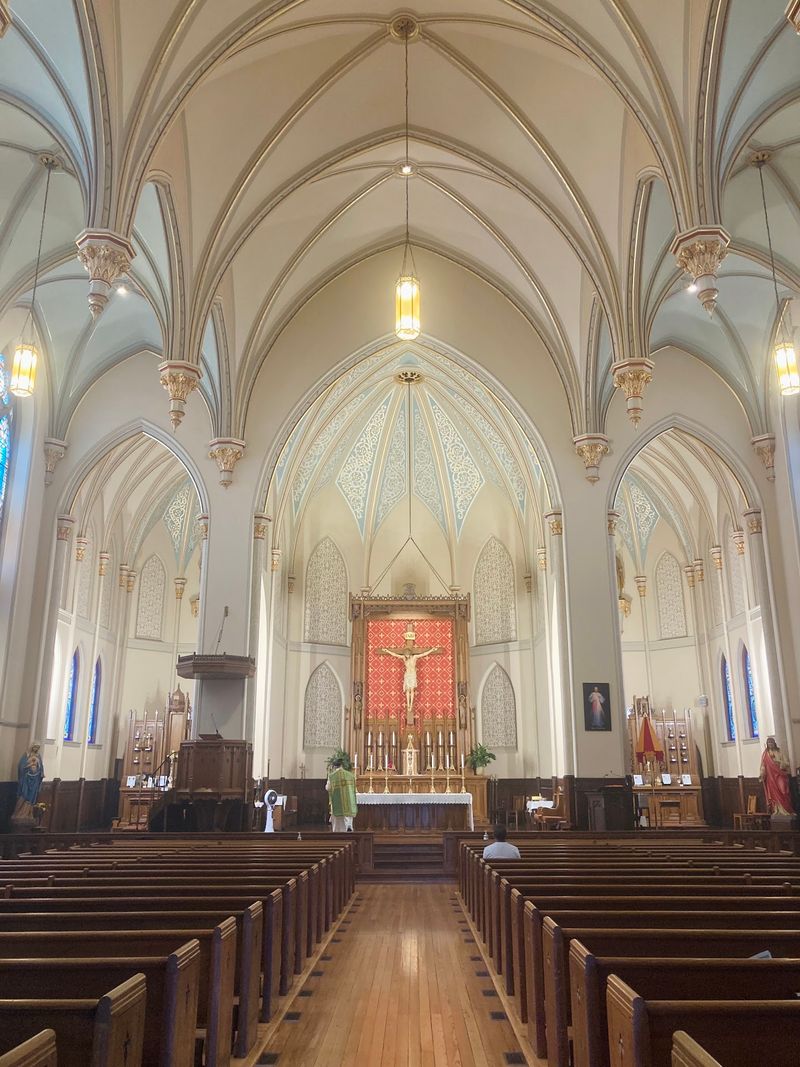
In Chattanooga’s historic St. Elmo neighborhood, the Basilica of Saints Peter and Paul rises with an Old World majesty that stops traffic. Completed in 1889, this Romanesque Revival masterpiece features twin bell towers that frame the entrance and announce the building’s importance from blocks away. The red brick exterior with stone accents creates a warm, inviting presence while maintaining impressive scale and dignity.
The basilica earned its official designation from the Vatican in 2011, recognizing both its architectural significance and its role in the regional Catholic community. This honor places it among a select group of churches in the United States with basilica status. The building’s rounded arches and sturdy construction echo ancient Roman architecture, connecting modern worshipers to centuries of Christian tradition.
Walking into the nave feels like entering a European pilgrimage church. Rows of columns march toward the altar, supporting arches that frame the central space with rhythmic grace. The ceiling soars overhead, decorated with painted designs and architectural details that reward careful examination.
Stained glass windows glow with color, filtering Tennessee sunlight into patterns of sacred beauty.
The basilica’s interior artwork includes statues, paintings, and decorative elements that span more than a century of additions and restorations. Each piece contributes to an overall atmosphere of reverence and artistic achievement. The building has been carefully maintained and updated over the years while preserving its historic character.
Standing in this sacred space, surrounded by such craftsmanship and beauty, you could easily imagine yourself in Italy rather than the Tennessee Valley.
6. St John’s Episcopal Cathedral – Knoxville
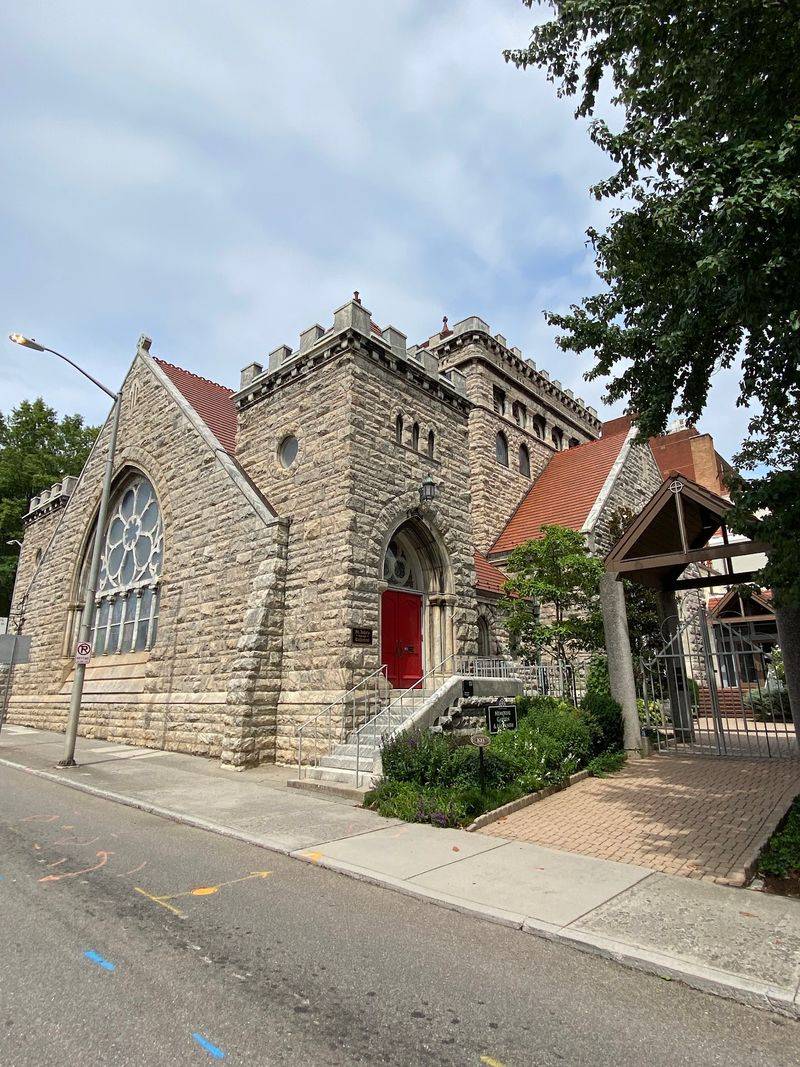
Overlooking downtown Knoxville from its hilltop perch, St. John’s Episcopal Cathedral has anchored the city’s skyline since 1892. The Gothic Revival design incorporates local Tennessee marble and limestone, grounding this European-inspired architecture in distinctly regional materials. The result is a building that feels both transported from another place and perfectly suited to its East Tennessee setting.
The cathedral’s tower and steeply pitched roof create a dramatic silhouette against the sky, especially when lit at night. Stone buttresses support the walls, adding both structural strength and visual interest to the exterior. The main entrance features a pointed Gothic arch that welcomes visitors into the sacred space beyond.
Careful stonework throughout demonstrates the skill of the craftsmen who built this enduring structure.
Inside, the sanctuary combines intimate warmth with impressive vertical space. Dark wood pews and trim contrast beautifully with light-colored walls and the glow of stained glass. The windows tell stories through colored glass, their artistry appreciated by generations of worshipers and visitors.
Sunlight streaming through creates an ever-changing play of light and shadow throughout the day.
The cathedral serves as the seat of the Episcopal Diocese of East Tennessee, making it both a parish church and a regional center of worship. Its location near the University of Tennessee campus has connected it to academic and cultural life in Knoxville for more than a century. The building’s combination of architectural beauty and active community engagement keeps it vital and relevant while honoring its historic past.
7. St. John’s Lutheran Church – Knoxville
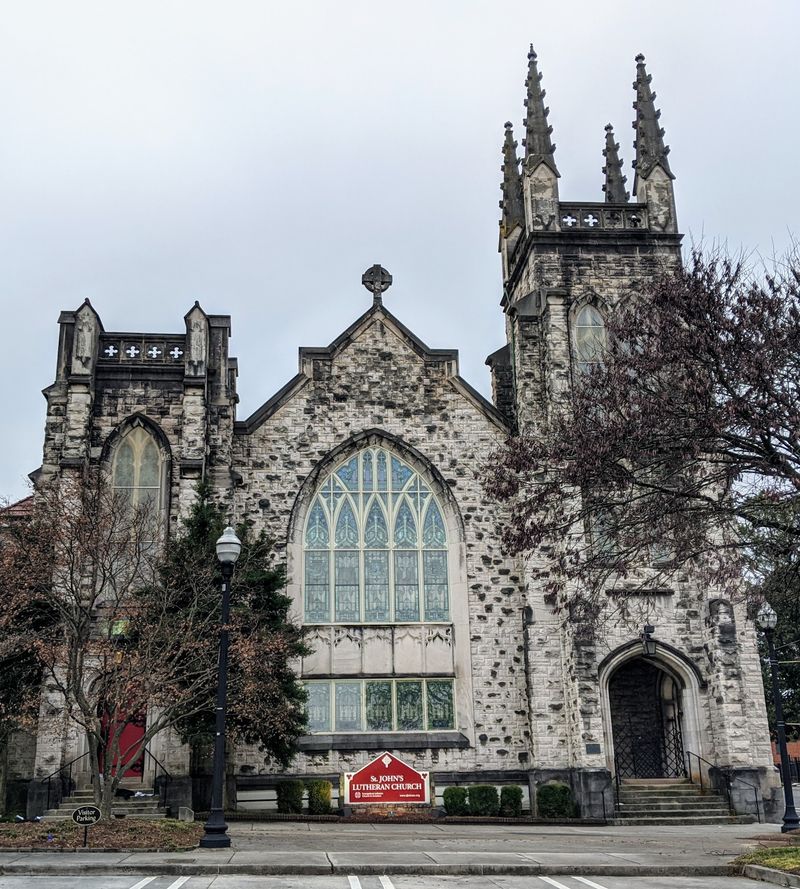
Founded by German immigrants in 1843, St. John’s Lutheran Church brings a taste of Old World tradition to Knoxville’s streets. The current building, completed in 1913, showcases architectural elements more commonly seen in German and Scandinavian Lutheran churches than in the American South. Its solid construction and thoughtful design reflect the values of the community that built it: permanence, craftsmanship, and reverence.
The church’s exterior combines brick and stone in patterns that create visual interest without excessive ornamentation. Arched windows and doorways add grace to the sturdy walls, while the tower announces the building’s purpose to the surrounding neighborhood. The overall effect is one of quiet dignity rather than showy grandeur.
This restrained approach to decoration allows the quality of materials and construction to speak for themselves.
Stepping inside reveals a sanctuary designed for both excellent acoustics and spiritual focus. The layout follows traditional Lutheran principles, with the altar, pulpit, and font positioned to emphasize the centrality of Word and Sacrament. Wooden pews, carved details, and carefully chosen colors create an atmosphere of warmth and welcome.
The space feels intimate despite its size, encouraging a sense of community among those gathered.
What sets St. John’s apart is how it preserves and celebrates its immigrant heritage while serving a diverse modern congregation. The building stands as a testament to the German families who established Knoxville’s Lutheran community and built a church worthy of their faith. Walking through its doors, you experience architecture and atmosphere that could transport you to a village church in Bavaria or Saxony.
8. The Cathedral of the Most Sacred Heart of Jesus – Knoxville
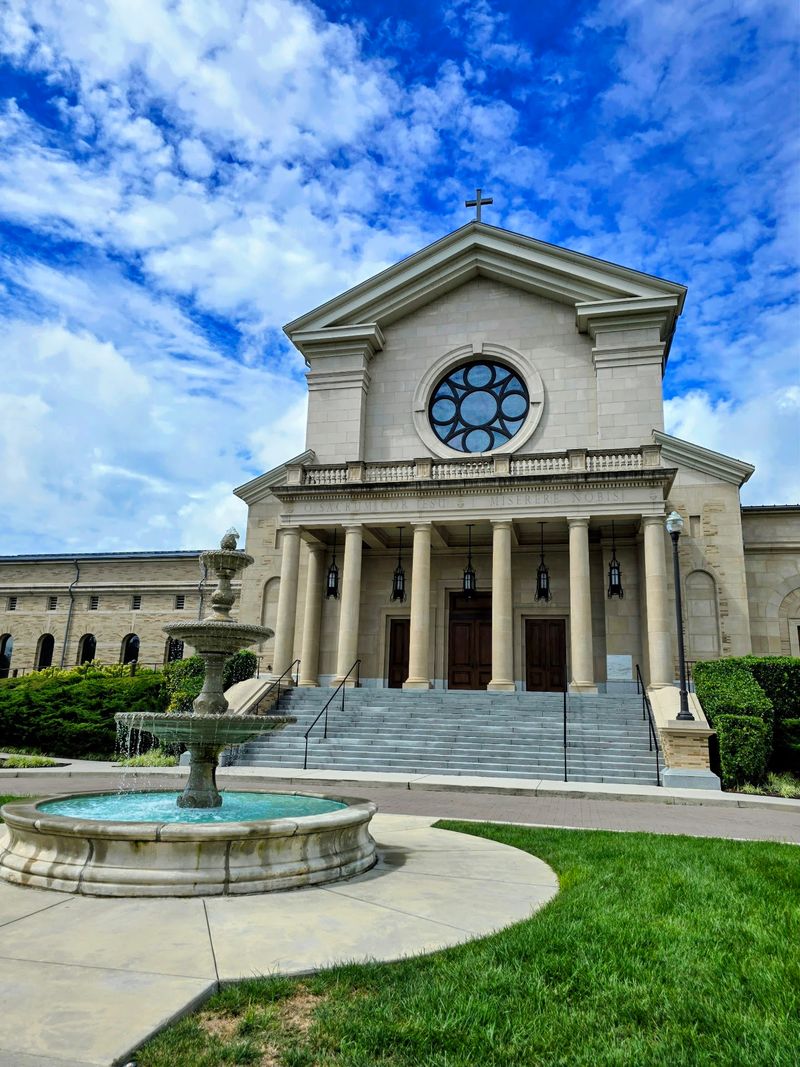
Dominating a prominent corner in downtown Knoxville, the Cathedral of the Most Sacred Heart of Jesus has served the Catholic community since 1913. The Romanesque Revival design features a massive rose window that serves as the building’s centerpiece, drawing eyes upward and flooding the interior with colored light. Constructed from warm-toned brick and stone, the cathedral projects both strength and beauty from its urban setting.
The building’s twin towers were planned but never completed, yet the cathedral’s presence remains commanding without them. Rounded arches frame the entrance and windows, echoing ancient Roman architecture and connecting modern worshipers to centuries of Christian building tradition. The facade’s careful composition and quality materials ensure the building holds its own among Knoxville’s varied architectural landscape.
Inside, the cathedral opens into a surprisingly spacious nave with vaulted ceilings and elegant proportions. Marble altars, detailed woodwork, and religious artwork create layers of visual interest that reward repeated visits. The aforementioned rose window becomes even more spectacular from the interior, its intricate tracery and colored glass creating patterns of light that shift with the sun’s movement.
Columns and arches organize the space while maintaining clear sightlines to the altar.
The cathedral underwent significant restoration in recent decades, preserving its historic character while updating systems for modern use. This careful stewardship ensures that future generations can experience the building as its creators intended. As the seat of the Diocese of Knoxville, it serves both ceremonial and everyday functions, remaining a vital part of the city’s religious and cultural life while transporting visitors beyond Tennessee’s borders through its architecture.
9. St Mary’s Episcopal Cathedral – Memphis
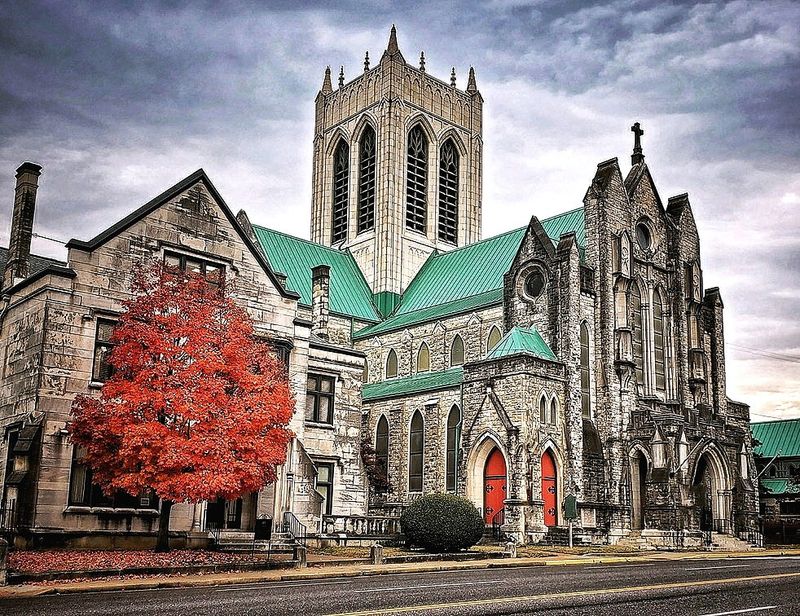
Rising gracefully in downtown Memphis, St. Mary’s Episcopal Cathedral has watched over the city since 1898. The Gothic Revival architecture features a soaring spire that punctuates the Memphis skyline, visible from the Mississippi River and serving as a landmark for travelers and residents alike. Built from local materials with imported craftsmanship techniques, the cathedral represents a remarkable achievement in Southern church architecture.
The exterior’s detailed stonework includes carved figures, decorative tracery, and flying buttresses that aren’t merely ornamental but actually support the building’s structure. Pointed arch windows march along the sides, their stained glass visible even from outside when light shines through. The main entrance invites visitors through elaborately carved doors into the sacred space beyond.
Every element of the facade demonstrates careful planning and skilled execution.
The interior lives up to the exterior’s promise with a nave that stretches toward a beautifully appointed altar area. Wooden ceiling beams cross overhead in patterns that please the eye while supporting the roof. Stained glass windows on both sides tell biblical stories and honor saints, their colors ranging from deep jewel tones to lighter, more delicate hues.
The overall effect creates an atmosphere of transcendent beauty.
St. Mary’s serves as the cathedral for the Episcopal Diocese of West Tennessee, hosting both regular worship and special diocesan events. The building has undergone careful preservation efforts to maintain its historic fabric while ensuring it remains functional for contemporary use. Standing in the nave or walking through the side aisles, you experience architecture that could place you in England’s countryside rather than Tennessee’s largest river city.
10. Cathedral of the Immaculate Conception – Memphis
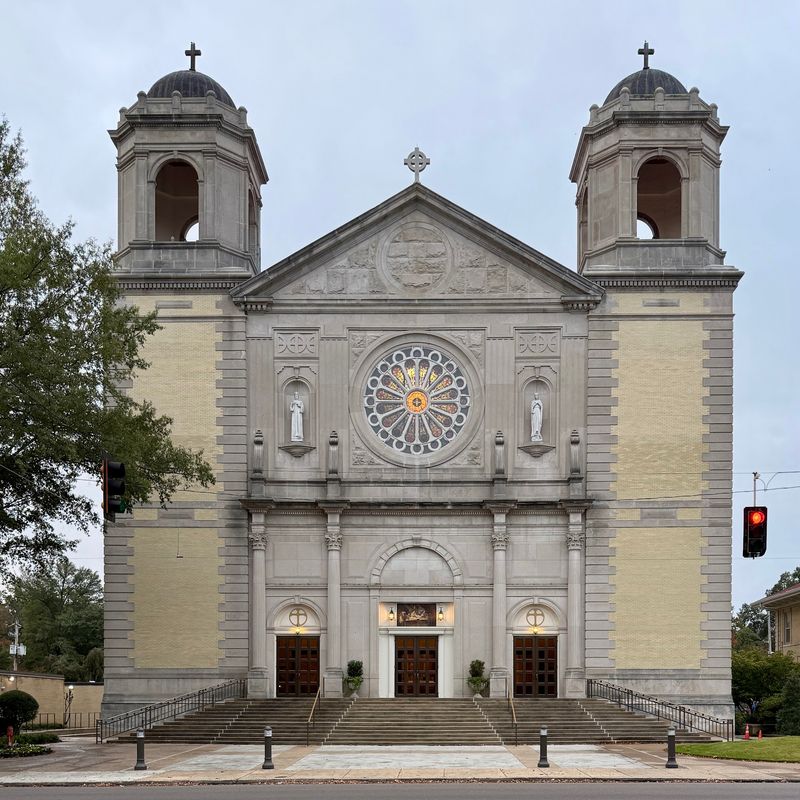
In Memphis’s Central Gardens neighborhood, the Cathedral of the Immaculate Conception presents one of Tennessee’s most ornate church interiors. Completed in 1938, the building combines Baroque Revival and Renaissance influences to create spaces of extraordinary richness and beauty. The exterior’s brick construction and copper dome hint at the treasures within, but nothing quite prepares first-time visitors for the cathedral’s lavish interior decoration.
The facade features classical proportions and restrained ornamentation that provide dignity without overwhelming the senses. Twin towers flank the entrance, and the central dome rises behind them, its copper surface weathered to a distinctive green patina. The building sits back from the street, allowing its full composition to be appreciated from the sidewalk.
Mature trees frame the cathedral, adding natural beauty to the architectural statement.
Step through the doors and you enter a world of color, gold, and artistic detail. The interior surfaces are covered with murals, mosaics, and decorative painting that create an almost overwhelming visual feast. The dome’s interior features a stunning representation of heaven with angels and saints rendered in brilliant colors.
Marble altars, ornate metalwork, and carved wood contribute to the sense of sacred splendor.
The level of artistic detail throughout the cathedral is simply remarkable. Every surface seems to have been considered as an opportunity for beauty and meaning. Stained glass windows add more color and light to spaces already rich with decoration.
The overall effect transports visitors to the grand cathedrals of Europe, making it easy to forget you’re in the American South rather than Rome or Madrid.
11. Calvary Episcopal Church – Memphis
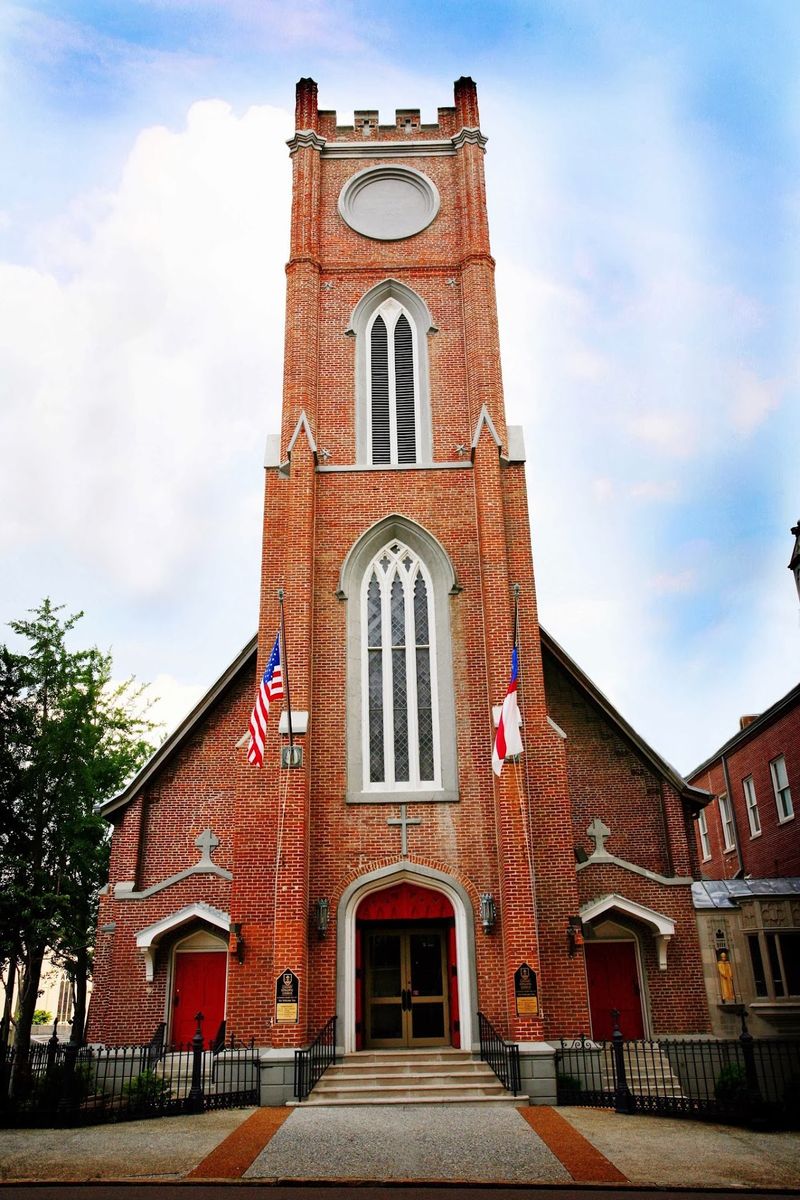
Standing proudly in Memphis’s historic district, Calvary Episcopal Church has served its community since 1843, making it one of the city’s oldest congregations. The current Gothic Revival building dates from 1893 and showcases the architectural ambitions of Memphis’s late Victorian era. Constructed from rough-cut stone with fine detail work around windows and doors, the church balances rustic materials with refined craftsmanship.
The church’s tower and steep roof create a distinctive profile that marks it as something special among the surrounding buildings. Stone buttresses support the walls, their practical function enhanced by decorative carving and careful proportioning. The entrance features a pointed Gothic arch with detailed stonework that rewards close examination.
The building has weathered more than a century of Memphis weather while maintaining its structural integrity and visual appeal.
Inside, the sanctuary preserves much of its original character with dark wood pews, exposed timber ceiling beams, and walls that show the texture of their construction. The stained glass windows are particularly noteworthy, created by skilled artisans and depicting biblical scenes with artistic sensitivity. Light filtering through these windows creates a constantly changing atmosphere as the sun moves across the sky.
The altar area features carved woodwork and religious artwork that focuses attention on the liturgical action.
What makes Calvary particularly moving is how it combines architectural beauty with a sense of lived history. Generations of Memphis families have worshiped within these walls, creating layers of memory and meaning that add depth to the physical structure. The building serves as both a functioning church and a link to Memphis’s past, offering visitors a glimpse of Southern Gothic Revival architecture at its finest.
12. The Downtown Presbyterian Church – Nashville
Perhaps the most unexpected architectural surprise in all of Tennessee, the Downtown Presbyterian Church breaks every rule about what a church should look like. Built in 1851, this extraordinary building embraces Egyptian Revival style with a boldness that still startles modern visitors. Massive columns with lotus capitals support a pedimented facade that would look at home along the Nile rather than the Cumberland River.
It’s the only surviving example of Egyptian Revival church architecture in the United States.
The exterior’s geometric lines and exotic details create an immediate sense of stepping into another world. The building’s designer, William Strickland, had previously used Egyptian motifs for other projects, but here he committed fully to the style. The result is a structure that defies expectations and challenges assumptions about American religious architecture.
Smooth stucco surfaces and bold forms make the building unmistakable from any angle.
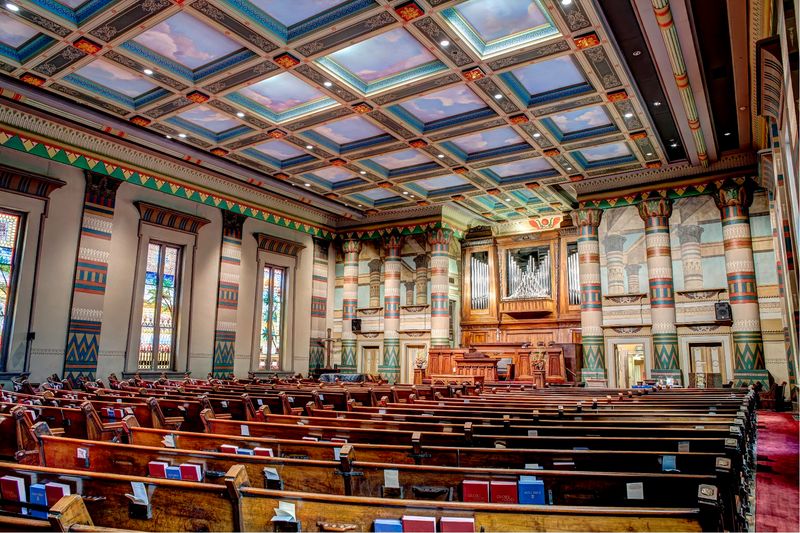
The interior continues the Egyptian theme with painted decorations covering nearly every surface. Walls and ceiling feature hieroglyphic-inspired patterns, lotus motifs, and color schemes drawn from ancient Egyptian art. Columns march down the sides of the sanctuary, their capitals blooming with stylized flowers.
The overall effect is unlike any other church interior you’ll encounter anywhere. Even the pews and woodwork incorporate Egyptian design elements.
What began as a daring architectural experiment has become a treasured landmark and a testament to Nashville’s willingness to embrace the unconventional. The church underwent major restoration in the 1980s, bringing back the vibrant colors and details that had been covered or lost over the years. Visiting this remarkable building genuinely makes you forget you’re in Tennessee, transporting you instead to the ancient world of pharaohs and pyramids.