
Running feels a lot easier when the route gives you something worth looking at every few steps. Along the Detroit RiverWalk, paved paths pair skyline views with open water, public art, green spaces, and plenty of room to set your own pace.
The appeal is how flexible the outing can be, whether you want a quick jog, a longer training run, or a relaxed walk with a few stops along the way. Cooler fall mornings make the riverfront especially inviting without changing the simple draw of the route.
For anyone looking for an easy Michigan run with scenery built in, the Detroit RiverWalk is a strong place to start.
Start With a Skyline and a Wide Stretch of Water
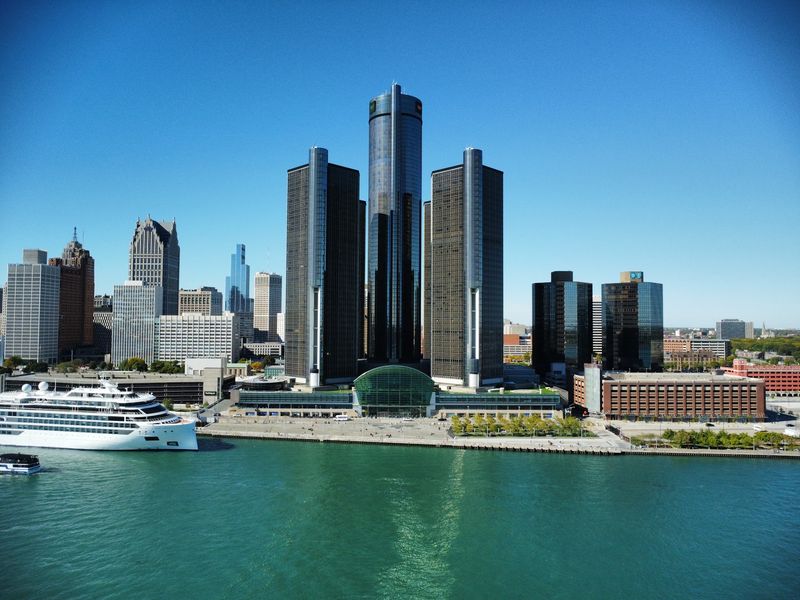
The first few steps offer a useful distraction: there is plenty to see before you even settle into a pace. Downtown buildings rise near the path, while the Detroit River opens up beside it.
On a clear fall morning, that contrast gives an ordinary jog a setting you can enjoy without hurrying.
Start near the downtown riverfront and give yourself a minute to look around before pressing a watch button. Find the direction you want to run, notice where other path users are moving, and begin gently.
Cold legs rarely need a fast opening mile, even when the air makes you eager to go.
The paved walkway is a friendly surface for an easy outing. You do not need to pick your way along a dirt trail or study a complicated route.
Keep your eyes ahead, though. Walkers may stop for a photo, and a bicycle can approach while you are watching the water.
Morning light changes the scene as you move. Glass on the city side catches the sun, while small ripples break up reflections on the river.
If the sky is cloudy, the view becomes quieter but no less interesting. Either way, the open space helps the run seem less tied to blocks and traffic lights.
Try using a visible point ahead, such as a bend in the walkway, as your first short goal. Once you reach it, choose another.
That simple habit keeps the effort relaxed and gives you natural chances to check your breathing, shoulders, and stride.
There is no prize for covering the prettiest stretch at top speed. Leave enough room in your morning to pause safely off the main flow of the path.
A look back toward the city can reveal a view you missed while running forward, with the river still moving steadily beside you.
Let Michigan’s Riverfront Set Your Distance
A good easy run has a plan you can change. The Detroit RiverWalk makes that simple: head along the waterfront, then turn around when you have covered half the distance you want.
You get a clear return route without having to build a loop through streets you do not know.
For a short outing, run for ten minutes in one direction and come back at about the same effort. If you have more time, extend the first leg before turning.
Time is often more useful than distance here, since a photo stop or a windy patch can change your pace.
Before setting off, note where you entered the walkway and pick out a clear landmark nearby. The waterfront has several access points, and a familiar building can help you find your way back.
Do not assume every section will be open on your chosen morning. Maintenance may affect a stretch, so be ready to turn early.
That flexibility is part of the route’s appeal. You can run steadily, mix running with walking, or bring someone whose pace differs from yours.
Agree on a turnaround time before you start. Then neither person has to guess whether the other wants another ten minutes or a water break.
Keep the return leg in mind when the breeze picks up. A tailwind can make the outward run seem wonderfully easy, only to push back once you reverse direction.
If your goal is a comfortable effort, slow down rather than fighting to keep the same number on your watch.
Near the end, resist the urge to sprint just because your starting point appears. Ease down to a walk and let your breathing settle.
An out-and-back run should finish where it began, with enough energy left to enjoy one last look across the river.
Share the Path Without Losing Your Rhythm
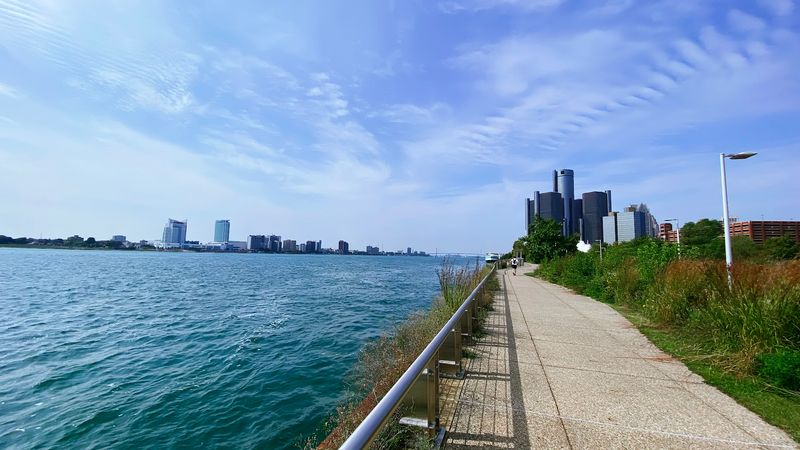
A runner, a bicycle, and a slow stroller can all reach the same patch of pavement at once. That is normal on the Detroit RiverWalk.
Its open walkway welcomes more than one kind of outing, so the easiest run begins with a little patience and a clear path around you.
Keep to the right where that fits the flow, and leave room when passing. Give a short, friendly warning if someone may not hear you coming.
Avoid slipping between two walkers or darting around a group near a narrow spot. Saving a few seconds is not worth startling somebody.
Pay extra attention near places where people stop to watch the river. A person taking a picture may step backward without looking; a child may change direction quickly.
Shorten your stride, pass with space, and pick up your normal rhythm after the area opens again. An easy run leaves room for small slowdowns.
Headphones are fine if you can still hear what is happening nearby. Low volume or one uncovered ear helps you notice bicycle bells, footsteps, and a companion’s voice.
If you run with a friend, move into a single line when others need to pass. The path works better when everyone can predict your next move.
Fall mornings can be quieter than a busy afternoon, but quiet does not mean empty. Look ahead rather than down at your watch, especially when you cross an entrance to the walkway.
If you need to tie a shoe or check directions, step aside first so the walking lane stays clear.
None of these habits takes the fun out of running. They let you hold a comfortable pace without treating the waterfront like a racecourse.
You can still notice the water, talk with a friend, and give another runner a nod as they pass in the opposite direction.
Canada Is Right There Across the River
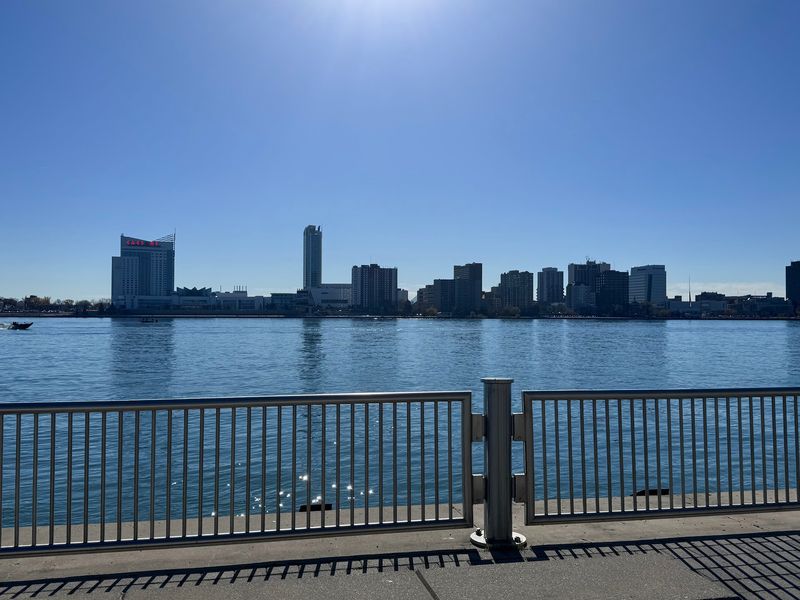
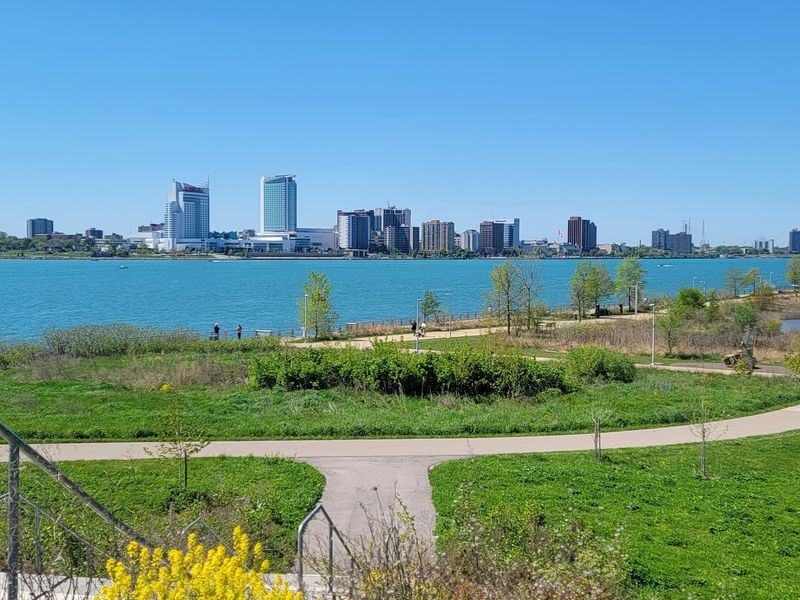
Across the water, you are looking at Windsor, Ontario. That is a striking sight to have beside a morning run: another country sitting in plain view while your shoes stay on a Detroit path.
The river gives you a steady line to follow, but the far shore keeps drawing your eyes upward.
Choose a clear morning if seeing across the water is a big part of your plan. From the walkway, watch how the buildings on the opposite bank appear between passing clouds and patches of light.
You might also spot activity on the river. Let yourself look, but slow down when a view asks for more attention.
The open sightline is especially useful if you run without music. Water, wind, and the sounds of other path users give the route its own quiet background.
It is not silent, and it is not separate from downtown. Both sides of that contrast are visible as you move.
For a photo, step fully off the main walking line before stopping. Aim for the river and the opposite shore together so the picture shows the short distance between them.
Then check behind you before rejoining the path. That little pause can work as a planned recovery break rather than an interruption.
If you are running with someone younger, the view can start an easy conversation. Ask them to point out a boat or compare the two shorelines.
You can keep moving at a talkable pace while giving them a reason to look beyond the next bend. There is no need to turn the outing into a geography lesson.
On the way back, glance across again from a different angle. The far bank may be the same, but the changing light and your new position alter the picture.
That steady view is one reason a simple out-and-back can stay interesting all morning.
A Working City Runs Beside You
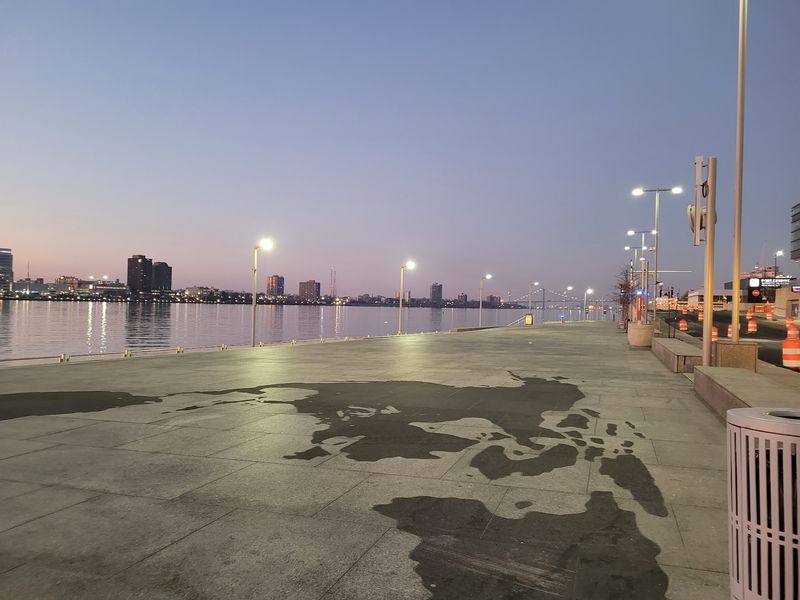
Not every waterfront run takes you away from the city. Here, Detroit stays close.
Buildings, paths, and public gathering spaces sit near the river, so your route shows how the shoreline fits into daily life rather than hiding it behind trees. It is a change of scene without leaving downtown behind.
Look around as you jog and you will notice that the walkway serves several purposes. Some people are getting exercise; others are taking a short walk, sitting for a while, or spending time with family.
There may be quiet stretches and busier ones within the same outing. Your pace can adjust to both.
That mix gives the run a friendly, everyday character. It also explains why you should not expect a continuous row of shops beside the path.
Treat the RiverWalk as a place to move and look around, not as a shopping trip with a run squeezed in. Bring what you need for your chosen distance.
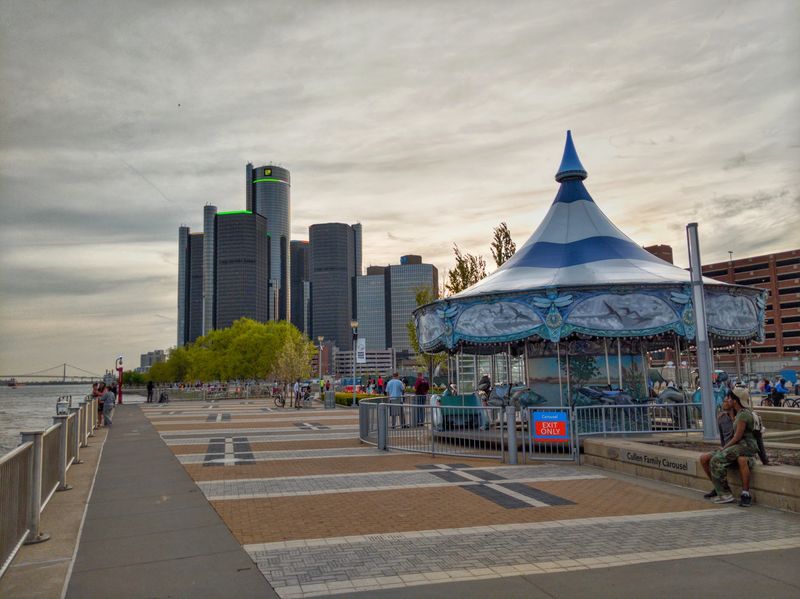
Near the downtown waterfront, features such as the carousel offer a reminder that this space is used for more than exercise. You do not have to stop there during your run.
Simply passing it can help you mark your place on the route and decide whether your turnaround is getting close.
If you want to learn the layout, make your first visit an unhurried one. Notice entrances, spots where the walkway widens, and places where you might rest afterward.
Familiar details can make the next visit easier to plan. They are more reliable than assuming every outing will have the same crowds or open sections.
By the time you head back, the city side may catch your attention as much as the river. Watch how the path connects people to the water, then keep moving.
The route is most interesting when you let its everyday uses remain part of the scene.
Dress for the Breeze, Not Just the Forecast
Fall air can seem mild when you leave home and much cooler beside the river. Open water gives the breeze room to reach the walkway, so check more than the temperature before heading out.
A light layer you can remove or unzip is often handier than a heavy jacket you cannot adjust.
Start a touch cool rather than dressed for standing still. After several minutes of gentle running, your body will warm up.
If the wind is sharp, a light hat or gloves may help on the first stretch. Choose gear you can carry easily if you no longer need it on the return.
Wear shoes that feel comfortable on pavement, and give yourself a brief walking warmup. Begin at a pace that lets you speak in full sentences.
You are aiming for an easy morning, not a test of how fast cold legs can move. Small steps at first can help you settle into a smooth stride.
Sunlight can be low in the morning, particularly later in fall. A cap may keep the glare out of your eyes, but watch the pavement when shadows cross it.
If you plan to arrive very early, check conditions ahead of time and choose a time when you can see your route clearly.
Bring water if your distance calls for it, even when you are not sweating much. Check current access information before leaving if you are counting on a restroom, a specific entrance, or parking nearby.
Services and open sections can change, so a quick plan saves you from a frustrating start.
Once you finish, put a dry layer on if you will stay by the water. Cooling down after a run can happen quickly in a breeze.
A little preparation lets you pay attention to the path and the view instead of wishing you had brought warmer hands.
Finish With a Walk, Not a Finish Line
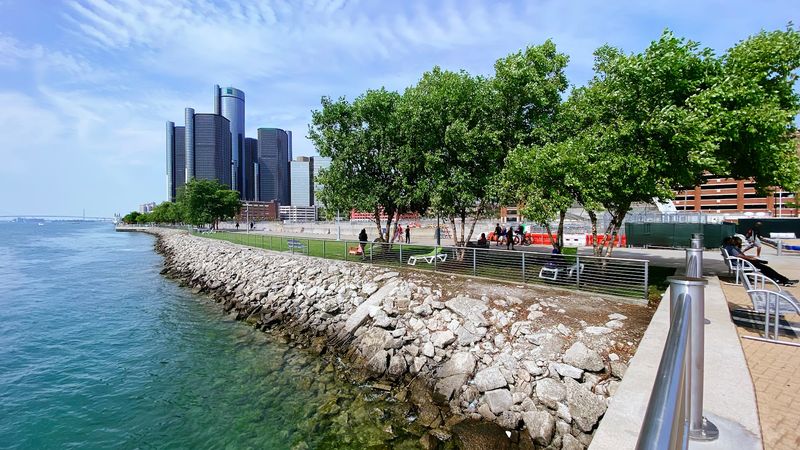
The best part of an easy run may come when you stop running. Instead of ending with a sudden halt, walk along the Detroit RiverWalk for a few minutes.
Your breathing can settle while your eyes catch details that were easy to miss at a jogging pace, from moving water to changing city light.
Give yourself space to cool down without blocking the walkway. If you want to stretch, move to a spot away from through traffic.
A few relaxed steps and a drink of water are enough for most short outings. Save longer stretches for somewhere you will not make others weave around you.
Use the walk to check how your route worked. Was the turnaround easy to spot?
Did the wind change your effort? Were there sections where you wanted more room to pass?
Those small answers can help you shape another run, whether you return alone or bring a friend next time.
You can also keep the morning simple and leave the watch out of it entirely. Run at a pace that lets you talk, turn around when you are ready, and stroll the final stretch.
The paved path and broad river view provide enough direction without a strict training plan.
If you brought a companion, the cooldown is a good time to compare what each of you noticed. One person may have watched the opposite shoreline; another may have focused on the downtown buildings.
You have covered the same path, yet your favorite view might not be the same.
Before leaving, take one last look at the water and make sure you have your belongings. A crisp fall morning does not need a dramatic ending.
On the Detroit RiverWalk, an easy run can simply become an easy walk, with the river beside you for both.