You do not need a battlefield to uncover Illinois’ deep connections to the Civil War. Across the state, historic homes, monuments, cemeteries, museums, and former prison camp sites preserve stories of the soldiers, generals, civilians, and prisoners whose lives were shaped by the conflict.
Some stand near well-traveled roads yet receive barely a glance from people passing through. Others require a small detour into communities with remarkable chapters of history hiding in plain sight. Together, they reveal just how significant Illinois was during the war. These 13 fascinating Civil War sites can add an unexpected dose of history to your next road trip.
1. General John A. Logan Museum (Murphysboro)
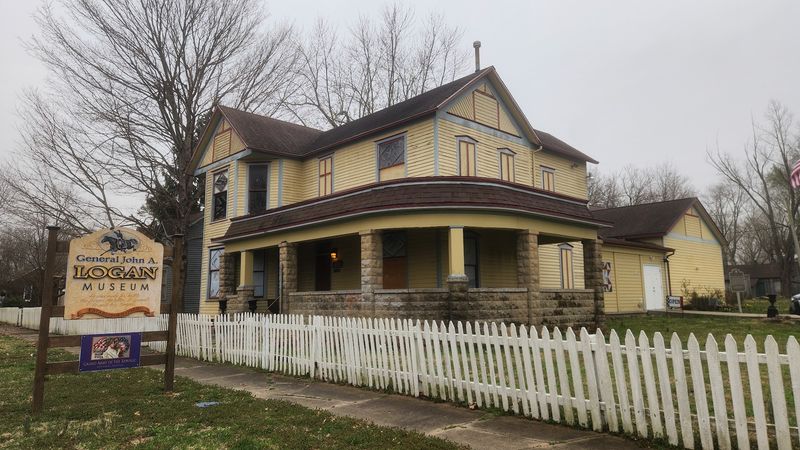
Every Memorial Day picnic has a southern Illinois connection. Major General John A. Logan, a Murphysboro native, pushed hard for a national day to honor fallen soldiers after the war. His hometown museum tells that story and a lot more.
Logan was a politician before he was a soldier. When the war broke out, he left Congress and put on a Union uniform, eventually rising to become one of the better-known volunteer generals of the conflict. Soldiers nicknamed him Black Jack, thanks to his dark hair and mustache.
Inside, the exhibits move through his life in a way that is easy to follow. You will find photographs, family artifacts, and maps that show where Logan and his men marched. Political memorabilia fills in the years after the fighting, when he stayed active in national politics.
Weapon fans get their share too. Civil War rifles and other arms are on display, giving you a close look at the gear soldiers carried. Seeing the real thing makes textbook battle descriptions click in a new way.
Step outside and the story keeps going. The grounds preserve the site of Logan’s birthplace, so you are standing right where his life began. That link between the man and the land adds weight to a visit.
Murphysboro sits a short drive from Carbondale and the Shawnee National Forest, so the museum fits nicely into a southern Illinois weekend. Pair it with a hike or a stop at a local barbecue joint, since the town is known for its smoky food scene.
Plenty of people cruise through this corner of the state heading somewhere else. Slowing down here gives you a front-row look at the man behind a holiday most Americans celebrate without ever knowing his name.
2. Fort Defiance State Park (Cairo)
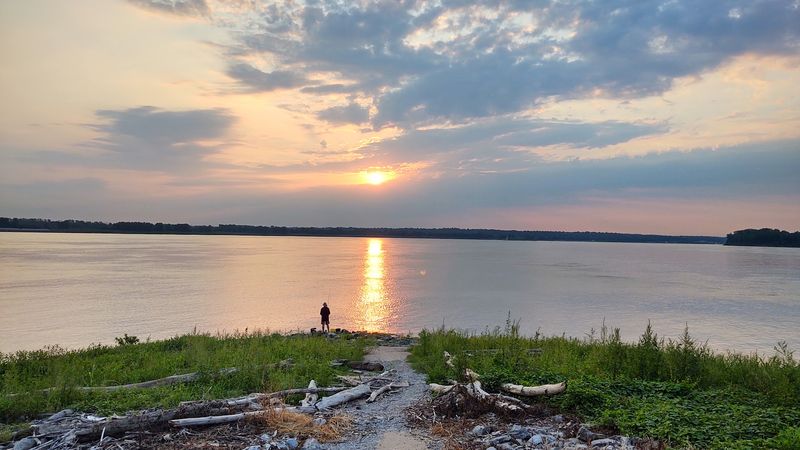
Stand at the very tip of Illinois and two giant rivers meet at your feet. On one side flows the Ohio, on the other the Mississippi. Back in 1861, Union leaders took one look at this spot and knew they had to hold it.
Control of these rivers meant control of travel, supplies, and troop movement deep into the South. So the Union set up Camp Defiance here in the early years of the war. Soldiers drilled, camped, and prepared for campaigns that would push down the Mississippi.
One name stands out. Ulysses S. Grant operated from Cairo during this period, before he became the most famous general in the Union Army.
Picture a mostly unknown officer planning moves that would later change the course of the war, all from this muddy river town.
Today the park is quiet and wide open. The land is flat, the sky feels huge, and barges slide past on the water. You can watch the two rivers blend, sometimes showing slightly different colors where they come together.
Cairo itself is worth a slow drive. The town has seen hard times, and many old buildings stand empty, but the historic architecture hints at how important this place once was. Some grand homes and storefronts still show off their past.
Bring a camera and some patience. Sunset over the rivers can be striking, and the history makes the view more meaningful. Few places in the Midwest let you literally stand where a war strategy was born.
Since the park sits at the far southern tip of the state, it makes a natural turnaround point on a river road trip. The drive down Route 3 is scenic in its own right.
3. Mound City National Cemetery (Mound City)
Mound City looks like a sleepy river town now. During the Civil War, though, it buzzed with activity as a Union naval and hospital center. Gunboats were worked on here, and wounded soldiers arrived for care.
Not everyone made it home. In 1864, a national cemetery was established for soldiers who died in the area, and it remains one of the most moving stops in southern Illinois.
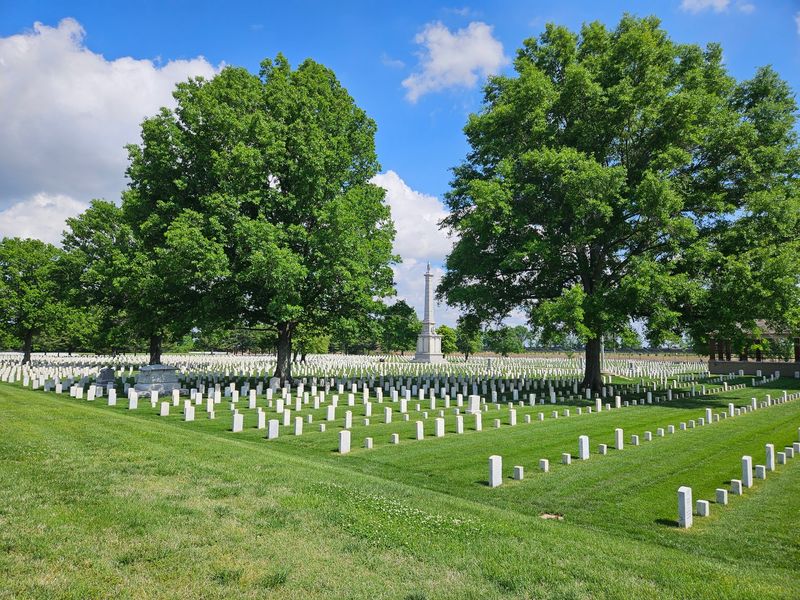
Walk the rows and you will notice something unusual. Union servicemen rest here, but so do Confederate prisoners. Both sides share the same ground, a quiet reminder that the war’s losses touched families everywhere.
The grounds are neat and peaceful. White headstones line up in long, careful rows, and the tall trees give welcome shade on hot days. A flag flies over it all, snapping in the river breeze.
History buffs sometimes spend a long time reading names and dates. Many markers belong to young men, some barely out of their teens. Others are labeled unknown, which hits in a different way.
Because it sits close to Cairo, this cemetery pairs perfectly with a visit to Fort Defiance State Park. You can see where troops gathered and then where many of them were laid to rest, all in one afternoon.
Visit respectfully, of course. This is an active national cemetery, and families still come here to honor loved ones from many wars. Keep voices low and stay on paths when possible.
Southern Illinois often gets overlooked in Civil War conversations. Places like this prove the region was deeply involved, sending care, supplies, and sacrifice down the rivers. A short detour off the highway reveals a chapter most textbooks skip entirely.
4. Alton Military Prison (Alton)
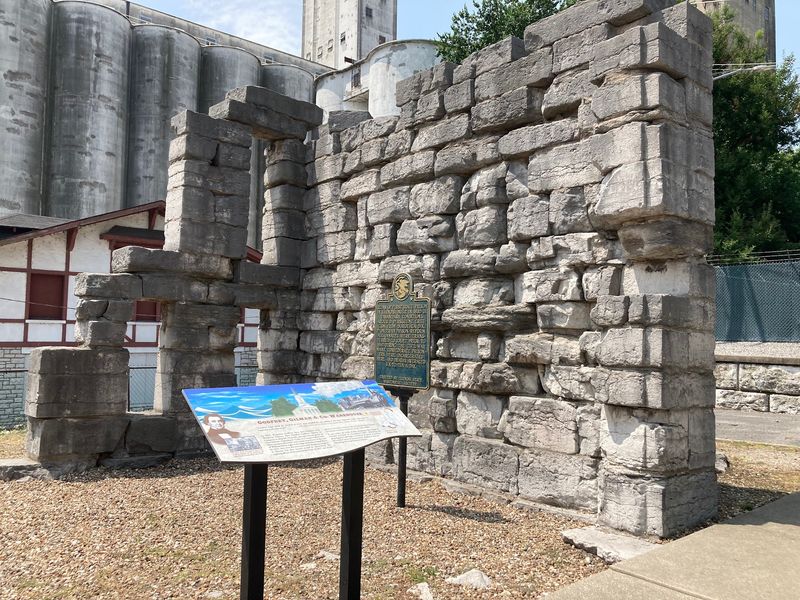
Blink and you might miss it. A chunk of old stone wall in Alton is all that remains of a building that once held thousands of Confederate prisoners.
The site started as the Illinois State Penitentiary, the state’s first. By the time the Civil War began, the prison had been closed because of poor conditions. Then the Union needed space for captured soldiers, and the old building was reopened for that purpose.
Things went badly. The prison became overcrowded fast, and disease spread through the cramped cells. Smallpox was the worst killer, claiming many lives before the war finally ended.
Standing beside the wall today, it is hard to imagine the noise and misery that once filled this corner of town. The stones are rough and weathered, and a marker explains what happened here. It takes only a few minutes to see, yet the story sticks with you.
Here is a handy tip. Plan to visit the nearby Confederate Cemetery on the same trip, since the two sites tell connected halves of one story. Seeing both gives you the full picture of what prison life cost.
Alton has plenty more to explore. The town sits on bluffs above the Mississippi River, and its old brick streets are packed with antique shops and restaurants. The Great River Road stretches north from here, offering some of the best views in the state.
Alton also has strong ties to the debates between Abraham Lincoln and Stephen Douglas, with the final debate held here in 1858. Walking through town connects the arguments before the war with the suffering during it.
A single wall might not sound like much. Once you know what it held, it becomes one of the most powerful stops along the river.
5. Confederate Cemetery (Alton)
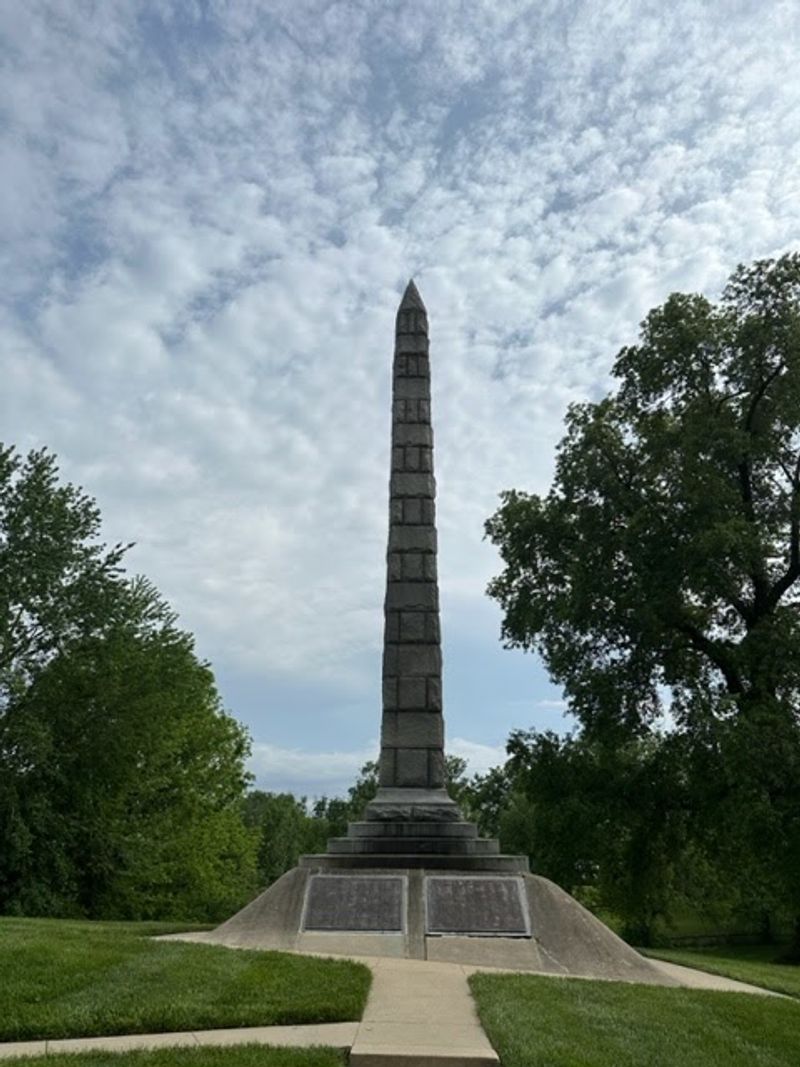
No long rows of headstones greet you here. Instead, a single tall monument rises over a quiet patch of grass tucked into an Alton neighborhood.
The cemetery holds the remains of Confederate prisoners who died at the nearby Alton Military Prison. Disease, especially smallpox, swept through the crowded cells, and the dead were buried away from town. Over time, this spot became their shared resting place.
Rather than marking each grave, the site honors the prisoners together. The monument lists names of those believed to be buried here, turning one stone into a record of many lives. Reading through them takes a while.
Visitors often expect something bigger. The cemetery is small and simple, and houses sit just beyond the edges. That ordinary setting is part of its impact, since history turns up right next to people’s backyards.
Many of the men buried here came from states far to the south. They died hundreds of miles from home, in a place their families likely never saw. Some local groups still gather to remember them and help care for the grounds.
Photography works well in soft morning or evening light, when the monument casts long shadows across the lawn. It is a peaceful place to pause, think, and read.
Because it sits just a few minutes from the prison wall, the cemetery makes an easy second stop. Together, they explain a part of Alton’s past that plenty of visitors never hear about while browsing antiques downtown.
Quiet stops like this balance out the bigger museums on a Civil War road trip. They remind you that the war was not only about famous generals. Ordinary soldiers, on both sides, paid the highest price, and many of their stories ended in places just like this.
6. Camp Butler National Cemetery (Springfield)
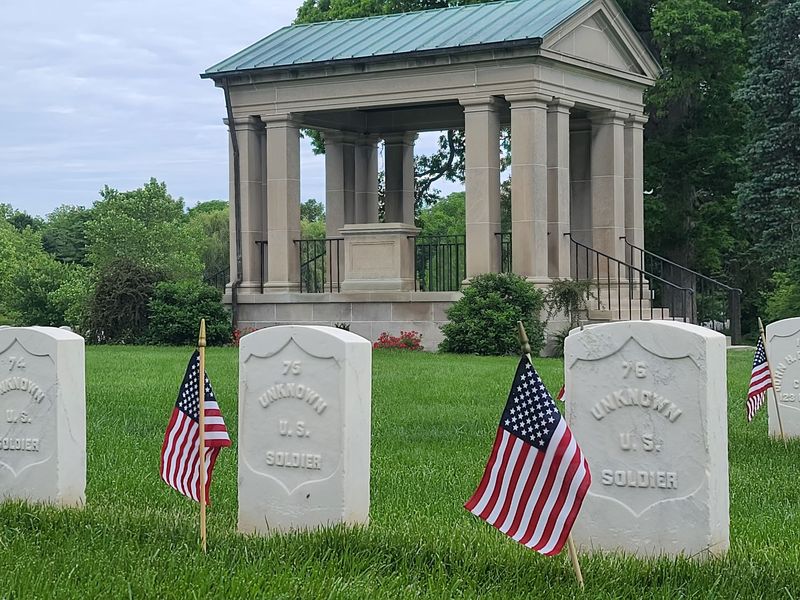
Thousands of young Illinois men got their first taste of army life at Camp Butler. They arrived as farmers, clerks, and shopkeepers and left as soldiers heading into war.
The camp, just outside Springfield, served as a major Union training and mustering facility. Recruits were organized into regiments, drilled in marching, and prepared for battle. The place stayed busy throughout the conflict.
Later, its role changed. Camp Butler also became a prison camp for captured Confederate soldiers. Suddenly the same grounds that trained Union troops held men from the other side.
That double history shows up in the cemetery. It was among the original national cemeteries created during the Civil War, and both Union and Confederate dead are buried here. A Confederate section sits within the grounds, marked by its own rows of stones.
Today, the cemetery covers wide, rolling ground dotted with trees. Veterans from later wars are buried here too, so the rows stretch far beyond the Civil War section. It is a calm, open space that invites slow walking.
Most visitors to Springfield head straight for the Lincoln sites downtown, which makes sense. Still, Camp Butler is only a short drive away and adds a different angle to the story. Lincoln led the nation, but places like this show the people who actually carried out the fight.
Take time to find some of the older markers. Their worn lettering and simple designs stand out from newer stones. Some list regiments, helping you picture which units these soldiers served in.
Fall is a lovely time to visit, when the trees turn gold and the air cools. Whenever you come, the grounds offer a thoughtful break between busier stops on a central Illinois trip.
7. Rock Island Confederate Cemetery (Rock Island)
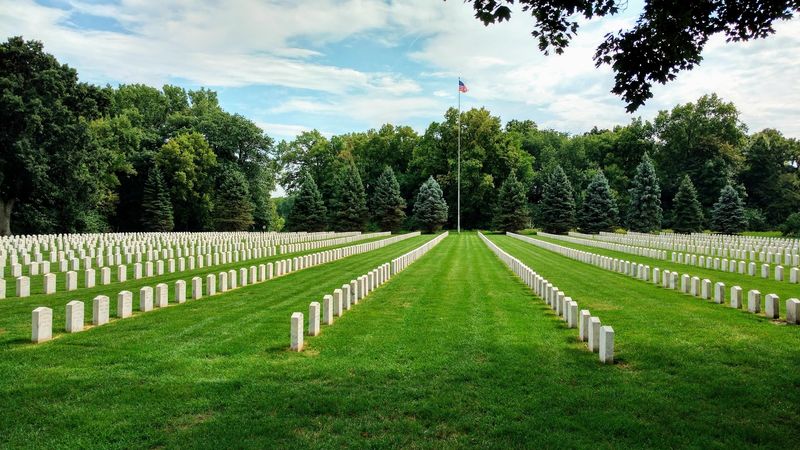
Getting here takes a little planning, and that is part of the adventure. The Rock Island Confederate Cemetery sits on Rock Island Arsenal, an active military installation in the middle of the Mississippi River.
During the Civil War, the island held the Rock Island Prison Barracks. Confederate soldiers captured in battle were sent here, far from home, to wait out the war. Harsh winters and disease took a heavy toll, and many prisoners never left.
Their graves remain on the island today. Rows of small white headstones stretch across the grounds, lined up in orderly fashion under tall trees. The setting is quiet and well kept.
Now for the practical part. Because the cemetery is on an active base, visitors must follow the Arsenal’s identification and access rules. Those requirements can change, so check the current guidelines before you make the drive to avoid getting turned away at the gate.
The effort pays off. Few cemeteries feel this tucked away, with the river nearby and military buildings in the distance. The island also holds a national cemetery for Union soldiers and other veterans, which offers a striking contrast.
History fans might enjoy the other attractions on the island as well, depending on what is open to the public. Older stone buildings on the Arsenal date back well over a century and hint at how important this spot has been to the military.
The Quad Cities area around it has plenty to do, from riverfront trails to local restaurants in Rock Island, Moline, and Davenport across the water. That makes it easy to build a full day around the visit. Travelers crossing the Mississippi here rarely realize what lies on the island below the bridges.
8. Douglas Tomb State Historic Site (Chicago)
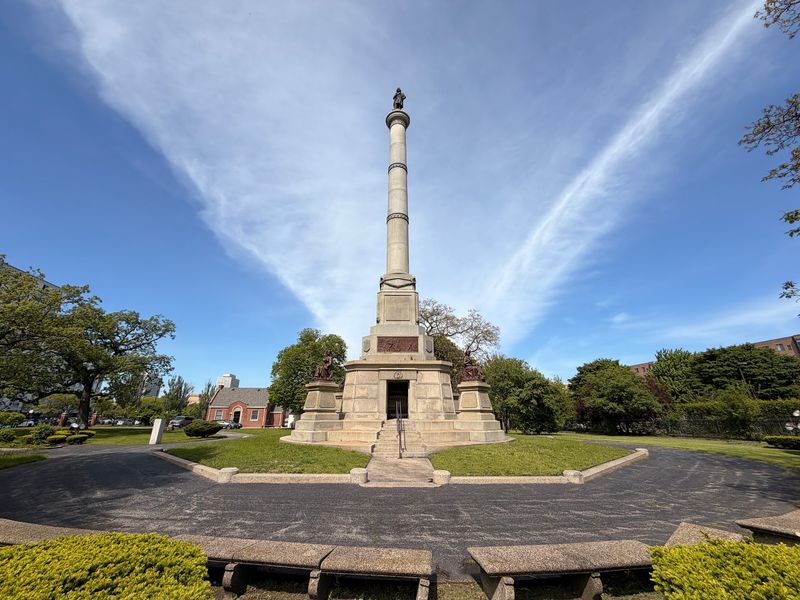
Abraham Lincoln’s biggest rival still has one of the best views in Chicago. Senator Stephen A. Douglas rests beneath a towering monument on the city’s South Side, not far from Lake Michigan.
Douglas and Lincoln faced off in famous debates in 1858 while running for a Senate seat. Douglas won that race, but Lincoln beat him for the presidency two years later. When the war came, Douglas urged support for the Union before he died in 1861.
His tomb is hard to miss once you are nearby. A tall column rises high above the grounds, topped by a bronze statue of Douglas himself. Around the base, sculpted figures and carvings add detail worth studying up close.
The story does not stop with Douglas. Part of his former estate nearby became Camp Douglas during the Civil War. At first, it served as a training camp for Union soldiers.
Later, the camp turned into a large prison for captured Confederates. Conditions were rough, and many prisoners died there. Almost nothing of the camp survives today, so the tomb area is one of the best places to connect with that history.
Chicago visitors usually stick to downtown, the museums, and the lakefront. Heading south to this site gives you a peek into a neighborhood many tourists never see. The small park around the tomb makes a nice spot for a short break.
Check posted hours before going, since access to the grounds may vary. Photos of the column against the sky turn out especially well on clear days.
Pair this stop with Oak Woods Cemetery, a short drive away, to follow the Camp Douglas story from start to finish. Together, they reveal a Civil War side of Chicago most residents barely know about.
9. Oak Woods Cemetery (Chicago)
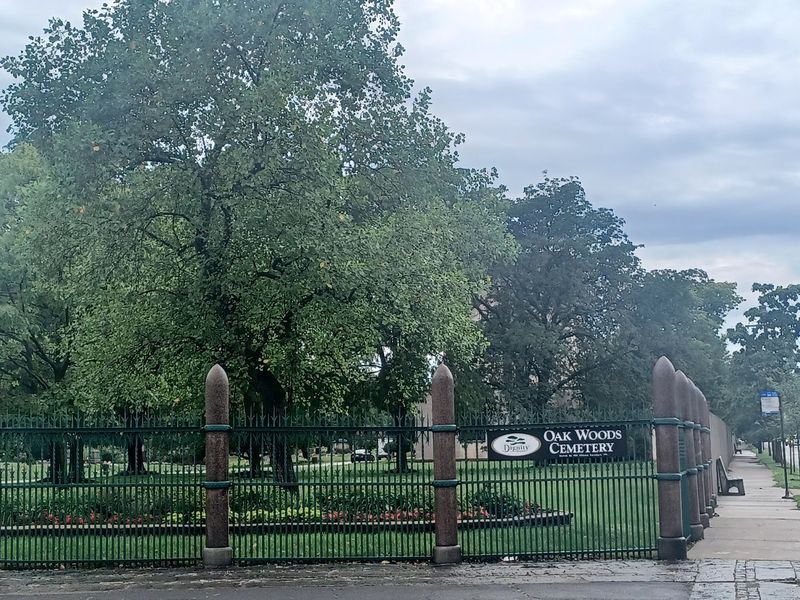
Winding lanes, old trees, and grand family monuments fill Oak Woods Cemetery on Chicago’s South Side. Keep driving along those curving paths and you will reach one of the largest Civil War memorials in the city.
It is called Confederate Mound. After the war, thousands of prisoners who died at nearby Camp Douglas were reinterred here. They had come to Chicago as captives and never went home.
A tall monument marks the spot. A bronze figure of a Confederate soldier stands at the top, and plaques around the base list names of the dead. The sheer length of those lists surprises most visitors.
So how did this happen in a northern city? Camp Douglas held a huge number of prisoners, and cold winters plus disease led to many deaths. The mound became the final gathering place for their remains.
Oak Woods has more history tucked around every bend. Many well-known Chicagoans are buried here, including famous athletes, politicians, and scientists. History lovers can easily spend an afternoon wandering.
The cemetery is large, so grab a map at the office if one is available. It will save you time hunting for Confederate Mound among the many sections. Driving slowly works well, since the grounds cover a lot of ground.
Trees here are mature and tall, giving the place a calm, park-like setting in the middle of a busy city. In autumn, the colors put on a real show.
Combined with the Douglas Tomb a few minutes away, this cemetery completes a Civil War loop that most Chicago travelers never think to take. Few people expect to find such a strong link to the war hiding among these quiet lanes.
10. Grand Army of the Republic Military Museum (Aurora)
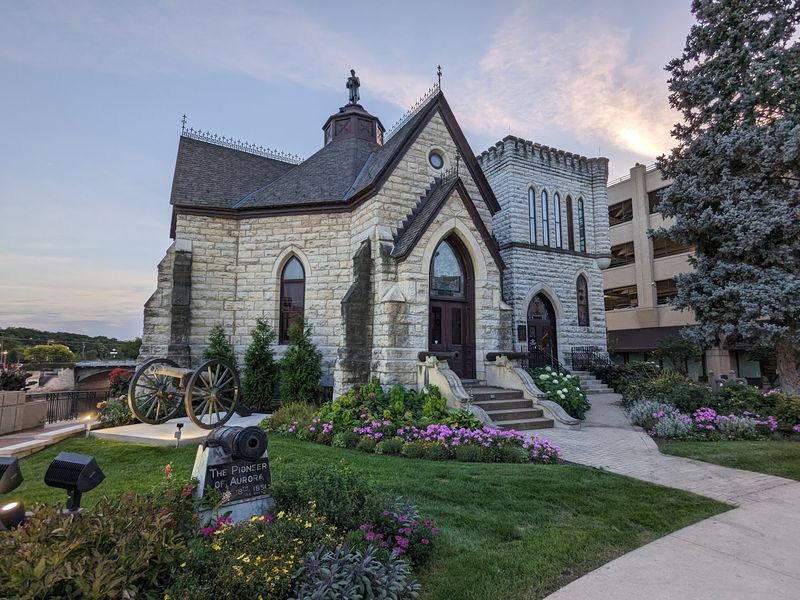
Old soldiers needed a clubhouse. In Aurora, local Union veterans got one, and their distinctive downtown building still stands.
The Grand Army of the Republic, often called the GAR, was a national group formed by men who served in the Union Army and Navy. Members met regularly, shared memories, supported one another, and pushed for veterans’ benefits. They also played a big role in honoring fallen comrades, including early Memorial Day events.
Aurora’s hall was built as a meeting place for this group. Its unusual design catches your eye from the street, making it one of the more memorable buildings in town. Inside, the museum keeps the GAR legacy alive.
Exhibits give a glimpse of life after the war. Most Civil War stops focus on battles and camps, but this place shows what happened once the shooting stopped. Men came home, raised families, and kept their bond with those who had fought beside them.
That angle makes the museum stand out. You get a sense of how veterans shaped their towns for decades, from parades to public monuments. Many statues in Illinois courthouse squares exist because groups like this raised money for them.
Aurora sits along the Fox River, and its downtown has been growing with restaurants, theaters, and riverfront paths. Adding the museum to a day out is simple, especially if you are already visiting the Paramount Theatre or walking by the river.
Hours can be limited at smaller museums like this one, so check ahead. Volunteers often share details you would never find on a sign.
For anyone curious about how the Civil War echoed through everyday life long after 1865, this building offers a rare, close-up view from the people who lived it.
11. Washburne House State Historic Site (Galena)
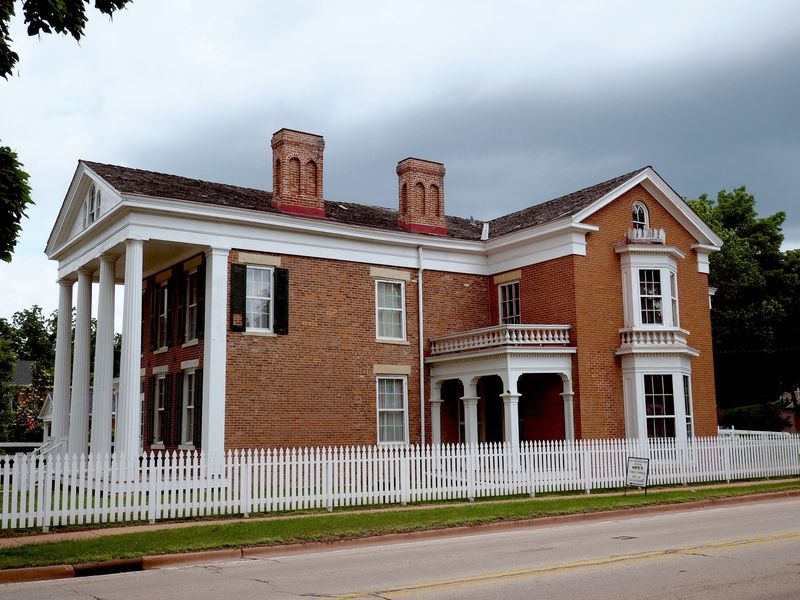
Election night, 1868. Ulysses S. Grant waited for news inside a Galena home that belonged to his good friend. When the results came in, he learned he would be the next President of the United States.
That home is the Washburne House, and it still stands on a hillside street in Galena. It belonged to Congressman Elihu B. Washburne, one of the most influential political allies in Illinois during the Civil War era.
Washburne backed Abraham Lincoln and helped boost Grant’s career early in the war. When Grant was just a former army officer working in his family’s leather store, Washburne saw his potential. That support helped open doors that led Grant to command.
The house itself is a fine example of Greek Revival style. Look for the columns and balanced shape, common features of homes built for important families in that era. Galena’s hilly setting makes the whole scene look like a painting.
Inside, the story centers on friendship and politics. Visitors learn how a small-town congressman ended up connected to two presidents. It is a fun reminder that big history often starts with personal relationships.
Galena is packed with history. Nearly the whole downtown is filled with preserved 1800s buildings, and Main Street is lined with shops, cafés, and restaurants. Walking from one historic site to another is easy, though some streets are steep.
Wear comfy shoes, because those hills are no joke. Staircases connect different levels of town, and climbing them rewards you with great views.
Plan to visit the U.S. Grant Home while in town. Seeing both places helps you understand how Galena shaped Grant and how its people helped him rise from shopkeeper to president.
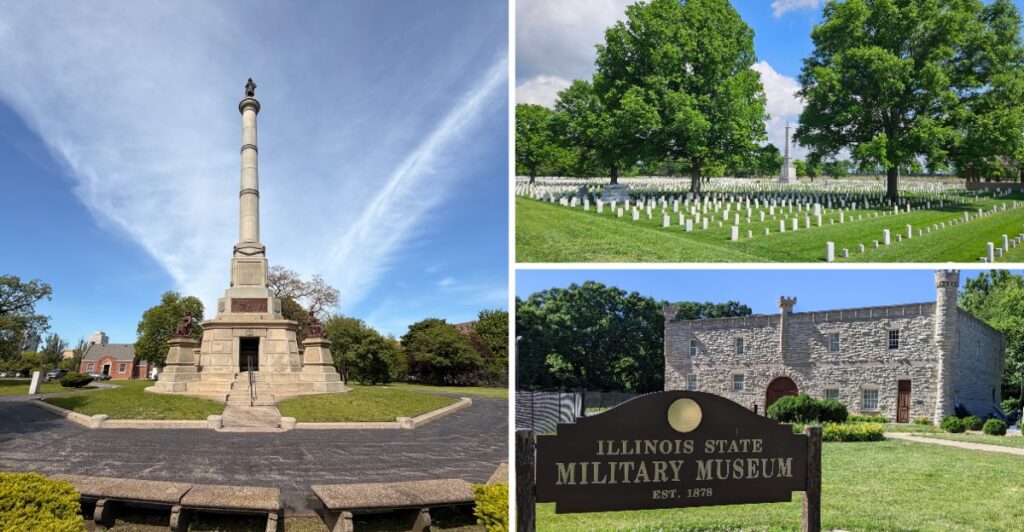
12. Illinois State Military Museum (Springfield)
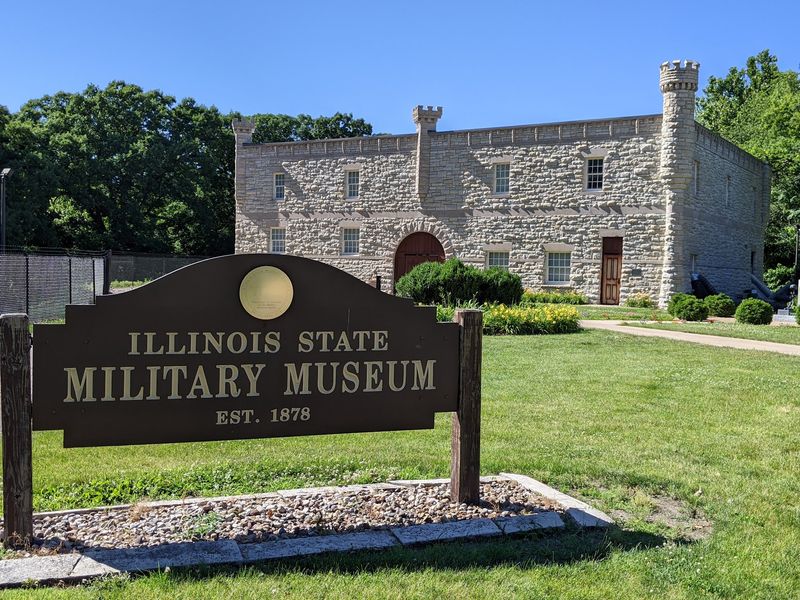
Faded battle flags have a way of stopping people in their tracks. At the Illinois State Military Museum, several of them tell stories of Illinois regiments that marched off to fight in the Civil War.
The museum sits at Camp Lincoln in Springfield, home to the Illinois National Guard. It covers the military experiences of Illinois residents across many generations, from early conflicts to modern times. Civil War items form a major piece of the collection.
Expect to see weapons, uniforms, and personal objects carried by soldiers. The blue wool coats look heavy even behind glass, and it is easy to imagine how hot they felt on summer marches. Rifles and swords show the tools of war up close.
Flags carried serious meaning in that era. Regiments rallied around them in battle, and soldiers risked their lives to keep them from being captured. Seeing the tears and stains on old banners makes that history real.
Many travelers skip this museum while visiting the Lincoln sites downtown. That is a shame, because it offers a closer look at the everyday soldiers from Illinois who carried out the war Lincoln led. The collection spans far beyond the 1860s too, giving you a broad view of the state’s service.
Families with kids might find it a good fit. Displays are easy to scan, and objects speak for themselves without needing a history degree.
Hours can be limited, so check before you go. Since Camp Lincoln is an active military site, follow any posted guidelines at the entrance.
Combine a visit with Camp Butler National Cemetery outside town for a well-rounded look at Springfield’s military past. One shows the gear, the other shows the cost.
13. U.S. Grant Home State Historic Site (Galena)
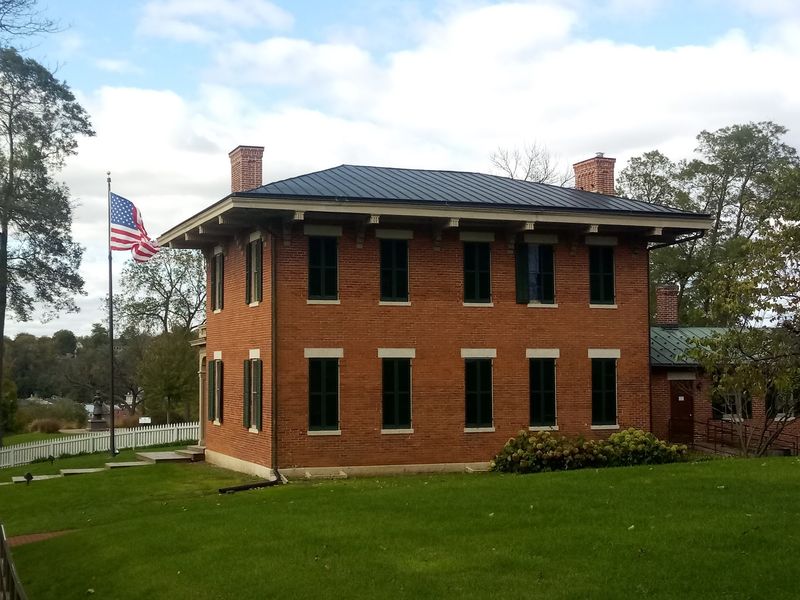
Talk about a welcome home gift. In 1865, the people of Galena presented Ulysses S. Grant with a handsome Italianate house after he returned as one of the most celebrated generals of the Civil War.
Only a few years earlier, Grant had been working in his family’s leather goods store in town. Few people guessed he would lead the Union Army to victory. His rise stunned neighbors who remembered him as a quiet clerk.
The house reflects that new status. Its Italianate design features a low roof, decorative brackets, and a graceful porch. Standing on the hillside, it looks proud but not flashy, much like Grant himself.
Step inside and you will find many furnishings that belonged to the Grant family. Chairs, tables, and household items give the rooms a lived-in look. Seeing them up close helps you picture the family gathered around after dinner.
Guided interpretation covers a lot of ground. Guides explain Grant’s wartime leadership, his run for president, and his later years. Their stories connect the objects to the big events of his life.
Fun fact: Grant was not born in Illinois. He came from Ohio, yet Galena became the town most closely tied to his name. Locals are still proud of that connection.
Galena makes a fantastic base for a weekend. The historic downtown bursts with shops, wine tasting rooms, and restaurants, and rolling hills surround the town. Fall color season draws big crowds, so visiting midweek can mean smaller groups.
After touring the home, walk down toward Main Street and picture the scene in 1865 when crowds cheered their returning hero. Few towns can claim a homecoming quite like that one.
Share this story