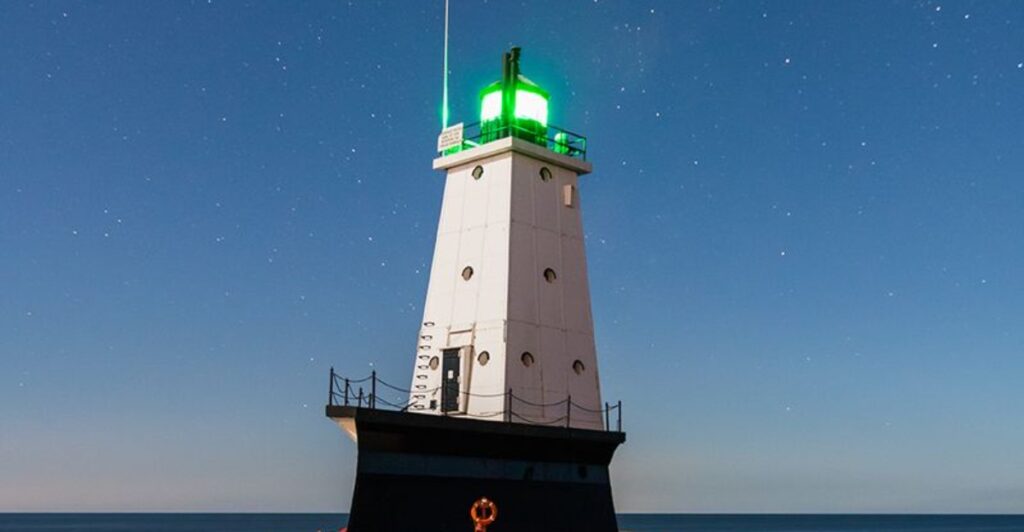
Getting to this Michigan lighthouse is half the fun. At Ludington North Breakwater Light, a long pier stretches roughly half a mile into Lake Michigan, turning the walk itself into part of the experience before you ever reach the tower.
The appeal comes from the open-water views, changing lake conditions, and small details waiting at the end, including the lighthouse’s noticeable lean. It is an easy outing to enjoy at your own pace, but the exposed breakwater also makes paying attention to weather and waves especially important.
For anyone who likes Michigan landmarks with a scenic walk built in, this Ludington stop delivers both.
A Thin Path Between Two Big Views
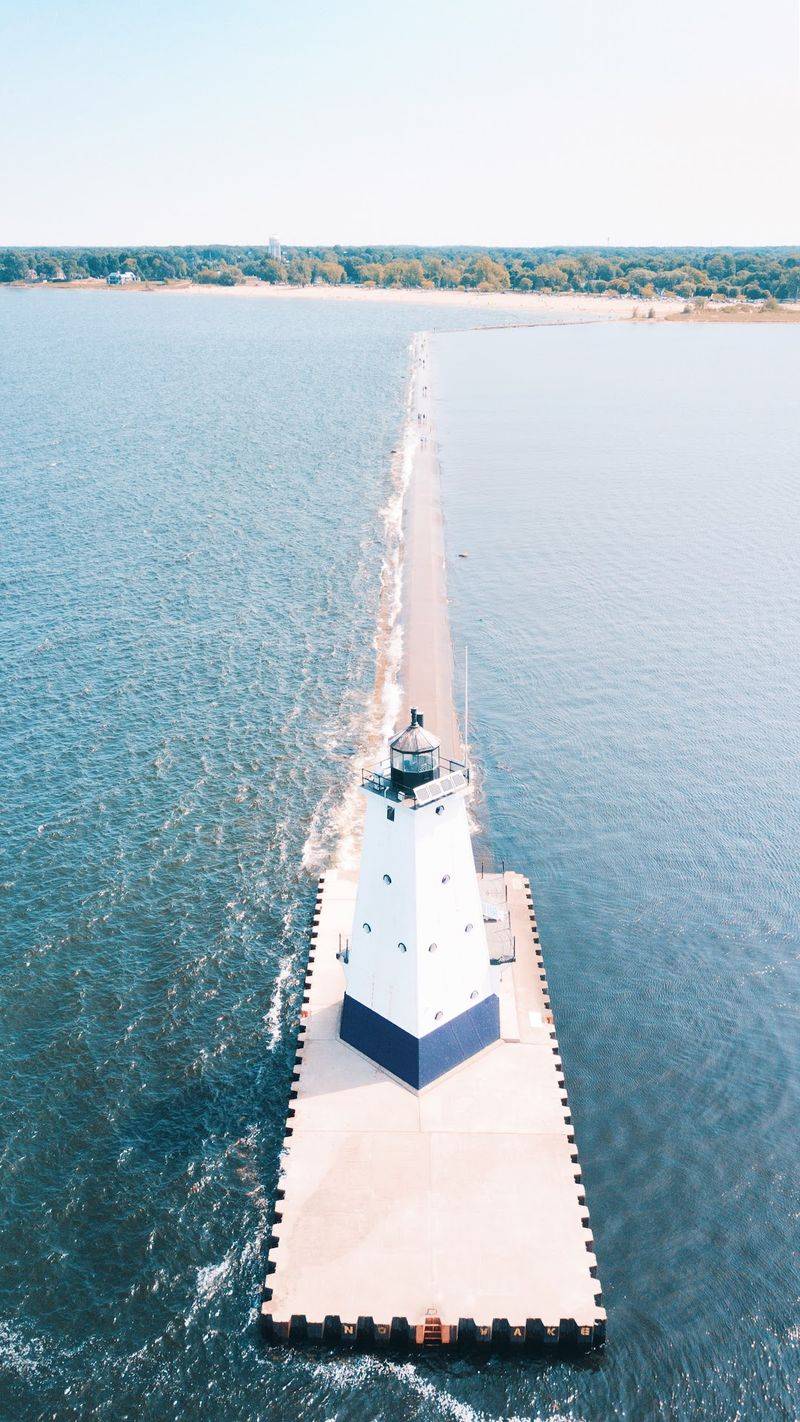
From shore, the breakwater looks almost like a line drawn across the water. The lighthouse sits at its far end, small enough to make you wonder whether the walk is longer than it looks.
Step onto the path, and the view changes with every few minutes of movement.
Lake Michigan opens out on one side, while Ludington Harbor lies on the other. Turn around partway, and you can see the beach and town from a new angle.
That changing view is a good reason not to rush straight to the tower, especially if someone in your group wants photos.
The walk to the light is roughly half a mile, so plan for about a mile round trip. It is a straightforward walk in good conditions, but it is not the same as a sidewalk through town.
The breakwater is exposed to sun and wind, and there is little shelter once you leave shore. Comfortable shoes make more sense than sandals that slide around.
Keep an eye on where you place your feet rather than watching the lighthouse the entire time. Give other walkers room to pass, and stay aware of anyone fishing nearby.
If you are walking with children, agree before setting out that they will stay close to you, not run ahead toward the end.
There is no need to reach the tower to enjoy the scene. A shorter walk still puts water on both sides of your view and gives you a closer look at the light.
On a clear day, pause once or twice and notice how much larger its shape becomes as you approach. The breakwater turns a landmark you can spot from the beach into one you reach step by step.
Michigan’s Lighthouse With a Little Tilt
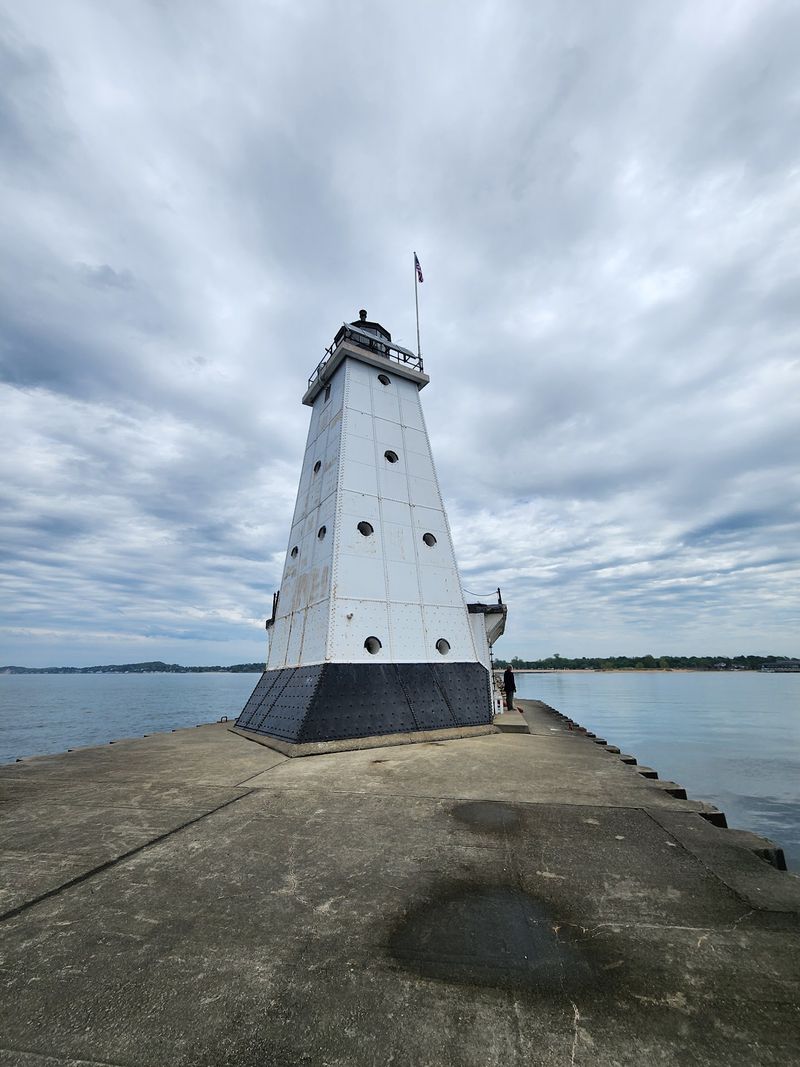
At the end of the walk, take a moment to look at the lighthouse before reaching for your camera. Ludington North Breakwater Light has a striking shape, with sides that seem to narrow and shift as you move around it.
Its slight lean adds to the surprise, but there is no need to exaggerate the tilt to find it interesting.
Try viewing the tower from farther back along the breakwater, then look again when you are near its base. Your angle changes the way its lines meet the sky.
In a photograph, the horizon can also affect how much the lean appears to show, so hold your camera level if you want a fair picture of what you saw.
The tower’s job is more serious than its unusual outline suggests. A breakwater light helps mark the harbor entrance for boats on the water.
Its position at the end of the structure matters: it stands where the protected harbor meets the open lake. You can understand that purpose simply by looking from the tower toward each side.
There is a playful photo opportunity here, too. Have one person stand safely back on the walking surface while another takes a picture that includes the tower and the lake horizon.
Avoid leaning over an edge or stepping onto a risky spot just to make the lighthouse appear more crooked. The real shape is enough.
Before heading inside, if the building is open, walk a few steps around the area where access is permitted. Notice how the lighthouse looks solid against the water, yet slightly off center to your eye.
Its odd lines give you a reason to slow down at the destination rather than turn around the instant your half mile is done.
The Harbor Has Its Own Show
A lighthouse visit can turn into a boat watching session without any extra planning. The north breakwater sits beside Ludington Harbor, so the water here is not just scenery.
Watch long enough, and you may see a fishing boat or another vessel making its way toward or away from shore.
That movement helps explain why the light stands where it does. Boats need to find the harbor entrance, while walkers get to see the same stretch of water from above.
When a vessel passes, stay in a safe spot and give anyone holding a fishing rod plenty of room. The best view is not worth crossing a line or crowding the edge.
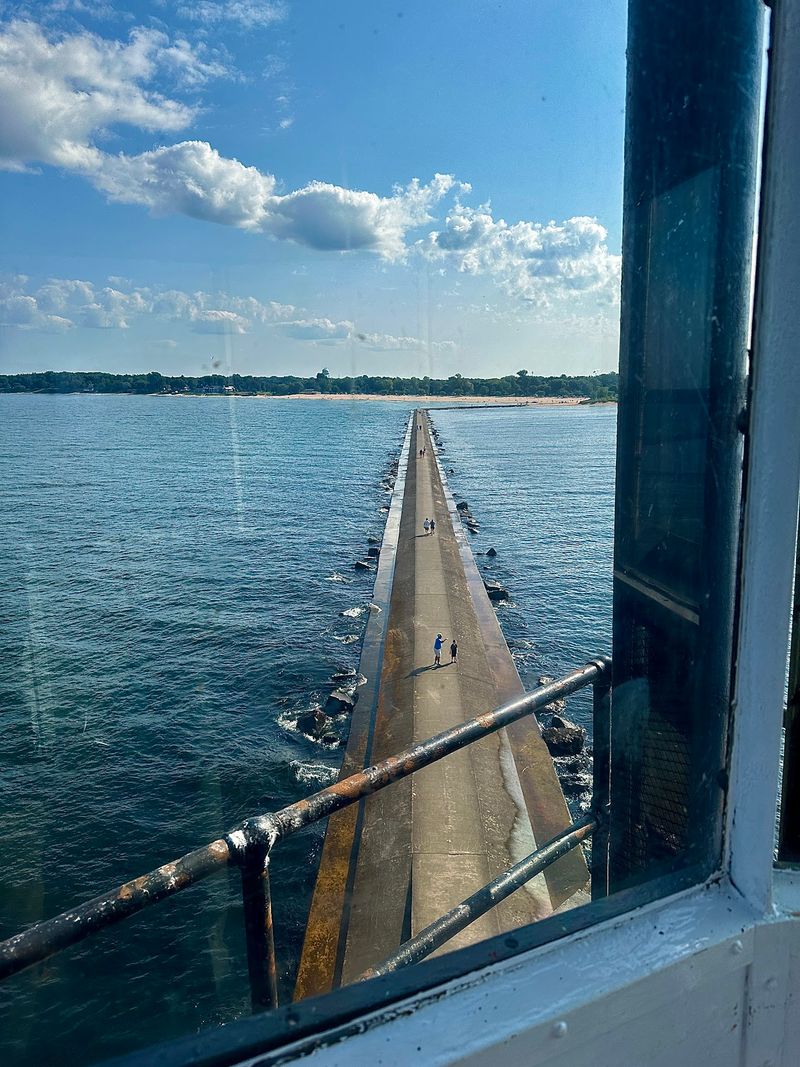
Look back toward town as well. The beach appears farther away than you might expect after such a simple walk, and the shoreline gives you a clear sense of how far the breakwater reaches.
If you came for a picture of the lighthouse, this reverse view deserves a frame, too. It shows the path that brought you there.
Boat traffic is never guaranteed, so do not plan your whole visit around catching a particular arrival. Instead, let it be a bonus while you spend time near the tower.
A vessel moving slowly across the harbor can give younger walkers something concrete to watch as they rest before the return trip.
For a calmer look, step aside where it is safe and notice the contrast between the water inside the harbor and the open lake beyond the breakwater. Conditions can change on either side, particularly when wind picks up.
You are standing near a working entrance, not on a path built only for sightseeing. That is part of what gives this walk its character: the lighthouse is a landmark you can visit and a marker that still makes sense from the water.
Inside, the Climb Gets Steep
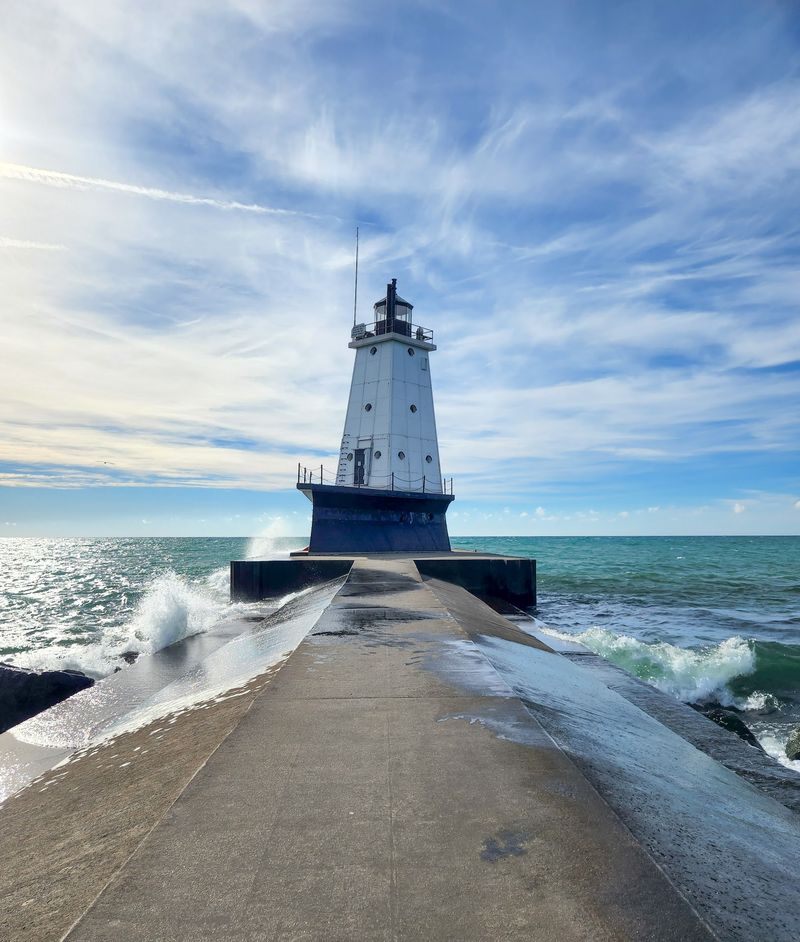
Reaching the lighthouse does not automatically mean climbing it. The walk along the breakwater is one experience; entering the tower is another, and access depends on whether it is open.
When tours are available, expect a much tighter space than the wide view outside might suggest.
The route upward includes several steep flights that are closer to ladders than ordinary household stairs. There are landings along the way, but you still need to climb carefully and come back down the same way.
If heights, steep steps, or small spaces bother you, it is perfectly reasonable to enjoy the lighthouse from ground level instead.
Ask the staff or volunteers about current entry rules before you pay or begin climbing. Fees, opening dates, and limits on how many people can go up may change.
If you are visiting with children, check any height or age requirements at the door rather than assuming everyone can join the climb.
Inside, take your time with any history displays and photographs that are available. They give context to a structure that can otherwise seem like a curious shape at the end of a long path.
You may also find souvenirs on the ground floor when the light is staffed. A purchase or admission fee helps support care for the building, though you do not need either to appreciate its exterior.
Keep your hands free on the stairs by securing your phone or camera before climbing. Let the person ahead reach a landing, follow staff directions, and save long conversations for a spot where others can pass.
Once you step back outside, the open air seems even larger. Whether you climb or not, the best choice is the one that fits your comfort and the conditions on the day.
Start at Stearns Beach, Not the Map Pin
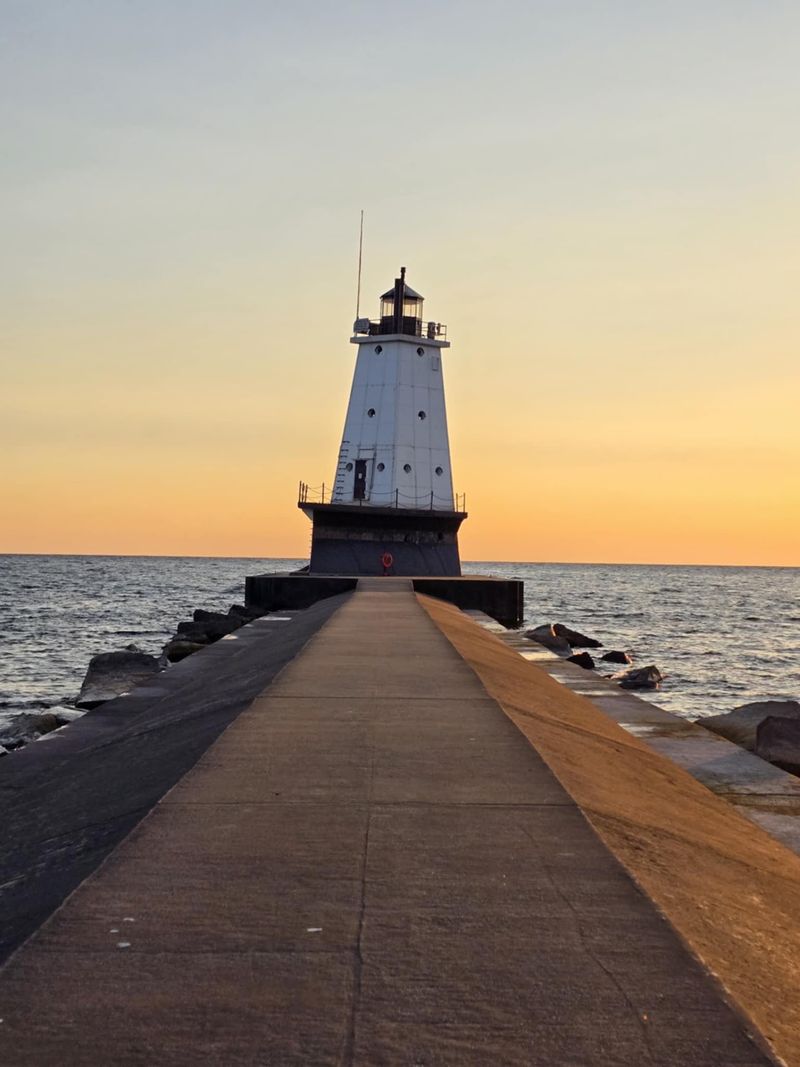
A map can point you toward the lighthouse without making the start of the walk obvious. For most people arriving by car, Stearns Beach Park is the useful place to begin.
From that shore area, find the north breakwater and follow it toward the light. The lighthouse itself sits out in the water, not beside a roadside parking space.
Parking at the beach gives you a chance to sort out the simple things before committing to the half mile outward. Use a restroom if one is available, fill a water bottle, and check whether the wind is stronger near the lake than it felt by your car.
Once you are on the breakwater, turning back is your main option if you need anything.
Allow time for the return walk, not only for reaching the tower. Roughly a mile on foot may be easy for some groups, but photos, children, and a stop at the lighthouse can stretch the visit.
If someone in your group tires quickly, agree on a turnaround point before you leave shore. The destination is easy to see, which makes distance tempting to underestimate.
Access to the breakwater does not guarantee access inside the building. If a climb is a key part of your plan, check the current tour schedule before setting out.
Published hours can shift with season, staffing, or weather. Even on a day when the tower is closed, you can still enjoy views from the path if conditions are safe.
Before stepping out, look toward the far end and judge whether spray is crossing the walkway. That quick check is more useful than trusting a calm patch near the beach.
Begin with the route, the conditions, and your group’s energy in mind; the lighthouse will be waiting at the end.
Let the Weather Make the Call
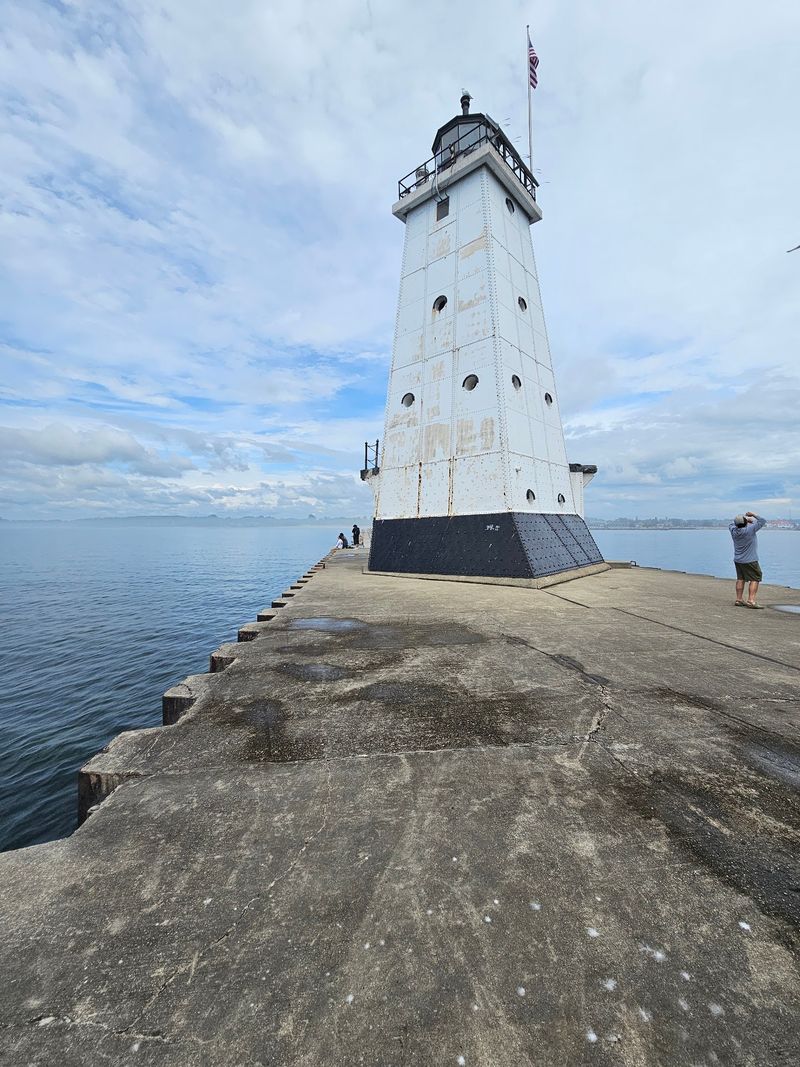
Water beside the breakwater can look inviting, then splash across the walking surface a moment later. Wind and waves are the biggest reasons to change your plan here.
If water is washing over the path, do not try to beat the next wave to a dry patch. Admire the lighthouse from shore and save the long walk for a calmer day.
Wet pavement can be slippery even after a wave has passed. Spray may also reach you when the lake is rough, so keep electronics protected and wear shoes with reliable grip.
Watch the conditions ahead as well as under your feet. A safe looking start does not prove that the far end is dry.
Cold weather brings another problem: ice. A frozen breakwater is not a shortcut to a dramatic winter photograph.
Ice can hide a slick surface and make the edge hard to judge. If the route looks icy, stay on shore.
You can still see the lighthouse and its long path from a safer place near the beach.
On pleasant days, basic awareness still helps. Keep children near you, do not climb down the sides, and avoid jumping into the water.
Give fishing lines space and step aside for other walkers only where there is room to do so safely. Strong sun reflects off the lake, so bring water and consider a hat for the exposed round trip.
Weather can change during a visit, particularly when you are far from shelter. If waves build or wind makes walking uncomfortable, turn back without treating the lighthouse as a finish line you must reach.
The most useful travel skill on this breakwater is knowing when to stop. You can always get a clear view of the slightly leaning tower without standing beside it.
Save Some Daylight for the Walk Back
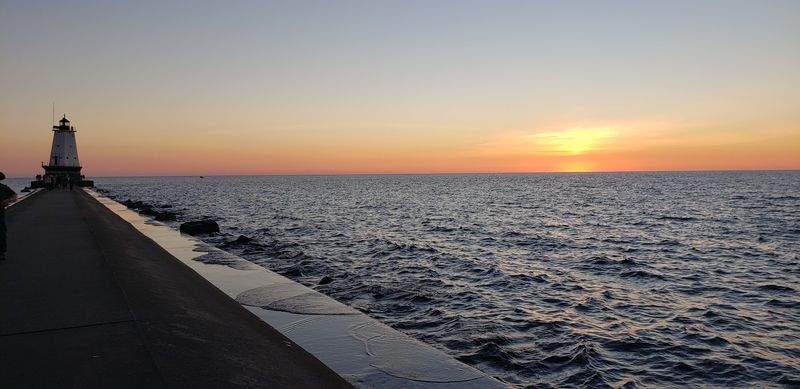
Late light can turn a simple walk into a careful game of timing. Ludington North Breakwater Light is a strong sunset subject because its outline stands clearly against the open sky.
The lake catches changing colors, while the breakwater gives your eye a path straight to the tower. You do not need to stand at the far end to get that picture.
Start early enough that you can reach your chosen viewing spot without hurrying. Then work backward from sunset: allow time for the half mile back to shore, plus any stops you expect to make.
A bright sky over the water can last longer than useful light on the walking surface, so leave while you can still see where you are stepping.
For a photograph, try more than one distance. From shore, the lighthouse appears small beside the broad lake.
Farther out, its angled walls become easier to notice. Turn around for a frame that includes the route back toward Ludington, too.
Each position tells a different part of the same short journey.
Evening can bring cooler air and insects, so a light layer and bug spray may make a longer stop more comfortable. Check the wind before you commit to walking out; a sunset does not make a wet or slippery breakwater safer.
If the path is unsafe, photograph the light from the beach rather than pushing toward the tower.
When you head back, the lighthouse moves behind you and the shore slowly grows larger. That change is easy to miss if you spend the return trip checking photos on your phone.
Put the screen away for a while and watch your footing. The best ending is wonderfully plain: you reach dry land with time to spare, having seen a slightly leaning lighthouse from both ends of its remarkable path.