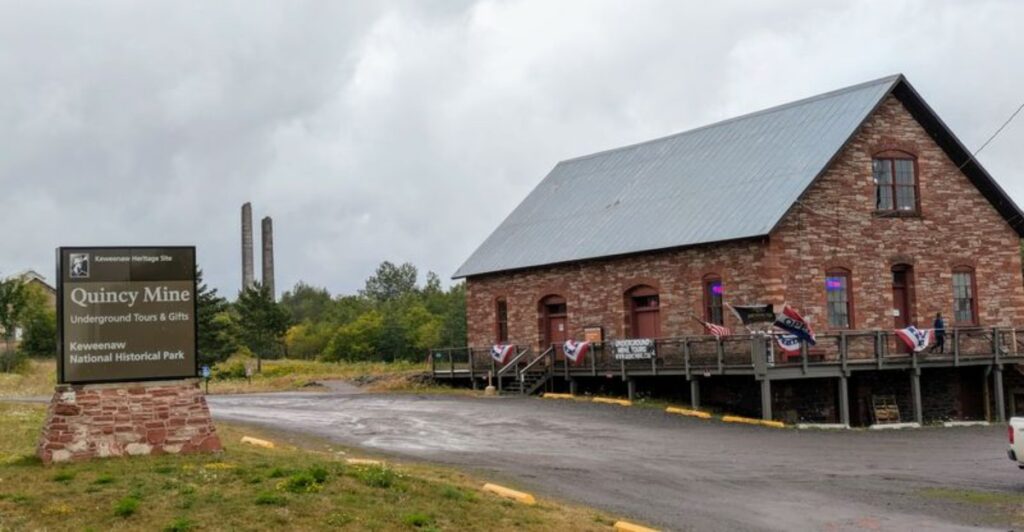
Michigan history feels a lot more real when the tour takes you underground. At Quincy Mine in Hancock, visitors can move from massive mining equipment above ground into a cold, damp passage that shows just how demanding copper mining once was.
The appeal comes from seeing the process up close, from the machinery used on the surface to the narrow spaces where workers searched for ore below. Along the way, guides explain how copper was found, moved, and brought out of the earth.
For anyone curious about Michigan’s mining past, this Upper Peninsula stop turns a history lesson into something you can actually step inside—just bring a jacket.
The Giant Hoist Tells You This Was No Small Job
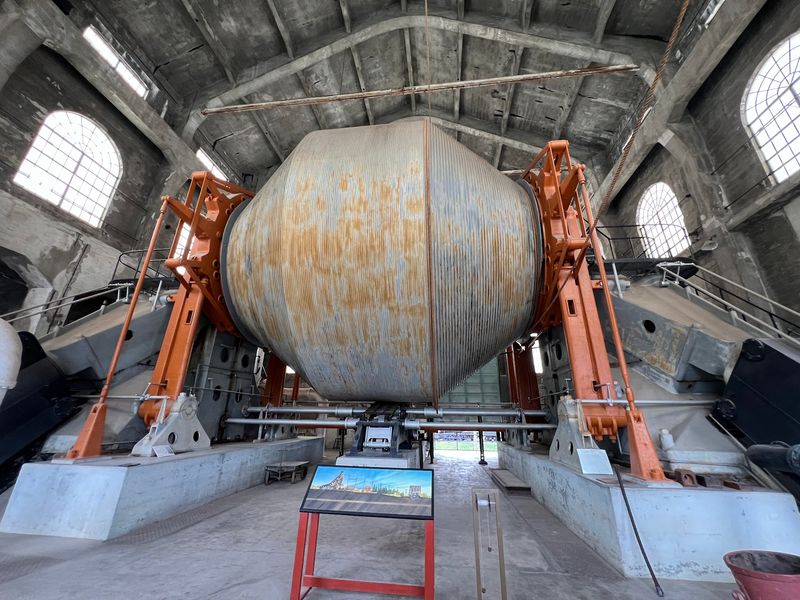
Before you head underground, give the hoist house a proper look. Its huge machinery helps explain a basic problem every deep mine faces: getting workers, equipment, and copper between the surface and the workings below.
Up close, the equipment has a scale that photographs can flatten. Notice the heavy metal parts and the space needed to operate them.
Mining depended on more than finding copper; it also required a system strong enough to move it.
The Quincy Mine tour connects that machinery to the underground passages you will see later. Instead of treating the hoist as an isolated museum object, picture the jobs it supported throughout a working day.
Every trip underground relied on planning above it.
If you enjoy engineering, this is a good place to slow down. Ask your guide how the hoist fit into the mine’s operation and which parts you are seeing.
You do not need a technical background to understand the main point.
For kids, start with a simple challenge: find the biggest piece of equipment in view. Then ask what would happen if a mine had copper underground but no reliable way to lift it.
The question turns an enormous machine into an easy lesson.
Look beyond the machinery, too. The remaining buildings and industrial structures show that mining needed room for many different tasks.
Copper did not move straight from rock to market by itself; crews and equipment worked together at every stage.
It helps to spend time here before the underground portion, rather than rushing toward the tram. Once you have seen the surface equipment, the trip into the mine has context.
You know there was an organized operation above every dark passage.
From outside, the hoist house is a bold landmark. Inside the story of Quincy Mine, it is a practical answer to a difficult question: how do you keep a deep copper mine running day after day?
A Tram Ride Changes the View
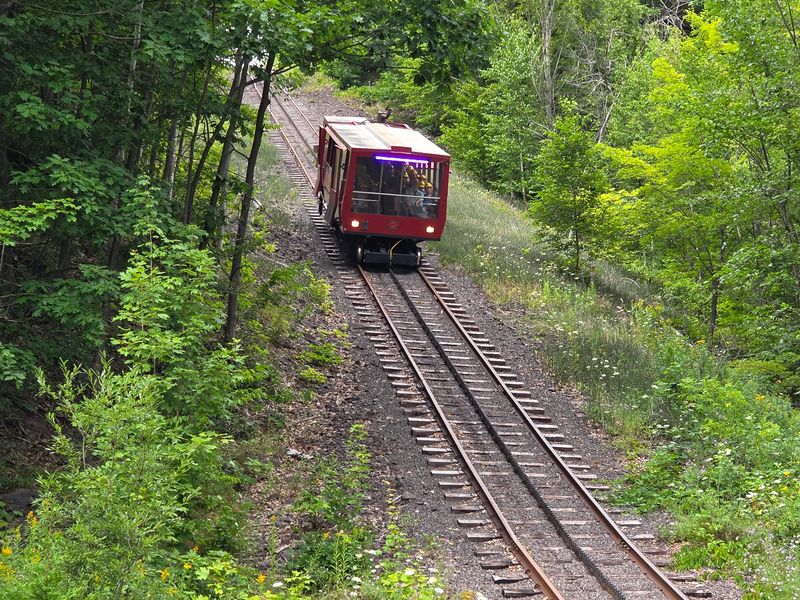
The trip toward Quincy Mine’s underground entrance gives you a useful pause between two parts of the visit. First come the surface buildings and wide views.
Then the tram carries you downhill toward a much narrower world.
That change in setting is part of the fun, but it also helps you understand the site. Quincy was not just a hole in the ground.
Its buildings, transport routes, and underground workings were connected pieces of one large operation.
Watch the layout as you travel. Look back toward the structures on the hill, then look ahead to where the tour will enter the mine.
The short journey makes the distance between surface and underground work easier to picture.
The tram is not a thrill ride, so there is no need to build it up as one. Its value is simpler: you can see the land change around you while your guide leads you from mining equipment to the place where rock was worked.
Keep your hands free for getting on and off, and follow the guide’s directions. If you are visiting with children, this is a good moment to explain what comes next.
The mine will be colder and darker than the open hillside.
Photographers may want a few pictures from the surface before boarding. Once the group is moving, pay attention to the route rather than trying to capture every angle.
The clearest view of the whole operation may come when you stop and turn around.
There is also a satisfying contrast in the ride itself. Outside, you can measure the site by buildings and slopes.
At the entrance, your attention shifts to a passage through rock, where a few steps can change how you hear and see everything.
By the time the tram stops, you have already crossed an important line. The mine is no longer just a historic structure on a hillside.
It is a place you are about to enter.
Inside Michigan’s Cold Copper Mine
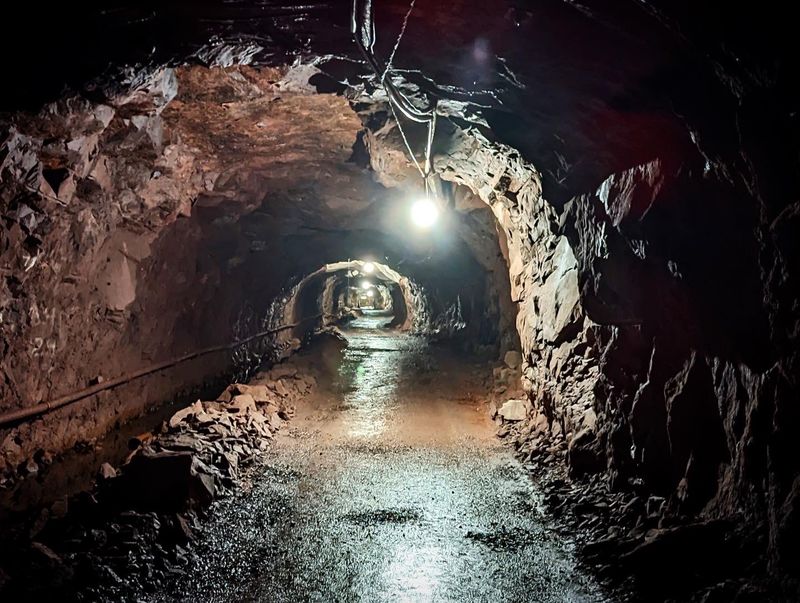
Summer weather loses its power quickly once you enter the mine. The underground passage is chilly, even when Hancock is warm, and the damp rock gives the air a different weight.
A jacket earns its place in your bag.
Quincy Mine’s guided underground tour brings you into a passage where you can study rock walls at arm’s length. Rather than imagining a mine from a drawing, you can see the space where a crew had to move and work.
Pay attention to the floor as well as the walls. Groundwater can leave the route wet, and drips may fall from above.
Closed-toe shoes with good grip are a smarter choice than sandals, especially if you prefer to walk without watching every step.
Guides explain the mining process as the group moves through the tunnel. Listen for the difference between finding copper-bearing rock and removing it.
Those are separate challenges, and the passage makes the physical part much easier to understand.
Do not expect access to every old working or the deepest parts of the mine. A public tour follows a managed route, while other areas are unsuitable for visitors.
The experience is about seeing a real underground setting safely, not reaching a record depth.
If darkness makes you uneasy, tell your guide before the group goes in. Tours may include demonstrations that change the lighting or introduce loud mining sounds.
Knowing what to expect can make those moments easier for children and adults alike.
The best way to use your time below ground is to ask specific questions. Why is one part of the passage wider?
Where did water go? What job was a tool built to do?
Small details often lead to the clearest answers.
Back on the surface, ordinary daylight seems unusually bright. That quick change helps explain why warm clothes, sturdy shoes, and a little preparation matter on this tour.
Listen for the Work Behind the Copper
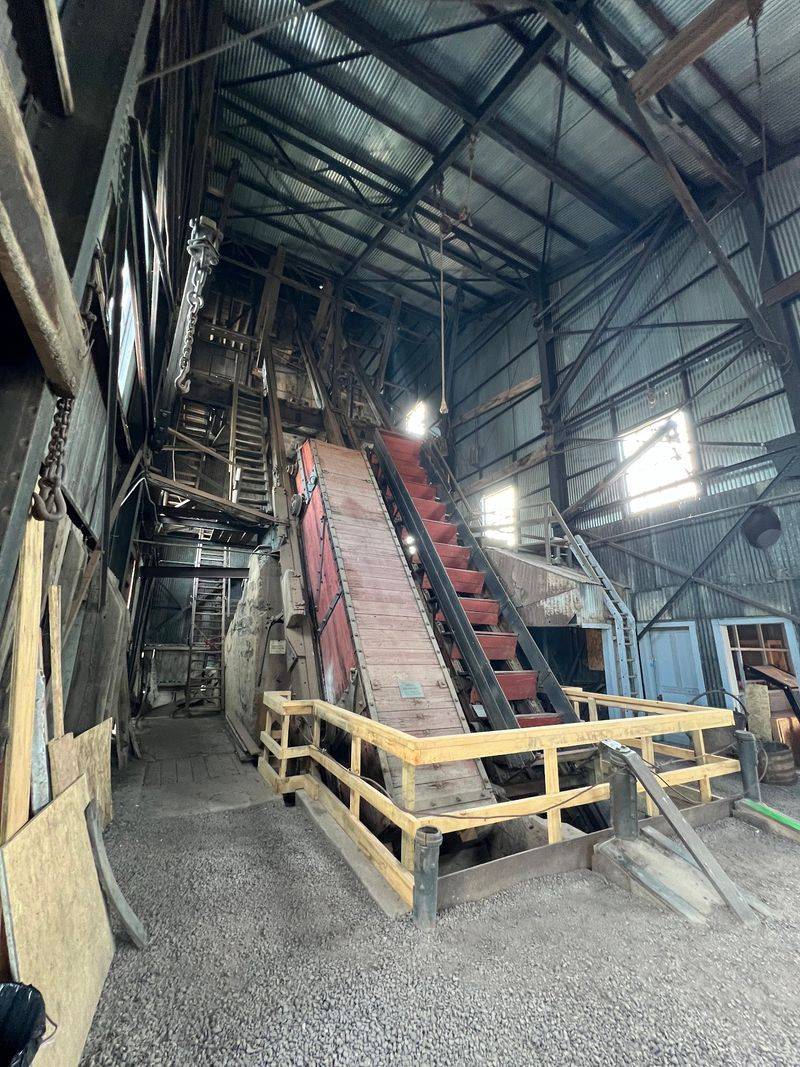
A piece of copper is easy to admire. Getting it out of hard rock was another matter.
At Quincy Mine, guides use the underground setting and mining equipment to show how much labor stood behind the metal.
Look closely at the tools discussed on the tour. Drilling was not a neat, quiet classroom task.
It demanded effort, made noise, and helped prepare rock for the next stage of mining. The tunnel gives those explanations a real setting.
Some tour demonstrations may let you hear how loud equipment could be. If sharp sounds bother anyone in your group, mention it to your guide ahead of time.
A brief warning can make a big difference, particularly for younger children.
Try to imagine a work shift in practical steps. A miner had to get to the work area, use the available tools, deal with rock and moisture, and make the return trip.
Each step took time and carried risks.
That is why the human story belongs alongside the machines. Quincy Mine was part of the Copper Country, where mining shaped jobs and daily life.
The tour gives you a way to connect the area’s copper history with the people who did difficult work.
Ask your guide what a particular tool did instead of trying to remember every name at once. One well-explained piece of equipment can reveal more than a long list of dates.
Children can join in by comparing a tool’s size with their own hands.
The guided format also leaves room for questions about working conditions. How did crews see what they were doing?
What made a task dangerous? Answers to questions like these turn the passage from a backdrop into a workplace.
When you return to the hoist house or look at copper on display, its path will make more sense. Before it could be moved above ground, someone had to face the rock below.
The Surface Has More Than One Story
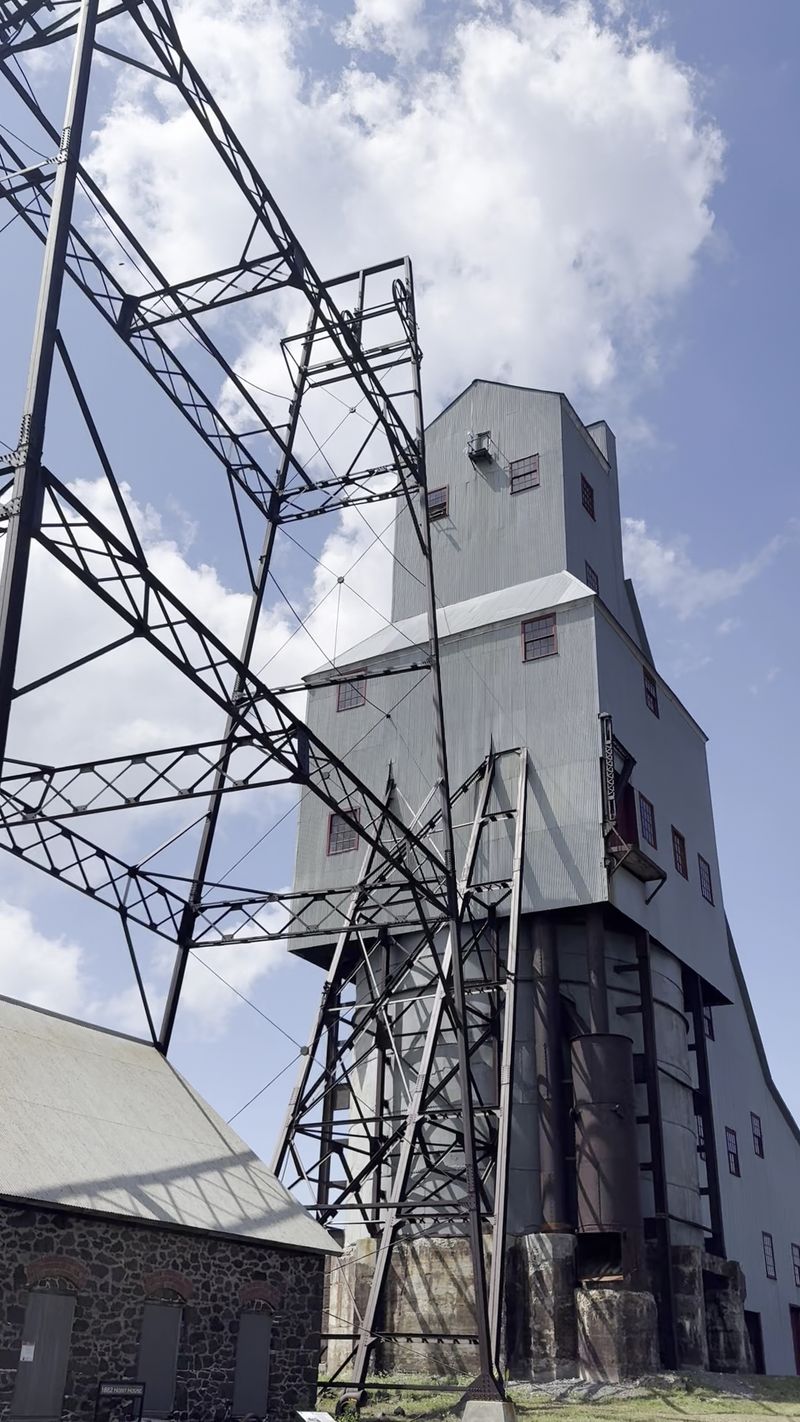
The underground tour gets the headline, but the ground above deserves more than a quick walk to the entrance. Quincy Mine’s surviving structures and exhibits help fill in the work that happened before and after rock came out.
Start by looking at the site as a whole. Buildings sit where people needed them to support the mine, not simply where they would look good in a photograph.
Their size and placement hint at the many jobs behind copper production.
Museum displays offer a different pace from the guided passages. You can stop at an object, read about it, and return to a question that came up during the tour.
That freedom is useful if your group includes both fast movers and careful readers.
Notice how different it is to see an old machine from above ground. Underground, space limits your view.
At the surface, you can step back and judge the equipment’s full size. Both views are needed to understand the operation.
Give children a small mission if their attention begins to wander: find an object that could move something, one that could cut or drill, and one that could help people work safely. You can compare guesses after reading the exhibits.
Leave some time for the grounds instead of planning only for the ticketed portion. Access to particular buildings and exhibits may vary, so check what is open when you arrive.
Staying within marked areas protects both you and the historic structures.
The surface also offers a chance to revisit what your guide explained. After hearing about lifting rock, look again at the hoist.
After seeing the passage, consider why so much equipment had to remain outside it.
Quincy Mine works best as a connected site, not a single tunnel stop. Moving between exhibits, machinery, and the entrance lets you piece together the copper operation in a way one room alone could not.
Pack for the Mine, Not the Forecast
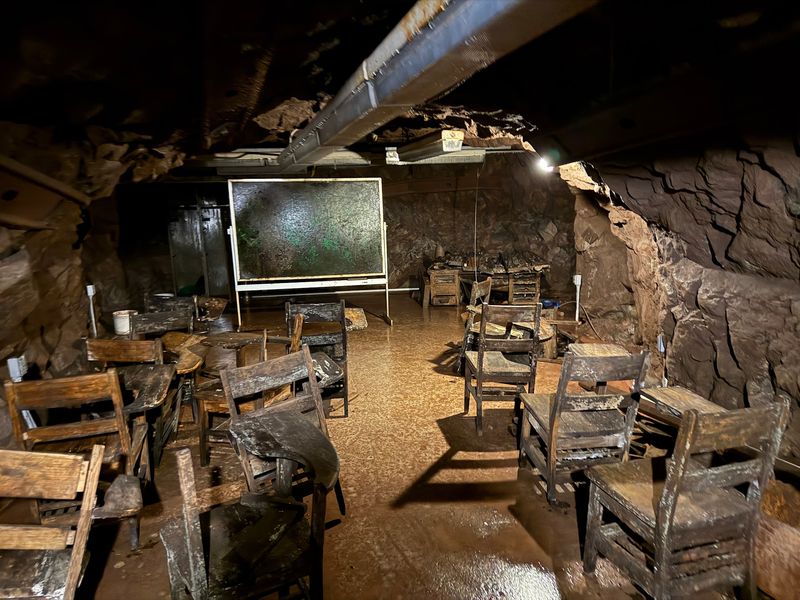
A sunny day on US-41 can make a warm jacket look unnecessary. Carry one anyway.
Quincy Mine’s underground portion stays much colder than the surface, and damp air can make the change feel even sharper.
Choose closed-toe shoes you trust on wet ground. The mine passage can have moisture underfoot, and you may encounter dripping water.
Shoes with grip let you focus on the guide and the rock rather than every place you set your foot.
Plan for more than a quick stop. The full visit can include surface exhibits, the hoist house, the tram ride, and guided time underground.
Set aside a generous block of your day so a question or display does not feel like a delay.
Tour schedules, admission, and available spaces can change. Check current details before traveling to the mine at 49750 US-41 in Hancock, and consider reserving a tour when that option is offered.
Arriving early also leaves time to get oriented.
If you are bringing young children, think beyond whether they like rocks. They will need to handle cool air, periods of listening, walking, and possibly dark or loud demonstrations.
Explain those parts beforehand so the unusual setting is not a surprise.
For anyone who has trouble with walking, boarding a tram, or being underground, ask about the current route and accessibility before booking. A historic industrial site has conditions that are easier to plan around when you know the details in advance.
Keep a light extra layer handy even if you usually run warm. A small bag is easier to manage than juggling loose clothes during the tour.
Follow the guide’s safety directions and stay with your group throughout the underground portion.
With the practical details settled, you can give your attention to the good questions: how the mine worked, what the machinery moved, and what daily labor demanded from the crews who used it.
One Mine Connects the Whole Copper Story
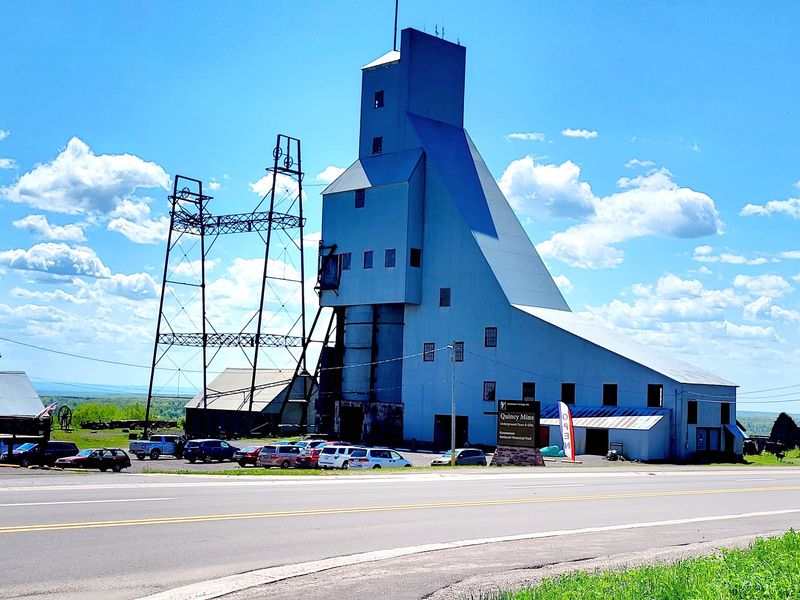
Stand on Quincy Mine’s grounds after the tour and look back toward the hoist house. The building has not changed, but you have.
You now have a better idea of what had to happen beneath it.
That is the strength of visiting this mine instead of learning about copper from a single display. You see the equipment above ground, ride toward the entrance, and walk through a passage cut into rock.
Each part answers a different question.
The hoist shows how material could move. The underground route shows the space where miners worked.
Exhibits and guides explain the decisions, tools, and people behind both. Taken together, those pieces give the Copper Country’s history a clear shape.
You do not have to be an engineer to enjoy that chain of clues. If machinery catches your eye, there is plenty to examine.
If you care more about people, the working conditions offer questions that are just as strong.
Quincy Mine also rewards visitors who resist the urge to rush. Give yourself time to look at the surface structures before the tour, listen closely below ground, and compare the two settings afterward.
The differences are as informative as the objects themselves.
A useful final question is surprisingly simple: which job at the mine depended on another job being done first? Try answering it while looking at the hoist, then again while thinking about the tunnel.
Copper mining was a chain of linked tasks.
For families, that question can continue on the way home without turning the outing into a test. Kids can choose the tool or structure they found most interesting and explain what they think it did.
Different answers open different parts of the story.
The visit ends above ground, where daylight, buildings, and open space return. Now the hillside is more than scenery. You know there is a working history underneath it.