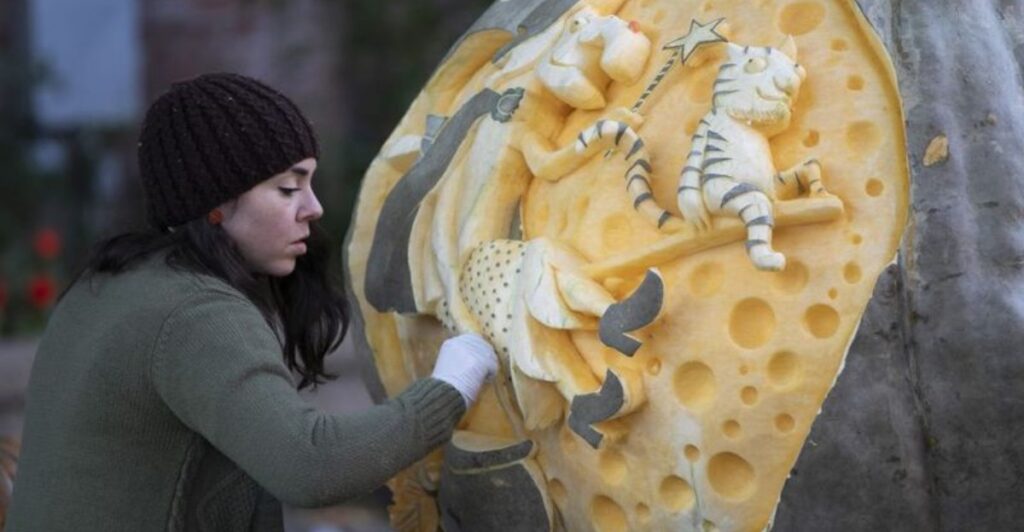
Pumpkins get a lot more impressive when artists turn them into giant works of fall art. In downtown Holland, Michigan, Fall Fest brings oversized pumpkins, detailed carvings, and seasonal energy to the streets during a two-day celebration. The appeal comes from watching the designs take shape, then wandering downtown to see how each finished piece adds something different to the scene.
It is an easy outing to enjoy at your own pace, especially if you want fall atmosphere without packing the day with too many plans. For anyone looking for a Michigan festival where creativity and autumn traditions meet, Holland Fall Fest gives you plenty to stop and admire.
Michigan Pumpkins Make a Big First Impression
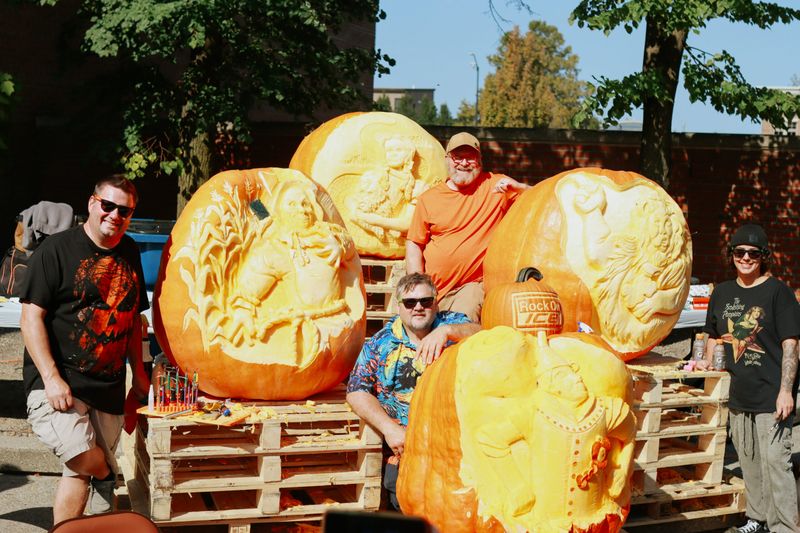
One enormous pumpkin can stop a whole sidewalk. At downtown Holland’s Fall Fest, the size of the pumpkins is part of the fun before an artist even picks up a tool. Stand a few steps back and you can see their lopsided curves, pale patches, and thick stems.
Each one already has a shape that could spark an idea.
Unlike a pumpkin you might carry home for your porch, a giant pumpkin asks you to look at it from several angles. Its broad side could hold a face or scene, while a deep ridge might become part of the design. Notice those bumps early, then check again after carving begins.
You may spot how an artist worked with the pumpkin instead of fighting its shape.
Downtown makes the scale easier to grasp. A huge orange form beside a shop window or a person holding a coffee gives you a quick sense of just how large it is. If you want a photo, leave room in the frame for that comparison.
A tight shot can show detail, but a wider view tells the whole story.
Move slowly when a crowd gathers around a pumpkin. Give others space to see, and watch for people who are stepping back to take pictures. Children may enjoy guessing what a pumpkin will become before any clear image appears.
There is no need to rush toward the finished piece; the early stage is its own surprise.
Look closely at the skin, too. The surface can shift from bright orange to soft yellow, with lines that run from stem to base. Those marks are not flaws to hide.
They give every oversized pumpkin a different starting point, making the first walk past the displays useful even if you plan to return later.
Watch a Pumpkin Change Before Your Eyes
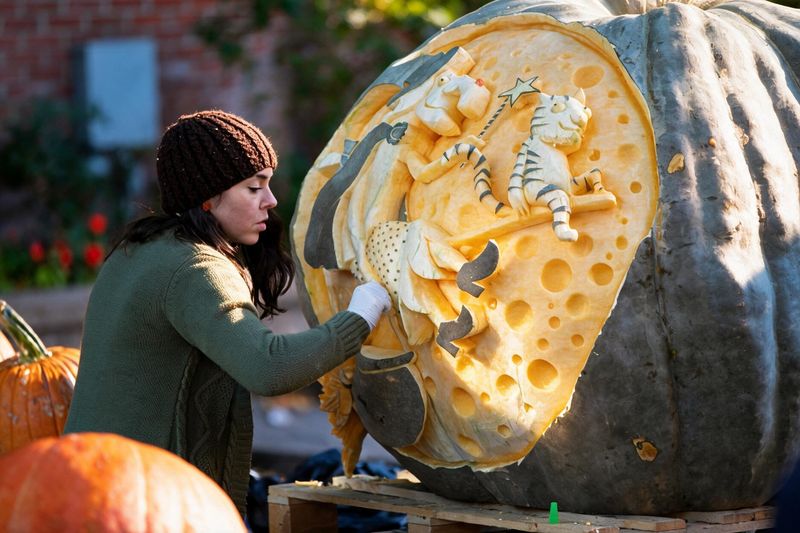
A pile of pumpkin scraps beside an artist can be as interesting as the finished sculpture. During Fall Fest, watching a giant pumpkin change is the main event. Cuts that seem small at first can turn a plain surface into a cheek, a leaf, or the edge of a bold pattern.
Stop for a few minutes, then return later to see what appeared.
Carving on this scale is different from cutting a simple porch jack-o’-lantern. An artist has to think about depth as well as shape. A shallow cut leaves the orange skin close to its original color, while a deeper cut can reveal a lighter layer underneath.
That contrast helps details stand out even when you view the pumpkin from across the sidewalk.
Watch how the artist steps away from the work. Close-up carving calls for care, but a few steps back reveal whether the design reads clearly. You can try the same trick as a viewer.
Study one section near the pumpkin, then back up and see how it joins the rest of the image.
For families, the changing design makes an easy guessing game. Ask a child which lines might become eyes or whether a curved mark looks more like a wave than a leaf. Keep guesses friendly and give artists room to work.
Tools, loose pieces, and busy hands are good reasons to stay outside any marked work area.
If you have time for only one short visit, look for carving in progress before moving to completed displays. A finished pumpkin shows skill, but the work itself explains how much thought goes into it. You get to see a simple idea tested against a giant, uneven surface, one careful cut at a time.
Find the Details Hiding in the Carvings
Back up, and a carved pumpkin may show one clear image. Lean in, and a second story appears in the tiny cuts. At Fall Fest, the best viewing is not always a quick glance from the front.
Circle a display when there is space, and you may find texture or shapes that disappear from another angle.
Giant pumpkins are not smooth drawing boards. Their ribs bend straight lines, and their skin can vary in color. An artist might use those natural marks as shadows, borders, or parts of a face.
Look for places where the carving follows a ridge instead of crossing it. The pumpkin’s original shape can help carry the picture.
Light changes what you see, too. A cut that looks pale in daylight may appear much deeper when a shadow falls across it. If you visit at different times during the two-day festival, compare your photos rather than trying to remember every detail.
Even a slight change in your position can bring a new line into view.
For a useful photo, first capture the entire pumpkin. Then take a closer picture of one feature that caught your eye, such as a curl, an eyebrow, or a row of small marks. Avoid reaching across barriers or touching the carving for a better angle.
Soft pumpkin flesh can be damaged more easily than it looks.
Try looking at the work with someone else for a minute. You may notice the main image while they spot a clever use of a stem or a shadow. Comparing those small finds is more fun than racing to name every design.
It also gives the artist’s careful choices a chance to come through, right down to the shallowest cut.
Let Downtown Holland Shape Your Route
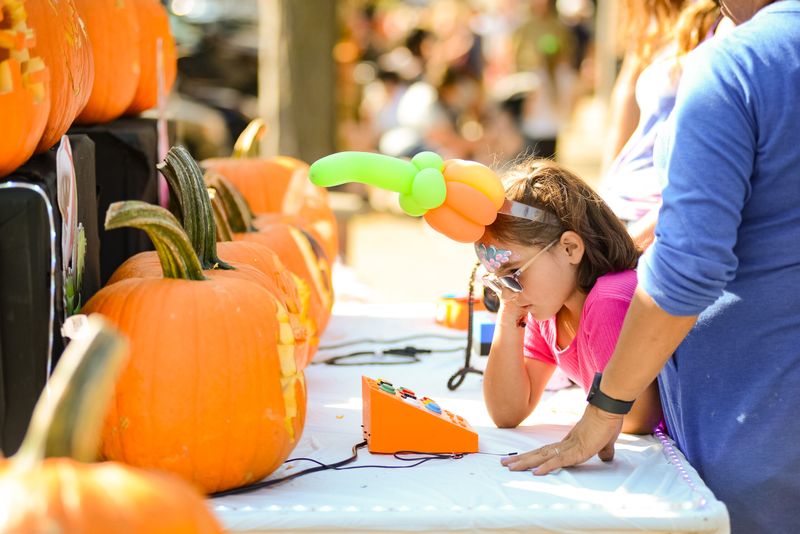
A pumpkin beside a storefront changes the way you walk down a street. Instead of heading straight for one display, you can use downtown Holland as a route between pieces of art. Shop windows, cafe doors, and brick buildings give each carving a different backdrop.
The walk becomes part of the festival rather than a break between attractions.
Start with an easy loop instead of trying to cover everything at once. Pick a direction, follow the pumpkin displays you can see, and turn back when your group needs a rest. A simple route helps children stay interested and makes it easier to find a carving you want to see again.
Downtown blocks can also feel different when you approach them from the opposite side.
Leave enough room on the sidewalk for other people to pass. A popular sculpture can pull a crowd toward a doorway or crossing, so pause where you are not blocking the path. If you are taking photos, look behind you before stepping backward.
It is easy to forget ordinary street traffic when a giant face is looking your way.
The nearby businesses offer natural pauses. You can take a break, warm up if the day is cool, or simply look at how a pumpkin changes the view outside a window. Supporting a local shop can fit into your visit, but you do not need to buy anything to enjoy the public street scene.
Keep the focus on the work and the people making it.
Before you go, check the current Fall Fest map or event details for the year’s display locations. A festival layout can change, and a saved plan from an older visit may send you in the wrong direction. Once you arrive, let the actual pumpkins guide the rest of your walk through downtown.
The Artists Give Each Pumpkin a Point of View
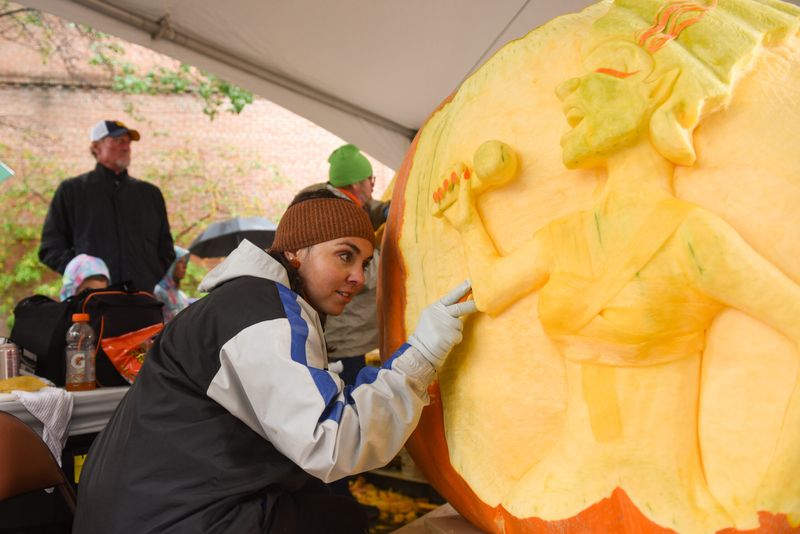
Two artists can begin with pumpkins of similar size and end up with completely different worlds. One may favor bold shapes you can read from far away. Another may work in small lines that reward a closer look.
That range is why it pays to see more than the largest or busiest carving at Fall Fest.
Watch for the choices that happen before a design looks complete. Where does the main image sit? Has the artist turned a broad ridge into a feature?
Are some areas left untouched so a carved section stands out? You do not need art training to notice these decisions. Think of it as watching someone solve a puzzle with an orange, uneven canvas.
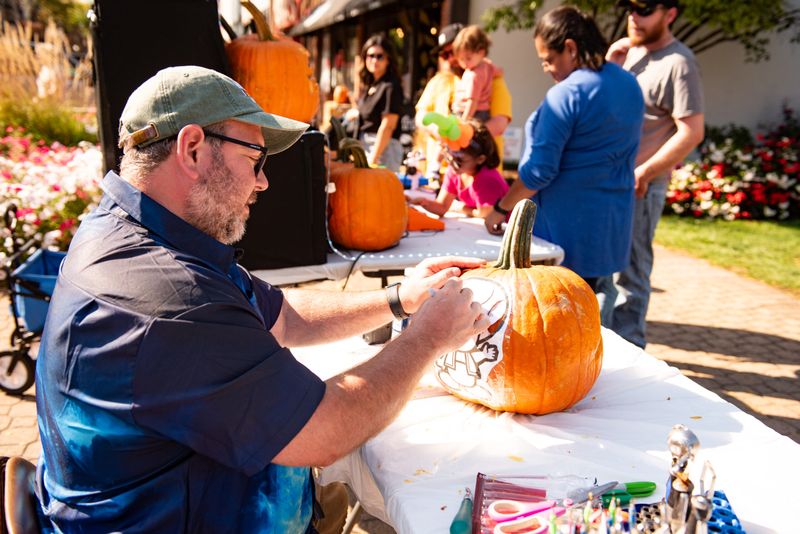
When an artist is working, be mindful of their space. It is fine to be curious, but a person handling sharp tools may need to concentrate. If conversation is possible, a short, polite question about a visible detail is more useful than asking for a long explanation in the middle of a tricky cut.
Follow any posted viewing rules.
There is also a human side to the changing work. Each finished design represents time spent planning, cutting, checking, and adjusting. The pumpkin itself sets limits; an artist cannot erase a deep cut and start that patch again.
Seeing the process makes a small, careful line seem just as impressive as a wide, dramatic opening.
Try choosing a favorite for a specific reason rather than asking which sculpture is best. Maybe it uses a stem in a clever way, or perhaps its expression changes when you move to one side. Sharing that detail with a friend keeps the conversation lively without turning the displays into a contest.
The artists’ different approaches are the real show.
Plan Around the Two-Day Clock
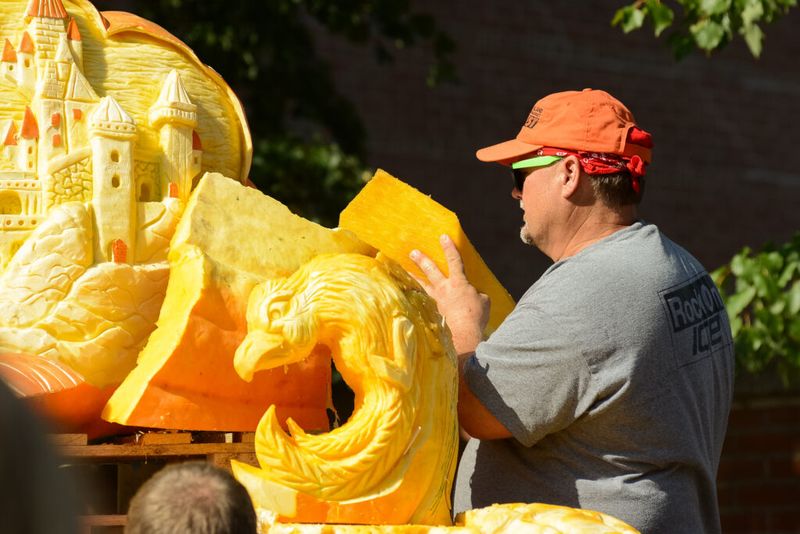
Two days sound like plenty until you realize that a pumpkin can look different each time you pass it. If watching the carving matters most, plan for some time while work is underway. If you mainly want finished art, look for the current event schedule before choosing when to visit.
Do not assume every display reaches the same stage at once.
Fall weather can change quickly in Michigan. Wear shoes that are comfortable for a downtown walk and bring a layer you can add or remove. A cool morning may turn into a warm afternoon, especially when you are standing in the sun to watch an artist.
A small bag leaves your hands free for photos and makes moving through busier spots simpler.
Give your group a meeting point before anyone wanders toward another carving or shop window. Downtown events can pull attention in several directions, and an easy landmark reduces confusion. If you are coming with children, agree on a comfortable pace rather than promising to see every pumpkin.
One careful look often beats several rushed ones.
Parking and street access may change with festival plans, so check current downtown guidance before you leave. Arriving with a route in mind is useful, but keep that plan flexible once you see where displays and crowds are. Allow extra time to cross streets safely and use marked crossings, even when an interesting carving is visible just ahead.
Before setting out, confirm the year’s Fall Fest dates, hours, and activity locations. Those details matter more than an old photo or an earlier festival schedule. Then make room for one unscheduled stop.
The pleasure of a two-day event is being able to pause, return, and catch a giant pumpkin at a different point in its short life as art.
See the Finished Art, Then Look Back at the Pumpkin
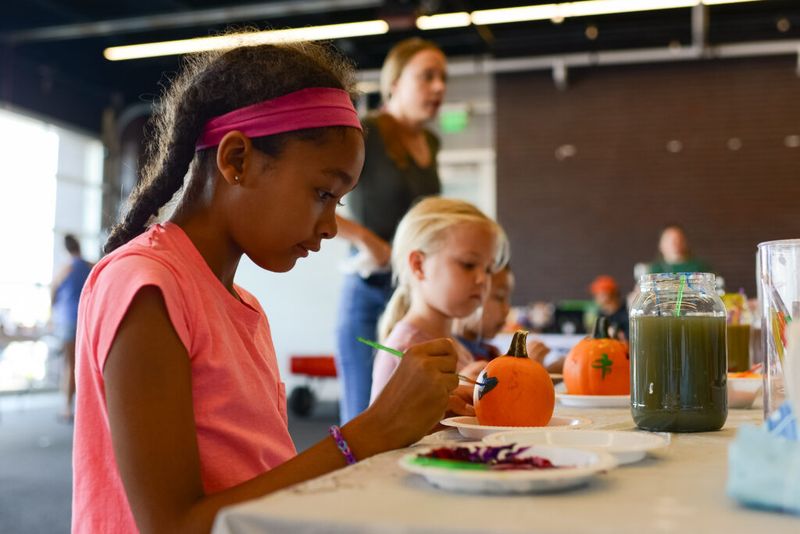
At the end of a carving, the pumpkin has not vanished. Its heavy stem, curved ribs, and orange skin are still right there beneath the design. That is the sharpest part of Fall Fest’s signature sight: a familiar fall object becomes art without losing the features that made it a pumpkin in the first place.
Take one last look at a completed piece from the same place where you first saw it, if you can. A line that seemed random earlier may now define a face or frame a scene. Comparing the beginning and end helps you see the artist’s choices, not just the final image.
Photos taken during the day can make that change especially clear.
A finished sculpture also invites you to test how it works in the street. From close by, you can study tool marks and layers. From farther away, you can see whether the design holds together against storefronts and passing pedestrians.
Neither view is the right one. The change between them is part of the experience.
Before leaving, give others a turn at the best viewing spot and keep hands off the carved surface. Pumpkin art is temporary and can be delicate, particularly where deep cuts leave narrow sections. Those simple courtesies help the next group enjoy the same crisp detail you came to see.
They also keep the sidewalk easier to share.
You do not need a packed schedule to get something out of these two days. See an artist at work, walk to a few displays, and return to one that caught your attention. Downtown Holland provides the setting, but the transformation supplies the story: a giant pumpkin arrives as a harvest curiosity and leaves with an artist’s unmistakable mark.