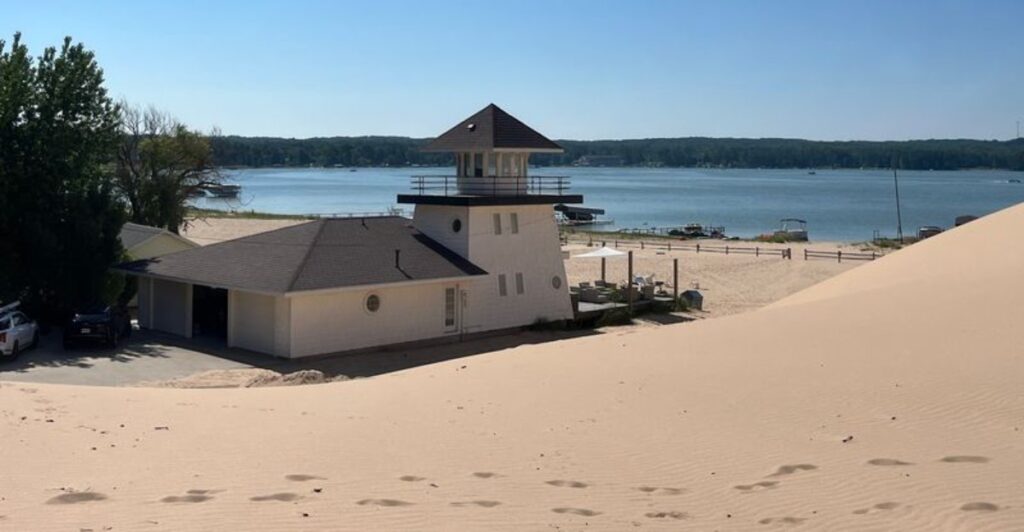
Michigan gets dramatically wild once you leave the familiar roads behind. Across both peninsulas, towering sand dunes, thundering waterfalls, clear inland springs, rocky cliffs, and seasonal ice formations create scenery that can feel completely different from one stop to the next. The appeal comes from that variety, because one trip might put you high above Lake Michigan while another leads deep into the Upper Peninsula for something far more rugged.
Knowing where to go also makes it easier to match each destination with the right season. For anyone ready to see the Great Lakes State at its boldest, these thirteen Michigan natural wonders are worth putting on the map.
1. Turnip Rock Near Port Austin
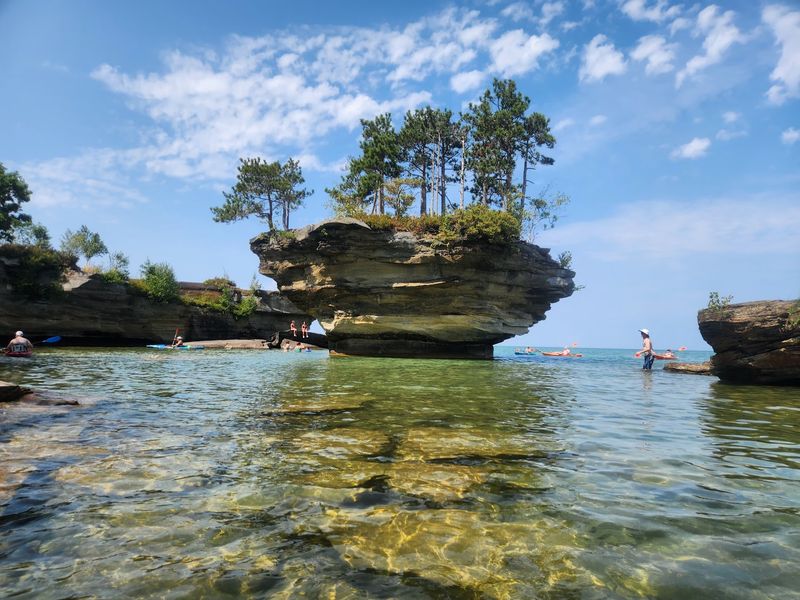
Picture a giant stone mushroom wearing a tiny hat of trees. That is Turnip Rock, a limestone sea stack sitting in the shallow waters of Lake Huron at the tip of Michigan’s Thumb. Waves have chewed away at its base for thousands of years, leaving the top wider than the bottom.
Here is the catch: you cannot drive or hike to it. The land around the shoreline is private, so the only way to see it up close is by water. Most people rent a kayak or paddleboard in Port Austin and paddle out along the coast.
The round trip is roughly seven miles, so plan on spending a few hours on the water. Calm mornings are your best friend here. Lake Huron can turn choppy fast in the afternoon, and paddling against wind gets tiring in a hurry.
Along the way, you will glide past rocky bluffs, little sea caves, and water so clear you can spot boulders resting on the bottom. Bring a dry bag for your phone, because you will want photos. Snacks and plenty of water are smart too, since there is no stopping spot with a store.
If you are new to kayaking, local outfitters often offer guided tours. Guides know the safest routes and can point out spots you might paddle right past. They also keep an eye on the weather, which matters on a lake this big.
Respect the private property rules once you arrive. Landing on the rock itself or the nearby shore is not allowed, so enjoy the view from your boat. Floating quietly beside this odd little formation is the whole point anyway.
Summer weekends get busy, so a weekday visit gives you more elbow room. Early fall can be lovely too, with fewer crowds and cooler air for that long paddle home.
2. Laughing Whitefish Falls Near Sundell
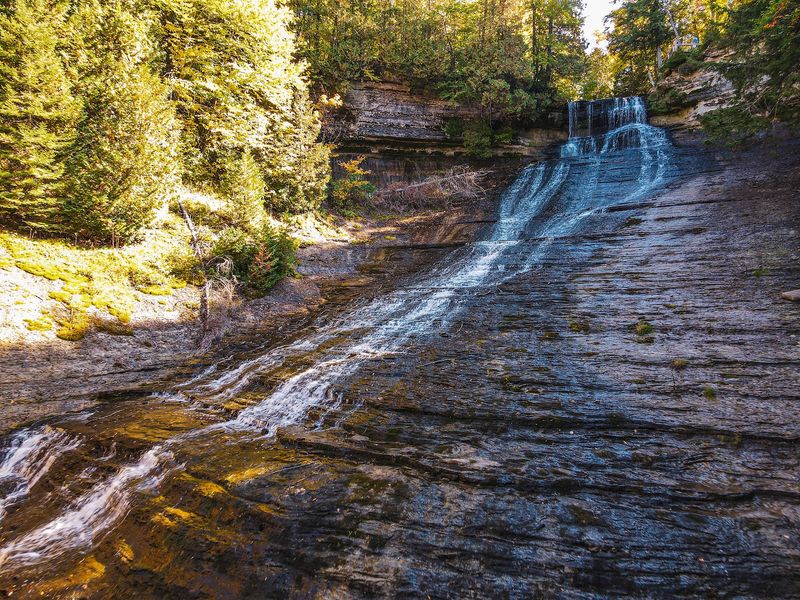
Ever seen a waterfall that looks like a white wedding veil draped over stairs? Laughing Whitefish Falls tumbles down a long, sloping rock face, spreading out into thin sheets of foamy water. The name alone makes people smile before they even reach the trail.
The falls sit inside a small state scenic site in the Upper Peninsula, south of Lake Superior. Getting there is simple. A fairly flat trail of about half a mile winds through a quiet hardwood forest before reaching the top of the falls.
From the top, a wooden staircase leads down along the side of the cascade. Counting steps is part of the fun, though your legs will notice on the climb back up. Several platforms along the way let you stop, catch your breath, and look at the water from new angles.
Spring is a great time to visit. Melting snow pumps extra water over the edge, making the falls louder and wider. By late summer, the flow can slow down a lot, which shows off more of the layered rock underneath.
Fall brings a different reward. Maple and birch trees around the gorge turn bright orange, red, and gold, framing the white water like a painting. Bring a camera with a wide lens if you have one.
Bugs can be fierce in early summer, so pack insect repellent. Good shoes help too, because the stairs and trail can be slippery after rain.
Combine your visit with a drive to nearby Munising or Marquette. The falls offer a scenic chance to stretch your legs during a longer U.P. road trip. Allow about an hour to explore, leaving plenty of daylight for your next stop.
3. Sleeping Bear Dunes National Lakeshore Near Empire
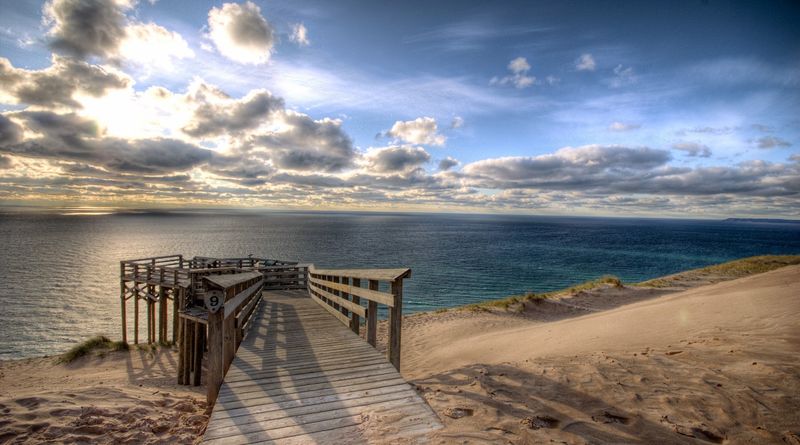
An old Anishinaabe legend tells of a mother bear who swam across Lake Michigan to escape a forest fire. She waited on the shore for her two cubs, who never made it, and the lake created two islands in their honor. Today, that story gives Sleeping Bear Dunes its name.
The park stretches along miles of shoreline in northwest Michigan. Sand bluffs here rise hundreds of feet above the water, and the views are big enough to make you stop mid-sentence.
Start with the Dune Climb, the most famous spot in the park. You can scramble up a steep wall of sand, and kids love racing back down. Fair warning: the hike to the actual lake from there is long and tough, so bring water and plan for several hours.
Prefer to stay in your car for a while? The Pierce Stocking Scenic Drive loops through forest and dunes with pullouts overlooking Lake Michigan. One stop puts you on a platform high above the water, with the Manitou Islands floating on the horizon.
Biking is another great option. The Sleeping Bear Heritage Trail is a paved path that links towns, beaches, and historic farms. It is mostly gentle, making it easy for families.
The nearby village of Empire works well as a home base. Glen Arbor, just up the road, has cherry treats and small shops worth a browse after a long day outside.
Remember that the park charges an entrance fee, and passes are checked. Sunscreen is a must, because sand reflects sunlight and heats up fast. Midday dune climbs in July can burn bare feet, so wear shoes and aim for morning or evening when the sand cools off.
4. Kitch-iti-kipi at Palms Book State Park
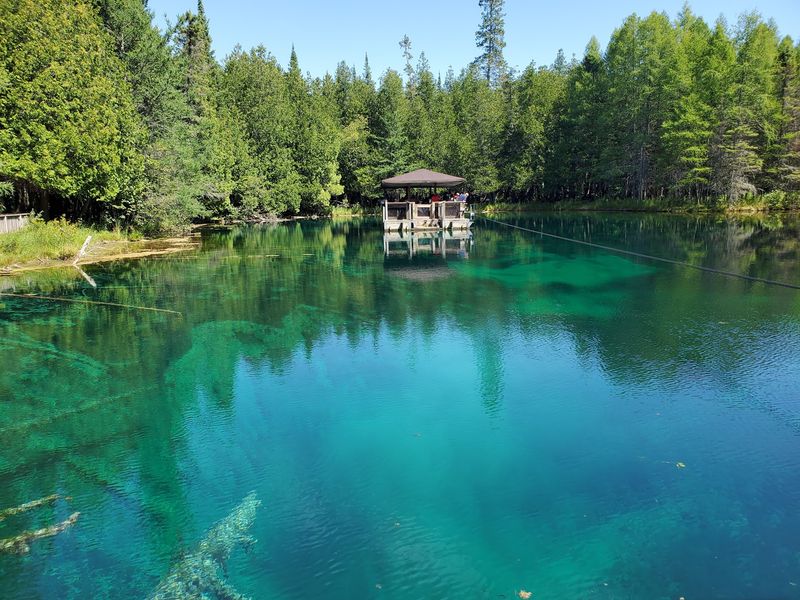
Forty feet deep and still clear enough to read the bottom like a book. Kitch-iti-kipi, often called the Big Spring, is the largest freshwater spring in Michigan. Thousands of gallons of water bubble up from the ground every minute, keeping the pool a steady temperature all year.
The water shines in shades of emerald and turquoise. Look closely, and you will see sand puffing up from the bottom where the spring pushes through. Big trout cruise lazily past old, moss-covered logs.
So how do you get a good look? The park has a self-operated observation raft. You turn a wheel attached to a cable, and the raft slowly glides across the pool.
A hole in the center gives everyone a clear window into the depths.
The raft is free to ride, though you will need a Michigan Recreation Passport to enter the park. The walk from the parking lot is short and paved, so almost anyone can manage it.
Timing matters. Summer afternoons can bring long lines for the raft. Show up early in the morning, and you might share the spring with only a few other people.
Fun fact: because the water stays around 45 degrees, the spring never freezes. Winter visits are possible, and steam rising off the surface on a frosty day looks amazing. Roads can be snowy, though, so check conditions first.
Bring polarized sunglasses if you have them. They cut the glare on the water and make the fish and logs pop into view. Swimming and fishing are not allowed, so leave the gear in the car.
Palms Book is near Manistique, which makes an easy stop on a trip along US-2. Plan on about an hour, including the raft ride and some time on the shore.
5. Arch Rock on Mackinac Island
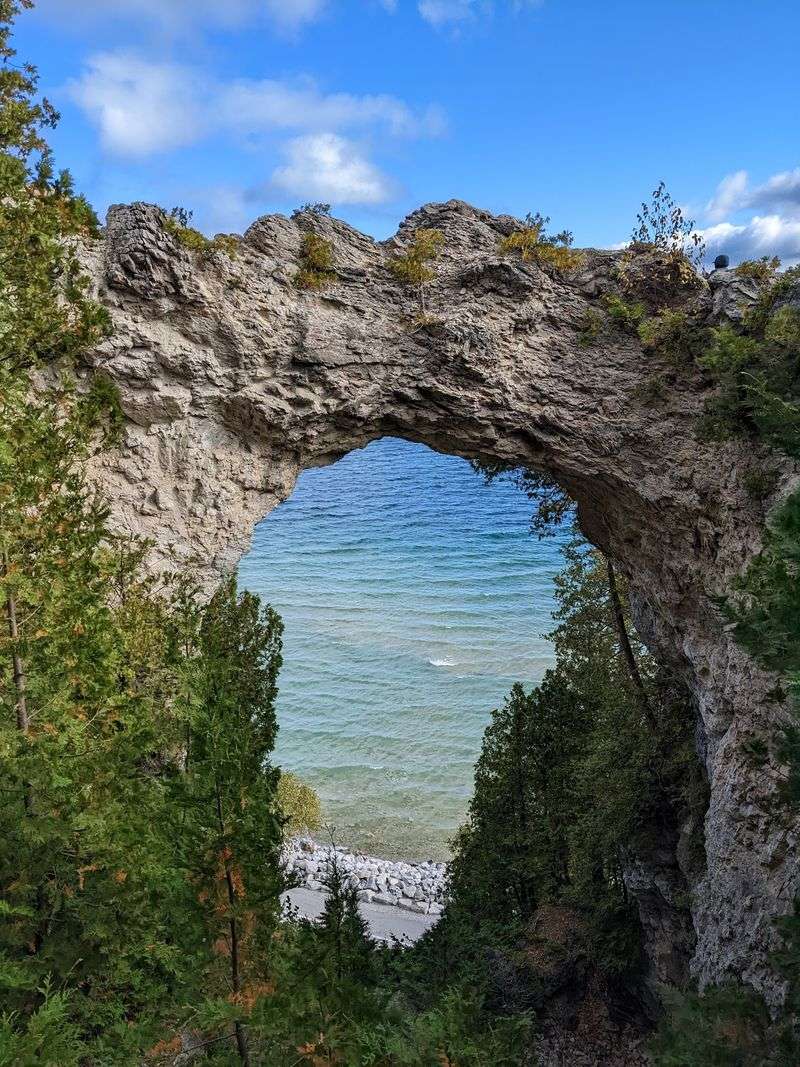
No cars allowed. That is the first surprise on Mackinac Island, where horses, bikes, and your own two feet do all the work. Climb up one of the island’s bluffs, and you will find Arch Rock, a natural limestone bridge hanging about 146 feet above Lake Huron.
Wind, waves, and ice carved the arch over a very long stretch of time. Through its opening, you can see bright blue water sparkling below. It is one of the most photographed views on the island, and for good reason.
There are two ways to see it. You can visit the upper viewing area by bike, carriage, or walking along the roads. Or, if you are feeling energetic, take the long wooden staircase from the shoreline road near the bottom.
That stairway has a lot of steps. It is a solid workout, but it also gives you a cool look at the arch from below. Pace yourself and take breaks on the landings.
Biking around the island is a favorite move. The road that circles Mackinac is about eight miles and mostly flat, with Arch Rock right along the route. Rentals are easy to find downtown, near the ferry docks.
Most of the island is a state park, so the trails beyond the arch are worth wandering. You might find quiet forest paths, old forts, and other rock formations like Sugar Loaf.
Of course, a trip here would not be complete without fudge. Shops in town make it fresh, and the smell drifts right into the street.
Ferries leave from Mackinaw City and St. Ignace. Summer is busiest, so if crowds bother you, try June or September. You will still get warm days but more breathing room on the trails.
6. Silver Lake Sand Dunes in Mears
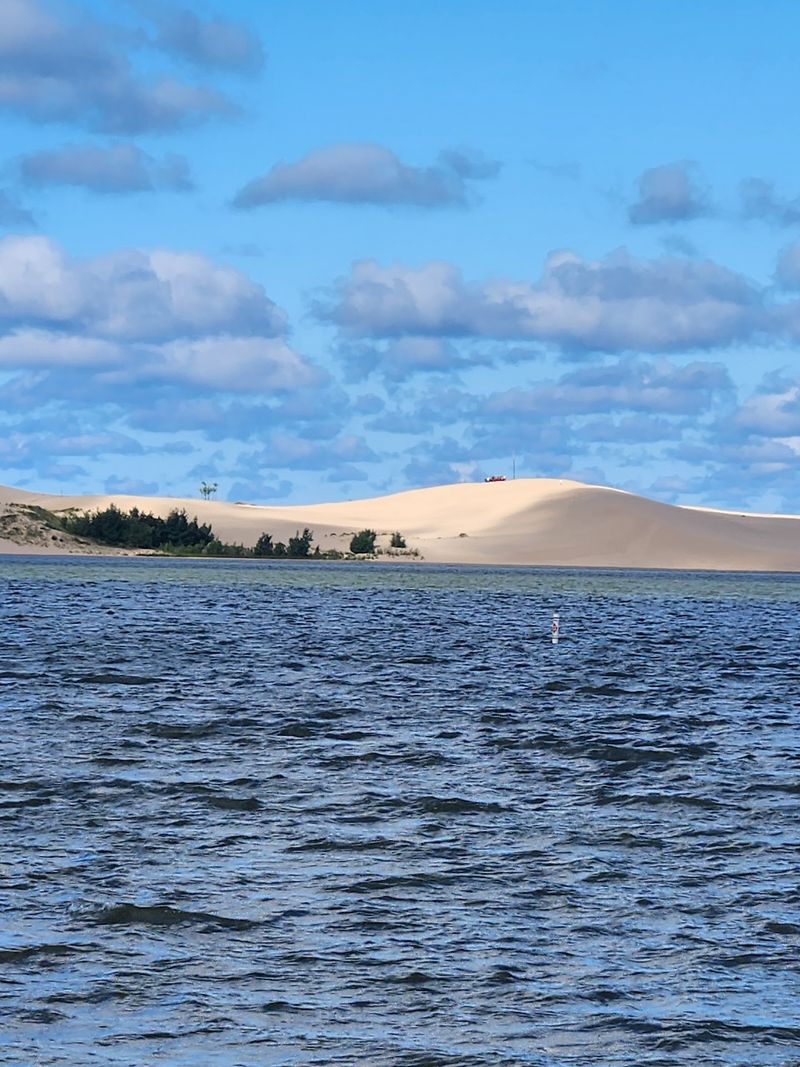
Engines roar, sand flies, and a jeep crests a dune like a roller coaster car. Silver Lake Sand Dunes is a rare spot in Michigan where you can legally drive your own off-road vehicle across open sand. The dunes sit between Silver Lake and Lake Michigan, giving you water on two sides.
Not into driving? No problem. Dune ride companies in the area offer guided tours in big open-air trucks.
Drivers zip up and over hills while you hang on and laugh.
The park is split into different zones. One section is for vehicles, another is set aside for hiking, and a third part is quiet natural area. That way, everyone gets their own type of fun.
If you plan to drive, read the rules first. Vehicles need certain safety gear, like a tall flag on a whip antenna so others can see you over the hills. Rentals in town usually come ready to go.
Walking the dunes can be a workout. Soft sand makes every step harder, so wear sturdy shoes and bring water. The reward is a stunning view of Lake Michigan stretching out to the horizon.
Little Sable Point Lighthouse stands nearby, a tall brick tower right on the beach. Climbing it in summer gives you a fresh angle on the shoreline and dunes. It is a nice, calmer break from all the engine noise.
Silver Lake itself is warm and shallow, which makes it popular for swimming and paddling. Families often spend mornings on the sand and afternoons in the water.
Small towns like Mears and Hart have ice cream stands, mini golf, and cozy campgrounds. Book early in summer, since spots fill up fast once school lets out.
7. Tahquamenon Falls Near Paradise
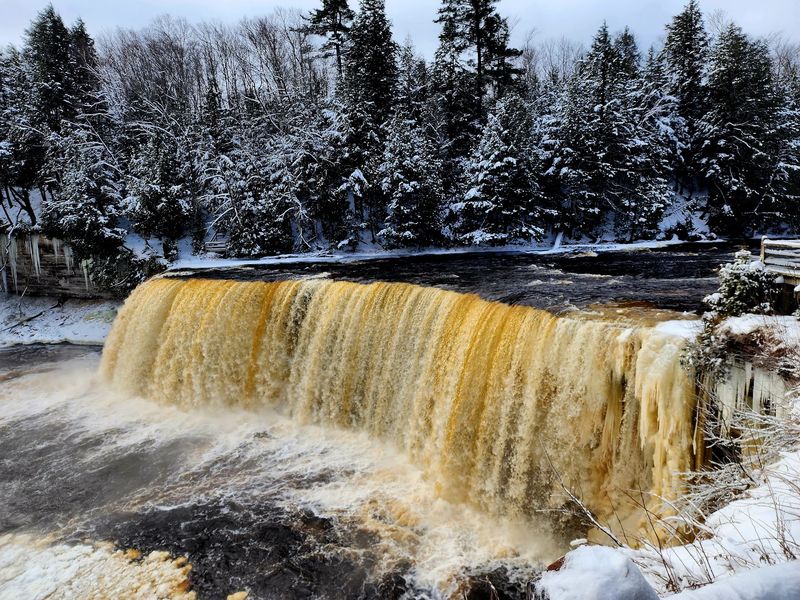
Root beer on tap, courtesy of Mother Nature. The water at Tahquamenon Falls has a rich amber color, thanks to tannins that leach from cedar and hemlock swamps upstream. Foam on the surface even looks a bit like a soda float.
The Upper Falls is the star. It stretches more than 200 feet across and drops close to 50 feet. During spring melt, huge amounts of water pour over the edge, making it one of the largest waterfalls east of the Mississippi.
A short, paved path leads from the parking area to several viewing spots. If you want a closer look, take the stairs down to the brink. You will feel the mist and hear the steady roar right next to you.
About four miles downstream sits the Lower Falls. This section breaks into a series of smaller cascades around an island. You can rent a rowboat and paddle over to the island for a fun walk around its edge.
Up for a hike? A trail connects the Upper and Lower Falls through quiet woods along the river. It takes a few hours each way, so plan carefully or arrange a ride back.
The park lies near the tiny town of Paradise, in the eastern Upper Peninsula. There is even a brewpub right near the Upper Falls, perfect for lunch after a day outdoors.
Autumn here is spectacular. Bright leaves surround the amber water, creating colors that do not seem real. Spring brings the biggest flow, while winter turns the falls into icy sculptures.
A Michigan Recreation Passport gets you in. Bug spray is a must in early summer, when mosquitoes and black flies come out in force.
8. Eben Ice Caves Near Eben Junction
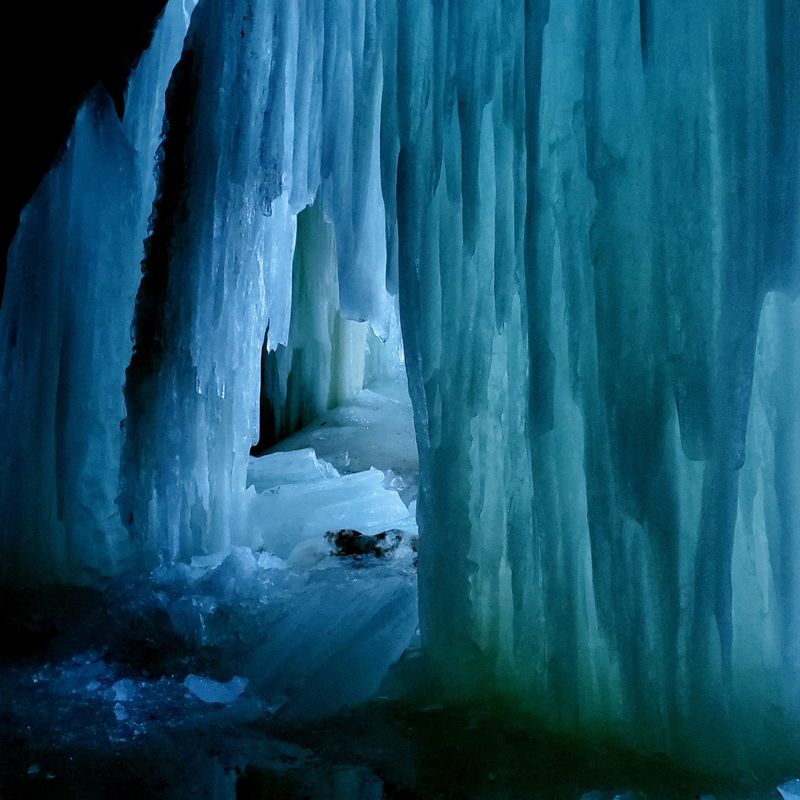
Most people wait for summer to explore Michigan. Smart winter fans know better. Every year, water seeping over a rock ledge in Hiawatha National Forest freezes into huge columns and curtains of ice, creating the Eben Ice Caves.
Technically, they are not true caves. They are more like frozen waterfalls that form hollow spaces behind them. You can walk right inside and look up at icicles glowing in shades of blue, white, and gold.
Getting there takes a bit of effort. From the parking area near Eben Junction, you will cross a farm field and then hike through the woods. The trail is roughly a mile, with a steep section near the end.
That steep part gets slick. Ice cleats or traction devices that slip over your boots make a huge difference. Plenty of visitors bring trekking poles too, for extra balance.
Dress in layers. Winter in the Upper Peninsula is no joke, and temperatures can stay well below freezing for weeks. A warm hat, gloves, and waterproof boots will keep you happy while you explore.
The best season usually runs from January through March, depending on the weather. A cold winter means bigger, thicker ice formations. Warmer spells can make them drip or even break apart, so watch for falling ice.
Weekends can get busy, with cars lined up along the road. A weekday trip often means a quieter walk and better photos without people in every shot.
Bring a headlamp or flashlight to catch the colors and patterns in the ice as light passes through it. After exploring, head to nearby Chatham or Munising for a hot drink and a chance to warm your hands.
9. Warren Dunes State Park in Sawyer
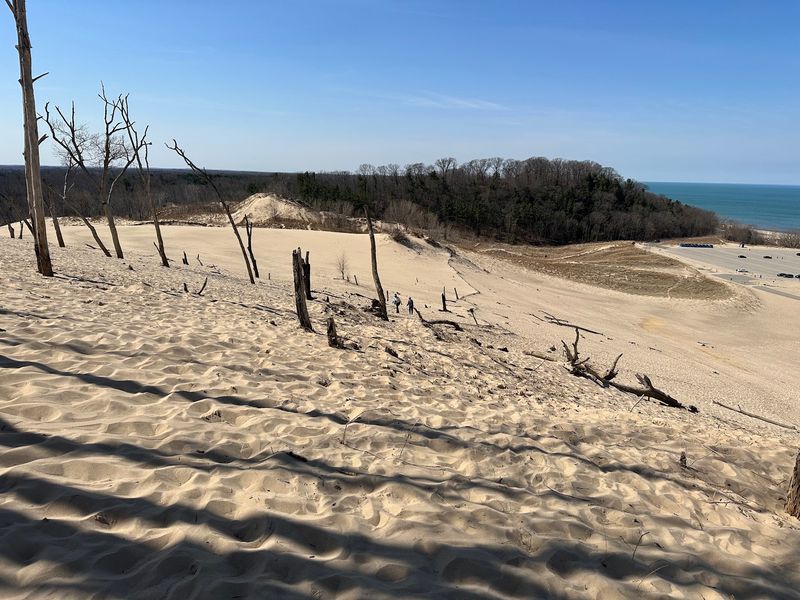
Kids charge up the sand, scream with joy, and tumble back down again. Warren Dunes State Park in southwest Michigan is a playground built from sand. Its tallest dune, Tower Hill, rises about 260 feet above Lake Michigan.
Climbing Tower Hill is the big challenge here. The slope is steep, and soft sand slides under every step. Once you reach the top, though, you will see the lake stretch out in a huge blue sheet, and on clear days, maybe even the Chicago skyline far across the water.
Running down is the reward. Just go slow enough to stay in control, and watch for others on the way.
The park has nearly three miles of beach, so even busy days rarely feel cramped. Swimming is popular in summer, but keep an eye on flags and warnings. Lake Michigan can create strong currents, especially on windy days.
Beyond the sand, wooded trails loop through forests and quieter dune areas. Hiking these paths gives you a break from the crowds and a chance to spot birds and wildflowers.
The park is close to the Indiana and Illinois borders, making it a favorite for weekend trips from Chicago. That means summer weekends fill up fast. Arrive early, or visit on a weekday if you can.
Camping is available, with sites tucked into the woods near the beach. Reservations open months ahead, and popular dates go quickly.
Pack sandals for hot sand, sunscreen, and plenty of water. Nearby towns like Sawyer and Three Oaks offer bakeries, small shops, and farm stands for a tasty side trip.
Fall is underrated here. The crowds thin out, the air cools down, and the trees in the forest trails start to change color.
10. Lake of the Clouds in the Porcupine Mountains
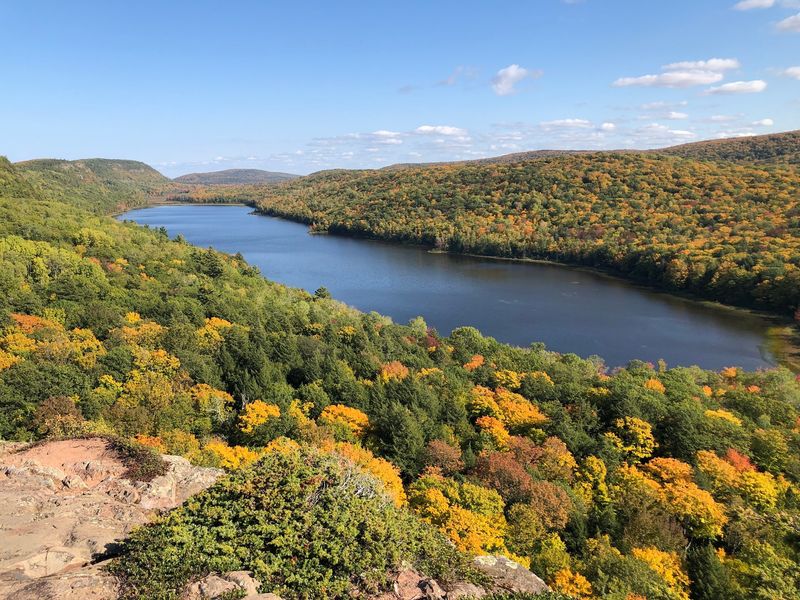
Stand on the rocky edge, look down, and a long, curvy lake stretches through a valley of endless trees. Lake of the Clouds is the signature view in Porcupine Mountains Wilderness State Park, often called the Porkies by locals.
The overlook sits on a high escarpment, a steep ridge of rock. From there, the lake looks like a blue ribbon tucked between forested hills. Clouds drifting overhead reflect on its surface on calm days, which helps explain the name.
Here is great news: the main overlook is easy to reach. A short paved path leads from the parking lot to the viewing area. Even if long hikes are not your thing, you can enjoy this view.
Want more? The Escarpment Trail runs along the ridge and offers more amazing views. It is rugged and rocky, so wear sturdy shoes and bring water.
Other trails lead down to the lake itself for fishing and quiet time.
The Porkies cover a huge area of old-growth forest, waterfalls, and rivers. It is one of the wildest places in the Midwest, with black bears, bald eagles, and plenty of other wildlife. Store food carefully if you camp.
Timing your trip right is key. Late September and early October bring fall colors that turn the whole valley orange, red, and gold. Photographers flock here during peak season.
Summer offers long days and warm weather for exploring. Winter brings skiing at the park’s downhill area, with views of Lake Superior from the slopes.
The park is far from big cities, so fill your gas tank before you go. Ontonagon and Silver City are the closest towns, with places to eat and stay. Cell service can be spotty, so download maps ahead of time.
11. Grand Sable Dunes Near Grand Marais
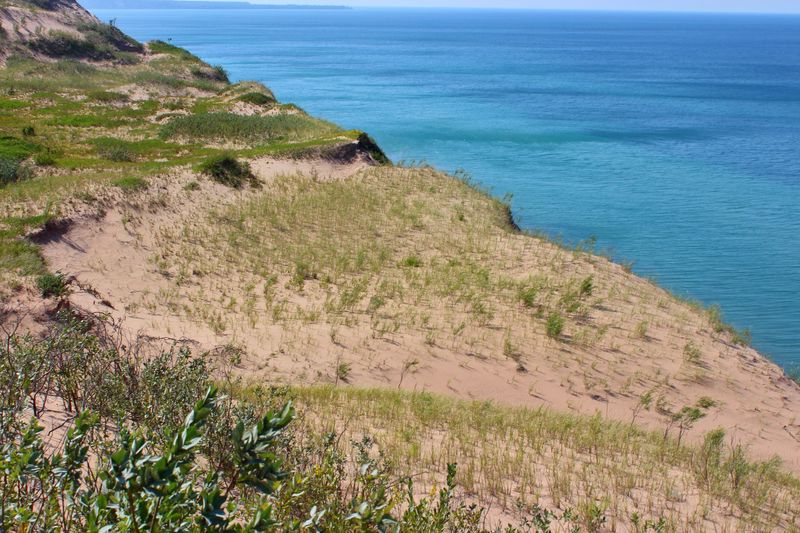
Lake Superior gets most of the attention at Pictured Rocks, with its famous painted cliffs. Head to the eastern end of the park, though, and you will find a very different scene. The Grand Sable Dunes pile up high above the lake, creating giant slopes of golden sand.
These dunes sit on top of steep banks, some rising around 300 feet. From the edge, the drop to the lake below is dramatic. Deep blue water meets pale sand in a way that looks almost tropical, at least until you dip a toe in that chilly water.
The Sable Falls area is a great starting point. A set of stairs takes you down to a pretty waterfall, then continues out to the beach. From there, you can walk along the shore and look up at the towering dunes.
For a view from above, check out the Log Slide Overlook. Back in the logging days, workers sent logs sliding down this steep bank into the lake. Today, it is a popular viewpoint, but signs warn against going down the slope.
Climbing back up is extremely hard and dangerous.
Hiking trails also wind through the dunes, past grassy ridges and twisted pine trees. Wildflowers bloom here in summer, adding small pops of color to the sand.
Grand Marais is the closest town. It is a quiet harbor village with a few restaurants, an old lighthouse, and a beach known for agate hunting.
Bring layers even in summer. Lake Superior keeps the air cool, and winds can pick up quickly. Sunscreen and water are smart picks too, since there is little shade on open sand.
12. Ocqueoc Falls Near Ocqueoc
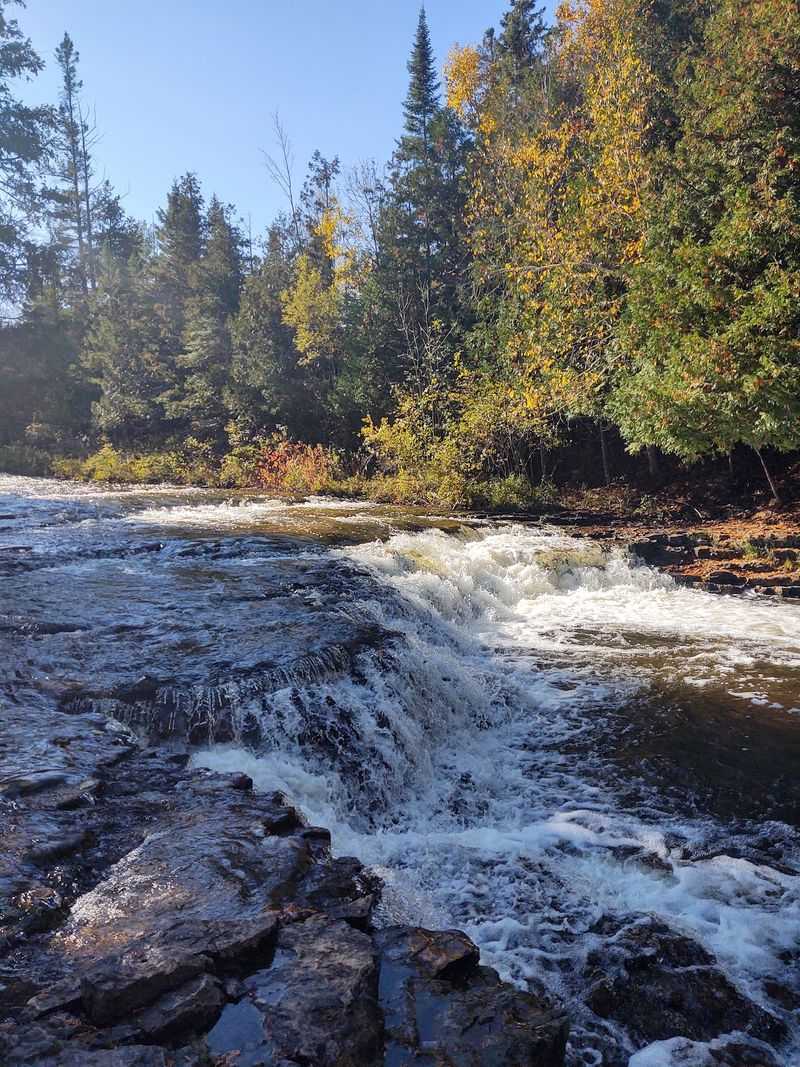
Waterfalls are everywhere in the Upper Peninsula, but the Lower Peninsula has very few. Ocqueoc Falls claims the title of the largest waterfall in the Lower Peninsula. It is small compared to Tahquamenon, yet its charm comes from how close and friendly it is.
The falls drop only a few feet over a series of limestone ledges. That gentle height makes it perfect for wading. On hot days, families splash in shallow pools and sit right under the little cascades.
The water can be cold, even in summer. Bring water shoes, since the rocks are slippery and sometimes sharp. A towel and a change of clothes will make the ride home more comfortable.
Accessibility is a big highlight. Ocqueoc Falls was one of the first spots in the country designed with a universally accessible waterfall area. Paved paths and ramps make it possible for wheelchair users to get close to the water.
Beyond the falls, a network of trails loops through the surrounding forest. These paths are great for hiking in summer and cross-country skiing in winter. Fall colors light up the woods in late September.
The falls are in a quiet part of northeast Michigan, near Rogers City. Fewer tourists head this way, which means a calmer visit than some of the state’s busier attractions.
Picnic tables nearby make it easy to bring a lunch and spend a slow afternoon. There is also a campground close by if you want to stay overnight.
Pair your visit with some time on Lake Huron’s beaches or a stop at the lighthouses around Presque Isle. Together, they make for a relaxed day trip through this peaceful corner of Michigan.
13. Grand Island Ice Curtains Near Munising
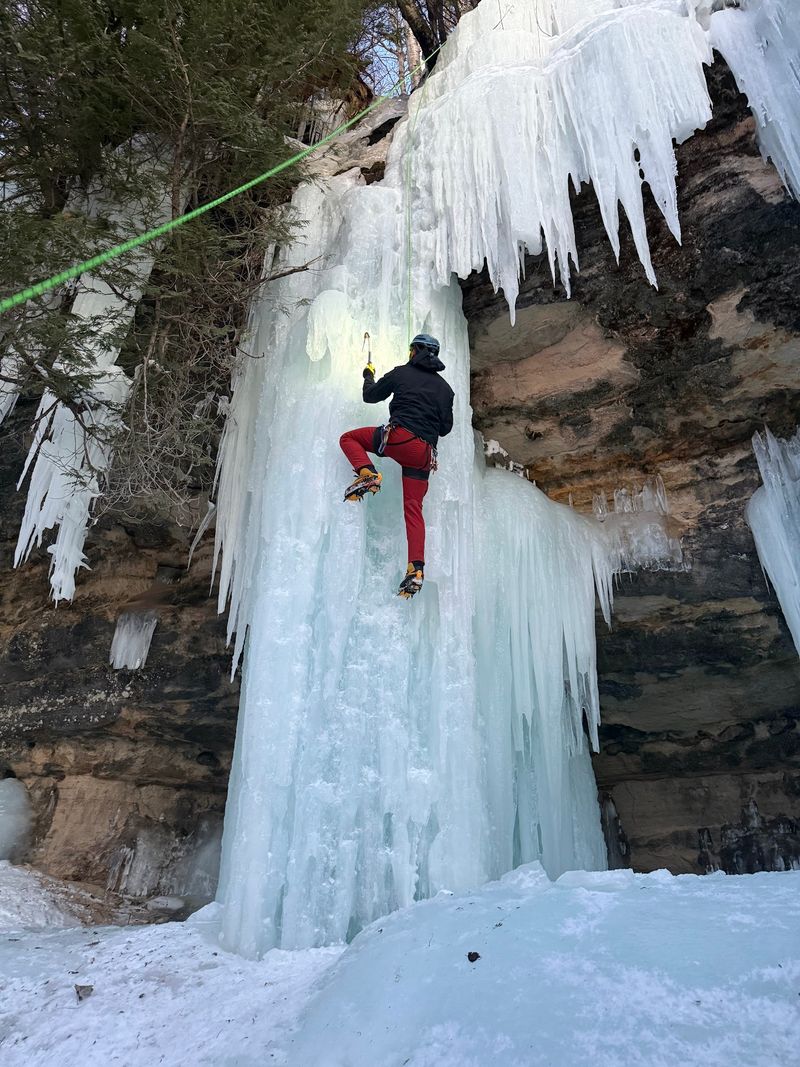
Cliffs dressed in blue and white ice, towering over a frozen Lake Superior. The Grand Island Ice Curtains form when water seeps through sandstone cliffs on the island’s east side and freezes into massive walls of icicles. Some stretch dozens of feet tall.
Reaching them is only possible when Munising Bay freezes solid enough to walk across. That does not happen every winter. In cold years, people hike or snowshoe across the ice from the mainland to see the formations up close.
Safety comes first here, and it matters a lot. Ice conditions change fast, and Lake Superior is not forgiving. Check local reports and talk with people in Munising before stepping out onto the bay.
When conditions are good, the walk is unforgettable. The icy formations glow in shades of turquoise, white, and even yellow or green, depending on minerals in the water. Up close, you can see bubbles and patterns frozen inside.
Bring ice cleats, warm layers, and something to block the wind. Out on the open bay, there is nothing to stop a cold breeze. Goggles or sunglasses help too, since sunlight bouncing off ice and snow can be very bright.
Late January through early March is the usual window. Each season is different, so flexibility helps. Plenty of locals keep an eye on the ice and spread the word when it is ready.
Munising makes a great base. It is the gateway to Pictured Rocks National Lakeshore, and winter there means snowmobiling, frozen waterfalls, and cozy restaurants.
Can’t cross the bay? You can still spot ice formations along the mainland shore. Nearby Munising Falls and other cliffs also freeze into amazing shapes worth checking out.