Eighty-seven trees does not sound like the beginning of a destination that could swallow up an afternoon. Yet that modest 1963 planting of crabapples, cherries, and hollies in Holmdel eventually grew into the David C.
Shaw Arboretum, a 22-acre collection tucked inside Holmdel Park. Today, nearly 3,000 trees and shrubs fill the grounds, ranging from familiar New Jersey favorites to specimens unusual enough to make even casual walkers stop and check the label.
The arboretum was never meant to be a formal garden where everything is clipped into submission. Its bigger idea was surprisingly practical: show people which woody plants can thrive in this part of New Jersey and what they actually look like when given room to mature.
Add specialized gardens, decades-old specimens, and the surrounding attractions of one of Monmouth County’s best-known parks, and this quiet corner of Holmdel becomes far more interesting than its understated name suggests.
How 87 Trees Grew Into One of New Jersey’s Most Impressive Collections
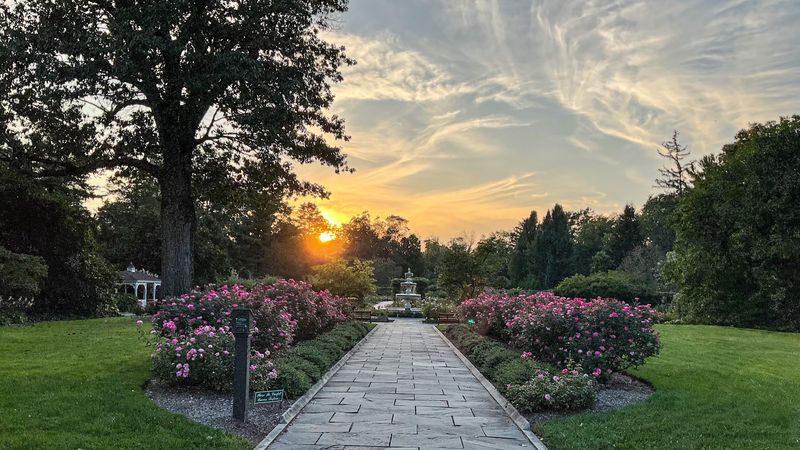
The story starts in 1963, when the arboretum was planted with just 87 trees, including crabapples, cherries, and hollies. What happened next was less about one massive landscaping project and more about steady growth.
Local nurserymen donated much of the plant material that expanded the collection, gradually turning a small display into a broad sampling of trees and shrubs suited to Monmouth County conditions.
The arboretum is now named for David C. Shaw, who served as superintendent of the Monmouth County Shade Tree Commission from 1963 until 2002. That long connection makes the name especially fitting, since the site developed through much of the same period Shaw was overseeing the county’s shade-tree work.
There was also a clear educational purpose behind the plantings. Rather than simply collecting unusual plants for the sake of having them, the arboretum was intended to show homeowners what different species could look like in a real landscape once they reached maturity.
In other words, this was partly a giant, slow-moving demonstration garden. A young tree at a nursery can be difficult to picture 20 or 30 years down the road; here, visitors can see what happens after decades of actual growth.
The arboretum was designed by Robert B. Clark, a landscape architect, taxonomist, and Rutgers professor of ornamental horticulture, giving the original project a serious horticultural backbone.
More than six decades later, those first 87 trees are only the opening chapter of a collection that has grown to a scale its founders could hardly have missed while walking through it today.
Nearly 3,000 Trees and Shrubs Now Fill These 22 Acres
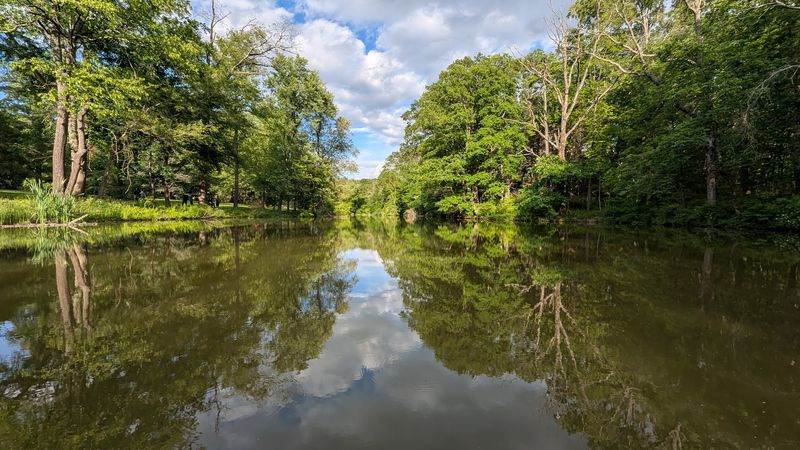
Numbers can get slippery when you are talking about a garden, but nearly 3,000 trees and shrubs spread over 22 acres is enough to make this place feel more like a living catalog than a typical landscaped park.
The collection represents hundreds of species, cultivars, and varieties, with everything from cherries and crabapples to dogwoods, hollies, pines, spruces, firs, lindens, hawthorns, bald cypress, and less everyday specimens such as Amur cork tree and weeping pagoda tree.
There are also attention-grabbers that make a walk more interesting even if you cannot tell a cultivar from a conifer. A weeping ginkgo has a completely different silhouette from the upright street trees most people recognize, while a weeping Atlas cedar can look almost sculptural when its branches are allowed to spread.
That variety is one of the arboretum’s strengths. You do not need to arrive with a notebook and a background in botany to get something out of it.
One minute you can be looking at a tree you have seen in suburban yards your whole life; a few steps later, the shape, bark, needles, or branching pattern of another specimen can feel entirely unfamiliar. An entrance map helps identify the major collections, which is useful because this is a place where wandering without a plan is easy.
Unlike a flower garden that may peak for a few weeks, the arboretum relies heavily on structure, foliage, bark, form, and seasonal changes. That gives its nearly 3,000 specimens plenty to show even when nothing particularly dramatic is blooming.
The Specialty Gardens Make Every Corner Feel Different
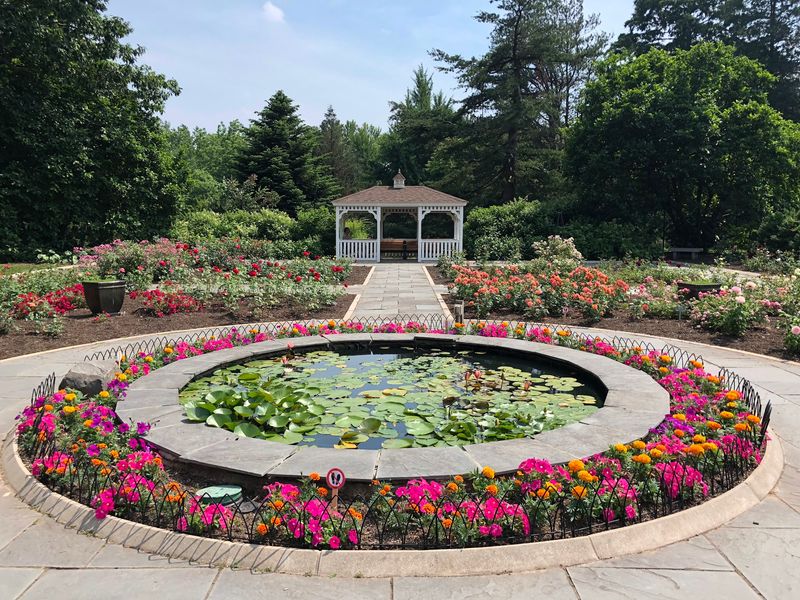
One stretch may be dominated by compact evergreens, while another feels like someone reorganized a botany textbook into actual plants. That variety comes from several specialty collections tucked within the larger arboretum.
The Handleman Garden focuses on texture and contrast, with particular emphasis on broadleaf evergreens. Instead of relying on flowers to do all the visual work, the planting makes differences in leaf size, shape, density, and growth habit part of the show.
Then there is the Alvarez Synoptic Garden, where groups of trees and shrubs are arranged alphabetically by their botanical names. It is the sort of detail that sounds academic until you are standing among the plants and realize there is a method to what might otherwise seem like a random assortment.
Another standout is the Jayne Kluis Dwarf Conifer Garden, a collection centered on dwarf evergreens with larger conifers and deciduous plants mixed in for contrast. Dwarf conifers can be particularly fun here because the term “dwarf” does not necessarily mean tiny; many simply grow much more slowly or remain substantially smaller than the full-size members of their family.
Elsewhere, the arboretum includes a collection of true cedars associated with David Rossheim, adding another layer to the site’s many focused plantings. Together, these gardens keep the 22 acres from feeling repetitive.
You are not walking through row after row of specimen trees planted with identical spacing. The mood changes as the plant palette changes, and that makes a casual loop surprisingly rewarding even for someone who arrived mostly because they wanted a peaceful walk rather than a horticulture lesson.
This Living Collection Was Designed With New Jersey Gardeners in Mind
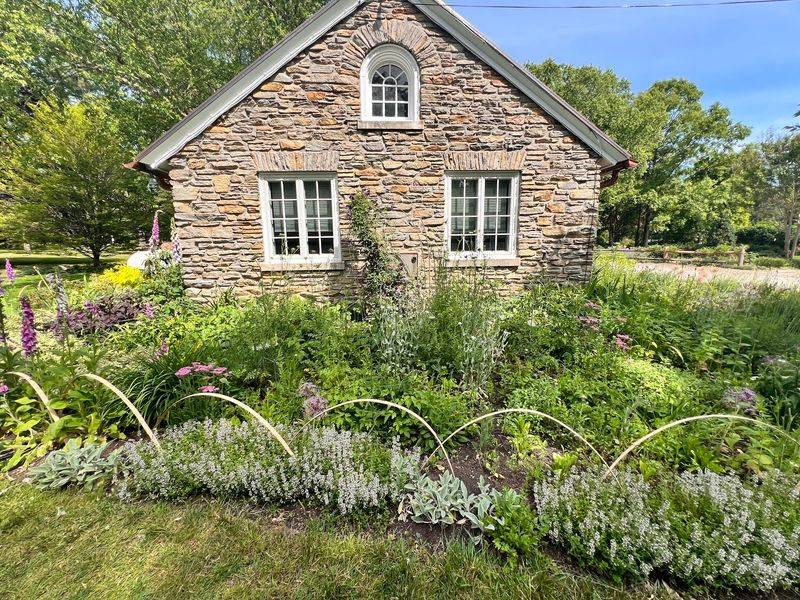
Here is the clever part of the arboretum’s original concept: many of these trees were planted not simply because they were beautiful, but because they could actually succeed in local landscapes. The collection was developed as a way to demonstrate trees and shrubs suitable for home gardens in this region, letting people see both what grows well and what those plants eventually become.
That matters more than it might sound. A six-foot ornamental tree sitting beside a price tag at a garden center tells you very little about how much shade it will cast, how broad its crown will become, or whether its mature shape will overwhelm a small yard.
At the David C. Shaw Arboretum, decades have answered many of those questions.
Visitors can compare upright and weeping forms, broadleaf evergreens and conifers, compact selections and trees that demand serious space. Crabapples, cherries, hollies, dogwoods, cedars, spruces, and other familiar landscape choices appear alongside less common possibilities, turning a walk into an informal lesson in what a New Jersey yard could look like after the planting crews have been gone for years.
The fact that local nurserymen donated most of the collection’s plant material also ties the arboretum closely to the region’s horticultural history. This is not a collection assembled purely from far-flung botanical curiosities.
It reflects, in large part, plants that professionals believed belonged in local landscapes. For homeowners who have ever planted something cute and compact only to watch it spend the next decade trying to eat the driveway, seeing mature specimens before making a decision has obvious appeal.
There Is Much More to Explore Beyond the Arboretum
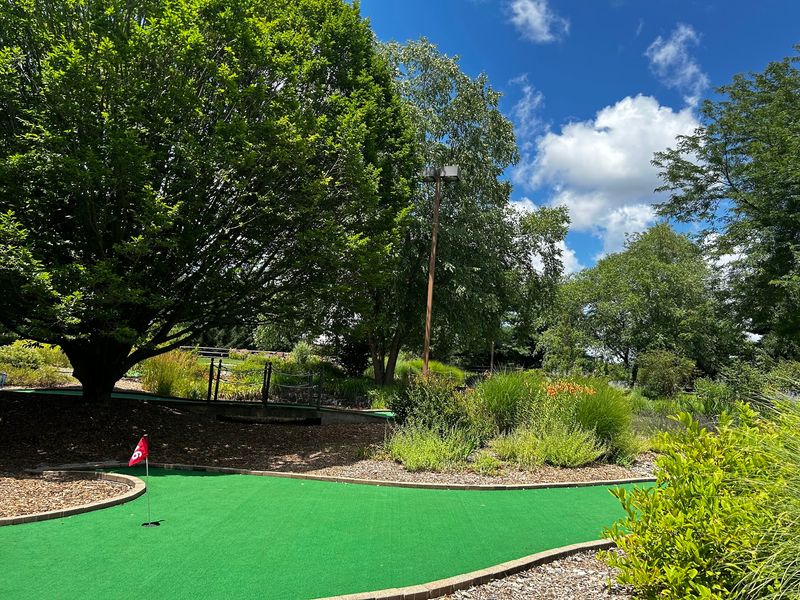
The trees occupy only one corner of the experience because the arboretum sits inside Holmdel Park at 44 Longstreet Road, a county park packed with enough extras to turn a plant-focused visit into a much longer outing. Hiking trails run through several landscapes, including short loops and longer routes.
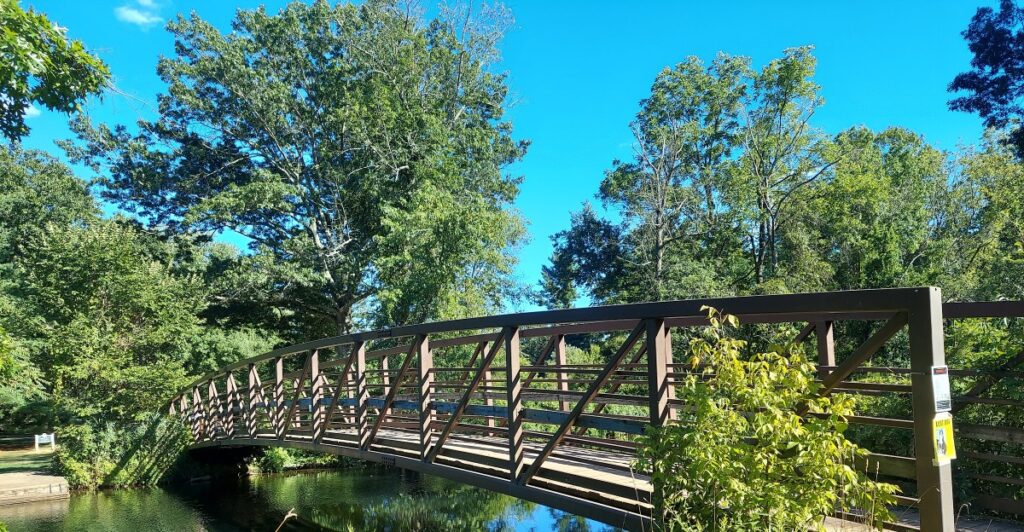
The 0.4-mile Pond Walk circles the Lower Pond, while the 0.8-mile Marsh Trail passes through wetter habitat and includes boardwalk sections. For more mileage, the 2.1-mile Ramanessin Trail and 1.4-mile Steeplechase Trail push farther into the park.
There are also playgrounds, tennis courts, open fields, picnic areas, and a fishing pond. Then there is Historic Longstreet Farm, probably the easiest addition to an arboretum visit.
Spread across nine acres within Holmdel Park, the working historical site recreates Monmouth County farm life in the 1890s. Period-dressed interpreters demonstrate agricultural and domestic activities, and the farm keeps historically appropriate animals and crops.
It is open daily year-round from 10 a.m. to 4 p.m., with extended hours of 9 a.m. to 5 p.m. from Memorial Day through Labor Day, and admission is free. The combination is unusually good for mixed-interest groups.
One person can inspect conifers, someone else can take the kids toward the farm, and the walkers in the group can tack on a trail afterward. Holmdel Park itself opens at 7 a.m. year-round, with closing times changing seasonally, so there is plenty of room to build a visit around more than just the arboretum.
Why Every Season Gives You a Different Reason to Visit
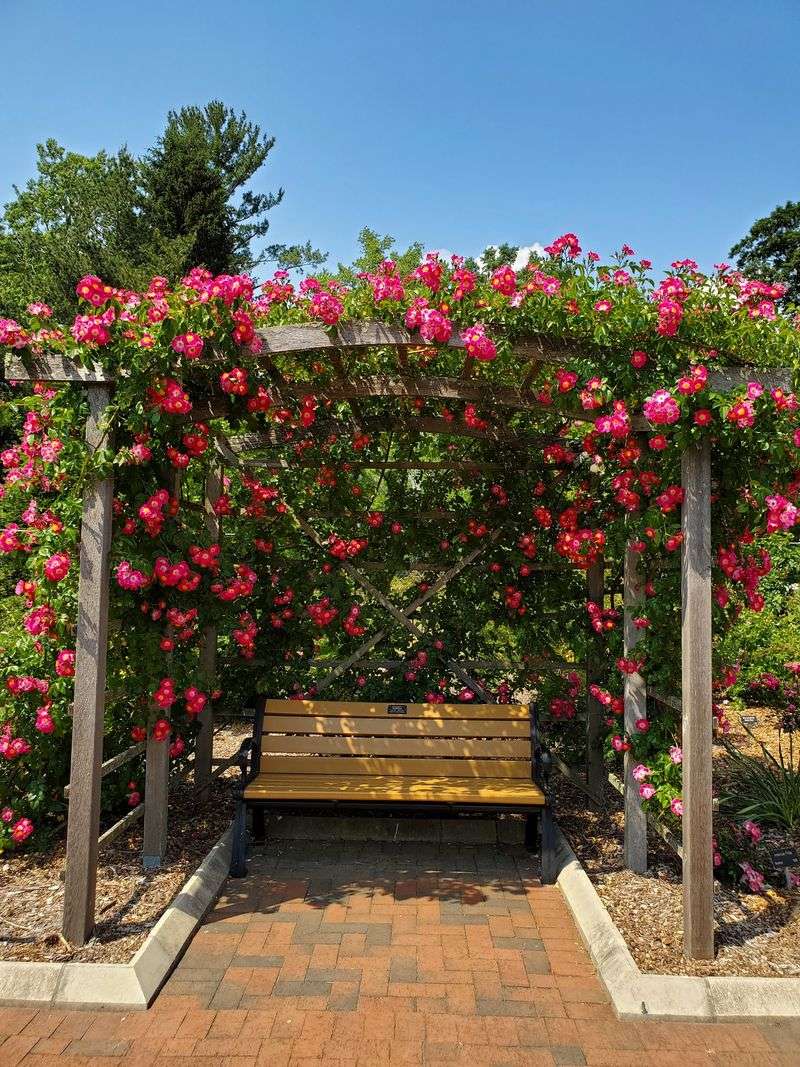
Spring makes the easiest sales pitch. Crabapples and cherries were part of the arboretum from its earliest days, and flowering trees can turn an ordinary walk into the kind where you keep slowing down because another canopy is showing off around the bend.
But judging the place only by spring bloom would miss much of what makes the collection work. Summer fills out the landscape, emphasizing the differences in foliage and mature tree form.
Broadleaf evergreens in the Handleman Garden stand against deciduous plants, while the conifer collections bring their own textures and shapes. Autumn shifts attention again.
Dogwoods, ginkgoes, bald cypress, maples, and other deciduous specimens have their own schedules for changing color, so the grounds rarely flip from green to fall color all at once. That uneven progression is part of the fun.
Even winter has something to contribute because so much of this collection was chosen for form as well as foliage. Dwarf conifers, true cedars, pines, spruces, unusual branching patterns, and weeping forms become easier to appreciate when flowers and leaves are no longer competing for attention.
The practical side helps too. Holmdel Park is open every day of the year, starting at 7 a.m., and there is no admission charge to wander the park or arboretum.
What began here in 1963 as 87 young trees has had more than six decades to grow into something much more interesting: a garden where time itself has become part of the collection.
Share this story