A restaurant with roughly 400 seats should have plenty of room, right? Tops Diner has a way of making that assumption look optimistic.
Pull up to its sprawling home on Passaic Avenue in East Newark during a busy stretch and the place can feel less like a neighborhood diner and more like a small food terminal, with tables turning, servers moving in every direction, cocktails being poured, desserts appearing from the bakery and another wave of customers coming through the door.
Tops has been around since 1942, but the version standing today is no little chrome-sided throwback. A multimillion-dollar reconstruction turned it into a roughly 15,000-square-foot operation three times the size of its predecessor, with seating for hundreds of people. Somehow, even all that room is put to work.
The reason becomes clearer once you understand just how many people eat here, how wide the menu stretches and how far Tops has evolved beyond the usual definition of a New Jersey diner.
More Than 15,000 People Walk Through the Doors Every Week
Try putting 15,000 customers into perspective. That works out to more than 2,000 people a day if spread evenly across a week, and Tops has publicly said it serves more than 15,000 hungry guests in a typical week.
That number explains why a building with seating for about 400 can still feel busy rather than cavernous. Breakfast starts the cycle at 8 a.m., lunch brings another crowd, dinner changes the mood again, and Tops keeps serving until 11 p.m. every day.
Weekends and peak dining hours are busy enough that the restaurant strongly recommends reservations, although walk-ins are still accepted when space is available. The interesting part is that Tops does not depend on one narrow audience.
You might see someone eating pancakes in the morning, coworkers splitting cheesesteak egg rolls at lunch, families settling into booths for dinner and couples ordering cocktails later in the evening. Its East Newark address also puts it close to Harrison, Newark and major commuter routes through northern New Jersey, so the customer base stretches well beyond the immediate neighborhood.
That constant turnover helps explain how the numbers get so high. Plenty of restaurants would love to fill a few hundred seats once on a Saturday night; Tops has built an operation around filling them again and again throughout the day.
And the crowds are not simply a recent curiosity created by a shiny new building. They are the latest version of a pattern that has been developing here for decades.
Tops Has Come a Long Way From the Diner That Opened in 1942
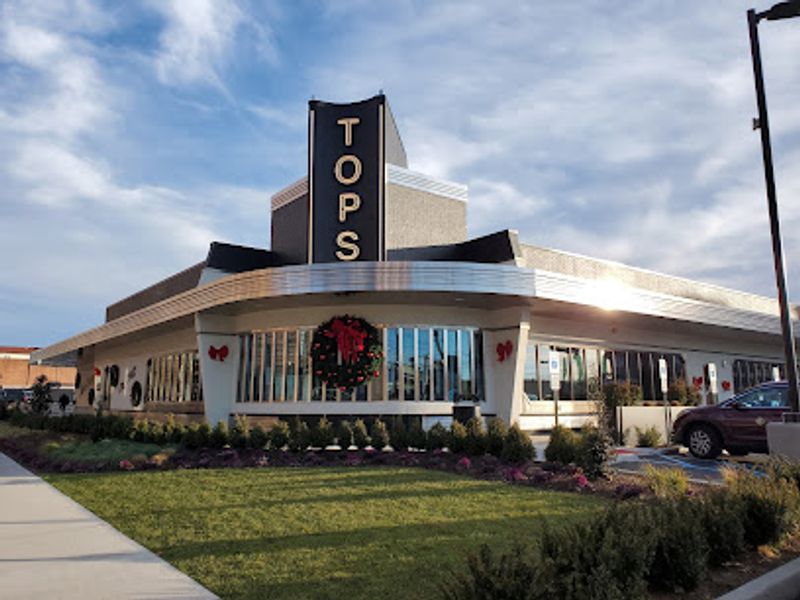
The name on the sign goes back to 1942, but almost everything surrounding it has changed. Tops began in an era when the American diner was defined by compact buildings, counters, quick service and menus designed to give regular people a dependable meal without much ceremony.
The Golemis family entered the story in 1972, when George Golemis purchased the restaurant, and his sons Van, Jim and John eventually carried the business forward. That family continuity matters because Tops could easily have become unrecognizable as it grew.
Instead, the owners have treated evolution as part of the diner tradition rather than a rejection of it. You can see that idea in the menu, where Jersey staples still sit comfortably beside dishes that would have seemed wildly out of place in a mid-century diner.
Disco fries remain available with mozzarella and the restaurant’s 1942 brown gravy, but the same menu can send chicken bao buns, burrata, Wagyu beef meatballs or a salmon scramble to the table. Coffee no longer means only a bottomless mug, either.
The barista section now includes cortados, cold brew, Cuban coffee, ube lattes and salted brown butter lattes alongside traditional drip coffee. Tops has essentially followed its customers across generations.
Grandparents who remember an earlier version of the diner can bring grandchildren who are deciding between avocado toast and chicken and waffles. Few restaurants survive eight decades by refusing to change.
Tops has survived by changing quite a lot while holding onto one very diner-like principle: whatever kind of meal you arrived wanting, there is a good chance the kitchen can make it happen.
A Massive Rebuild Nearly Doubled the Number of People It Could Seat
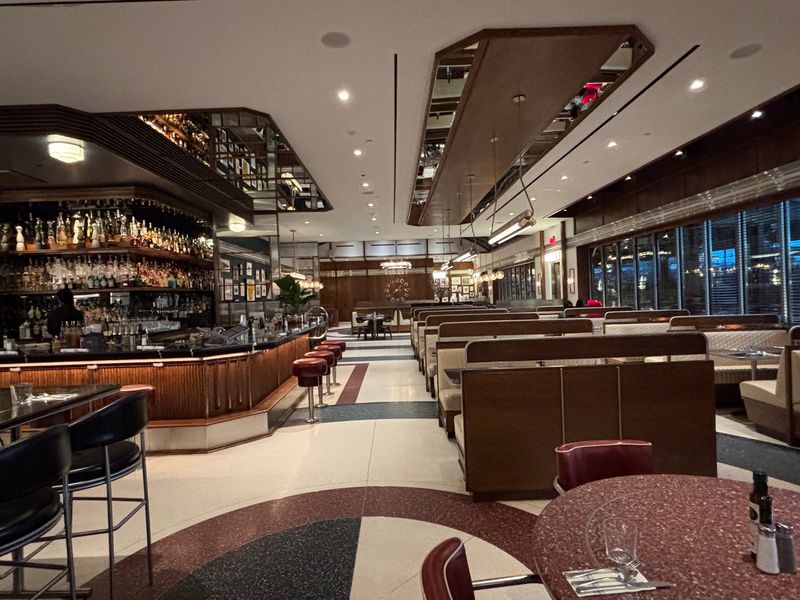
For decades, Tops operated from a building of roughly 5,000 square feet. Then the owners did something far more ambitious than a cosmetic renovation.
The old structure was demolished and replaced with an approximately 15,000-square-foot restaurant, a multimillion-dollar project that reopened in 2021 after years of planning. The result is about three times the size of the previous diner and has been reported as accommodating roughly 400 guests.
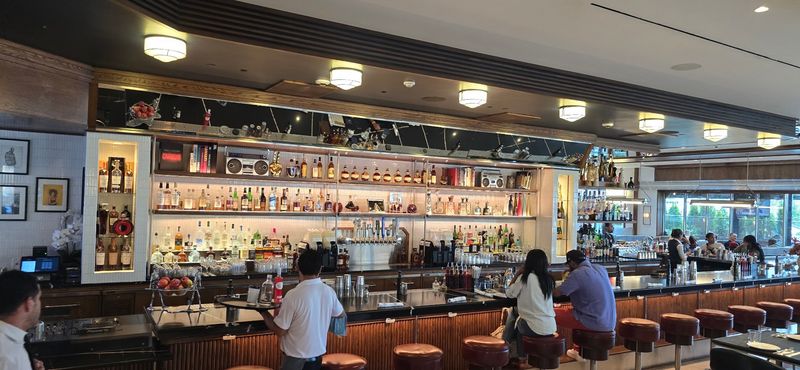
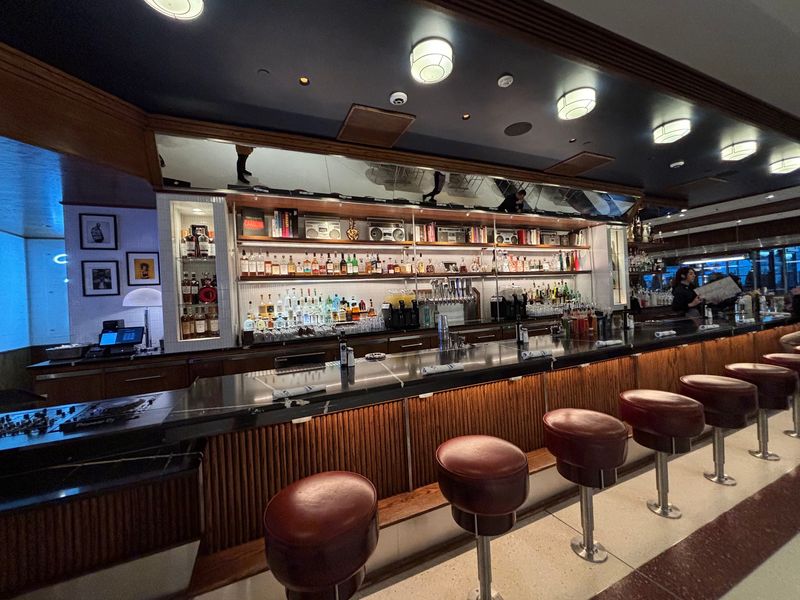
That scale becomes much easier to grasp once you are inside. There is an 18-seat black-marble counter, a full bar, outdoor patio-style dining, an open bakery, coffee and espresso stations, an ice cream area and a much larger kitchen designed to handle the restaurant’s extraordinary volume.
In other words, Tops did not simply add a few booths and call it an expansion. The entire operation was rebuilt around the reality that thousands of meals have to move through this address every day.
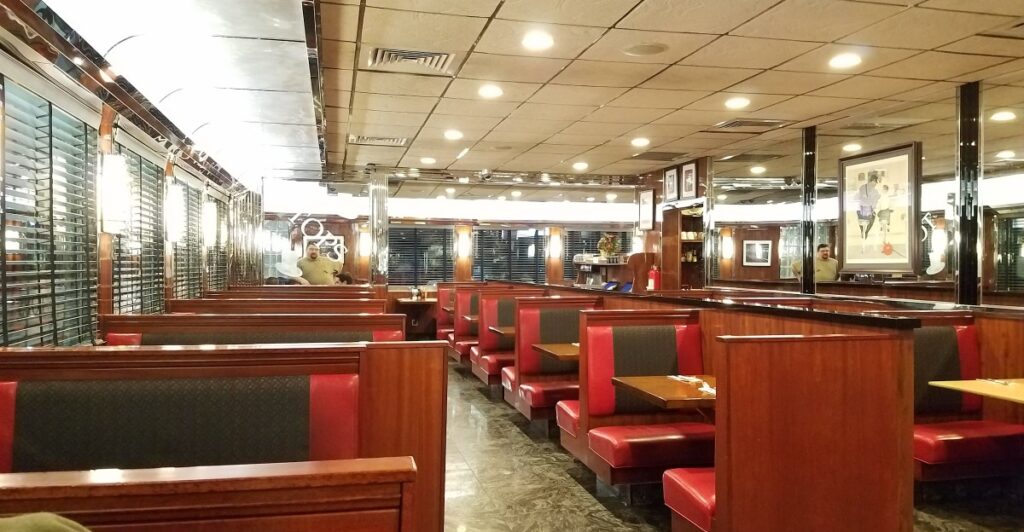
Yet the design deliberately avoids feeling like a banquet hall. Booths, counter seating and familiar diner cues keep the room connected to the restaurant’s history even as the sheer footprint pushes the idea of a diner into something closer to a large modern restaurant.
That contrast is probably the most interesting thing about the rebuild. Tops needed more space because it had outgrown the old building, but becoming bigger created a new challenge: how do you expand to 15,000 square feet without losing the identity that made people line up in the first place?
The answer was not to recreate the old diner piece by piece. It was to build a larger version of what Tops believed a New Jersey diner could become.
The Menu Is So Big That Choosing What to Eat Is Half the Challenge
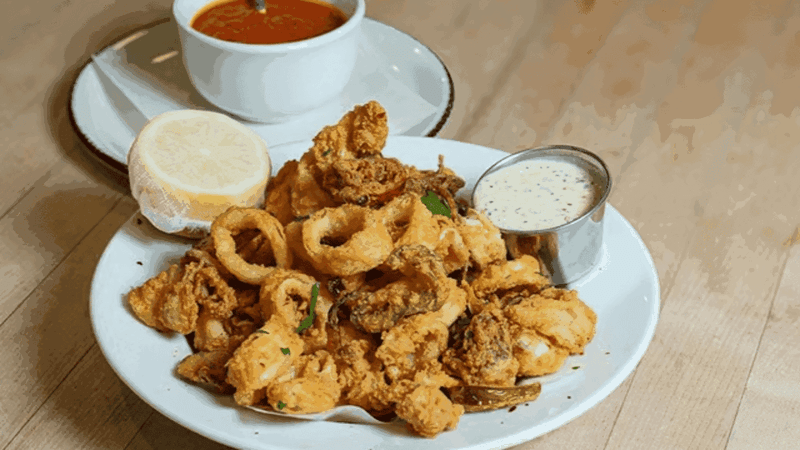
Ordering here can turn into a negotiation with yourself. Start with breakfast and you could go simple with organic pasture-raised eggs, hash browns and toast, or veer toward smoked salmon, cheddar grits, chorizo hash, biscuits with chicken sausage gravy or a four-egg-white scramble with chicken sausage, spinach, Monterey Jack and avocado.
Move deeper into the day and the choices multiply quickly. The appetizer section jumps from burrata to cheesesteak egg rolls to chicken bao buns, while the burger lineup includes an eight-ounce American Wagyu burger topped with aged cheddar, Taylor ham and a sunny-side-up egg.
Even the famous Jersey diner fallback of disco fries gets its own Tops treatment with melted mozzarella and brown gravy tied to the restaurant’s 1942 heritage. This is also the kind of place where one person can order pancakes while someone across the table gets seafood, steak or pasta without either choice seeming strange.
Prices reflect the modernized approach more than old-fashioned diner economics. Current menu examples include $13 disco fries, $16 Wagyu beef meatballs and burgers running into the low $20s, while specialty coffees generally fall around the $5 to $8 range.
The enormous selection is not simply there for novelty. Serving more than 15,000 customers every week means dealing with thousands of different ideas about what a diner meal should be.
Tops answers by stretching the category almost as far as it can go. You can come looking for eggs and coffee, a serious dinner, cocktails and appetizers, or a late dessert, and somehow all of those visits still make sense under the same roof.
This Is Part Diner Part Bakery Part Bar and Part Nightlife Spot
Around 8 a.m., Tops can behave exactly how you expect a diner to behave. Coffee lands on tables, eggs crack on the griddle and breakfast orders fly out of the kitchen.
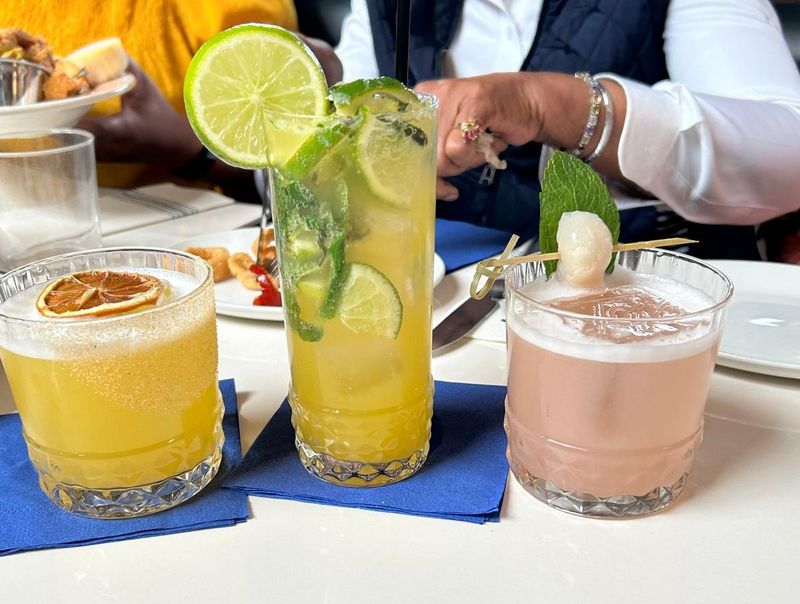
Come back much later, though, and you may wonder whether you have walked into the same place. The rebuilt restaurant includes a full cocktail program, wine and beer lists, an open-concept bakery and a bar built into an 18-stool black-marble counter.
Then there is the DJ. Tops currently schedules DJ NYXX from 7 p.m. to 11 p.m. Friday through Sunday, with additional afternoon sets from 1 p.m. to 4 p.m. on Saturday and Sunday. That is not exactly the image most people have when somebody says they are heading to the diner.
The drinks menu stretches well beyond a couple of bottled beers, too, with wines ranging from everyday glasses to bottles of Veuve Clicquot Champagne. Coffee has similarly become its own operation, covering espresso drinks, flavored lattes and cold brew.
None of this means you have to treat Tops like a night out. You can still slide into a booth, order a burger and leave perfectly happy.
The point is that the building supports several kinds of visit at once. Families can be eating dinner while someone else meets friends at the bar and another table orders cake and coffee.
That flexibility helps the enormous restaurant stay active across a long 8 a.m.-to-11 p.m. day. Tops does not wait for one dinner rush to justify hundreds of seats. It keeps finding new reasons to fill them from morning through late evening.
Somehow Tops Still Feels Like a Neighborhood Institution
The strangest thing about Tops may be that its numbers sound more like a chain restaurant’s annual report than the story of one diner at 500 Passaic Avenue. Fifteen thousand customers a week, a 15,000-square-foot building and seating for roughly 400 people should make the place feel anonymous.
Its history keeps pulling in the opposite direction. The Golemis family has been connected to Tops since George Golemis bought it in 1972, and the diner itself has occupied a place in the local landscape since 1942.
That gives the restaurant something a brand-new mega-restaurant cannot manufacture: generations of customers who remember earlier versions of the same place. The physical diner may be newer, but the routines surrounding it are not.
People still meet here for breakfast, bring relatives for a big meal, stop in after work or argue over whether they have room for dessert. Even the menu reflects that balance between old and new.
Taylor ham appears on a Wagyu burger. Disco fries share space with bao buns.
A bottomless cup of drip coffee sits a few lines away from a lavender latte. Tops is not preserving diner culture by freezing it in amber; it is showing what happens when that culture gets bigger, louder and considerably more ambitious.
The restaurant now recommends reservations during busy periods, which says plenty about the challenge of managing all those customers despite the expanded dining room. Hundreds of seats solved the old space problem, but they did not make Tops quiet.
If anything, the rebuilt diner proved just how much demand had been waiting for more room.
Share this story