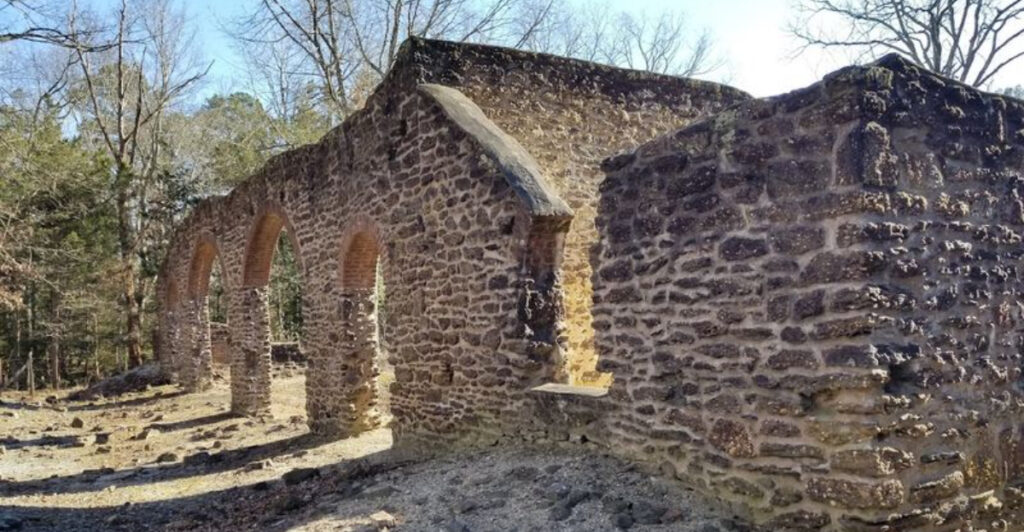
New Jersey does eerie better than it gets credit for. Beyond the beach towns, diners, and forever-debated pizza loyalties, there are places where the past does not just linger, it practically sits beside the trail and watches you pass.
Estell Manor Park in Atlantic County is one of those places. At first glance, it looks like classic South Jersey woodland: flat trails, wetland edges, tall pines, and that quiet, slightly spooky stillness the region does so well.
Then the ruins show up. Concrete foundations.
Old rail beds. Strange shapes in the trees.
Bits of a vanished industrial world that once mattered in a very big way. This 1,700-acre park holds the remains of the Bethlehem Loading Company, a huge World War I munitions site built in 1918.
Today, the factory is gone, but the footprint is still there, slowly being folded back into the forest. That mix of history, decay, and Pinelands beauty is what makes this place unforgettable.
A forgotten wartime city hidden in the South Jersey woods
Tucked a few miles south of Mays Landing, Estell Manor Park does not announce itself like some grand historic landmark. You pull up expecting a pleasant county park, and that part is true.
It is a popular Atlantic County park with woods, trails, and river access. But woven through the landscape is the ghostly outline of something much bigger: the Bethlehem Loading Company, a massive World War I industrial complex built at astonishing speed in 1918 to manufacture and ship munitions.
This was not some tiny backwoods outpost. It was a full operation, with plant buildings, rail lines, and the kind of wartime urgency that turned quiet land into a working city almost overnight.
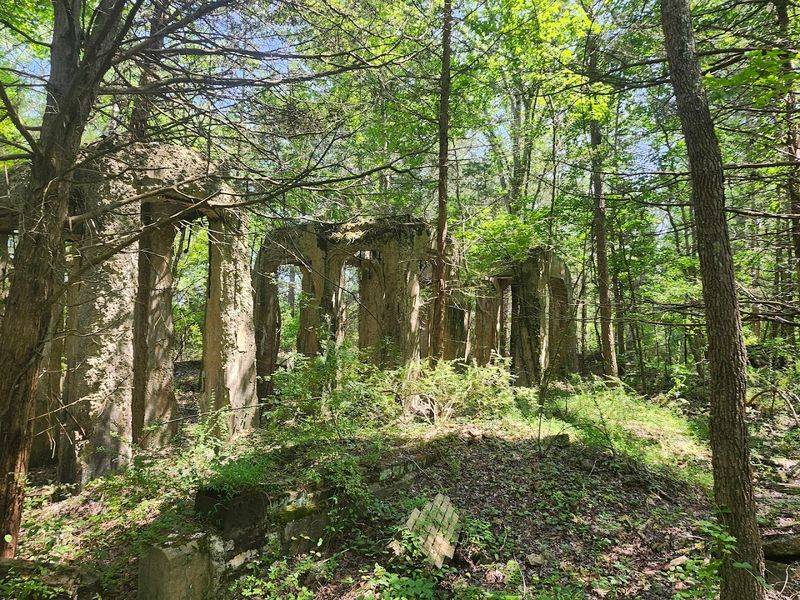
What survives now is less skyline than skeleton. The buildings are gone, stripped of useful materials long ago, but concrete foundations and rail beds remain scattered through the park like clues.
That is what gives the place its strange power. You are not looking at a restored village with tidy signs and polished exhibits.
You are seeing the footprint of an industrial machine after the machine has disappeared. The woods have filled in the gaps.
Moss softens the edges. Trees rise out of old work zones as if they have been correcting the land for a century.
And that setting matters. South Jersey’s Pinelands landscape is already atmospheric on its own, all sandy soil, wet patches, quiet shade, and long stretches where the natural soundtrack does most of the talking.
Add in the remains of a wartime complex, and the whole place starts to feel like a historical mirage. One minute you are in a county park.
The next, you are walking through the remains of a vanished city that once helped feed the machinery of World War I. That contrast is what makes Estell Manor feel less like a park with ruins and more like a ghost city that happened to become a park.
How Estell Manor became one of New Jersey’s strangest parks
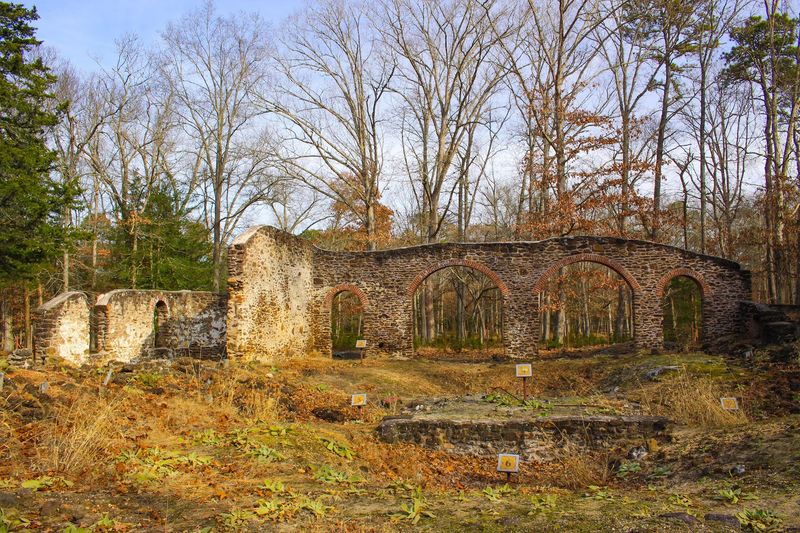
Long before it became a favorite for hikers and local explorers, this land had a much more intense assignment. The Bethlehem Loading Company was constructed between April 3 and July 1, 1918, an absurdly fast timeline that says plenty about the pressure of wartime production.
Its purpose was straightforward and enormous: manufacture and ship munitions for World War I. Workers connected to the operation lived in nearby Belcoville, another wartime creation built quickly to support the plant.
The site’s historical significance is tied not only to what it produced, but to how rapidly American industry could reorganize itself when the moment demanded it. That history is part of what makes Estell Manor so unusual.
Most parks ask you to admire scenery, maybe spot a hawk, maybe pretend you enjoy uphill walking. This one asks you to reckon with industrial archaeology in the middle of a swampy forest.
The district once held an enormous spread of buildings, foundations, and rail infrastructure, enough to suggest the scale of what stood here without needing a full reconstruction to make the point. It feels bigger than a ruin site and stranger than a typical county park.
After production ended, the site was stripped of reusable steel and iron, especially during World War II, leaving behind the more stubborn bones of the complex. Over time, those remains became part of Atlantic County’s park system rather than being erased altogether.
That decision gave New Jersey one of its oddest and best hidden historical spaces: a park where family-friendly trails and deeply un-family-friendly wartime ruins coexist with almost no fuss. It is educational without being stiff, eerie without trying too hard, and local in the most South Jersey way possible.
Estell Manor does not package its strangeness into a theme. It just lets the woods and the ruins make the point together.
The eerie beauty of ruins being swallowed by the Pinelands
Ruins in the abstract sound dramatic. Ruins in the middle of a South Jersey forest are something else entirely.
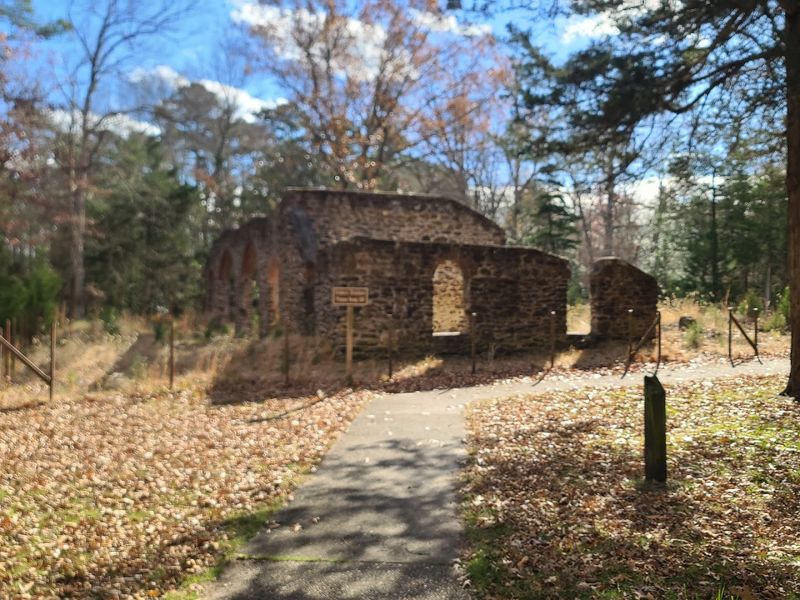
At Estell Manor, the effect is less blockbuster apocalypse and more quiet, creeping takeover. Concrete pads sit low under the trees.
Old rail beds cut through the property like faded lines on a map that no one updates anymore. In some spots, you can tell exactly what the land used to do.
In others, the forest has blurred the evidence so thoroughly that the remains feel almost accidental, as if the earth is trying to keep a secret and failing just enough for visitors to notice. That is where the park gets its mood.
Nothing about the site feels over-curated. The ruins are not polished up for easy consumption, and that is a good thing.
You are seeing the leftovers of industry after weather, time, and roots have all had their turn. Once you know what used to stand here, the place shifts from vaguely spooky to vividly historical.
A foundation stops being just a slab. A stretch of raised ground becomes part of an old transportation route.
The landscape starts reading like a document written in concrete and moss. The Pinelands setting adds the final layer.
This is swamp land, river country, and pine forest, not some dry open field where every ruin is visible from fifty yards away. The trees break sightlines.
Seasonal growth changes the feel. Light filters through in a way that makes the concrete look even older than it is.
You hear birds, wind, and maybe your own footsteps, and that only sharpens the contrast with what happened here in 1918, when the site was built for speed, production, and movement. Today, nature is not simply surrounding those remnants.
It is actively reshaping them, softening the war story without erasing it. Estell Manor’s real magic is that it lets you watch that process in progress.
What it feels like to walk through history on these forest trails
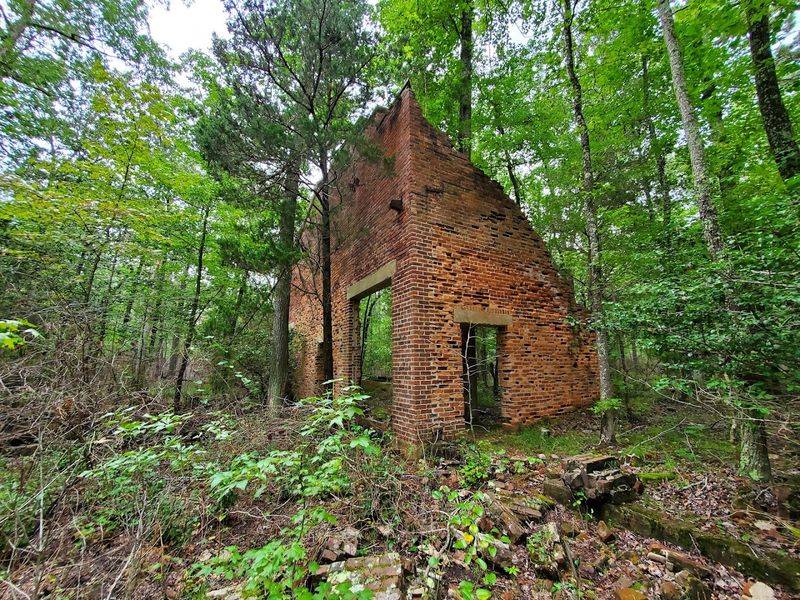
Walking Estell Manor is not like touring a museum, and that is exactly the appeal. There is no velvet rope separating you from the story.
Instead, the history arrives in pieces as you move through the landscape. One stretch feels like a regular wooded path.
Then a concrete shape appears off to the side. A little farther on, you cross an old rail bed.
The rhythm of the place keeps changing, which makes the experience feel more like uncovering something than being instructed about it. For people who get restless with heavily packaged history, this park is a sweet spot.
The trail system is extensive enough to let you choose your own version of the day. You can linger around the historic remains, then keep going into quieter sections where the park returns to pure woods and wetland.
That matters because the ruins are not the only reason to be here. The trails themselves give the site its pace.
They create the slow reveal that makes the whole place work. You are never blasted with everything at once.
It comes in fragments, and that makes the setting feel more intimate. There is also something unusually effective about covering this history on foot.
A car would flatten the mood. A guided tram would kill it dead.
Walking lets the place unfold at the right speed. You notice small changes in terrain.
You catch details you would otherwise miss. You get that slight jolt of surprise when something industrial emerges from a natural setting where it should not exist anymore.
That is the emotional hook here. Estell Manor does not just tell you that a wartime complex once stood in these woods.
It lets you physically trace what is left of it, step by step, until the scale of the vanished city starts to register in your bones instead of just your brain.
Why the boardwalk and river make this place more than a ghost town
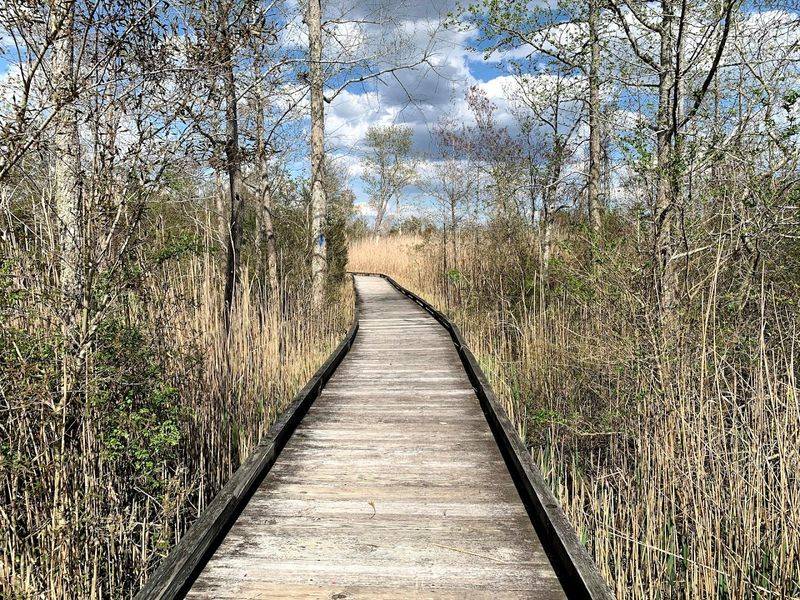
The ruins may get top billing, but Estell Manor would still be worth visiting if the old factory had never existed. The park sits along the Great Egg Harbor River and South River, which means the natural setting does real work here.
Water changes the mood of a landscape fast. It cools it down, opens it up, and gives the woods a softer edge.
In a place already loaded with history and atmosphere, the riverfront setting keeps the experience from becoming too heavy. You are not trudging through a monument to decay.
You are moving through a living ecosystem that just happens to be built around one of New Jersey’s strangest historic sites. That balance is one reason the park resonates with so many different visitors.
Some come for the wartime ruins. Some come for the trails.
Some are there because Estell Manor is a dependable local park with nature access, picnic potential, and open space that does not feel overly manufactured. The boardwalk sections are especially important because they shift the experience from forest ramble to wetland immersion.
A long walk through South Jersey swamp habitat has its own appeal, even before you factor in ghost-city energy. It slows you down and changes what you notice.
The ground is no longer abstractly swampy. You are right above it, hearing it, seeing it, and realizing how thoroughly the landscape dictates the personality of the park.
That is why Estell Manor feels fuller than the average ruin site. It is not frozen in one register.
It can be eerie, then peaceful, then unexpectedly pretty. It can lean industrial in one stretch and fully wild in the next.
The natural side of the park does not distract from the history. It completes it.
Without the river corridors, wetlands, and forest density, the ruins would be interesting. With them, they become haunting.
The land is not just a backdrop for the story of the Bethlehem Loading Company. It is the reason the story still has such a hold on people now.
The haunting reason Estell Manor belongs on every New Jersey bucket list
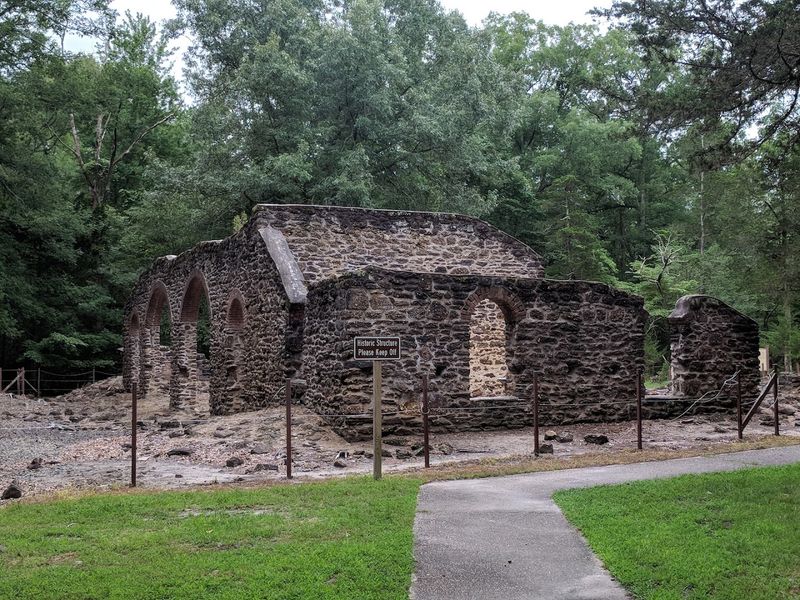
A lot of places in New Jersey are more famous than Estell Manor Park. Very few are more memorable.
This is the kind of destination that sneaks up on you because it does not fit neatly into one category. It is a history site, but it does not behave like one.
It is a nature park, but it carries a distinctly uncanny edge. It is family-friendly enough for a daytime visit and weird enough to impress the friend who claims they have already seen everything worth seeing in the state.
That combination is rare. New Jersey has plenty of overlooked spots, but not many that feel this layered.
What puts Estell Manor on bucket-list territory is not simply the age of the ruins or the size of the property, though both help. It is the collision of scales.
You have more than 1,700 acres of parkland and the remains of a major wartime industrial district occupying the same space. You have a county park experience sitting on top of a nationally significant historical footprint.
You have the kind of South Jersey landscape that already feels half-mythic, then you add concrete remnants of 1918 and suddenly the whole place takes on that hard-to-shake, tell-your-friends-about-it energy. And maybe that is the real reason people remember it.
Estell Manor does not hand you a fake sense of the past. It lets the past stay incomplete.
You see what remains, and you feel what is missing. The site is powerful precisely because it has not been cleaned up into something too tidy.
The woods, the water, the ruins, and the silence do the storytelling together. For a state that is often flattened into turnpike jokes and shore stereotypes, this park is a reminder that New Jersey can still surprise you.
Sometimes the most unforgettable place in the state is not a beach, a boardwalk, or a skyline view. Sometimes it is a ghost city in the pines, still lingering just beneath the trees.
Share this story