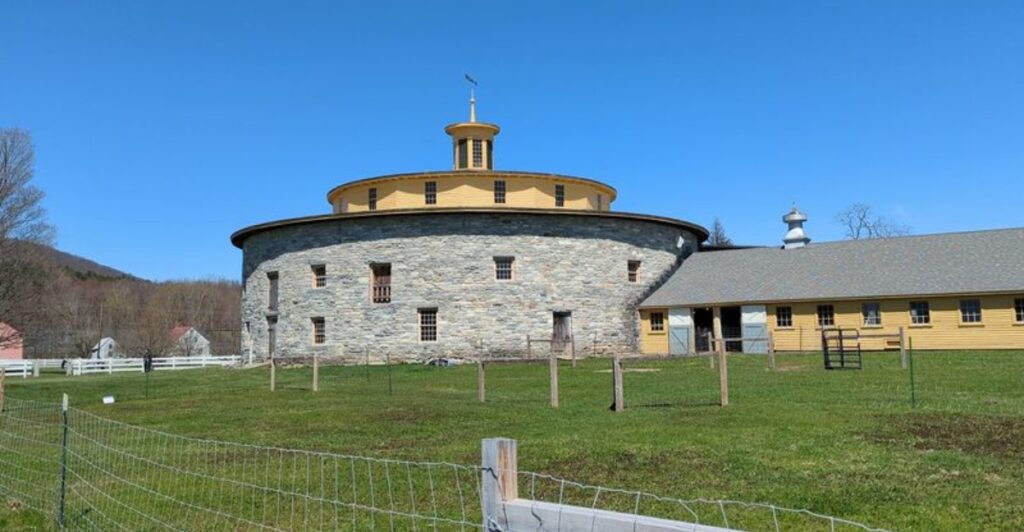
A round stone barn, grazing animals, and old workshops can make history feel a lot more alive than another museum display. In Pittsfield, Massachusetts, Hancock Shaker Village turns a former Shaker community into a hands-on family outing where kids can explore a working farm, meet animals, and see how people once lived and worked. The appeal comes from how naturally the learning fits into the day, with historic buildings and craft demonstrations giving adults plenty to notice too.
Every barn, tool, and pasture adds another piece to the story. For families looking for a Massachusetts outing that mixes animals, history, and room to wander, Hancock Shaker Village makes an easy place to spend a few curious hours.
A Massachusetts Farm With History Right Outside the Barn Door
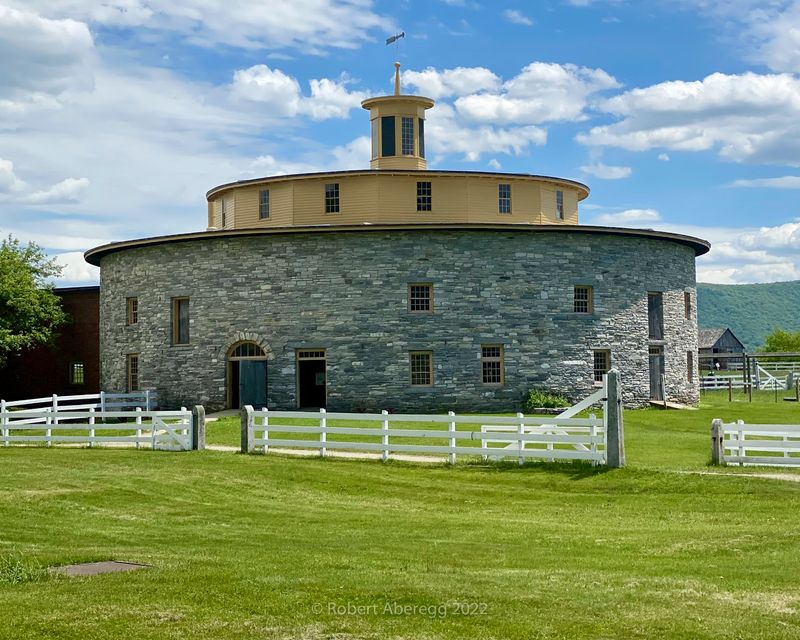
Stone walls and open fields give the village a setting that makes sense before you read a single sign. Rather than placing farming tools inside one museum room, Hancock Shaker Village preserves the buildings and land where community life unfolded.
Located in the Berkshires of western Massachusetts, the site combines a history museum with an active farm. You can move between animal areas, historic rooms, and workshops, seeing how food, shelter, and skilled work once fit together.
For families, that layout offers a useful advantage: learning does not require standing still for the entire visit. A child can study a tool indoors, then head outside to look at the kind of work that tool supported.
Start by getting a map and checking which buildings are open that day. The grounds cover more space than the entrance alone suggests, so choosing a few priorities helps you avoid wandering past the farm without stopping.
The visual contrast is part of the story. Solid stone, plain wooden surfaces, and practical building shapes show a community focused on usefulness, while the surrounding fields explain why farming mattered so much.
Encourage kids to notice connections rather than memorize names. Ask where animal feed might have been stored, how materials moved between buildings, or why a workshop needed to be close to other work areas.
Those small observations turn the grounds into a readable map of daily life. You do not need a guided tour to begin spotting patterns, although staff explanations can fill in details that signs cannot fully show.
Keep the opening stretch simple, especially with younger children. Pick one clear landmark, locate the animal areas, and save extra buildings for later, after everyone understands where they are and has had a chance to stretch their legs along the paths between the village’s historic structures.
Meet the Animals, but Let the Farm Set the Rules
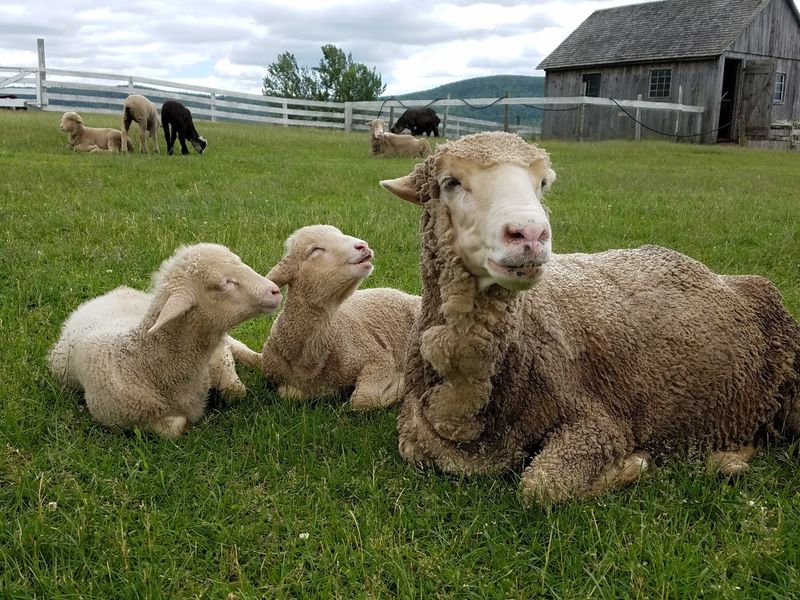
A goat looking your way can win a child’s attention faster than a wall of dates. The farm animals are a major reason to bring kids here, but the strongest experience starts with watching rather than rushing to touch.
The working farm includes livestock such as cattle, sheep, goats, pigs, and chickens, with the animals you see depending on the day’s access and farm routine. Ask staff where to go instead of assuming every animal area is open.
Petting opportunities may be available, but they are not a promise for every animal or every visit. Follow posted instructions and staff guidance, and let children know that an animal stepping away is not an invitation to follow.
Give each stop a small purpose. Watch how a sheep eats, compare a goat’s feet with a chicken’s, or notice how animals use shade and shelter.
Observation can hold attention surprisingly well when you offer a specific challenge. Younger kids might count ears or tails, while older children can think about what each animal contributed to farm life, such as milk, wool, or eggs.
Keep snacks out of animal areas, and never offer food unless staff specifically permits it. Closed shoes are sensible around a farm, and handwashing after animal contact should come before eating, even when hands look clean.
Expect ordinary farm sounds and smells rather than a polished petting attraction. A bleat from a nearby pen or a rooster’s call helps explain that these are living animals with their own routines, not props placed beside historic buildings.
If your child is nervous, begin at a distance and allow time to watch. There is no need to turn the visit into a bravery test; spotting an animal chewing, resting, or moving through its space is already a useful encounter with the everyday life of a farm.
The Round Stone Barn Solves a Very Real Farm Problem
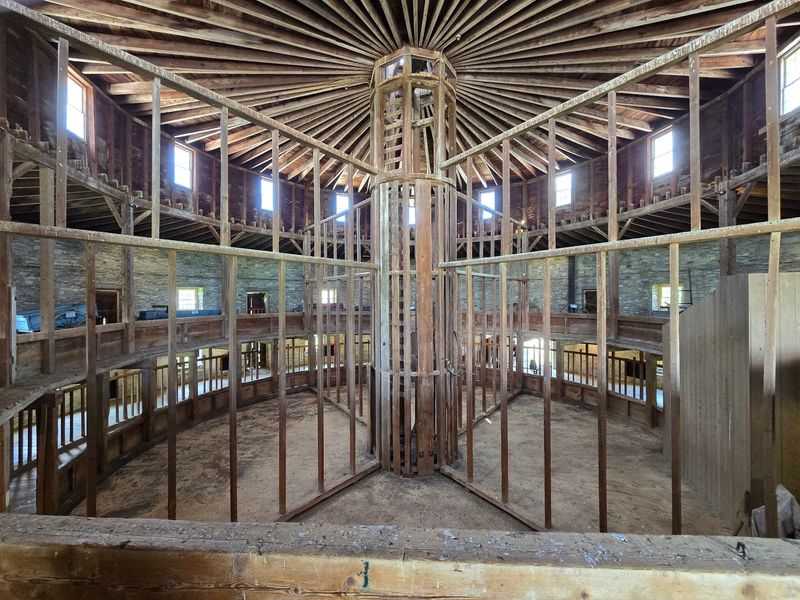
Most barns have corners. Hancock’s famous stone barn takes a different approach, and its circular shape offers a ready lesson in solving everyday problems through design.
Built in 1826, the Round Stone Barn is the village’s signature structure. Its shape was not simply a way to attract attention; the building organized farm work around the movement of hay, animals, and people.
One especially useful feature was the upper wagon route. Teams bringing hay could travel around the circular level rather than repeatedly backing out, making deliveries easier to manage when several wagons needed to unload.
That is a satisfying detail for children who love vehicles, building sets, or figuring out how things work. Ask them to picture a loaded wagon turning around in a cramped space, then compare that problem with a route that keeps moving forward.
Inside, where access allows, look beyond the unusual outline to the supporting structure. The relationship between stone walls, wooden framing, and different working levels shows how a barn could function as an organized system rather than a single storage room.
A staff explanation or scheduled tour can help make that system clearer. Check the day’s program before wandering off, since understanding the building’s layout adds much more than simply taking a photograph of its exterior.
Keep children close and respect any barriers or closed sections. A historic agricultural building deserves the same attention to footing and access as any other working farm space, especially when everyone is busy looking upward.
For a quick family activity, have each person choose one design feature and explain what job it helped accomplish. Then step outside and study the circular wall again: the unusual shape now has a purpose, and the barn becomes an example of practical thinking instead of just the biggest building in the picture behind your family.
Small Hands Get Their Turn in the Discovery Barn
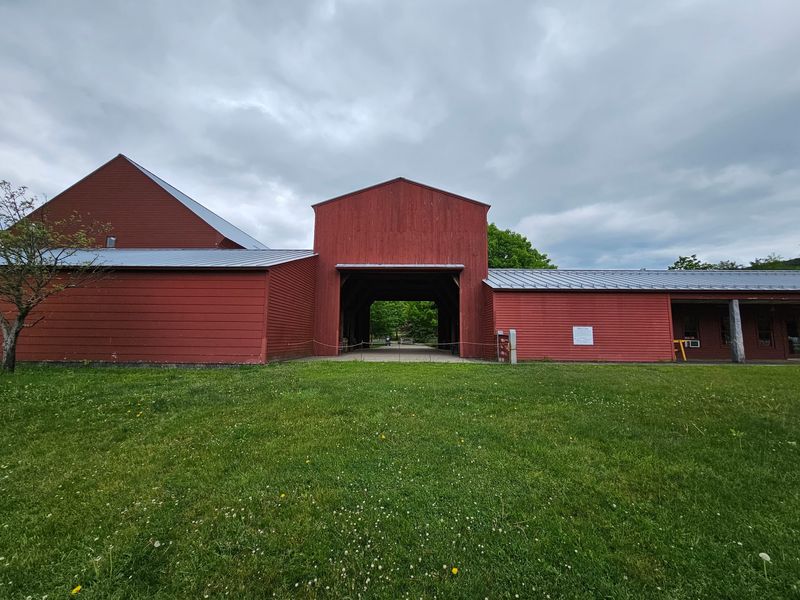
After a stretch of looking without touching, a hands-on stop can reset the whole family. The Discovery Barn gives children a place to explore ideas about farming and Shaker life through activities suited to younger learners.
Think of it as a bridge between the animals outside and the history inside. A task involving farm work or a simple craft can make unfamiliar routines easier to understand than a long explanation alone.
Offerings can change, so check what is available during your visit. Do not build the day around one activity seen in an old photograph or described by another family, especially if you are visiting outside a special event.
Let your child choose a starting point when possible. Some children want to try a task immediately, while others need to watch someone else first; both approaches can lead to useful questions and a better grasp of the activity.
Instead of asking whether they had fun, try asking what the task required. Did it take strength, patience, careful hands, or repeated practice?
Those questions connect play with the work that kept a farm running. They also help older siblings find something interesting in an area that might initially seem aimed at younger children.
Keep expectations modest and follow the instructions for each station. Hands-on museum activities are invitations to learn, not permission to handle every historic object nearby, so explain that difference before moving back into exhibition rooms.
This stop fits especially well between a building visit and another outdoor stretch. Children get a change of pace, adults can see which topics catch their interest, and the next part of the village becomes easier to choose.
If an activity sparks a strong interest, carry that thread onward. A child curious about wool can look for textile demonstrations, while one fascinated by animal care can return to the farm with new questions.
Follow the Tools to the People Who Used Them
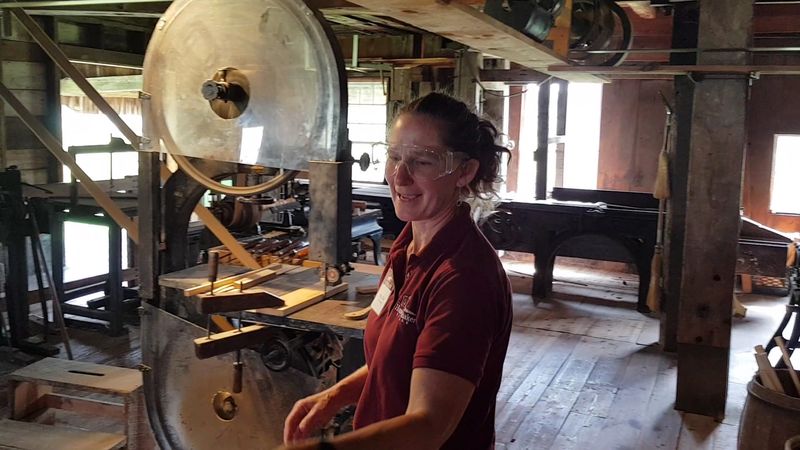
The people behind the chairs and tools deserve as much attention as the objects themselves. Hancock interprets the lives of a religious community whose beliefs shaped how members worked, shared resources, and organized their days.
The Shakers practiced communal living and celibacy, and they placed strong value on useful work. Their history gives the buildings context: these were not separate businesses collected for display, but parts of a community with shared responsibilities.
Keep the explanation straightforward for kids. People lived and worked together under religious rules, and producing food, clothing, furniture, and other necessities required many different skills.
Craft demonstrations help turn those broad ideas into actions you can follow. Depending on the schedule, you may encounter work such as blacksmithing, weaving, or woodworking, with staff explaining tools and methods as they go.
Watch one process long enough to see a change happen. A piece of material becoming something useful is easier to understand than a quick glance into several workshops, especially for a child who learns best by seeing movement.
Ask focused questions when the demonstrator invites them. How did someone learn this skill, what made the job difficult, and how long would an ordinary task take without modern equipment?
These questions keep the history connected to daily life rather than turning it into a list of unusual facts. They also reveal how much knowledge sits behind an object that appears simple at first glance.
Give working tools plenty of space and stay behind any marked boundaries. Sparks, sharp edges, and moving equipment make demonstrations interesting, but attention to safety is part of understanding the work.
Before leaving a room, choose one finished object and trace its story backward. Think about the materials, the person who handled them, and the job the object served within the village, then look for those connections in the next building.
Spring Babies and Garden Rows Change the Visit
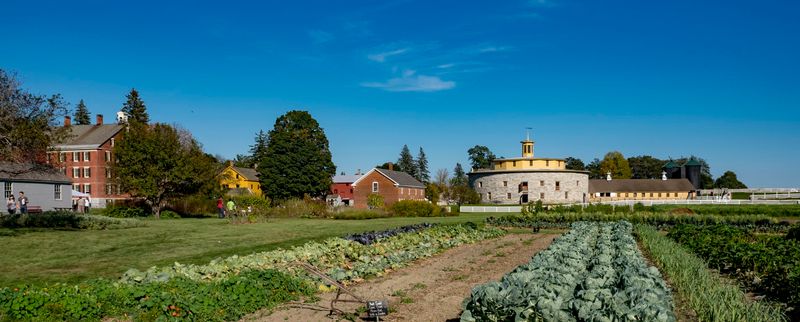
A spring visit and a late summer visit can tell different farm stories. The buildings remain familiar, but young animals, growing plants, and changing field conditions give the working landscape its own calendar.
The village’s seasonal Baby Animals programming is a particular draw for families. Check current dates, admission details, and activity rules before planning around it, because this is a scheduled offering rather than a guarantee throughout the year.
Young animals need rest and careful handling, even when their small size makes children eager to get closer. Explain that staff instructions protect both the animals and the people meeting them, and that watching quietly may be the best option.
Outside special programming, the gardens offer another way to understand farm life. Looking at crops and useful plants shows that the community’s work extended well beyond caring for livestock.
Ask kids to find differences in leaf shapes, growing heights, or the spaces between rows. Labels, where provided, can help connect an unfamiliar plant with something used in a kitchen or another part of daily life.
A garden also creates a good opportunity to talk about waiting. Unlike a museum activity finished in a few minutes, growing food depends on weather, soil, regular care, and a season long enough for plants to develop.
Stay on visitor paths and leave plants where they are. Picking a leaf or stepping into a bed can undo careful work, so make observation the challenge rather than collecting things to carry home.
Choose your season around your family’s main interest, not a single ideal photograph. Spring programming may suit animal lovers, while later growing months can reward children interested in plants and outdoor exploration.
Check the day’s forecast as well as the calendar. Waterproof footwear after rain, sun protection in open areas, and an extra layer can make outdoor stops much easier to enjoy.
Build a Family Route Before Little Legs Run Out
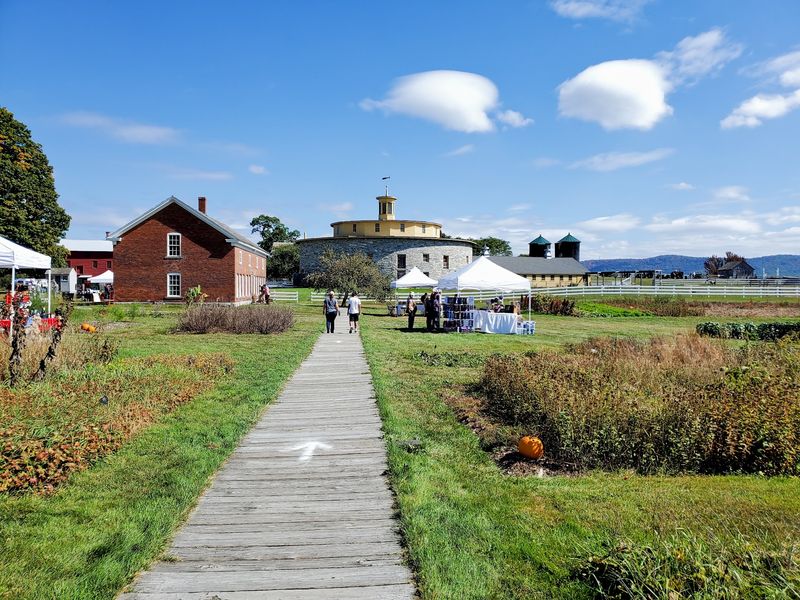
Good timing can prevent the classic museum problem: finding the best activity just as everyone gets tired. Give Hancock Shaker Village several hours if you want animals, a demonstration, and time inside the historic buildings without rushing.
The address is 1843 W Housatonic St, at Routes 20 and 41, in Pittsfield. Listed hours are 10 a.m. to 5 p.m. daily, but confirm the current seasonal schedule, admission prices, and special event arrangements before leaving home.
At arrival, check the day’s demonstrations first. A fixed program time can anchor your route, while animal viewing and self-guided building stops fill the spaces around it.
Choose three priorities rather than trying to finish every exhibit. For a family with young children, the animals, Round Stone Barn, and Discovery Barn make a sensible starting plan, with additional rooms added as energy allows.
Wear shoes suitable for outdoor walking and bring weather protection. The grounds include paths and historic buildings, so expect changing surfaces rather than one smooth indoor route.
If anyone uses a wheelchair, stroller, or other mobility support, ask staff about current access before committing to a route. Historic entrances, steps, and terrain can affect which spaces are practical to visit; do not assume every building offers the same access.
Food service and shop availability should also be checked that day. Plan a break before children become hungry, follow the village’s food rules, and keep eating separate from animal contact.
Save the shop for the end if browsing is part of your outing. A book or small useful item can connect with a subject your child discovered, rather than becoming the day’s first distraction.
Leave a little unplanned time before departure. That gives you room to revisit a favorite animal area, ask a final question, or catch a demonstration you noticed while crossing the grounds between your planned stops.