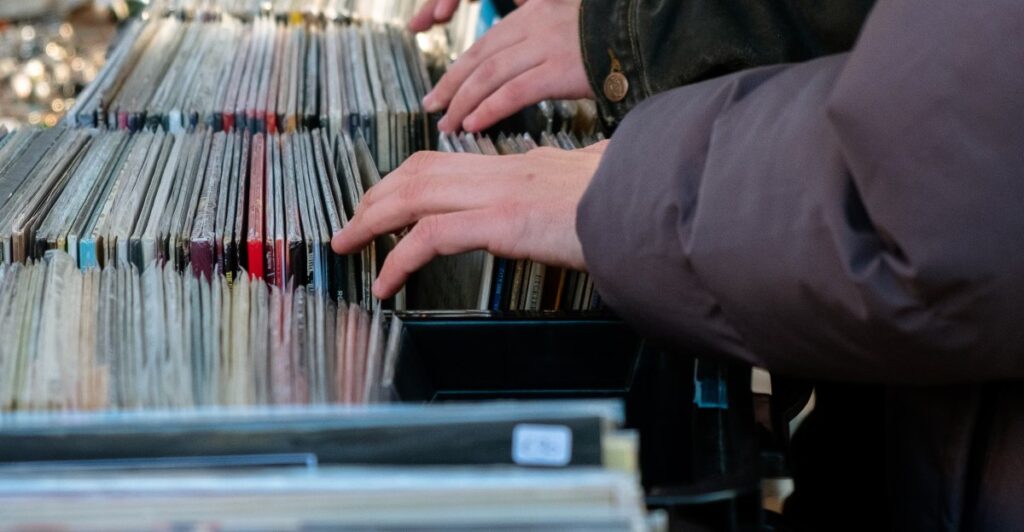
A cardboard box marked “$2 EACH” can be more dangerous to a music fan’s wallet than an entire wall of neatly priced records. That is the particular joy of flea-market crate digging: nobody knows whether the next dusty stack holds 40 copies of forgotten easy-listening albums or the record you have been hunting for years.
Across New Jersey, vinyl turns up in everything from curated vintage markets to sprawling weekend fleas where sellers unload entire basements onto folding tables. Some stops on this list regularly attract dedicated record dealers; others are appealing precisely because the music inventory is unpredictable.
Add in concert shirts, posters, stereo equipment, old magazines, autographs, instruments, pins, patches, and the occasional wonderfully strange piece of band merchandise, and there is plenty to hunt beyond LPs. Bring cash, inspect records carefully, and leave some empty space in the trunk.
These 10 New Jersey markets are especially fun places to start digging.
1. New Jersey Punk Rock Flea Market
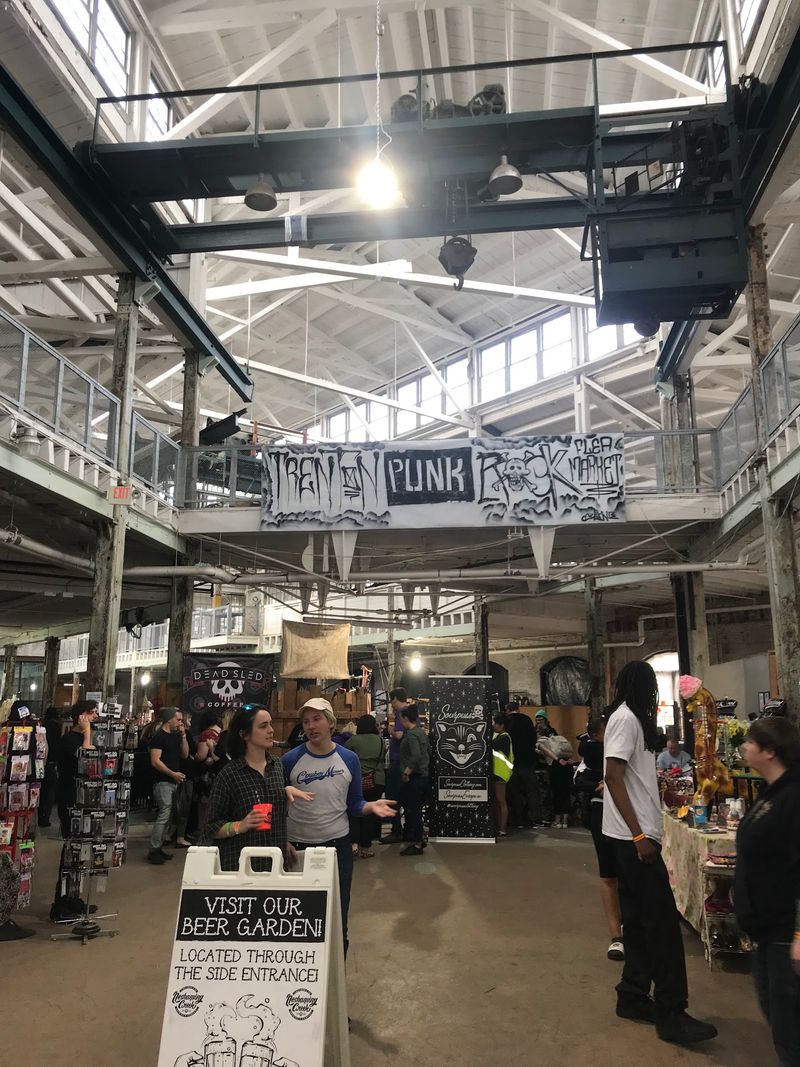
This is the easy first pick for anyone whose definition of music memorabilia extends beyond a clean copy of Rumours. The New Jersey Punk Rock Flea Market is built around underground music and alternative culture, bringing together record collectors, vintage sellers, bands, labels, artists, makers, and enough black T-shirts to alter the color balance of an entire room.
Vinyl is part of the market rather than an accidental discovery, so shoppers can encounter everything from punk and hardcore releases to oddball pressings, seven-inch singles, music-related artwork, pins, patches, shirts, posters, and other collectibles. The event has grown considerably since launching in 2013, and current editions are held at the New Jersey Convention and Exposition Center in Edison.
Hundreds of vendors can participate in a weekend, while live entertainment, food trucks, tattoo artists, and appearances by musicians make the experience feel closer to a compact alternative-culture convention than a traditional Sunday flea. That distinction matters for collectors: sellers generally know what they have, so this is not always the place for anonymous dollar-bin miracles.
It is, however, one of the strongest stops in the state for finding merchandise tied directly to bands, labels, punk history, and underground scenes. Unlike weekly markets, events happen on selected dates, so checking the schedule before making the drive is essential.
2. Golden Nugget Antique Flea Market
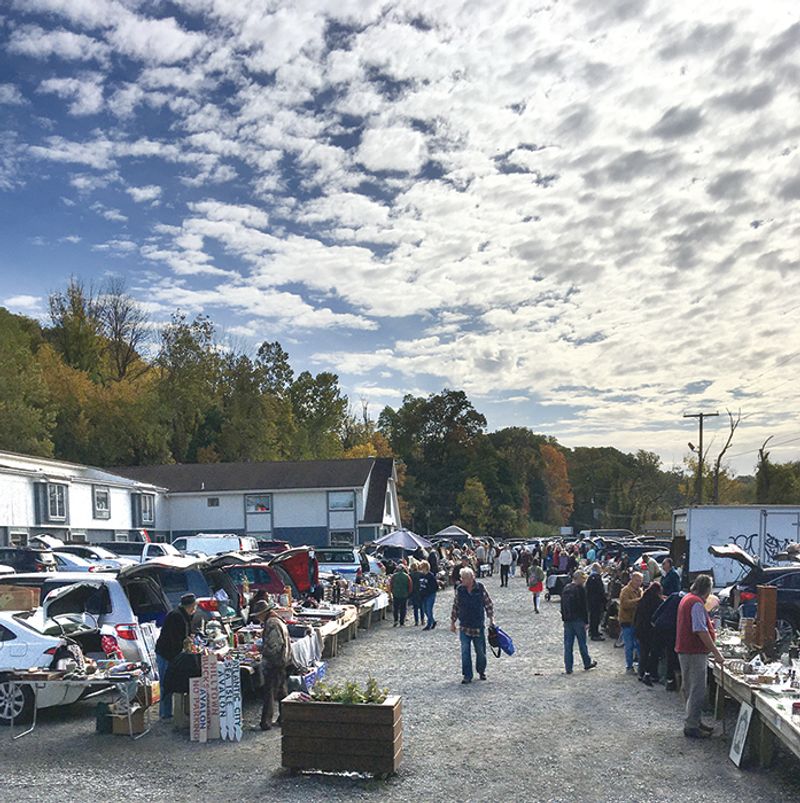
Early morning suits this Lambertville institution. The outdoor gates open at 6 a.m., when serious antique hunters are already moving between tables with coffee in one hand and an eye on whatever has just come out of a dealer’s van.
Music collectors have good reason to join them. Records are specifically among the collectibles sold here, and the combination of outdoor dealers and more than 40 antique-mall shops gives you two very different ways to search.
Outside is where patience can pay off: boxes of LPs may appear beside books, household goods, old advertising, toys, and estate-sale leftovers, making it worth scanning tables that do not initially look music-focused. Inside, the shopping becomes more curated, with established dealers covering art, collectibles, memorabilia, and vintage goods.
That also makes Golden Nugget particularly interesting if you collect more than vinyl. Autographs, photographs, old entertainment ephemera, and pop-culture pieces can all fit naturally into the merchandise mix.
The market operates Wednesday, Saturday, and Sunday, with outdoor shopping beginning at 6 a.m. and the indoor shops opening later in the morning. Free parking makes an early reconnaissance lap painless.
For record hunters, the best strategy is simple: check the outdoor tables first, then slow down inside once the obvious morning bargains have been claimed.
3. Montclair Flea
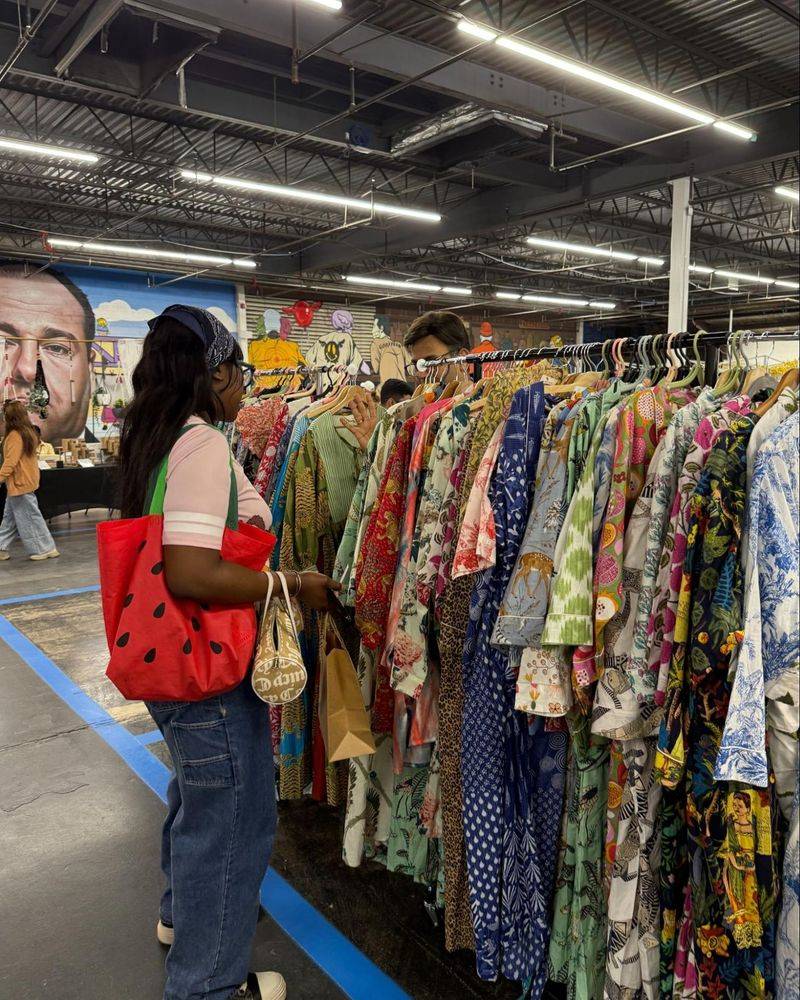
Records feel particularly at home inside Montclair’s old Lackawanna Station. Rather than the sprawling, anything-goes setup of a traditional field market, Montclair Flea leans toward curated vintage, independent sellers, art, and design, which gives the vinyl selection a different personality.
A 2026 Vintage Crawl even devoted half of its main room to a record fair, pairing vinyl dealers with open turntables where visitors could take a short DJ slot. That tells you plenty about the crowd this market attracts.
Expect records to mingle with vintage clothing, retro décor, art, and collectibles rather than appearing in random boxes between power tools and kitchenware. For someone searching for album art, old concert-style clothing, music-adjacent ephemera, or records that have already been given at least a little dealer attention, that curation can be a plus.
Lackawanna Station also keeps the main market indoors, removing the familiar flea-market problem of watching dark clouds gather over a cardboard box of LPs. Montclair Flea operates through scheduled weekend events rather than as an every-Saturday market, and the calendar changes throughout the year; its October 2026 edition, for example, is scheduled for October 24 and 25.
Come expecting fewer accidental attic cleanouts than at an old-school flea, but a stronger chance that somebody behind a table shares your enthusiasm for vintage culture and knows exactly why you are flipping through every crate.
4. New Egypt Flea Market Village
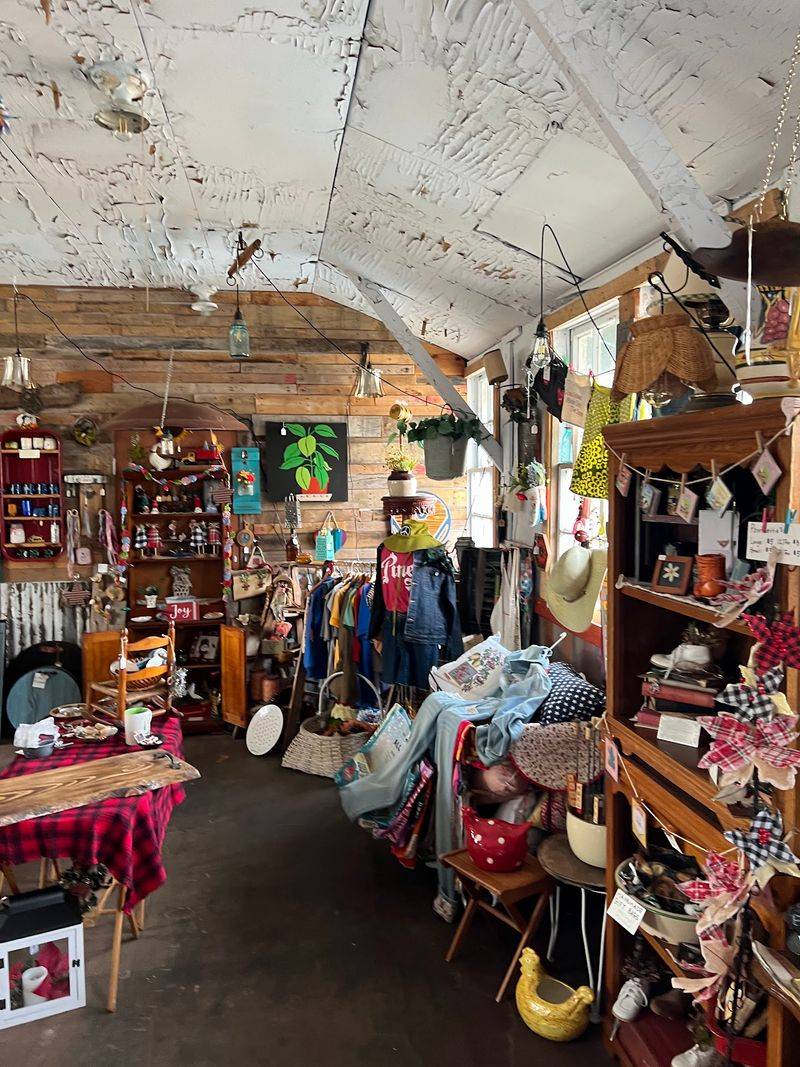
Part of the fun here is that hunting for records feels like exploring a tiny, eccentric settlement. More than 40 historic buildings make up New Egypt Flea Market Village in Cream Ridge, including structures associated with former Fort Dix barracks, and the dirt lanes and small specialty shops give the property a personality unlike New Jersey’s parking-lot markets.
Music fits naturally into that mix. The market has long included music-focused merchandise and specialty dealers, while outdoor tables can produce vinyl alongside books, electronics, antiques, tools, and household items.
That means there are two kinds of digging to do: check the established shops for more deliberately collected material, then work through the less predictable outdoor stock for cheaper surprises. Old instruments and other music-related objects also make this one worth considering if your collection extends beyond records.
The market currently operates Wednesdays and Sundays from 8 a.m. to 2 p.m., year-round and rain or shine, though individual sellers and outdoor turnout can vary. Cash is useful, but many merchants also accept cards or mobile payments, and an ATM is available on the property.
New Egypt rewards people who look inside every doorway rather than rushing through with a strict want list. A crate of records may be the destination, but an old music book, forgotten piece of stereo gear, or unusual collectible could easily become the thing you carry back to the car.
5. Collingwood Auction & Flea Market
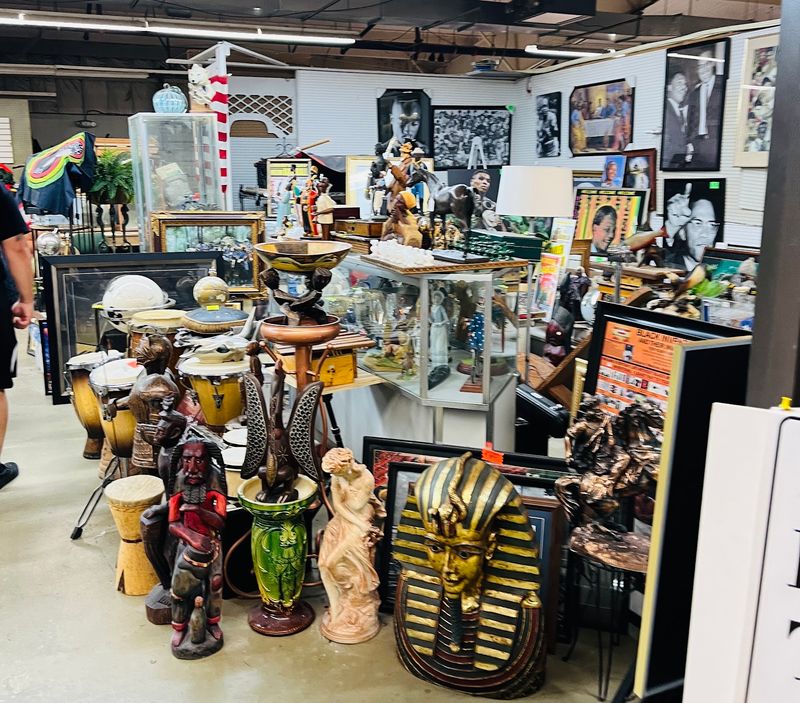
Scale is Collingwood’s greatest advantage. Spread across roughly 25 acres in the Farmingdale area, the market can accommodate more than 500 outdoor merchants, while a 60,000-square-foot indoor building adds around 100 tables and booths.
For record collectors, those numbers matter because flea-market vinyl is largely a numbers game: the more secondhand sellers you inspect, the better your odds of finding somebody who brought along a few boxes of LPs, CDs, cassettes, stereo components, or music memorabilia. Collingwood does not need to be a specialized record fair to deserve a morning of crate digging.
Its merchandise runs through antiques, collectibles, furniture, jewelry, used goods, closeouts, clothing, sports items, and household merchandise, which is exactly the broad mix in which forgotten record collections tend to surface. The approach here should be different from a curated vinyl show.
Do not expect every seller to grade records or price them according to collector databases; do expect to inspect condition yourself, ask whether there are more records tucked away, and negotiate when you are buying several at once. Collingwood operates Friday through Sunday from 8 a.m. to 5 p.m. and stays open throughout the year.
Because seller inventory changes, no single visit tells the whole story. One weekend may produce little more than common LPs; another could put an entire personal collection on a folding table for the first time.
6. Englishtown Auction
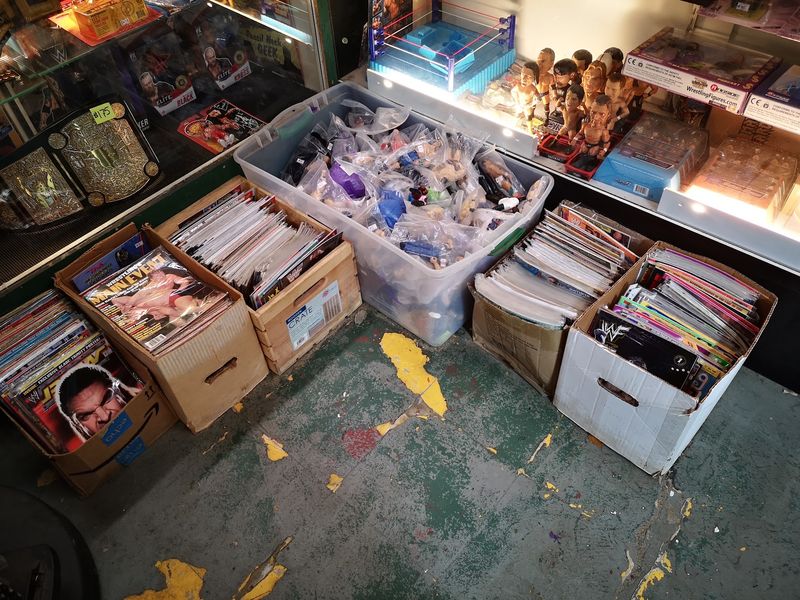
Nearly a century of bargain hunting gives this Manalapan market some serious flea-market credentials. Englishtown traces its history to 1929, when farmers gathered to trade livestock, equipment, and produce; today, the operation combines outdoor selling areas with five indoor buildings packed with vendors.
For music hunters, that old-school size and variety are the draw. Records can appear among antiques, collectibles, electronics, toys, household goods, clothing, and personal collections, so the smartest route is rarely a straight line.
Scan for LP-sized boxes under tables, ask sellers with vintage electronics whether they brought records, and pay attention to booths carrying older pop-culture merchandise. Those same vendors can be good sources for CDs, cassettes, band shirts, magazines, stereo equipment, and bits of memorabilia that are harder to search for deliberately.
Englishtown is especially suited to shoppers who enjoy the gamble of an unsorted box more than the certainty of a professionally priced record-store bin. It is open every Saturday and Sunday from 8 a.m. to 4 p.m., rain or shine, with free admission and free parking.
Indoor booths add some weather protection, but the outdoor area is important enough that a dry weekend generally gives you more to investigate. Go prepared to walk, and resist spending your entire budget at the first promising record table.
At a market this large, there is usually another row.
7. Berlin Farmers Market
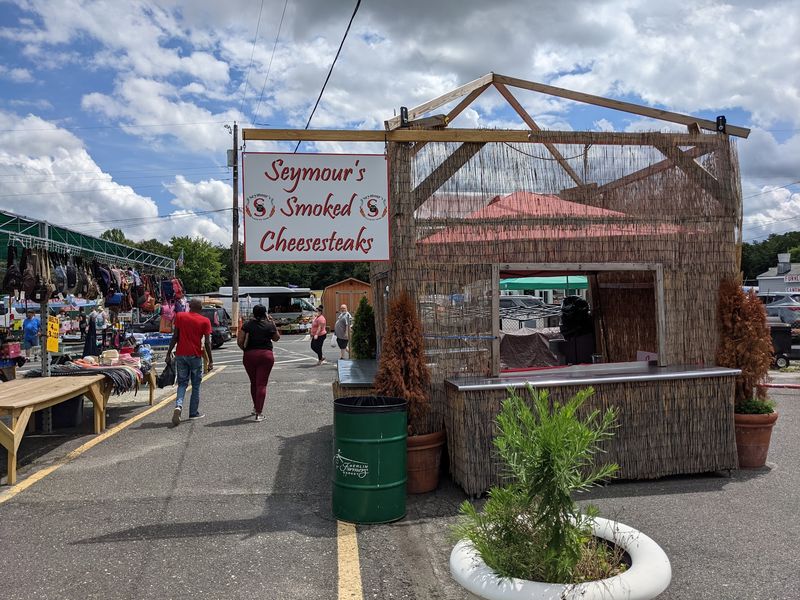
The first challenge at Berlin is deciding where to start. The South Jersey institution combines a substantial indoor market containing more than 70 businesses with an outdoor flea area capable of accommodating hundreds of vendors.
That sprawling setup gives record hunters both consistency and chaos. The indoor portion has long been associated with an eclectic mix of specialty merchants, while the outdoor market is the better bet for sellers unloading assorted secondhand possessions—the kind of tables where vinyl might share space with old speakers, video games, tools, toys, and boxes that clearly came straight from somebody’s house.
Music collectors have a history of finding records at the Berlin market, but the rotating nature of vendors means it is smarter to think of this as a hunt than a guaranteed record-shopping trip. That unpredictability is part of the attraction.
A dealer who specializes in collectibles may know every record’s value; a casual outdoor seller might simply want a stack gone before lunchtime. The outdoor flea market runs Saturday and Sunday, with activity beginning early in the morning, while the indoor market operates on a broader Thursday-through-Sunday schedule.
If vinyl is the priority, arrive early on a weekend and inspect outdoor tables before spending too long indoors. Bring a reusable bag sturdy enough for LPs, check discs for warping in good light, and remember that a jacket in excellent condition tells you very little about the record hiding inside it.
8. Columbus Farmers Market
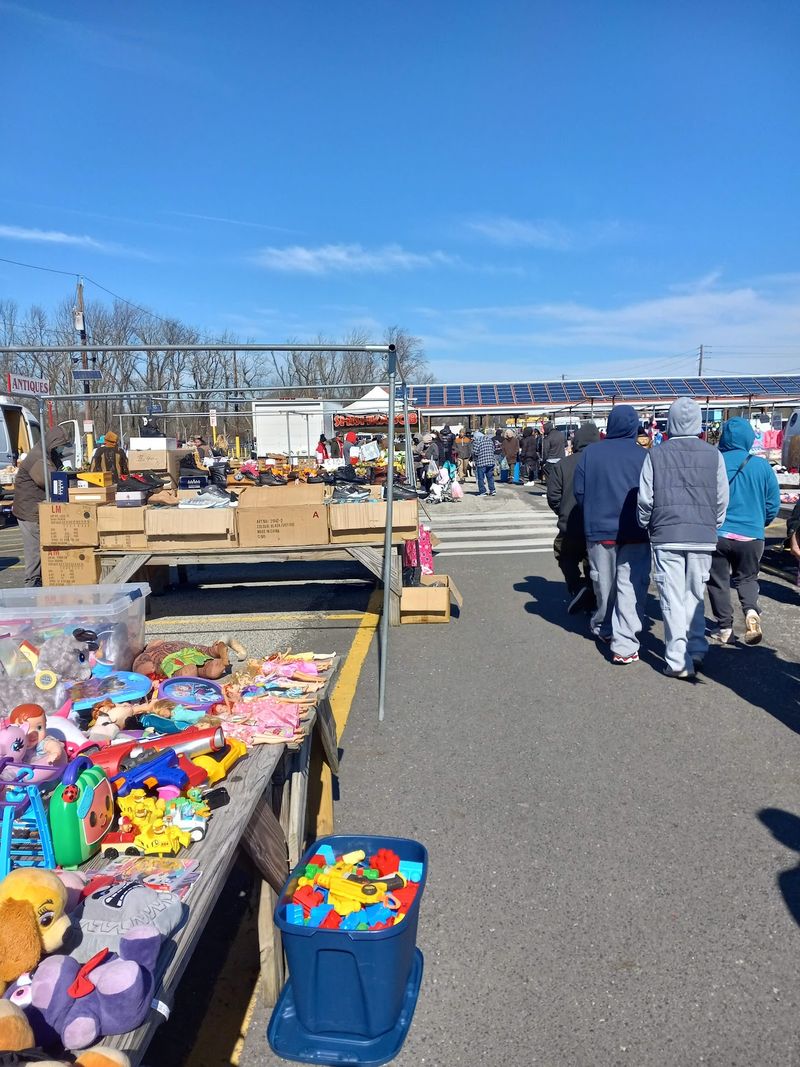
Thursday is the day veteran bargain hunters often circle for the outdoor flea at Columbus. The Route 206 complex has operated since 1929 and bills itself as one of the Delaware Valley’s oldest and largest flea markets, with more than 65 indoor retail stores plus a large outdoor selling area.
Its official description promises thousands of new and used items each week, including vintage finds and collectibles, so records fit comfortably into a much bigger scavenger hunt. The outdoor tables are where music fans should concentrate first.
Inventory changes constantly, and sellers may be clearing estates, garages, basements, or personal collections rather than operating as dedicated vinyl dealers. That can mean plenty of common titles, but it also creates the possibility of cheap records that have not been individually researched and priced.
Once you have worked through the outside rows, the indoor shops provide another layer of browsing, and the larger Columbus complex has enough food vendors and other shopping to make a long visit easy. The outdoor flea operates Thursday, Saturday, and Sunday from 8 a.m. to 3 p.m. year-round, with free parking available around the property.
Weekends can be busier, but Thursday has a reputation among regular flea shoppers as a particularly interesting day for oddball secondhand merchandise. For a collector willing to sift through a lot of unrelated stuff, that is exactly the point.
9. New Meadowlands Flea Market
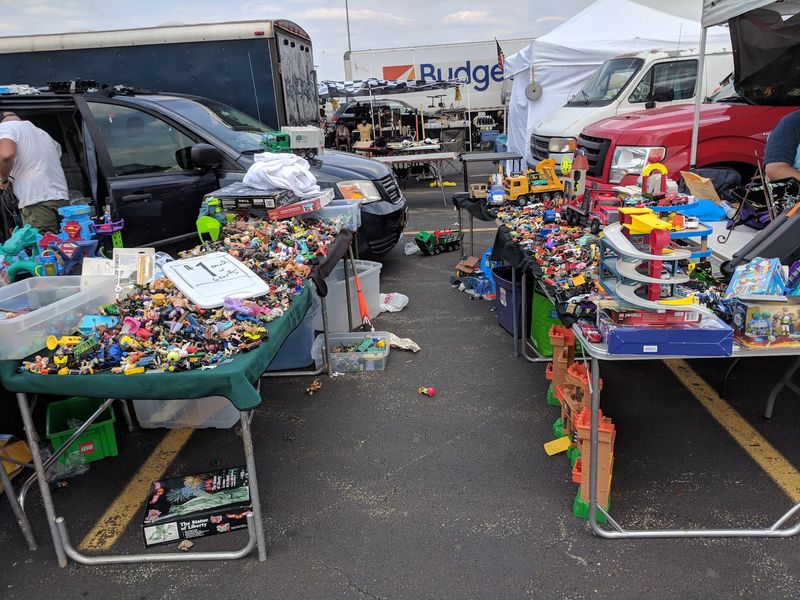
On Saturdays, part of the MetLife Stadium complex trades tailgates for folding tables. The New Meadowlands Market takes over Lot J in East Rutherford with hundreds of merchandise vendors, turning a vast piece of stadium parking into one of North Jersey’s biggest weekly bargain hunts.
Vinyl is not the market’s sole focus, which can work in a collector’s favor. Past shoppers have reported inexpensive record finds here, and the broad mix of used merchandise means LPs can surface without the pricing expectations that follow them into specialized record fairs.
That makes Meadowlands particularly good for collectors who enjoy inexpensive digging, genre experimentation, and the possibility of buying something simply because the cover looks interesting. Check boxes carefully—outdoor records can have a harder life than stock in a climate-controlled shop—and do not be shy about asking for a better price on a stack.
Beyond albums, keep an eye out for CDs, old audio equipment, shirts, toys, posters, and entertainment collectibles scattered among the general merchandise. The market normally runs every Saturday from 8 a.m. to 4 p.m., although the schedule can change when events at the sports complex require it.
Admission and parking are free. Arriving early gives you first look at newly unloaded boxes; arriving later can improve your bargaining position with sellers who would rather discount a pile than pack it back into the vehicle.
10. Avenel Flea Market
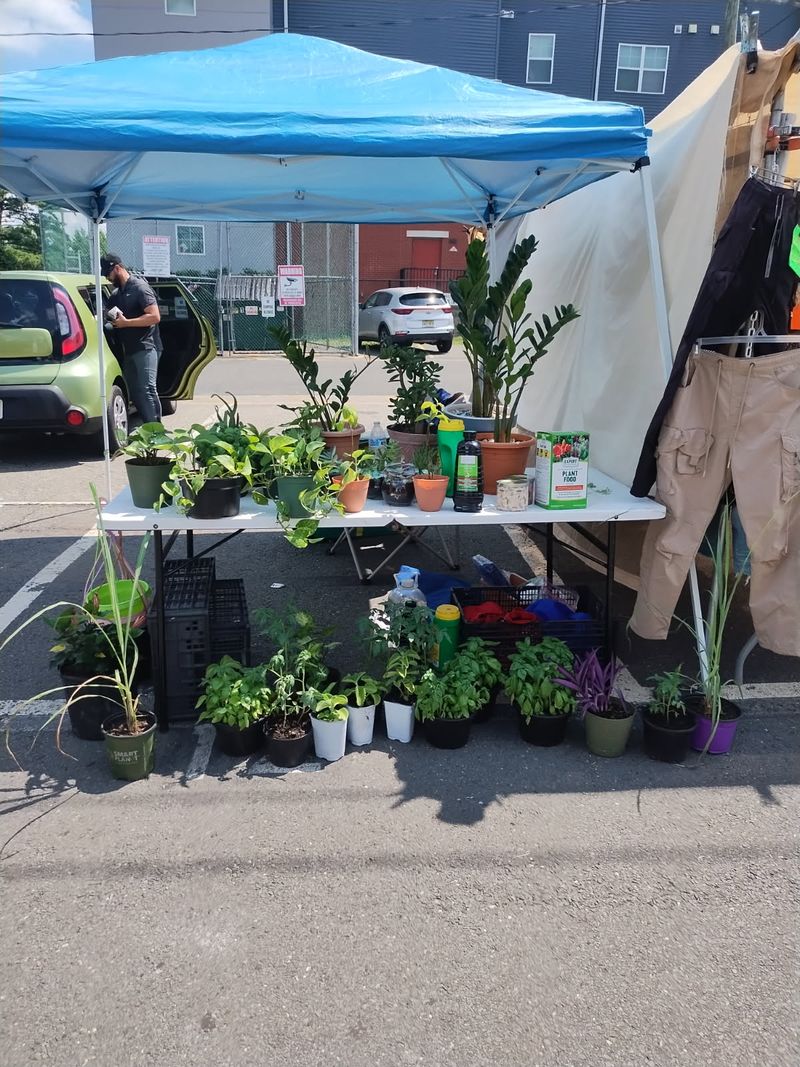
There is something encouraging about a flea market that starts selling at 6 in the morning. Avenel has been around since 1940 and offers more than 150 vendor spaces, sheds, and stores, with shoppers moving among new goods, used merchandise, antiques, and whatever else sellers have brought that day.
For vinyl collectors, this is less about visiting a known record destination and more about exploiting exactly that broad, old-fashioned mix. Sellers clearing household collections may arrive with a milk crate of LPs, a stack of 45s, old CDs, cassette tapes, speakers, or forgotten music memorabilia that was never important enough to list individually.
That is where careful scanning pays off. Look underneath tables as well as on top of them, and ask vintage sellers whether they have additional records in their vehicle or storage space; flea-market inventory often exceeds what fits in the booth.
Condition requires particular attention at any outdoor market, so pull discs from sleeves and check for scratches, edge warps, moisture damage, and battered inner sleeves before agreeing on a price. Avenel operates year-round on Thursday, Saturday, and Sunday, generally from 6 a.m. to 3:30 p.m., with free parking and admission.
There is no promise that every visit will produce a collectible pressing. For crate diggers, that is not really a drawback.
The appeal is showing up before breakfast without knowing what collection may have arrived overnight.
Share this story