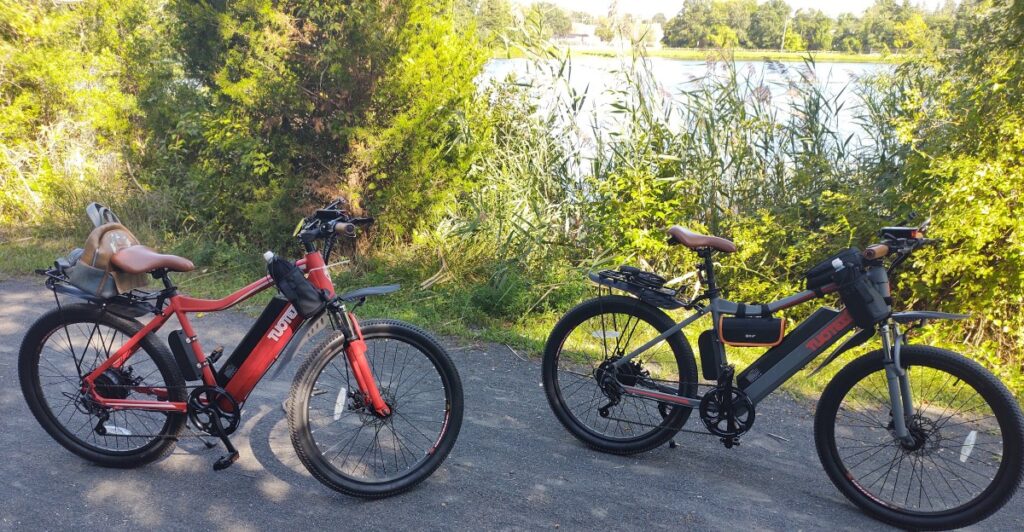
There is a particular kind of relief that comes from realizing the car behind you does not exist. No shoulder-checking every few seconds, no delivery truck squeezing past, and no wondering whether the next driver actually noticed your bright-yellow jersey.
For newer cyclists, New Jersey has plenty of places where riding can feel much simpler than navigating a regular road. These 11 paths run primarily along former railroad corridors, through county parks, beside canals, and across protected coastal land, keeping riders away from ordinary vehicle traffic for most of the experience.
Some are smooth asphalt; others use forgiving crushed stone or gravel. Almost all are relatively flat, and none requires mountain-bike skills or a cyclist’s tolerance for steep climbs.
Street crossings still pop up on several routes, so “traffic-free” does not mean switching off your common sense. But if you want room to wobble, coast, stop, and build confidence at your own pace, start here.
1. Sandy Hook Multi-Use Pathway: Beach Views Without the Road Stress
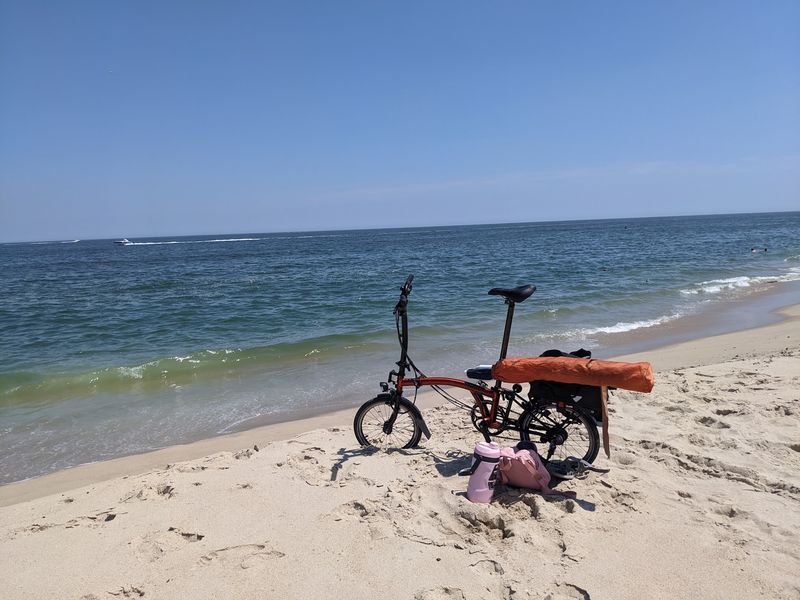
Few beginner rides in New Jersey deliver this much scenery without demanding much from your legs. The multi-use pathway at Sandy Hook stretches roughly seven miles through the narrow peninsula, with a flat, even surface that lets newer riders concentrate on enjoying the surroundings instead of worrying about hills or rough terrain.
The path begins near the entrance to the Sandy Hook unit of Gateway National Recreation Area and works its way north past beach access points and toward historic Fort Hancock.
Along the way, the landscape keeps changing: maritime woods give way to open coastal views, old military batteries appear beside the route, and the distinctive buildings of Officers Row make the northern end feel completely different from the beachier southern portion.
You can also work the Sandy Hook Lighthouse and former Nike missile facilities into a ride, which makes this one particularly good for cyclists who prefer frequent excuses to stop. The pathway is shared with walkers, runners, and skaters, so beginners do need to stay right and pay attention when passing.
Otherwise, the combination of level terrain, paved riding, multiple potential turnaround points, and practically zero climbing makes Sandy Hook an easy confidence-builder. Summer weekends can be busy, especially around the beaches, so an early start gives you more breathing room.
2. Saddle River County Park Bike Path: A Green Escape in Bergen County
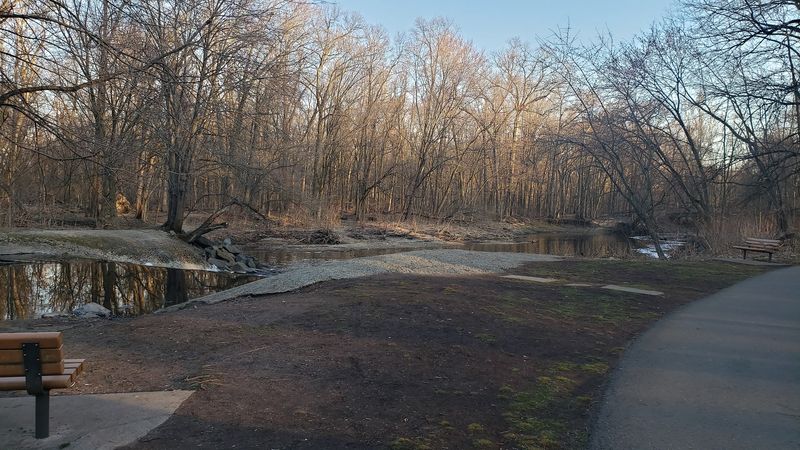
A six-mile ribbon of path through Bergen County manages to connect six communities without feeling much like an urban commute. Running between Ridgewood and Rochelle Park, the bicycle and pedestrian route through Saddle River County Park follows the Saddle River and Ho-Ho-Kus Brook, slipping between ponds, wooded stretches, recreation areas, and neighborhoods while staying largely removed from normal road traffic.
For a newer cyclist, that combination is hard to beat: the route is long enough to feel like a proper outing but short enough that you can turn around whenever your legs have had enough. The scenery provides natural stopping points, too.
Dunkerhook Park has a small waterfall, Historic Easton Tower sits near the route around Route 4, and several park areas have picnic facilities, playgrounds, athletic fields, and ponds. That makes this especially useful for families or groups where not everyone wants to ride the full distance.
Another beginner-friendly detail is continuity. Rather than asking riders to piece together disconnected park loops, the main path links Ridgewood, Glen Rock, Fair Lawn, Paramus, Saddle Brook, and Rochelle Park in one corridor, even passing beneath Route 4.
You will still share the pavement with plenty of walkers and runners, particularly on pleasant weekends, so this is more relaxed cruise than speed-training territory.
3. Middlesex Greenway: A Manageable Rail-Trail Confidence Builder
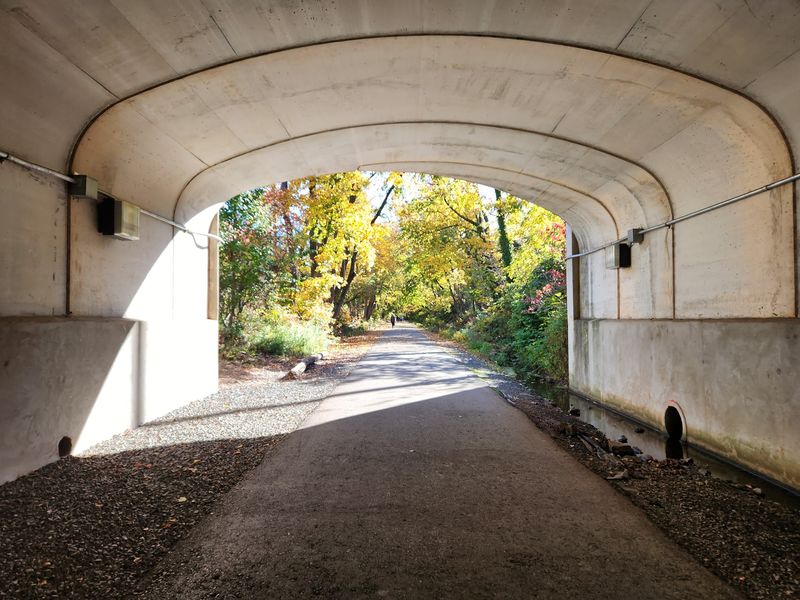
Rail-trails tend to make excellent training grounds for nervous cyclists, and this 3.5-mile corridor through Metuchen, Edison, and Woodbridge shows exactly why. The Middlesex Greenway follows part of the former Lehigh Valley Railroad, which means the route was inherited from trains rather than designed around steep recreational climbs.
What riders get today is a 10-foot-wide paved pathway with a straightforward linear layout and numerous access points along the way. That width matters when you are still getting comfortable steering around pedestrians or allowing faster cyclists to pass.
It gives the trail a little more breathing room than a narrow park path. The short overall distance is another advantage.
Ride the entire greenway out and back and you get about seven miles, a manageable target for many beginners without committing to an all-day expedition. Or simply start at one of the numerous entrances and turn around after a mile or two.
The surroundings are more suburban than wilderness-like, with neighborhoods, parks, schools, and commercial areas near parts of the corridor, but that can actually make a first ride less intimidating. You never feel stranded miles from civilization.
There are street crossings along the way, so slow down where the greenway meets roads, but between them the riding is pleasantly uncomplicated.
4. Loantaka Brook Reservation Trail: An Easygoing Woodland Ride
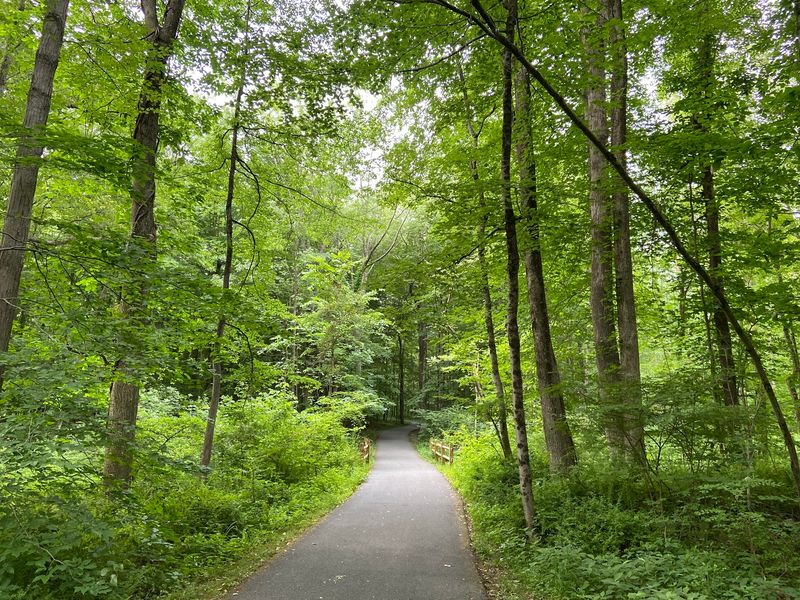
For riders who associate beginner routes with boring laps around a parking lot, Morris County offers a much better alternative. Loantaka Brook Reservation spreads across more than 850 acres and contains nearly 10 miles of trails, with an extensive network of paved routes winding through mostly flat green space.
Cycling here feels more like exploring a park than completing a prescribed point-to-point ride. Wooded stretches follow the brook, paths pass Kitchell Pond, and different branches connect areas around South Street, Kitchell Road, Loantaka Way, and the neighboring equestrian facilities.
That network gives beginners control over how ambitious the day becomes. A short spin can remain short; riders feeling good can keep adding distance.
Much of the cycling route is asphalt, and the relatively flat terrain is friendly to everything from hybrids to standard recreational bikes. Because this is a multi-use reservation, expect company.
Joggers, walkers, families, and, on designated portions, equestrians all use the trail system, so speed should stay modest. The South Street area is a practical starting point thanks to parking and nearby recreation facilities, while other access points allow you to build different routes.
There are a few road crossings between sections, but once you are back beneath the trees, cars quickly become somebody else’s problem.
5. Traction Line Recreation Trail: Small Distance, Big Practice Value
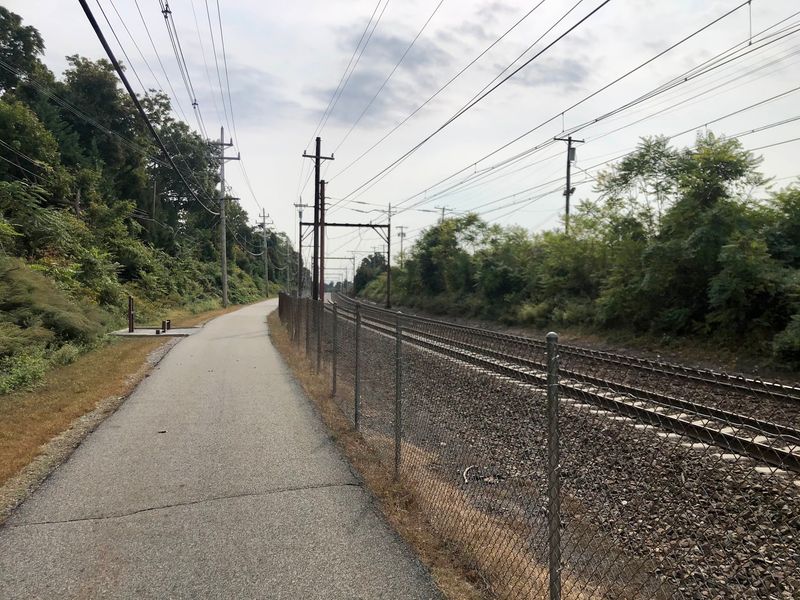
Trains are part of the scenery here, not something you have to race across town to avoid. The 2.7-mile Traction Line Recreation Trail runs beside the NJ Transit rail corridor between Madison and Morristown, creating a paved recreational route through one of the busier parts of Morris County.
Despite the urban surroundings, the trail itself is relatively flat and specifically designed for walking, running, biking, and rollerblading, making it a comfortable option for anyone who wants a predictable first ride. Its modest length may be its biggest strength.
A full out-and-back is only about 5.4 miles, enough to get some exercise without turning the afternoon into an endurance test. The path passes Fairleigh Dickinson University, Convent Station, and Saint Elizabeth University before reaching the area around Washington’s Headquarters in Morristown National Historical Park, so there is more to look at than fencing and railroad tracks.
Fitness stations along the route offer another excuse to stop if you want to break up the ride. This is not the trail to choose if your dream ride involves complete wilderness and birdsong; passing trains make sure you remember exactly where you are.
But for beginners, that accessibility is part of the appeal. The route is easy to understand, relatively level, and close to populated areas throughout.
6. Atlantic County Bikeway: A Straightforward South Jersey Spin
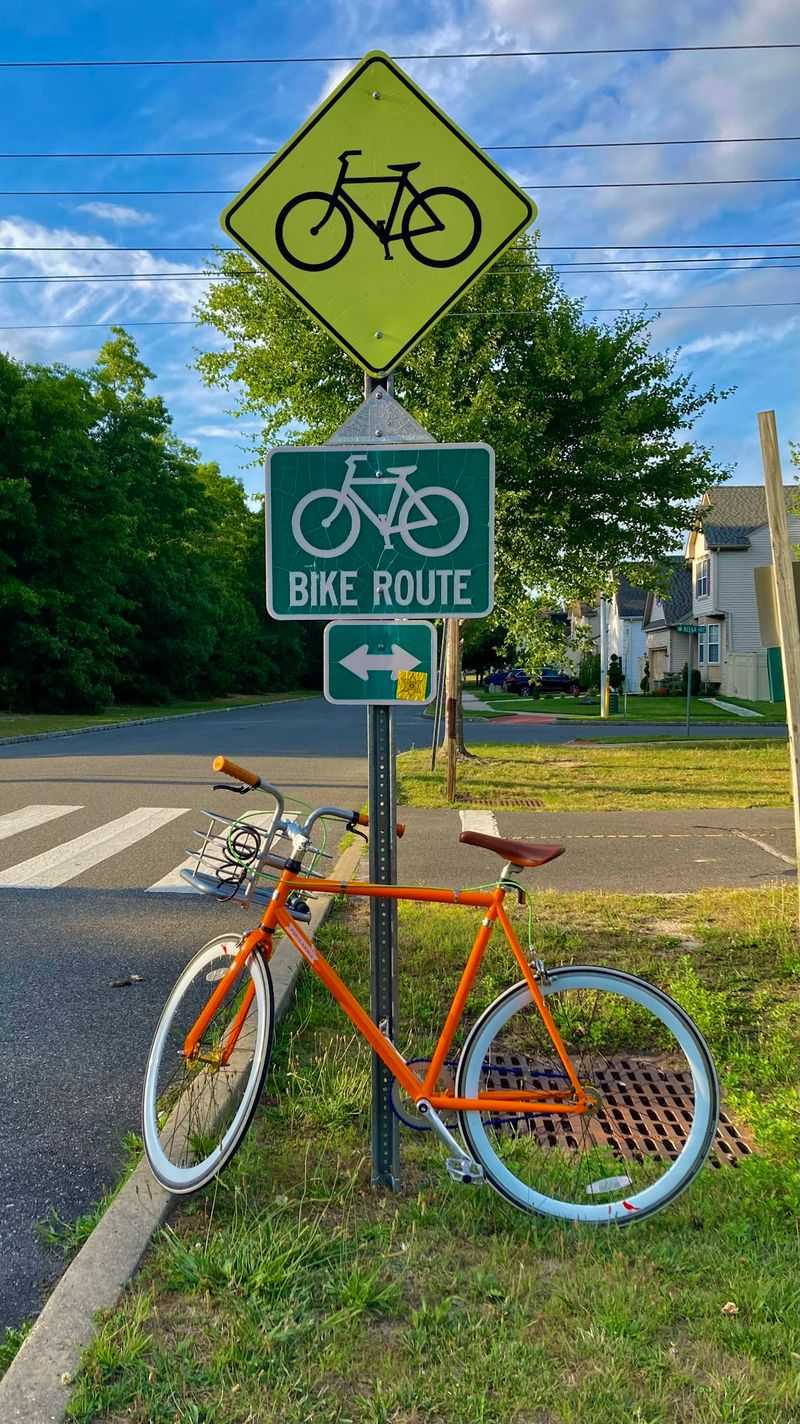
South Jersey’s old railroad corridors have a habit of becoming very useful bicycle routes, and this one now gives riders 7.56 miles between Egg Harbor Township and Hamilton Township. The Atlantic County Bikeway traces the former Pennsylvania-Reading Seashore rail corridor, creating a long, mostly straight bike-and-pedestrian path that works particularly well for beginners ready to graduate from short neighborhood rides.
There are no technical trail features waiting to catch you out, and the linear design makes navigation simple: ride as far as you are comfortable, turn the handlebars around, and retrace your route. Three main trailhead parking areas make planning easier, including access near Harbor Square, English Creek Avenue, and the Atlantic County Institute of Technology.
At English Creek Avenue, a pedestrian-activated traffic signal helps riders negotiate one of the important road crossings. That detail is worth remembering because the bikeway is separated from regular vehicle lanes, but it is not magically sealed away from every road.
Stop, look, and treat crossings seriously. Between them, the route settles into the easy rhythm that makes converted rail lines so approachable.
Interpretive signs along the path touch on local Pinelands plants, wildlife, and railroad history, providing something to read during water breaks. For beginners aiming for their first 10- or 15-mile ride, this is an excellent place to build up gradually.
7. Monroe Township Bike Path: A Friendly Gloucester County Rail Route
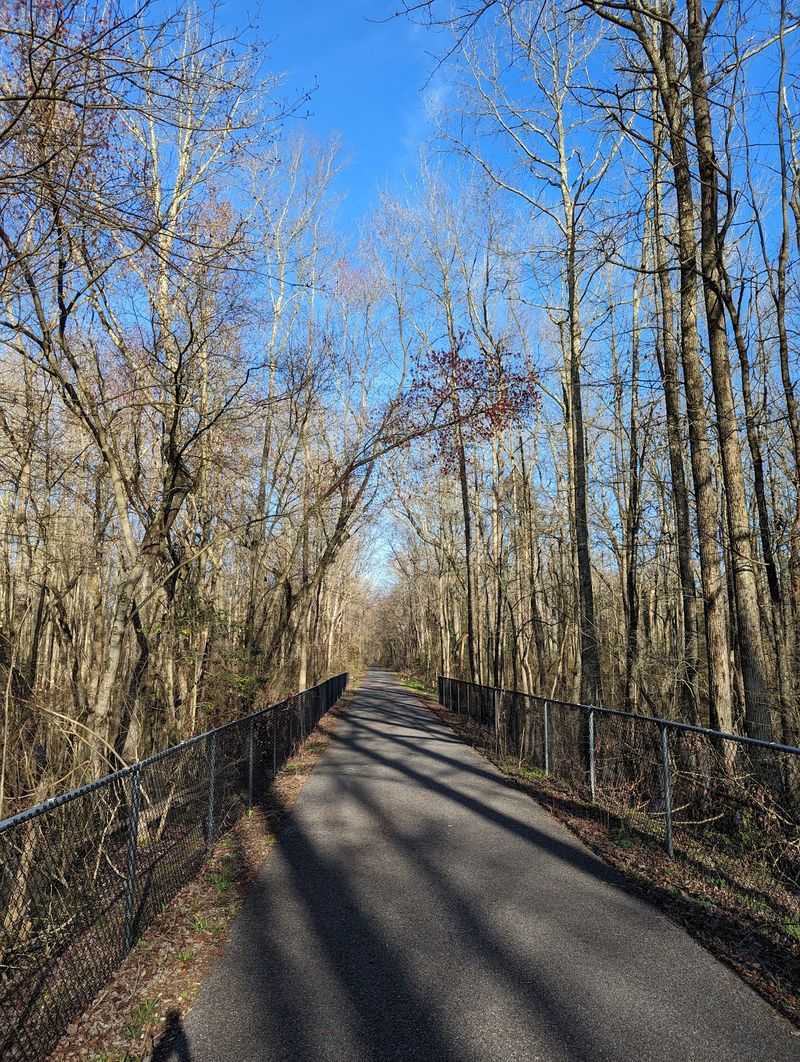
If the goal is simply to get on the bike and ride without spending half the morning decoding a trail map, this Gloucester County path keeps things refreshingly straightforward. The Monroe Township Bike Trail runs for approximately 6.25 miles between Williamstown and Glassboro on an asphalt surface, giving newer riders a smooth corridor long enough for a respectable workout without pushing into intimidating mileage.
Because it follows a mostly linear route, calculating a ride is easy. Two miles out and two back gives you four.
Reach the far end and return and you are looking at roughly 12.5 miles, a satisfying benchmark for somebody beginning to extend their range. The trail passes a succession of local roads, including Clayton Avenue, Tuckahoe Road, Sykes Road, Fries Mill Road, and others, so road crossings require attention even though the bike path itself is removed from ordinary traffic.
Parking is available near the middle school on Clayton Road, providing a convenient place to start without hunting through residential streets for access. This path is less about destination sightseeing than it is about uncomplicated riding.
There are no major climbs to conquer, no rocky stretches demanding special tires, and no complicated maze of intersecting mountain-bike trails. Bring water, keep an eye out at crossings, and let the miles accumulate almost without noticing.
8. Henry Hudson Trail: Choose Your Own Bayshore Adventure
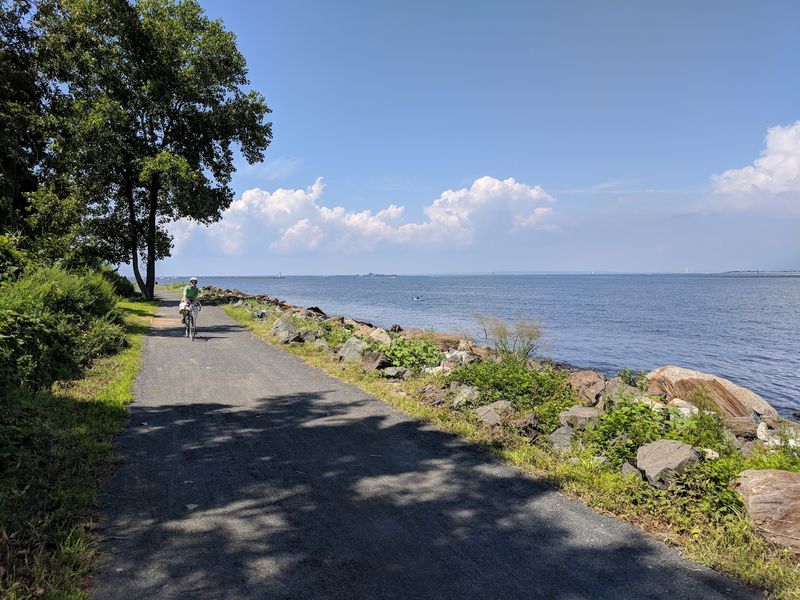
Twenty-four miles can sound alarming when you have only recently started cycling, but nobody says you have to ride all 24. That is precisely what makes the Henry Hudson Trail so useful.
This former railroad right-of-way through Monmouth County is divided into northern and southern portions, allowing riders to choose a section that matches their confidence and energy rather than tackling the entire system. Much of the trail is 10 feet wide, paved, and relatively flat, with tree-lined stretches alternating with views of wetlands, fields, streams, and developed areas.
The northern section runs through communities along the Bayshore, while the southern extension reaches through areas including Marlboro and Freehold. Instead of dramatic hills, the main challenges are the practical kind: intersections, road crossings, and occasional interruptions or signed detours that mean riders should stay alert rather than assuming every mile is completely isolated.
For beginners, starting with a shorter out-and-back from one of the established access areas is smarter than chasing a mileage record. The trail’s railroad heritage keeps grades gentle, and the paved surface removes worries about loose gravel or roots.
Once your legs get stronger, the same path grows with you. A five-mile outing can become 10, then 15, without needing to learn an entirely new route.
9. Columbia Trail: Shady Miles With a Different Surface
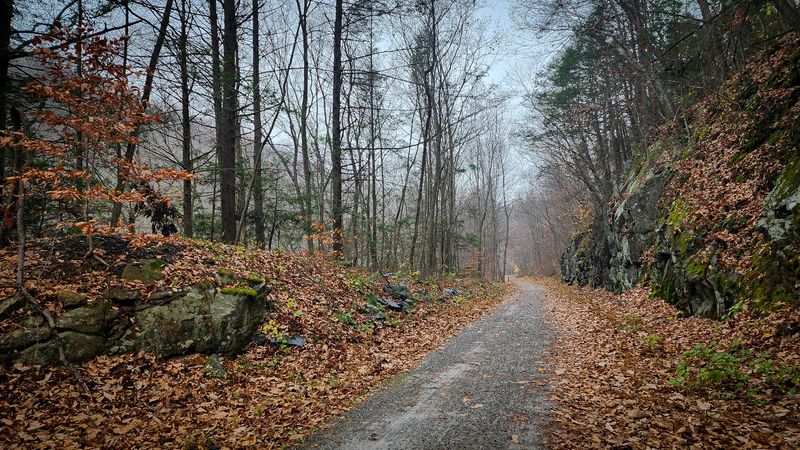
Not every beginner-friendly ride needs asphalt beneath the tires. The Columbia Trail offers 16.5 miles of mostly natural and stone-dust tread through western Morris County and into Hunterdon County, giving newer cyclists a chance to try an unpaved surface without jumping straight into mountain biking.
The old railroad alignment keeps the route flat, and there are no rock gardens, steep switchbacks, or technical descents to negotiate. Instead, the trail threads through woodland, farmland, fields, small bridges, and rural communities before reaching some especially dramatic scenery around the gorge of the South Branch Raritan River.
The tradeoff for that more natural feel is rolling resistance. Stone dust and packed trail surfaces usually require a little more effort than fresh asphalt, and conditions can change after prolonged rain, so a hybrid, gravel bike, or bike with moderately wider tires will feel more comfortable than a delicate road setup.
Horses also use the trail, making courteous passing important. For a first visit, there is absolutely no reason to tackle all 16.5 miles.
Pick an access point, ride three or four miles, then come back the same way. The combination of shade, gentle grades, and long traffic-free stretches makes this a particularly good bridge between paved greenway riding and more adventurous cycling.
10. Union Transportation Trail: Rural Riding at Your Own Speed
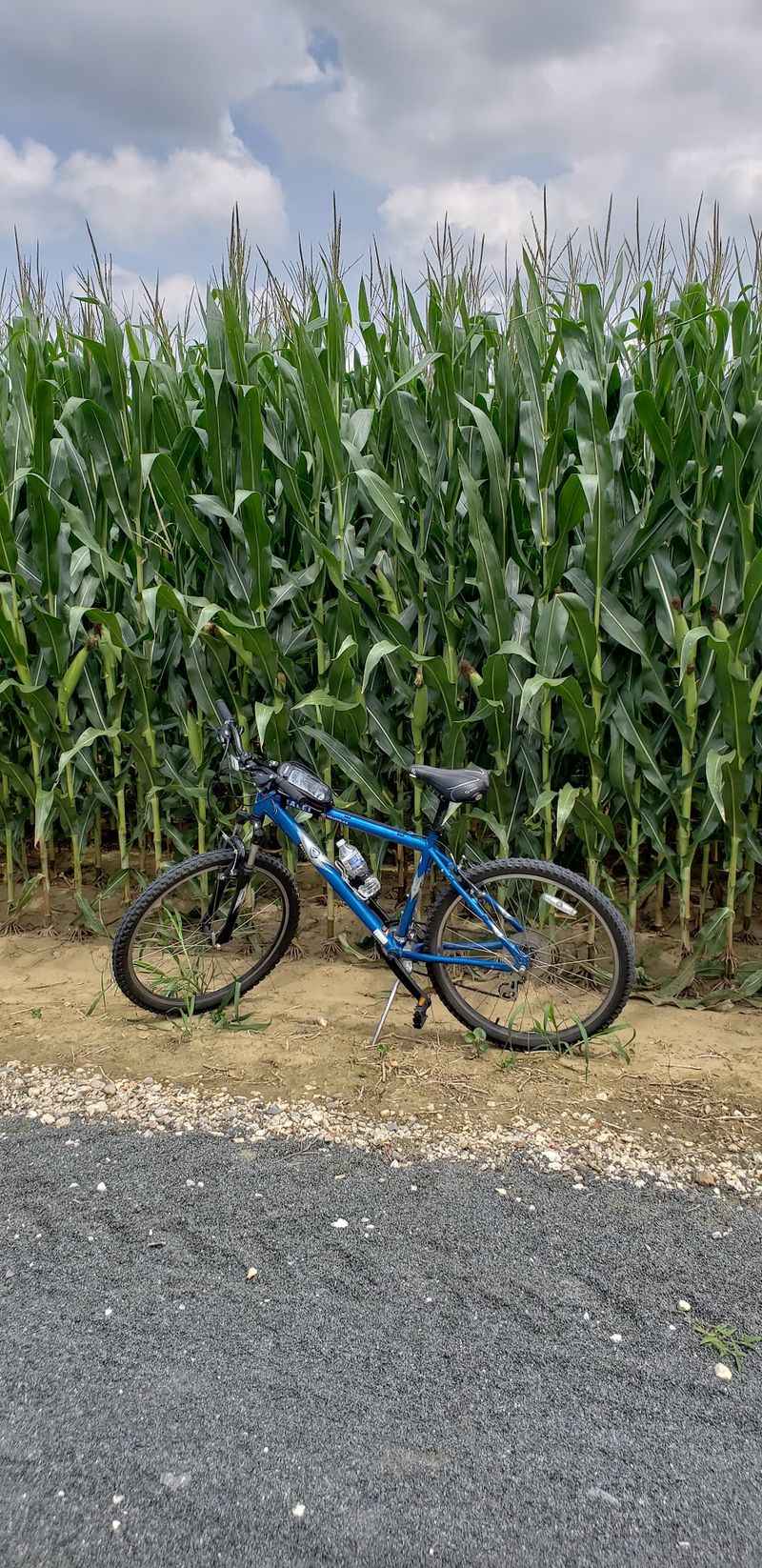
Farm fields, power lines, old railroad history, and a wooden trestle bridge give this Monmouth County route a personality completely different from a suburban greenway. The Union Transportation Trail runs for about nine miles through Upper Freehold on the former Pemberton & Hightstown Railroad corridor, and the park system classifies it as an easy trail.
Its gravel surface is the main thing beginners should know before arriving. This is not silky asphalt, but it is still a maintained rail-trail rather than a technical mountain-bike track, making it comfortable for hybrids, gravel bikes, and recreational bikes with reasonably substantial tires.
The landscape is largely rural, with broad agricultural views and long, straight sections that encourage an unhurried pace. One of the most memorable features comes early on the route: a restored historic trestle crossing Lahaway Creek, a surviving piece of the railroad that once carried passengers and agricultural freight through the region.
Several parking areas provide access, including lots around Millstream Road, Jonathan Holmes Road, and the Upper Freehold municipal complex, so there is no need to commit to the full trail. Shade can be limited on exposed portions beneath the utility corridor, making water and sun protection especially worthwhile in warm weather.
For beginners curious about riding beyond pavement, this is a gentle place to experiment.
11. Delaware & Raritan Canal State Park Towpath: Waterside Miles Without Hurry
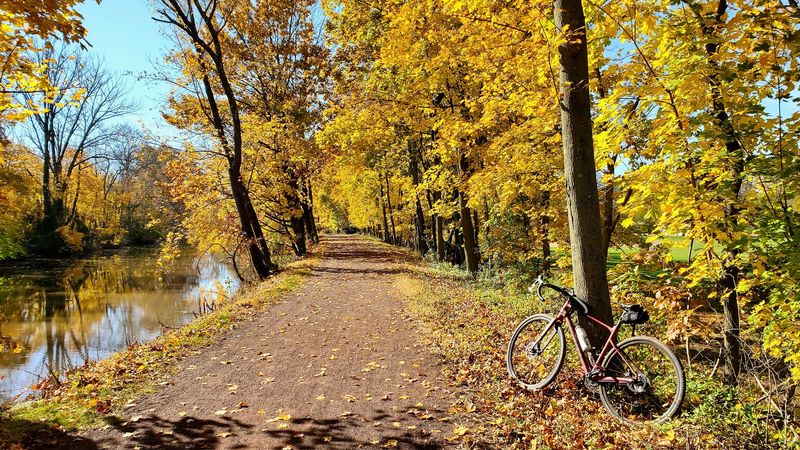
This is the one to remember when a five-mile beginner ride quietly turns into a 12-mile ride because nobody wants to turn around yet. The Delaware & Raritan Canal State Park contains more than 70 continuous miles of wide, flat multi-use pathway, following the historic canal and former railroad corridors through central New Jersey.
That enormous mileage sounds more serious than the riding actually is. The surface is primarily crushed and packed stone, the grade is famously gentle, and numerous access points let you choose anything from a short afternoon spin to an ambitious day trip.
For new cyclists, stretches around places such as Princeton, Kingston, Griggstown, Blackwells Mills, Lambertville, and Bulls Island can deliver the satisfying feeling of traveling somewhere under your own power without forcing you onto a busy highway. Water is often beside you, historic canal structures appear regularly, and tree cover makes many portions especially pleasant when temperatures rise.
The crushed-stone surface is generally friendly to hybrid, gravel, and recreational bikes, though very skinny road tires can feel less secure, particularly after wet weather. There are occasional crossings and areas where riders need to pay close attention, but motorized vehicles are prohibited on the trail itself.
Perhaps the best feature for a beginner is flexibility: there is always another access point, another potential turnaround, and another section waiting when you are ready to ride farther.
Share this story