A teak credenza with pencil legs, a chrome floor lamp that looks ready for a 1960s cocktail party, and a set of atomic-pattern drinking glasses can all turn up in the same New Jersey antique mall — assuming somebody else doesn’t spot them first.
Mid-century furniture has become far too collectible to count on bargain-basement prices, but the state still has plenty of multi-dealer shops where the fun comes from walking in without knowing whether you’ll leave with a $20 ceramic planter or a Danish modern dining set.
The strongest hunting grounds combine enough dealers to create real variety with a steady turnover of furniture, lighting, art, glassware, and small décor from the 1940s through the 1970s. Some lean heavily into design; others mix mid-century pieces among Victorian furniture, farmhouse antiques, jewelry, records, and oddball collectibles.
Either way, these 12 New Jersey antique malls give retro-minded shoppers plenty of territory to cover.
1. A Touch of the Past Antiques, Lambertville: Start With a Statement Piece
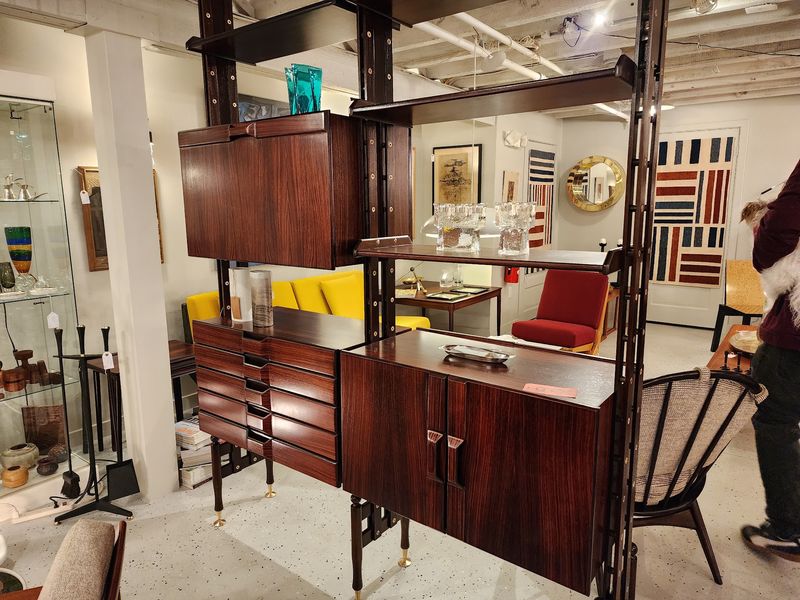
Anyone specifically hunting mid-century furniture should put this Lambertville stop near the top of the route. The 10,000-square-foot showroom brings together about 50 dealers, but one of its biggest advantages for design fans is a dedicated presence of serious mid-century inventory alongside the broader mix of American and European furniture, decorative art, ceramics, jewelry, and fine antiques.
You can move from a traditional mahogany piece to a sleek walnut nightstand or Danish-inspired seating without leaving the building, which makes comparison shopping unusually easy. The lower level is especially worth investigating because it houses a gallery devoted to vintage mid-century modern furniture and art, with pieces by recognizable designers and makers appearing in the rotation.
That means prices can stretch well beyond casual flea-market territory, particularly for authenticated or restored furniture, but there are also smaller decorative objects that make the hunt accessible without committing to a four-figure chair. Lambertville is already one of New Jersey’s strongest antiquing towns, so this is an easy place to build a longer day around.
The shop is at 32 North Union Street and is generally open from 10:30 a.m. to 5 p.m., except Tuesdays.
2. People’s Store Antiques Center, Lambertville: Let the Hunt Unfold
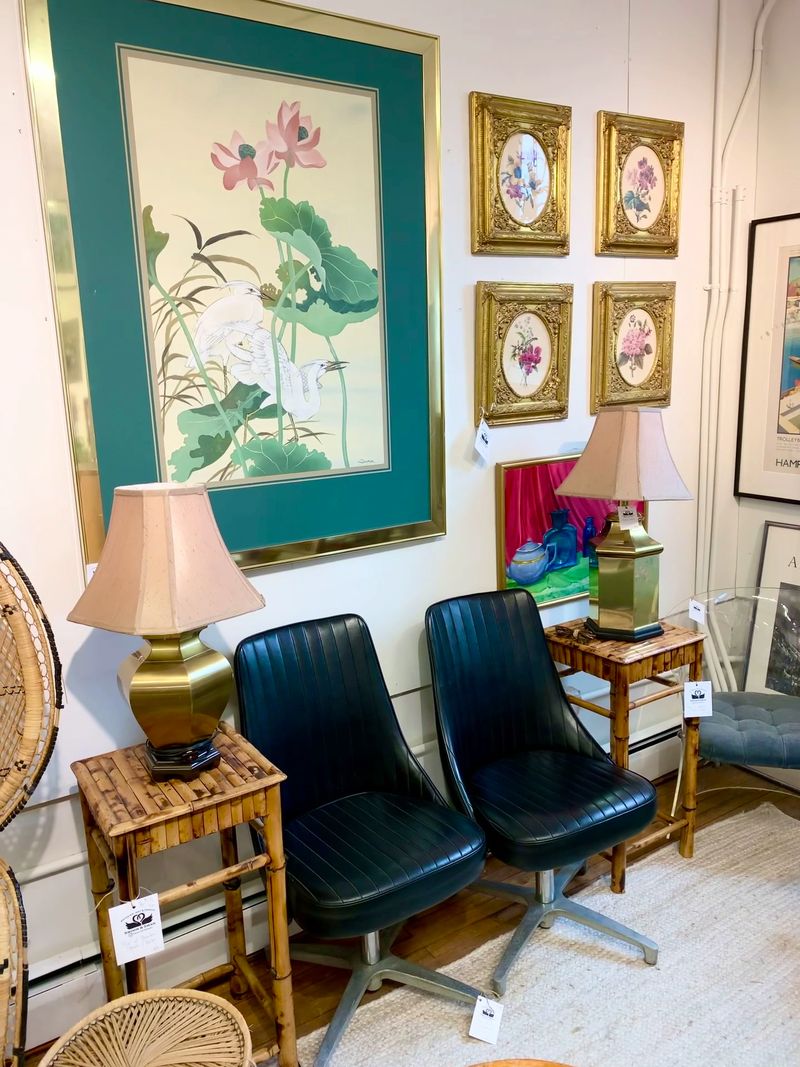
Four floors change the equation when you are antique hunting. Instead of deciding whether one dealer’s taste matches yours, you can keep climbing until the furniture, art, lighting, or strange little object you were hoping for finally appears.
This Lambertville landmark dates to 1839 and now contains more than 50 dealers, creating an unusually broad mix that runs from formal European antiques and silver to vintage clothing, paintings, books, industrial pieces, and mid-century modern furnishings. For someone furnishing a 1950s- or 1960s-inspired room, that variety matters because the best finds are not always the obvious ones.
A sculptural lamp, abstract painting, bar cart, occasional chair, or ceramic piece can do just as much work as a large credenza. The building itself rewards slow browsing, and this is not the place to rush through one floor and assume you have seen it.
Different dealers maintain distinct collections, so prices and styles can change dramatically within a few steps. The store sits at 28 North Union Street, close enough to A Touch of the Past that the two make a natural pairing.
It is open daily, making it one of the easiest Lambertville stops to work into an antiquing day without much advance planning.
3. Tomato Factory Antiques & Design Center, Hopewell: Shop With a Room in Mind
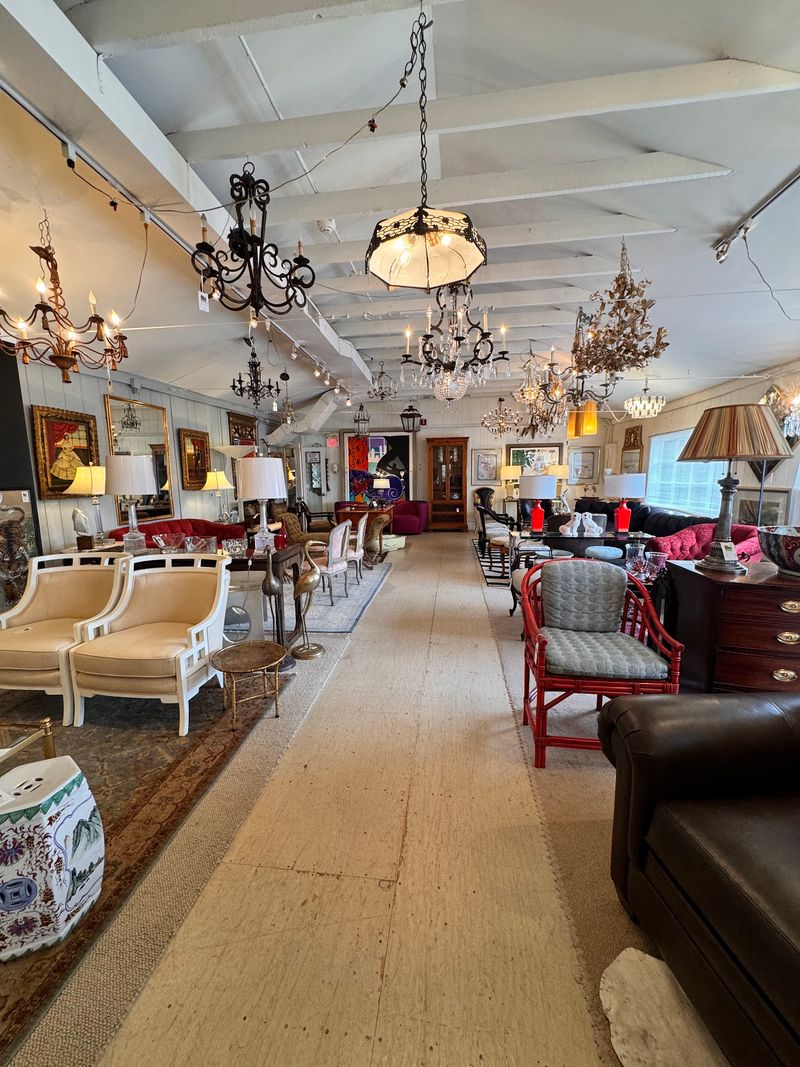
The building alone gives this Hopewell destination an advantage: it occupies an 1892 tomato cannery, and the old industrial shell makes a fitting backdrop for furniture spanning several generations of design. More than 20 antique and vintage dealers operate inside, with furniture, restored lighting, pottery, jewelry, artwork, glassware, and collectibles filling the spaces.
Mid-century shoppers should pay particular attention upstairs, where Umbrella Antiques & Modern has built its identity around distinctive twentieth-century design. Names associated with the inventory have included Mies van der Rohe, Milo Baughman, Paul Evans, and James Mont — a clue that this is not merely a place where “mid-century” means any brown dresser manufactured before 1980.
The selection can range from serious statement furniture to lighting and decorative pieces that are easier to fit into an existing room. Downstairs, the mix shifts toward more traditional antiques, so the contrast makes browsing more interesting rather than repetitive.
The Tomato Factory has been operating as an antiques destination since the 1960s, giving it the sort of established dealer network that helps keep inventory moving. It is located at 2 Somerset Street in downtown Hopewell, with regular hours throughout the week, making it an easy stop to combine with lunch or a walk around town.
4. Antique Center of Red Bank, Red Bank: Check the Details
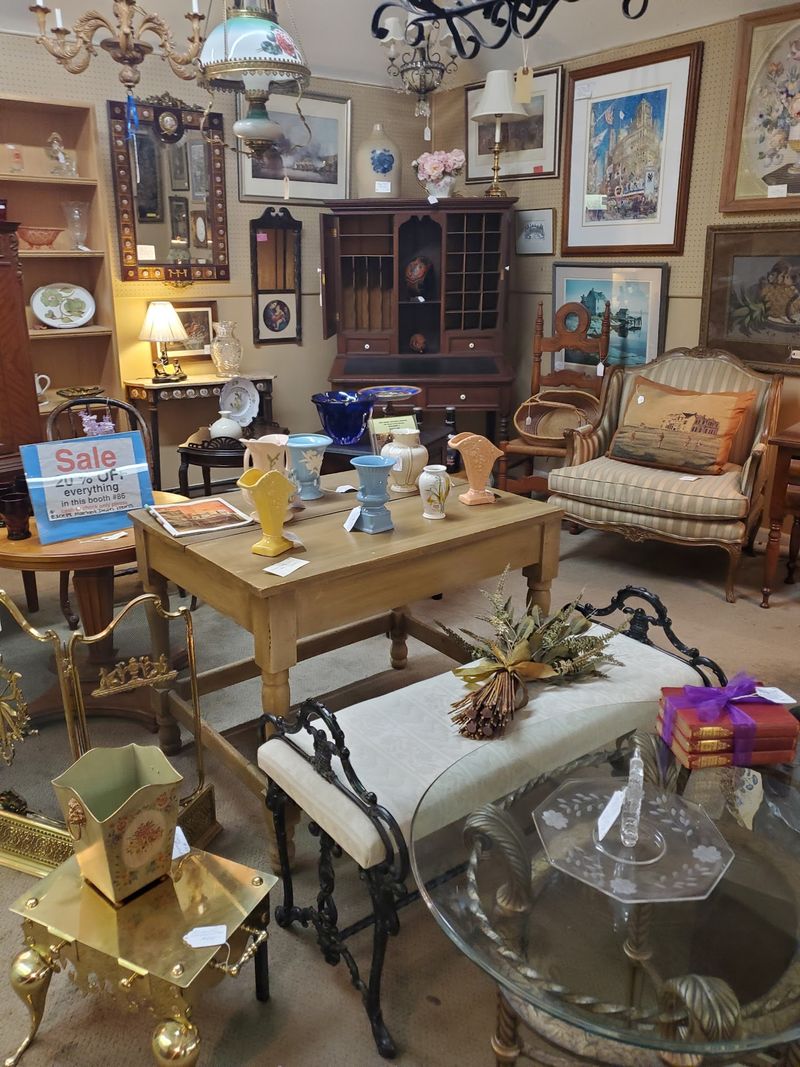
More than 100 dealers spread across two West Front Street locations give shoppers plenty of chances to stumble into the right decade. That scale is the main reason the Antique Center of Red Bank belongs on a mid-century hunt even though it is not dedicated solely to modernist furniture.
One booth may lean heavily toward estate jewelry, another toward collectibles, and the next may hold vintage furniture, lamps, artwork, or household pieces from the postwar years. The fun is in watching the eras change as you move through the dealer spaces.
For décor hunters, that broad inventory can be especially productive: glassware, framed art, ceramics, small tables, mirrors, lighting, and other manageable pieces often turn up alongside larger furniture. The center has been part of Red Bank’s antiques scene since 1964, so it has the longevity of an old-school dealer marketplace rather than a carefully staged vintage boutique.
That also means you should arrive prepared to dig a little rather than expecting every desirable piece to be spotlighted for you. The two buildings are at 195 and 226 West Front Street, and both can be tackled during the same visit.
With downtown Red Bank nearby, it is easy to turn the shopping trip into a half-day rather than making a quick furniture run and heading straight home.
5. Summit Antique Center, Summit: Find Something You Will Actually Use
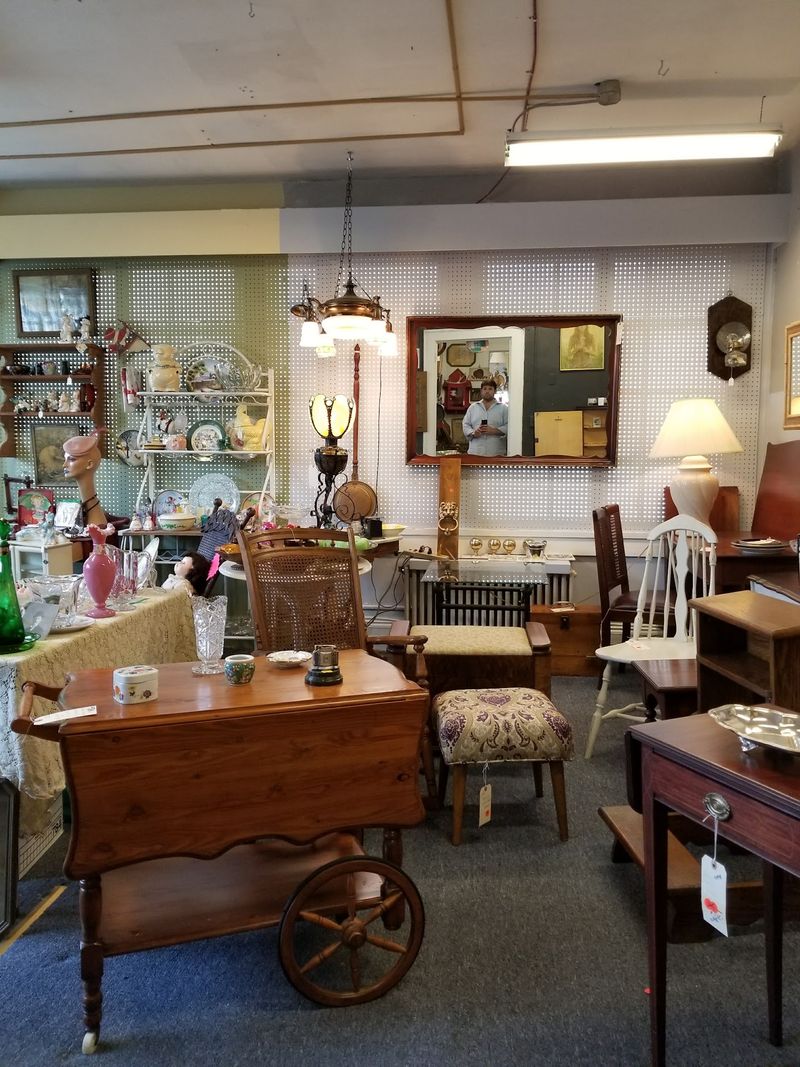
One dealer here has a particular weakness for mid-century modern. Another concentrates on country antiques.
Others deal in jewelry, historic furniture, vintage clothing, decorative accessories, and things that fit neatly into no category at all. That mix is precisely why the Summit Antique Center works: more than 50 professional dealers fill two floors, and their individual specialties keep the inventory from feeling like one enormous collection chosen by a single buyer.
Mid-century shoppers should seek out the booths operated by dealers who specifically handle twentieth-century modern pieces, then widen the search to adjacent spaces for artwork, glass, lighting, and accessories from the same period. A room does not need every object to have an Eames-era pedigree, and this is the kind of place where an unusual lamp or piece of pottery may be the better score anyway.
The center has operated in Summit since 1990, giving it an established presence in North Jersey’s antiques world. It is located at 511 Morris Avenue, within a city where antiquing can easily be paired with lunch or other shopping rather than becoming an isolated roadside stop.
Because dealer inventory changes independently, repeat visits make sense — especially if you are searching for a particular furniture profile rather than simply looking for anything old enough to qualify as vintage.
6. Scranberry Coop, Andover: Follow Your Curious Side
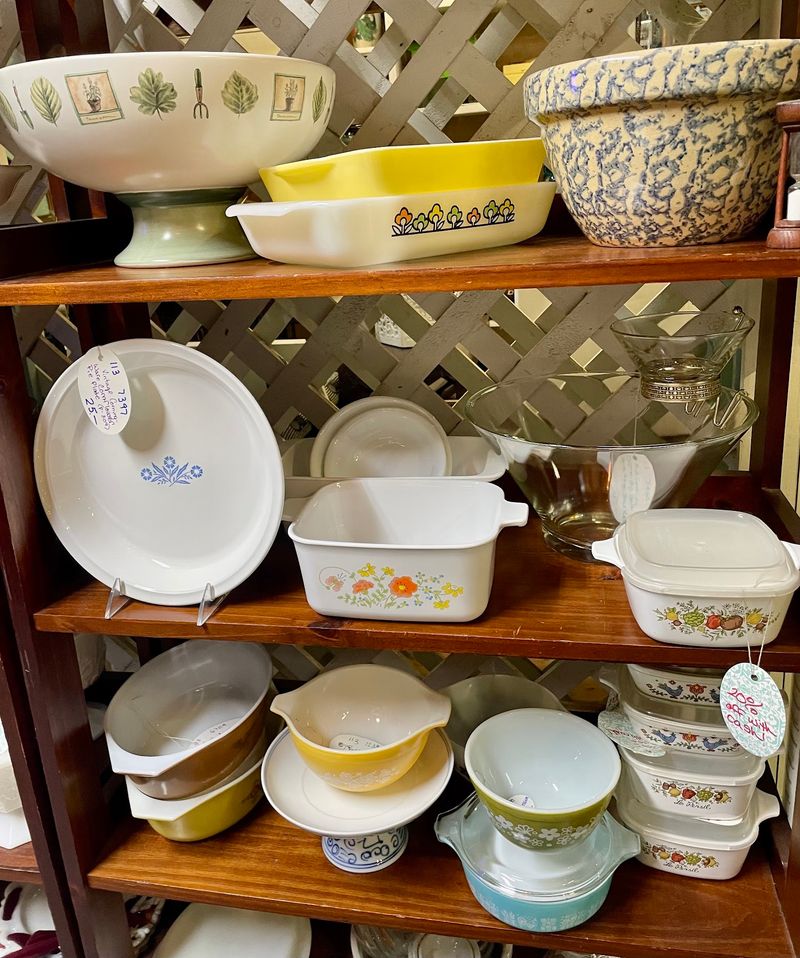
The bright yellow building on Route 206 does not look shy, and neither is the selection inside. Scranberry Coop packs more than 170 dealers into roughly 10,000 square feet, making it one of those places where the sensible plan is to leave yourself much more time than you think you need.
Furniture shares space with records, artwork, glassware, jewelry, architectural salvage, tools, toys, kitchenware, collectibles, and plenty of pieces that sit somewhere between useful household object and pure nostalgia. Mid-century finds are part of the mix rather than the entire mission, which can actually make the hunt more satisfying.
A statement side table or 1960s decorative piece may appear in a booth dominated by completely different eras. With so many sellers sourcing independently, there is also a constant turnover that rewards people who return periodically instead of treating the store as a one-and-done destination.
Furniture shoppers should measure their available space before visiting and keep dimensions handy on their phone; impulse buys become much more complicated when the “small” cabinet turns out to be 60 inches wide. Scranberry Coop is at 42 Main Street in Andover and is typically open Wednesday through Sunday.
The shop also hosts outdoor flea-market events, adding another layer of potential finds during the warmer months.
7. The Andover Village, Andover: Make Comparison Your Superpower
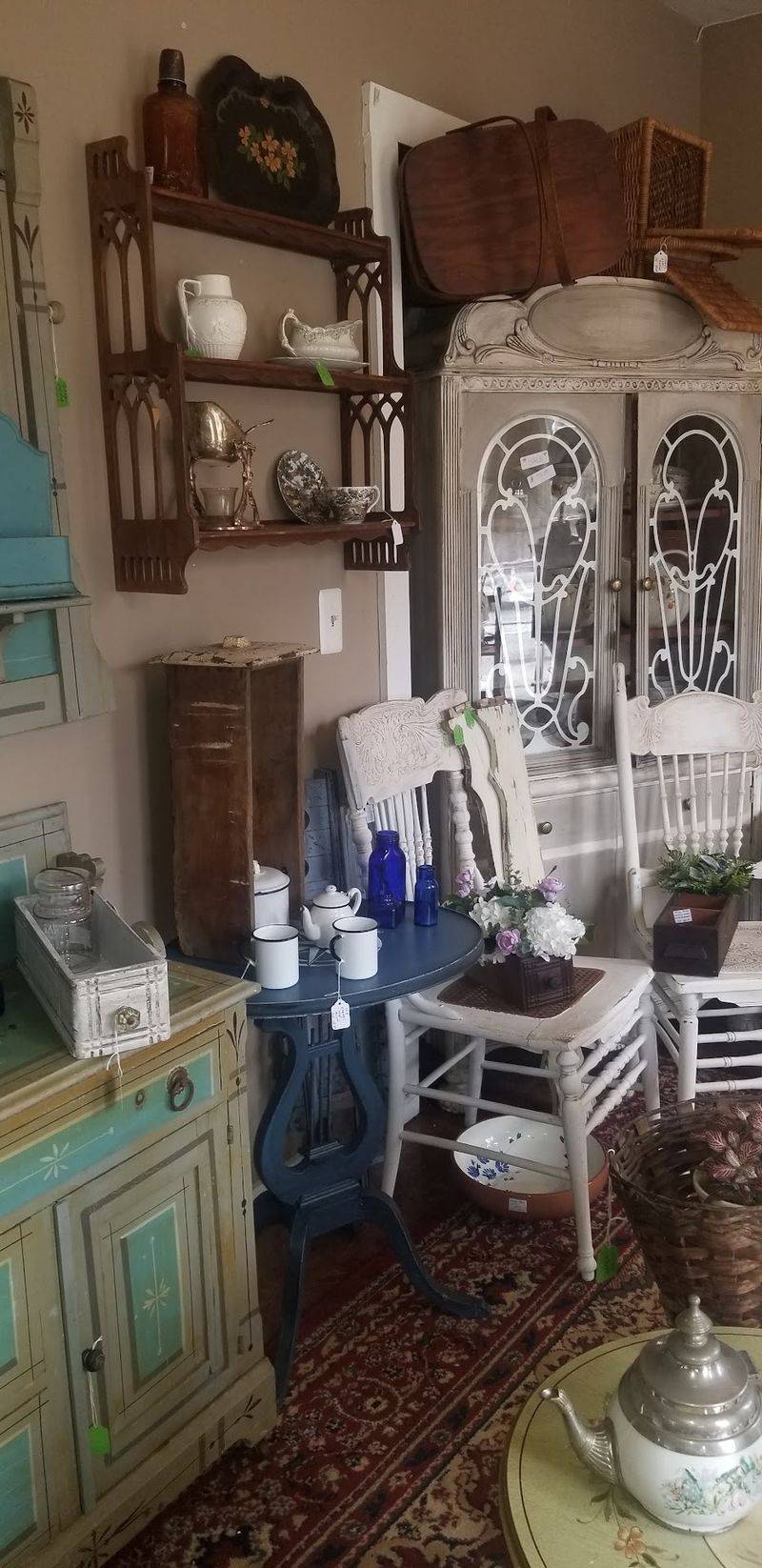
Instead of one enormous warehouse divided into rows of booths, this Andover destination feels more like a small antiques compound. Shoppers move among spaces including the 1868 House, Carriage House, Cottage, White House, and courtyard, with different areas carrying furniture, paintings, mirrors, vintage jewelry and clothing, pottery, glassware, architectural pieces, and outdoor décor.
That format makes the experience feel less repetitive than a conventional antique mall, and it also encourages a broader approach to mid-century decorating. You may come looking for a low-slung cabinet and end up more interested in a mirror, planter, piece of art, or vintage glass that brings the same era into a room without dominating it.
Mid-century pieces appear alongside primitives, estate finds, traditional furniture, and garden antiques, so this is better approached as a treasure hunt than a specialist showroom. The advantage is the possibility of finding something overlooked because it is not surrounded by twenty nearly identical pieces.
Located at 124 Main Street, The Andover Village also sits close enough to Scranberry Coop that serious shoppers can comfortably cover both in the same outing. Give yourself time between the two; after hundreds of dealer displays, a five-minute “quick look” stops being a realistic concept.
Regular operating days can vary, so this is one where checking the current schedule before a longer drive is sensible.
8. Lafayette Mill Antiques Center, Lafayette: Give Wood Furniture a Careful Look
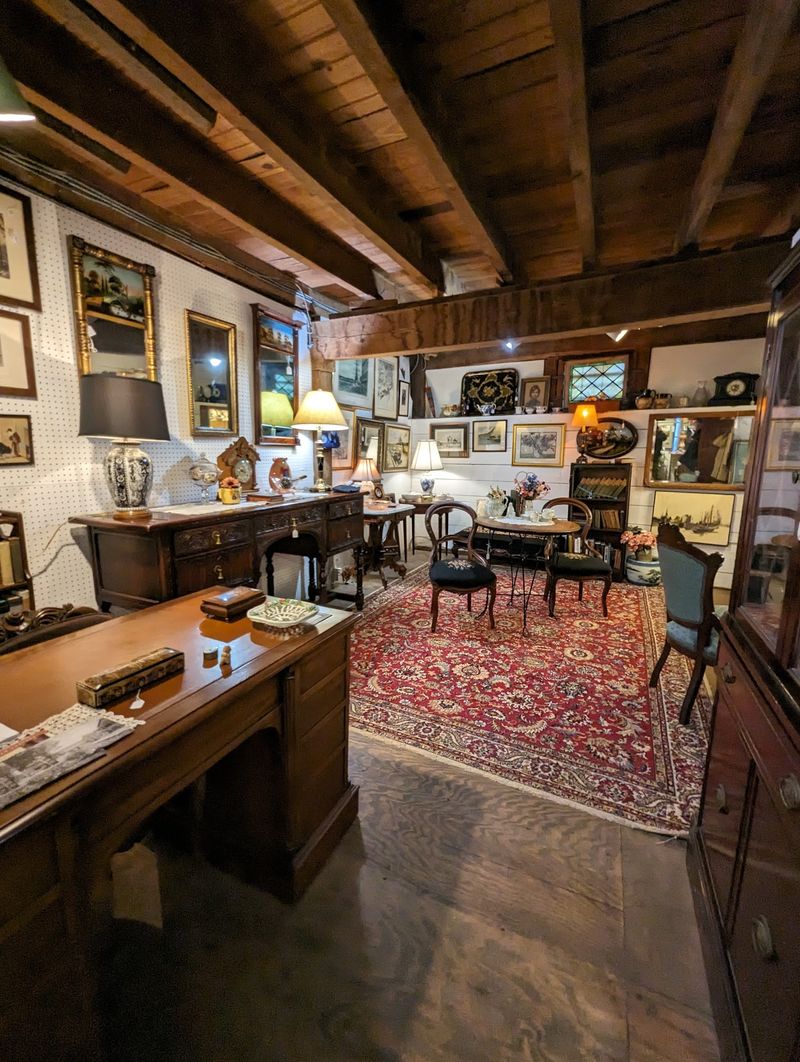
An 1840s gristmill is an unexpectedly good place to shop for twentieth-century design. Inside The Mill at Historic Lafayette, three floors hold the Lafayette Mill Antiques Center, where dozens of independent dealers rotate furniture, decorative pieces, collectibles, artwork, and other vintage finds through a building that already feels like part of the hunt.
The contrast is half the appeal: clean-lined mid-century furniture can look even sharper when it is sitting against old beams and mill architecture instead of a polished modern showroom. This is a broad antiques center rather than an MCM-only destination, so expect to work through different periods and styles.
That makes smaller pieces particularly fun to search for — lamps, glass, ceramics, framed art, barware, clocks, and tabletop décor can all deliver the 1950s-through-1970s look without requiring a truck. Larger furniture does turn up, but inventory depends on what the individual dealers have brought in recently.
The surrounding Historic Lafayette complex adds more shopping beyond the mill itself, so the trip works best when you give it some breathing room instead of arriving shortly before closing. The Mill is at 12 Morris Farm Road in Lafayette and currently opens Thursday through Sunday, plus holiday Mondays, from 10 a.m. to 5 p.m.
For North Jersey antique hunters, it is the sort of place that can easily swallow an afternoon.
9. Creek Mercantile, Rancocas Woods: Build the Look With Smaller Finds
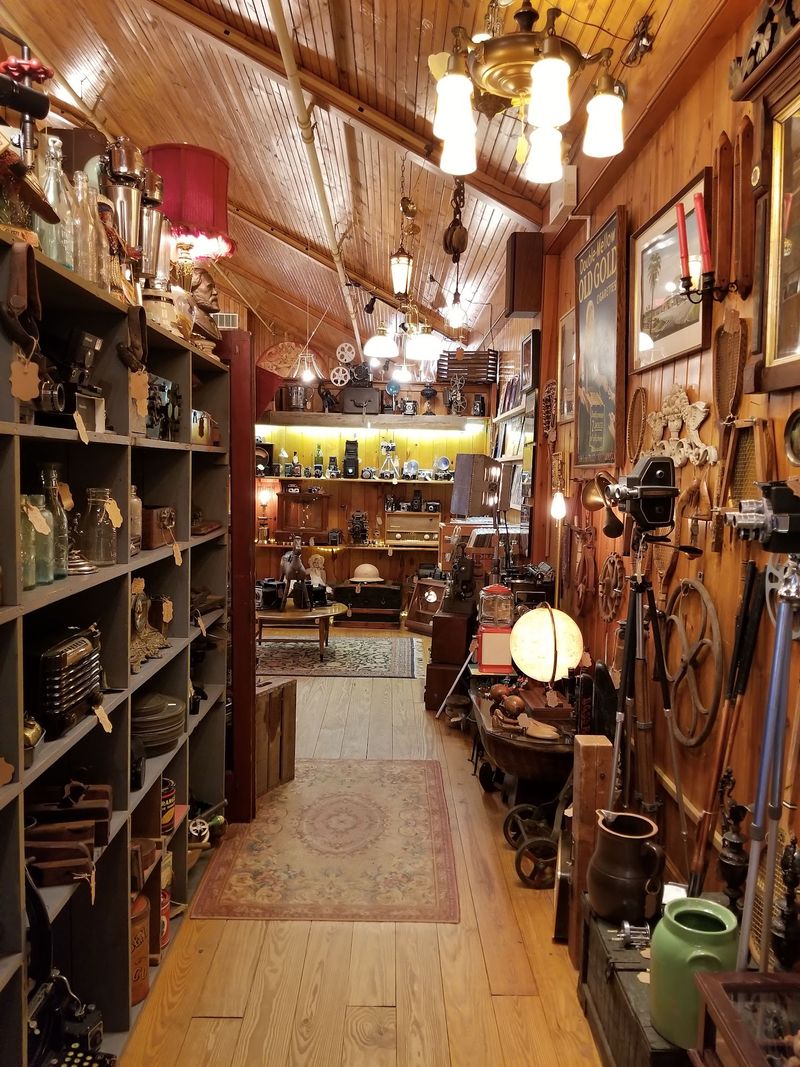
Mid-century modern sits comfortably beside industrial, farmhouse, traditional, and architectural styles inside this three-level Rancocas Woods collective. More than 50 vendors operate throughout an 11,000-square-foot log building, and the inventory ranges from substantial furniture and lighting to vintage art, records, home décor, clothing, and oddball objects that are difficult to categorize but easy to imagine taking home.
The building was once part of the historic Rancocas Woods shopping development, which gives the whole stop a wonderfully mismatched quality: rustic timber surroundings on the outside, potentially sleek twentieth-century furniture waiting inside. For mid-century shoppers, the advantage is breadth.
You are not limited to investment-grade designer pieces; you can also look for the smaller ingredients that make a retro room convincing, whether that means a period lamp, framed print, serving set, record storage piece, or sculptural accessory. Because the merchandise turns over frequently, the balance between styles can shift considerably from one visit to another.
Creek Mercantile is open seven days a week and sits within the Rancocas Woods shopping area in Mount Laurel, making it easy to browse without building your entire day around a single store. Monthly outdoor shows held during much of the year add more vintage sellers and make the strongest dates worth planning around if maximum rummaging is the goal.
10. Historic Burlington Antiques and Art Emporium, Burlington: Let Art Lead
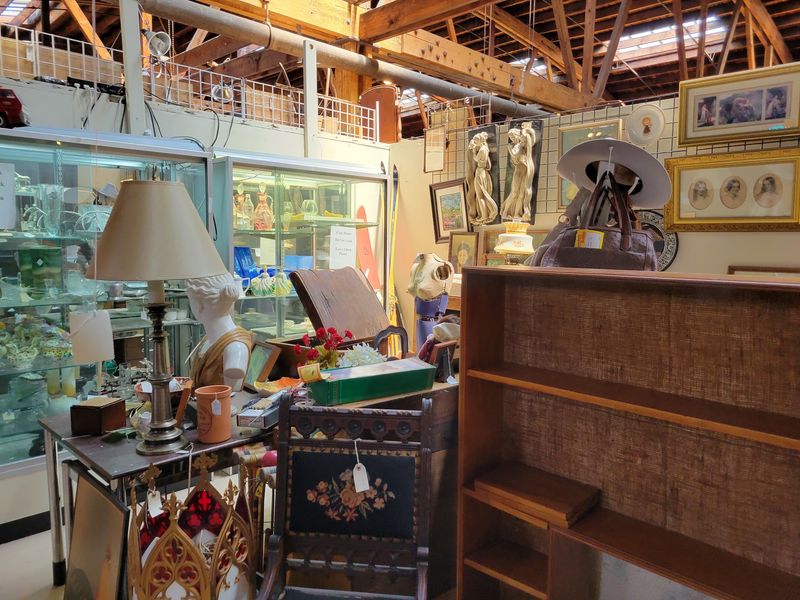
A former automobile dealership with a soaring wooden truss ceiling is already more interesting than the average retail box, even before you start looking at what is for sale.
Historic Burlington Antiques and Art Emporium fills roughly 15,000 square feet in Burlington City with more than 60 dealers, creating enough variety to cover furniture, pottery, lamps, paintings, prints, glassware, radios, toys, books, kitchenware, jewelry, and collectibles from multiple eras.
The building’s twentieth-century roots feel particularly appropriate when you start encountering objects from the 1950s and 1960s. This is not a showroom arranged exclusively around modernist design, so patience pays off.
Look past the obvious furniture and scan shelves for period lighting, barware, clocks, ceramics, advertising pieces, and artwork — the categories that can often add more personality to a mid-century room than another predictable walnut table. Bigger items do appear, and the spacious former dealership provides more room for furniture than many cramped antique shops can manage.
The Emporium occupies 424 High Street, only a couple of blocks from the Delaware River and close to Burlington’s River Line station, which makes it unusually convenient for an antiques destination of this size. Regular hours generally begin at 11 a.m., with the shop closed Mondays and later closing times on Thursdays and Fridays.
11. Old Mill Antique Mall, Mullica Hill: Plan for the Big Find
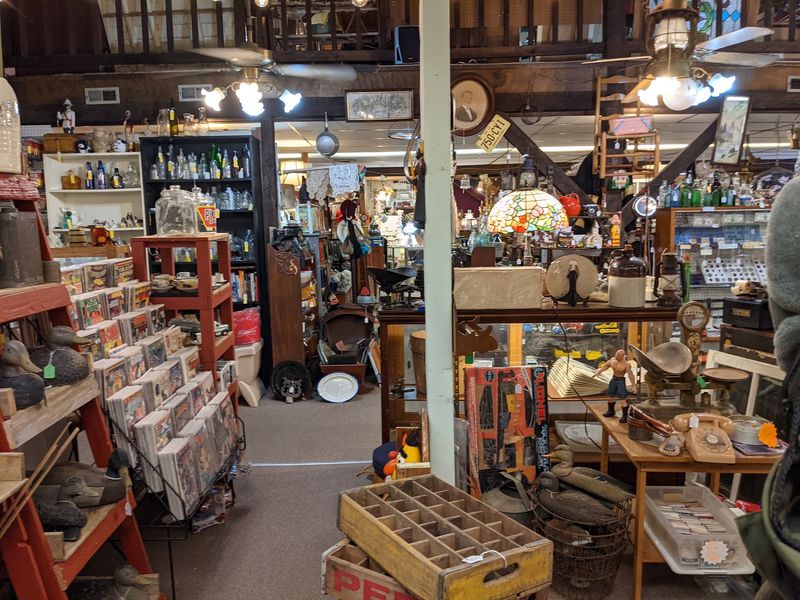
Mullica Hill has been associated with antique shopping for decades, and this two-floor mall is one of the places keeping that tradition visible. More than 15 dealers fill the Old Mill with furniture, lamps, glassware, kitchen items, bottles, tools, coins, toys, jewelry, sports memorabilia, and assorted vintage pieces.
Compared with some of the enormous multi-dealer centers on this list, the scale is manageable enough that you can examine booths closely rather than reaching the final aisle with antique-shopping fatigue. Mid-century furniture is part of a broader mix here, so the best strategy is to think beyond one specific designer or furniture type.
Look for 1950s and 1960s lighting, serving pieces, kitchenware, wall décor, side tables, and the occasional larger furnishing that has survived without being painted beyond recognition. The mall’s real advantage is location.
It sits at 1 South Main Street in a town whose antiques scene grew dramatically during the second half of the twentieth century, so one stop can easily expand into a wider walk through Mullica Hill’s shops. The Old Mill itself has roots in the local antiques trade going back to the late 1960s.
It is open seven days a week, with Saturday hours beginning earlier than the rest of the week, which makes it particularly easy to use as the starting point for a full morning of hunting.
12. Cape May Antique Center, Cape May: Keep the Vacation Purchase Smart
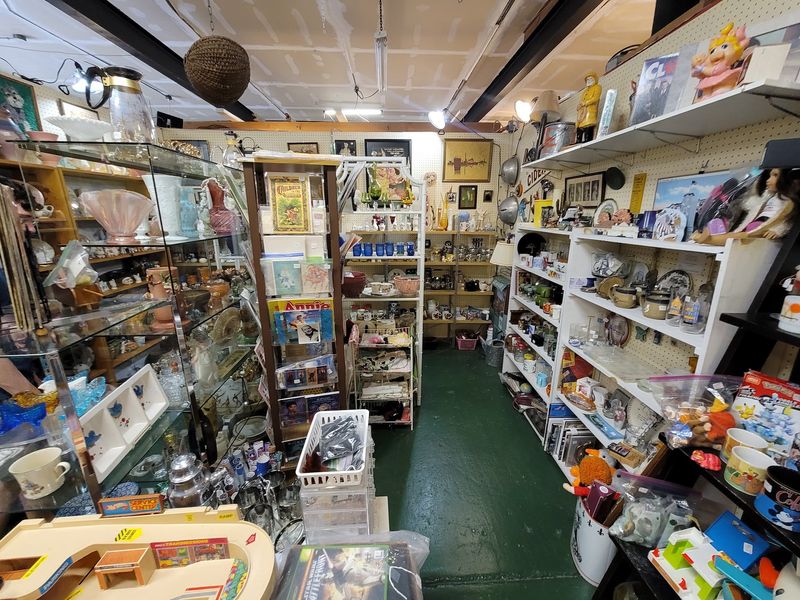
Beach traffic and Danish modern furniture do not normally belong in the same sentence, but this Route 109 stop gives vintage hunters a reason to look beyond Cape May’s Victorian image. The Cape May Antique Center brings more than 70 dealers into roughly 6,000 square feet, with furniture sharing space with jewelry, coins, glassware, military collectibles, vintage clothing, toys, trains, sports items, records, and nautical pieces.
Mid-century through modern furniture appears in the rotation, although coastal and maritime finds understandably have a stronger presence here than at many inland malls. That combination can produce some fun decorating possibilities.
A straightforward 1960s cabinet feels less predictable when paired with vintage nautical art, old glass floats, or another piece connected to the Shore. Prices stretch across a broad range, so the center works for both serious furniture shoppers and people who would rather leave with a smaller decorative object tucked under one arm.
The store is at 1228 Route 109, on the main approach into Cape May, which makes it convenient to hit before getting pulled toward the pedestrian mall and historic district. Inventory is year-round but hours can vary seasonally, particularly outside the busiest Shore months, so checking before a winter drive is worthwhile.
For retro shoppers vacationing in Cape May, it is an easy detour with considerably more variety than the usual souvenir stop.
Share this story