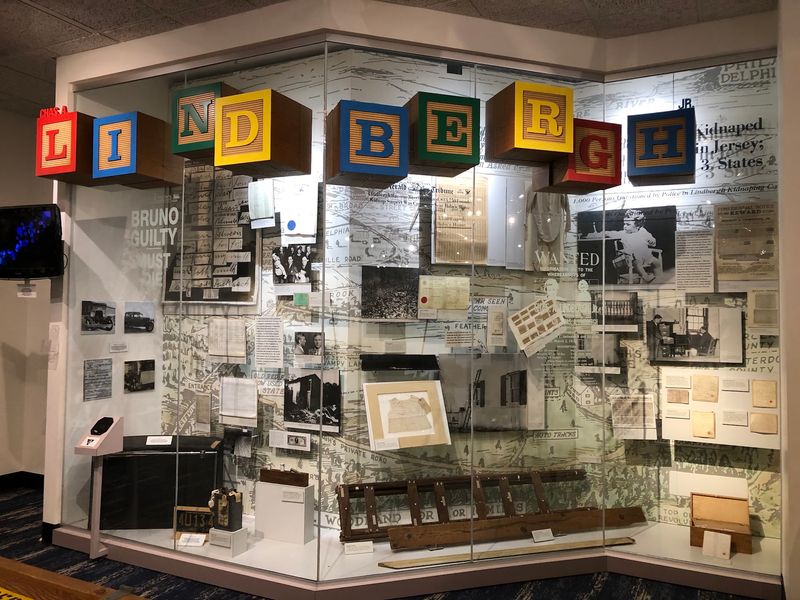
A homemade wooden ladder does not look especially sinister until you know where it came from. At the New Jersey State Police Museum & Learning Center in West Trenton, the ladder sitting behind glass was recovered during the investigation of the 1932 kidnapping of Charles Lindbergh Jr., a case that consumed the country and became known as the “Crime of the Century.”
Nearby are ransom notes, handwriting evidence and other pieces of an investigation that unfolded less like a distant history lesson and more like the true-crime story everyone in America once followed.
And that is only one corner of this surprisingly deep museum. There is an electric chair from New Jersey State Prison, old police equipment, vintage vehicles, uniforms, forensic displays and artifacts spanning more than a century of State Police history.
The setting makes it even more unusual: the museum sits right on the grounds of New Jersey State Police Headquarters, and admission is free.
Inside the New Jersey State Police Museum and Its Darker Side of History
You could easily drive along River Road in West Trenton without realizing that one of New Jersey’s stranger museums is tucked inside State Police Headquarters. The New Jersey State Police Museum & Learning Center is not a giant tourist attraction with flashy signage out front.
It feels more like a collection you have stumbled onto, which makes the things inside hit a little harder. The museum follows the story of the New Jersey State Police from its founding in 1921 through more than a century of changing technology, investigations and public safety work.
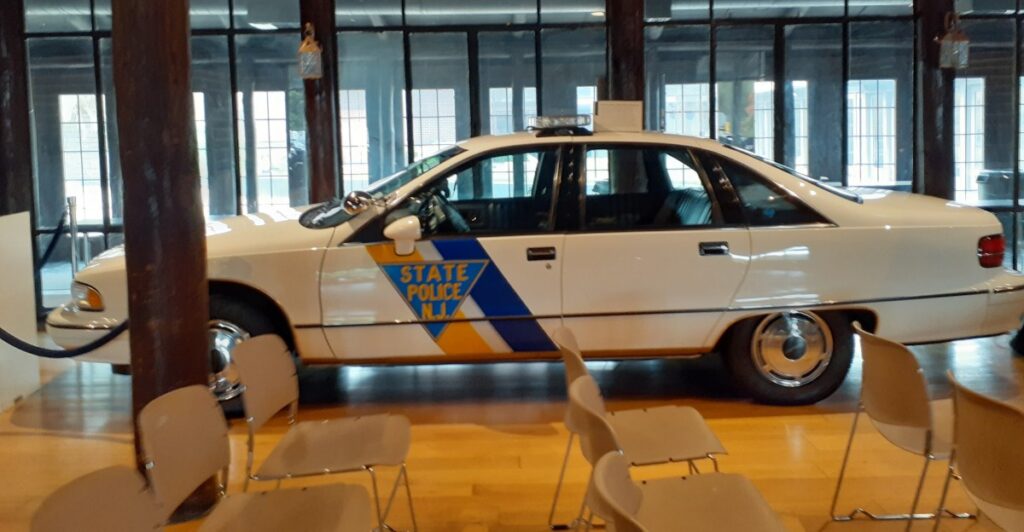
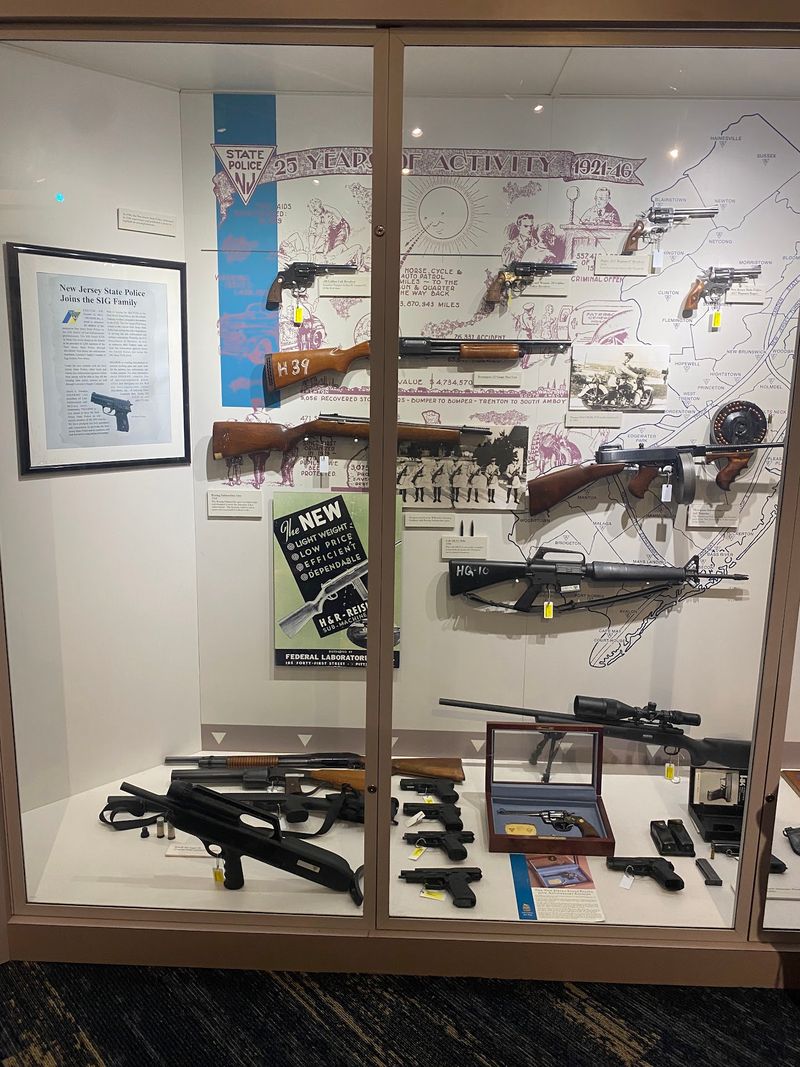
On December 5, 1921, the first class of 81 troopers began assignments after months of training, when much of their job involved providing police coverage to rural parts of the state. From that starting point, the museum moves through uniforms, motorcycles, patrol equipment, communications gear, photographs and investigative tools from different eras.
Then the tone shifts. Cases involving kidnapping, murder, terrorism and capital punishment sit alongside that institutional history, sometimes represented by the actual objects involved.
That mix is what makes this place different from the average police museum. You are not simply looking at old badges and patrol cars.
One display might show how equipment changed over several decades, while the next puts you in front of physical evidence connected to a crime that once dominated American newspapers. There are also exhibits covering the State Police response to September 11, including steel from the World Trade Center, and displays devoted to other major investigations.
It is history told through the objects that were actually there, and some of those objects are considerably harder to forget than others.
The Lindbergh Kidnapping Evidence That Still Draws Visitors
On March 1, 1932, 20-month-old Charles Augustus Lindbergh Jr. disappeared from the second-floor nursery of his family’s home near Hopewell. His father was Charles Lindbergh, the aviator who had become an international celebrity after flying solo nonstop from New York to Paris in 1927.
That combination of celebrity, mystery and tragedy turned the kidnapping into a national obsession almost immediately. A handwritten note found at the house initially demanded $50,000 for the child’s return.
The ransom was eventually paid, but the boy’s body was discovered nearby more than two months later. The investigation produced an enormous paper trail and some of the most famous physical evidence in American crime history, much of which is connected today to the museum’s collection.
The most striking object is the homemade wooden ladder believed to have been used to reach the nursery window. Visitors can also see ransom-note material, handwriting comparison charts and other evidence associated with the investigation and the prosecution of Bruno Richard Hauptmann.
Hauptmann was arrested in 1934 after a $10 gold certificate from the ransom money was used at a gas station and traced through a license-plate number. Investigators subsequently found $13,760 in ransom money in his garage, while wood evidence and handwriting analysis became major parts of the case against him.
His trial began in Flemington in January 1935 and became another media spectacle. He was convicted the following month and executed in 1936.
For anyone interested in the case beyond the display cases, the museum has also served as an important research center, preserving a vast archive of documents, photographs and records. More than 90 years later, the physical evidence makes an extraordinarily familiar story suddenly feel very close.
Coming Face to Face With New Jersey’s Notorious Old Smokey
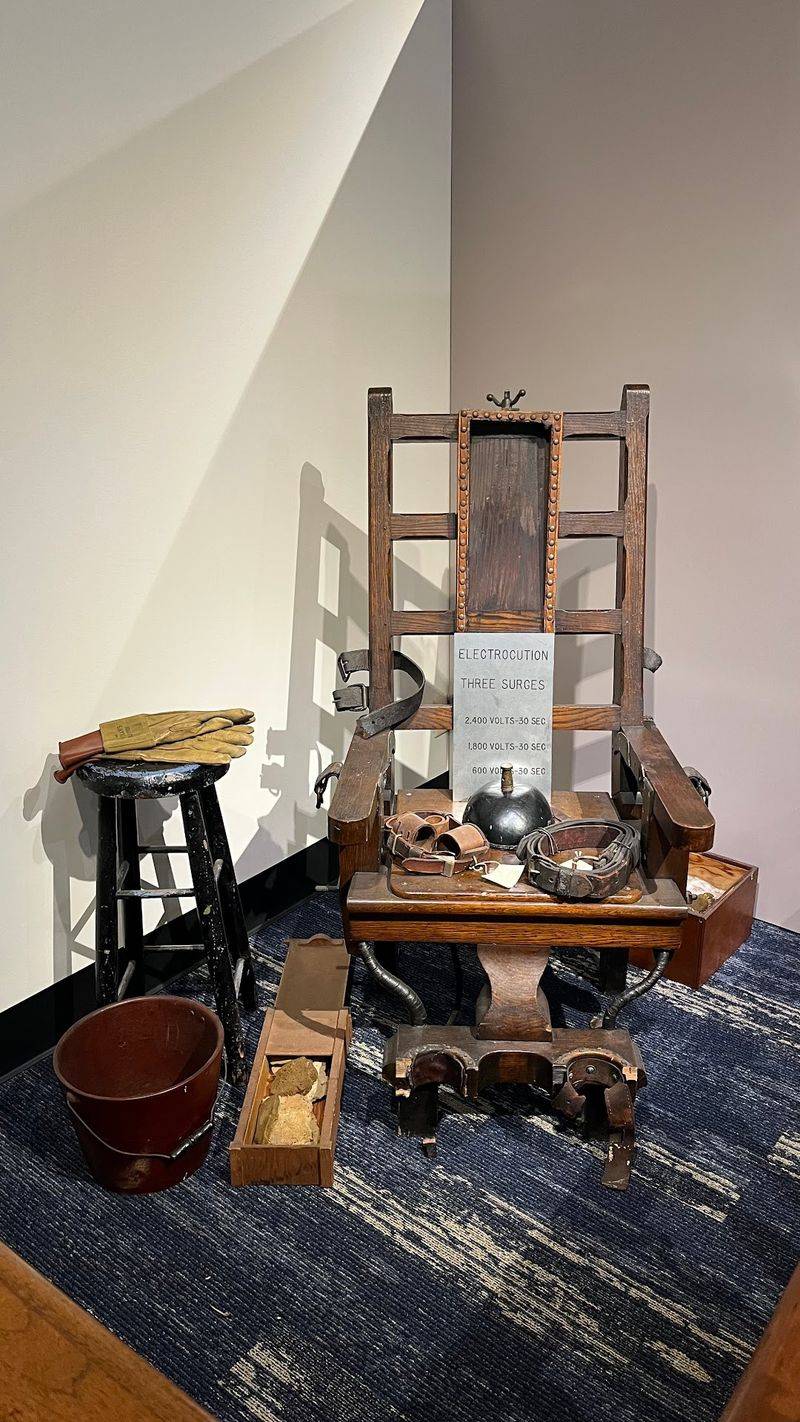
Then there is the chair. It is difficult to confuse “Old Smokey” with anything else in the museum, and you do not need much imagination to understand why visitors tend to stop when they see it.
The electric chair was used at New Jersey State Prison in Trenton during the era when electrocution was the state’s method of execution. Its connection to the museum’s most famous criminal case is direct: Bruno Richard Hauptmann was executed in the chair on April 3, 1936, a little more than four years after Charles Lindbergh Jr. was kidnapped.
The chair remained part of New Jersey’s execution system for decades, with the state’s final execution taking place in 1963. What makes the display effective is that the object does not need dramatic presentation.
An old wooden electric chair with restraints is already unsettling enough, particularly when you have just spent time looking at evidence from the case that led Hauptmann to it. The pairing also turns the Lindbergh exhibit into something larger than a collection of true-crime artifacts.
It opens the door to questions about how criminal investigations worked in the 1930s, what counted as persuasive forensic evidence, how sensational trials shaped public opinion and how the justice system itself has changed. New Jersey ultimately abolished the death penalty in 2007, putting even more historical distance between present-day visitors and the world Old Smokey represents.
Yet there it sits, a very physical reminder that this legal history is not especially ancient. For older visitors, it may be surprising to realize how recently capital punishment remained part of New Jersey law.
For younger ones, the chair can look like an artifact from another country or century entirely. Either way, it is probably the museum object that requires the least explaining before everyone in the room goes quiet.
A Century of Police History Told Through Real Artifacts
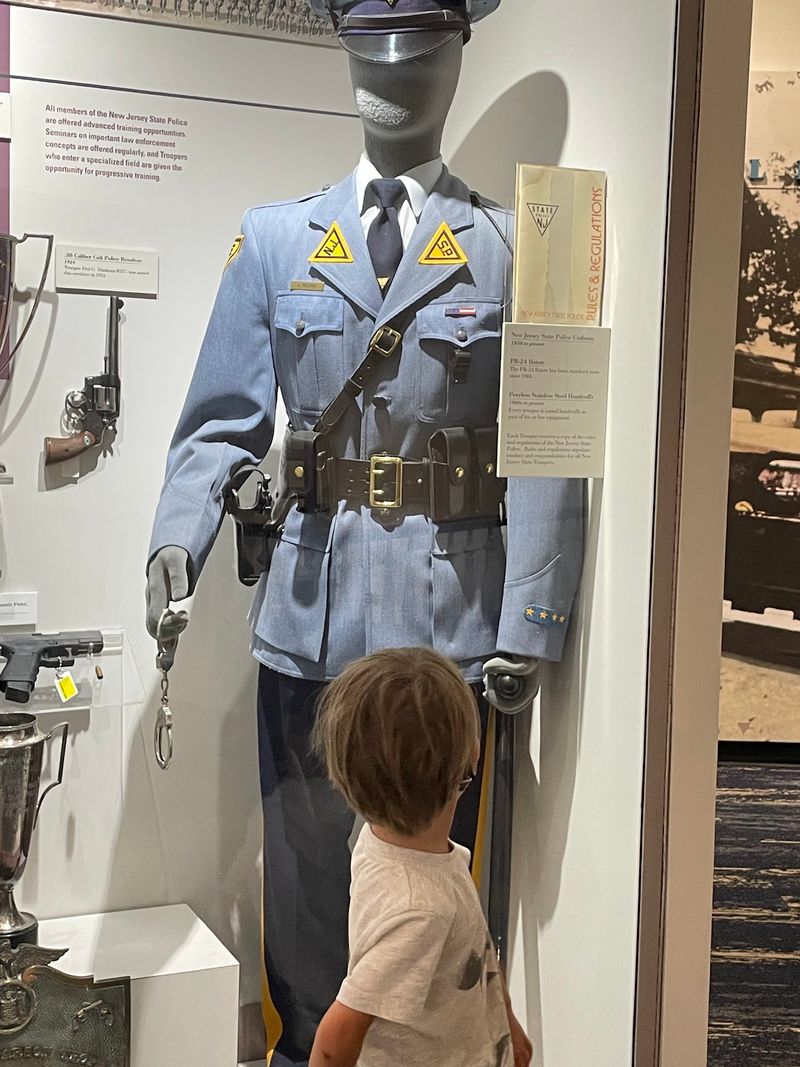
Crime-of-the-century evidence may get most of the attention, but skipping the rest of the collection would miss what this museum actually does best. Its larger story is how New Jersey policing changed as New Jersey itself changed.
The State Police were established in 1921, when automobiles were transforming travel, large areas outside major cities still lacked substantial local police coverage and the technology associated with modern law enforcement barely existed. Following that development through physical objects is much more interesting than reading a timeline on a wall.
Early uniforms look noticeably different from their modern counterparts. Motorcycles and patrol vehicles show how troopers began covering greater distances.
Communications equipment traces the shift from a world in which officers could be difficult to reach once they left a station to one built around instant radio contact. Investigative equipment follows its own evolution, from comparatively simple fingerprinting and photographic tools to increasingly specialized forensic techniques.
One particularly good counterpoint to all that technology is the historic log cabin associated with the State Police, which gives visitors a sense of just how modest some of the organization’s early facilities could be. The museum also moves well beyond highway patrol.
Displays touch on specialized units, major investigations, emergency response and events such as the September 11 attacks. A section commemorating the World Trade Center response includes a piece of structural steel donated by the Port Authority of New York and New Jersey, connecting the collection to an event many visitors will remember personally.
That range keeps the place from becoming a parade of sensational crimes. The notorious cases are here, but so are the everyday tools, uniforms and vehicles that explain how the job itself changed.
By the time you reach the modern era, the transformation from those first 81 troopers in 1921 is hard to miss.
Step Into the Investigation With the Museum’s Crime Scene Displays
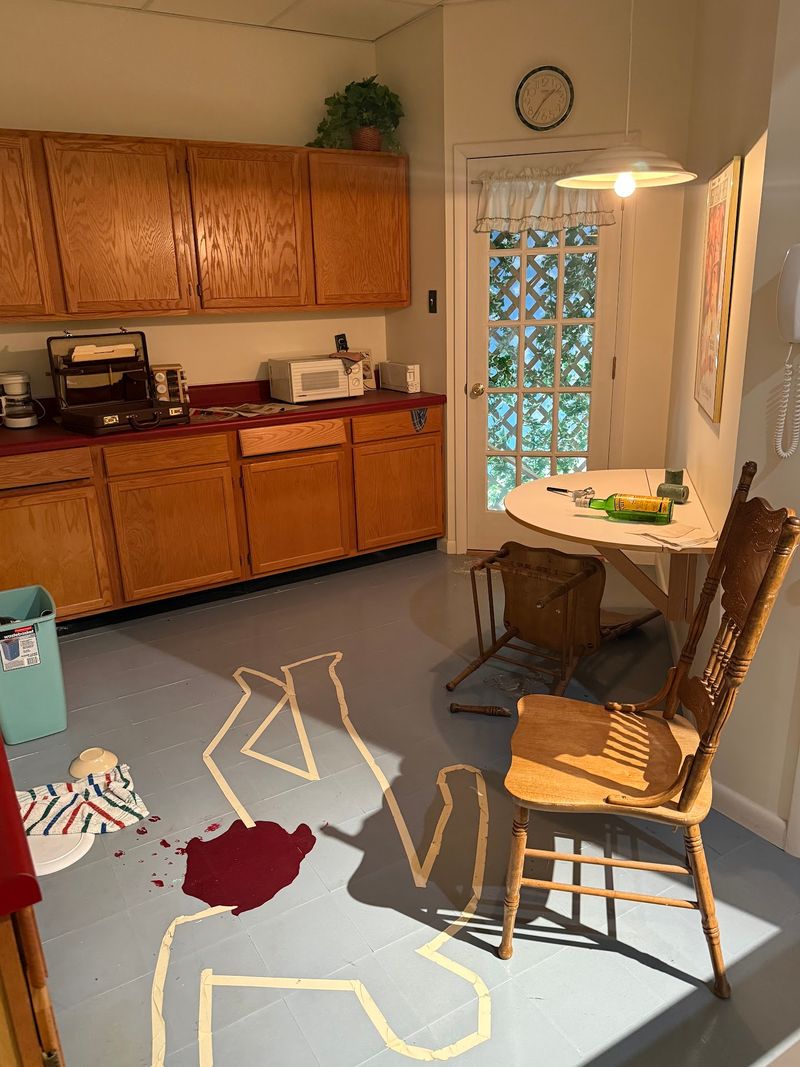
A glass case can tell you what investigators found; a crime-scene display makes you think about how they found it. That is the idea behind the museum’s Crime Scene Investigation section, where the focus shifts from famous names and cases to the nuts and bolts of evidence collection.
Instead of simply presenting a solved case from beginning to end, the displays invite visitors to pay attention to the small things that can turn into major clues. Fingerprints, fibers, surveillance equipment and other investigative tools show why a scene that initially looks ordinary may look completely different to someone trained to examine it.
The mock crime-scene environment is especially useful for younger visitors, who may know forensic investigation mostly from television. Real police work is considerably less convenient than the version where a machine identifies the suspect before the next commercial break, and the museum makes that point without turning the experience into a lecture.
Older equipment is part of the fun, too. Polygraph technology, fingerprint methods and evidence-gathering tools from previous decades reveal how investigators worked before DNA databases, digital photography and the enormous amount of computing power available today.
It also makes the Lindbergh investigation elsewhere in the museum easier to appreciate. Detectives working that case in the 1930s leaned heavily on physical evidence such as the construction of the kidnapping ladder, comparisons between pieces of wood, serial numbers from ransom bills and handwriting analysis.
Seeing the broader history of crime-scene work gives those techniques context. The result is one of the museum’s more approachable sections because you do not need to arrive knowing anything about State Police history.
You just have to look carefully. In a building filled with objects whose stories are already known, this is the part that encourages visitors to imagine figuring the story out for themselves.
How to Visit This Fascinating New Jersey Museum for Free
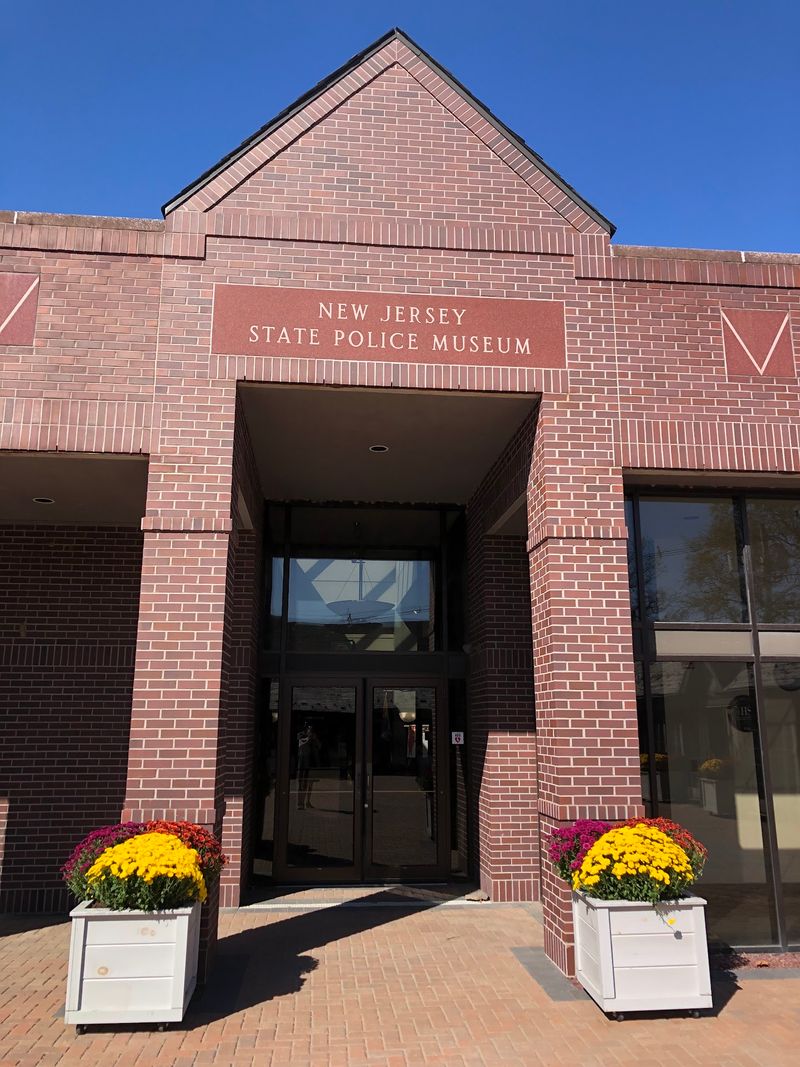
The practical details are almost as unusual as the collection. The New Jersey State Police Museum & Learning Center is located at 1040 River Road in West Trenton, on the grounds of New Jersey State Police Headquarters.
That last part matters. This is an active law-enforcement complex rather than a standalone museum sitting on a downtown street, so visitors enter through the headquarters property and should expect to stop at the security booth for directions.
The museum currently lists regular visiting hours from 9 a.m. to 3 p.m. Monday through Friday. Saturday visits and group tours are available by appointment, while Sundays and state holidays are closed. Because access is tied to an active government facility, checking the schedule before making a special trip is sensible.
Admission itself is free, which makes the museum an easy addition to a Mercer County day out, particularly for anyone already heading toward Trenton, Washington Crossing or the Delaware River corridor. Give yourself more time than the building’s low-key profile suggests.
The Lindbergh material alone rewards slow reading, and the museum branches from there into forensic science, historic vehicles, uniforms, communications technology, major investigations, the World Trade Center response and the State Police’s century-plus history. This is also one of those places where the audience can vary wildly.
A history buff may spend twenty minutes studying a 1930s investigation display while a kid becomes completely absorbed in the crime-scene section and someone else heads straight for the motorcycles. But sooner or later, nearly everyone ends up standing in front of the same ladder, the same ransom evidence and the same electric chair.
For a museum with no admission charge and a fairly quiet presence in West Trenton, it holds an extraordinary amount of New Jersey history behind its doors.
Share this story