Golden schnitzel, buttery spaetzle, and a generous spoonful of red cabbage can turn dinner into a delicious trip through Illinois’ German heritage. While many old-school German restaurants have disappeared over the years, a handful of kitchens across Chicago, the suburbs, and beyond continue serving the dishes generations of diners grew up loving.
Expect crisp cutlets, rich gravies, hearty sausages, and plenty of recipes rooted in Old World traditions. Some of these places have been feeding families for decades, making the experience about more than one comforting meal. Bring a serious appetite, because these nine Illinois German restaurants keep the classics coming.
1. Laschet’s Inn (Chicago)
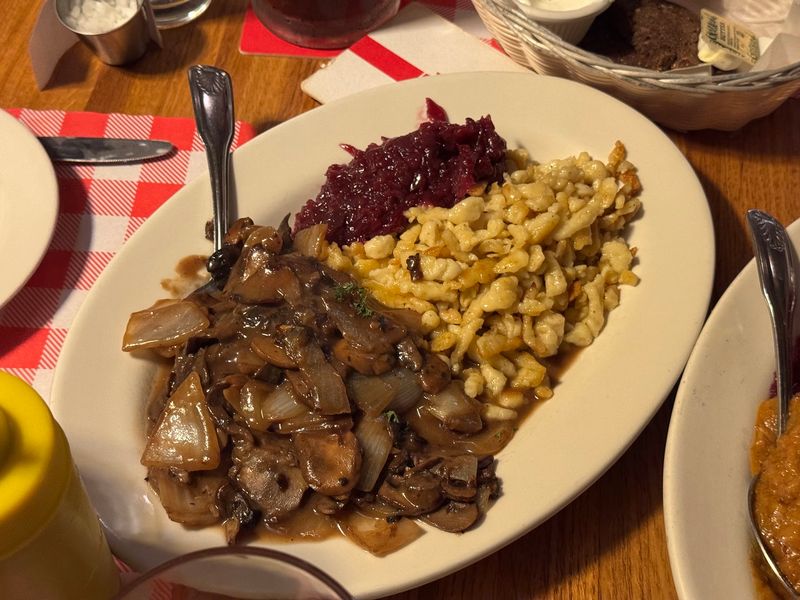
Picture a neighborhood tavern where the beer steins on the shelf have probably seen more Chicago winters than most of the customers. Laschet’s Inn sits in Irving Park, and it carries itself like a place that never felt the need to chase trends.
The schnitzel arrives crisp at the edges, with a thin, crackly coating that snaps a little when your fork hits it. Next to it, you’ll often find a pile of buttery spaetzle, those small, chewy dumpling noodles that soak up gravy like a sponge. Red cabbage adds a sweet and tangy bite that cuts through all that richness.
Schnitzel is only part of the story here. Rouladen, thin beef rolled around fillings and simmered until tender, shows up on plenty of tables. Sauerkraut brings that sour punch German food is famous for, and it pairs nicely with almost anything on the menu.
Inside, the room has a classic pub look. Wood paneling, a long bar, and German decorations give it the mood of a corner tavern in a small Bavarian town. Regulars chat with the staff, and newcomers usually don’t stay strangers for long.
Fun fact: Chicago’s North Side was once packed with German families, and neighborhoods like Irving Park and Lincoln Square still show traces of that history. Laschet’s Inn is one of the spots that keeps those roots visible, one plate at a time.
Come hungry and bring a friend who likes to share. Portions lean generous, and splitting a rouladen and a schnitzel lets you sample more of the kitchen’s old-school strengths.
Ordering a cold German beer to go with it is pretty much expected. On a snowy Chicago night, few places in the city make more sense than a booth here with a hot plate in front of you.
2. Edelweiss German American Cuisine (Norridge)
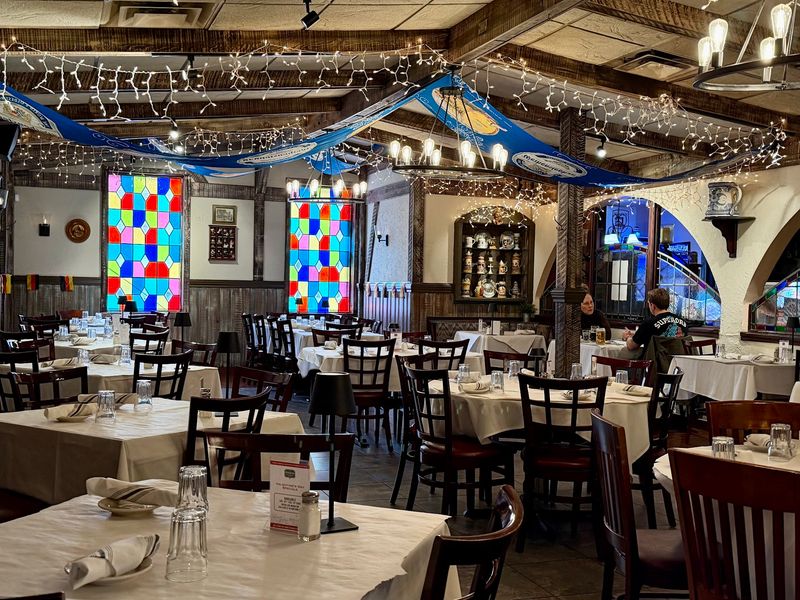
Accordion music, clinking glasses, and plates so full they almost need two hands. That’s a typical evening at Edelweiss in Norridge, a restaurant that treats dinner a little like a party.
Live entertainment is a big part of the fun. On music nights, traditional tunes fill the room, and it’s common to see guests swaying, clapping, or raising a glass along with a song. Kids tend to love it, and grandparents often know the words.
The food matches the festive mood. Schnitzel comes in generous portions, golden and crisp, with spaetzle on the side. Potato pancakes, crunchy outside and soft inside, are a must for anyone who likes fried potatoes in any form.
Red cabbage shows up too, adding color and a sweet-sour flavor to the plate. Together, these sides create the kind of meal that could fuel a long day of hiking in the Alps. Or, more realistically, a long nap on the couch.
Edelweiss has served the community for decades. Many families have marked birthdays, anniversaries, and holidays here, which gives the dining room a warm, lived-in energy. You’ll spot big groups celebrating almost any night of the week.
Here’s a little trivia. The edelweiss is a small white flower that grows high in the mountains of Austria, Germany, and Switzerland. It became a symbol of the Alps and even inspired a famous song from The Sound of Music.
Planning a celebration? Check the entertainment schedule ahead of time and call about larger tables, since busy nights fill up quickly.
The music turns an ordinary dinner into something closer to a mini festival. For anyone who wants schnitzel with a side of singing, Norridge has you covered.
3. Chef Klaus’ Bier Stube (Frankfort)
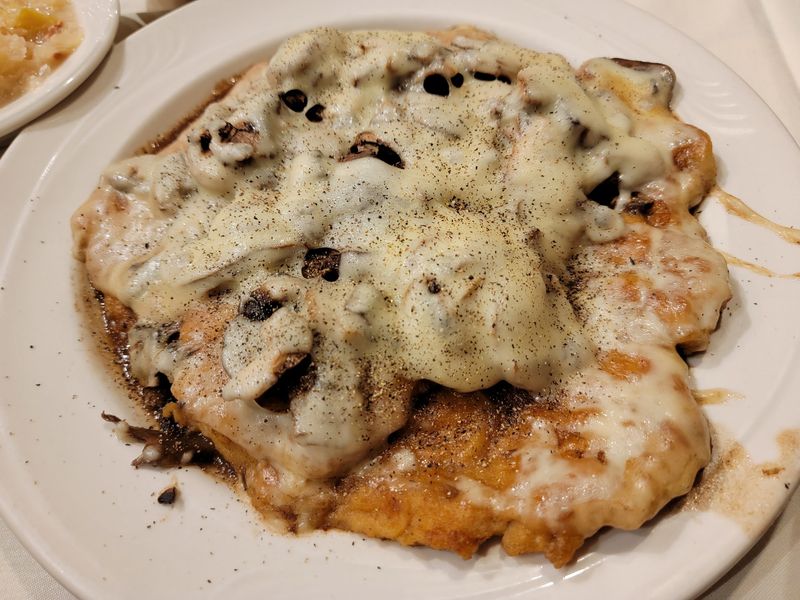
Jäger, Rahm, Cordon Bleu. At Chef Klaus’ Bier Stube in Frankfort, choosing a schnitzel works a bit like picking a flavor at an ice cream shop, except everything comes breaded and fried.
Variety is the big draw. Jägerschnitzel arrives smothered in a rich mushroom gravy, the kind you’ll want to scoop up with every last noodle. The name means hunter’s schnitzel, a nod to the forest mushrooms hunters might have gathered.
Rahmschnitzel goes creamier. Its smooth sauce is mild and comforting, a great pick for anyone who likes gentle flavors. Then there’s Schnitzel Cordon Bleu, stuffed with ham and melty cheese, which feels like a fancy grilled cheese got a German passport.
Warm spaetzle sits beside most plates, ready to catch every drop of sauce. Add traditional sides, and the meal turns seriously filling. Arriving with an empty stomach isn’t just smart here, it’s practically required.
A bier stube is basically a beer room, a casual spot for drinking and eating with friends. Chef Klaus’ place leans into that idea with an old-school look. Wood, steins, and German touches give it a homey, unhurried mood.
The menu rewards curious eaters. If you’re dining with a group, ordering different schnitzel styles and passing plates around is a great way to compare. You might discover that creamy beats mushroom, or the other way around.
Frankfort itself has a charming downtown, so a visit can easily turn into an afternoon of strolling before or after dinner. Just don’t expect to walk very fast after finishing a full plate.
Schnitzel fans who think they’ve tried it all should stop here. With so many versions on one menu, there’s always a reason to return and order something new.
4. The Bavarian Lodge (Lisle)
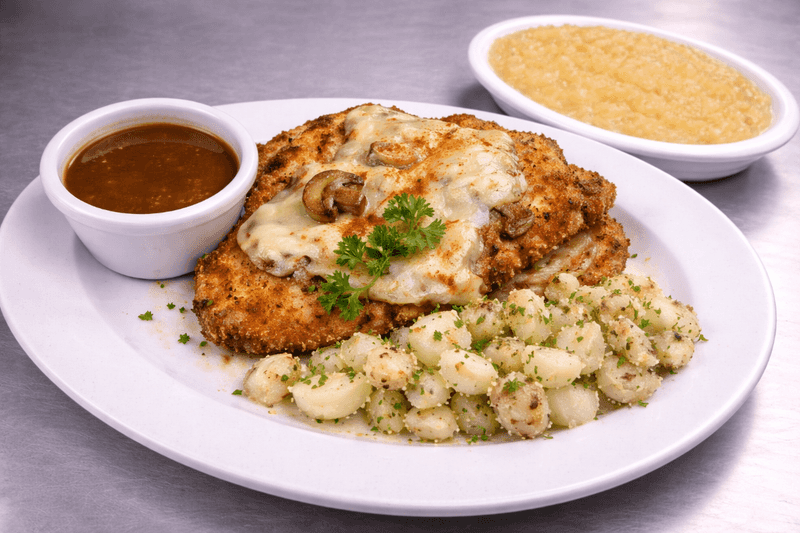
Since 1986, a family in Lisle has been frying schnitzel and roasting duck for hungry suburbanites. That kind of staying power says a lot in a restaurant world where places open and close in a single year.
The Bavarian Lodge goes big on comfort. Schnitzel is the star for many diners, but the menu stretches far beyond it. Sausages, roast duck with crispy skin, and other hearty classics fill the pages, so deciding can take a while.
Think of it as a German food sampler with no rush. You might start with a sausage plate to share, then move to a schnitzel with traditional sides. Spaetzle, potato dishes, and tangy cabbage round things out nicely.
Beer lovers, pay attention. The drink list leans heavily on German and European beers, from crisp lagers to darker, malty brews. Matching a golden pilsner with a breaded cutlet is a classic move, while a dark beer stands up well to roast duck.
The lodge setting fits the food. Wooden touches and Bavarian decorations create a cozy, mountain-cabin mood without feeling like a theme park. Families, couples, and groups of coworkers all seem to blend in comfortably.
Being family owned shows up in the details. Recipes tend to stay consistent, and the staff usually knows the menu well enough to steer first-timers toward a good pick. That’s handy if words like Jägerschnitzel look a bit intimidating.
Lisle is an easy drive from much of the western suburbs, which makes this a solid choice for a birthday dinner or a weekend treat. Bring a big appetite, and maybe skip lunch.
Leftovers are common, and nobody ever complains about cold schnitzel the next day. Duck lovers especially should keep this place on the short list.
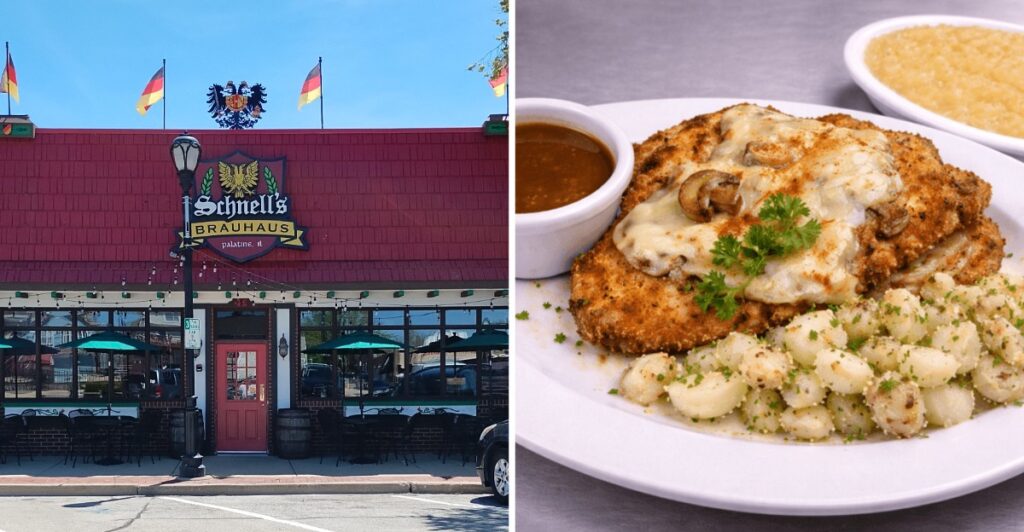
5. Schnell’s Brauhaus (Palatine)
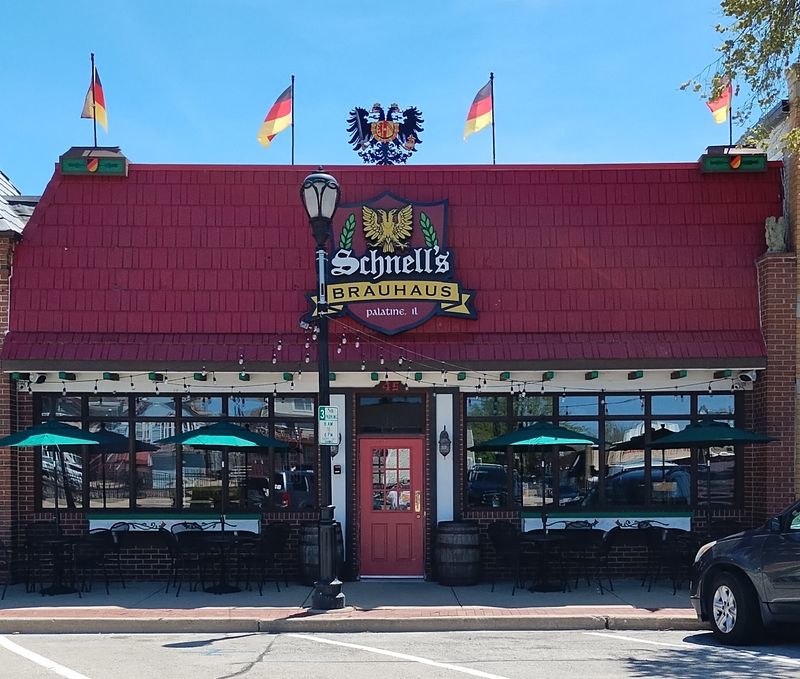
Dark wood walls, glowing lights, and the smell of something frying in butter. Schnell’s Brauhaus in Palatine sets a cozy stage before the first plate even leaves the kitchen.
Pork schnitzel is the headliner. It comes thin and crisp, with a coating that stays crunchy even under a little gravy. Every bite has that satisfying mix of tender meat and crackly crust.
The herbed spaetzle deserves its own spotlight. Fresh herbs give these little dumplings a bright, green flavor that wakes up the whole plate. They’re a nice change from plain buttered versions found elsewhere.
Then come the sides. Red cabbage adds sweetness and tang, while potato pancakes bring golden crunch. Together, it’s a plate full of color and texture, not just beige comfort food.
A brauhaus is German for brewhouse, a place traditionally tied to beer making and big, shared meals. Schnell’s welcomes guests in that spirit, with a friendly, relaxed vibe that suits a weeknight dinner or a weekend outing.
Now, about dessert. Saving room might feel impossible after all that food, but the warm apple strudel makes the effort worth it. Thin, flaky pastry wraps around soft, cinnamon-spiced apples, often dusted with powdered sugar.
Strudel has deep roots in Austria and southern Germany. Bakers there were known for stretching the dough so thin you could supposedly read a newspaper through it. That’s some serious pastry skill.
One smart move is ordering the strudel to share. That way, nobody has to choose between finishing the schnitzel and enjoying dessert. Pair it with coffee for a sweet, mellow ending.
Palatine locals already know this spot well. For everyone else in the northwest suburbs, it’s an easy drive toward a very satisfying dinner.
6. Fritz & Frites Bistro (Galena)
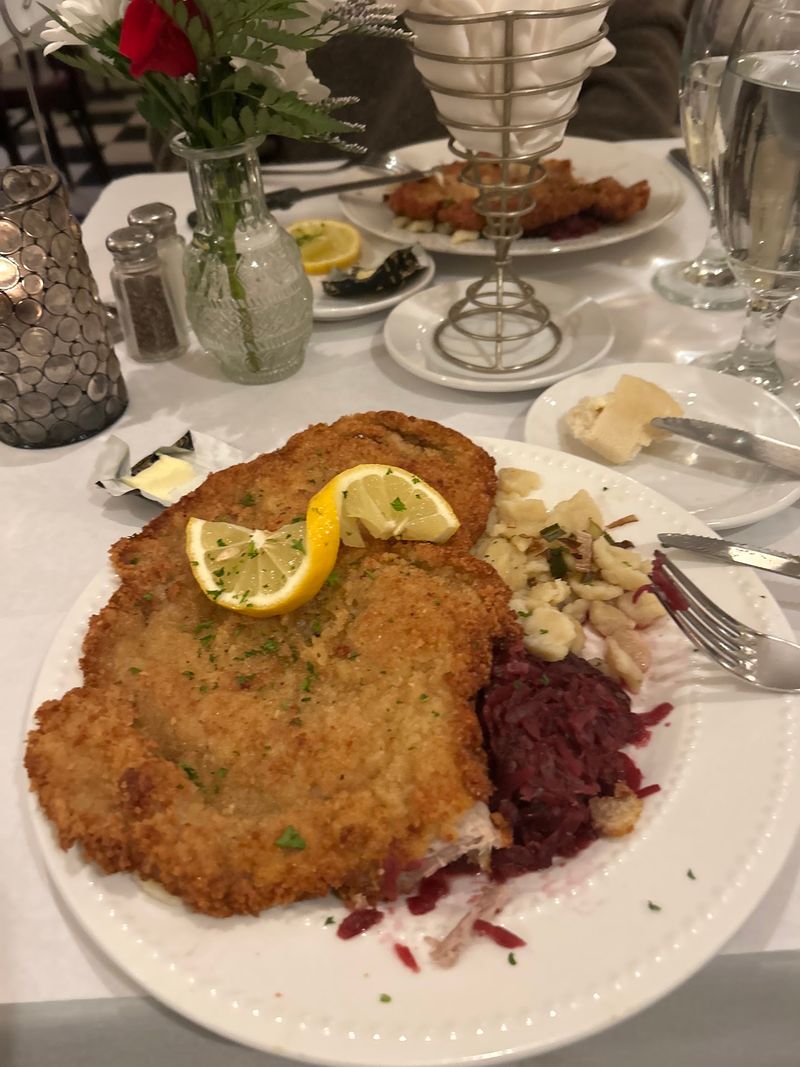
Germany and France share a border, so it only makes sense they’d share a menu too. Fritz and Frites Bistro in Galena brings those two kitchens together in one cozy dining room on historic Main Street.
The name gives away the plan. Fritz is a classic German name, and frites are French fries. On one table, you might see golden schnitzel with spaetzle, while the next table digs into steak frites and bubbling French onion soup.
That mix makes this spot great for groups who can’t agree. One person gets their German comfort fix, and another goes the French route. Sharing bites across the table becomes part of the fun.
The schnitzel here holds its own. Crisp and well seasoned, it pairs nicely with tender spaetzle. French onion soup, topped with melted cheese, makes a rich starter before either kind of main dish.
Inside, the bistro is small and intimate, with an old-world charm that suits Galena perfectly. Soft lighting and close tables create a warm, quiet setting. It’s a good choice for a date night or a calm dinner after hours of walking.
Galena itself is a treat to explore. The town is known for its well-preserved 1800s buildings, and Ulysses S. Grant lived there before becoming president. Main Street is lined with shops, galleries, and sweet stops.
Because the dining room is cozy, tables can fill up fast, especially on weekends and during busy tourist seasons. Booking ahead is a smart idea if you have your heart set on a specific night.
After a day of browsing antique shops and climbing hilly streets, sitting down to schnitzel or steak frites hits the spot. Galena’s history and this bistro’s food make a very good team.
7. Renate’s German Restaurant (Hanover Park)
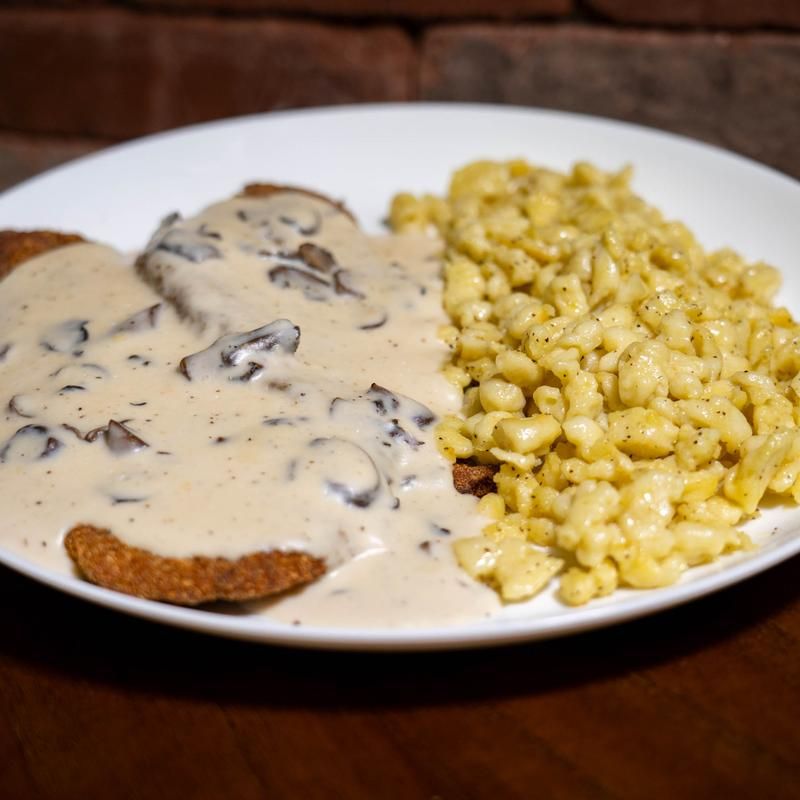
Homemade is the word that matters most at Renate’s. In Hanover Park, this restaurant cooks German food the way a grandmother in Bavaria might, using family recipes instead of shortcuts.
The schnitzel lineup alone could keep you busy for weeks. Wiener Schnitzel, the classic Viennese version, comes thin and golden, usually with a wedge of lemon. Jägerschnitzel brings mushroom gravy, and Rahm Schnitzel adds a smooth, creamy sauce.
Spaetzle shows up as the faithful sidekick. Soft and slightly chewy, it’s perfect for mopping up sauce. Many diners find themselves hunting for that last little noodle with their fork.
Beyond schnitzel, the menu digs deep into tradition. Sauerbraten is a pot roast marinated for days in vinegar and spices, which gives it a tangy, rich flavor. Rouladen, rolled beef with savory filling, gets cooked low and slow until fork tender.
Sausages round out the lineup for anyone who wants something simple and satisfying. Paired with sauerkraut and mustard, they make a quick, classic plate.
The dining room carries a cozy Bavarian look. Warm decor and a homey vibe make it comfortable for families, old friends, and solo diners alike. It’s the kind of place where people linger over coffee long after the plates are cleared.
Little fact: true Wiener Schnitzel is traditionally made with veal. In Austria, the name is even protected, so pork versions are often called Wiener Art, meaning Viennese style.
For first-timers, the sauerbraten is a great way to taste the kitchen’s patience. Dishes that take days to prepare show off what homemade cooking can do.
Craving old-country flavors without hopping on a plane? Renate’s makes a strong case for staying right here in Illinois.
8. Schnitzel Platz (Glendale Heights)
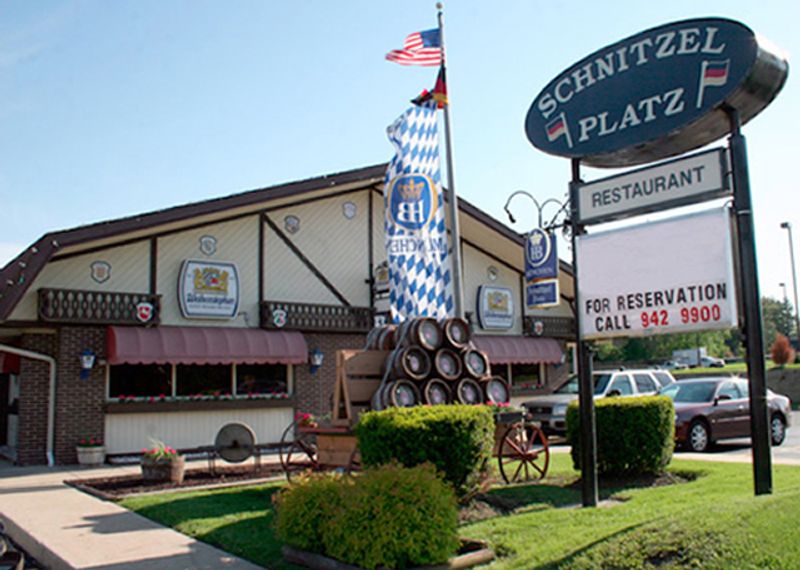
Some restaurants hide their specialty in fancy names. Schnitzel Platz does the opposite and puts it right on the sign, so there’s zero confusion about what to order.
Schnitzel takes center stage here, and the kitchen treats it with real pride. Pork, veal, or chicken gets pounded thin, breaded, and fried until it turns a deep golden brown. Some plates arrive with the cutlet stretching nearly to the edges.
Toppings make each version different. A mushroom gravy turns it into a savory, earthy dish, while a squeeze of lemon keeps things light and simple. Trying a new style each visit is a fun way to work through the menu.
Not in a schnitzel mood? Other hearty European specialties fill out the menu, from sausages to slow-cooked meats. Spaetzle and classic sides make solid partners for almost any entree.
The vibe stays lively on regular nights, but Oktoberfest season is when this place truly lets loose. Expect extra decorations, plenty of beer, and a crowd ready to celebrate German heritage. Blue and white checkered patterns, the colors of Bavaria, tend to pop up everywhere.
Quick history lesson: Oktoberfest started in Munich in 1810 as a celebration of a royal wedding. The party was such a hit that it became a yearly event, and now cities around the world throw their own versions.
For the full experience, plan a fall visit and make a reservation early. Seats go fast when the festival spirit kicks in. A weeknight in quieter months works well too, especially if you want a relaxed meal and more time to chat.
Glendale Heights may not sound like the heart of Bavaria. One bite of that crunchy cutlet, though, and the zip code stops mattering.
9. Prost! (Chicago)
Prost means cheers in German, and this Lincoln Park restaurant takes the name seriously. Long communal tables and a laid-back beer-hall setup practically invite you to raise a glass with strangers.
Shared seating is a big part of the experience. You might end up next to a group celebrating a birthday or a couple on their first visit. In German beer halls, sitting together is normal, and it often leads to friendly conversation.
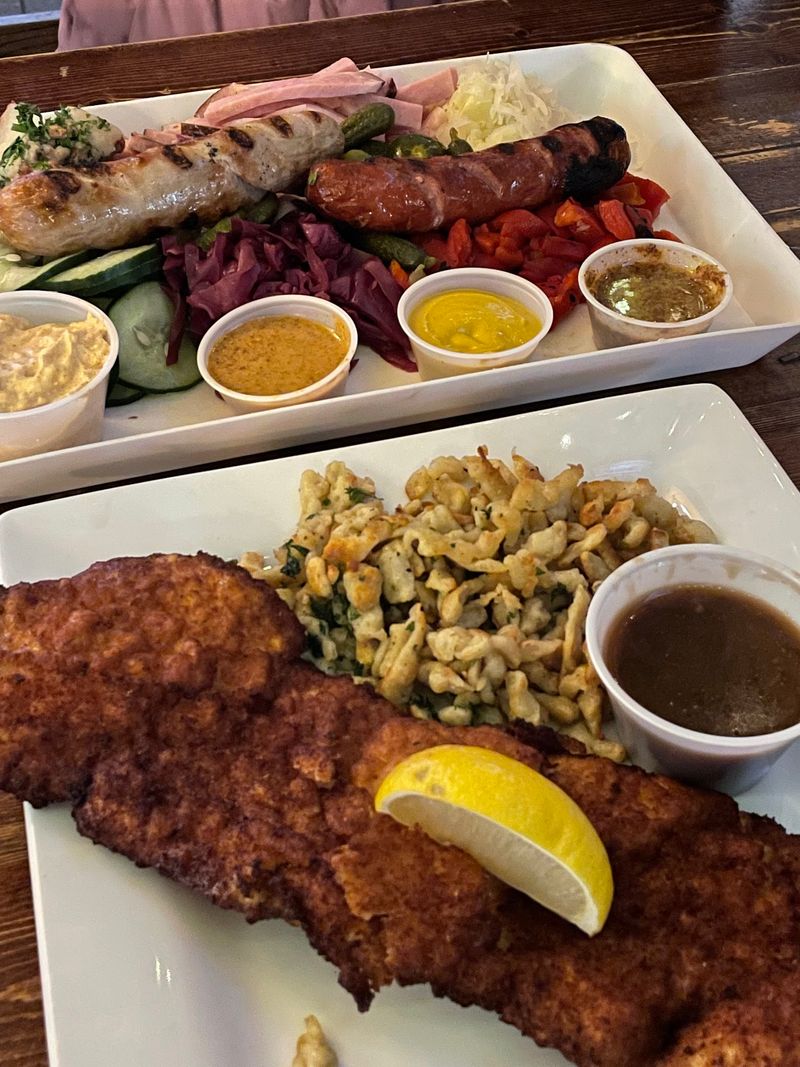
The menu is built for feasting. Schnitzel and spaetzle cover the comfort side, while bratwurst with sauerkraut adds smoky, tangy flavor. Then there are the pretzels, which are oversized in the best possible way.
Seriously, those pretzels can be bigger than your face. Soft inside, chewy outside, and sprinkled with coarse salt, they’re perfect for tearing apart and dipping in mustard. Ordering one for the table is basically a rule.
Building a full spread is easy here. Start with a pretzel, add a brat platter, then bring in schnitzel and spaetzle as the main event. Passing plates around turns dinner into a casual party.
Lincoln Park is one of Chicago’s busiest neighborhoods, with lots of restaurants, shops, and nightlife nearby. Prost fits right in, offering a relaxed hangout that works for game days, group outings, or a fun night with friends.
Bratwurst, by the way, comes from an old German word for finely chopped meat. Different regions of Germany have their own versions, each with special spices and sizes.
Big groups will love the setup, but smaller parties shouldn’t feel left out. The communal tables keep the energy up no matter how many people you bring along. Bring your appetite and your best toast. Prost!