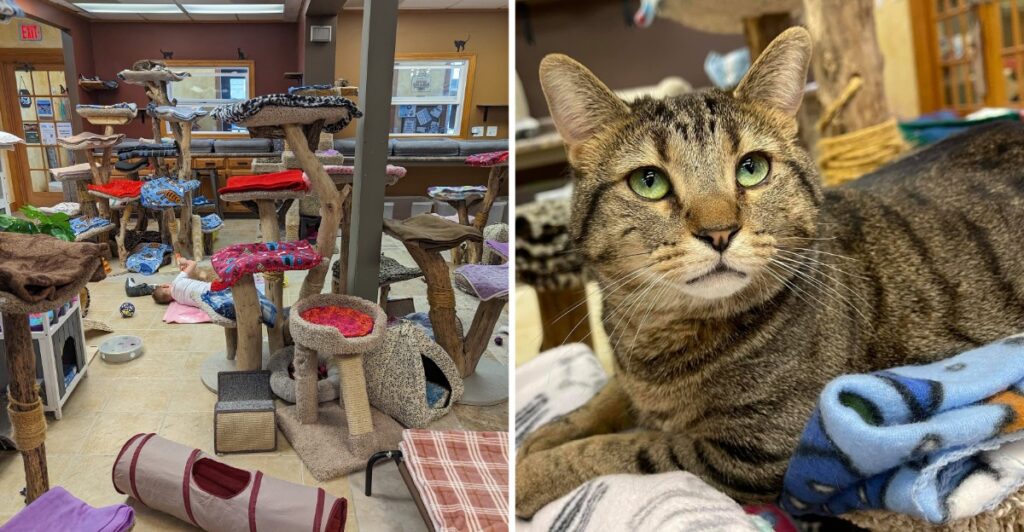
Sunlit shelves, tall cat trees, and plenty of room to stretch out make Purrfect Cat Rescue in Crystal Lake look very different from the shelter many people might imagine. Instead of spending their days lined up in cages, rescued cats can lounge, climb, play, and show off their individual personalities while waiting for permanent homes.
The relaxed environment also gives potential adopters a chance to see how each cat behaves outside the confines of a traditional kennel. Behind the cozy setting is a small nonprofit focused on finding the right matches. For Illinois cat lovers considering adoption, this cage-free rescue offers a heartwarming place to start.
Shelves, Tunnels, and Trees Instead of Cages
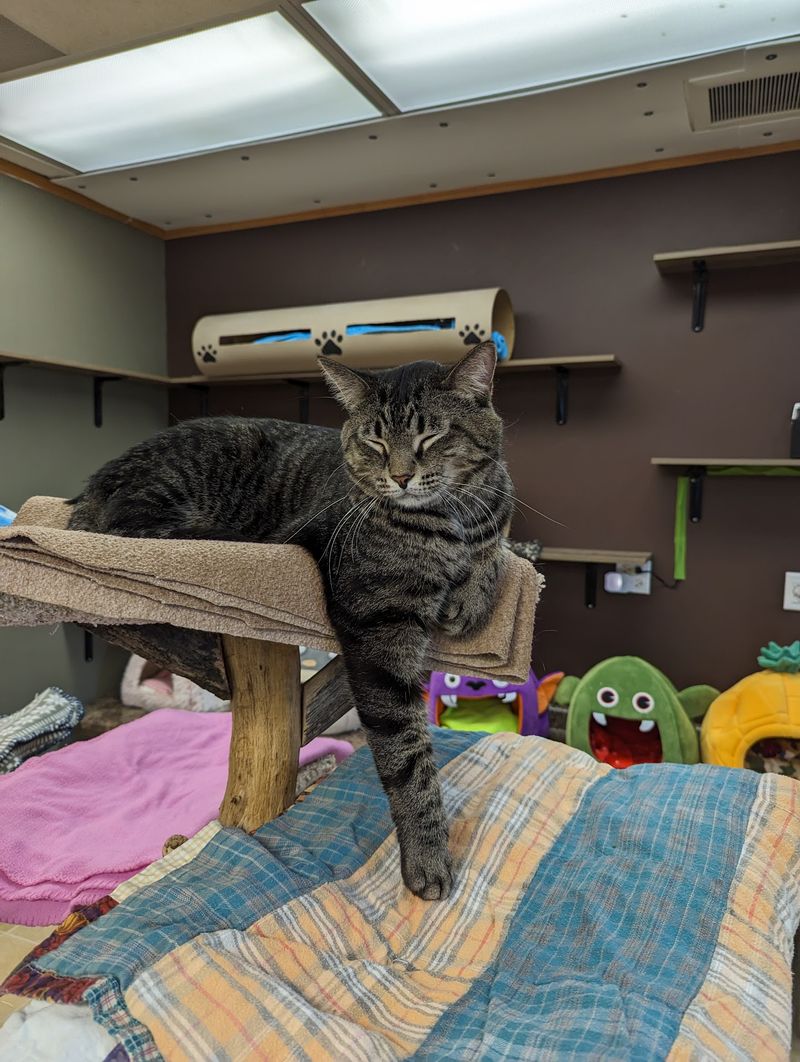
Picture a gray tabby stretched out on a wooden shelf near the ceiling, one paw dangling over the edge like a sleepy lifeguard. Below, a pair of young cats chase each other through a fabric tunnel. Nobody is locked behind a door.
At Purrfect Cat Rescue, cages are not part of the plan. The rooms are set up with wall shelves, carpeted cat trees, climbers, tunnels, and toys scattered across the floor. Cats move freely, picking their own favorite perch for the day.
Why does this matter so much? A cat stuck in a small cage can get stressed, bored, or shut down. When cats can climb, hide, explore, and play, they act more like themselves. That means you get to see their true personality before you take one home, not just a scared version of them.
The setup also makes visits more fun. Instead of peering through bars, you can sit down and let curious cats come to you. A bold one might hop into your lap within minutes. A shy one might watch you from a high shelf before deciding you seem okay.
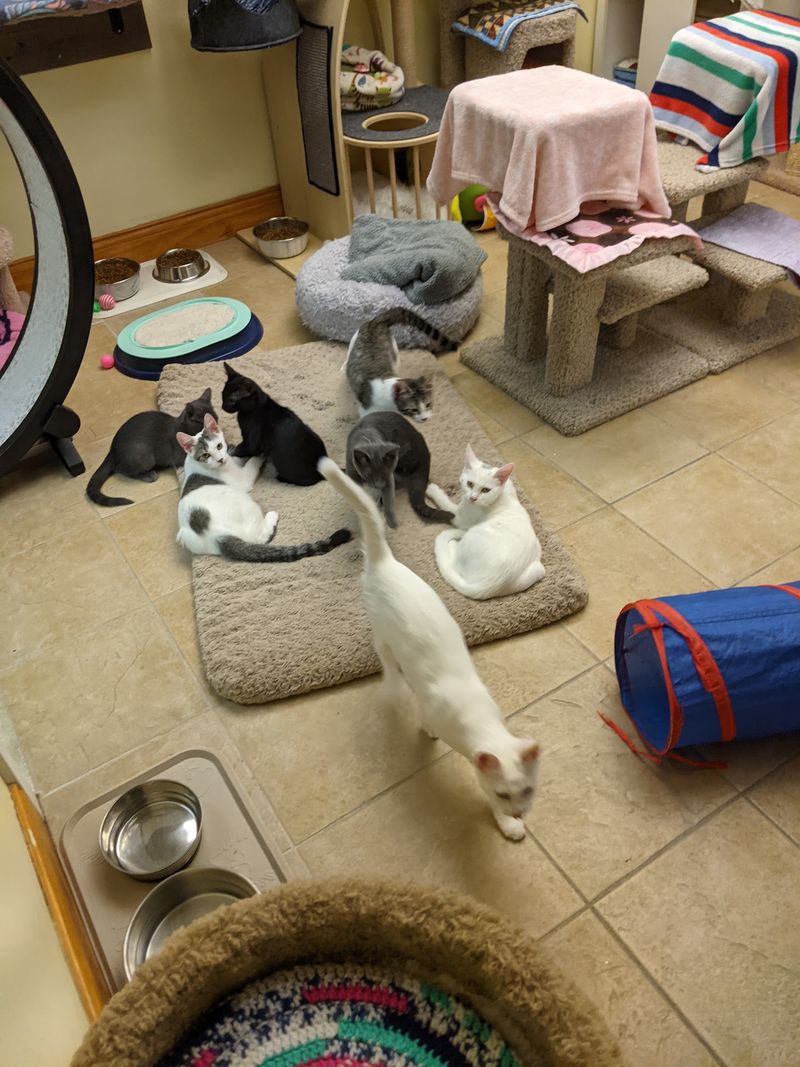
Cats are not all tossed together in one big room, though. They are separated by age and health, so playful kittens have their own space, and older or recovering cats get a calmer area. This keeps everyone safer and less stressed.
Height is a big deal for cats. Being up high helps them feel secure because they can watch everything below. That is why the shelves and tall cat trees are not just decoration.
They give each cat a sense of control in a place full of new faces. Look up when you walk into each room. Some of the best-hidden residents are often napping right above your head.
A Spotless Space Run by Busy Hands
Anyone who has ever owned a cat knows the truth. Cats shed, scatter litter, knock things over, and leave little surprises in odd places. Now multiply that by a whole building full of them.
Somehow, this rescue stays remarkably clean. Volunteers and staff work through the rooms every day, scrubbing floors, refreshing bedding, scooping litter, and wiping down surfaces. The cleaning does not happen once and stop. It keeps going as cats come and go.
Clean rooms protect more than appearances. In a shelter, germs can spread quickly from cat to cat, especially among kittens or cats who arrived weak and sick. Keeping surfaces fresh helps stop illnesses before they start, and it makes the building safer for visitors too.
Health care follows the same careful pattern. If a cat seems off, maybe eating less or hiding more than usual, the team steps in quickly. Many of these animals came from rough places, including hoarding and abuse situations, so their bodies often need extra time to heal.
You will notice the difference in the cats themselves. Coats look shiny. Eyes look bright. Cats who might have arrived thin and frightened now stretch out in the open, trusting enough to sleep where people can see them.
Here is a helpful idea if you visit. Wash your hands before and after handling cats, and ask before moving between rooms. It is a small habit that helps the team keep everyone healthy.
And if your own home ever feels like a fur tornado, take mental notes. Watching how the volunteers handle so many cats at once might give you a few tricks for keeping your future kitty corner neat and fresh.
Meet Deb, Di, and the Crew Who Know Every Whisker
Ask Deb about almost any cat in the building, and you will likely get a full story. Where the cat came from. How it acted on day one. Which toy it secretly loves. Who it gets along with and who it avoids.
Deb is the owner, and she leads the rescue alongside Di and a dedicated team of staff and volunteers. One counselor goes by the nickname Chewy, and she has a knack for giving families a patient, friendly tour, even close to closing time.
This deep knowledge shapes everything. Because the team knows each cat so well, they can point you toward a shy kitty who needs a quiet home or a rowdy kitten who would love a busy household. Matching personalities is their specialty.
The rescue also takes on tough cases. Some cats here are not up for adoption at all. They may be too fragile, too old, or too traumatized, and instead of being turned away, they get to stay and live out their days safely cared for.
Help reaches beyond the building too. The team has guided panicked owners searching for lost cats, connected people who found kittens in their yards with trap-neuter-return help, and found emergency care for newborn kittens on a Sunday. That kind of help happens over the phone, often for strangers.
Behind it all is a crew of volunteers called socializers. Their job sounds dreamy but matters a lot. They play with cats, brush them, pet them, and sometimes simply sit and talk softly to a nervous kitty until it relaxes. That steady attention is how a frightened rescue becomes a confident pet, ready for a new family.
Finding Your Match at This Crystal Lake, Illinois Rescue
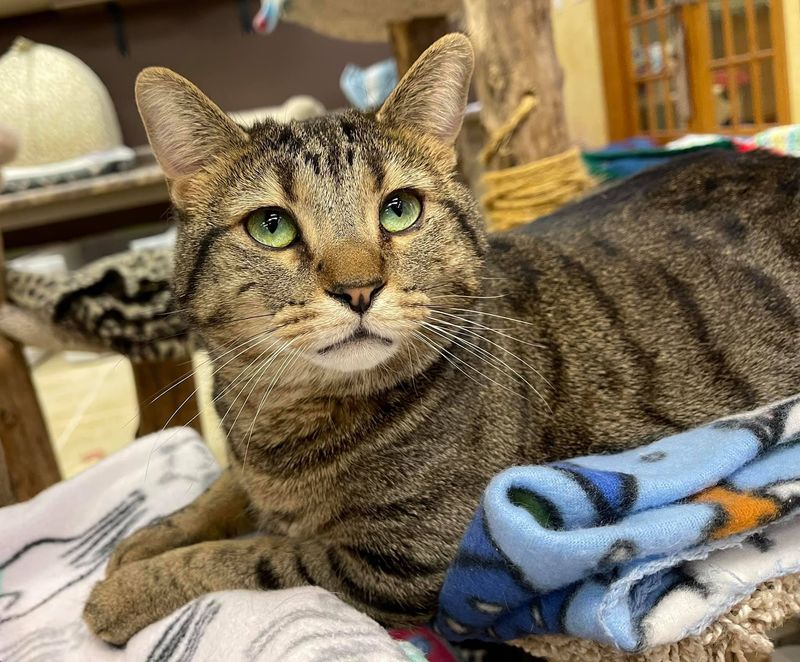
Think of adoption here less like shopping and more like matchmaking. The goal is not just to send a cat home. It is to send the right cat to the right home, so nobody gets returned or heartbroken later.
The process starts with an application. The team checks with your veterinarian and contacts a reference, which helps them understand how you have cared for pets before. For many families, the whole application wraps up in about two days.
After that comes the fun part, meeting cats. Counselors talk with you about your household. Do you have a dog? Young kids? A quiet apartment? Long work hours? Every answer helps narrow down which cats would truly be happy with you.
Be ready for honesty. The team is choosy, and they will sometimes say a certain cat is not right for you. A deeply shy cat, for example, might need someone who can get down on the floor and coax it out from under a bed. Hearing no can sting, and not every visitor leaves happy.
Still, there is a reason behind the careful screening. Many of these cats survived abuse or neglect. A bad match could set them back, while a good one lets them bloom. Plenty of adopters return again and again, with some families bringing home four cats over several years.
Some smart prep helps. Be open about your pets, kids, and schedule. Ask questions about introducing a new cat to a dog. Stay flexible, since the cat you fall for online may not be the best fit in person.
Also, plan on keeping claws intact. Declawing is a firm no in this crowd, so bring an extra scratching post home instead.
Scoop Up a Volunteer Shift or Foster a Kitten
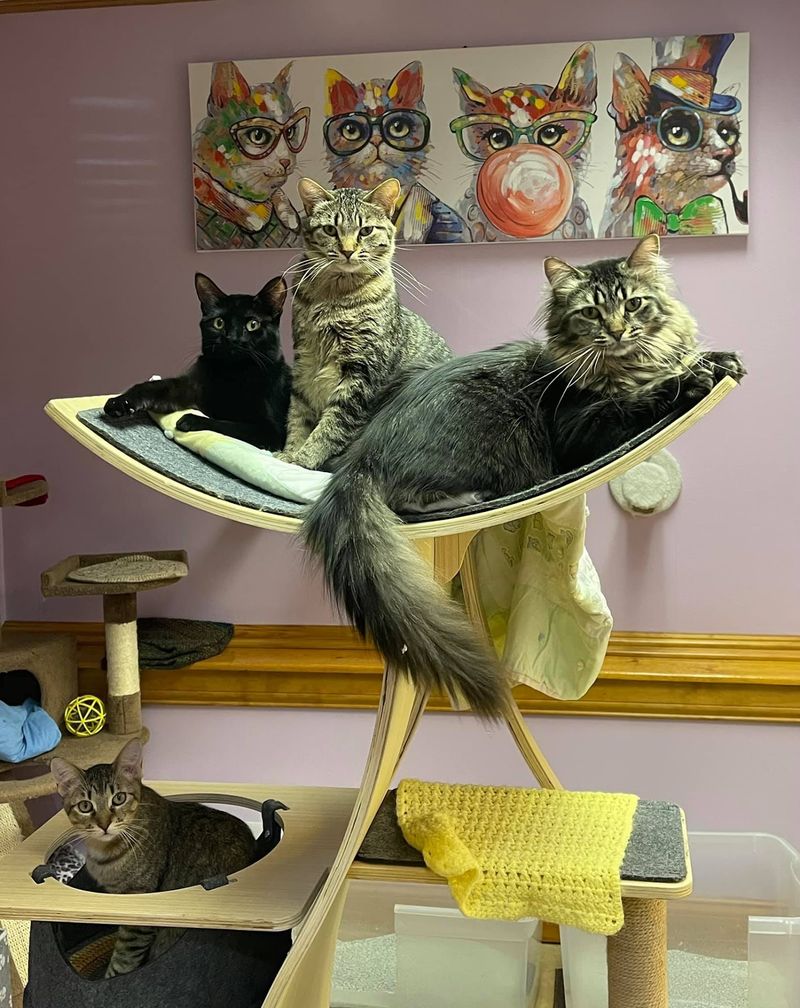
Not ready to adopt? Good news. You can still spend plenty of time with these cats by joining the volunteer team.
Small nonprofits like this one run on people power. Feeding, cleaning, laundry, playtime, and supply runs all take hands, and the staff is often stretched thin caring for so many animals. Every extra helper eases that load.
Socializing is one of the most popular roles. You might drag a feather wand across the floor for a hyper kitten, brush a long-haired senior, or sit quietly while a timid cat slowly decides you are safe. Over weeks, you can watch a cat change from frozen and hiding to bold and curious.
Fostering is another option. Foster parents bring cats or kittens into their own homes for a while, giving them a calm place to grow, heal, or practice living with people. Tiny kittens especially benefit, since a shelter room can be a lot for a baby.
Volunteering can teach you real skills too. You learn to read cat body language, like a twitching tail or flattened ears. You figure out how to handle a squirmy cat safely. These lessons come in handy if you ever adopt.
Donations of time are not the only way to pitch in. Handmade toys show up around the rooms, proof that crafty supporters help keep the cats busy and entertained. Fundraising has also helped pay for care for sick and injured animals.
Families with kids should remember one thing. The rescue is not a petting zoo, and children need close supervision. Calm voices and slow hands make the visit better for everyone, cats included.
Timing Your Trip Down Route 31
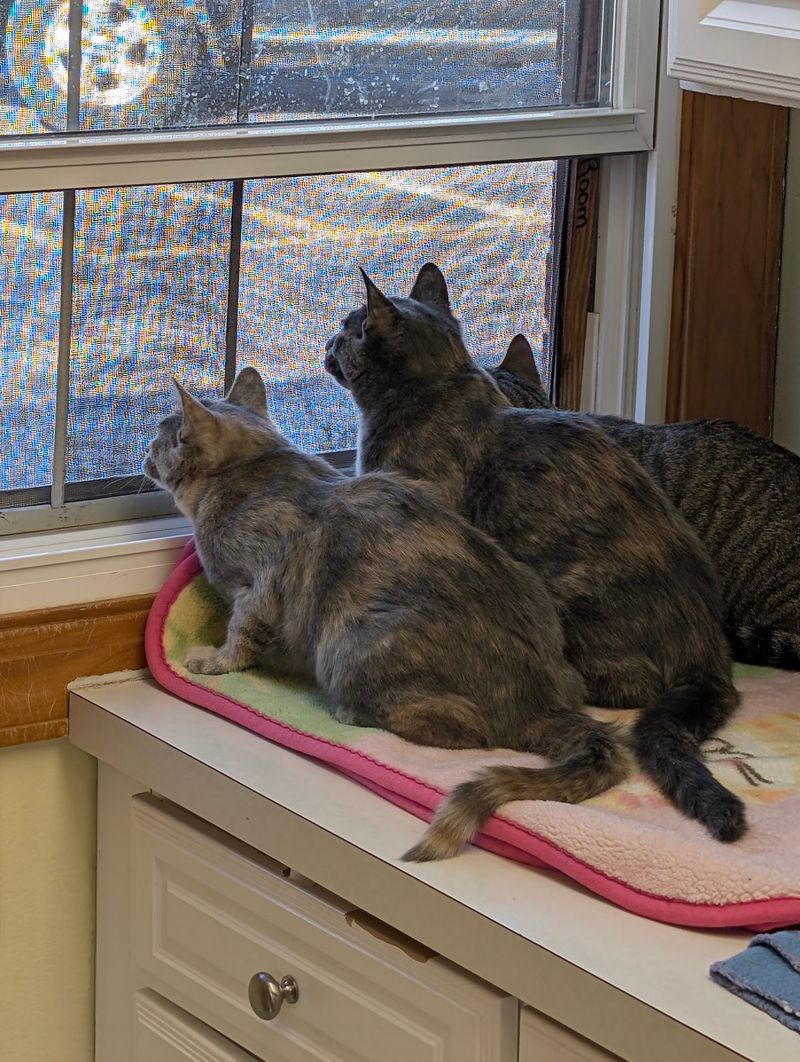
Hours here are a little unusual, so check before you hop in the car. The rescue sits at 318 South Illinois Route 31 in Crystal Lake, an easy drive for folks across McHenry County and the northwest Chicago suburbs.
Thursday offers the longest window, running from noon until 8 PM. If you want a slow, unhurried visit, this is your day. Saturday and Sunday are shorter, open from noon to 3 PM, so weekend visits move faster.
Evening hours fill the rest of the week. Monday, Tuesday, and Friday run from 5 to 8 PM, which works nicely for people heading home from work or school. Wednesday is closed, giving the team a breather.
When should you go? Weekday evenings tend to work well for meeting cats, since the after-dinner hours are when many cats wake up and get playful. A kitten that snoozed all afternoon may be bouncing off cat trees by 6 PM.
Arriving right before closing is not ideal if you want a full tour. Give yourself at least an hour, especially if you are serious about adopting. Meeting several cats, asking questions, and talking with a counselor all take time.
Plan ahead on the paperwork side too. Have your vet clinic name and a reliable reference ready. If you rent, it helps to know your landlord pet rules before you apply.
One small sensory note. Some cat rooms play radios to keep the cats company, and the stations can differ from room to room. If you are sensitive to noise, step out for a quiet moment between rooms.
Bring patience, a flexible schedule, and maybe a lint roller for the ride home.
From Timid Rescue to Couch Boss
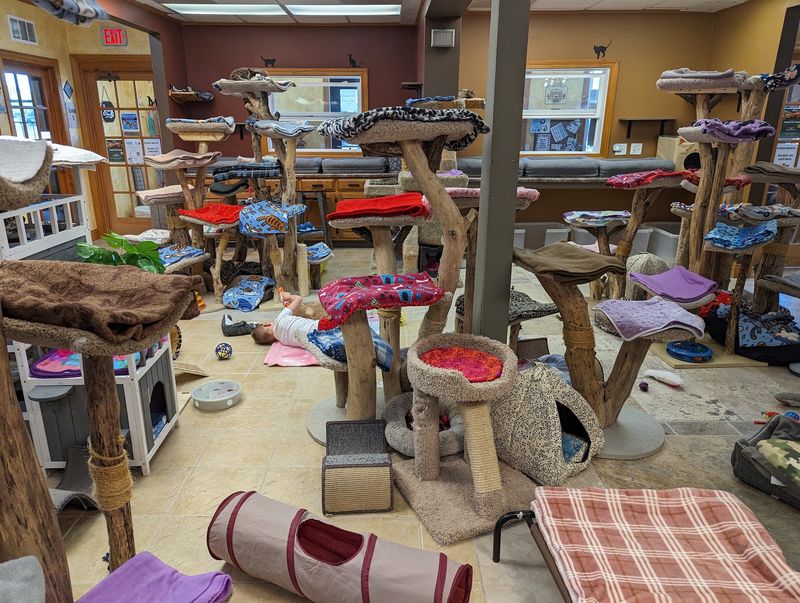
A nervous little cat named Timone once tiptoed around the rescue, unsure of everyone. Two months after adoption, renamed Cirrus, he had turned into a loud, bouncy, larger-than-life character running his new home.
Stories like that happen often here, and they show why the cage-free model pays off. Cats who spent their shelter time climbing, playing, and being handled gently arrive home better adjusted. They already know people can be kind.
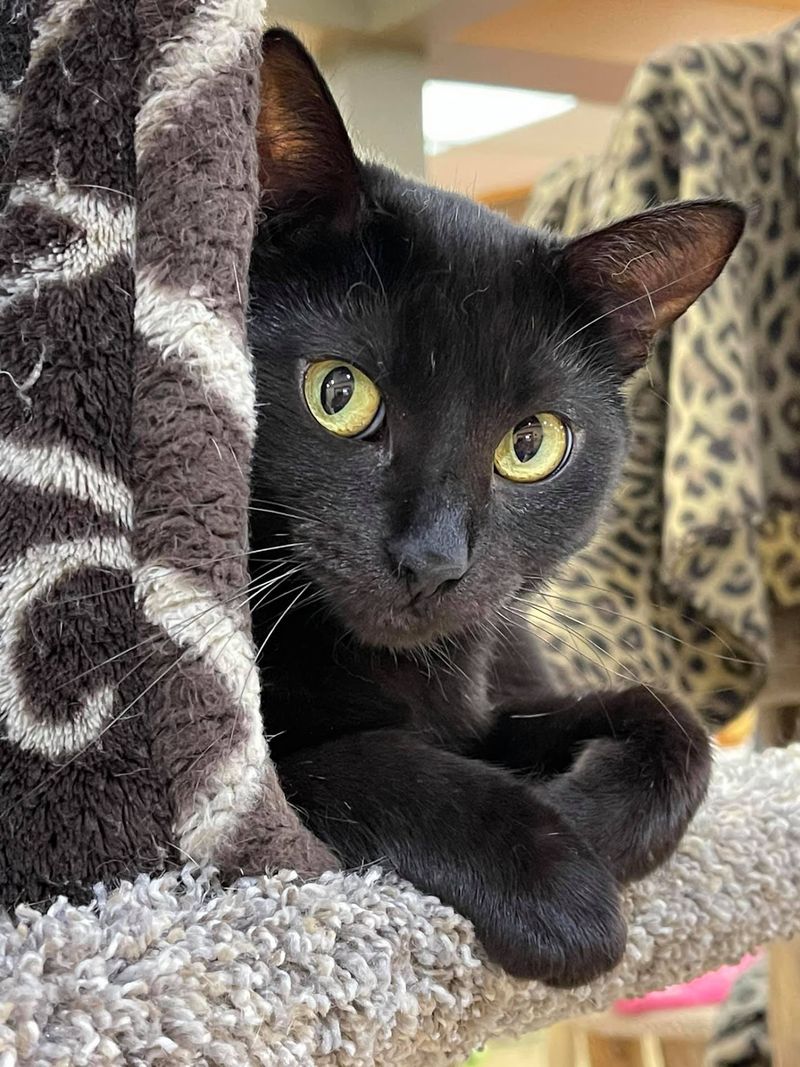
Adoption days have brought home all sorts of pairs and personalities. Kitten brothers named Joey and Levi went home with a family of young boys. Two spunky tabbies joined a household with a dog. A sweet black cat once called Max became Binx, the new pal of a first-time cat owner.
Support does not end at the door. The team has checked in with families after adoption to make sure the new cat is settling in. That follow-up gives nervous owners a chance to ask questions about litter habits, picky eating, or dog introductions.
For your first few weeks, start small. Set up a quiet room with food, water, a litter box, and a hiding spot. Let your cat explore the rest of the house at its own pace instead of rushing things.
Copy the rescue setup at home if you can. A sturdy cat tree, a window perch, or a couple of wall shelves give your new pet that same high-up feeling of safety it enjoyed in Crystal Lake.
Picture the payoff. Weeks later, your formerly shy rescue sprawls across the sunniest spot in the living room, purring loudly, fully in charge of the couch.