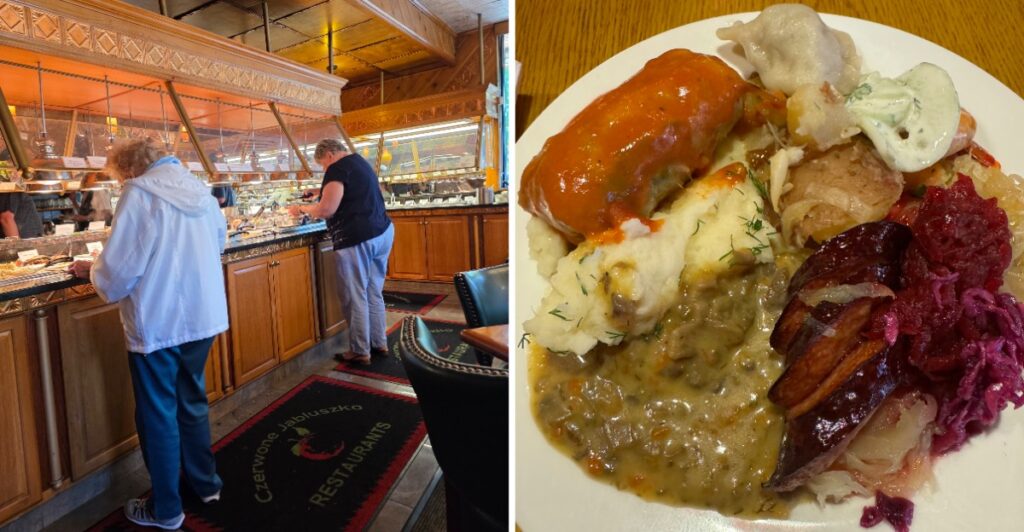
One plate is probably not going to be enough at Red Apple Buffet on Chicago’s Northwest Side. This Milwaukee Avenue favorite turns a single price into a full tour of Polish comfort food, with pierogi, crispy potato pancakes, stuffed cabbage, carved meats, and plenty of other hearty dishes competing for room.
The dessert spread gives diners another reason to pace themselves, especially after several trips through the savory side. Weekend service draws families, groups celebrating special occasions, and regulars returning for familiar flavors. Come hungry and take your time, because the biggest challenge here may be deciding what deserves a second helping.
A Milwaukee Avenue Storefront With a Packed Dining Room
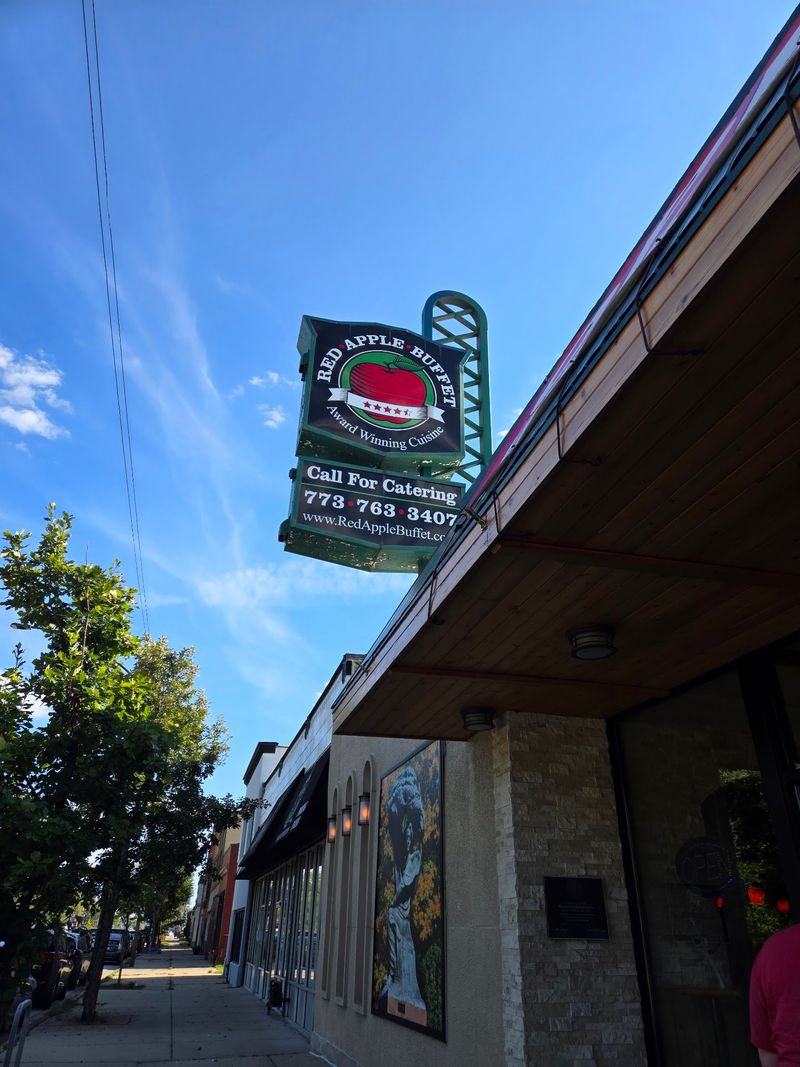
Drive past too fast and you could miss it. Red Apple sits along North Milwaukee Avenue in the Norwood Park area, close to the city’s northwest edge, where small shops, bakeries, and Polish delis have lined the street for generations.
Outside, the building looks plain. Inside, the story changes. The dining room is warm, slightly old-fashioned, and full of tables pushed close together, with soft music playing and servers moving quickly between them.
The decor leans dated, and that works in its favor. Nobody comes here for sleek lighting or trendy design. The room looks like a place built for big family dinners, and on weekend evenings that is exactly how it gets used, with grandparents, toddlers, and groups of friends all sharing the same space.
Seating is snug. If you are bringing a stroller or someone who needs extra room to move, ask for a table near the edges instead of the middle of the floor. Chairs fill in tightly once the crowd arrives, and getting back to the buffet line can turn into a careful shuffle.
Beyond the main room, there is a full bar and a separate space that can host parties and private events. That second room is handy to know about if you are planning a birthday, a reunion, or a gathering after a christening or graduation.
Parking takes a little patience. The lot is small, so most visitors end up circling the nearby side streets for a spot. Give yourself an extra ten minutes, especially on Saturday nights, and read the street signs carefully before you lock the car.
Once you are seated, a host takes you to your table and a server arrives almost right away to ask what you want to drink. Then the plates are yours to fill.
Pierogi, Potato Pancakes, and Cabbage Rolls Steal the Show
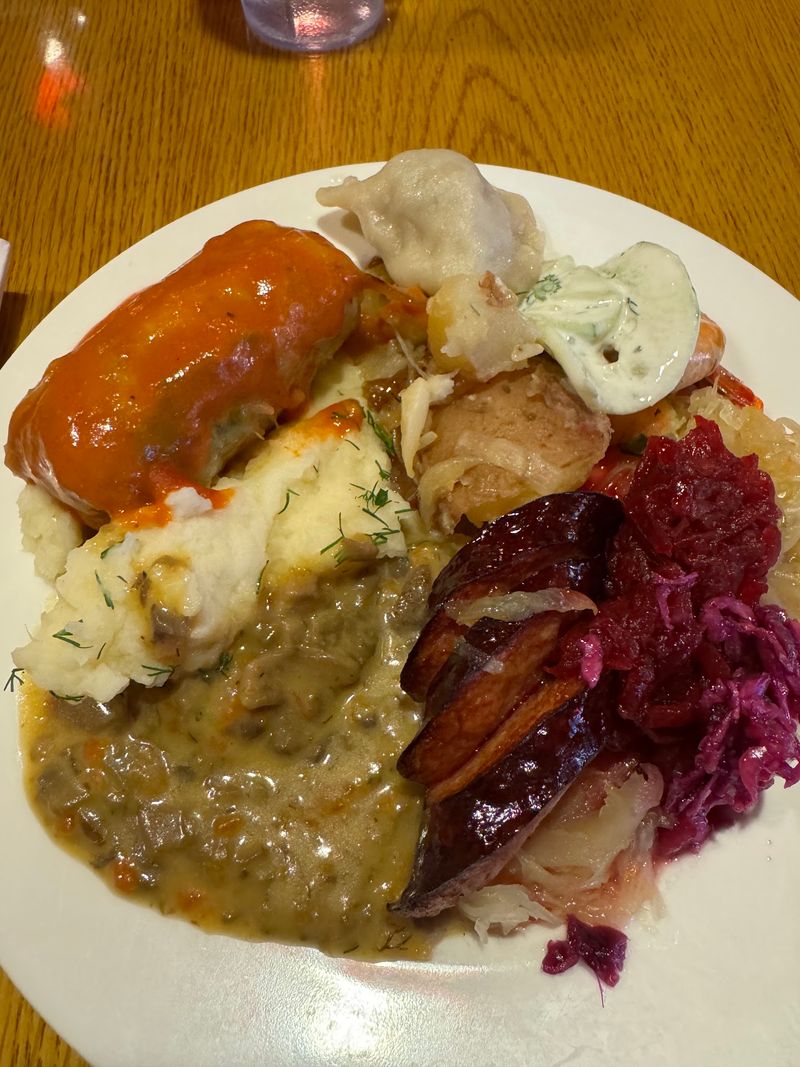
Start with the potato pancakes. Crisp at the edges and soft in the middle, they are the dish that disappears from the trays fastest, and the kitchen keeps refilling them with hot batches all night.
Right nearby sit the pierogi, the half-moon dumplings that every Polish grandmother has an opinion about. The classic potato and cheese version is the safe first pick. Soft dough, creamy filling, and a little butter or onion on top make them easy to love, even for kids trying Polish food for the first time.
Then come the stuffed cabbage rolls, known in Polish as golabki. Tender cabbage leaves wrap around seasoned meat and rice, simmered in sauce until everything turns soft enough to cut with a fork. They are filling, so one roll is plenty on your first trip.
Here is a smart move. Grab a small spoonful of the wild mushroom gravy and pour it over your potato pancakes or pierogi. The earthy, rich sauce turns simple potatoes into something much deeper. The meatball gravy works the same way on cutlets or mashed potatoes.
Look for kopytka too. The name means little hooves, and these chewy potato dumplings get their name from their shape. Under mushroom gravy, they might become your new favorite.
Adventurous eaters should hunt for kartacze, a regional dish from northeastern Poland. These large potato dumplings are stuffed with meat and are hard to find at most restaurants in America.
Polish food is heavy in the best way. Butter, potatoes, cabbage, and slow-cooked meat add up quickly. Take small portions of many things rather than big piles of a few, and you will taste far more before your stomach waves the white flag.
Carving Station Meats Built for Serious Appetites
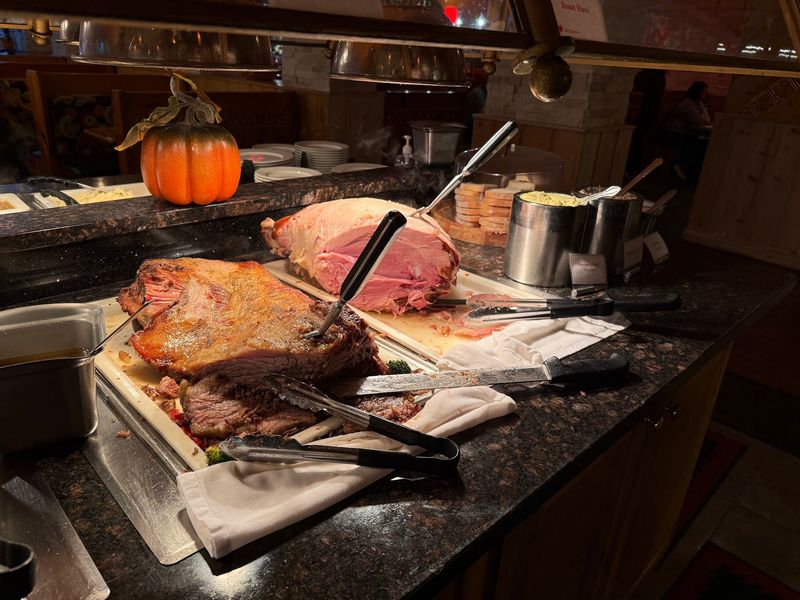
Bring a meat lover. That is the clearest advice for anyone heading to Red Apple, because the protein section here goes far beyond a single tray of chicken.
The carving station anchors the line. Tender beef brisket, sliced ham, and roast beef get cut and served fresh, and the roast beef pairs beautifully with the horseradish cream sitting next to it. That sharp, creamy kick cuts through the richness of the meat and wakes up your taste buds between bites.
Polish sausage, or kielbasa, shows up too, smoky and snappy when fresh off the tray. Pick links from a newly refilled pan if you can, since sausage that sits too long can dry out.
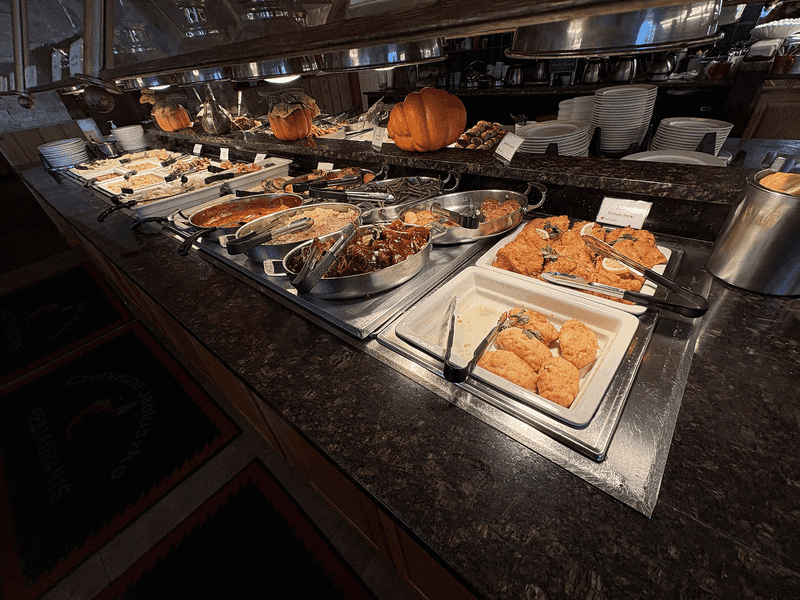
Breaded cutlets take up their own corner. The pork cutlet and the Polish schnitzel are pounded thin, coated in crumbs, and fried golden. Chicken Kiev, with its buttery center, makes an appearance as well.
Some dishes lean old-world and slow-cooked. Beef roulades, thin slices rolled around fillings and braised in gravy, sit near bigos, the famous hunter’s stew made with sauerkraut, cabbage, and several kinds of meat. Bigos gets better the longer it cooks, and Polish families often make it days ahead for holidays.
On some visits you may spot roast duck with apple filling, a celebration dish that rarely shows up on buffet lines anywhere.
Not into red meat? Salmon with dill sauce stays moist and flaky, which is rare at buffets where fish often turns dry. Garlic and cilantro shrimp adds a lighter option.
Skip anything that looks like it has been waiting a while, and watch for servers bringing out fresh pans. Timing your trip to the line right after a refill means hotter, juicier meat.
Soups, Salads, and the Bread Basket Nobody Skips
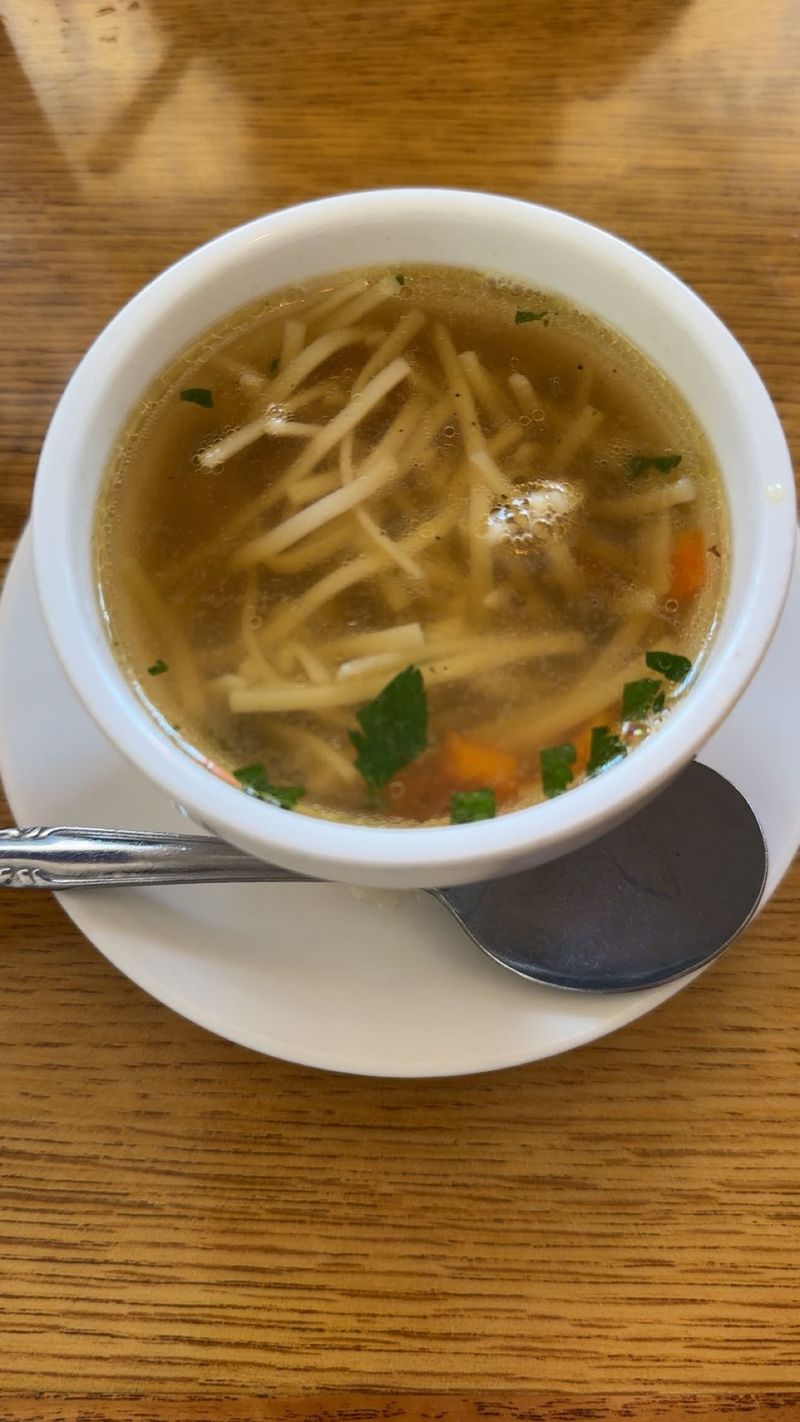
Steam rising from a row of tureens marks the soup station, and it deserves its own lap around the buffet.
Borscht is the headliner, a deep red beet soup that tastes earthy, slightly sweet, and a little sour all at once. Chicken noodle soup offers a gentle, familiar option for picky eaters. Braver diners can try flaki, a traditional Polish beef tripe soup seasoned with marjoram and pepper.
It sounds unusual, but it is a beloved comfort food across Poland. Soup is also a clever strategy. A small bowl first warms you up without filling you too much, leaving room for the main dishes.
Across the way, the salad area runs long. This is not a sad pile of iceberg lettuce. Polish cooks treat salads as real dishes, and you will find options like beet salad, cabbage mixes, pickled vegetables, and creamy combinations loaded with vegetables.
Look for kholodets, a chilled meat aspic. It is jiggly, savory, and very old-school, the kind of dish grandparents in Eastern Europe still set out at holidays. Try a small piece with a dab of horseradish or mustard.
Vegetarians can eat well here too. Between the salads, potato pancakes, cheese pierogi, kopytka, and sides, it is easy to build a full plate without meat.
Now, about the bread. Fresh baked loaves sit ready for slicing, with butter on the side. It is soft, hearty, and perfect for wiping up the last of your gravy or borscht.
Go easy, though. Bread is the classic buffet trap, and two thick slices can take up space meant for brisket and dessert. One slice with butter alongside your soup is the sweet spot.
A Dessert Table That Skips the Sugar Overload
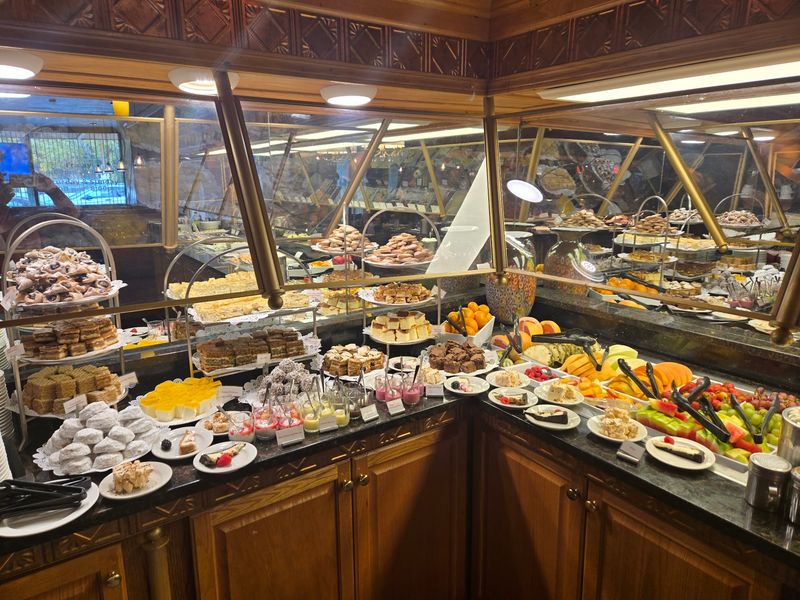
Expect a surprise if you grew up on frosting-heavy American sweets. Polish desserts tend to taste lighter and less sugary, letting fruit, cheese, and cream carry the flavor instead.
The dessert spread at Red Apple is large, with cakes, pastries, and creamy treats lined up for sampling. Apple cake, known as szarlotka in Poland, is a must. Soft layers of baked apples sit between buttery crumbs, and it pairs well with a cup of hot tea.
Blueberry cake is another strong pick, along with an orange cheesecake that tastes bright and tangy. Polish cheesecake, called sernik, is usually made with a farmer-style cheese, giving it a firmer, less sweet texture than the New York kind.
Cheese blintzes deserve a spot on your plate too. These thin crepes wrapped around sweetened cheese are mild and comforting.
Then there are the coffee meringues. Crisp outside, slightly chewy inside, they melt quickly on your tongue. Add a spoonful of the homemade whipped cream and you have a simple but impressive finish.
Not every sweet will thrill every visitor, especially anyone used to very sugary desserts. Think of this table as a place for tasting rather than loading up. Grab small slices of three or four things, then go back for more of your favorite.
A hot drink helps. Tea with lemon or a cup of coffee cuts through the cream and butter and makes dessert feel like a proper ending, the way it would at a Polish family table on a Sunday afternoon.
Save at least a little room. After potatoes, pierogi, and meat, it is tempting to quit early, but the dessert table offers some of the most traditional flavors in the building.
Cash, Weekend Hours, and Smart Timing at This Illinois Buffet
Red Apple keeps a short schedule, so planning ahead pays off. The restaurant opens only three days a week. Friday hours run from 4 to 8 PM, while Saturday and Sunday run from noon until 8 PM. Monday through Thursday, the doors stay shut.
Bring cash. The buffet has long been known as a cash-friendly spot, and recent visits show card payments come with an extra fee of around three percent. Showing up with bills in your wallet keeps things simple and saves a little money.
Price-wise, the buffet has been around $33 per adult. Drinks cost extra, so budget a few more dollars per person for tea, coffee, soda, or something from the bar. For two people, a total near the mid-$70s is a reasonable guess once drinks and tip are included.
Timing matters on weekends. Saturday evenings get crowded, and the room can feel packed by dinner hour. For a calmer meal, aim for noon on Saturday or Sunday, right when the doors open and the trays are freshly stocked. Friday at 4 PM is another good window.
Big group? Arrive early or ask about the party room ahead of time. Tables fill fast, and large parties are easier to seat before the rush.
Service runs quickly. Servers clear empty plates almost as soon as you set them down, which keeps your table tidy for the next round.
Leaving with leftovers in mind? Carryout is sold by the pound, so you can take home pierogi, cabbage rolls, or other favorites for later.
Give yourself time. A relaxed meal here can easily stretch past an hour and a half, especially with soup, mains, and dessert.
Decades of Polish Home Cooking on the Northwest Side
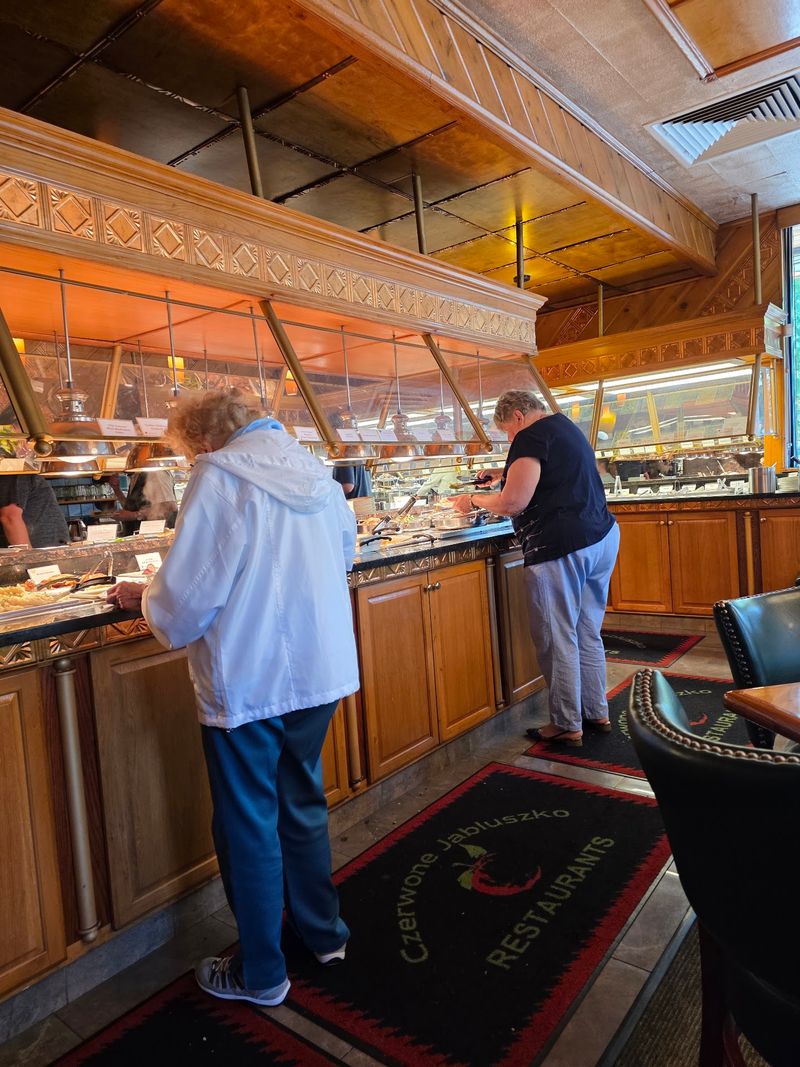
Chicago has one of the largest Polish communities anywhere outside of Poland, and Milwaukee Avenue has been a main street for that community for generations. Red Apple fits right into that story, having served the area for more than three decades.
Listen closely during your meal and you may hear Polish spoken at nearby tables. Regulars come here for the same reason families gather at a grandmother’s house: the food tastes homemade and familiar. Dishes are cooked from scratch in large batches, and the kitchen keeps restocking so trays stay full.
For first-timers, the buffet format is a gift. Polish menus can feel confusing if you do not know what bigos, golabki, or flaki mean. Here, small name cards label each dish, so you can point, scoop, and taste without guessing what to order.
Every tray offers a small lesson. Sauerkraut stews, beet soups, and potato dumplings come from a cooking tradition shaped by cold winters, farm ingredients, and big family meals. These dishes were meant to fill hungry people and stretch simple foods into something special.
Families use the place for birthdays, out-of-town visits, and holiday-style dinners. Some visitors who moved away make it a ritual to stop by every time they come back to Chicago. No Polish grandmother at home? This buffet is the next best thing.
The cooking here is hearty rather than fancy, and home cooks with strong family recipes might say their own versions taste better. Still, few places let you try so many classic dishes in one sitting for a single price.
Bring an empty stomach, some cash, and a curious appetite. Then start with a potato pancake and see where the line takes you.