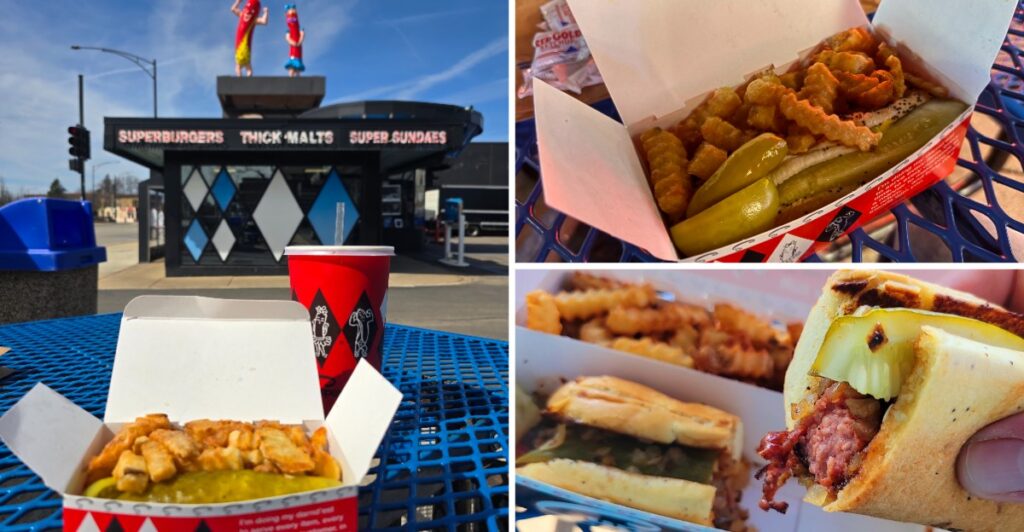
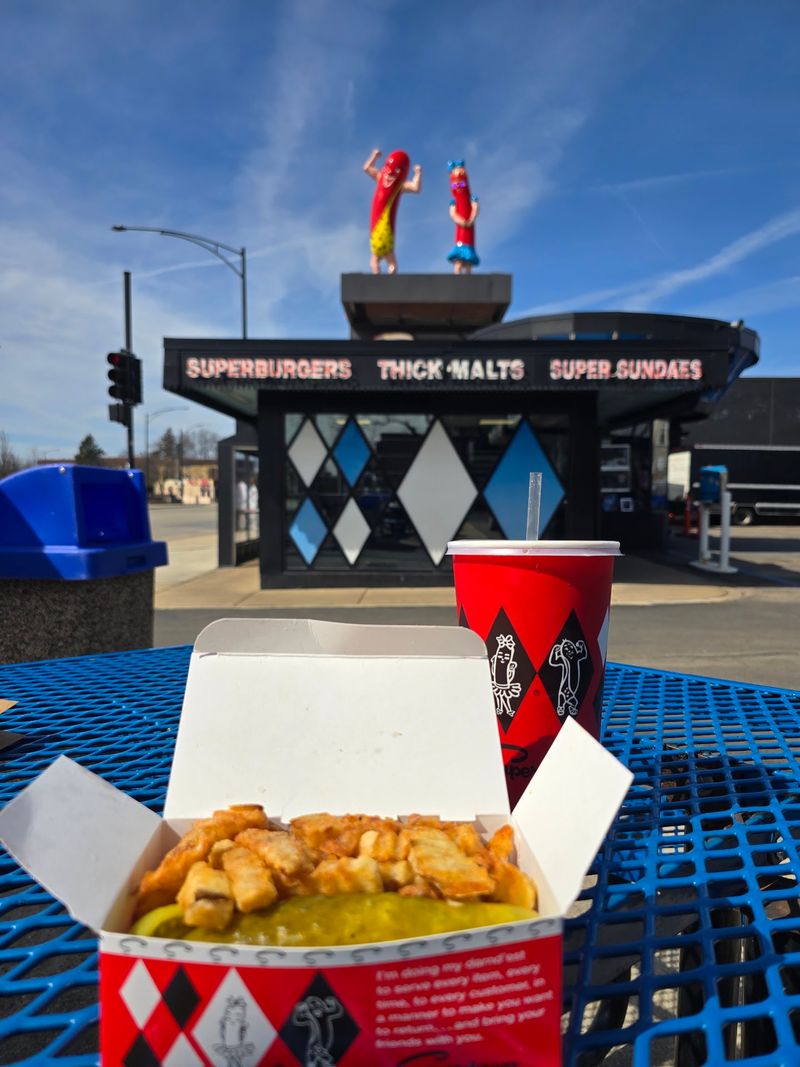
Two enormous hot dog characters standing proudly on a rooftop are your first clue that Superdawg is no ordinary Chicago restaurant. Since 1948, this beloved drive-in on North Milwaukee Avenue has been serving its signature beef hot dogs, crinkle-cut fries, and plenty of nostalgia without losing its unmistakable personality.
Customers can still order from their cars, making dinner feel like a trip back to the days of classic American drive-ins. Between the colorful rooftop mascots, old-fashioned service, and familiar menu favorites, the experience is almost as memorable as the food. For anyone craving a taste of Chicago history, Superdawg delivers it right to the car window.
A Rooftop Couple Steals the Show
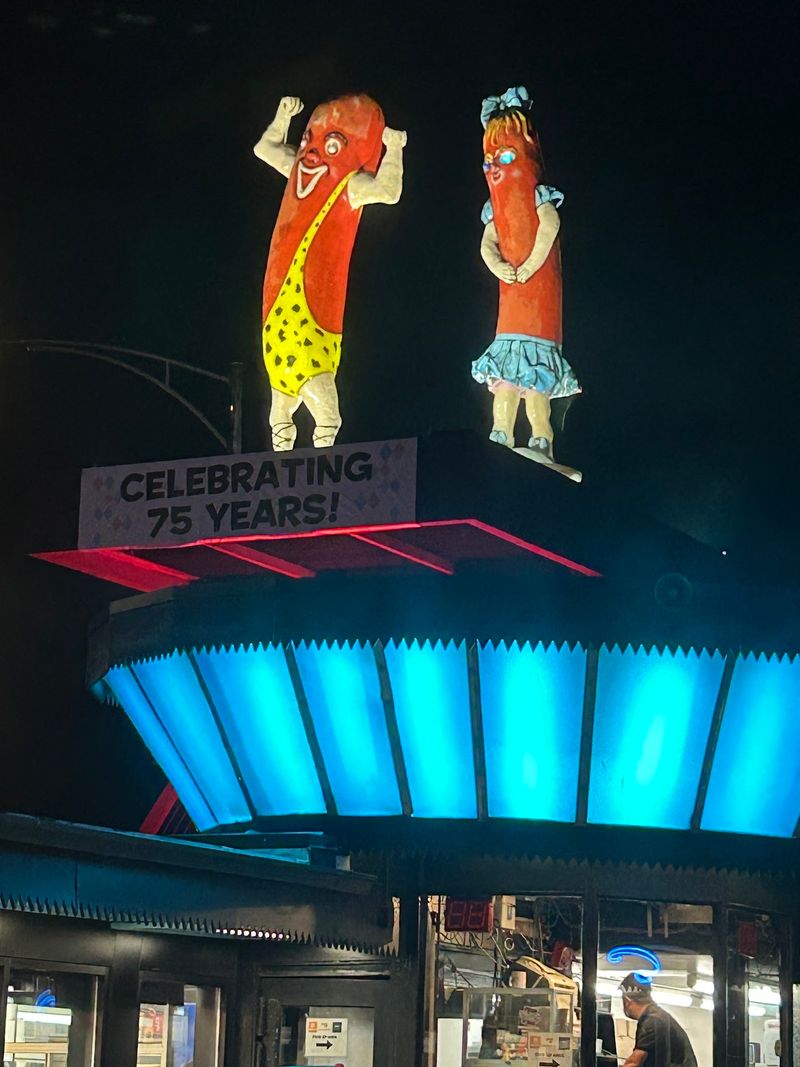
Look up before you look at the menu. A giant hot dog couple stands above Superdawg, turning the roof into a cheerful landmark that is much harder to overlook than an ordinary restaurant sign.
The figures are known as Maurie and Flaurie, names shared with the restaurant’s founders. Their playful appearance gives the building a face, or rather two faces, before a carhop ever reaches your window.
Below them, the drive-in layout makes the setting easy to understand. Cars pull into individual spaces beside ordering stations, and the restaurant becomes the center of a small, moving scene of arrivals, food deliveries, and departures.
That arrangement is worth noticing because the view is part of the meal. Instead of facing a dining room wall, you can watch the building, nearby cars, and servers moving between the kitchen and parking spaces.
For a photograph, step away from the tight view through your windshield and find a safe pedestrian spot. Aim upward enough to include both rooftop figures, but leave some of the building below them so the picture shows their setting.
Daylight makes the shapes and colors easier to capture, while evening brings the signs and restaurant lighting into greater focus. Neither requires a staged scene; the unusual roofline already supplies the main attraction.
Keep photos quick when the lot is active. Ordering spaces and paths between vehicles are working areas, so avoid standing where a driver needs to turn or a server needs to pass with food.
Children may spot the characters before anyone mentions lunch, which makes the exterior an easy starting point for a family visit.
Take that first look before settling into your space, then let the meal begin beneath two oversized hosts who never need to leave their rooftop posts, even as cars come and go below them throughout the day and night.
An Illinois Original With Roots in 1948
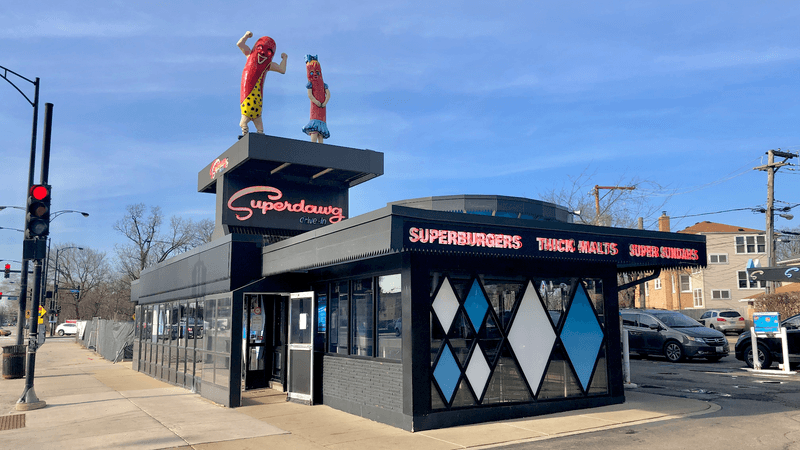
In 1948, Maurie and Flaurie Berman opened Superdawg in Chicago. That date gives the title its footing: the restaurant’s connection to the late 1940s is real, not simply a decorating choice made to suggest another era.
The founders’ names also live on through the rooftop mascots. Linking the people behind the business with its most visible feature makes the history unusually easy to explain, even to a child seeing the building for the first time.
Superdawg has continued as a family business, giving its story a thread that runs beyond the opening year. The important point is continuity, rather than imagining that every surface or piece of equipment has remained untouched since 1948.
A working restaurant must maintain its building, serve today’s diners, and keep food moving. Its older identity survives through recognizable choices, including the name, the figures overhead, the drive-in format, and a menu centered on its signature beef dog.
Those details offer a useful way to read the place. Look at how the restaurant operates, not just how it photographs, and the connection to earlier roadside dining becomes clearer with each order delivered to a parked car.
There is no need to turn lunch into a history lesson. Knowing the opening year and the founders’ names is enough to give the visit context, while leaving room for mustard, fries, and ordinary conversation.
For families, the setting can spark a simple comparison between ordering here and ordering at a modern drive-through. At Superdawg, the car stays put while the food travels, a small difference that changes the pace of the meal.
The strongest evidence of its past is therefore not a dusty display case. It is the everyday act of serving dinner through a format the restaurant has carried forward, with its original identity still visible above the roof and across the menu today.
The Superdawg Arrives Dressed for Dinner
Mustard, onion, relish, and a pepper give the signature order plenty to say before you take a bite. The Superdawg is a beef hot dog served on a poppy seed bun, with fries sharing its familiar cardboard box.
The menu describes the dog as an exclusive pure beef creation, rather than treating it as an interchangeable frankfurter. That distinction puts the meat at the center, even with a busy collection of toppings surrounding it.
Its standard dressing includes golden mustard, tangy piccalilli relish, chopped Spanish onions, a kosher dill pickle, and a hot pepper. Each adds a different kind of contrast, from the onion’s crunch to the mustard’s sharpness.
A pickled green tomato wedge adds another sour note and separates this serving from the fresh red tomato slices associated with many Chicago dogs. Notice that detail before mixing everything together or moving toppings aside.
Try an initial bite with the standard toppings if they suit your taste. The salty beef, soft bun, crisp vegetables, and bright pickle flavors are meant to share the same mouthful, rather than appear as unrelated extras.
If you dislike relish or want to avoid the hot pepper, say so while ordering. A clear request is easier than trying to remove finely chopped onions or spread relish after the box reaches your car.
Unpack with a little patience, since the fries and hot dog occupy a compact space. Set the box on a stable surface, gather napkins, and shift a few fries if you need a better grip on the bun.
For a first visit, this is the most direct introduction to the kitchen’s identity. Start with the namesake order instead of building a large tasting spread, and pay attention to the green tomato, the dressed beef dog, and how the bun holds the whole combination together through those first bites.
Crinkle-Cut Fries Deserve Their Own Moment
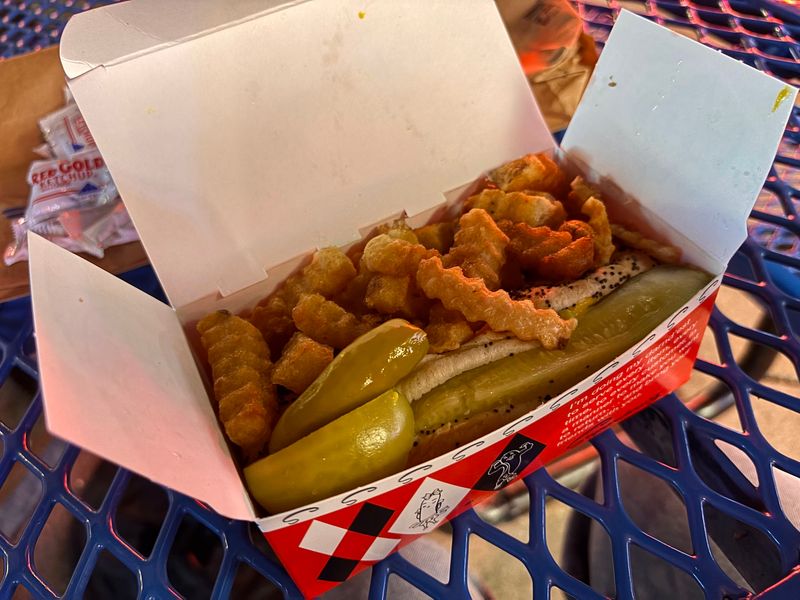
Open the box carefully, because the fries are not standing politely off to one side. Superfries share the package with the main order, filling the space around the sandwich and making the first few bites a small unpacking exercise.
Their crinkle-cut shape supplies the obvious visual difference. Ridges give each piece a textured edge, while the thicker potato center offers a softer contrast when the fries arrive hot.
They are also part of the basic meal calculation. The signature Superdawg comes with fries, so check what is included before adding a separate order simply out of habit.
That matters most when several people order together. A family can end up with more potatoes than expected if everyone adds a side without realizing that the boxes already contain them.
Eat a few fries first to clear room around the hot dog, then switch between the two. This practical approach makes the compact serving easier to handle and lets you enjoy the potatoes before they cool.
In a car, packaging has a bigger job than it does at a table. The box must hold the food, catch loose toppings, and help keep mustard away from clothing, which is another reason to avoid balancing it on an uneven seat.
Bring extra napkins or ask for them when your order arrives, especially if children are sharing. A small paper plate can also help anyone who prefers separating the sandwich from the fries rather than working from the crowded box.
There is no need to treat the side as filler. Look at the cut, notice the contrast between edges and centers, and decide whether you want more before ordering an extra portion.
Finally, resist leaving the open box unattended while taking several photos. The best eating window is right after delivery, when the fries are still warm and ready to share.
Beyond the Beef Dog, the Menu Gets Playful
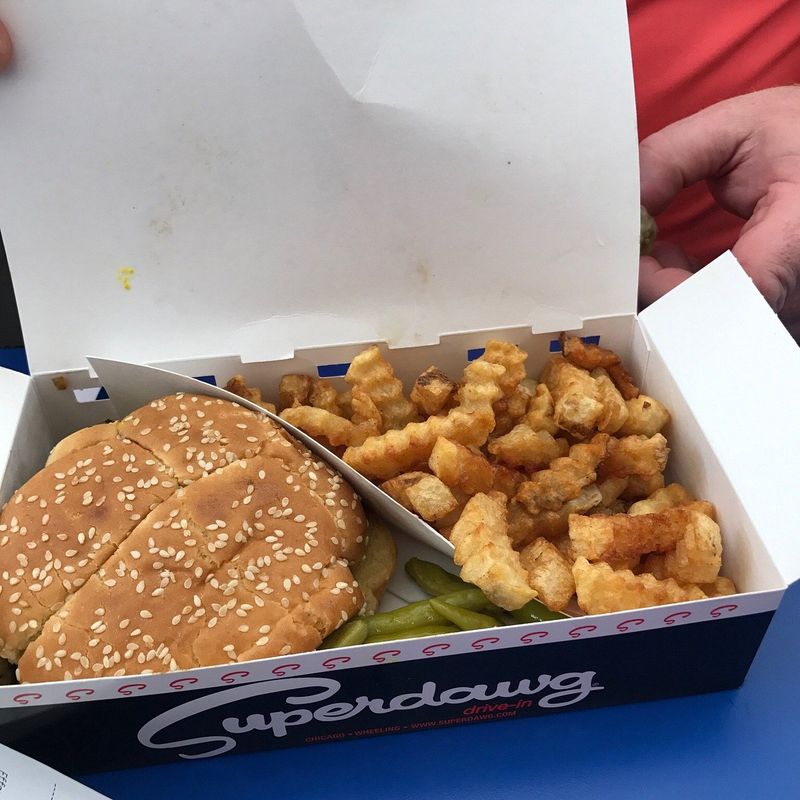
Not everyone in the car has to order the same thing. Superdawg’s menu makes room for sausage, burgers, and cold desserts, so a mixed group can explore different flavors without changing the destination.
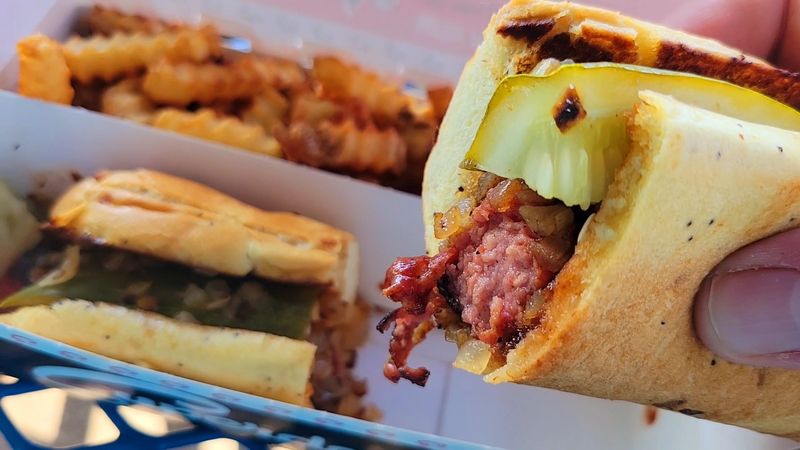
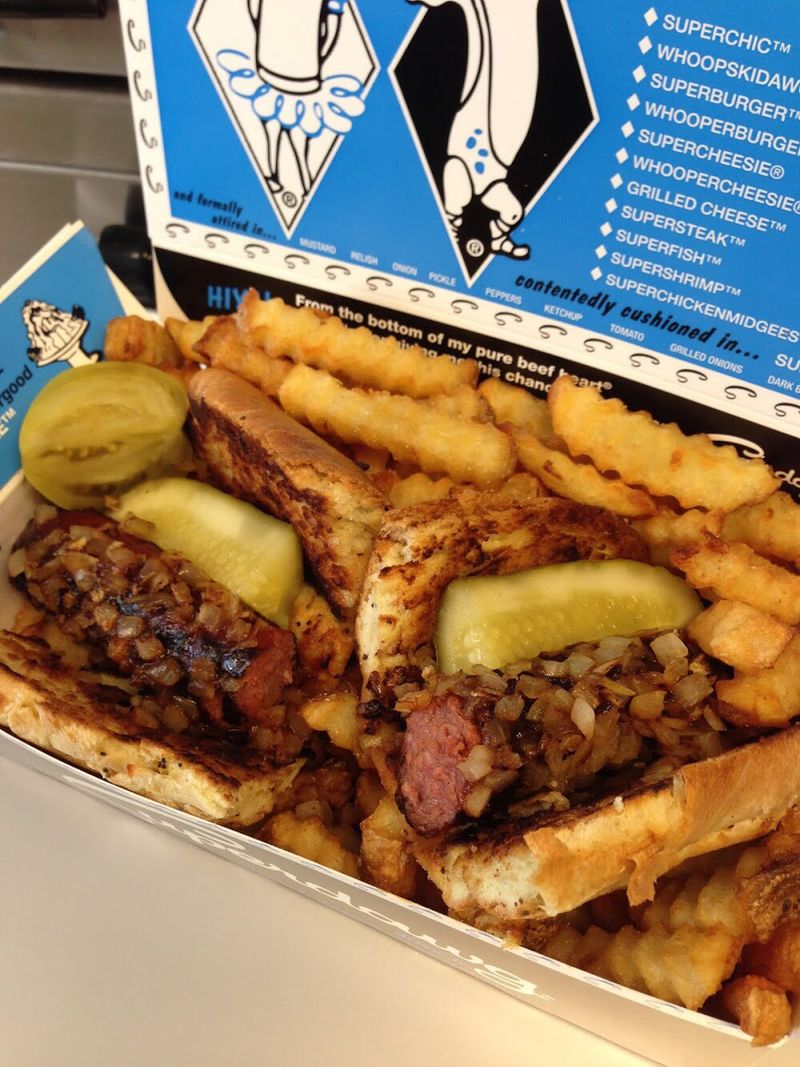
The Whoopskidawg takes the meal in a smokier direction. It is a charbroiled sausage inspired by Romanian, Hungarian, and Polish styles, basted with the restaurant’s special sauce and served on a roll with grilled onion and a pickle.
Compared with the dressed beef dog, that combination puts more emphasis on char, sauce, and cooked onions. Choose it if a sausage sandwich sounds more appealing than mustard, relish, and the standard hot dog toppings.
Burgers offer another route, including the Whoopercheesie. Ask about the current toppings before ordering if you have strong preferences, rather than assuming the dressing will match a familiar burger from somewhere else.
Then come the drinks that can double as dessert. Supermalts and Supershakes bring the thick, creamy side of the menu, with flavors such as chocolate, vanilla, strawberry, and pineapple listed among the choices.
A malt is useful for diners who enjoy that extra malted flavor, while a shake keeps the choice more straightforward. Confirm available flavors when you order, since planning around one specific option can lead to disappointment if it is unavailable.
The Black Kow pairs root beer with ice cream, making it a float rather than an ordinary soft drink. It is a sensible pick for someone who wants a spoonable treat alongside a beverage.
Keep the size of the whole meal in mind before adding dessert. A sandwich with fries and a thick drink can be filling, especially for younger diners or anyone hoping to sample several things.
For two people with different tastes, order separate sandwiches and share a dessert if that suits you. The menu’s playful names become easier to navigate once you know what each contains.
Park, Order, and Let Dinner Come to You
Your car becomes the dining space here, not merely the way you reach it. Pull into a drive-in stall, use the ordering station, and wait for a carhop to bring the food out.
Unlike a drive-through lane, the setup does not ask you to keep inching toward another window. You stay in one place, which gives everyone time to read the menu, settle their drinks, and decide how to share the available space.
First-time visitors should pause before pressing ahead with an order. Locate the speaker controls, check the menu, and choose one person to speak so several voices do not compete through the intercom.
If the speaker is difficult to hear, ask for the message to be repeated. Confirm sandwich names, topping changes, and drinks clearly instead of guessing at a reply, especially when ordering for several people.
Keep a window accessible for delivery and clear a stable place for the food before it arrives. Loose bags, coats, and charging cables can turn a simple handoff into a juggling act inside a crowded vehicle.
Once the order arrives, check that you have the requested items and any utensils you need. Sorting out a missing drink or an unclear topping request is easier before everyone starts opening boxes.
Eating outside is another option when the weather cooperates, with picnic tables providing an alternative to the car. Walk-up ordering also gives visitors without a vehicle a way to use the restaurant without pretending the drive-in stalls are ordinary seating.
Choose the format that fits your group rather than forcing the novelty. Small children may do better at a table, while a couple with a tidy front seat might enjoy keeping the whole meal inside the car.
When you finish, collect wrappers and check for dropped fries before leaving. Watch for servers and pedestrians as you back out of your parking space.
Plan for a Neighborhood Stop, Not a Downtown Dash
Set your map for 6363 N Milwaukee Ave, not a downtown Chicago destination. Superdawg sits on the city’s Northwest Side, so the travel time can be a meaningful part of the outing if you are starting near the central tourist areas.
Give the restaurant its own place in your plans rather than squeezing it between tightly timed reservations. Traffic, finding a space, placing the order, and eating can all take longer than a quick takeaway stop.
The supplied hours list an 11 AM opening every day. Closing is listed at 1 AM Sunday through Thursday and 2 AM on Friday and Saturday, making an evening meal a practical possibility.
Check current hours before leaving, particularly around holidays or if you expect to arrive near closing. A late schedule is helpful, but it should not be treated as a promise that every future date follows the same pattern.
Late service also does not guarantee an empty lot. Leave some flexibility in your schedule, and avoid planning around a specific wait time, since the number of orders can change quickly.
For outdoor seating, consider the weather before choosing your arrival time. A warm afternoon may suit the picnic tables, while rain or cold makes eating in a vehicle the simpler option for drivers.
Review current menu prices when you get there rather than relying on older photos. Look for included fries, decide whether dessert fits your budget, and ask about ingredients if anyone in your group has a food allergy.
Parking deserves patience, too. Enter carefully, follow posted directions, and watch for people crossing between cars and the building instead of treating the lot like a fast-moving drive-through lane.
With those basics handled, the visit stays refreshingly simple: arrive, choose your meal, and settle in. The landmark roof and carhop format provide the occasion without requiring a complicated itinerary or formal dining plans.