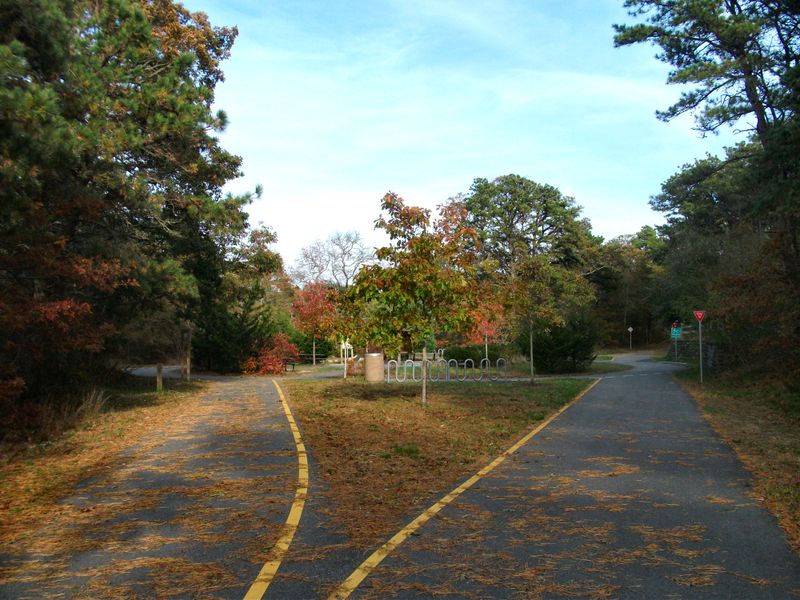
Fall color should not require a steep climb or a whole weekend away. Across Massachusetts, pond paths, river walks, and old rail lines bring bright leaves close to home.
These 12 outings offer shorter, mostly level ways to enjoy the season, with history and neighborhood life along the way. Before leaving, check the official destination website for current hours, fees, parking rules, and trail conditions.
1. Boston Public Garden
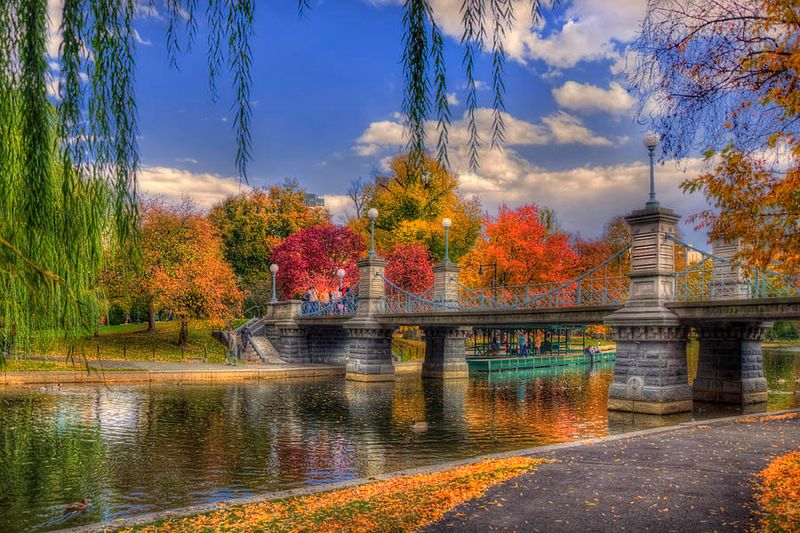
A bright canopy can be waiting just a few blocks from your usual Boston errands. The Public Garden puts autumn trees beside a lagoon, curved paths, and familiar city views, without asking you to tackle a woodland trail.
Follow the paved paths around the water and add a crossing of the pedestrian bridge if its slope suits you. A relaxed loop can stay well under a mile, and benches make it easy to turn the outing into several small walks rather than one continuous push.
The variety of trees gives this stop its character. Look for different leaf shapes and shades instead of expecting every tree to change at once, and enjoy the contrast between warm foliage and the surrounding buildings.
The garden itself has no admission charge, though transportation and parking can add to the cost. Fallen leaves may hide wet pavement, and busy weekends bring crowds near the bridge and statues, so a weekday morning offers a quieter visit.
2. Charles River Esplanade
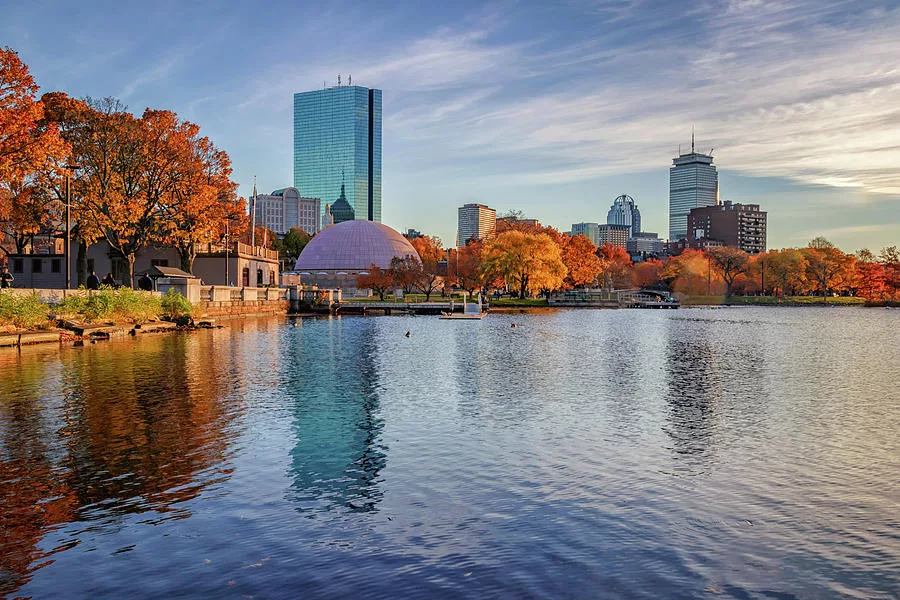
Water gives autumn color a second chance to shine along the Charles. On the Boston side, the Esplanade pairs leafy riverbanks with broad views, so even a short stroll feels more open than a walk through crowded city blocks.
Choose a riverside segment near the Hatch Shell and walk out for 15 or 20 minutes before turning back. You do not need to cover the whole park, and staying on one bank avoids adding bridge crossings to an otherwise mostly level route.
Some stretches feel lively, with runners and people heading to work, while others invite a slower pace beside the lagoons. That mix makes the Esplanade a good choice when you want fall scenery without feeling far removed from everyday Massachusetts life.
Access from the city involves pedestrian bridges over Storrow Drive, and their ramps can add effort. Check your entrance in advance, watch for bicycles where routes are shared, and bring a windproof layer because the exposed riverfront can feel cooler than nearby streets.
3. Fresh Pond Reservation
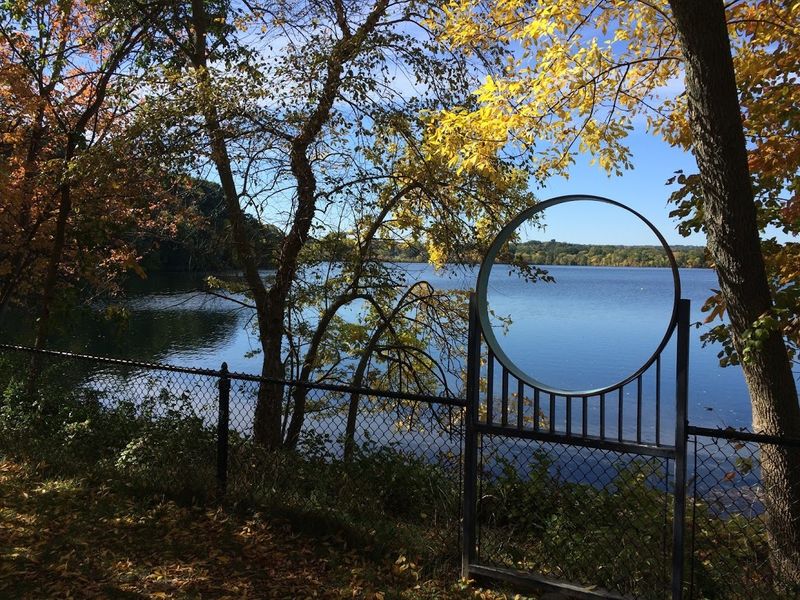
Leave the street noise behind, and a reservoir becomes the center of your afternoon. Fresh Pond Reservation in Cambridge offers a broad perimeter route where autumn leaves frame the water and neighborhood walkers set an unhurried mood.
The full circuit is roughly 2.25 miles, but a shorter out-and-back works just as well. The main route is generally gentle, with some gradual changes in grade, so choose your turnaround by comfort rather than feeling committed to the loop.
Views alternate between open water and tree-lined stretches. That changing scene gives the walk more variety than its simple shape suggests, especially when yellow leaves catch the sun along the reservoir edge.
Fresh Pond is part of Cambridge’s drinking-water system, not a swimming destination. Respect posted rules, give runners and dogs room, and check municipal parking restrictions before driving because some lots require a Cambridge resident permit; wet leaves and loose material can also affect footing on the path.
4. Arnold Arboretum’s Ponds and Meadow Road
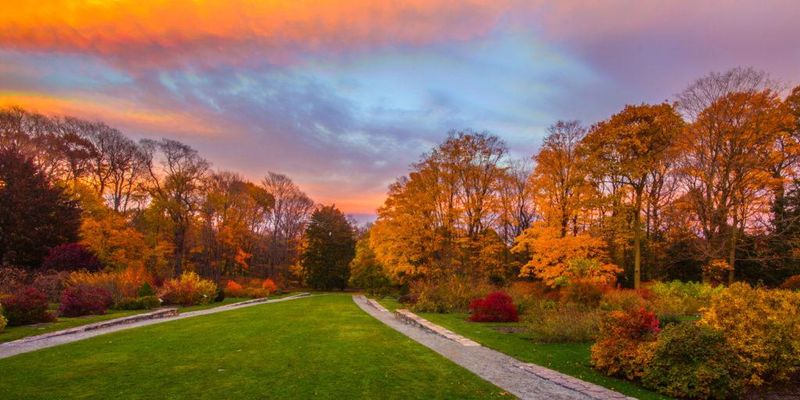
Think of this outing as leaf browsing rather than hill climbing. At the Arnold Arboretum, the lower routes near the ponds and Meadow Road let you enjoy a rich tree collection while leaving the steeper climbs for another day.
Enter at the Arborway gate near the Hunnewell Building and use the official map to plan a short route toward the ponds. Turn around whenever you like, and skip the summit roads to Bussey Hill and Peters Hill if avoiding elevation is your main goal.
Tree labels add a small discovery to the scenery: you can connect a brilliant patch of color with the plant that produced it. Because species change at different times, the pleasure is in spotting individual standouts rather than chasing one perfect statewide peak.
The grounds have no admission charge, but parking is limited and nearby street rules matter. Check current gate hours and route conditions, and remember that even the lower paved roads include gentle grades rather than a completely flat course.
5. North Bridge and the Concord River
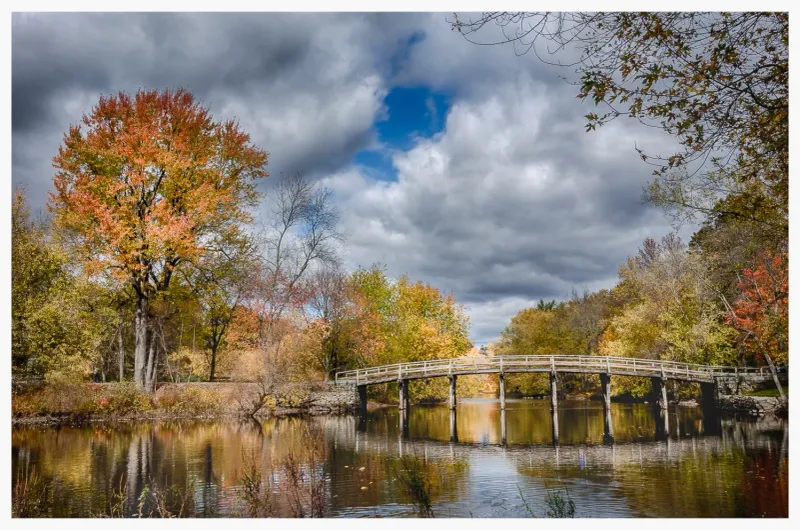
Few short walks place so much Massachusetts history beside the water. Around Concord’s North Bridge, fall trees soften a landscape tied to the fighting of April 19, 1775, making this a place for both scenery and reflection.
Use the Monument Street approach for a relatively short walk toward the bridge, rather than assuming every park entrance offers the same terrain. The route from the North Bridge Visitor Center involves more slope, so your starting point matters.
Walk to the river, cross the bridge if conditions suit you, and pause near the monuments before returning. The outing can remain comfortably under a mile, with plenty to notice in the river reflections, open grass, and wooded edges.
The park does not charge an entrance fee, but visitor buildings follow schedules that differ from outdoor access. Check National Park Service alerts for construction or closures, and expect gravel, weathered wood, and occasional uneven footing rather than a fully paved route throughout.
6. Great Meadows National Wildlife Refuge
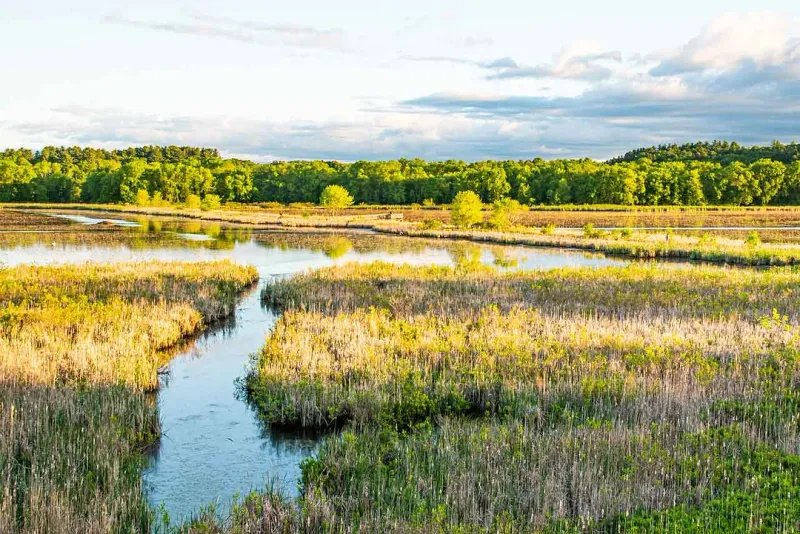
Not all autumn color hangs overhead. At the Concord unit of Great Meadows National Wildlife Refuge, gold marsh plants and colorful woodland edges spread across an open wetland landscape, giving fall a wider, quieter stage.
The dike trails offer mostly level walking, with options for a short out-and-back instead of a longer circuit. These are natural-surface routes, however, and flooding or muddy sections can change an easy-looking plan quickly after rain.
Bring binoculars if you have them, because migrating waterfowl may provide as much interest as the leaves. Even without special gear, you can watch the movement of birds over the water and enjoy views that do not depend on a steep overlook.
Confirm current access and any applicable fees with the U.S. Fish and Wildlife Service before visiting.
Pets are not allowed on refuge trails, and exposed sections can be windy, so this is best treated as a wildlife outing with comfortable shoes and a spare layer.
7. Assabet River Rail Trail
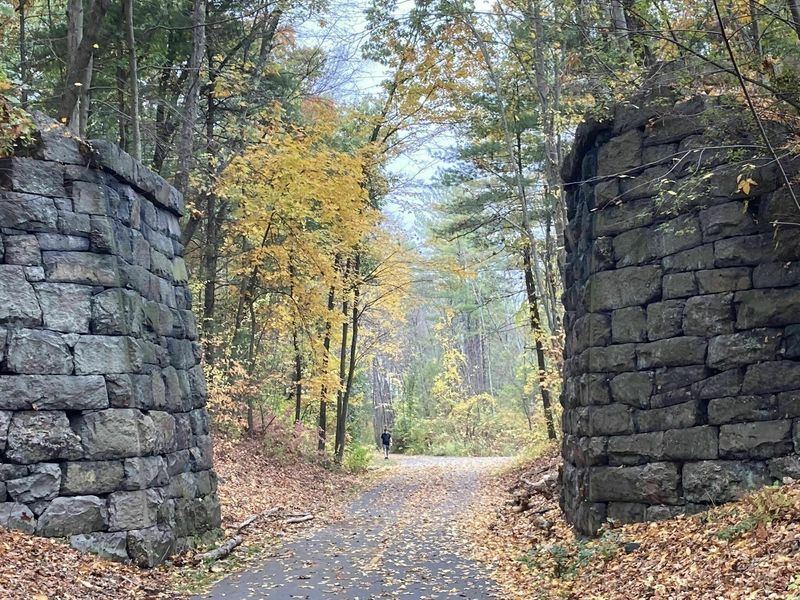
An old railroad corridor does the hard work of keeping the grades modest. The Assabet River Rail Trail gives walkers a paved route through parts of Marlborough, Hudson, Stow, Maynard, and Acton, with wooded stretches that brighten in fall.
Rather than treating the trail as one long challenge, pick a local access point and walk half a mile before deciding whether to continue. The developed trail has separate sections, so consult the official map instead of assuming an uninterrupted route between every town.
Hudson makes a useful base when you want to pair foliage with a downtown stop. Depending on where you enter, the scenery shifts between neighborhood edges, trees, and wetter ground, giving the outing an everyday, close-to-home feel.
Bicycles share the pavement, and road crossings deserve your full attention even on a relaxed walk. Check parking signs and construction notices, keep to the right, and avoid blocking the path when stopping for a photograph of a particularly colorful stretch.
8. Norwottuck Rail Trail
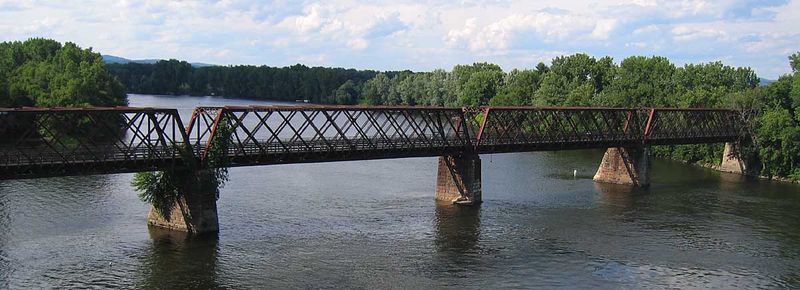
A river crossing can deliver the payoff of an overlook without the climb. On the Norwottuck Rail Trail, the former railroad bridge between Northampton and Hadley opens up views of the Connecticut River and its changing banks.
Start near the western end and make the bridge your main destination for a compact outing. If you want more distance, continue east toward Hadley, where wooded sections and nearby farmland add another side of the Pioneer Valley’s autumn landscape.
The paved rail route has gentle grades, though the approach from your chosen parking area may differ. An out-and-back of one or two miles gives you room to enjoy the scenery without committing to the trail’s much longer overall length.
Check the Massachusetts Department of Conservation and Recreation’s current parking, fee, and closure information before setting out. The bridge is exposed to wind, and cyclists can approach quickly, so stay aware while looking across the water and move aside fully when stopping for pictures.
9. Ashuwillticook Rail Trail
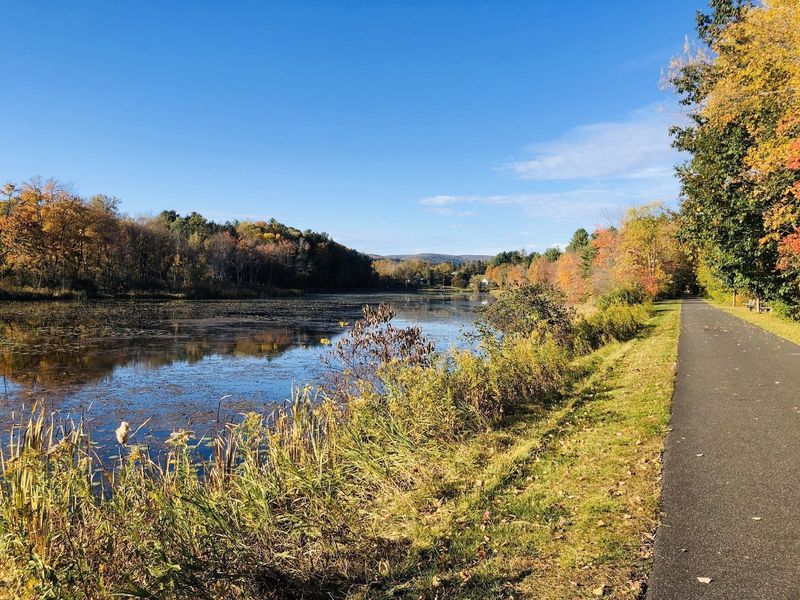
The Berkshires can look wonderfully dramatic from a nearly level path. Along the Ashuwillticook Rail Trail, former railroad grades bring water views and wooded hills within reach without sending you up those hills yourself.
Choose a starting point near Cheshire Reservoir and plan a short out-and-back along the shoreline area. A mile or two is enough for a satisfying walk, and there is no reason to cover the full trail simply because it continues farther.
Water, open sky, and distant slopes give this route a different feel from a closed-in forest walk. On a calm day, the reservoir adds reflections to the scene, while mixed tree cover means the colors can vary from one stretch to the next.
The paved surface is shared with cyclists and other trail users, so keep right and pause off the travel lane. Verify current DCR parking rules, fees, and alerts, and carry a warm layer because open sections beside the water can feel chilly even in bright sunshine.
10. Stony Brook Wildlife Sanctuary
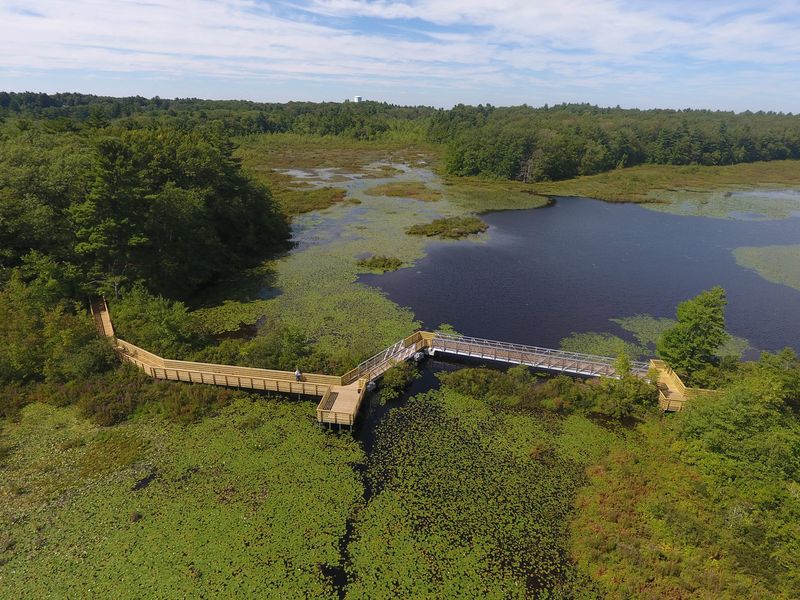
A boardwalk changes the way you see a pond. At Stony Brook Wildlife Sanctuary in Norfolk, waterside trails bring you close to reeds, reflections, and autumn trees without requiring a summit as the reward.
Use Mass Audubon’s trail map to choose a short pond-focused route and ask about current boardwalk conditions before arriving. Some approaches have natural surfaces, roots, or small changes in grade, so the presence of a boardwalk should not be read as a promise that every route suits every visitor.
The appeal here is small-scale discovery. A leaf floating on the water, a bird moving through the brush, or a bright tree reflected beside the walkway can turn a modest distance into a full afternoon’s memory.
Admission charges and member benefits can change, so confirm the current arrangement along with sanctuary hours. Leave pets at home, follow posted wildlife rules, and take extra care on damp wooden surfaces; choosing a shorter route leaves more time to stop and look.
11. Blackstone River and Canal Heritage State Park
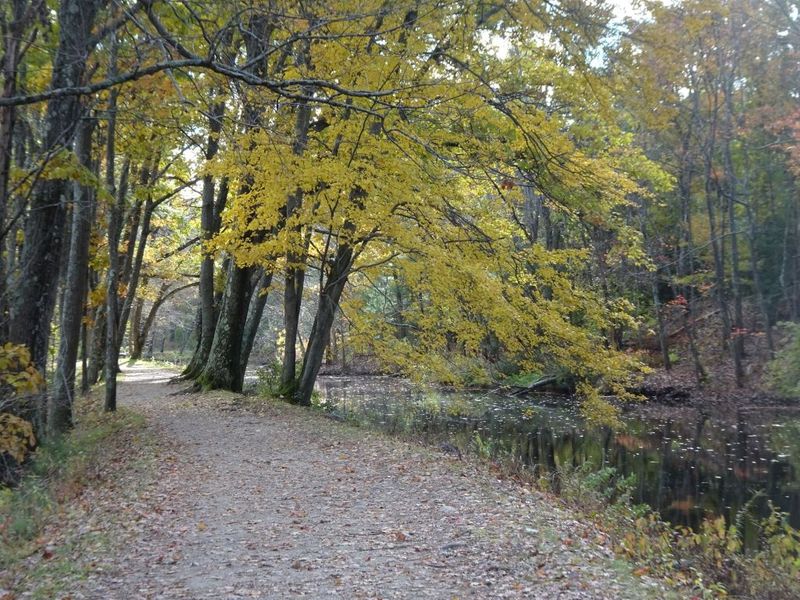
For a walk with an industrial-history thread, follow the water near River Bend Farm in Uxbridge. The canal-side landscape at Blackstone River and Canal Heritage State Park recalls a time when waterways helped move goods through this part of Massachusetts.
Choose the towpath for a mostly level out-and-back, keeping your distance modest rather than exploring every connecting trail. Canal reflections, fallen leaves, and wooded banks provide the fall scenery, while the route’s purpose gives it a story beyond the colors.
A visitor-center stop can add context if the building is open during your visit. It is also fine to enjoy the outdoor landscape on its own, reading available signs and noticing how the narrow canal differs from the nearby river.
Check DCR’s current hours, parking fees, and trail alerts before traveling. The towpath is not uniformly paved, and muddy patches or exposed roots may slow your pace after rain, so firm footwear and a willingness to turn back are useful here.
12. Cape Cod Rail Trail in Nickerson State Park
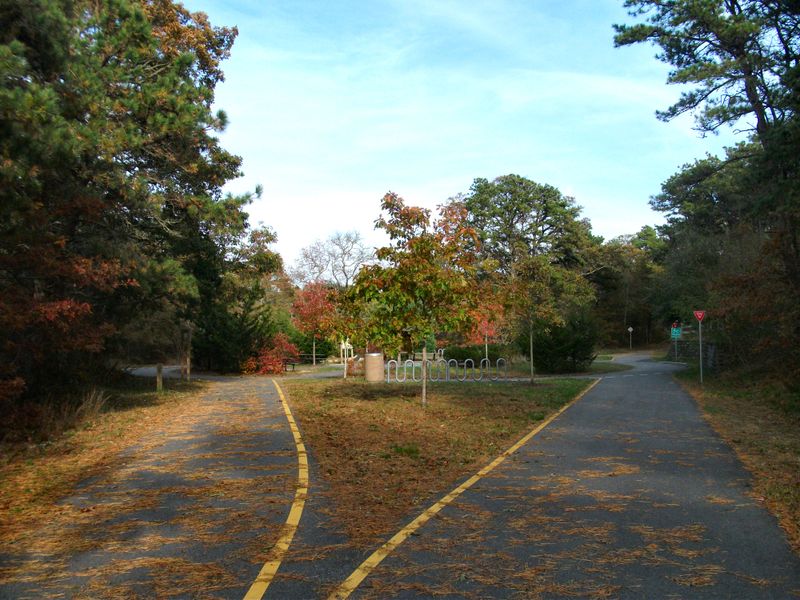
Cape Cod’s fall palette often leans toward bronze, rust, and gold rather than a wall of scarlet. The Cape Cod Rail Trail through Nickerson State Park in Brewster lets you enjoy that quieter mix on a paved route through oak and pine woods.
Stay on the rail trail for the gentler option, since the park’s pond trails and internal roads can involve more hills. Pick a mapped access point, walk for a comfortable stretch, and return the same way instead of trying to connect unfamiliar side paths.
Evergreens give the changing leaves a dark backdrop, and gaps in the canopy let low autumn light reach the pavement. This is a useful choice for Cape residents who want a seasonal outing close to home, rather than a drive inland for mountain scenery.
Consult DCR information for current parking charges, seasonal facilities, and closures. Cyclists share the route, and services can be farther apart than expected, so bring water and use a map to confirm your return distance before continuing.