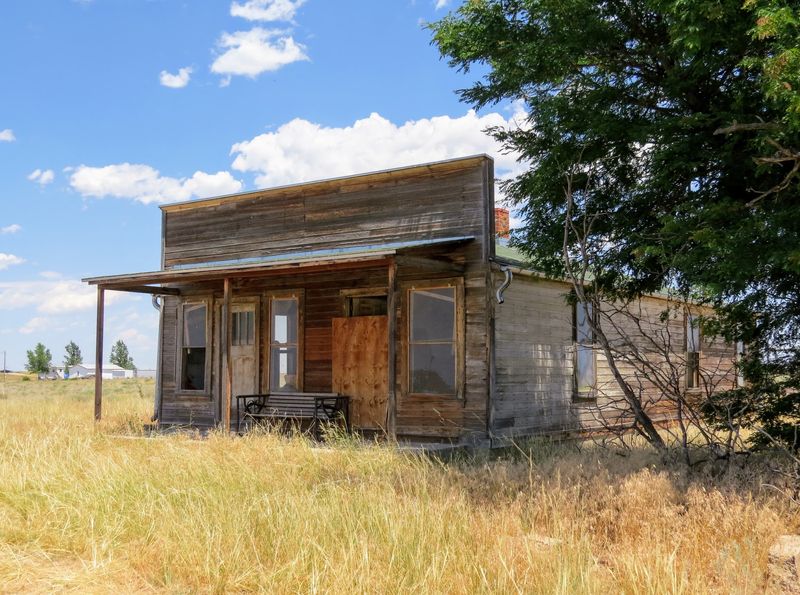
Out on the open prairie east of Greeley, a few weathered buildings stand beside the highway, and most drivers pass them without a second look. Those buildings are what remains of a town that Black families built by hand in the early 1900s, a place founded on a big dream of owning land and farming it.
The Dust Bowl years eventually emptied it, and for decades its story was close to forgotten. Today a restoration effort is bringing it back into view, and it is a short, free stop that tells one of the most meaningful stories on Colorado’s Eastern Plains.
A Quiet Pullout on US-34
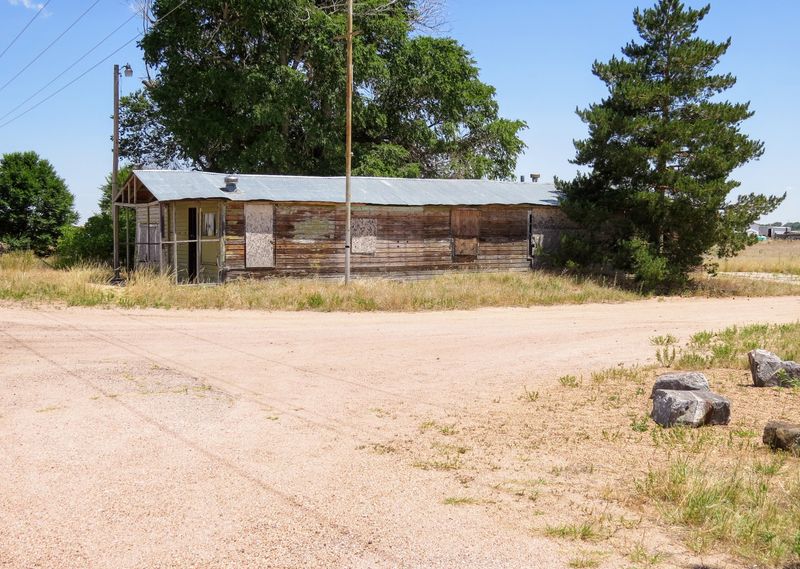
Blink near the right mile marker and the whole place can slip past your windshield.
The site is Dearfield, a historical landmark at 42468 US-34, Orchard, CO 80649, on Colorado’s Eastern Plains. It sits along the highway in Weld County farm country, with open land stretching out in every direction.
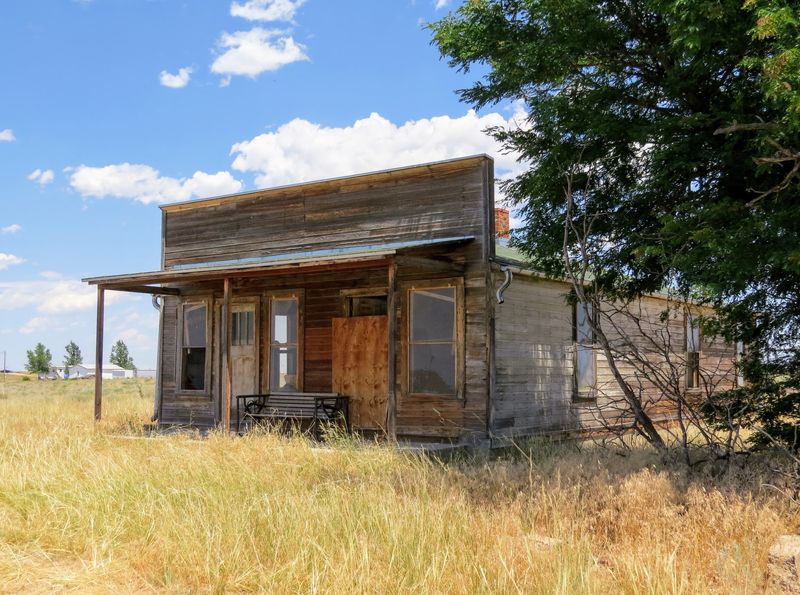
What remains is small. A handful of old buildings, a stone memorial and some markers are the main features today.
Even so, the site carries real weight. It is often described as the first African American settlement in Colorado, and some locals call it the first and only all-Black settlement of its time in the state.
The National Park Service lists Dearfield on its website, which offers background reading before a trip. That is a smart move, since on-site information has been limited in past years.
For Front Range residents, the stop works well as part of a longer drive east. It does not take much time, and there is no admission fee mentioned for the grounds.
Small as it looks from the road, the story behind those walls is anything but small.
The Jacksons and Their Prairie Dream
Every town starts with somebody stubborn enough to believe in it.
For Dearfield, those believers were O.T. and Minerva Jackson, an African American couple who founded the community in the early 1900s. Their goal was a farming town where Black families could own land and build a future.
The idea took root. Dearfield grew into an agricultural community on the plains, a place shaped by vision and steady work.
That spirit still moves people. Many who stop here leave talking about how inspiring it is to see what determination could build in such an open, demanding landscape.
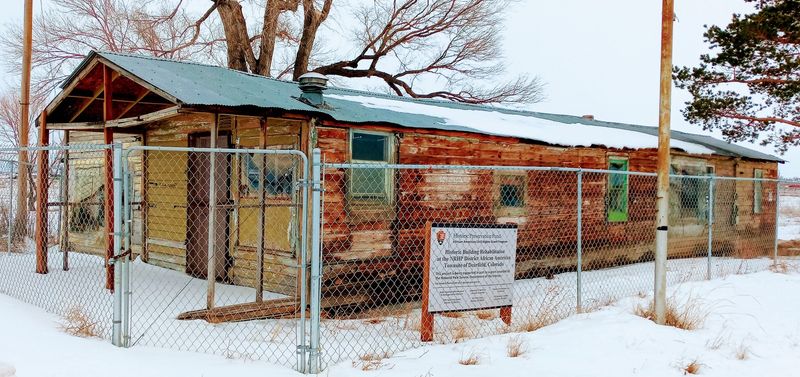
The founders’ own home also served as a hotel. It remains one of the structures most closely tied to the couple who started it all.
Knowing their names changes the experience of standing on this ground. The buildings stop being anonymous ruins and become part of a family’s very personal plan.
How the Dust Bowl Emptied a Town
Hard work can build a town, but it cannot make it rain.
Dearfield thrived for a time as an agricultural community. Then the Dust Bowl arrived, and the dry, difficult years proved too much for the farming economy that held the town together.
Families gradually moved on. Over time the community faded until only a few structures were left beside the highway.
The stone memorial on site tells this part of the story directly. It commemorates Dearfield as an African American farming community that was bested by the Dust Bowl.
Many people leave with a mix of feelings. There is pride in what was achieved and a reflective sense of what was lost.
Some describe it as a peaceful spot for exactly that kind of thinking. The quiet surroundings make it easy to stop and consider the people who once called this stretch of prairie home.
It is a short chapter of Colorado history, and one that sticks.
Three Buildings Still Standing Watch
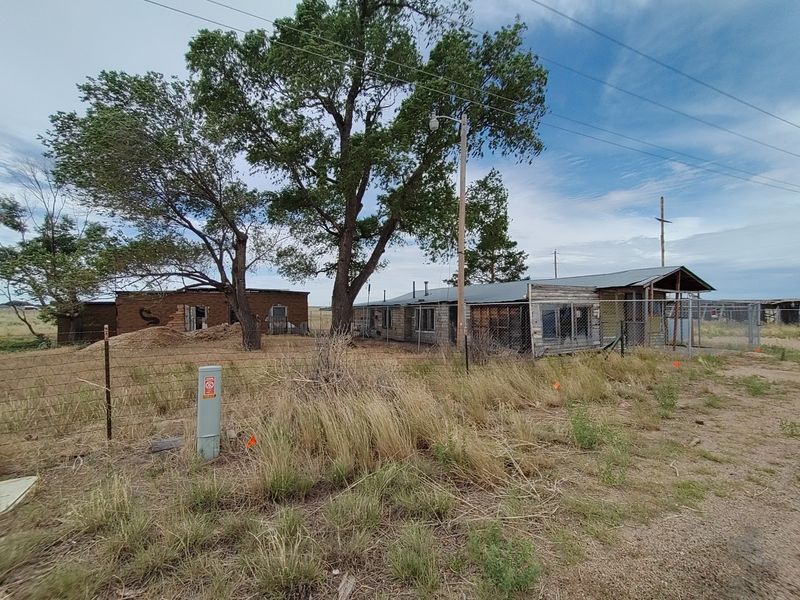
Count them on one hand and you will still have fingers to spare.
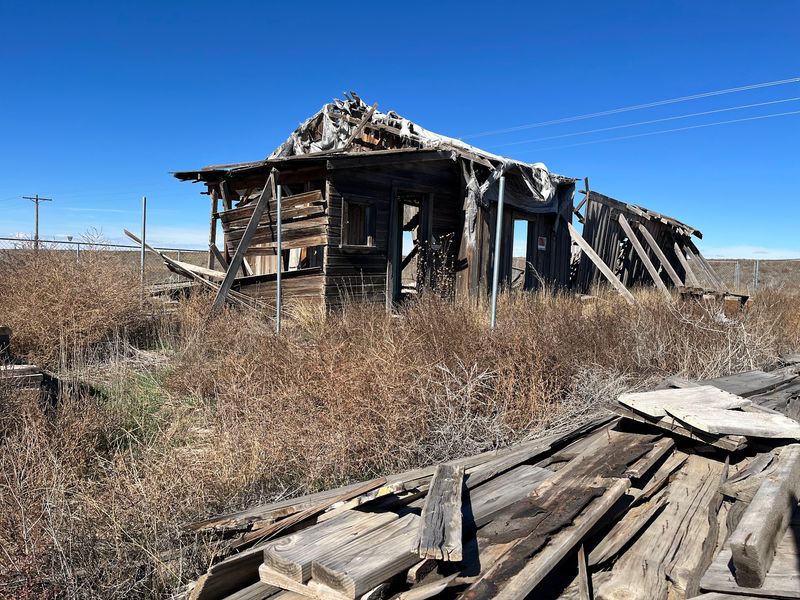
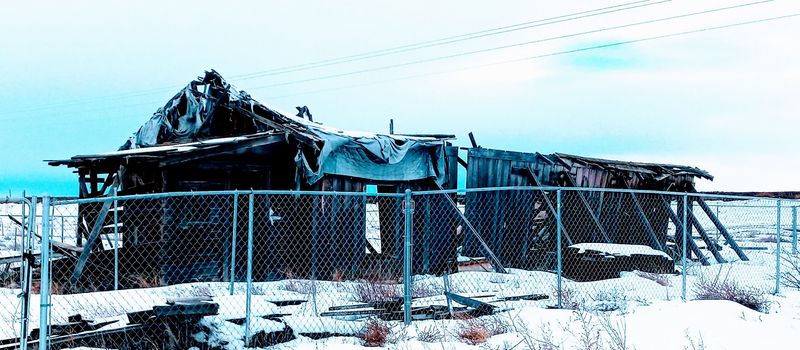
Three main structures remain at Dearfield. One has been described as mostly collapsed, while others are in better shape.
The two safely standing buildings are the founders’ home, which doubled as a hotel, and an old gas station. During special events, people have been able to walk through them.
Chain link fencing surrounds the structures. That protects them while restoration continues, though it means most days are about looking from the outside.
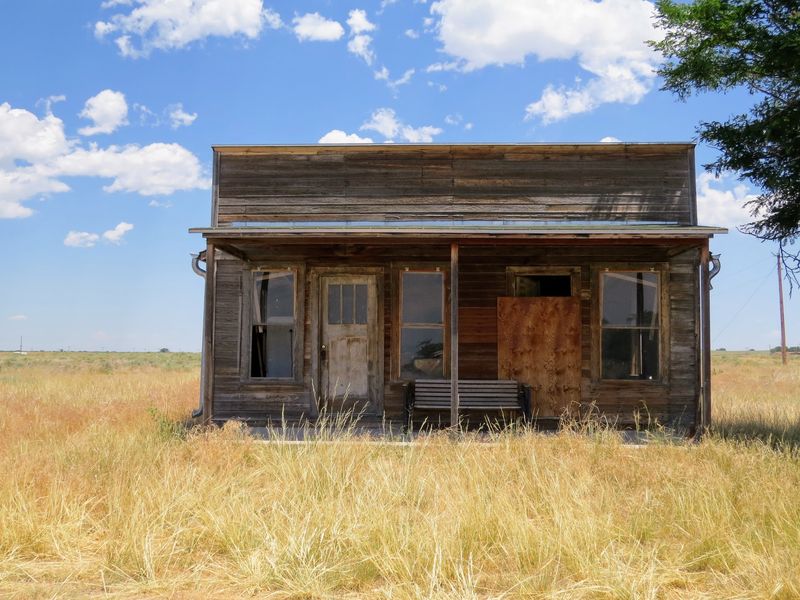
Down the road a bit sits another boarded-up building that appears to have been an old store. It looks solid enough that it could one day be rebuilt.
Signs identifying each building have been scarce at times. A quick read on the National Park Service page beforehand helps you tell the hotel from the gas station without guessing.
Modest walls, yes, but each one is a survivor.
Stone Memorial by the Roadside
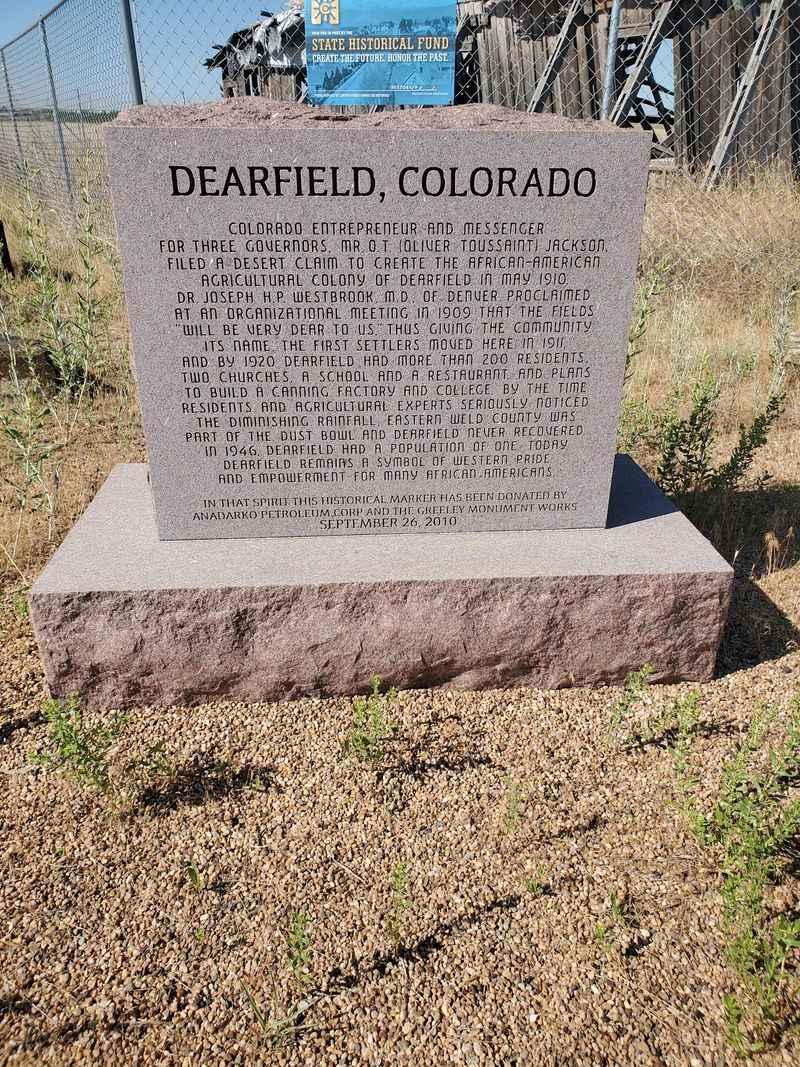
Some history fits on a plaque, and Dearfield’s plaque packs in plenty.
A stone memorial stands at the site to commemorate the town. It describes Dearfield as an African American agricultural community and explains its eventual decline during the Dust Bowl.
For many people, the memorial is the anchor of the visit. It gives quick context before a walk along the fence lines.
Point of interest markers along the highway also signal that you are close. They are your cue to slow down.
Earlier in its history, the site had very little interpretive signage, which frustrated some travelers. Restoration work is aimed at changing that over time.
Plan a few minutes here to read and reflect. It is the closest thing the site has to a front door, and it sets the tone for everything else on the grounds.
Restoration Work and Who Is Behind It
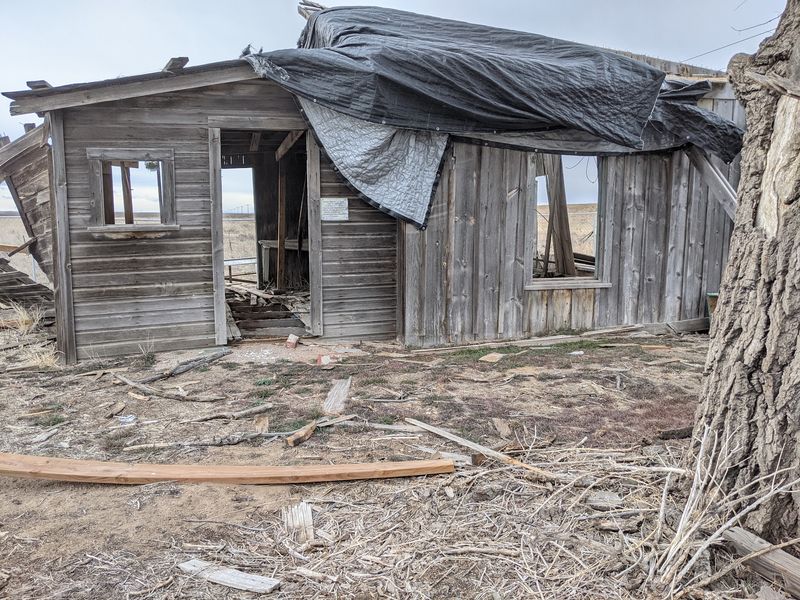
Good news for anyone who worried this town would quietly crumble away.
Dearfield is in the middle of a restoration effort. Buildings have been shored up and fenced off, and signage indicates the property now belongs to a nonprofit.
The Black American West Museum and Heritage Center in Denver is tied to the project. Donations to that museum help restore the remaining buildings and may eventually lift and renovate fallen structures.
Preservation grant dollars have also supported the work. Former Governor John Hickenlooper is among those credited with helping push preservation forward.
Some folks have watched the site decline over many years of driving past. Vandalism and neglect were real problems in earlier times.
The hope now is that Dearfield becomes a true destination where future generations can learn. A museum on site is a wish shared by many who stop by.
Right now, you are catching the story mid-rebuild.
Dearfield Day and the PBS Spotlight
Television brought a lot of new faces down this lonely stretch of road.
Rocky Mountain PBS featured Dearfield on its Colorado Experience series. Many people make the trip after watching the episode, and it is a great primer before you go.
The program fills in the full story that the site itself cannot yet tell. Watching first makes the remaining buildings far more meaningful.
Then there is Dearfield Day, a special event at the site. During the event, people have been able to walk inside the founders’ home and the gas station.
Some fans return again and again. One devoted supporter counted a fifth trip on a Dearfield Day.
Event timing is the best way to see more than fences. Keeping an eye on the Black American West Museum for updates is a sensible plan.
A screen and a celebration, it turns out, can do a lot to keep a town remembered.
Getting There Without Missing It
Here is the trick: slow down before you think you need to.
Two short dirt roads, more like driveways, lead off US-34 into the town area. They are easy to miss, and plenty of drivers sail right past on the first try.
Watch for the point of interest markers along the highway. Once those appear, ease off the gas.
Expect some dirt road driving depending on your route. Plan accordingly if your vehicle prefers pavement.
The site is listed as open, and there is no posted fee. A stop here typically takes a short time, which makes it an easy add-on to an Eastern Plains day trip.
Midday trips are common, but summer heat out here can be serious, so bring water and sun protection. There is little shade on the open prairie.
Birders get a bonus. Swallows, flycatchers and doves have been spotted around the grounds.
Worth the Detour, With the Right Expectations
Go for the story, not the spectacle, and Dearfield delivers.
The site holds a 4.2-star average on Google Maps, and opinions split in a predictable way. People hoping for a full ghost town walk often leave wanting more, since there is little to explore beyond fenced buildings.
Those who come prepared tend to leave moved. History lovers, families teaching kids about Colorado’s past and anyone curious about Black history on the plains will find real value here.
Do a little homework first. The National Park Service page and the PBS episode turn a ten-minute stop into a meaningful one.
It also suits the retiree road-tripper or weekend driver looking for something free and uncrowded. Crowds are rarely an issue on this quiet stretch.
The best may be yet to come as restoration moves forward. A return trip in a few years could look very different.
For now, stand by the memorial, read the names, and let this prairie town have its moment.