New Jersey has never had a shortage of oddball landmarks, but the Palace of Depression sits in a category of its own. This thing was not built by a millionaire with a taste for drama or a developer chasing headlines.
It was built in Vineland by George Daynor, a man who said he had lost everything and answered that loss by creating a handmade fantasy from junk, mud, broken glass, bed frames, car parts, and whatever else the land or roadside offered up.
He opened it to the public on Christmas Day in 1932, and for years people came to gawk, laugh, marvel, and try to figure out whether they were looking at folk art, architecture, performance, or all three at once.
The original palace was later destroyed, but the story refused to die. That is the real hook here.
The Palace of Depression is not just weird. It is one of New Jersey’s strangest and most stubborn monuments to reinvention.
How a penniless dreamer turned a Vineland swamp into a palace
It started with a rough patch of South Jersey land that most people would have written off instantly. George Daynor settled on boggy ground in Vineland that had been used as a dumping area, which meant it came pre-loaded with the exact sort of material respectable builders avoid and imaginative builders obsess over.
Accounts of Daynor’s early life are slippery because he loved mythmaking, but the broad outline stuck: he arrived in Vineland around 1929, claimed he had once struck it rich in the Alaska gold fields, then lost his fortune in the 1929 stock market crash. Whether every part of that story was true mattered less than what he did next.
Instead of shrinking under the weight of the Depression, he decided to construct a palace and give it a name that practically dared despair to come closer. Over the next few years, he turned the site into a bizarre, many-spired compound assembled from castoff objects and sheer nerve.
An oversized kettle became a dome. Wagon wheels helped support towers. Car fenders became arches. Iron bedsteads and chunks of salvaged wood found new life in walls and decorative details.
Daynor even claimed an angelic spirit had guided him to New Jersey and supplied the design, which tells you almost everything you need to know about the scale of his imagination.
By the time he opened the place to the public on Christmas Day 1932, Vineland had gained a landmark that felt half folk-art environment, half fever dream.
In a state full of boardwalk flash and polished historic sites, the Palace of Depression came at visitors from the opposite direction. It looked improvised because it was improvised, and that rawness was the point.
Why junk, glass, and mud became the building blocks of something unforgettable
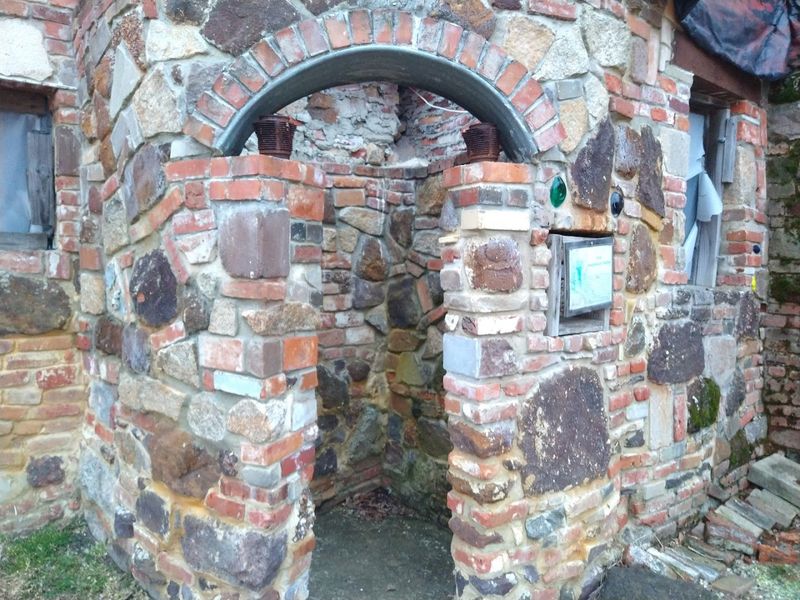
Calling the Palace of Depression a junk structure is technically true, but it misses the artistry. Daynor was not simply stacking trash into a pile and hoping people would be impressed.
He was repurposing discarded objects with the confidence of someone who saw possibility where everyone else saw scrap. The property already contained pieces of the future palace, since the land was littered with auto parts, bedsteads, petrified wood, and other leftovers from ordinary life.
He used mud as binding material, embedded colorful bottles into surfaces, and worked metal and found objects into features that were both structural and theatrical. That blend is what made the place memorable.
The palace was not clean, symmetrical, or conventionally elegant. It was textured, improvised, and visually restless.
One detail led to another. A wall glittered with glass. An arch leaned into a curve made from salvaged metal. Towers rose from pieces never intended for towers.
Visitors did not need an architecture degree to get the appeal. They just needed eyes and a tolerance for the unexpected.
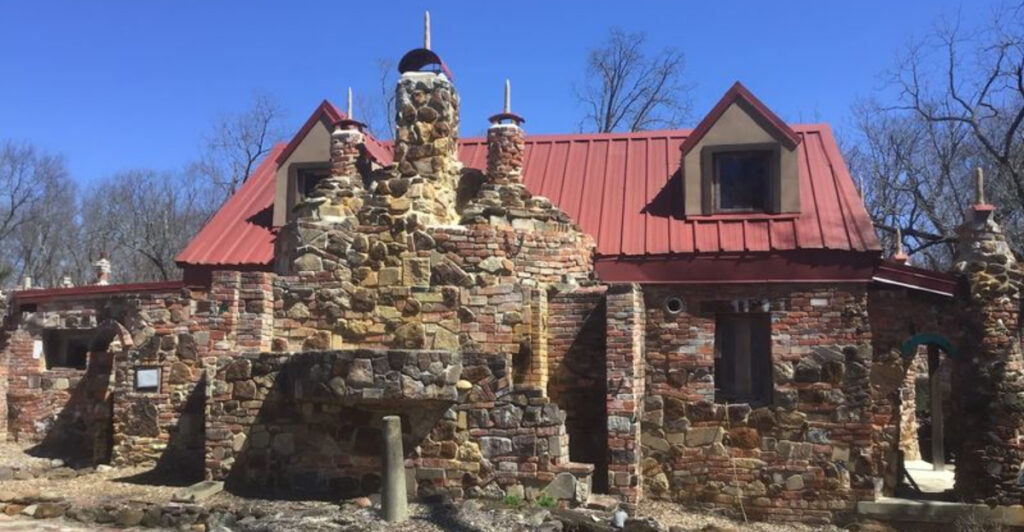
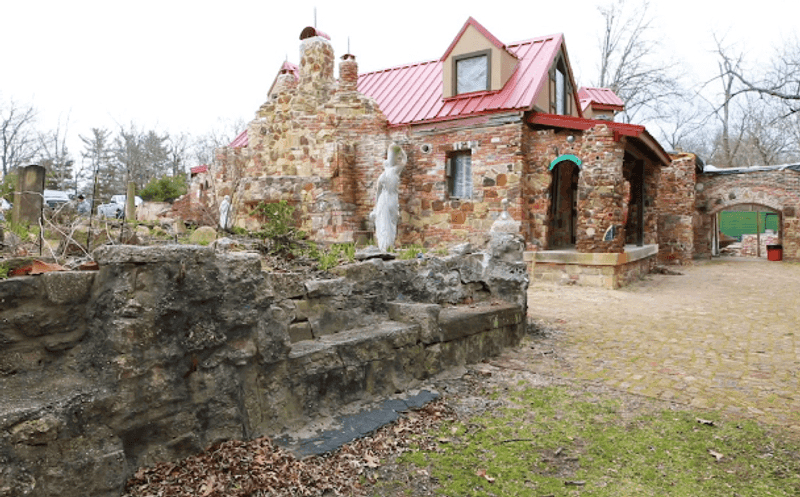
Even the reconstructed version still carries that patchwork spirit. Reporting from the site describes brick, glass bottles, hubcaps, marble pieces, and all sorts of found materials pressed into the current fabric of the place.
One recreated door even nods to Daynor’s original flair for the dramatic, using shells to echo a design once made with turtle shells. That is the magic of this landmark.
It does not hide its ingredients. It flaunts them.
In a polished age where tourist sites often feel over-managed, the Palace of Depression still reads like a handmade argument that beauty can come from leftovers, and that a castoff object is only one bold decision away from becoming ornament.
The strange beauty that made the Palace of Depression impossible to ignore
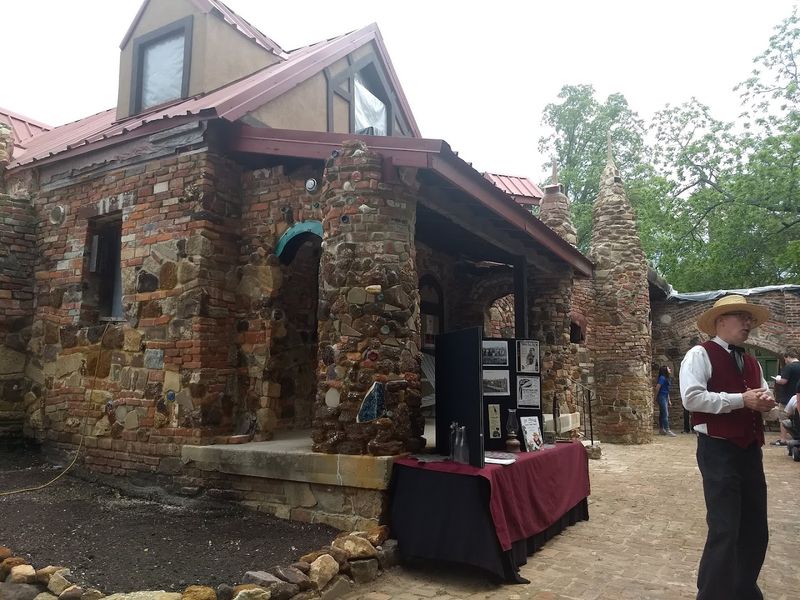
Photos of the palace never fully prepare you for how weirdly charming it sounds in person. People have described it in ways that make it feel almost impossible to pin down.
One report compares the current reconstruction to a mash-up of a red-roofed country house, a hobbit hole, and a medieval castle. That feels right, but it is still incomplete, because the Palace of Depression was also a stage set for George Daynor himself.
He knew how to work a crowd. He cultivated the look, the beard, the stories, the sense that a visitor was stepping into the orbit of a character who had built not just a structure but a legend around it.
Curators and local historians have noted that he was larger than life and loved spinning tales that hooked the imagination. That charisma helped turn a homemade oddity in Vineland into a national attraction.
For roughly a quarter century, the palace drew crowds from around the world, and estimates place visitation at around 250,000 people. It even landed a spot on the New Jersey map and attracted enough attention for Universal Studios to make a short film about it.
None of that happened because the palace was beautiful in the refined sense. It happened because it was unforgettable.
It had the same quality as the best roadside attractions and outsider-art environments: the feeling that one person’s private vision had spilled into public view at full scale. You could laugh at it, admire it, debate it, or stare at it trying to make sense of the whole thing.
What you could not really do was forget it. That is rare.
Plenty of landmarks are nice. Far fewer feel like they were dreamed into existence by someone who refused to recognize the normal rules.
How George Daynor turned hardship into one of New Jersey’s oddest attractions
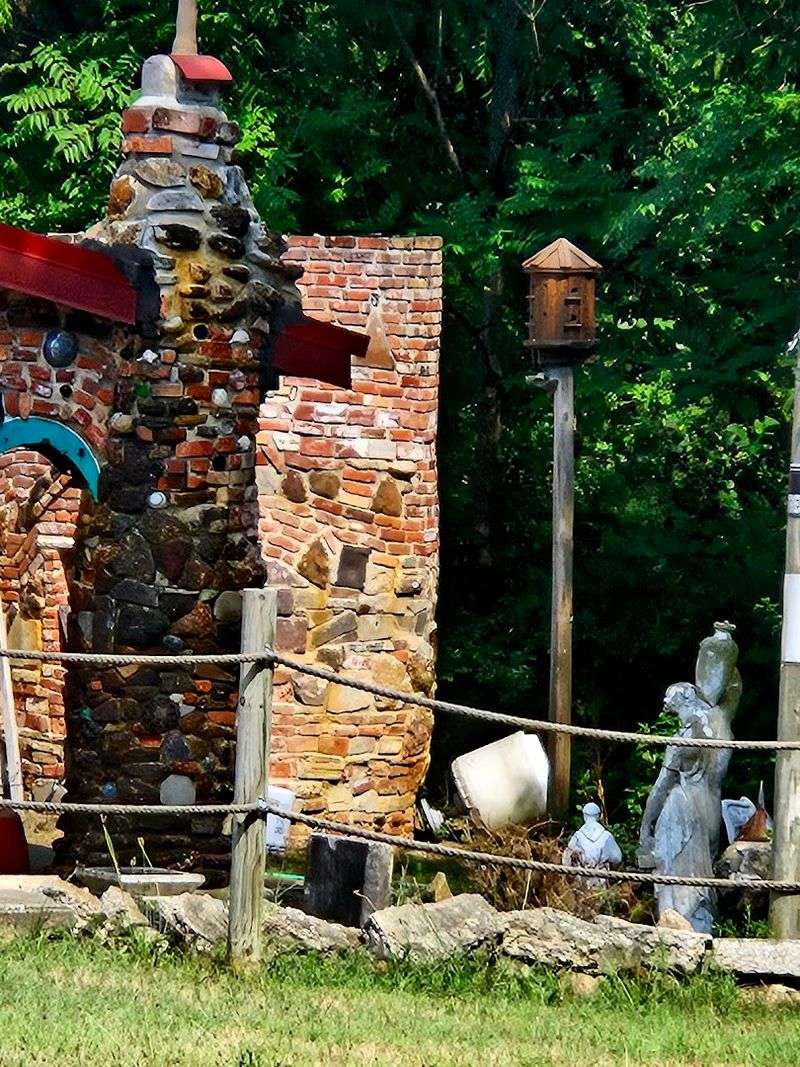
Hard times shaped the palace, but they did not make it solemn. That is one of the most fascinating parts of the story.
The name Palace of Depression could have signaled defeat, a monument to misery, a dusty reminder of economic collapse. Instead, Daynor used the phrase almost like a taunt.
He built the place as an answer to the Great Depression, not as a surrender to it. According to preservation archives and reporting on the site, he pitched it as proof of resilience and billed it as an antidote to the bleakness of the era.
That framing gave the palace its emotional charge. It was not just junk architecture.
It was a declaration that even in a national crisis, one man could still create spectacle, pull in visitors, and turn hardship into a livelihood. Daynor charged admission, promoted himself relentlessly, and kept inventing reasons for the public to pay attention.
He clearly understood that the palace needed story as much as stone and metal. Of course, his appetite for attention also fed the darker side of his legend.
In 1956, he falsely told authorities and news outlets that the palace had a connection to the kidnapping of infant Peter Weinberger. The stunt brought federal consequences, and he was later jailed for fraud.
By then, the line between showmanship and self-sabotage had blurred badly. Still, even that messy chapter says something about the force of his personality.
Daynor was not a quiet folk artist laboring in obscurity. He was an unapologetic self-mythologizer who made himself inseparable from the attraction.
New Jersey has plenty of famous builders, promoters, and hustlers in its history. Few of them answered personal ruin by constructing a castle from bed frames and bottle glass in Vineland and persuading the nation to come look at it.
That takes a special kind of audacity.
Why the palace disappeared and how the community brought it back
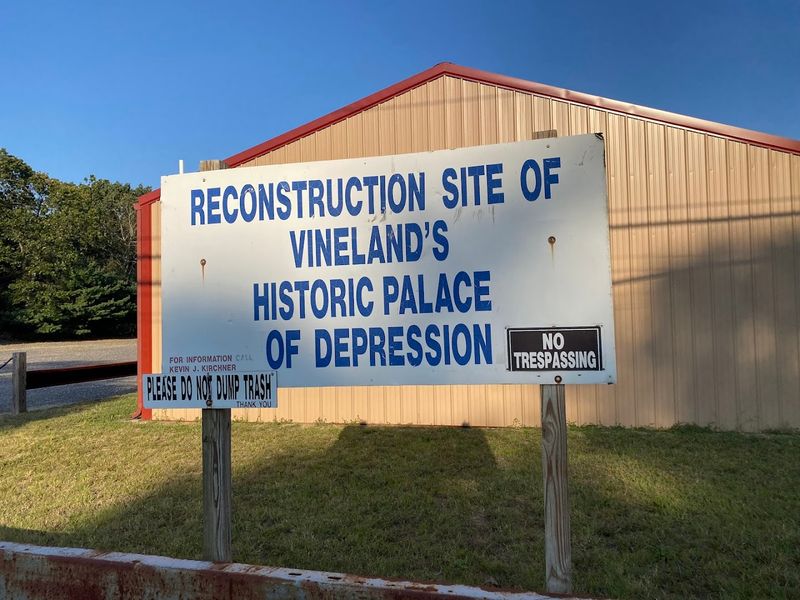
The original palace did not vanish in one clean, cinematic moment. It unraveled the way fragile, one-of-a-kind places often do: through neglect, vandalism, rumor, and bad timing.
After Daynor’s fraud conviction and jail time, the unattended property became vulnerable. Stories about buried gold only made that worse, drawing vandals and treasure hunters who treated the site less like an artwork and more like a target.
Daynor eventually returned, but he was aging and in declining health. He was removed to a county hospital in the early 1960s and died in 1964.
Not long after, a fire damaged the palace, and by the late 1960s the city demolished what remained. That could have been the end of the story, another strange local chapter swallowed by time.
Instead, Vineland’s memory of the place kept flickering. In 1998, when the city planned to sell the lot, construction official Kevin Kirchner stepped in.
According to later accounts, only the ticket booth from the original site still stood, yet the idea of rebuilding sparked a stunning wave of support. Within hours, hundreds of people had reportedly committed to helping.
Kirchner, later joined closely by his son Kristian and a network of volunteers, pushed for a reconstruction based on archival photographs, footage, and local memory. The process was slow, difficult, and deeply personal.
WHYY reported that both Kevin and Kristian Kirchner died before the rebuilt palace could fully open, but volunteers continued the work, determined to preserve not just Daynor’s vision but the Kirchners’ labor as well. That second act may be the most New Jersey part of the whole saga.
The original palace was a one-man act of wild invention. The rebuilt palace became a community project powered by stubborn loyalty, local pride, and the refusal to let an eccentric landmark stay buried.
What a visit to this one-of-a-kind South Jersey landmark feels like today
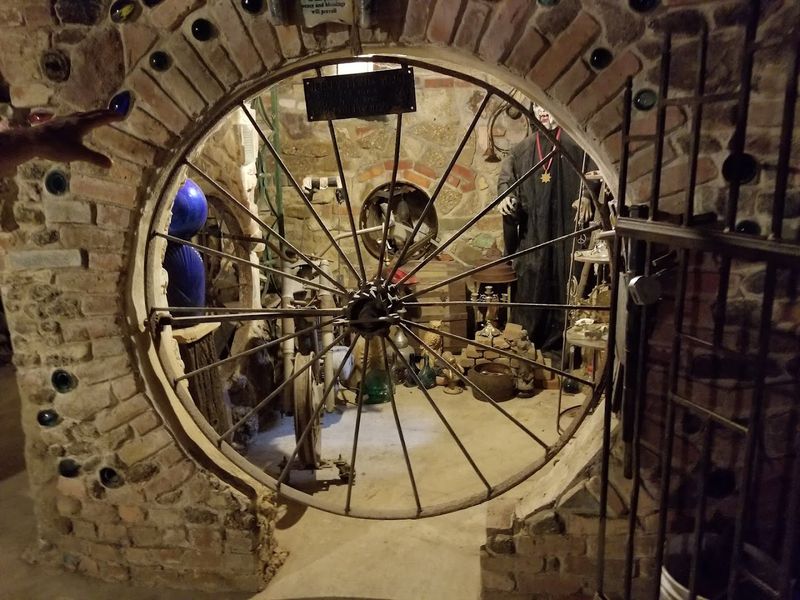
Even in restoration, the Palace of Depression gives off the energy of a place that has never cared much about fitting in. It sits in Vineland as a reconstructed echo of the original, shaped by archival research and volunteer labor rather than by slick commercial redesign.
That matters, because the appeal is still in the details. Reports from the site describe bottle-studded walls, improvised towers, embedded sculpture, shell-covered doors, and rooms that feel more discovered than planned.
The surviving ticket booth from the original era adds another layer, a literal piece of continuity between Daynor’s palace and the version rising now. There are not regular public visiting hours yet, according to preservation listings, though local organizers have expressed hopes of reopening for tours and events as work nears completion.
That means the palace still feels a little elusive, which honestly suits it. This was never meant to be a polished conveyor-belt attraction where you shuffle through, buy a magnet, and leave with the same photo as everyone else.
Its personality comes from rough edges, stories, and the sense that a vision this eccentric could only happen in a place willing to let the unusual breathe. For a New Jersey-focused traveler, that is the real payoff.
Vineland is not putting on airs here. The Palace of Depression is a reminder that some of the state’s most memorable landmarks were not designed by committees or blessed by wealth.
They were improvised by dreamers, then saved by locals who understood what outsiders might miss. Spend enough time around New Jersey and you learn to respect that kind of place.
It may look odd at first glance. Give it another minute and it starts to feel like a masterpiece assembled the hard way.
Share this story