Some New Jersey places know how to do reinvention without scrubbing away their personality, and the Stangl Factory in Flemington is one of the best examples around.
What used to be part of a pottery legacy that shaped Hunterdon County for generations now feels like a lived-in creative campus, where history is still baked into the walls and the present-tense energy comes from artists, food vendors, events, and regulars who actually use the place.
That mix is what makes it work. This is not one of those polished historic sites that feels frozen behind glass.
It is active, a little quirky, proudly local, and much more fun because of it. The old factory building carries the story of a pottery business whose roots go back to 1814 and whose Stangl chapter became deeply tied to Flemington before pottery production ultimately ended in 1978.
Today, the site has found a second life as a creative gathering place with market traffic, event space, and a very New Jersey habit of turning errands into an afternoon.
Why the Stangl Factory Still Matters in New Jersey
Long before it became a weekend destination for coffee, browsing, and market bags full of local produce, this address was part of one of New Jersey’s most recognizable pottery stories.
The business that eventually became Stangl began in Flemington in 1814 with Samuel Hill, later became Fulper Pottery, and then moved through the Stangl era that made the name famous with collectors and longtime residents alike.
That timeline matters because the building is not borrowing old-world charm as a design choice. It earned every bit of it.
For people in Hunterdon County, the pottery legacy is woven into local identity, not tucked away as some niche trivia for antique dealers. Stangl pieces are still sought after, the company’s bird figurines remain especially well known, and the story of the pottery is still treated as a meaningful part of county history by local historical organizations.
The factory’s importance also goes beyond nostalgia. Its reuse kept a significant industrial site in public life instead of letting it slide into vacancy and fade from memory.
In a state full of places that talk a big game about preservation, this one actually shows what preservation can look like when it stays useful. You can feel the difference.
The building does not read like a museum label. It reads like continuity.
Flemington kept a place that once helped define the town, and rather than turning it into a dead relic, it let the next chapter stay noisy, visible, and community-facing. That is exactly why the Stangl Factory still lands as more than a nice backdrop.
It is a surviving piece of New Jersey craft history that still has a pulse.
How an Old Pottery Plant Became One of Flemington’s Most Creative Spaces
The smartest thing about the Stangl Factory’s comeback is that nobody tried to make it behave like a generic retail center.
After the former pottery property sat vacant, it was acquired in 2012 by The Stangl Factory, LLC, which transformed the roughly 16,000-square-foot site into a center for creative arts and related activity rather than flattening its character into something bland and overmanaged.
That decision gave Flemington more than a restored building. It gave the town a working ecosystem.
The adaptive reuse effort was recognized as part of the borough’s broader arts and downtown revival, and the site was intentionally shaped as a multifunctional destination with permanent tenants, event space, and market activity all under the same historic roof.
That layered setup is a big reason the place feels alive instead of staged.
There is movement built into the concept. One person arrives for a show, another for a market run, another for an art-related event, and suddenly a former industrial property starts acting like public space again.
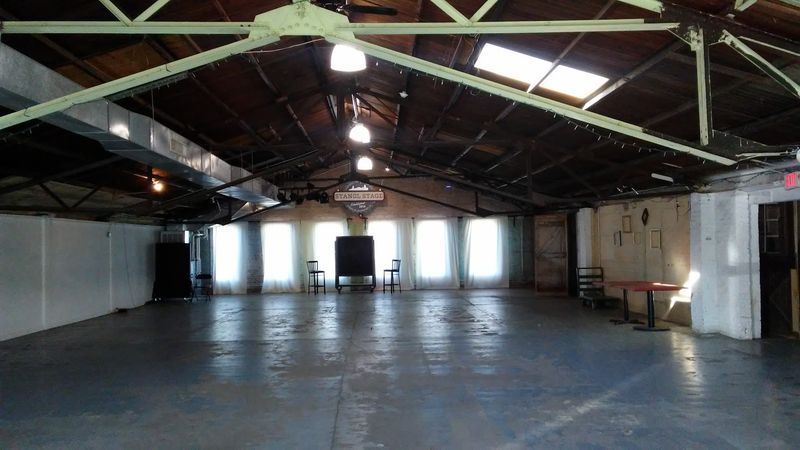
The factory’s older bones also do a lot of heavy lifting. Industrial structures can sometimes feel cold after redevelopment, but here the scale and texture work in the building’s favor.
High ceilings, open volume, and preserved details keep the place from feeling precious. It still remembers what it used to be.
And that memory is exactly what gives newer activity a little extra charge. Flemington has plenty of charm in the obvious places, but this is one of the town’s more satisfying turns because it did not just rescue an old building.
It found a use for it that matches the town’s creative streak and keeps people coming back for reasons that feel current, not sentimental.
The Artists, Makers, and Small Businesses Giving the Building New Life
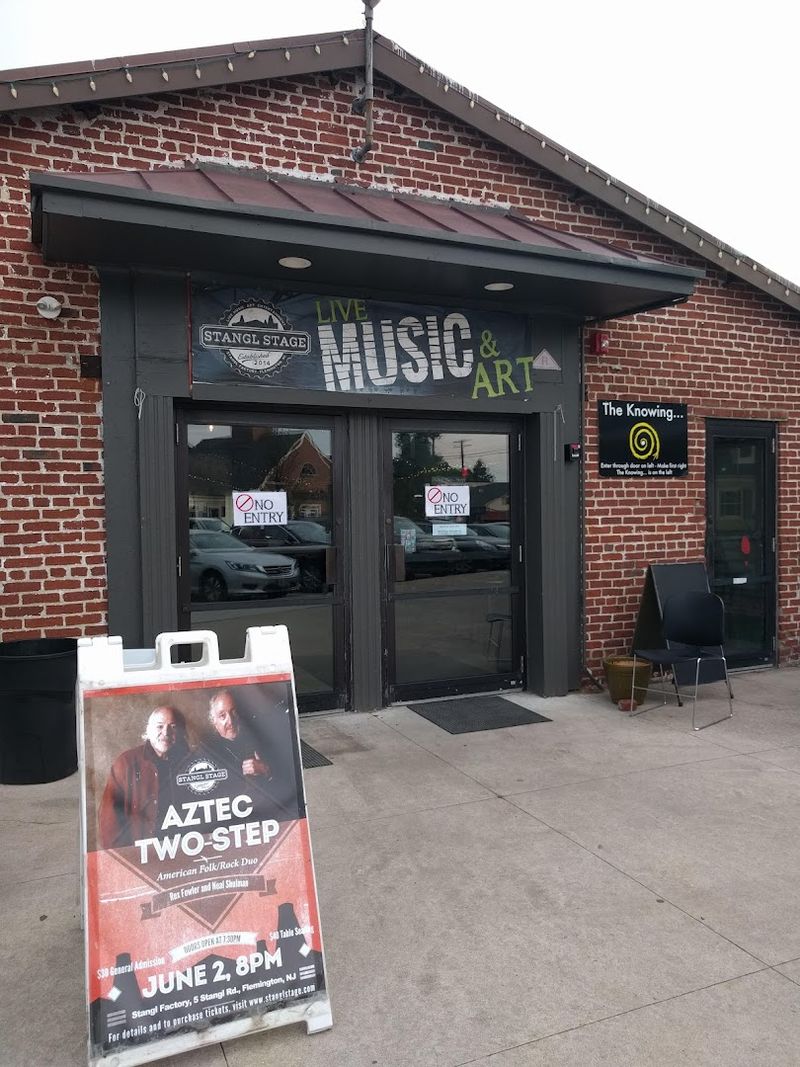
What gives the Stangl Factory its personality now is not just the architecture. It is the steady presence of people making, serving, building, and selling things that do not feel mass-produced or interchangeable.
That is the shift that turned the property from a former factory into an artisan village in the real sense, not the marketing-brochure sense. Local reporting on the redevelopment described the site as a center for creative arts and related pursuits, with full-time and part-time workers engaged in fine craft, design, and other creative work.
That foundation still shapes how the place is experienced. Instead of one single attraction swallowing all the attention, the energy comes from the mix.
You get a building with enough room for artists, events, independent businesses, and rotating activity to coexist without stepping on each other. That creates a better rhythm for visitors too.
You are not walking through a space that asks for a single transaction and then spits you back onto the sidewalk. You linger.
You peek into another storefront. You notice something handmade.
You hear music from another corner. Maybe you came for bread or produce and leave thinking about pottery, prints, candles, or whatever local obsession caught your eye that day.
That is the whole charm of the place. It behaves more like a creative neighborhood compressed into one industrial shell.
The small-business feel is part of what makes it distinctly New Jersey as well. There is less polish, more personality.
Fewer chains, more opinions. More evidence that somebody behind the counter actually lives nearby and cares what happens in Flemington next year.
In a time when too many commercial spaces feel copied and pasted, the Stangl Factory works because it still feels authored by the people inside it.
What You’ll Find at the Stangl Factory Farmers Market
A lot of locals first fall for the Stangl Factory through the farmers market, and that makes perfect sense because it is the easiest way to watch the whole place come alive.
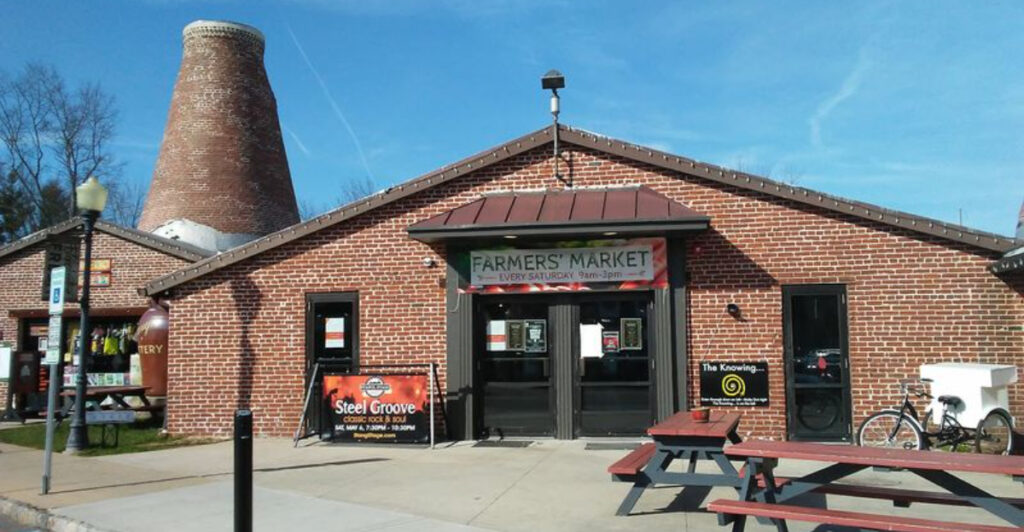
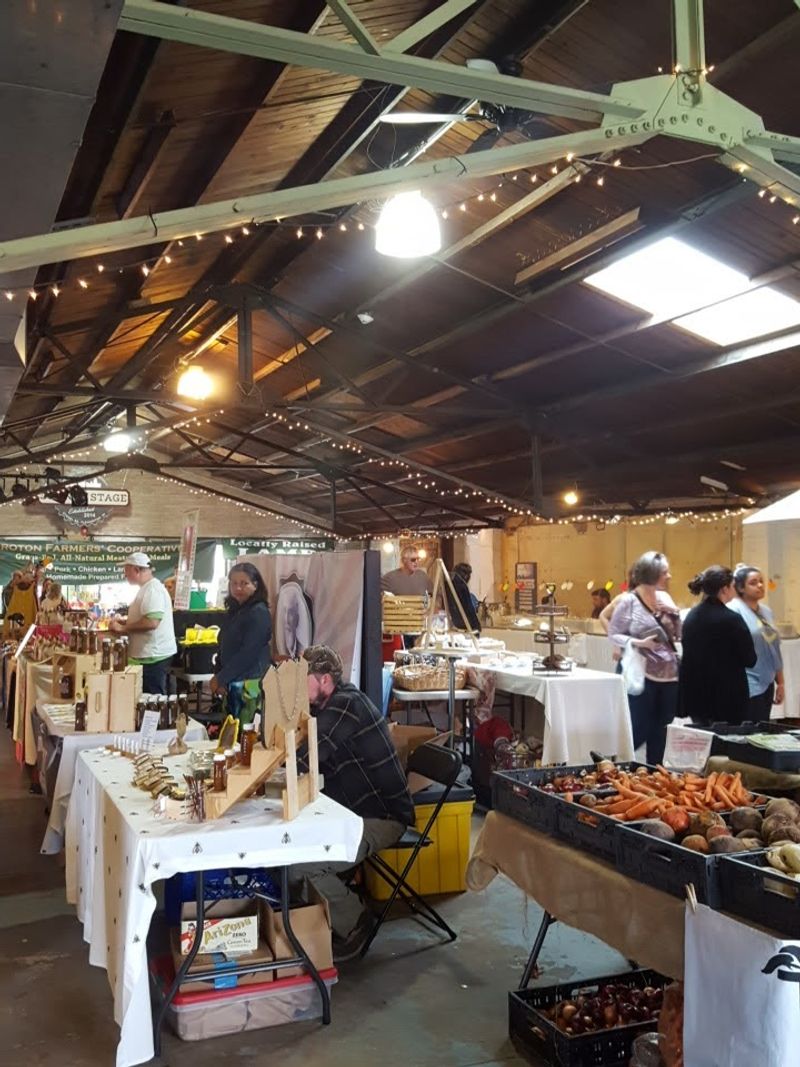
The market is described by Flemington Community Partnership as a year-round indoor market held on Saturdays from 9 a.m. to 3 p.m., bringing together more than 30 artisan vendors and local growers inside the historic factory.
That setup already gives it an edge over the usual pop-up experience. Indoor means the market has some staying power.
It is not so precious that a little bad weather ruins the plan, and it feels less like a seasonal cameo and more like part of local routine. The vendor mix matters too.
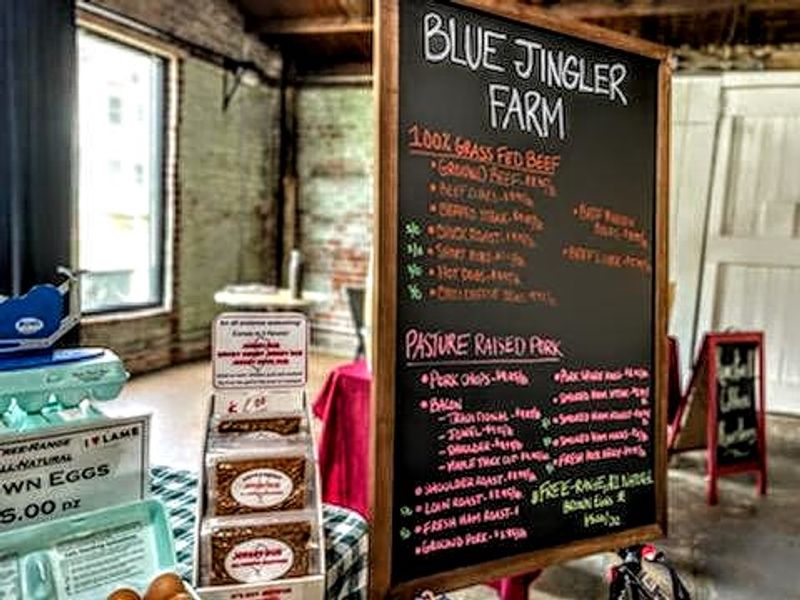
You are not dealing with a single-note produce stop. The draw is the blend of food, handmade goods, and that slightly unpredictable market magic where one table has farm products, another has something giftable, and another makes you pause because you did not expect to care about it until you saw it in person.
Live entertainment has also been part of the market’s identity, which helps explain why people tend to hang around rather than do the tactical in-and-out. At places like this, the soundtrack matters.
So does the mood. It turns a shopping trip into a social space without becoming performative about it.
There is also something fitting about a former factory now functioning as a weekly meeting point for growers, makers, and regular customers. The building once produced objects for everyday life on a large scale.
Now it hosts a smaller, more local version of that exchange. Same spirit, different century.
And for Flemington, that might be the nicest trick the place pulls off.
Why This Flemington Destination Feels More Like a Community Than a Shopping Stop
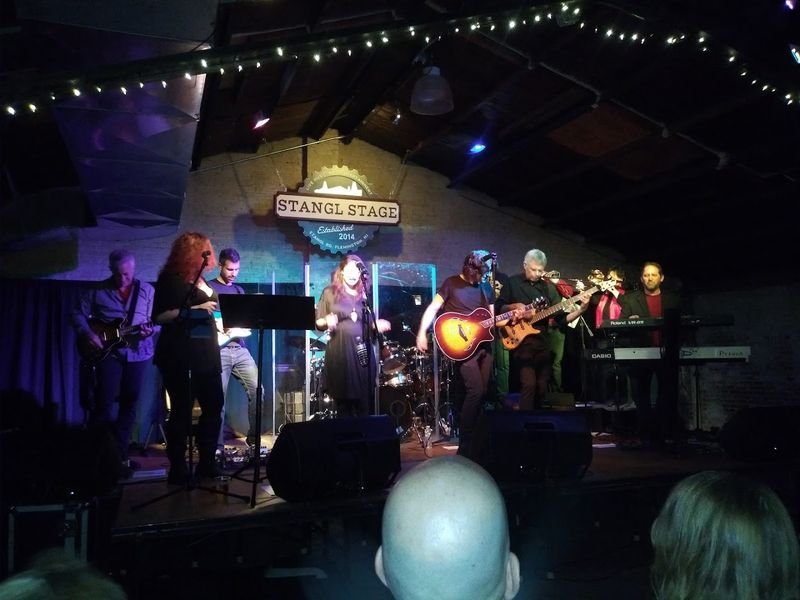
Plenty of places can line up vendors and call it a destination. The harder thing is making people feel like they have stepped into an actual local scene instead of a curated consumer experience.
That is where the Stangl Factory has an advantage. The site was redeveloped not simply as rentable square footage, but as a multifunctional gathering place with event space, market activity, creative tenants, and room for community-oriented programming.
Past coverage highlighted nonprofit meetings, fundraisers, marketplace events, and other activities that brought different groups into the building for different reasons. That matters because community is usually built through overlap, not branding.
The Stangl Factory gets that. Someone comes for a Saturday market, someone else shows up for an event, someone nearby treats the place like familiar territory, and before long the building starts operating less like a store cluster and more like one of those local anchors that naturally collects people.
The location helps, too. It sits within Flemington’s broader arts and downtown district, so it feeds off the walkable, browse-friendly mood of the borough rather than existing in total isolation.
You can feel that connection in the way people talk about it. They do not describe it like a one-off attraction to conquer and check off.
They talk about going there, returning there, seeing what is happening there. That small language difference says a lot.
The place invites repeat behavior. It has routine energy.
And in New Jersey, that is often the real test of whether somewhere matters. Not whether it photographs well once, but whether people fold it into their weekends without thinking too hard about it.
The Stangl Factory passes that test because it feels woven into life, not staged outside of it.
The Historic Details That Make a Visit to Stangl Factory So Memorable
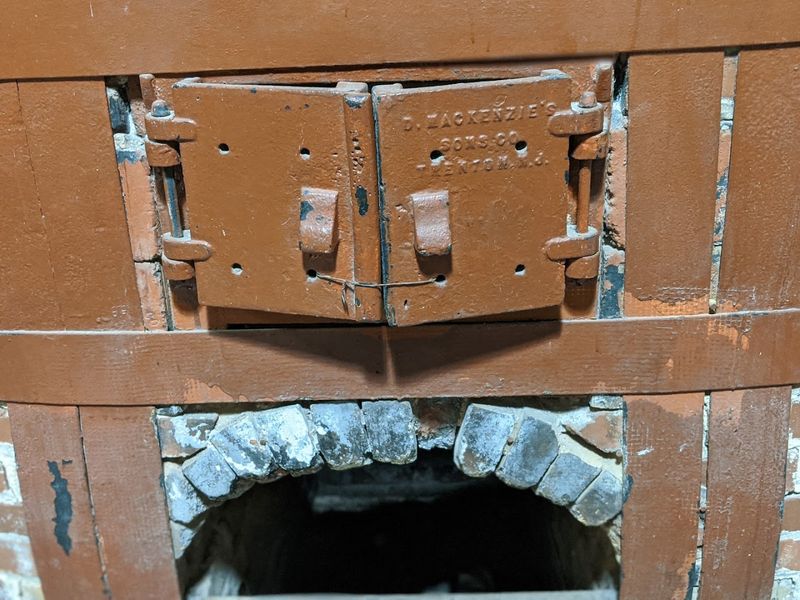
Even if you know nothing about pottery history when you arrive, the building still gives itself away. This is not one of those former industrial spaces that had all its rough edges sanded off in the name of modernization.
The old factory still carries the kind of visual evidence that makes adaptive reuse satisfying in the first place. According to the current venue description, the structure features steel trusses, high ceilings, and the last remaining commercial brick kilns of their type in New Jersey.
That last detail alone is enough to stop people in their tracks. It is the sort of fact that turns a pleasant visit into a place you remember later.
The historical marker for the former showroom building likewise notes that the three large kilns there are the last known commercial pottery kilns of that type in the state. Those are not decorative nods to history.
They are the real thing. And because they survive in a building that is still active, they register differently than they would in a sealed-off historic site.
You notice the scale of the place. You notice the industrial proportions.
You start to picture what it meant for this corner of Flemington to be part of a manufacturing story rather than just a shopping district. That mental flip is one of the most enjoyable parts of visiting.
The architecture quietly teaches you what the place used to do without forcing a lecture. Then, just when the history starts to pull focus, the present barges back in with market chatter, event movement, and people carrying coffee.
That contrast is the whole point. The Stangl Factory is memorable because its historic details are not trapped in the past.
They are still in the room, still doing their job, still making the modern version of the place feel richer than it would otherwise be.
Share this story